The Best Electric Water Kettle: Honest Reviews for Every Budget, Brew Style, and Kitchen
Why Choosing the Right Electric Kettle Actually Matters
At first glance, an electric kettle seems like one of the most unambiguous kitchen purchases you can make. It boils water. You pour it. How complicated can it be? As it turns out — very, if you care about the quality of what you’re brewing.
Water temperature is the most overlooked variable in home tea and coffee preparation. Pour 212°F boiling water over a delicate Japanese green tea and you’ll extract a bitter, astringent cup that tastes nothing like the same tea brewed at 170°F. Use that same 212°F water on a pour-over single-origin coffee and you’ll scorch the grounds, driving out harsh acidic compounds and masking the nuanced flavors that make specialty coffee worth drinking. Temperature isn’t a minor detail — it’s arguably the most controllable variable that determines whether your morning cup is genuinely good or merely adequate.
Beyond temperature precision, the quality of your kettle affects how quickly you can brew, how much control you have over the pour, how safe the appliance is on your counter, and how long it will last before requiring replacement. The difference between a $25 kettle and a $150 kettle isn’t imaginary — it’s reflected in the consistency of the heating element, the quality of the temperature sensor, the durability of the lid and handle, and the ergonomics of the pour.
The good news is that the electric kettle market in 2026 has never offered better options across every price tier. Models like the Cuisinart CPK-17, Fellow Stagg EKG, and Breville Smart Kettle have refined what it means to deliver precise, reliable hot water to your cup — and even budget options have meaningfully improved over the past few years. This guide will help you find the exact right kettle for how you actually brew, rather than how you imagine you might brew someday.
Types of Electric Kettles: Know What You’re Shopping For
Not all electric kettles are built for the same purpose. Understanding the main categories will help you identify which type matches your brewing habits before you compare individual models.
Standard Electric Kettles (Single Temperature)
These are the entry-level workhorses — they heat water to a rolling boil and automatically shut off. No temperature settings, no digital display, no frills. They’re fast, simple, and inexpensive. For households that primarily make black tea, instant noodles, French press coffee, or just need hot water quickly, a standard kettle does the job without unnecessary complexity. The Hamilton Beach 40880 and Amazon Basics models fall into this category.
Variable Temperature Kettles
Variable temperature kettles allow you to select a target brewing temperature — typically through preset buttons (e.g., 160°F, 175°F, 185°F, 200°F, 212°F) or a continuous dial. They’re essential for anyone brewing green, white, or oolong teas, and meaningfully improve pour-over and drip coffee quality. The Cuisinart CPK-17 PerfecTemp and Breville IQ Kettle are benchmark examples of this category. The price premium over standard models is typically $30–$60, which is almost always worth it for daily tea or coffee drinkers.
Gooseneck Kettles
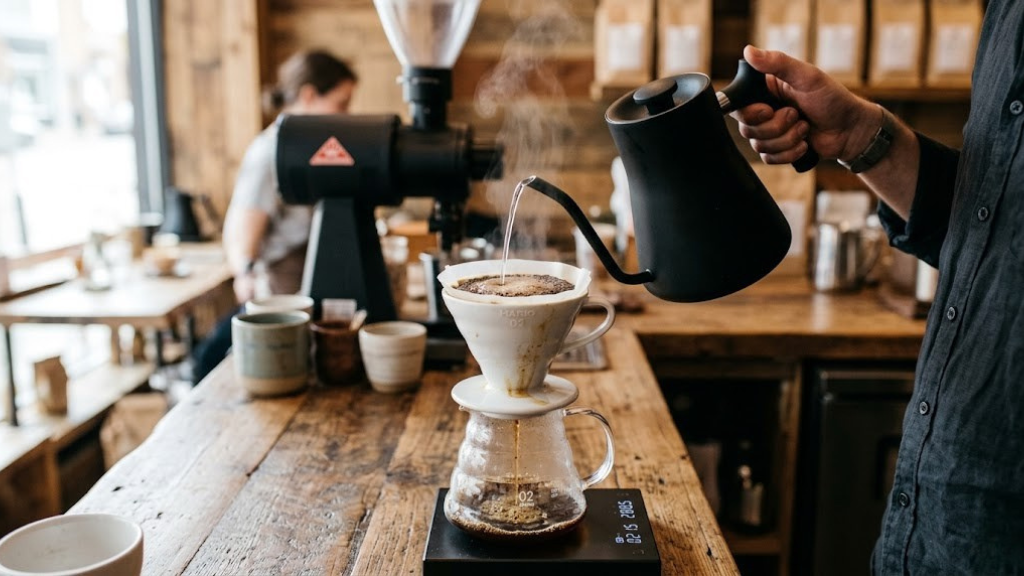
Gooseneck kettles are defined by their elongated, curved, narrow spout — designed specifically to give the brewer precise, low-flow control over the direction and speed of the pour. They’re the tool of choice for pour-over coffee methods (V60, Chemex, Kalita Wave) where a slow, even spiral pour is critical to proper extraction. Most premium gooseneck kettles also include variable temperature control. The Fellow Stagg EKG is the category-defining model; the Hario Buono is the well-regarded traditional option.
Smart / Connected Kettles
A growing category of kettles includes Bluetooth or Wi-Fi connectivity, allowing control through a smartphone app. The Fellow Stagg EKG+ has Bluetooth integration for temperature scheduling. Smart features sound appealing but add cost and a potential reliability failure point. For most users, the value of app control over a kettle is marginal — but for dedicated home baristas who want precise data logging and temperature scheduling, it’s a meaningful feature.
Travel and Compact Kettles
For small kitchens, dorm rooms, offices, or travel, compact kettles in the 0.5L–1.0L range offer basic or variable temperature functionality in a minimal footprint. Dual-voltage travel kettles that work on both 110V and 220V systems are especially useful for frequent international travelers.

Cuisinart CPK-17 PerfecTemp Variable Temp Kettle
Six temperature presets, keep-warm function, 1.7L capacity — the best all-around electric kettle.
Check Price on Amazon ›Key Buying Factors: What Actually Separates Good Kettles from Great Ones
Once you know which type of kettle fits your needs, these are the factors that determine which specific model deserves your money.
Temperature Accuracy and Consistency
The most important spec in any variable temperature kettle. A kettle rated for 175°F that consistently delivers 185°F produces the same result as a kettle with no temperature control — you’re just paying more for a false promise. The Fellow Stagg EKG is rated to ±0.5°C accuracy; most mid-range kettles achieve ±2–5°C, which is adequate for tea but noticeable in precision pour-over. If temperature precision matters to you, look for models that publish their accuracy specifications and have been independently tested.
Keep-Warm Function
The keep-warm feature holds water at your selected temperature for a set period (typically 20–60 minutes) after reaching target temperature. This is remarkably useful in practice — you don’t always brew immediately after the kettle finishes, and having to reheat (which overshoots your target temperature in many models) is annoying. Most mid-range and premium kettles include this function; budget models rarely do.
Spout Design and Pour Control
For everyday use, a standard wide spout is perfectly adequate. For pour-over coffee, a narrow gooseneck spout is transformative. Beyond pour-over, there’s a genuine ergonomic difference between well-designed spouts — a good spout produces a steady, controlled flow without dripping, dribbling, or splashing when you tilt the kettle. This is worth checking in user reviews since it’s difficult to assess from spec sheets or product images alone.
Capacity
The standard electric kettle holds 1.7 liters, which is enough for approximately 6–7 standard cups. This is the right size for most households. Smaller 1.0L kettles heat faster and take up less space. Larger 1.8–2.0L models are useful for households that frequently make full teapots or multiple hot drinks at once. Note that every kettle has a minimum fill line — overfilling or underfilling below the minimum line is a safety hazard.
Build Quality and Materials
Interior material matters most from a flavor and safety standpoint. All models reviewed here use food-grade stainless steel interiors or BPA-free plastic. Stainless steel is preferred — it doesn’t leach flavors, is easier to descale, and lasts longer. Exterior materials range from brushed stainless to matte black to polished glass. Glass exteriors look beautiful but can be harder to clean if hard water deposits build up on the interior wall. Plastic exterior housings are fine as long as the interior is stainless steel.
Lid Design
Poorly designed lids are a frequent complaint in long-term kettle ownership. Look for lids that open fully (rather than partially) for easy filling and cleaning, stay securely closed during pouring, and don’t spray steam at your hand when you open them mid-boil. One-touch lid release buttons are convenient; hinged lids that stay open while you fill are genuinely appreciated after years of use.
Cord and Base Design
All quality electric kettles use a cordless design: the kettle body lifts off a 360° rotating base. The base connects to the power cord, and you fill and pour without being tethered to the wall. Look for a cord storage system that keeps excess cord tidy. The base should feel stable and not wobble — a loose base connection is the most common long-term reliability complaint in user reviews.
Building a well-equipped kitchen around quality tools makes every cooking task more enjoyable. If you’re also considering other appliances at the same time, our food processor comparison guide covers another high-impact kitchen appliance that pairs naturally with a kettle for complete meal prep — and together they form the backbone of a practical, efficient kitchen setup.
Top Electric Kettles at a Glance
Here’s the competitive landscape in a single view. These are the models that consistently perform above their price tier and earn strong long-term owner satisfaction.
| Model | Type | Capacity | Wattage | Price | Best For | Rating |
|---|---|---|---|---|---|---|
| Cuisinart CPK-17 Editor’s Pick | Variable temp | 1.7L | 1,500W | $70–$90 | All-around home use | ★★★★★ |
| Fellow Stagg EKG Pour-Over Pick | Gooseneck + variable | 0.9L | 1,200W | $165–$185 | Coffee enthusiasts | ★★★★★ |
| Breville BKE820XL | Variable temp | 1.8L | 1,500W | $100–$130 | Premium family use | ★★★★★ |
| OXO Brew Adjustable | Variable temp | 1.75L | 1,500W | $60–$80 | Great value + UI | ★★★★☆ |
| Hamilton Beach 40880 Best Budget | Standard | 1.7L | 1,500W | $25–$35 | Budget / basic use | ★★★★☆ |
| Fellow Stagg EKG+ | Gooseneck + smart | 0.9L | 1,200W | $195–$215 | Tech-forward baristas | ★★★★★ |
| Hario V60 Buono | Gooseneck (stovetop) | 1.0L | N/A (stovetop) | $45–$60 | Pour-over on budget | ★★★★☆ |
Cuisinart CPK-17 PerfecTemp: The Best All-Around Electric Kettle
Cuisinart CPK-17 PerfecTemp 1.7L Cordless Variable Temperature Kettle
$70–$90
Best overall for most householdsThe Cuisinart CPK-17 has occupied the top of the mainstream electric kettle market for several years, and 2026 finds it still holding that position — not because it hasn’t been challenged, but because it executes its core purpose with a consistency and reliability that few competitors have matched at its price point.
The PerfecTemp system offers six temperature presets: 160°F for delicate white teas, 175°F for green tea, 185°F for oolong, 190°F for French press, 200°F for pour-over coffee, and 212°F for black tea and everything else. Each preset is clearly labeled — not just with a temperature number, but with the tea or coffee type it’s best for. For users who are learning about temperature-dependent brewing, this labeling is genuinely educational. For experienced brewers who know exactly what they want, it’s simply convenient.
The 30-minute keep-warm function is one of the most useful implementations in the category. When the kettle reaches your target temperature, it holds it there for thirty minutes — long enough for a leisurely morning routine without the water cooling or requiring reheating. Unlike some models that keep-warm runs to a separate temperature from the selected preset, the Cuisinart maintains the exact temperature you selected.
Build quality is solid without being extravagant. The stainless steel body is fingerprint-resistant brushed steel; the handle is comfortable and well-balanced even when the kettle is full. The lid opens with a push button and stays open for easy filling. The 360° base has a stable, weighted feel that has held up well in long-term use reports. Independent testing consistently shows real-world temperatures within 3–5°F of the preset targets, which is excellent for this price range.
The one meaningful criticism: the spout is wide and produces a vigorous flow that’s slightly harder to control than narrow-spout alternatives. For French press and drip coffee, this is inconsequential. For pour-over brewing where a slow, precise bloom is important, the CPK-17 works but requires a deliberate pouring technique that a gooseneck spout makes effortless. If pour-over precision is your primary use case, the Fellow Stagg EKG is worth the price premium.
✓ Pros
- Six clearly labeled temperature presets
- 30-minute keep-warm function at preset temperature
- 1,500W heats 1.7L in approximately 6 minutes
- Durable brushed stainless construction
- 3-year limited warranty
- Intuitive controls with no learning curve
- Widely available, easy to find replacement parts
✗ Cons
- Wide spout lacks precision for pour-over technique
- Only six presets — no continuous temperature selection
- Lid can drip slightly if tilted during pouring
- No audible temperature confirmation on select models
Cuisinart CPK-17 PerfecTemp
6 presets · 30-min keep-warm · 3-year warranty · Ships free with Prime
View on Amazon ›Fellow Stagg EKG: The Pour-Over Coffee Specialist

Fellow Stagg EKG Electric Pour-Over Kettle
$165–$185
Best gooseneck kettle for pour-over coffeeIf the Cuisinart CPK-17 is the right tool for most households, the Fellow Stagg EKG is the right tool for the coffee enthusiast who has moved beyond “a good cup” and into the world of deliberate, repeatable extraction. It’s a precision instrument designed around a very specific workflow — and within that workflow, it’s genuinely peerless at its price point.
The gooseneck spout is the defining feature, and it delivers on its promise completely. The narrow, curved spout produces a smooth, laminar flow that you can start and stop cleanly, direct precisely into a 50mm bloom circle, and modulate from a thin thread to a steady stream with a simple wrist rotation. For Chemex, V60, or Kalita Wave brewing, the difference between this spout and a standard kettle spout is immediately and dramatically apparent in the cup. The ability to deliver a slow, even bloom pour without channeling the grounds is the single greatest impact variable in pour-over extraction quality — and the EKG makes it accessible to anyone willing to practice.
Temperature precision is rated at ±0.5°C, making the EKG the most accurate kettle in this comparison by a significant margin. The LCD display shows the current temperature in real time and updates continuously as the water heats. The temperature dial allows continuous selection from 135°F (57°C) to 212°F (100°C) in one-degree increments. The 60-minute keep-warm function holds temperature with the same ±0.5°C precision. For coffee brewing where 197°F and 203°F produce meaningfully different extractions, this level of control is not overkill — it’s the whole point.
The build quality matches the price. The matte black or polished steel finish is understated and elegant. The counterbalanced handle feels completely natural in the hand, even when the kettle is nearly full. The base has a built-in stopwatch — an unexpectedly useful feature for timing bloom phases and total brew time without reaching for your phone.
The compromises are real but knowable. At 0.9L, the EKG is smaller than standard kettles and barely accommodates a full French press fill for four people. The 1,200W element is slower than the 1,500W options on competing models. And $165–$185 is a genuine premium that only makes sense for the brewer who genuinely uses these features. For the right user, though, there is no close second.
✓ Pros
- ±0.5°C temperature precision — best in class
- Gooseneck spout delivers perfect pour control
- Continuous temperature selection, 135–212°F
- 60-minute keep-warm at precise target temp
- Built-in stopwatch on base
- Premium build quality and aesthetics
- Bluetooth version (EKG+) available for app control
✗ Cons
- $165–$185 is a meaningful premium
- 0.9L capacity is small for 3–4 person households
- 1,200W heats more slowly than 1,500W competitors
- Overkill for non-pour-over users
- Learning curve on the control dial

Fellow Stagg EKG Electric Gooseneck Kettle
±0.5°C precision · Built-in stopwatch · Gooseneck pour control
View on Amazon ›Breville BKE820XL IQ Kettle: The Premium Family Workhorse

Breville BKE820XL Smart Kettle Luxe 1.8L
$100–$130
Best premium variable-temp kettle for familiesBreville’s approach to the kettle market reflects the same design philosophy that defines its food processors and toaster ovens: engineering precision housed in a beautifully made product that earns its premium through function rather than branding. The BKE820XL is the clearest expression of that philosophy in a kettle.
The 1.8L capacity is the largest in this comparison — a meaningful advantage for families and households that regularly make multiple rounds of hot drinks. Where the Cuisinart CPK-17 offers six presets and the Fellow Stagg a continuous dial, the Breville splits the difference with a 5-preset button interface and the ability to dial up or down from any preset using a dedicated adjustment control. In practice this gives you meaningfully more flexibility than the Cuisinart while being easier to use quickly than the Fellow’s dial — a thoughtful middle path.
Build quality is the Breville’s calling card. The body is polished stainless steel with a notably substantial weight that communicates quality without needing to be picked up. The hinged lid opens wide and stays there. The spout is well-designed for controlled pouring without being a gooseneck — it produces a steady, dripless stream that handles everything from careful cup filling to rapid kettle emptying without mess.
Breville also includes a soft-open lid mechanism that prevents hot steam from releasing suddenly — a thoughtful safety detail that becomes very appreciated after the first time a standard kettle lid snaps open directly into your face over a boiling kettle. This is exactly the kind of user-experience thinking that justifies the premium over the Cuisinart for households willing to spend an extra $30–$40.
✓ Pros
- 1.8L — largest capacity in this comparison
- Soft-open lid prevents steam injury
- Exceptional build quality and materials
- 5 presets with fine-adjustment control
- Very dripless, controlled pour spout
- Available in multiple finishes
✗ Cons
- $100–$130 is a meaningful premium over the Cuisinart
- Heavy when full — not ideal for users with wrist issues
- Fewer temperature presets than some competitors
- Larger footprint on the counter

Breville BKE820XL Smart Kettle Luxe 1.8L
Soft-open lid · 1.8L capacity · Premium stainless finish
View on Amazon ›OXO Brew Adjustable Temperature Kettle: Outstanding Value with a Brilliant Interface

OXO Brew Adjustable Temperature Pour-Over Kettle
$60–$80
Best user interface and value in the mid-rangeOXO built its reputation on user interface design — ergonomic tools that work intuitively, feel natural in the hand, and don’t require a manual. The Brew Adjustable Temperature Kettle brings that same design sensibility to the premium kettle market, and the result is a product that earns its place despite operating in a crowded field.
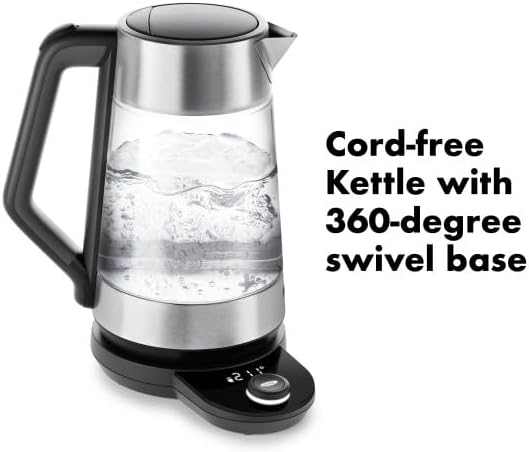
The temperature interface is the most intuitive in this comparison. A large, clear dial on the handle adjusts temperature in one-degree increments from 140°F to 212°F — no need to memorize which preset corresponds to which drink type. The current temperature and target temperature are both displayed simultaneously on a backlit LED panel that’s readable at a glance even in a bright kitchen. When the target is reached, an audible tone sounds and the keep-warm mode activates automatically for 30 minutes.
The gooseneck-adjacent spout (not a pure gooseneck, but narrower and more curved than a standard spout) provides a notably more controlled pour than the Cuisinart CPK-17 without requiring the technique of a true gooseneck. This makes it a meaningful upgrade for pour-over users who want more control than a standard kettle offers but don’t want the full commitment — and full price — of the Fellow Stagg EKG.
At $60–$80, the OXO Brew sits in a compelling position between the Cuisinart CPK-17 and the Breville Smart Kettle. It has a slightly better user interface than the Cuisinart, more pour control than either non-gooseneck competitor, and comes in at a price that’s genuinely accessible. The main trade-off compared to the Breville is the build material quality — the OXO uses a brushed steel exterior that doesn’t quite match the Breville’s premium feel — but in functional terms, the difference is negligible.
✓ Pros
- Best-in-class user interface for intuitive control
- Continuous degree-by-degree temperature selection
- Narrow curved spout for improved pour control
- Dual display shows current and target temps
- 30-minute keep-warm activates automatically
- Great value at $60–$80
✗ Cons
- Build material slightly below Breville’s standard
- Not a true gooseneck for precision pour-over
- Lid hinge feels slightly less premium than competitors
OXO Brew Adjustable Temperature Kettle
Best UI in its class · Degree-by-degree control · Narrow pour spout
View on Amazon ›Hamilton Beach 40880: The Best Electric Kettle Under $35

Hamilton Beach 40880 1.7L Electric Kettle
$25–$35
Best budget electric kettle — outstanding at its priceThe Hamilton Beach 40880 has no temperature control, no presets, no display, and no keep-warm function. What it has is a 1,500W heating element, a 1.7L stainless steel body, an automatic shutoff, boil-dry protection, and a reliable 360° cordless base — all for $25–$35. For a household that boils water for black tea, instant coffee, oatmeal, and late-night noodles, this machine delivers exactly what’s needed with zero unnecessary complexity.
At 1,500W, the Hamilton Beach 40880 boils 1.7 liters in approximately 6.5–7 minutes — competitive with variable temperature models at twice the price. The stainless steel interior is BPA-free and produces no plastic taste, which is the most common complaint about cheap kettles in lower price brackets. The hinged lid opens fully for easy filling and the water window is visible from both sides, which is a small but appreciated design touch.
The build quality is honest for the price point — thinner stainless steel than premium models, a plastic handle that’s functional rather than delightful, and a lid that won’t win design awards. These are appropriate trade-offs for a product priced at $30. The real question is whether those compromises affect the fundamental task, and the answer is no. It boils water reliably, shuts off automatically, and won’t leak or fail under normal household use.
If you currently have no electric kettle and are deciding whether to invest at all, the Hamilton Beach 40880 is the ideal starting point. It will show you immediately whether an electric kettle transforms your morning routine (it will) and help you identify, with real use, whether you need temperature control for your brewing style. That knowledge will make your next kettle purchase far more informed.
✓ Pros
- Exceptional value under $35
- 1,500W boils water quickly
- Stainless steel interior — no plastic taste
- Automatic shutoff and boil-dry protection
- Dead simple to use
- Water window visible from both sides
✗ Cons
- No temperature control
- No keep-warm function
- Thinner construction than premium models
- Plastic handle and base
- Expected lifespan shorter (2–4 years with daily use)

Hamilton Beach 40880 1.7L Electric Kettle
Under $35 · 1,500W · Stainless interior · Auto shutoff
View on Amazon ›Best Compact and Travel Electric Kettles
Not everyone needs a 1.7L kettle on the counter. Small households, frequent travelers, office kitchens, and dorm rooms have genuine use cases for compact or travel-specific models that the full-size picks don’t serve well.
COSORI Electric Kettle (0.8L) — Best Small-Kitchen Pick
The COSORI 0.8L variable temperature kettle packs six temperature presets, a keep-warm function, and a stainless steel interior into a genuinely compact footprint. It’s perfect for a one-person household where counter space is precious, or for an office desk setup where a full-size kettle would be impractical. The smaller water volume boils in under 4 minutes at 1,200W, making it faster per-cup than most full-size models. At $35–$50, it’s one of the best value-to-function ratios in the compact category.
Travel Kettle: Miroco Foldable 500ml
The Miroco foldable travel kettle collapses to less than 3 inches tall, fits in a carry-on bag, includes a dual-voltage element (110V/240V), and heats 500ml in about 4 minutes. It’s BPA-free, has a stainless steel heating plate, and includes a travel pouch. For anyone who travels frequently and refuses to accept hotel room instant coffee, this $25 investment pays for itself on the first trip.
Fellow Stagg EKG (0.9L) — Best Compact Premium
Worth noting again in the compact section: the Fellow Stagg EKG’s 0.9L capacity, while limiting for families, makes it a natural fit for single-user pour-over setups. You’re unlikely to fill it more than two-thirds for a single V60 brew, and the compact base footprint means it sits comfortably on a dedicated coffee station without consuming significant space.

COSORI 0.8L Variable Temperature Kettle
Compact design · 6 presets · Keep-warm · Great for small kitchens
View on Amazon ›Temperature Guide: What Temperature for Each Brew?
This is the most practical section in the guide for anyone considering a variable temperature upgrade. Here’s a reference you can bookmark and return to every time you’re setting your kettle.
The practical takeaway here is clear: if you only drink black tea and French press coffee, a standard kettle at 212°F covers you perfectly. But if you drink green tea, pour-over coffee, or any delicate specialty tea, investing in a variable temperature model is the single highest-impact upgrade you can make to your daily brew quality — more impactful than a better teapot, a nicer mug, or higher-quality loose leaf.
Head-to-Head Comparison: Full Feature Breakdown
All five primary models in a single table for direct comparison across every meaningful specification.
| Feature | Cuisinart CPK-17 | Fellow Stagg EKG | Breville BKE820XL | OXO Brew Adjust. | Hamilton Beach |
|---|---|---|---|---|---|
| Variable Temp | 6 presets | 1° increments | 5 presets + adj. | 1° increments | ✗ |
| Temp Range | 160–212°F | 135–212°F | 140–212°F | 140–212°F | 212°F only |
| Temp Accuracy | ±3–5°F | ±0.5°C (±0.9°F) | ±2–4°F | ±3–5°F | N/A |
| Keep-Warm | 30 min | 60 min | 40 min | 30 min | ✗ |
| Capacity | 1.7L | 0.9L | 1.8L | 1.75L | 1.7L |
| Wattage | 1,500W | 1,200W | 1,500W | 1,500W | 1,500W |
| Gooseneck | ✗ | ✓ | ✗ | Narrow curved | ✗ |
| Interior | Stainless | Stainless | Stainless | Stainless | Stainless |
| Warranty | 3 years | 2 years | 2 years | 2 years | 1 year |
| Approx. Price | $70–$90 | $165–$185 | $100–$130 | $60–$80 | $25–$35 |
Choosing by Use Case: Match Your Kettle to Your Brew Life
If You Drink Multiple Types of Tea Daily
Variable temperature is non-negotiable for you. The Cuisinart CPK-17 is the ideal fit: its six labeled presets cover every major tea category, the keep-warm holds your temperature while you steep, and the price is accessible. If you want finer control than six presets provide, step up to the OXO Brew for degree-by-degree precision at only a modest price premium.
If Pour-Over Coffee Is Your Daily Ritual
The Fellow Stagg EKG — full stop. There is no meaningful competition for pour-over precision in the home kettle market. The gooseneck spout, ±0.5°C accuracy, and built-in stopwatch are the exact combination that turns a competent pour-over attempt into a consistently excellent one. The 0.9L limitation is the only real trade-off, and for a single-cup morning pour-over ritual it’s irrelevant.
If You’re Building a Complete Kitchen From Scratch
When you’re equipping a kitchen from the ground up, it helps to think about appliances as an ecosystem rather than isolated purchases. A quality electric kettle pairs naturally with a toaster oven for quick breakfast prep, with a food processor for complete meal prep, and with a rice cooker for grain-based cooking. Our toaster oven reviews can help you think through that side of the kitchen setup while you’re in the kettle-shopping mindset — many of the same buying principles apply.
If Your Household Has 3–4+ People
The Breville BKE820XL wins on capacity (1.8L), build quality, and the practical daily-use features — particularly the soft-open lid and dripless spout — that matter most in a high-traffic household. It’s the kettle that handles the morning rush without complaint.
If You’re a First-Time Kettle Buyer or Working with a Tight Budget
Start with the Hamilton Beach 40880. Its $30 price point means you’re not taking a big risk, it will work well for everyday hot water needs, and it will help you quickly discover whether temperature control would meaningfully improve your brew quality. If after a few weeks you find yourself wishing you had more temperature precision, you’ll know exactly what to invest in next.
For the Appliance Collector and Kitchen Enthusiast
If you’ve already built out your kitchen with quality tools — perhaps you’ve consulted our stand mixer reviews and our rice cooker buying guide to stock up on serious appliances — then the kettle deserves the same treatment. The Fellow Stagg EKG or Breville BKE820XL both belong in a carefully assembled, quality-first kitchen and will reward daily use for years.

Fellow Stagg EKG — For the Serious Coffee Brewer
The only kettle purpose-built for pour-over precision. Nothing else comes close.
Shop on Amazon ›Maintenance, Descaling, and Care: Making Your Kettle Last
An electric kettle is one of the lowest-maintenance kitchen appliances you own — but the maintenance it does require, if neglected, directly affects performance, flavor, and longevity. Here’s everything you need to know.
Understanding Limescale and Why It Matters
Limescale is the white, chalky mineral deposit (primarily calcium carbonate) that builds up inside kettles over time wherever water contacts heated surfaces. In hard water areas — which cover a significant portion of North America and the UK — limescale accumulates noticeably within weeks of regular use. Beyond being aesthetically unpleasant, heavy scale deposits insulate the heating element, forcing it to work harder to achieve the same temperature and significantly shortening its lifespan. A thick layer of limescale can also flake into your cup, affecting the taste of your brew.
How to Descale: The Vinegar Method
Fill the kettle with equal parts white vinegar and water. Bring to a boil. Let the solution soak for 20–30 minutes (or overnight for heavy buildup). Discard and rinse. Then run two to three full kettle volumes of clean water through a boil cycle each to ensure no vinegar residue remains — you’ll taste it in your tea if you don’t. In moderately hard water areas, descale monthly. In soft water regions, every 3–4 months is sufficient.
Commercial Descalers
Commercial citric acid-based descalers (like Urnex Dezcal or generic citric acid from any grocery store) are equally effective and leave less residual odor than vinegar. Follow the same process: dilute per package instructions, boil, soak, rinse thoroughly. Citric acid dissolves calcium deposits efficiently and is completely food-safe when rinsed.
Daily and Weekly Cleaning
Rinse the interior with clean water after each use. Once a week, wipe the exterior with a damp cloth. Do not submerge the base or allow water to contact the electrical connections. The exterior of stainless steel models can be polished with a small amount of mineral oil on a soft cloth to maintain finish and reduce fingerprinting.
Filter Maintenance
Many kettles include a removable limescale filter at the spout that traps larger scale particles and prevents them from reaching your cup. These should be rinsed under running water weekly and soaked in diluted vinegar monthly alongside your regular descaling routine. Replace filter elements every 6–12 months or when visibly degraded.
Long-Term Storage
If you’re storing a kettle for an extended period, descale it first, rinse thoroughly, and leave the lid open to allow the interior to dry completely. Storing a kettle with residual water is the fastest way to develop mineral buildup and mold in crevices around the lid seal.
Frequently Asked Questions About Electric Kettles
What is the best electric kettle right now?
For most households, the Cuisinart CPK-17 PerfecTemp offers the best balance of precision, features, and value at $70–$90. Coffee enthusiasts who use pour-over methods should invest in the Fellow Stagg EKG. Budget shoppers will find excellent value in the Hamilton Beach 40880.
What wattage should I look for in an electric kettle?
For North American 120V outlets, most quality kettles run at 1,000–1,500 watts and boil 1.7L in about 5–7 minutes. Choose the highest wattage available if speed matters. In 220–240V countries, kettles can hit 2,400–3,000 watts and boil in under 3 minutes.
Do I need a variable temperature electric kettle?
If you drink green tea, white tea, oolong, or pour-over coffee, yes — the right temperature makes a genuinely meaningful difference in cup quality. For black tea and French press coffee only, a standard 212°F kettle is perfectly adequate.
What is a gooseneck kettle and who needs one?
A gooseneck kettle has a long, narrow, curved spout for precise, controlled pouring — essential for pour-over coffee methods like V60, Chemex, and Kalita Wave. For standard tea and French press, a regular spout is fine. The Fellow Stagg EKG is the definitive gooseneck electric kettle.
How long does an electric kettle take to boil?
A 1,500W North American kettle boils 1.7 liters in roughly 5–7 minutes. Filling to a lower level — say 500ml — cuts boiling time to under 2 minutes on most models. Higher-wattage models (common in 220V countries) boil 1.7L in under 3 minutes.
Is stainless steel or glass better for an electric kettle?
Stainless steel is more durable, retains heat better, and is easier to maintain over time. Glass looks elegant and lets you see water levels clearly, but requires more careful handling and shows mineral deposits more visibly. For daily heavy use, stainless steel is the practical choice.
How do I descale an electric kettle?
Fill with equal parts white vinegar and water, bring to a boil, soak 20–30 minutes, discard, then rinse with 2–3 full boil cycles of clean water. Alternatively, use citric acid-based descaler per package instructions. Descale monthly in hard water areas, every 3–4 months in soft water.
Can electric kettles overheat?
Quality electric kettles have boil-dry protection (shuts off if no water is present) and automatic shutoff when boiling is reached. Never operate a kettle without water in it. All models reviewed here meet UL or ETL safety certification standards that include overheat protection requirements.
What capacity electric kettle do I need?
For one or two people, a 1.0–1.2L kettle is sufficient. For households of 3–4 or anyone making a full teapot regularly, the 1.7L standard size is practical and gives you the widest selection of models. Never fill below the minimum water line marked inside the kettle.
Is the Fellow Stagg EKG worth the price?
For dedicated pour-over coffee drinkers, absolutely yes. The precision gooseneck spout, ±0.5°C accuracy, and built-in stopwatch justify the $165–$185 premium. For casual tea and coffee drinkers, a $70–$100 variable temperature kettle like the Cuisinart CPK-17 delivers excellent results at half the cost.
How long do electric kettles last?
A quality electric kettle lasts 4–8 years with proper care and regular descaling. Budget models typically last 2–4 years with daily use. The heating element is usually the first component to fail — scale buildup is the primary accelerant, which is why descaling is the most impactful maintenance step.
What temperature should I use for different teas?
White tea: 165–185°F. Green tea: 160–180°F. Oolong: 185–205°F. Black tea: 200–212°F. Herbal/rooibos: 205–212°F. Pour-over and French press coffee: 195–205°F. Using water that is too hot for delicate teas extracts bitter tannins and destroys delicate aromatics.
Final Verdict: The Right Kettle for Every Kitchen
The electric kettle market today offers genuinely excellent options at every price tier. The decision is simpler than it might appear once you’re honest about how you actually brew day-to-day.
For the vast majority of households — families who drink a mix of black tea, green tea, and regular coffee — the Cuisinart CPK-17 PerfecTemp is the ideal answer. It handles every common brewing temperature precisely, holds warmth while you get organized in the morning, and will last for years. If you have a touch more to spend and want better build quality and larger capacity, the Breville BKE820XL is worth every extra dollar.
For the coffee enthusiast whose mornings center on a careful pour-over ritual, stop looking and buy the Fellow Stagg EKG. It is the best instrument for that specific task, and a daily practice built around it will produce better coffee than you could make with any other kettle at any price.
And for the practical household that just wants to boil water reliably for under $35, the Hamilton Beach 40880 is a genuinely smart purchase — honest, efficient, and surprisingly capable for its price.
Whatever you choose, an electric kettle is one of those rare kitchen appliances where the upgrade from nothing to something transforms your daily routine immediately and visibly. Start somewhere, brew better, and enjoy every cup.
Browse Top Electric Kettles on Amazon ›