
A rice cooker seems like a simple appliance — you add water, add rice, press a button, and walk away. And at the basic end of the market, that’s largely true. But spend a week testing the range of rice cookers available in 2026, from a $25 entry-level basic cooker to a $350 Japanese induction heating model with artificial intelligence, and you quickly discover that there is an enormous amount of meaningful variation in how well these machines do their single most important job: producing perfectly cooked rice.
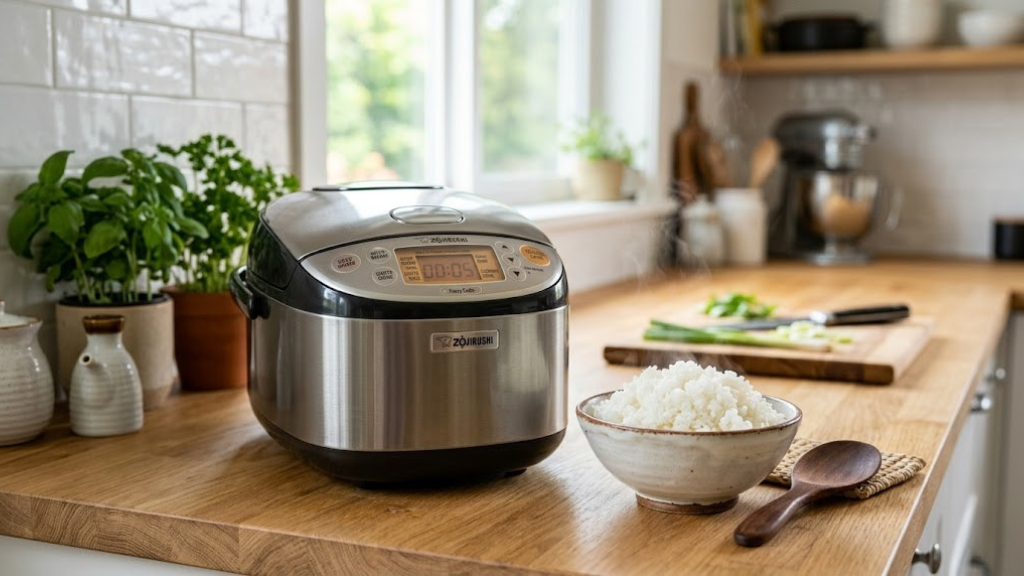
The texture differences are not subtle. A high-end Zojirushi IH cooker with a Neuro Fuzzy algorithm produces rice with a fundamentally different character than a basic single-switch cooker at a quarter of the price — fluffier, more individual grains, better aroma, and a precisely engineered texture that can be adjusted by program selection. For households that eat rice several times a week, these differences genuinely improve daily life. For the occasional rice eater, a $40 model does the job fine.
This buying guide helps you figure out which of those two camps you’re in — and what to look for at every point on the price spectrum. We cover the different heating technologies, how to match capacity to your household, which features actually matter versus which are marketing fluff, the best brands at each price tier, and everything else you need to buy with confidence the first time.
1. Why Buy a Dedicated Rice Cooker at All?
This is the first question worth answering honestly, because a rice cooker is a dedicated appliance that takes up counter or cabinet space and requires a budget allocation. If you only eat rice occasionally and cook it passably on the stovetop already, a rice cooker may not change your life in any meaningful way. But if you eat rice regularly — several times a week or more — a rice cooker’s advantages over stovetop cooking are substantial.
The Set-and-Forget Convenience
Stovetop rice requires attention. You bring it to a boil, reduce heat at the right moment, watch that it doesn’t boil over, check that it doesn’t burn, and time the rest, then wait for it to steam off. Get distracted for a few minutes and the bottom burns or the top remains undercooked. A rice cooker eliminates all of that mental load entirely. You add the right amount of water, press one button (or select a program), and the machine handles everything — including automatically switching to keep-warm mode when done. This isn’t a minor convenience; it frees up significant cognitive bandwidth during meal preparation.
Consistency That Stovetop Can’t Match
Even experienced cooks acknowledge that stovetop rice has more variability than machine-cooked rice. The exact flame height, the age and type of pan, the altitude, and minor variations in water measurement all affect the outcome. A quality rice cooker with a calibrated sensor and precise heating cycle produces the same result every single time, regardless of how distracted you are or how your gas pressure fluctuates. For households where rice is a staple, that consistency has real quality-of-life value.
Energy Efficiency
Rice cookers use less energy than boiling a large pot of water on a gas or electric stove for the full cooking duration. The insulated inner pot retains heat efficiently, and the switch from cooking to keep-warm mode dramatically reduces energy draw. For households cooking rice multiple times per week, the energy savings over time are genuinely meaningful.
Versatility Beyond Rice
Modern mid-range and premium rice cookers are significantly more versatile than their name suggests. A quality fuzzy logic cooker can steam vegetables and fish in a separate steamer basket while rice cooks below, prepare congee and porridge, cook oatmeal and grains like quinoa and millet, and some models even bake cakes and slow-cook stews. Understanding this versatility changes the value calculation — it’s not just a rice machine, it’s a kitchen appliance with genuine range.
2. Types of Rice Cookers: An Overview of the Market
Before comparing brands or features, it helps to understand the structural categories of rice cookers, because different types serve fundamentally different needs and price points.
Basic / Conventional Rice Cookers
The simplest rice cookers operate on a single mechanical switch: the switch is pushed down (cook) and when the temperature inside reaches approximately 100°C — signaling that all the water has been absorbed — a bimetal strip releases the switch, popping it up to the warm position. That’s the entire mechanism. There are no sensors, no microprocessors, no programs. These machines typically cost $20–$40 and do an adequate job with white rice under normal conditions. They’re not well-suited to brown rice, sushi rice, or multi-grain blends, and their keep-warm function runs hot, eventually drying out rice over time.
Fuzzy Logic Rice Cookers
Fuzzy logic cookers contain a microcomputer that monitors temperature throughout the cooking process and adjusts heating cycles based on what it senses. The “fuzzy logic” terminology comes from the control algorithm that processes imprecise sensor data (actual vs. ideal temperature, rate of change, external conditions) to make fine adjustments that a simple on/off switch cannot make. These cookers typically have multiple programs for different rice types, a keep-warm function that monitors and maintains ideal temperature rather than just applying constant heat, and often include a delay timer and quick-cook option. Price range: $50–$200.
Induction Heating (IH) Rice Cookers
Induction heating cookers generate heat electromagnetically within the inner pot itself rather than from a hot plate below it. This produces faster, more even heating and allows for much more precise temperature control throughout the cooking process. The entire pot heats simultaneously rather than from the bottom up, producing more evenly cooked rice. IH cookers are almost always combined with fuzzy logic AI for maximum control. They’re significantly heavier than conventional cookers due to the electromagnetic coil components. Price range: $150–$400+.
Pressure Rice Cookers
Pressure rice cookers combine pressure cooking with rice-specific programming to cook rice at temperatures above 100°C (typically 110–120°C). The elevated temperature produces a different grain texture — slightly softer, stickier, and with more pronounced aroma — that is particularly prized in Korean cuisine. Cuckoo and Instant Pot are the most common brands in this category. Pressure rice cookers handle brown rice exceptionally well because the pressure penetrates the bran layer more effectively. Price range: $80–$300+.
Micom (Microcomputer) Cookers
Micom is simply another term for a fuzzy logic or microcomputer-controlled cooker — the terms are used interchangeably across different brands. Zojirushi’s “Micom” series, for example, uses fuzzy logic control without induction heating, while their “IH” series adds induction heating to the microcomputer control. It’s a marketing terminology distinction rather than a meaningful technical one beyond those specific brand naming conventions.
3. Cooking Technologies Explained: What Actually Matters
The technology inside a rice cooker determines more about the quality of results than any other single factor — more than capacity, more than brand, more than price in isolation. Understanding the technology helps you match the right machine to your actual needs.
How Conventional Heating Works (and Where It Falls Short)
In a conventional rice cooker, a resistive heating element beneath the inner pot applies heat at a fixed wattage. When the internal temperature sensor detects the characteristic temperature spike that occurs once all free water has been absorbed (water’s boiling point is 100°C; without free water, temperature rises rapidly), the switch trips from cook to warm mode. The problem is that this detection method is imprecise — it can’t distinguish between properly cooked rice that’s ready and rice that’s cooked unevenly but has simply absorbed surface water. It also can’t adapt to different grain types, different water ratios, or altitude variation.
Fuzzy Logic: The Meaningful Middle Ground
A fuzzy logic cooker’s microcomputer monitors temperature at multiple points throughout the cooking cycle and adjusts the heating element’s duty cycle based on what it measures. If the temperature is rising too fast (risk of burning), it reduces heat. If it’s rising too slowly (possible undercooked result), it extends the cooking cycle. It can apply programmed algorithms specific to each grain type — white rice requires a different temperature profile than sushi rice or brown rice — and it monitors the keep-warm phase to maintain ideal serving temperature rather than just applying constant heat. The results are measurably better than conventional heating, particularly for non-white rice types.
Induction Heating: The Precision Difference
IH rice cookers solve one of the fundamental limitations of both conventional and fuzzy logic cookers: uneven bottom-heating. When heat comes from a hot plate below, the bottom of the inner pot is always hotter than the sides and top. Grains at the bottom cook slightly differently (and more quickly) than grains in the middle of the pot. With induction heating, the entire inner pot wall heats simultaneously and uniformly, producing more even cooking throughout. When combined with fuzzy logic AI that has been refined over decades of Japanese rice science, the results are genuinely exceptional — this is what premium IH cookers deliver that cheaper models simply cannot replicate.
AI and Multi-Stage Cooking Algorithms
Modern premium Japanese rice cookers contain increasingly sophisticated algorithms. Zojirushi’s “Artificial Intelligence” fuzzy logic distinguishes between short and long cooking cycles and adjusts accordingly. Tiger’s “Tacook” simultaneous cooking function monitors two separate cooking operations (rice and steam tray) and coordinates their completion. Panasonic’s “Diamond Fluorine” inner coating interacts with the AI heating algorithm to optimize texture. These are not marketing fluff — they represent decades of accumulated knowledge about rice cooking science expressed in software.
| Technology | White Rice | Brown Rice | Multi-Grain | Keep-Warm Quality | Price Range |
|---|---|---|---|---|---|
| Conventional | Adequate | Poor | Poor | Runs hot / dries out | $20–$40 |
| Fuzzy Logic (Micom) | Good | Good | Good | Stable, consistent | $50–$150 |
| Induction Heating (IH) | Excellent | Very Good | Very Good | Precise, ideal temp | $150–$400+ |
| IH + AI Fuzzy Logic | Outstanding | Excellent | Excellent | Best available | $200–$400+ |
| Pressure + Micom | Very Good | Excellent | Very Good | Good | $80–$300+ |

4. Choosing the Right Capacity: Don’t Over-Buy or Under-Buy
Rice cooker capacity is measured in “cups” of dry, uncooked rice — not the same as US standard liquid measuring cups. A Japanese “rice cup” (the standard used by most Asian rice cooker brands) equals 180ml of dry rice, which is approximately 0.75 US customary cups. This creates confusion when buyers apply standard cup measurements to rice cooker capacity ratings. Always think in terms of household servings rather than cup numbers when choosing capacity.
Capacity-to-Household Size Guide
| Cooker Capacity | Household Size | Dry Rice Yield | Cooked Rice (approx) | Best For |
|---|---|---|---|---|
| 3-cup | 1–2 people | ~540ml dry | ~3–4 servings | Singles, couples, small kitchens |
| 5–5.5-cup | 2–4 people | ~900–990ml dry | ~6–8 servings | Most households — the sweet spot |
| 8-cup | 4–6 people | ~1440ml dry | ~12–14 servings | Larger families, frequent meal prep |
| 10-cup | 6–8+ people | ~1800ml dry | ~16–20 servings | Large families, meal preppers, small catering |
The Minimum Fill Rule
One of the most commonly ignored but important guidelines for rice cookers is the minimum fill rule: never cook less than half the cooker’s minimum rated capacity. A 5-cup cooker designed to cook a minimum of 1 cup of rice will produce poor results with 0.5 cups — the water ratio, the sensor calibration, and the heating cycle are all designed around the minimum capacity. If you typically cook small amounts, buy a smaller cooker rather than a large one.
Capacity and Feature Availability
One important consideration is that premium features (IH heating, advanced AI fuzzy logic, multi-program selection) are almost always available on 5.5-cup models first — manufacturers develop these technologies for the most common household size. The same technology in 10-cup versions often costs significantly more. If maximum performance within budget matters more than capacity, a smaller premium model outperforms a larger basic model in every way except volume.
5. Inner Pot Materials: The Detail Most Buyers Skip
The inner pot is the component that directly touches your food, determines cleaning ease, affects cooking performance, and most directly correlates with how long the cooker remains functional. Budget cookers frequently cut costs here first, and the difference in pot quality between a $30 and a $100 rice cooker is immediately visible if you examine them side by side.
Non-Stick Coatings: What to Look For
The vast majority of rice cooker inner pots have a non-stick coating, and quality here varies significantly. Budget pots have thin single-layer non-stick coating that tends to scratch easily, chip with metal utensil contact, and degrade within 2–3 years of regular use. Premium Japanese cookers use multi-layer non-stick coatings with harder base materials — Zojirushi’s “Super Non-Stick Coating” and Panasonic’s “Diamond Fluorine” coating are measurably thicker and more durable.
Regardless of coating quality, always use wooden or silicone utensils inside the pot and wash with a soft sponge only. Metal spatulas, abrasive scrubbers, and dishwasher washing are the primary causes of coating failure, and once the coating starts to peel or flake, it’s time to replace either the pot or the cooker.
Stainless Steel Inner Pots
Some brands (notably Tiger on select models) offer stainless steel inner pots as an alternative to non-stick. Stainless steel is more durable, has no coating to degrade, and is dishwasher-safe. The tradeoffs are that rice sticks more easily (especially drier rice varieties), cleanup requires more effort, and the heat transfer properties are different from the non-stick aluminum pots that rice cooker algorithms are typically calibrated for. For buyers who want to avoid the non-stick coating concern entirely, stainless steel is a valid choice with appropriate cooking technique adjustments.
Inner Pot Thickness
Pot thickness directly affects heat distribution evenness. Budget pots are thin (1–2mm) and develop hot spots that can scorch the bottom layer of rice. Premium Japanese pots are typically 3–5mm with reinforced bases, producing more even heat distribution and better overall cooking results. When comparing models, the inner pot thickness and material are among the most meaningful spec differences.
Specialty Coatings Worth Knowing
Zojirushi’s Platinum Plus coating claims to release platinum nanoparticles during cooking that activate the sugars in rice, claiming to enhance sweetness and aroma. Cuckoo uses a bio-ceramic inner pot coating that claims superior heat retention. Panasonic’s Diamond Fluorine is their diamond-particle reinforced non-stick. These proprietary coatings do produce measurable differences in cooking results — the platinum and diamond coatings in particular have legitimate science behind their claimed effects on starch gelatinization.
✓ Non-Stick Advantages
- Easy food release with minimal oil
- Simple cleanup — rinses clean
- Rice cooker algorithms calibrated for it
- Better bottom crust (okoge) potential
- Available with premium coatings
✗ Non-Stick Disadvantages
- Coatings degrade over 3–5 years
- Vulnerable to metal utensil scratching
- Usually not dishwasher safe
- Requires replacement when coating fails
- Quality varies dramatically by price tier
6. Key Features: What Matters vs. What’s Marketing Fluff
Rice cookers have accumulated an impressive array of features over the decades, and not all of them are equally valuable to all buyers. Here’s an honest feature-by-feature assessment of what actually improves the cooking experience versus what’s primarily there to justify a higher price point.
Features That Are Mostly Marketing
Some features sound impressive but provide minimal practical benefit. “Smart connectivity” (Wi-Fi/app control) adds cost with minimal utility — you still have to physically load the cooker before starting it remotely. “Umami mode” on some models (which adds a soaking cycle before cooking) is legitimate science but produces differences most home cooks don’t notice. Capacity displays and “grain cycle indicators” are largely cosmetic. Focus your budget on technology tier (conventional vs. fuzzy logic vs. IH) and inner pot quality rather than feature count.

7. Matching Your Rice Cooker to the Rice You Actually Eat
Different rice varieties have fundamentally different cooking requirements — different water ratios, different temperature curves, different cook times, and different optimal textures. A rice cooker’s ability to handle your specific rice preferences is one of the most important matching criteria.
White Rice (Japanese Short-Grain)
This is what most rice cookers are primarily optimized for, and it’s what virtually all models handle competently. Short-grain Japanese-style rice (Calrose, Koshihikari) requires precise water absorption and a low-temperature steam finish for optimal texture. Budget conventional cookers do this adequately. Fuzzy logic cookers do it noticeably better. IH cookers do it exceptionally well.
Long-Grain White Rice (Jasmine, Basmati)
Long-grain varieties like Thai jasmine and Indian basmati require slightly different water ratios and cooking times than short-grain. Most fuzzy logic cookers have a dedicated long-grain or “regular” program that handles these well. Basic conventional cookers tend to produce gummy jasmine and overly soft basmati. If long-grain is your primary rice, fuzzy logic is a meaningful upgrade worth the price difference.
Brown Rice
Brown rice has an intact bran layer that requires significantly more water and longer cooking time than white rice. It’s where basic conventional cookers fail most clearly — the simple temperature-trigger mechanism doesn’t accommodate the extended cooking cycle. A fuzzy logic cooker with a dedicated brown rice program is the minimum requirement for reliably good brown rice; pressure cookers handle it exceptionally well because the elevated pressure penetrates the bran layer faster.
Sushi Rice
Sushi rice (short-grain cooked to specific texture for vinegared rice preparation) requires a very specific texture — slightly firmer than regular short-grain rice, with individual grains that hold together but separate easily. Premium Japanese IH cookers with dedicated sushi rice programs are designed for exactly this, and they produce results noticeably superior to general white rice settings.
Multi-Grain and Ancient Grains
Quinoa, farro, millet, barley, and other grains increasingly appear in modern diets, and a quality fuzzy logic or IH cooker with a multi-grain or “other grains” setting handles them with varying success. Quinoa in particular cooks very well in a fuzzy logic cooker with a dedicated setting. Barley and farro do well on the brown rice program. Pure specialty grain cooking is best handled by the stand-alone grain-cooking programs available on premium models.
Congee and Porridge
Congee (rice cooked with excess water to a porridge consistency, common throughout East and Southeast Asian cuisines) requires much more water than regular rice and a longer, lower cooking temperature. Most fuzzy logic cookers include a congee or porridge program. This is one of the most underrated features for buyers who enjoy this dish — making a perfect congee on the stovetop is time-consuming and requires constant monitoring; a rice cooker with a congee program does it hands-free and produces excellent results.
8. Budget Tiers: What You Get at Every Price Point
Understanding the meaningful jumps in quality at different price thresholds helps you avoid under-buying (expecting premium results from a budget machine) or over-buying (paying for features that won’t matter to your cooking habits).
- Conventional heating only
- Single-switch mechanical operation
- Good for white rice only
- Basic keep-warm (runs hot)
- Thin inner pot coating
- 2–4 year lifespan typical
- Best for: occasional rice eaters
- Fuzzy logic microcomputer
- Multiple grain programs
- Delay timer & steam tray
- Better keep-warm stability
- Quality inner pot coating
- 5–7 year lifespan typical
- Best for: regular home cooks
- IH heating + fuzzy logic
- 10+ cooking programs
- Advanced keep-warm
- Premium inner pot coating
- Detachable lid
- 7–10 year lifespan
- Best for: daily rice eaters
- IH + AI fuzzy logic
- Pressure cooking capability
- Platinum / diamond coatings
- 15+ programs with AI adjustment
- Altitude auto-correction
- 10+ year build quality
- Best for: daily rice + perfectionists
Where the Meaningful Jumps Are
The single biggest quality jump is from conventional to fuzzy logic — this is where the rice cooker transforms from a single-function appliance to a genuinely versatile kitchen tool. If you eat any rice type other than plain white rice regularly, this jump is non-negotiable.
The second meaningful jump is from fuzzy logic to IH heating — this is where you get genuinely outstanding white rice and perfect results with any grain type. The improvement is real and noticeable, but requires daily rice eating to justify the premium.
The jump from IH fuzzy logic to ultra-premium AI + pressure produces improvements that are increasingly marginal for most home cooks. This tier serves culinary enthusiasts and households where the absolute best bowl of rice every single day is a genuine priority.
9. Top Rice Cooker Brands: An Honest Comparison
The rice cooker market has a clear hierarchy of brands, and understanding where each brand excels (and where its limitations are) prevents expensive mismatches between expectation and reality.
| Brand | Origin | Best Technology | Price Range | Best For | Weakness |
|---|---|---|---|---|---|
| Zojirushi | Japan | IH + AI Fuzzy | $70–$400 | Premium white rice; versatile cooking | High price ceiling; size/weight |
| Tiger | Japan | IH + Micom | $60–$350 | Brown rice; Tacook simultaneous | Fewer programs than Zojirushi |
| Panasonic | Japan | IH + Diamond Coat | $80–$300 | Umami enhancement; durability | Less widely available outside Japan |
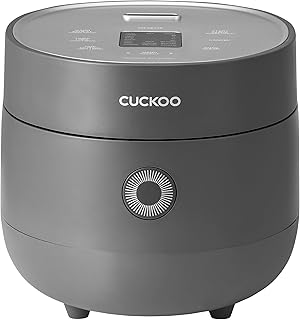
| Cuckoo | South Korea | Pressure + IH | $80–$300 | Brown rice; Korean-style sticky rice | Complex operation; noisier |
| Aroma | USA (mfg. China) | Fuzzy Logic | $30–$100 | Budget value; college/first apartment | Inner pot quality; shorter lifespan |
| Instant Pot | Canada (mfg. China) | Pressure + Rice mode | $80–$200 | Multi-purpose cooks; Instant Pot fans | Rice texture inferior to dedicated cooker |
| Hamilton Beach | USA (mfg. China) | Conventional | $20–$50 | Budget white rice; simplicity | Limited to white rice; basic keep-warm |
| Toshiba | Japan | IH + Micom | $80–$200 | Japonica rice enthusiasts; compact size | Limited availability; fewer programs |
The Zojirushi Benchmark
Zojirushi occupies a unique position in the rice cooker market — they are simultaneously the most copied and the most recommended brand at the premium tier. Their engineering is genuinely excellent, their build quality is exceptional (replacement inner pots are sold separately and last a decade), and their cooking results are consistently ranked best-in-class by both home users and culinary professionals. If you’re buying one premium rice cooker you intend to use for 10 years, Zojirushi is the right answer for most buyers.
Tiger’s Differentiation: The Tacook System
Tiger differentiates itself from Zojirushi primarily through the Tacook simultaneous cooking function — a stainless tray that sits above the rice in a specifically designed inner pot, allowing a complete dish (protein + vegetables) to cook in the steam above the rice simultaneously. The concept is compelling for weeknight cooking efficiency: one appliance, one cooking cycle, a complete meal. The results are good, not exceptional — steaming isn’t the ideal cooking method for all proteins and vegetables — but the convenience factor is genuine.
Cuckoo: The Brown Rice Champion
If your primary concern is brown rice — and particularly if you eat the short-grain brown rice common in Korean and macrobiotic diets — Cuckoo’s pressure-cooking IH models deserve serious consideration. The elevated pressure produced in Cuckoo’s pressure rice cookers penetrates the bran layer of brown rice far more effectively than conventional or even fuzzy logic heating, producing brown rice that is genuinely comparable in texture to premium white rice from a conventional cooker. For committed brown rice eaters, this is a meaningful technical advantage.
10. Rice Cooker vs. Alternatives: Honest Comparison
Before committing to a dedicated rice cooker, it’s worth honestly considering the alternatives — not to talk yourself out of the purchase, but to make an informed decision about whether a rice cooker or a multi-function alternative better serves your specific kitchen situation.
Rice Cooker vs. Instant Pot / Pressure Cooker
The Instant Pot’s rice function is adequate — better than stovetop for consistency, but notably different in texture from a dedicated rice cooker’s output. Pressure-cooked rice tends to be slightly stickier and denser than rice cooker rice, with a chewier texture. For households where rice is one of many cooking uses for an Instant Pot, the tradeoff is acceptable. For households that primarily want great rice every day, a dedicated rice cooker produces superior results at equal or lower cost. The Instant Pot wins for multi-function versatility; the rice cooker wins for rice quality.
If you’re already invested in a stand mixer or food processor for kitchen prep work, the same logic applies — purpose-built tools do their specific job better than multi-function alternatives. Our food processor comparison guide explores a similar question about when specialized tools justify their cabinet footprint.
Rice Cooker vs. Stovetop
Experienced cooks who have perfected stovetop rice technique will argue (correctly) that great stovetop rice is possible. The honest counterpoint is that stovetop rice requires consistent attention, is more variable, can’t be timed automatically, and occupies a burner during cooking. A rice cooker liberates the stovetop, eliminates attention requirements, and produces equal or better results with less skill required. For daily rice cooking, this is almost always the right trade.
Rice Cooker vs. Microwave
Microwave rice cookers (plastic vessels designed for microwave rice cooking) are a separate product category at a much lower price point ($10–$20). They produce adequate white rice with minimal fuss and take up very little storage space. For small households with limited counter space and budget, they’re a legitimate solution. They cannot match a dedicated rice cooker’s quality, versatility, or precision — but they’re not trying to. If space is the primary constraint, a microwave rice cooker is better than stovetop inconsistency.
Rice Cooker vs. Stand Mixer (For Cake / Bread Rice Cooker Hacks)
Some rice cookers are marketed with “bake cake” functionality — you can indeed make simple sponge cakes and steamed breads in premium rice cookers. This is a genuine feature, not a gimmick, but it’s a secondary use case rather than a primary selling point. If baking is a primary need, a dedicated stand mixer and oven combination produces far better results. For an in-depth look at baking equipment, the stand mixer reviews guide covers what to look for at every price point — a complement to the rice cooker for a fully equipped kitchen.
11. Maintenance and Care: How to Make Your Rice Cooker Last
A well-maintained rice cooker should last years beyond its expected lifespan; a poorly maintained one fails ahead of schedule with damaged coatings, clogged steam vents, and degraded heating elements. The maintenance required is minimal — but consistency matters.
Daily Care Routine
After every use: remove the inner pot while still warm (but not boiling hot) and wash with warm water and mild dish soap using a soft sponge. Never use abrasive pads, metal scourers, or harsh detergents — these damage non-stick coatings rapidly. Wipe the heating plate (the heating surface beneath the inner pot location) with a dry or barely damp cloth to remove any starch residue. Wipe the inner lid surface with a damp cloth. Allow the inner pot to air-dry completely before replacing — storing a wet pot inside a closed cooker creates an environment for mineral buildup and potential mold.
Weekly Deep Cleaning
Most modern rice cookers have removable condensation collectors or drip trays — small cups or trays that collect steam condensation during cooking. Empty and wash these weekly; neglected condensation collectors develop odors and can contaminate rice with off-flavors. Remove the steam vent cap (usually a twist or pull mechanism on the lid) and wash separately — this component accumulates starch over time and can restrict steam flow if not cleaned, affecting cooking results. Most manufacturers label which components are dishwasher-safe — typically the steam vent cap, condensation tray, and steam tray, but not the inner pot itself.
Descaling for Mineral Buildup
In hard water areas, mineral deposits (calcium and magnesium) build up on the inner pot and heating plate over time. Descale every 2–3 months by filling the inner pot with a solution of equal parts water and white vinegar, running a cook cycle, then rinsing thoroughly. This dissolves mineral buildup without damaging coatings. Some manufacturers include descaling-specific instructions in their manuals for their specific models.
Prolonging Inner Pot Life
The inner pot’s non-stick coating is the most vulnerable component and the most expensive to replace (or the reason you need to replace the entire cooker when it fails on cheaper models). To maximize coating life: always use wooden, silicone, or plastic utensils inside the pot; never stack anything inside the pot during storage; always hand-wash only; and avoid extreme temperature changes (don’t run cold water on a hot pot). Premium Japanese manufacturers sell replacement inner pots separately for their models — a Zojirushi replacement pot costs $30–$60 and effectively extends the cooker’s life by another several years.
12. The Final Buying Checklist: Making Your Decision
With all the variables covered, here’s the distilled decision framework. Work through these questions in order and your ideal rice cooker becomes much clearer.
Rice Cooker Buying Decision Checklist
- How often do you eat rice? — Daily = invest in fuzzy logic or IH. Occasional = basic conventional works.
- What rice types do you eat? — White only = any tier. Brown / multi-grain = fuzzy logic minimum. All types = IH recommended.
- Household size? — 1–2 people: 3-cup. 2–4 people: 5.5-cup. 4+: 8–10 cup.
- Budget ceiling? — Under $40: conventional. $50–$100: entry fuzzy logic. $100–$200: premium fuzzy/IH. $200+: IH + AI.
- Do you want a delay timer? — If yes, skip conventional models entirely.
- Do you want steam cooking? — Look for included steam tray on mid-range and above.
- Brown rice a priority? — Fuzzy logic minimum; consider Cuckoo pressure model for exceptional results.
- Lifespan expectation? — 5+ years: buy Japanese brand fuzzy logic minimum. 10+ years: buy IH model.
- Hard water area? — Descale regularly; stainless steel inner pot is a good choice.
- Non-stick concerns? — Look for stainless inner pot option; or invest in a thick multi-layer coating from a premium brand.
- Counter space limited? — 3-cup models are significantly smaller. Consider if a multi-function appliance serves you better.
- Gift purchase? — Zojirushi Neuro Fuzzy 5.5-cup is the safe, well-received choice at any income level.
The Five Models That Cover Every Buyer
| Model | Price | Technology | Best For |
|---|---|---|---|
| Hamilton Beach 2-8 Cup | ~$25 | Conventional | Budget, occasional white rice, first apartment |
| Aroma ARC-914SBD 8-Cup | ~$50 | Fuzzy Logic | Mid-range value, brown rice, steam, delay timer |
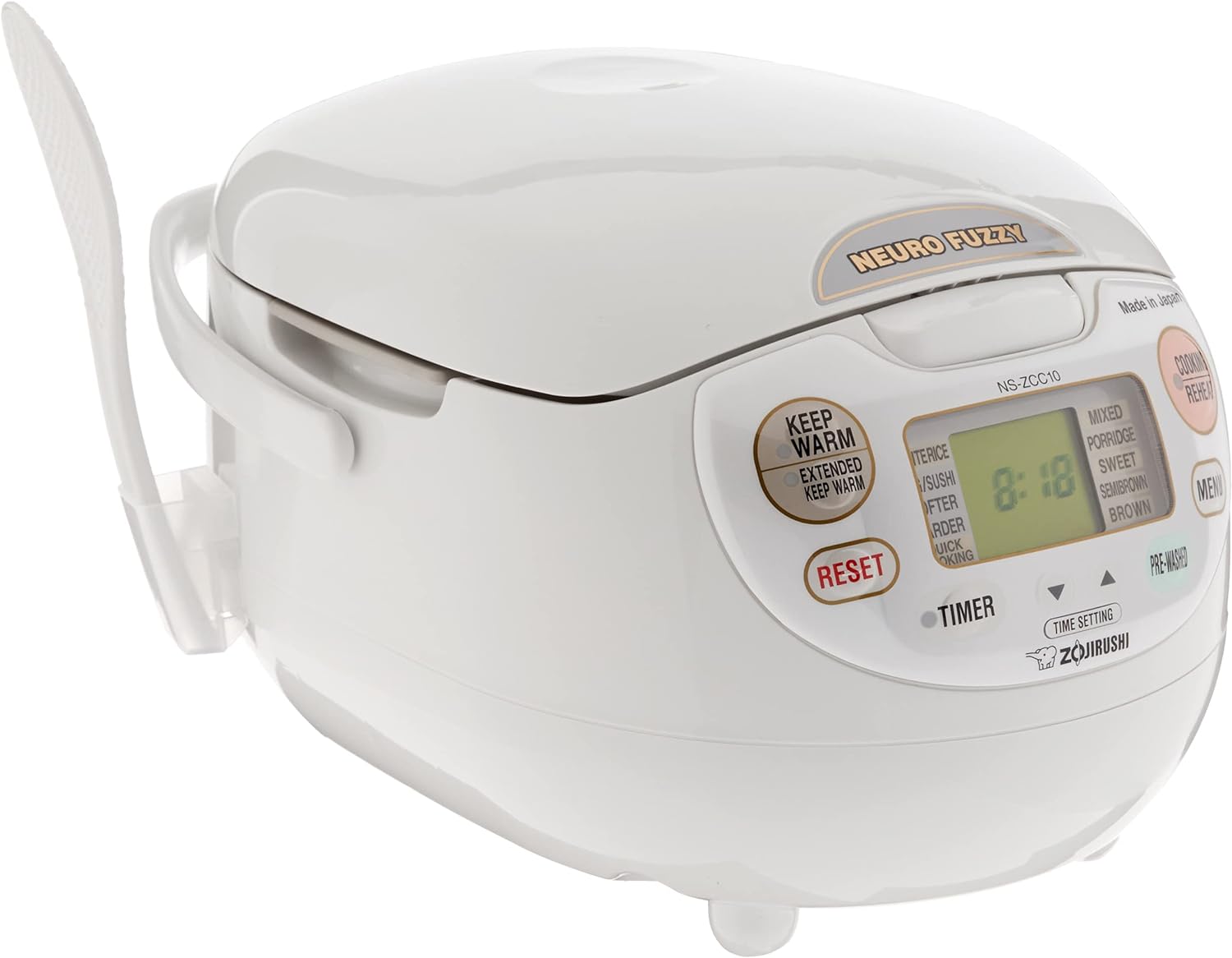
| Zojirushi NS-ZCC10 5.5-Cup | ~$110 | IH Micom | Daily rice, premium results, serious home cooks |
| Cuckoo CRP-P1009SW 10-Cup | ~$200 | IH Pressure | Brown rice specialists, Korean-style, larger families |
| Zojirushi NP-NVC10 5.5-Cup | ~$350 | IH + AI Fuzzy | Daily rice perfectionists, 10-year investment |
Frequently Asked Questions About Rice Cookers
Conclusion: The Right Rice Cooker Is One You’ll Use Every Day
A rice cooker is one of those appliances where the decision to buy the right one — rather than the cheapest one — pays off in daily quality of life for years. The difference between mediocre rice and excellent rice isn’t about chef skill when you’re using a machine. It’s entirely about the machine’s technology and how well it was designed.
The core recommendations from this guide are simple to summarize:
- Eat rice daily? Buy at least a fuzzy logic cooker ($50+) and ideally an IH model ($100+). The daily quality difference justifies every dollar.
- Eat rice occasionally? A basic $30–$40 conventional cooker handles white rice adequately. No need to over-invest.
- Primarily eat brown rice? Prioritize fuzzy logic or pressure cooking (Cuckoo) over the basic tier. Brown rice specifically rewards better technology.
- Want the best available? Zojirushi NP-NVC10 or equivalent IH + AI fuzzy logic model. Cook it with quality short-grain Japanese rice and you’ll understand why people spend this much on an appliance that does one thing.
The rice cooker is also the appliance that most rewards the habit of good cooking prep. Load it in the afternoon on a delay timer, press one button, and come home to perfectly cooked rice ready for whatever protein or vegetable you’re pairing with it. That simple kitchen routine, repeated hundreds of times across the life of a quality appliance, adds up to a genuinely better daily cooking experience — and that’s what a good buying decision looks like.
Ready to Find Your Perfect Rice Cooker?
Browse our curated picks by budget tier, or dive into our other appliance buying guides to build out your ideal kitchen setup.
Shop All Rice Cookers on Amazon Explore Our Food Processor Guide