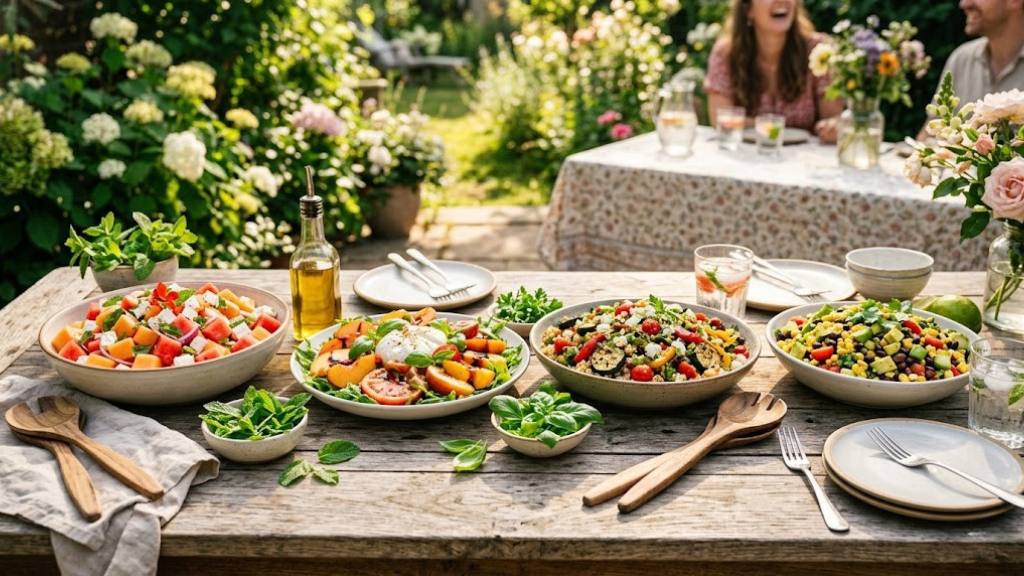
The Ultimate Guide to Summer Salads — Fresh, Healthy & Unforgettable Recipes for Every Table
From weeknight dinner bowls to showstopping party platters, these are the seasonal salad recipes your summer has been waiting for.
There is a moment every year, usually around late May, when the first truly warm evening arrives and a heavy dinner feels completely wrong. You open the fridge, see a pile of ripe tomatoes, a handful of herbs you bought on impulse, and half a watermelon — and suddenly the answer is obvious. You need a salad. Not a sad pile of iceberg with ranch on the side, but a real, proper, deeply satisfying summer salad that makes you wonder why you ever bothered turning on the oven.
That feeling is why this guide exists. Over the following pages, you will find everything you need to build incredible summer salads from the ground up — from the simplest five-minute side dishes to elaborate dinner centerpieces that will have your guests asking for the recipe. Whether you are looking for healthy salad recipes for everyday eating, cold make-ahead options for busy weeknights, fruit-studded creations for weekend brunches, or crowd-feeding bowls for your next backyard party, every single recipe and technique here has been designed around one idea: summer should taste effortless.
Along the way, we will cover seasonal ingredient sourcing, dressing ratios you can memorize and riff on forever, protein pairing strategies that turn a side dish into a satisfying main course, and practical storage advice that keeps your salads crisp for days. If you have ever tossed a soggy, lifeless salad in the trash and wondered what went wrong, those days end here.
Why Summer Salads Deserve the Spotlight in Your Kitchen
Salads occupy a strange position in the food world. People say they love them, yet most cooks treat them as afterthoughts — the thing you throw together when there is nothing else in the fridge. Summer has the power to change that entirely. When the produce available to you shifts from cold-storage root vegetables to vine-ripe tomatoes, sweet corn, juicy stone fruits, fragrant basil, and crunchy cucumbers, the salad stops being a side act and becomes the main event.
The Seasonal Advantage
There is a practical reason summer salads taste better than their winter counterparts, and it has nothing to do with your cooking skills. Fruits and vegetables picked during their natural growing season contain higher concentrations of sugars, volatile aroma compounds, and micronutrients compared to out-of-season produce shipped from distant greenhouses. A tomato in July is biochemically a different food than a tomato in January. That chemistry translates directly to flavor — and flavor means you need less dressing, less cheese, less of everything to make a salad taste exceptional.
This principle extends far beyond tomatoes. Summer zucchini is tender enough to eat raw in ribbons. Fresh sweet corn, sliced straight off the cob, carries a milky sweetness that no canned kernel can replicate. Peaches at peak ripeness have a floral quality that elevates a simple arugula salad into something restaurant-worthy. When your ingredients are already extraordinary, the salad practically assembles itself.
Nutritional Powerhouse
Beyond flavor, summer salads offer one of the most nutrient-dense meals you can put on a plate. A well-constructed salad with leafy greens, a variety of colorful vegetables, a lean protein, and a healthy fat provides fiber, vitamins A, C, K, and E, folate, potassium, magnesium, antioxidants, and phytochemicals in a form your body absorbs efficiently. Eating a large, diverse salad daily has been linked to improved gut microbiome diversity, reduced inflammation, and better long-term cardiovascular outcomes.
For people managing blood sugar, a salad built on a fiber-rich base with lean protein and healthy fats can significantly blunt postprandial glucose spikes compared to a carbohydrate-heavy meal. If you are following a structured eating plan — whether it is a low-carb menu or a more general wellness approach — summer salads make compliance feel effortless rather than restrictive.
Speed and Simplicity
Most summer salads take less time to prepare than it takes to preheat an oven. The majority require no cooking at all. Even the more elaborate recipes in this guide — the ones with grilled proteins, toasted nuts, and homemade dressings — can be on the table in under 30 minutes. On the hottest evenings of the year, when the thought of standing over a stove makes you question every life choice, a 10-minute dinner salad is an act of culinary self-care.
The Social Factor
Salads are inherently shareable. A big bowl of vibrant, colorful food is visually inviting in a way that few other dishes can match. When you show up at a barbecue with a stunning watermelon-feta-mint salad or a Mediterranean orzo packed with sun-dried tomatoes and olives, people notice. Great summer salads start conversations, and they pair beautifully with everything else on the grill table — from perfectly grilled burgers to smoked meats that have been slow-cooked all afternoon.

OXO Good Grips Large Salad Spinner
The single most important salad tool — dry greens mean dressing actually clings instead of pooling at the bottom of the bowl. This model fits a full head of lettuce.
Check Price on Amazon →Essential Ingredients for the Best Summer Salads Ever
Before diving into specific recipes, it helps to understand the building blocks. Every memorable salad, from the simplest side dish to the most elaborate dinner centerpiece, follows a basic architectural framework. Once you internalize this framework, you will stop needing recipes for most salads and start improvising confidently based on whatever looks best at the market.
The Base: Greens and Grains
Your base sets the tone for the entire salad. Leafy greens bring freshness and bulk with minimal calories. Grains and pastas add substance and make a salad filling enough for a meal. Many of the best summer salad recipes use a combination of both.
For leafy bases, baby spinach is the universal crowd-pleaser — mild enough to pair with anything, tender enough to eat without chopping, and nutritionally dense. Arugula brings a peppery bite that stands up to bold flavors like goat cheese, balsamic vinegar, and grilled stone fruit. Romaine hearts give you crunch and structural integrity for composed salads and wraps. Mixed spring greens offer visual variety and a spectrum of mild, sweet, and slightly bitter flavors. Butter lettuce is silky and delicate, ideal for lighter dressings and Asian-inspired preparations.
For grain and pasta bases, quinoa cooks in 15 minutes and provides complete plant protein. Farro has a satisfying chewy texture that holds up in make-ahead salads. Orzo and small pasta shapes absorb dressing beautifully for pasta salad applications. Bulgur wheat requires only soaking, making it ideal for tabbouleh-style salads when you want zero cooking. Couscous, particularly the pearl variety, is quick and versatile.
The Crunch Factor
Texture contrast is what separates forgettable salads from ones you crave. Every salad needs at least one crunchy element: toasted nuts or seeds (almonds, pecans, walnuts, pepitas, sunflower seeds, sesame seeds), raw vegetables (radishes, cucumbers, bell peppers, celery, jicama, snap peas), croutons or toasted bread, crispy shallots or fried garlic, or crumbled tortilla chips for Tex-Mex preparations.
The Creamy Component
Creaminess provides richness and makes a salad feel satisfying rather than sparse. Avocado is the reigning champion here — a ripe avocado turns any collection of vegetables into a meal. Other creamy options include soft cheeses (goat cheese, burrata, fresh mozzarella, ricotta), hard-boiled or jammy eggs, tahini-based dressings, and hummus dolloped in generous spoonfuls.
The Acid
Acidity is what makes a salad taste alive. Without it, even the freshest ingredients taste flat. Vinaigrettes provide acid through vinegar (red wine, apple cider, sherry, balsamic, rice wine) or citrus juice (lemon, lime, orange, grapefruit). Pickled vegetables — quick-pickled red onions, cornichons, pickled jalapeños — add targeted bursts of brightness. Fresh tomatoes contribute natural acidity alongside their sweetness.
The Sweet Element
A touch of sweetness balances acidity and brings out the natural flavors of summer produce. Fresh fruit is the most natural option (berries, stone fruits, mango, watermelon, citrus segments, figs, grapes). Dried fruit works when fresh isn’t available or when you need a more concentrated sweetness — cranberries, cherries, apricots, and golden raisins are salad staples. A small amount of honey, maple syrup, or agave in a vinaigrette accomplishes the same goal.
The Savory Anchor
Umami-rich, savory ingredients keep a salad from tasting too light or one-dimensional. Aged Parmesan shaved over a salad, sun-dried tomatoes, olives, capers, anchovies in a Caesar dressing, smoked salmon, prosciutto, or a well-seasoned grilled protein all serve this purpose. Even a generous pinch of flaky sea salt and freshly cracked black pepper brings out savory depth.
| Element | Role in Salad | Best Summer Options | Common Mistakes |
|---|---|---|---|
| Base | Volume, structure, foundation | Arugula, spinach, romaine, quinoa, farro | Using only iceberg; not drying greens |
| Crunch | Textural contrast | Toasted pecans, radishes, cucumbers, pepitas | Skipping crunch entirely; adding croutons too early |
| Creamy | Richness, satisfaction | Avocado, burrata, goat cheese, eggs | Overdoing cheese; using unripe avocado |
| Acid | Brightness, balance | Lemon, lime, vinegar, pickled onion | No acid at all; drowning in dressing |
| Sweet | Flavor rounding | Berries, peaches, mango, dried cranberries | Adding sugar to dressing instead of using fruit |
| Savory | Depth, umami | Parmesan, olives, grilled chicken, bacon | Under-seasoning; bland protein |
Herbs: The Secret Weapon
Fresh herbs transform a good salad into an extraordinary one. In summer, you have access to the full herb garden: basil (sweet or Thai), cilantro, mint, dill, chives, flat-leaf parsley, and tarragon. Use them generously — not as a garnish sprinkle but as a full ingredient. A salad with half a cup of torn basil leaves and a quarter cup of mint tastes dramatically different from the same salad without herbs. The essential oils in fresh herbs provide aroma that your nose perceives before the first bite even reaches your mouth, priming your palate for flavor.

Lipper International Acacia Wood Salad Bowl Set
Generous 12-inch bowl with matching serving hands — beautiful enough for the table, functional enough for tossing big batch salads.
Check Price on Amazon →Fresh Salad Recipes Bursting with Seasonal Flavor
Freshness is the defining quality of a summer salad. These recipes lean heavily on raw, peak-season produce prepared simply to let natural flavors shine. Each one is designed to be assembled quickly and served immediately, capturing that just-picked vibrancy that makes warm-weather eating so pleasurable.
Classic Caprese Salad with a Twist
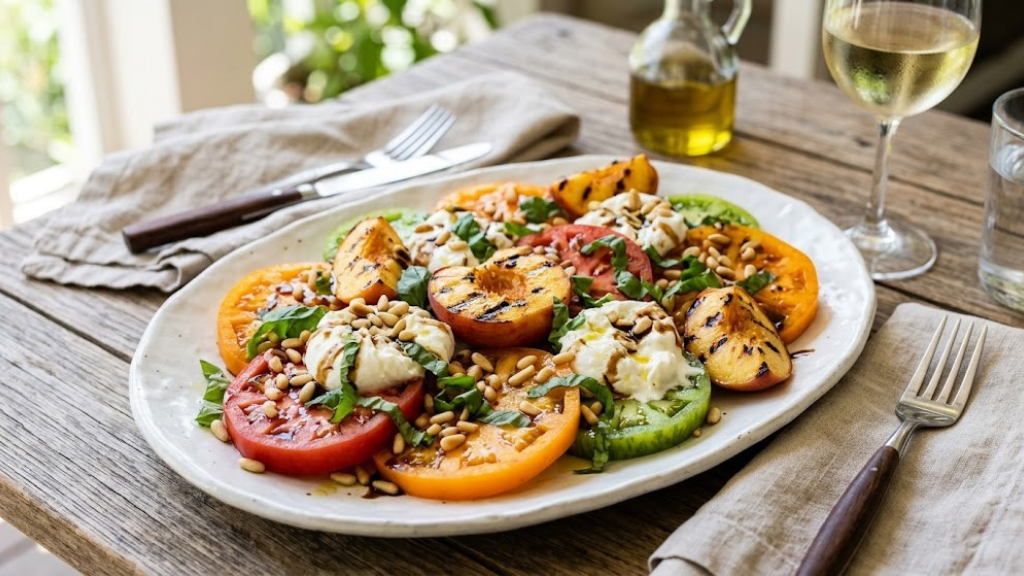
The traditional Italian combination of tomatoes, mozzarella, and basil is near-perfect as written, so the goal here is not to reinvent it but to elevate it. Start with the best tomatoes you can find — heirloom varieties in multiple colors create a stunning visual. Use burrata instead of standard mozzarella for a more dramatic presentation: when you cut into it, the creamy interior spills out and creates its own sauce. Layer the tomato slices and torn burrata on a platter, scatter generously with fresh basil leaves, drizzle with excellent extra-virgin olive oil and aged balsamic, and finish with a generous pinch of flaky sea salt and coarsely cracked black pepper.
The twist: add thinly sliced ripe peaches or nectarines between the tomato layers. The stone fruit brings a honeyed sweetness that pairs beautifully with the milky burrata and the acidic tomatoes. A handful of toasted pine nuts adds crunch and nuttiness. This version turns a simple appetizer into a centerpiece salad that could anchor an entire summer dinner outdoors.
Heirloom Tomato & Burrata Caprese with Peaches
Ingredients: 2 lbs mixed heirloom tomatoes (sliced ¼ inch thick), 2 balls burrata (8 oz each), 2 ripe peaches (sliced), 1 cup fresh basil leaves, 3 tbsp extra-virgin olive oil, 2 tbsp aged balsamic vinegar, ¼ cup toasted pine nuts, flaky sea salt, cracked black pepper.
Method: Arrange tomato and peach slices alternately on a large platter. Tear burrata into large pieces and nestle among the fruit. Scatter basil and pine nuts. Drizzle with olive oil and balsamic. Season generously with salt and pepper. Serve immediately with crusty bread.
Garden Cucumber, Dill & Yogurt Salad
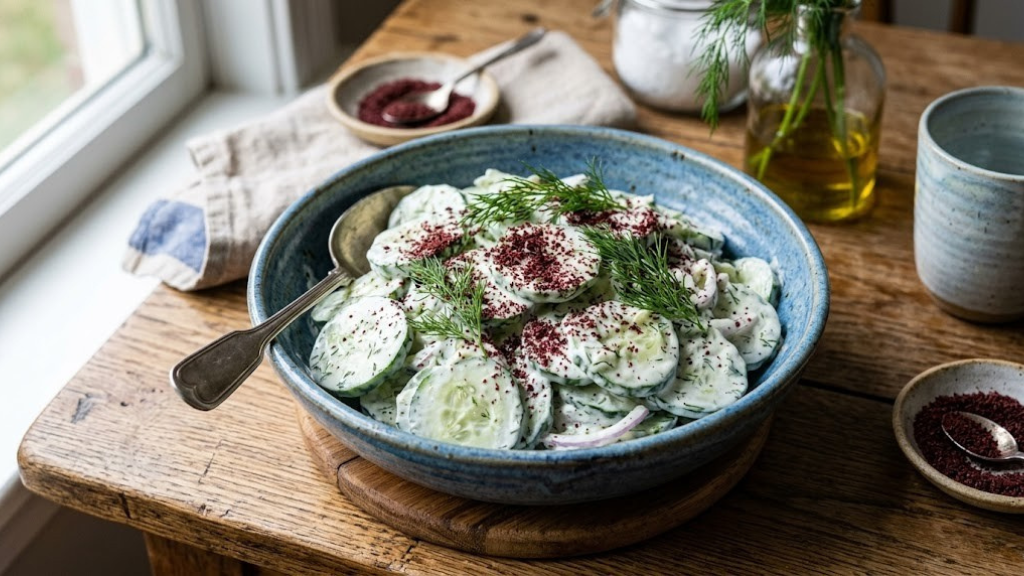
This salad sits somewhere between a salad and a sauce — cool, creamy, and impossibly refreshing on a hot day. English cucumbers or Persian cucumbers work best because they have fewer seeds and thinner skins. Slice them thinly, salt them lightly, and let them sit for 10 minutes. This draws out excess water so the salad stays crisp rather than becoming watery. Meanwhile, mix full-fat Greek yogurt with minced garlic, a squeeze of lemon juice, a generous handful of chopped fresh dill, and a drizzle of olive oil. Toss the drained cucumbers in the yogurt dressing and finish with a sprinkle of sumac or Aleppo pepper for color and a warm, citrusy heat.
This doubles as a side dish alongside grilled lamb, chicken, or fish, and it holds up surprisingly well for several hours in the refrigerator, making it an excellent choice for meal prep or party buffets.
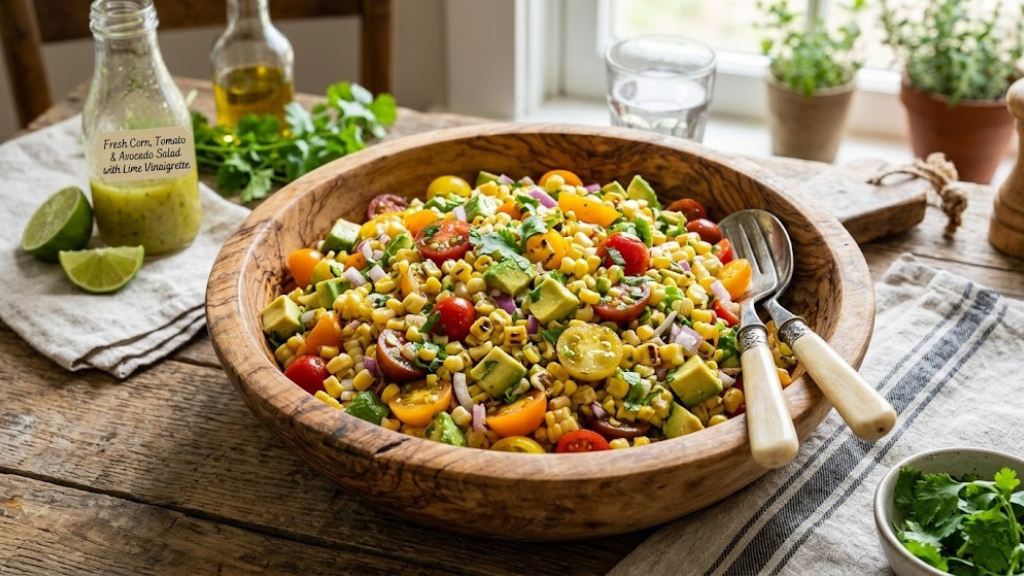
Corn, Tomato & Avocado Salad with Lime Vinaigrette
Few combinations say “summer” as clearly as sweet corn, ripe tomatoes, and creamy avocado. This salad works with raw corn cut straight off the cob (peak-season sweet corn needs no cooking) or grilled corn for a smoky dimension. Combine the corn kernels with halved cherry tomatoes, diced avocado, thinly sliced red onion, and chopped cilantro. Dress with a simple vinaigrette of lime juice, olive oil, a pinch of cumin, salt, and a tiny bit of honey. The lime brightens everything, the cumin adds warmth, and the honey smooths out any sharpness.
For a heartier version, fold in a can of rinsed black beans and crumbled cotija cheese. This turns the salad into a filling meal that also works as a dip with tortilla chips — a versatile preparation that straddles the line between salad, side dish, and appetizer.
Shaved Zucchini & Lemon Salad
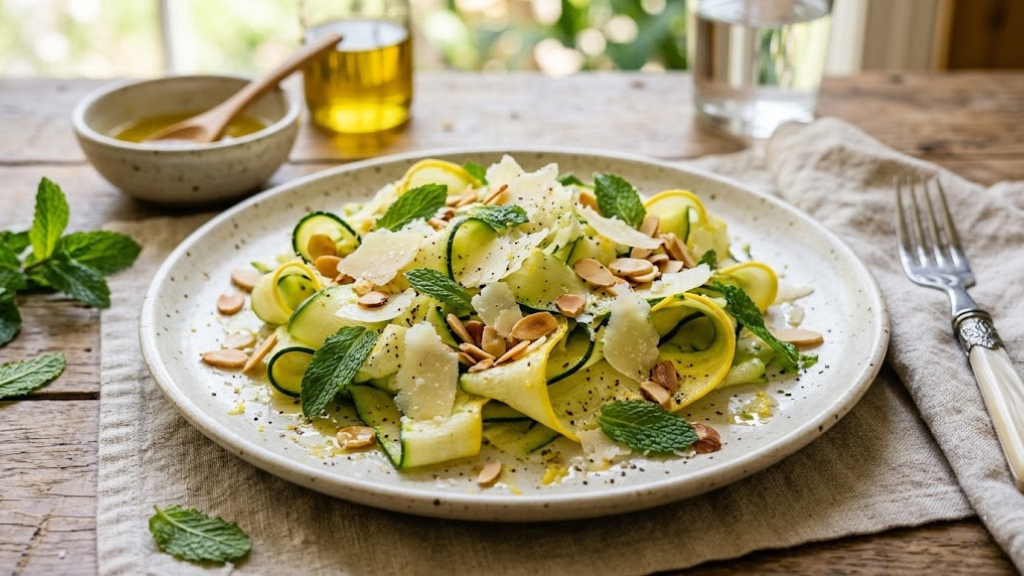
Raw zucchini might sound unappetizing if you have only ever eaten it cooked into mush, but thinly shaved summer zucchini is a revelation. Use a vegetable peeler or mandoline to create long, thin ribbons. Dress them immediately with lemon juice, good olive oil, salt, and pepper. The acid from the lemon softens the zucchini slightly, creating a tender-crisp texture similar to fresh pasta. Top with shaved Parmesan, toasted almonds, fresh mint, and a drizzle of extra olive oil. This salad is elegant enough for a dinner party and light enough to eat before a heavier main course.
Watermelon, Radish & Herb Salad
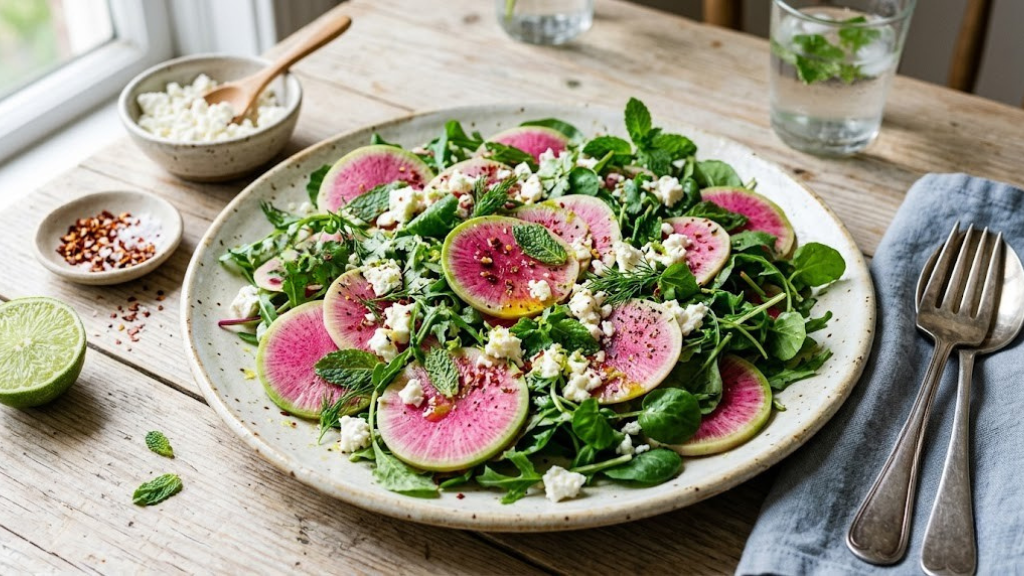
The juicy sweetness of watermelon against the peppery bite of thinly sliced radishes creates a flavor dynamic that is addictive once you try it. Cube the watermelon into bite-sized pieces, slice the radishes paper-thin on a mandoline, and toss both with fresh mint, a squeeze of lime, a small pinch of chili flakes, and a drizzle of olive oil. The unexpected combination of sweet, spicy, herbal, and acidic flavors makes this one of the most refreshing salads you can eat on a blazing afternoon. Crumbled feta cheese is an optional but highly recommended addition — the salty creaminess against the cold watermelon is a textural and flavor contrast that works brilliantly.

Benriner Japanese Mandoline Slicer
Paper-thin cucumber, radish, and zucchini slices in seconds. Essential for salads where uniformity and delicacy matter.
Check Price on Amazon →Healthy Salad Recipes That Actually Taste Amazing
The phrase “healthy salad” has suffered from years of association with joyless bowls of plain lettuce, dry chicken breast, and fat-free dressing that tastes like vinegar-flavored water. That era is over. A truly healthy salad should make you excited to eat it — and it should be nourishing enough to keep you satisfied for hours, not leave you raiding the pantry 45 minutes later.
The key to healthy salads that actually taste good is embracing healthy fats, using bold seasonings, and building layers of flavor rather than stripping everything away in the name of calorie reduction. A tablespoon of excellent olive oil, half an avocado, or a handful of toasted walnuts adds relatively modest calories but dramatically improves both taste and satiety. These additions also help your body absorb the fat-soluble vitamins (A, D, E, K) present in leafy greens and vegetables, making the salad more nutritionally effective.
Mediterranean Quinoa Power Bowl
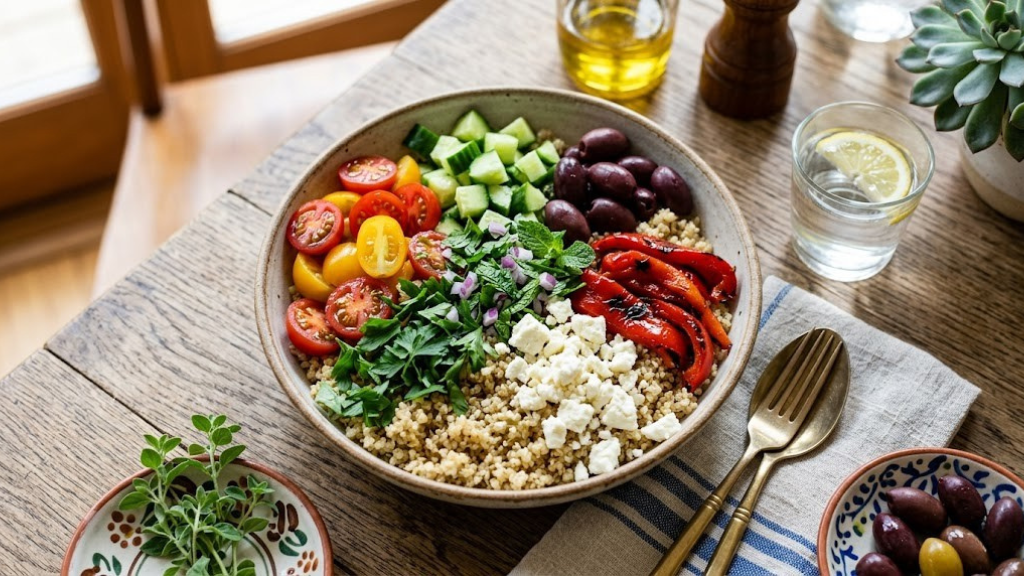
This is the salad that converts skeptics. Fluffy quinoa forms the base, topped with a colorful array of Mediterranean staples: diced cucumbers, halved cherry tomatoes, Kalamata olives, roasted red peppers, crumbled feta, and a generous shower of fresh parsley and mint. The dressing is a bold, punchy combination of lemon juice, olive oil, minced garlic, dried oregano, salt, and pepper. The result is a salad that tastes deeply savory and satisfying while being naturally high in fiber, plant protein, and antioxidants.
To make this a complete meal, add grilled chicken, baked falafel, or a few dollops of hummus. It keeps well in the refrigerator for up to three days, making it a meal-prep powerhouse for busy workweeks. The quinoa absorbs the dressing over time, so add an extra splash of lemon juice and olive oil when serving leftovers.
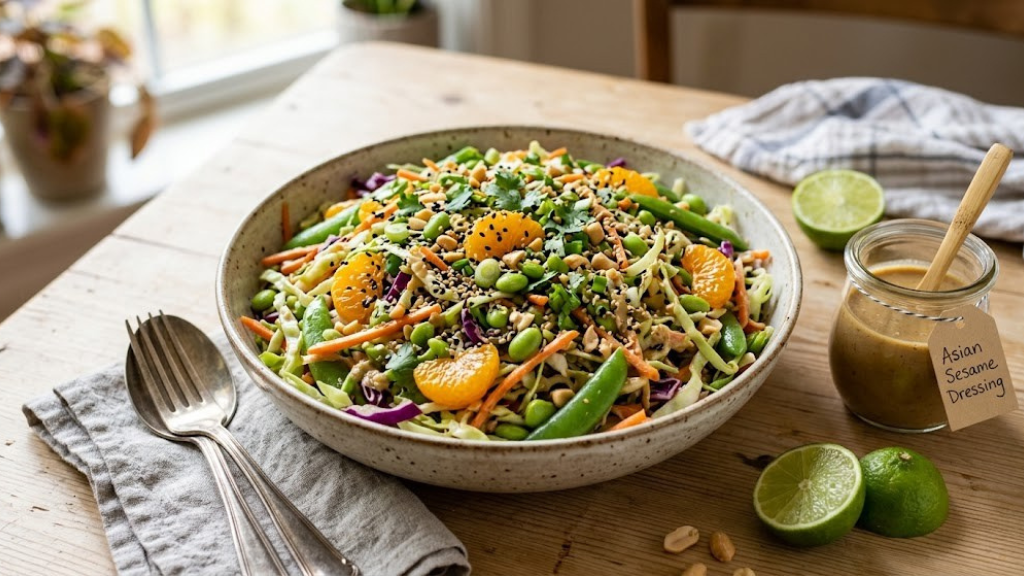
Asian Sesame Crunch Salad
Shredded cabbage (a mix of green and purple), julienned carrots, sliced snap peas, edamame, mandarin orange segments, and a tangle of thinly sliced scallions form the base. The dressing is the star: rice vinegar, low-sodium soy sauce, sesame oil, fresh ginger, garlic, and a touch of honey or maple syrup whisked together until emulsified. Pour it over the crunchy vegetables and toss with toasted sesame seeds and crushed roasted peanuts.
The magic of this salad is that cabbage holds its crunch for hours, making it one of the best make-ahead options in your healthy salad rotation. The shredded vegetables absorb the dressing’s flavors without wilting, so it actually tastes better the next day. For added protein, top with sliced grilled chicken, baked tofu, or a fried egg.
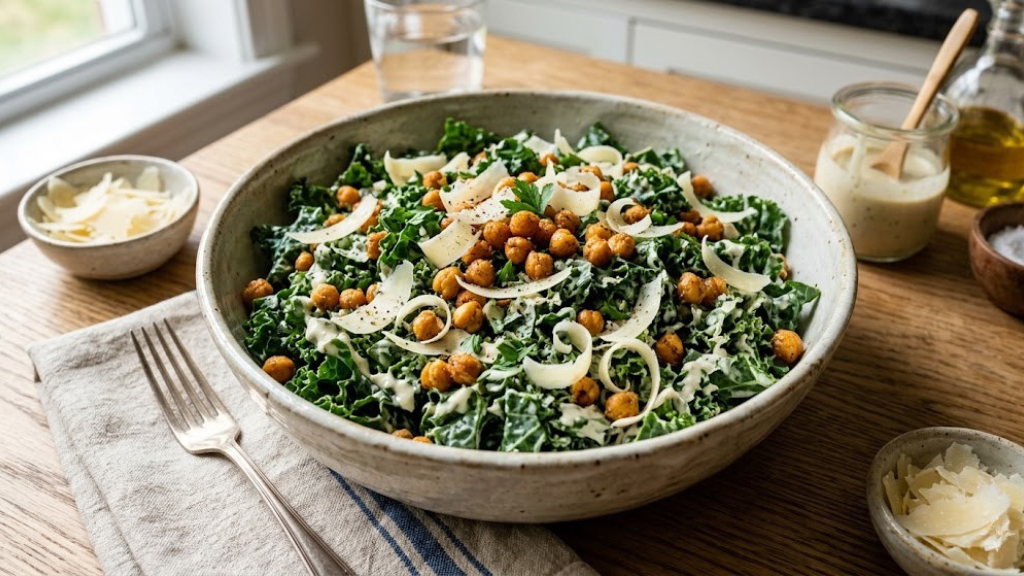
Kale Caesar with Chickpea Croutons
Kale Caesar has become a restaurant staple for good reason: the hearty leaves stand up to bold Caesar dressing without wilting, and the flavor improves as the kale softens slightly in the dressing. Tear lacinato (Tuscan) kale into bite-sized pieces, remove the tough center ribs, and massage the leaves with a small amount of olive oil and salt for about 60 seconds. This breaks down the fibrous cell walls and transforms raw kale from tough and bitter to tender and sweet.
For the Caesar dressing, blend together olive oil, lemon juice, Dijon mustard, garlic, anchovy paste (or a splash of Worcestershire for a milder version), and Parmesan. Toss with the massaged kale and top with crispy roasted chickpeas (tossed in olive oil, smoked paprika, and garlic powder, then roasted at 425°F until crunchy). The chickpeas replace traditional croutons with a gluten-free, protein-rich alternative that adds incredible crunch and flavor.
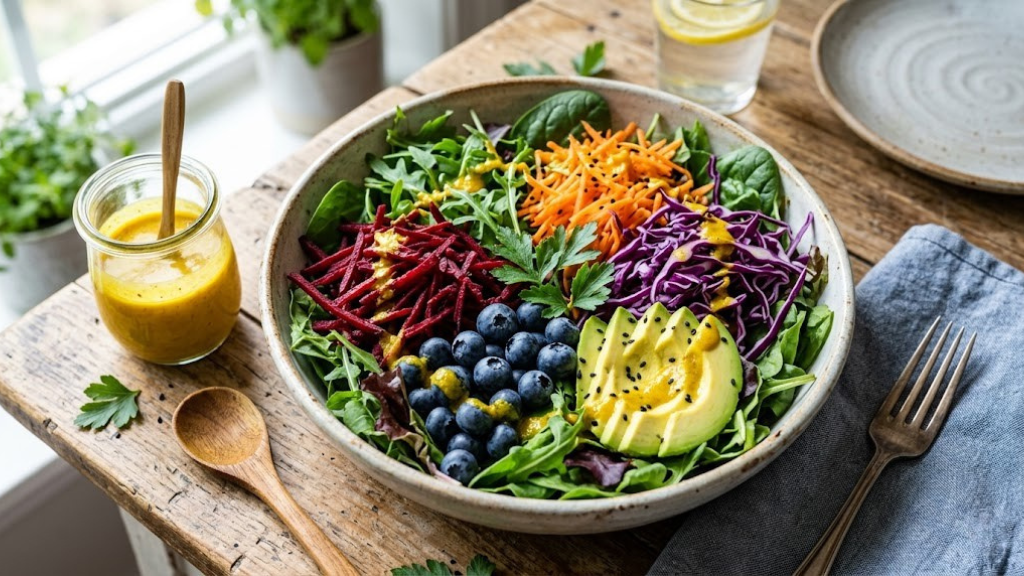
Rainbow Detox Salad
The concept here is simple: load as many colors onto one plate as possible, because color diversity in produce corresponds to nutrient diversity. Start with a base of mixed greens. Add shredded purple cabbage, grated raw beets, shredded carrots, diced yellow bell pepper, halved blueberries, sliced avocado, and a sprinkle of hemp seeds. The dressing is a turmeric-ginger vinaigrette made with apple cider vinegar, olive oil, fresh grated turmeric (or ground), fresh grated ginger, lemon juice, and a drizzle of honey.
This salad is not just Instagram-worthy — the combination of cruciferous vegetables, berries, healthy fats, and anti-inflammatory spices creates a genuinely functional meal that supports digestion, reduces inflammation, and provides a wide spectrum of vitamins and minerals.
Nutrient Density Comparison
| Salad Type | Calories (est.) | Protein | Fiber | Key Vitamins | Best For |
|---|---|---|---|---|---|
| Mediterranean Quinoa Bowl | 420 | 16g | 9g | C, K, Folate, Iron | Meal prep, lunch |
| Asian Sesame Crunch | 310 | 12g | 7g | A, C, K | Make-ahead, potlucks |
| Kale Caesar w/ Chickpeas | 380 | 18g | 10g | A, C, K, Calcium | Weeknight dinner |
| Rainbow Detox | 290 | 8g | 11g | A, C, E, K, Folate | Anti-inflammatory focus |
| Classic Side Salad | 120 | 3g | 3g | C, K | Quick accompaniment |
Salads for Parties: Crowd-Pleasers That Scale Effortlessly
The best party salads share three qualities: they can be made ahead, they travel well, and they look spectacular on a buffet table. A wilted bowl of dressed greens fails on all three counts, which is why the most successful party salads tend to fall into categories that avoid delicate leaves altogether — think grain salads, pasta salads, slaws, bean salads, and composed vegetable platters.
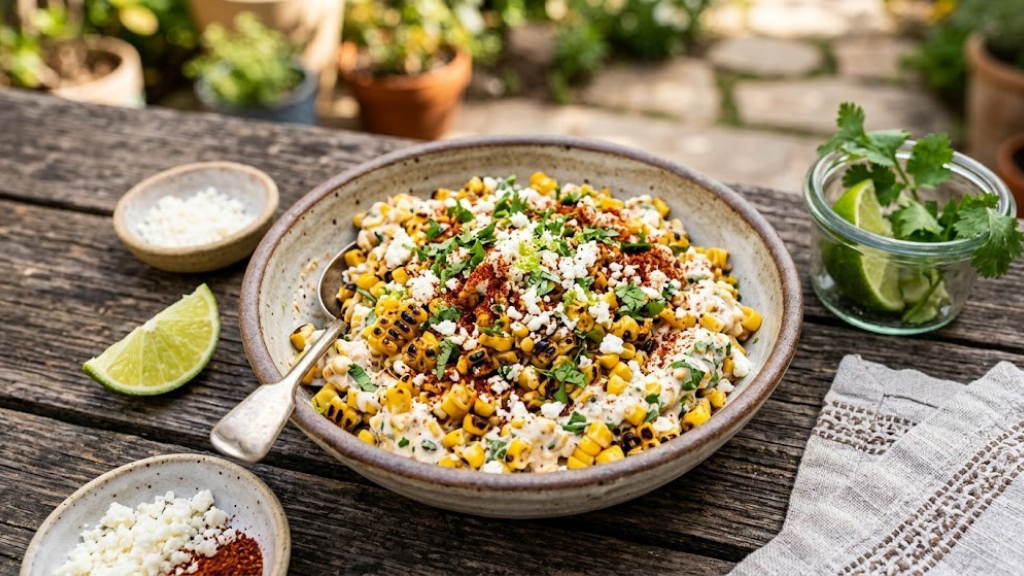
Mexican Street Corn Salad (Esquites)
This off-the-cob version of elote is one of the most popular party salads for good reason. It packs enormous flavor, travels perfectly, serves a crowd, and appeals to virtually everyone. Char corn kernels in a hot skillet or on the grill until they develop dark spots. Toss the charred corn with mayonnaise (or a mix of mayo and sour cream), lime juice, chili powder, smoked paprika, minced jalapeño, crumbled cotija cheese, and a big handful of chopped cilantro. Serve at room temperature or slightly chilled.
This recipe scales linearly — double, triple, or quadruple it without adjusting anything. Make it up to 24 hours ahead and store it in the refrigerator. Give it a stir and add a final squeeze of lime juice before serving to refresh the flavors. For an extra layer, add diced avocado just before serving.
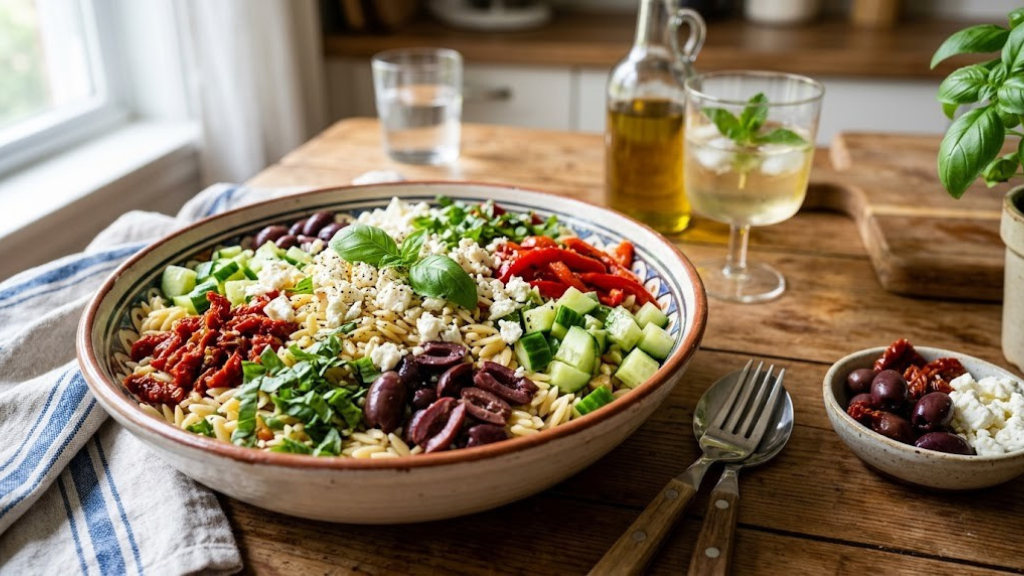
Mediterranean Orzo Salad
Orzo is the pasta shape specifically designed for salad applications. Its small, rice-like shape means every forkful contains a balanced distribution of ingredients. Cook the orzo just until al dente, rinse with cold water, and toss with a generous amount of olive oil to prevent sticking. Add diced cucumbers, halved grape tomatoes, diced red onion, Kalamata olives, roasted red peppers, artichoke hearts, crumbled feta, and a shower of fresh basil and oregano. Dress with a red wine vinaigrette seasoned with garlic and dried herbs.
This salad gets better over time as the orzo absorbs the vinaigrette, making it an ideal prepare-ahead option. It serves well on a buffet for hours without deteriorating. For gatherings where dietary restrictions vary, this recipe happens to be easily adaptable — swap the feta for dairy-free cheese, use gluten-free orzo, or add grilled chicken for meat eaters.
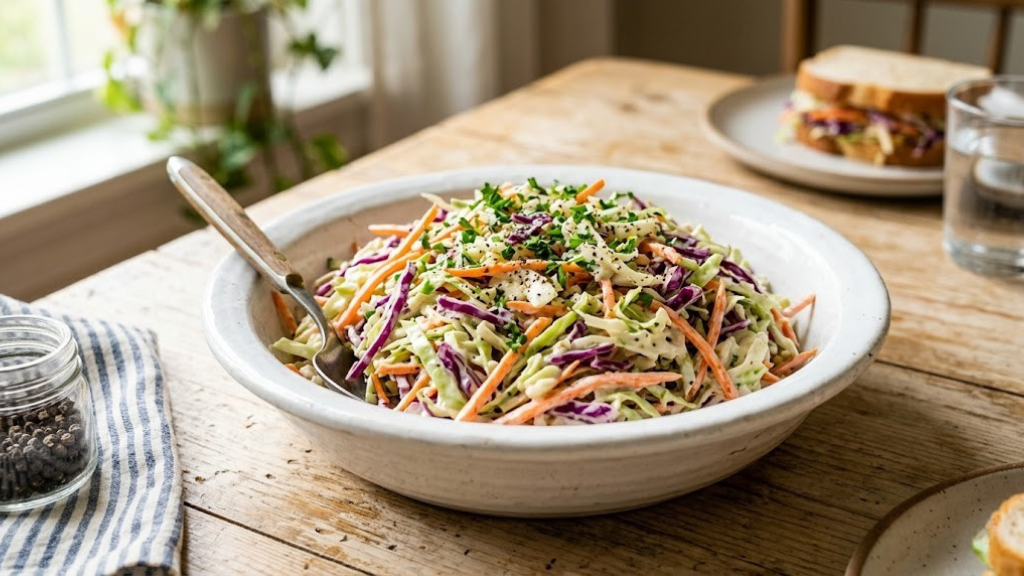
Classic Creamy Coleslaw
Every barbecue and cookout needs a great coleslaw, and this recipe delivers the ideal balance of creamy, tangy, and sweet. Combine shredded green cabbage, shredded purple cabbage, and grated carrots. In a separate bowl, whisk together mayonnaise, apple cider vinegar, Dijon mustard, sugar (just a tablespoon or two), celery salt, salt, and white pepper. Toss the vegetables with the dressing and refrigerate for at least one hour before serving — the cabbage softens slightly and absorbs the dressing’s flavors, developing a more rounded taste.
This coleslaw is the perfect accompaniment to barbecue of every kind — pulled pork, grilled chicken, smoked ribs, burgers. If you are serving it alongside food from the grill, you will want to make sure your equipment is in top shape with the right barbecue tools for the job.
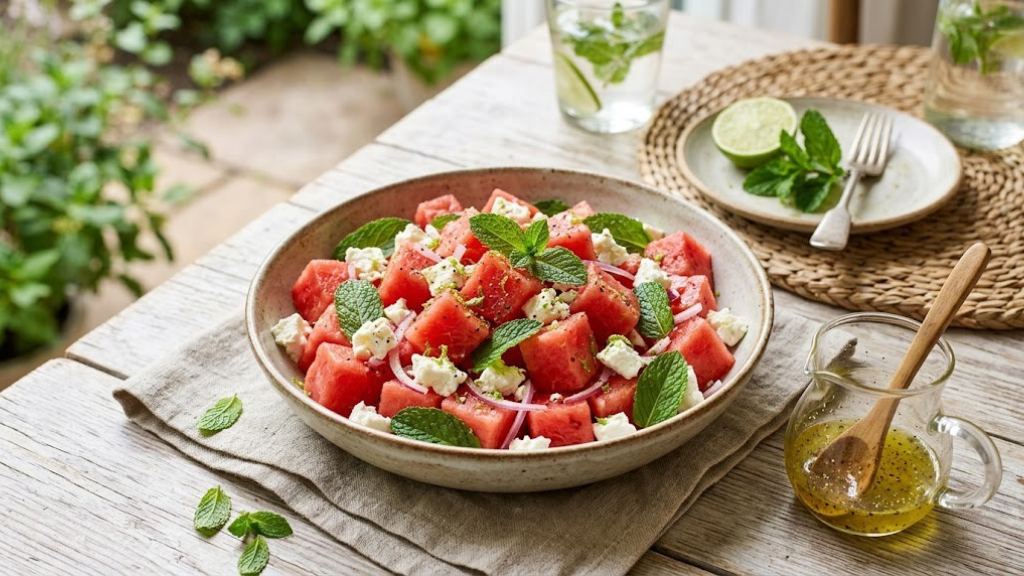
Watermelon, Feta & Mint Salad
For sheer visual drama, few party salads compete with a platter of ruby-red watermelon cubes scattered with snow-white feta, bright green mint, and glossy black olives. The flavor combination is extraordinary — sweet, salty, herbaceous, and slightly briny — and the cold watermelon on a hot day is universally appealing. Cube the watermelon, crumble the feta, tear the mint leaves, and dress lightly with olive oil, a squeeze of lime, and a pinch of flaky salt. Assemble no more than 30 minutes before serving to keep the watermelon from releasing too much juice.
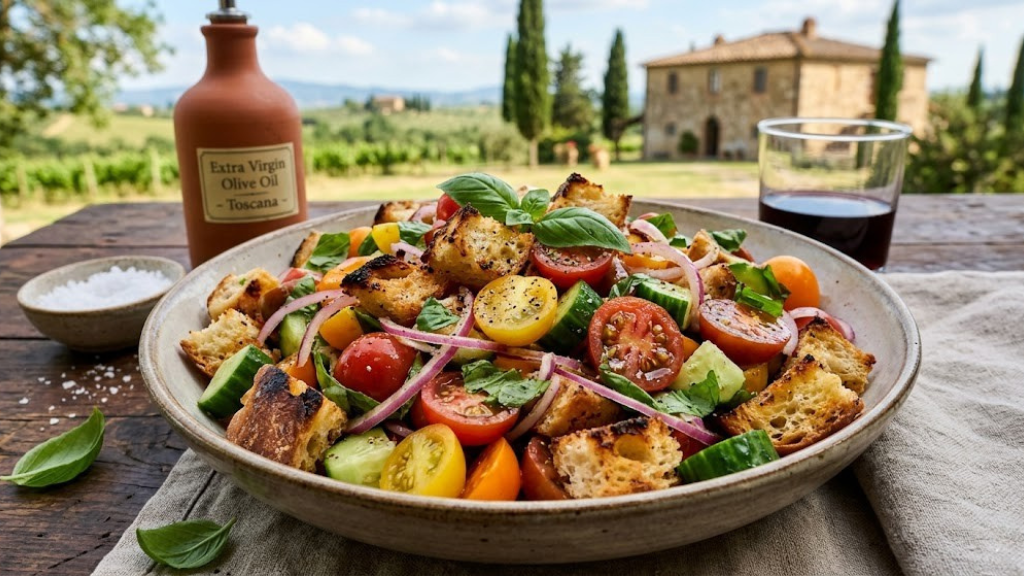
Panzanella (Tuscan Bread Salad)
Stale bread becomes the star in this classic Italian salad that was invented specifically to avoid food waste. Tear day-old ciabatta or sourdough into rough chunks, toss with olive oil, and toast in the oven until golden and crunchy on the outside but still slightly chewy inside. Combine the bread with ripe tomatoes, cucumbers, red onion, fresh basil, and capers. Dress generously with a red wine vinaigrette — the bread soaks up the dressing and tomato juices, creating a texture that is simultaneously crunchy and saturated with flavor.
For a summer party, prepare the bread cubes and chop the vegetables ahead of time, then toss everything together 20-30 minutes before serving. This rest time allows the bread to absorb just enough dressing without becoming completely soft.

Anchor Hocking Presence Glass Serving Bowl (Set of 3)
Crystal-clear glass lets your colorful salads be the centerpiece. Nested set saves storage space between parties.
Check Price on Amazon →Salads with Fruit: When Sweet Meets Savory
Fruit in salad can go one of two ways: inspired genius or bewildering disaster. The difference lies in understanding which fruits pair with which savory elements, and — critically — knowing how to balance sweetness with enough acid, salt, and peppery or bitter greens to prevent the salad from tasting like dessert.
The golden rule: the sweeter the fruit, the more aggressively you need to counter it with salty cheese, bitter greens, acidic dressing, and pungent aromatics. A salad of mango and baby spinach with a gentle vinaigrette falls flat because everything is mild. Add pickled red onion, crumbled feta, jalapeño, lime juice, and peppery arugula, and suddenly each bite creates a dynamic conversation between sweet, salty, spicy, and sour.
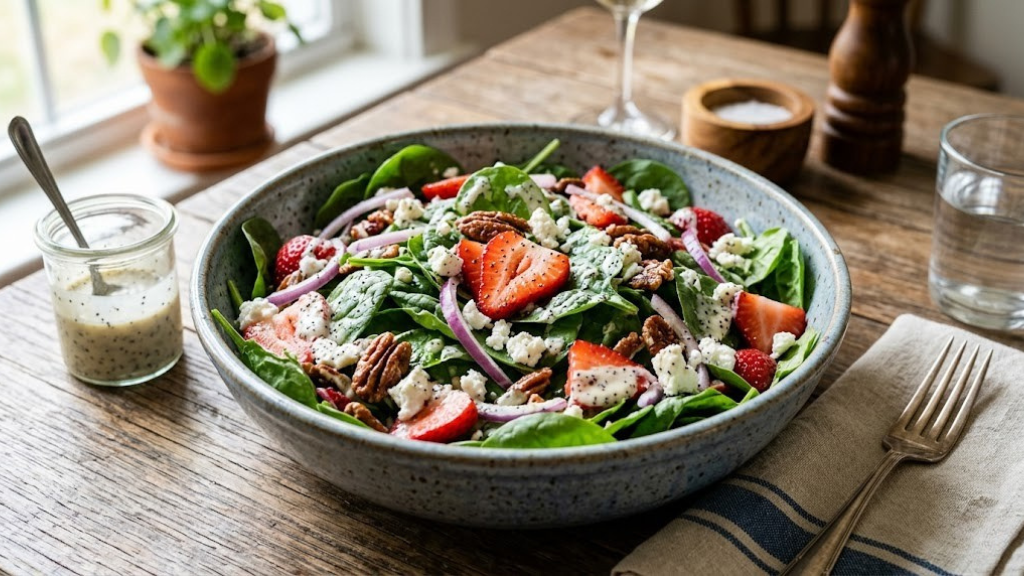
Strawberry Spinach Salad with Poppy Seed Dressing
This classic combination endures because it works perfectly. The sweet berries, mild spinach, tangy poppy seed dressing, and crunchy candied pecans create a harmony of flavors and textures that appeals to nearly everyone. Hull and quarter fresh strawberries, toss with baby spinach, sliced red onion (soaked in ice water for 10 minutes to mellow its bite), crumbled goat cheese, and candied pecans.
The poppy seed dressing brings everything together: whisk together olive oil, apple cider vinegar, a spoonful of honey, Dijon mustard, poppy seeds, a tiny bit of grated onion, salt, and pepper. The dressing should be slightly sweet, noticeably tangy, and flecked with the earthy crunch of poppy seeds. This salad is ideal for spring and early summer when strawberries are at their peak.
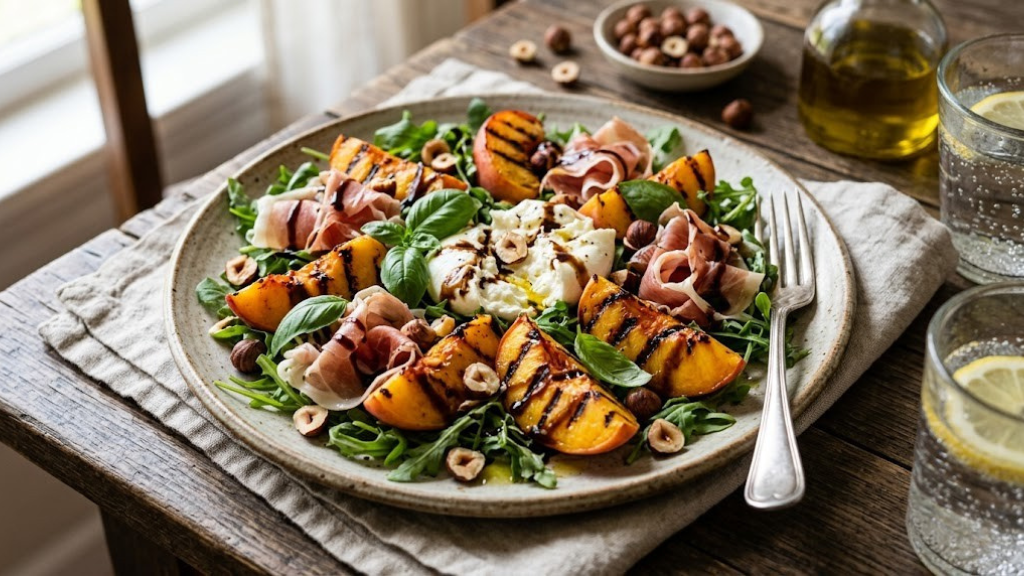
Grilled Peach & Prosciutto Salad with Burrata
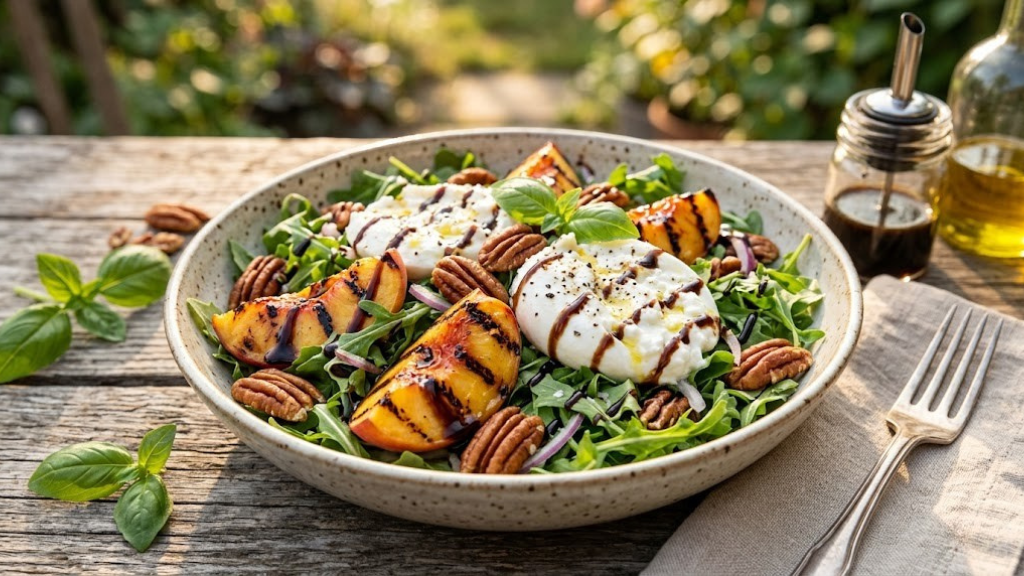
Grilling intensifies the sweetness of ripe peaches while adding a smoky char that plays beautifully against salty prosciutto and creamy burrata. Halve ripe (but still firm) peaches, brush with olive oil, and grill cut-side down for 2-3 minutes until you get defined grill marks. Arrange on a bed of arugula, drape with thin slices of prosciutto, tear burrata over the top, and drizzle with a balsamic reduction. Finish with torn fresh basil, toasted hazelnuts, and a pinch of flaky salt.
This salad looks and tastes like something from a high-end restaurant, but it takes about 15 minutes to prepare from start to finish. The key is using perfectly ripe peaches — they should give slightly when pressed but not be mushy. If you are grilling the peaches alongside dinner proteins, this becomes an effortless addition to your meal.
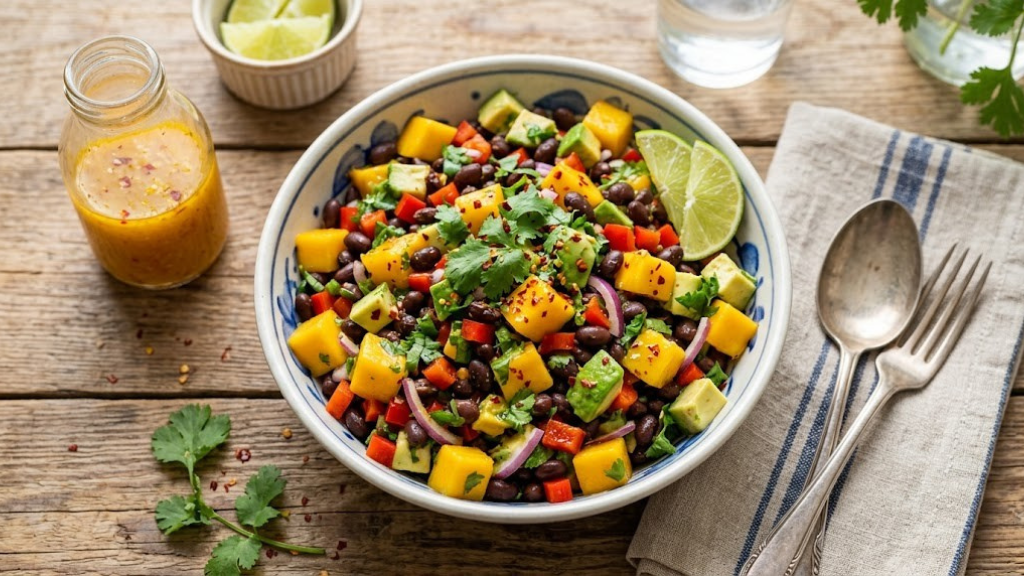
Mango & Black Bean Salad with Chili-Lime Dressing
Tropical mango, earthy black beans, crunchy red bell pepper, creamy avocado, and bright cilantro combine into a salad that works as a side, a taco topping, a dip, or a standalone light meal. The chili-lime dressing — lime juice, olive oil, honey, chili powder, cumin, garlic, and salt — ties everything together with its sweet-spicy-acidic profile. This salad is naturally vegan, gluten-free, and high in fiber, making it one of the most inclusive party dishes you can bring.
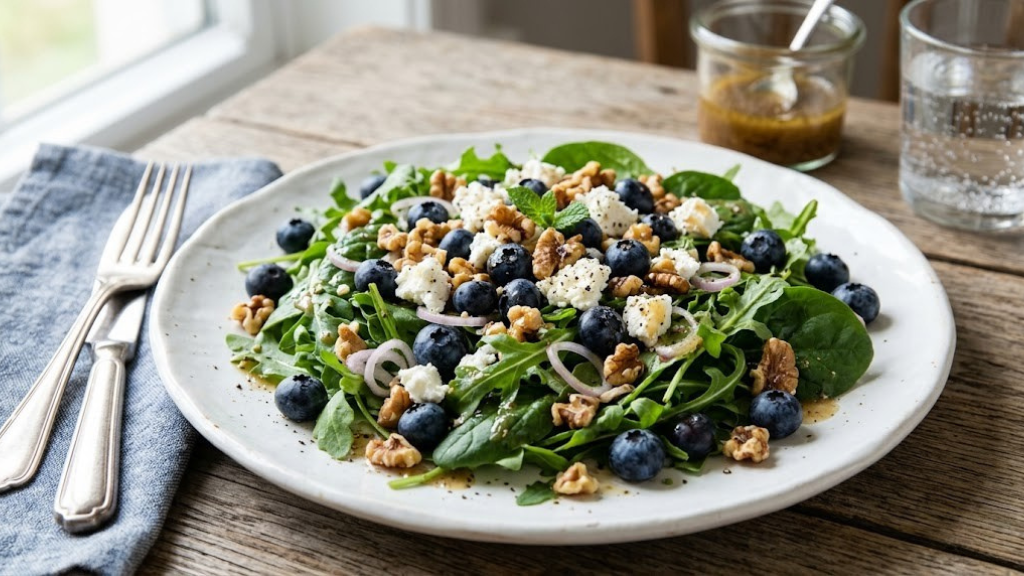
Blueberry, Goat Cheese & Arugula Salad with Walnut Vinaigrette
Blueberries are uniquely suited to savory salads because they bring sweetness without the heavy juiciness of stone fruits. Toss fresh blueberries with peppery arugula, crumbled chèvre, toasted walnuts, and thinly sliced shallots. The walnut vinaigrette is made by blending toasted walnuts with sherry vinegar, olive oil, a little Dijon mustard, honey, and salt until slightly creamy. The walnut flavor in the dressing echoes the toasted walnuts in the salad, creating a cohesive flavor experience.
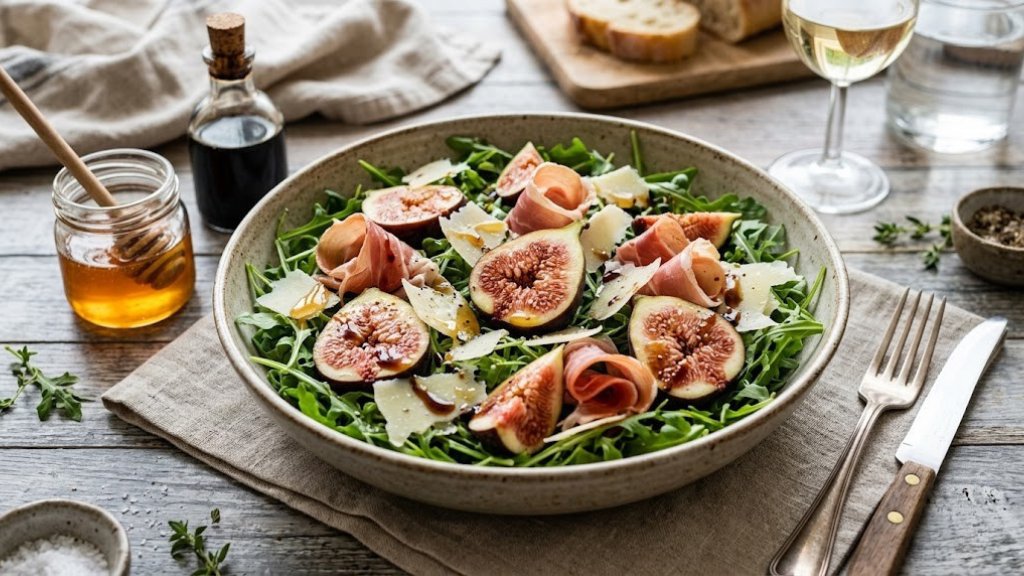
Fig, Prosciutto & Arugula Salad
When fresh figs are in season — typically late summer through early fall — they transform any salad into something luxurious. Halve ripe figs and arrange on arugula with torn prosciutto, shaved Parmesan, and a drizzle of honey. The dressing is simple: balsamic vinegar, olive oil, salt, and pepper. The figs provide intense natural sweetness, the prosciutto delivers salt and meatiness, the arugula contributes peppery bitterness, and the Parmesan rounds everything out with umami depth. This is a salad where restraint matters — fewer ingredients, all exceptional quality, assembled with care.
Fruit and Salad Pairing Chart
| Fruit | Best Greens | Best Cheese | Best Nut | Best Dressing Style |
|---|---|---|---|---|
| Strawberry | Spinach, spring mix | Goat cheese, brie | Candied pecan | Poppy seed, balsamic |
| Peach / Nectarine | Arugula, butter lettuce | Burrata, ricotta | Hazelnut, almond | Balsamic reduction, honey-lemon |
| Watermelon | Arugula, mixed greens | Feta, halloumi | Pistachio, pepita | Lime, mint-based |
| Mango | Romaine, cabbage | Cotija, queso fresco | Cashew, peanut | Chili-lime, Thai-style |
| Blueberry | Arugula, kale | Goat cheese, blue cheese | Walnut, pecan | Sherry, walnut oil |
| Fig | Arugula, endive | Parmesan, gorgonzola | Walnut, pine nut | Balsamic, honey |
| Apple / Pear | Spinach, mixed greens | Blue cheese, cheddar | Walnut, pecan | Apple cider, maple |
| Citrus segments | Fennel, watercress | Ricotta salata, Parmesan | Pistachio, almond | Citrus, champagne vinegar |
Dinner Salad Recipes: Hearty Enough for a Main Course
A dinner salad needs to satisfy in a way that a side salad never has to. It should leave you feeling full, nourished, and genuinely content — not virtuously hungry. The strategy is straightforward: start with a generous base, add a substantial protein, include at least one source of complex carbohydrate or healthy fat, and dress it with something bold enough to carry the whole plate.
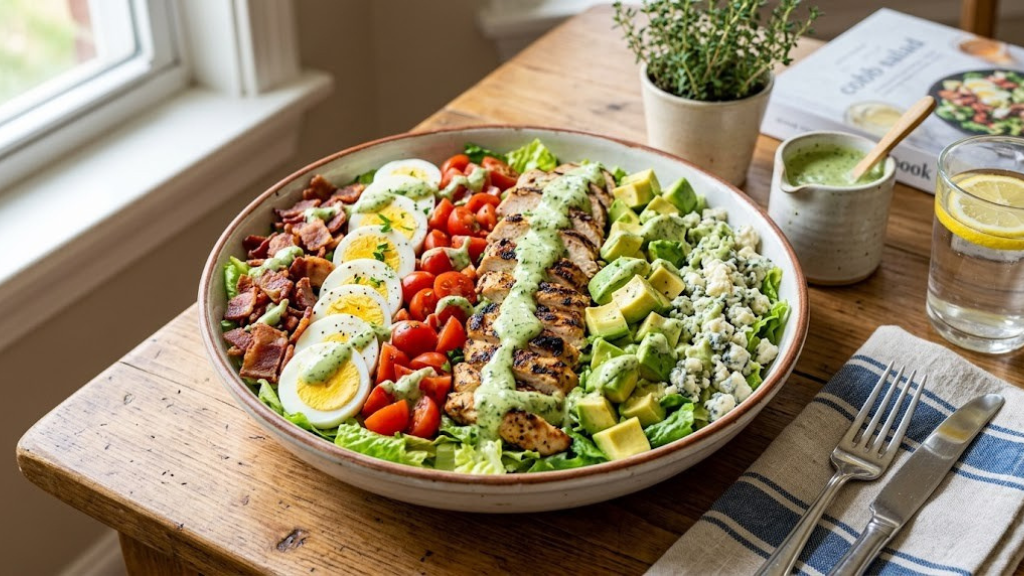
Grilled Chicken & Avocado Cobb Salad
The Cobb is the king of dinner salads for a reason — it is fundamentally a complete meal arranged on a bed of lettuce. The traditional Cobb uses rows of chopped ingredients laid side by side over greens: grilled chicken breast, crispy bacon, hard-boiled eggs, avocado, tomatoes, crumbled blue cheese, and a red wine vinaigrette.
To update it for summer, swap in grilled chicken thighs (more flavorful and juicier than breast), ripe heirloom tomato wedges, creamy avocado slices, and a green goddess dressing made from avocado, buttermilk, herbs, garlic, and lemon. The composed, row-by-row presentation makes it visually stunning, and diners can customize each forkful with their preferred combination of toppings.
Season the chicken generously before grilling — a mix of smoked paprika, garlic powder, onion powder, cumin, salt, and pepper creates a flavorful crust. Let the chicken rest for 5 minutes after grilling before slicing against the grain. This resting period allows the juices to redistribute, keeping the meat moist and tender on top of the cool salad.
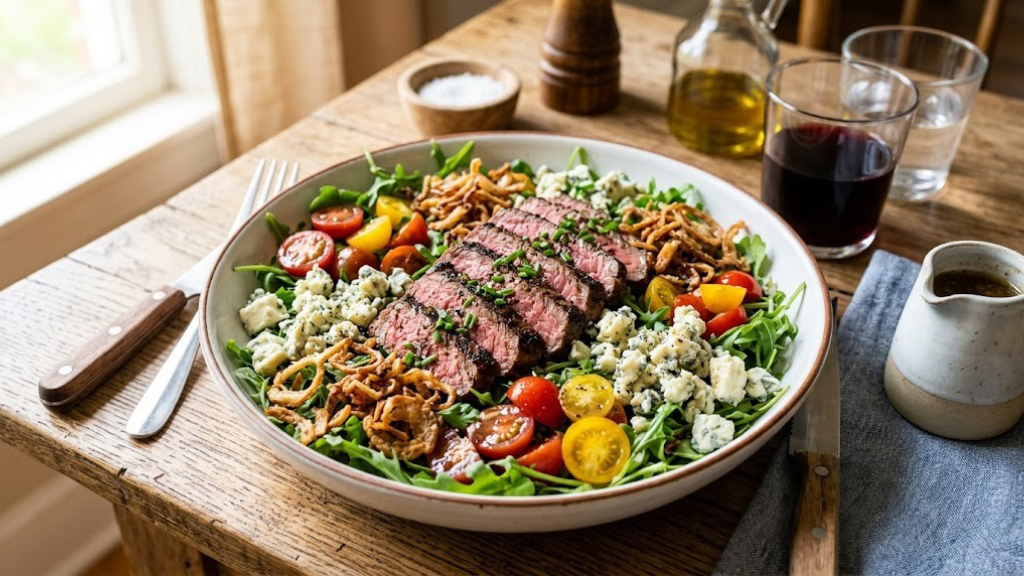
Steak & Blue Cheese Salad with Crispy Shallots
A perfectly seared steak, sliced thin and fanned over peppery greens with crumbled blue cheese, cherry tomatoes, and a red wine vinaigrette, makes one of the most satisfying salads you will ever eat. Use a well-marbled cut like skirt steak, flank steak, or hanger steak. Season with salt and pepper, sear in a blazing-hot cast iron skillet for 3-4 minutes per side (for medium-rare), and rest for 10 minutes before slicing.
The crispy shallots take this from ordinary to memorable: thinly slice 3-4 shallots, toss in seasoned flour, and fry in a shallow pool of oil until golden and crunchy. They add sweet, oniony crunch that complements the richness of the steak and the sharp tang of the blue cheese.
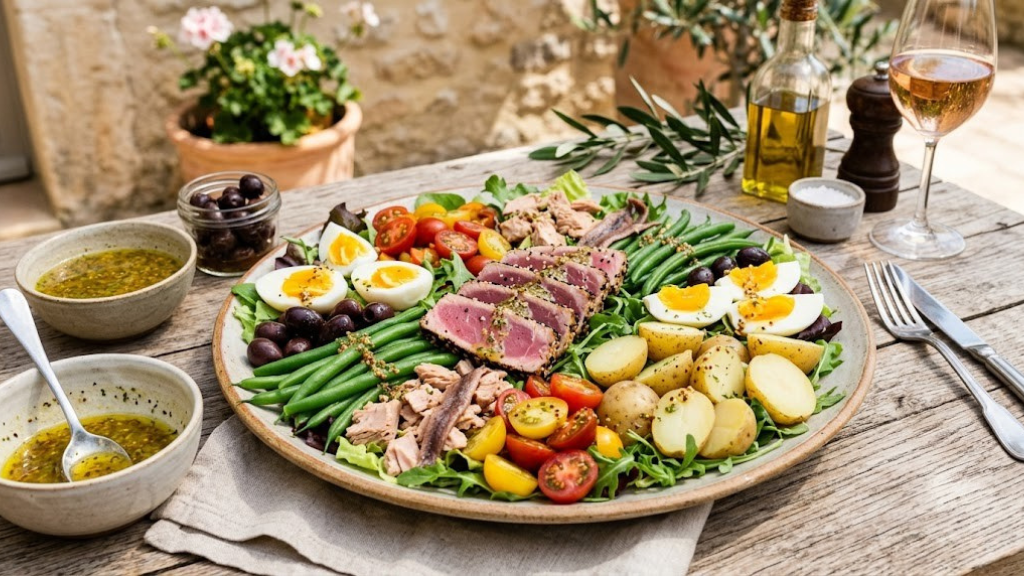
Niçoise Salad
The classic French composed salad is a study in balanced flavors and elegant simplicity. Arrange on a large platter: seared tuna steaks (or high-quality canned tuna), blanched haricots verts (thin green beans), boiled baby potatoes, hard-boiled eggs, niçoise olives, halved cherry tomatoes, capers, and anchovies. Dress with a Dijon vinaigrette made with red wine vinegar, olive oil, Dijon mustard, minced shallot, and fresh herbs.
Niçoise is a composed salad, meaning the ingredients are arranged separately on the plate rather than tossed together. This lets each ingredient shine on its own while allowing the diner to combine flavors in each bite. It is as beautiful as it is nutritious — a Mediterranean masterpiece that proves dinner salads can be deeply elegant.
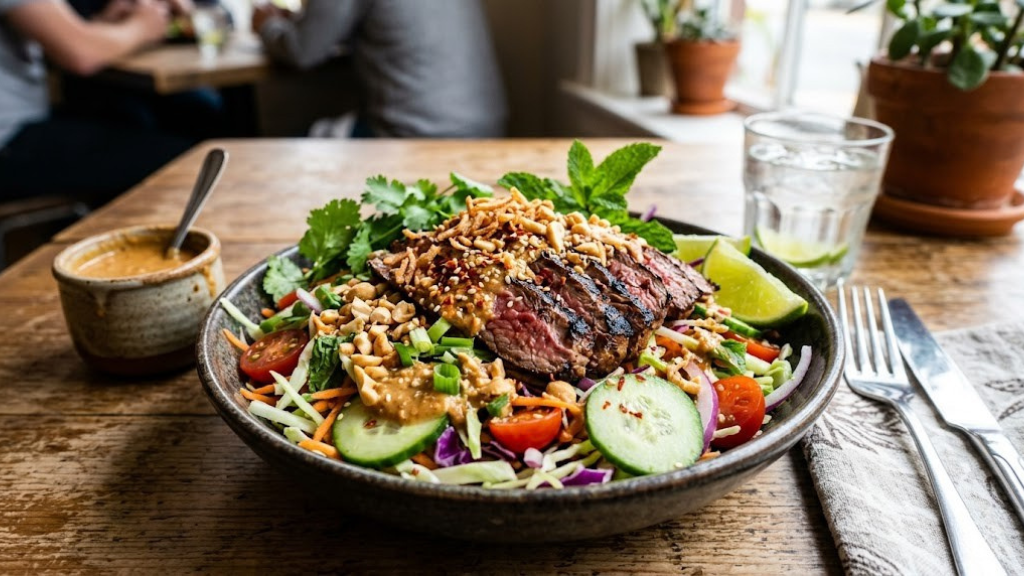
Thai Steak Salad with Peanut Dressing
Southeast Asian flavors create some of the most exciting dinner salads on the planet. This one combines thinly sliced grilled steak with shredded cabbage, matchstick carrots, sliced cucumbers, cherry tomatoes, fresh mint, cilantro, Thai basil, sliced red chili, and crushed roasted peanuts. The peanut dressing is a game-changer: blend together peanut butter, lime juice, soy sauce, sesame oil, rice vinegar, a garlic clove, fresh ginger, a touch of sriracha, and enough warm water to reach a pourable consistency.
The combination of crunchy, spicy, sweet, salty, sour, and herbaceous flavors in every bite makes this salad incredibly dynamic. It works equally well with grilled chicken, shrimp, or tofu for a plant-based version.
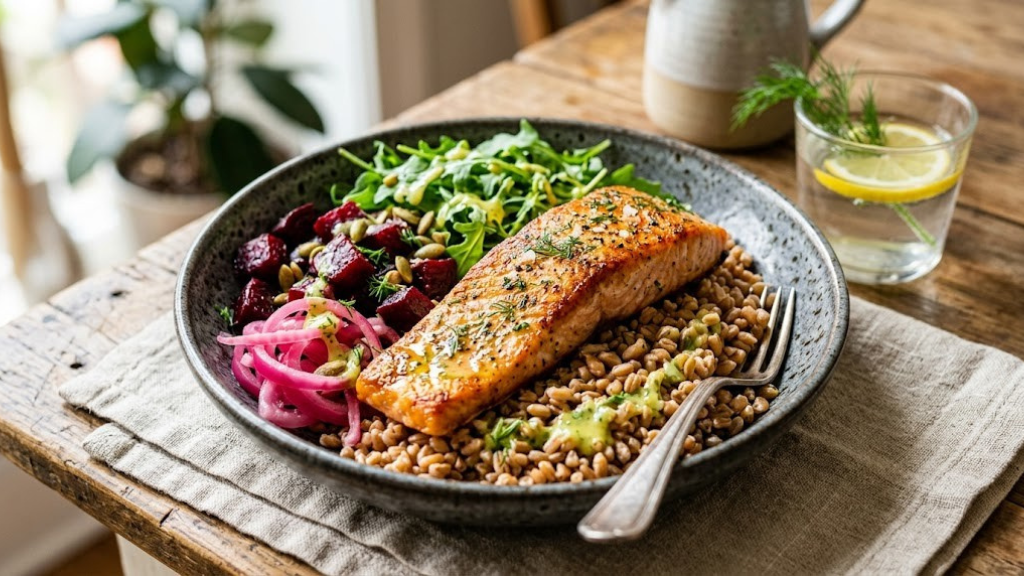
Salmon & Grain Bowl with Lemon-Herb Dressing
A dinner bowl built on a foundation of warm farro or barley, topped with a pan-seared or baked salmon fillet, roasted beets, quick-pickled red onions, arugula, everything bagel seasoning, and a creamy lemon-herb dressing. The warm grain base against the cool greens and pickled vegetables creates a temperature contrast that is deeply satisfying. The salmon provides omega-3 fatty acids, the farro offers sustained energy from complex carbohydrates, and the vegetables contribute fiber and micronutrients.
This is the kind of salad that makes you feel genuinely good after eating it — nourished rather than stuffed, energized rather than sluggish. It is also impressive enough to serve to dinner guests who might be skeptical about “salad for dinner.”

Lodge 12-Inch Cast Iron Skillet
The best sear on chicken, steak, or salmon starts with a ripping-hot cast iron. Pre-seasoned and virtually indestructible.
Check Price on Amazon →Cold Salad Recipes: Make-Ahead Perfection for Busy Days
Cold salads are the unsung heroes of summer eating. While leafy green salads demand immediate assembly and quick consumption, cold salads built on grains, pasta, beans, or shredded vegetables can be made hours or even days ahead — and many of them actually taste better after they have had time to marinate. For meal preppers, busy parents, and anyone who wants to open the refrigerator and find a delicious, ready-to-eat meal waiting, cold salads are indispensable.
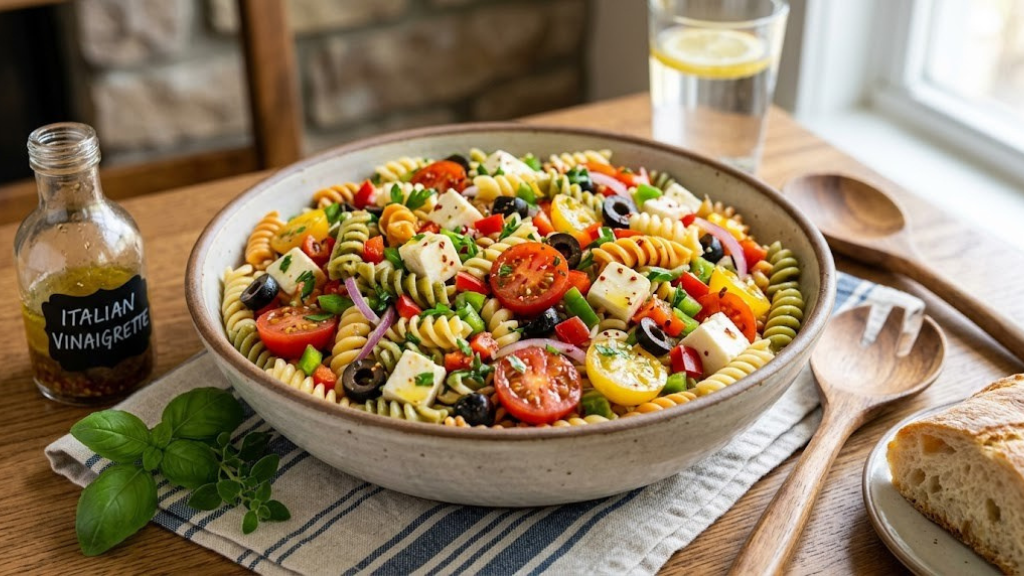
Classic Pasta Salad
There is a reason pasta salad appears at every summer gathering from coast to coast — it is universally beloved, endlessly customizable, and practically foolproof. Cook rotini, fusilli, or farfalle until al dente (slightly firm), rinse with cold water, and toss immediately with olive oil. Add diced bell peppers (use multiple colors), halved cherry tomatoes, sliced black olives, diced red onion, cubed mozzarella or provolone, and sliced pepperoni or salami if desired. Dress with a zesty Italian vinaigrette — olive oil, red wine vinegar, garlic, dried oregano, dried basil, salt, pepper, and a pinch of sugar.
The secret to exceptional pasta salad: overdress it slightly when making ahead. Pasta absorbs liquid as it sits in the refrigerator, so a salad that seems perfectly dressed initially will taste dry the next day. A second light toss with additional dressing before serving revives the flavors completely.
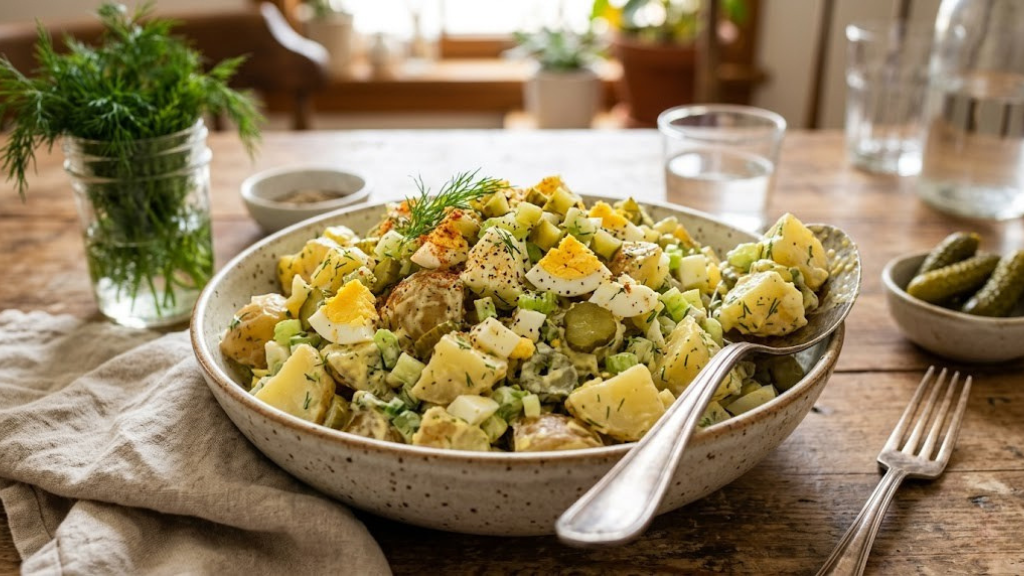
Creamy Potato Salad
The key to great potato salad is choosing the right potato and cooking it properly. Waxy potatoes — Yukon Gold, red-skinned, or fingerling — hold their shape when boiled and sliced, while starchy Russets crumble into mush. Boil the potatoes in well-salted water until they are tender when pierced with a knife but not falling apart. Let them cool slightly before cubing and dressing — warm potatoes absorb dressing more effectively than cold ones.
For the dressing, combine mayonnaise, yellow mustard, apple cider vinegar, finely diced celery, diced dill pickles, grated hard-boiled egg, chopped fresh dill, salt, and pepper. Some versions add a spoonful of sweet pickle relish for additional sweetness, or a dollop of sour cream for extra tang. Make the salad at least 4 hours ahead and preferably overnight — the flavors meld and develop as it chills.
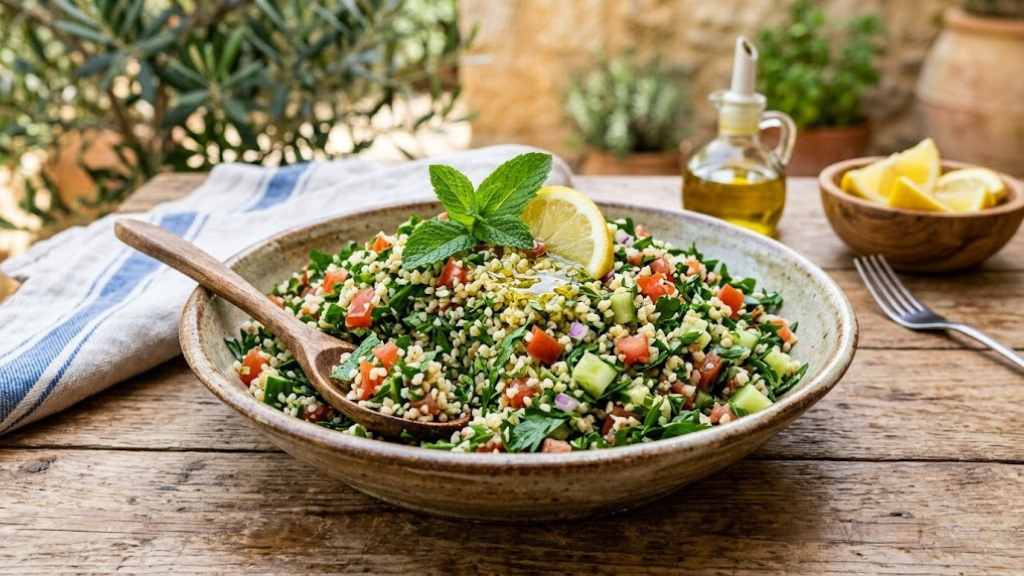
Tabbouleh
This Middle Eastern herb salad is more herb than grain — and that is the secret to its extraordinary freshness. Fine bulgur wheat is soaked (not cooked) in hot water until it is tender, then combined with an enormous quantity of finely chopped flat-leaf parsley, fresh mint, diced tomatoes, diced cucumbers, and sliced scallions. The dressing is nothing more than generous amounts of lemon juice, olive oil, salt, and pepper.
Authentic tabbouleh should be bright green from the sheer volume of herbs, with the bulgur playing a supporting role rather than dominating. It is one of the most refreshing salads in any cuisine, and it holds beautifully in the refrigerator for up to three days — though you may need to add a splash of lemon juice to brighten the flavors before serving.
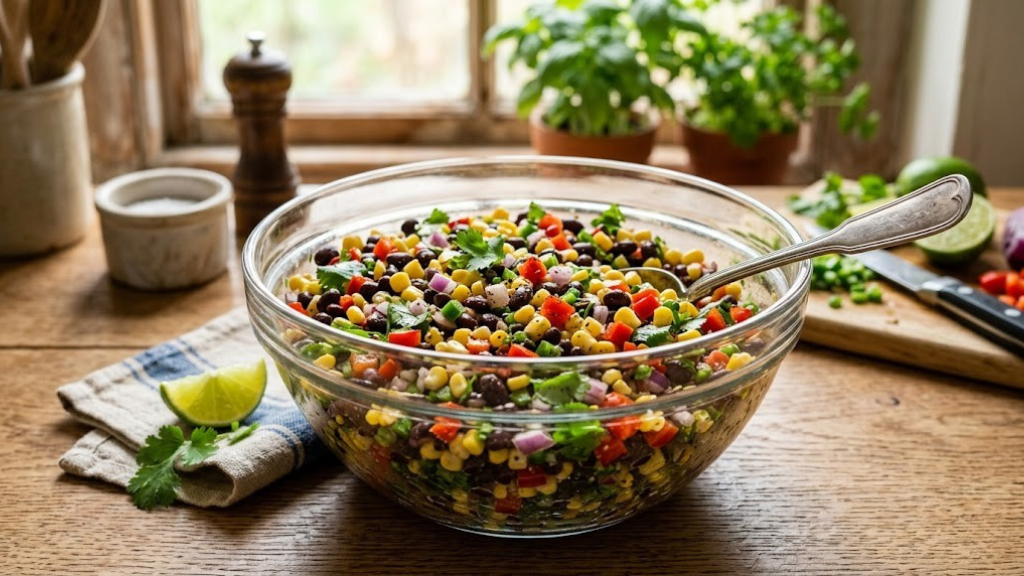
Black Bean & Corn Salad
This no-cook salad comes together in under 10 minutes and lasts up to five days in the refrigerator. Rinse and drain two cans of black beans, combine with thawed frozen corn (or fresh corn cut from the cob), diced red bell pepper, diced red onion, chopped cilantro, and diced jalapeño. Dress with lime juice, olive oil, cumin, chili powder, garlic powder, and salt. The longer this salad sits, the more the beans absorb the citrusy, spicy dressing. Serve it as a side, spoon it over grilled fish, use it as a taco topping, or eat it with tortilla chips as a dip.
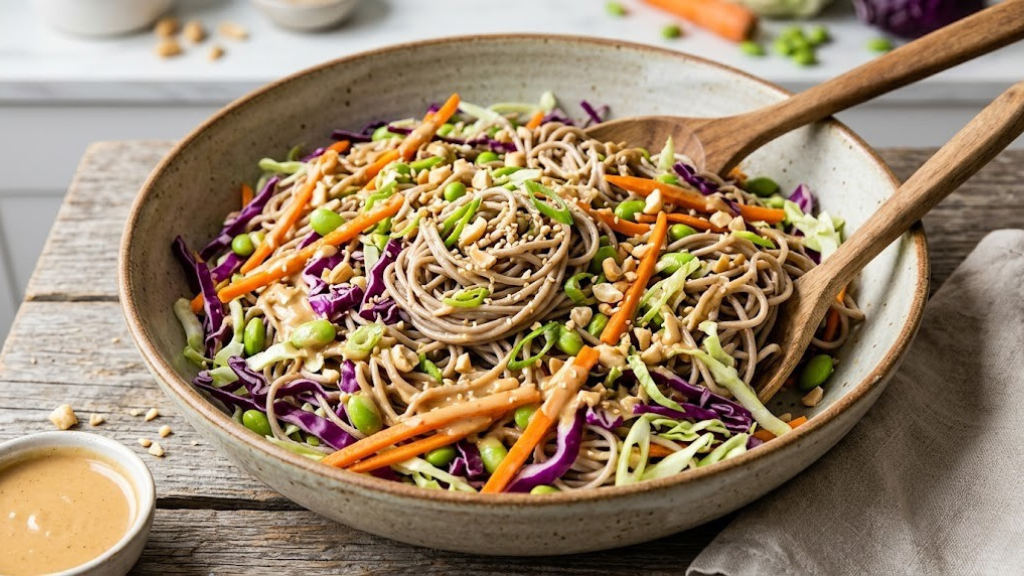
Asian Noodle Salad
Cold rice noodles or soba noodles tossed with shredded cabbage, julienned carrots, sliced bell peppers, edamame, and a bold peanut-sesame dressing create a satisfying meal that eats like a cold lo mein. Cook the noodles according to package directions, rinse with cold water, and toss with a small amount of sesame oil to prevent sticking. The dressing combines soy sauce, rice vinegar, sesame oil, peanut butter, lime juice, ginger, garlic, and a splash of sriracha. Garnish with sliced scallions, crushed peanuts, and sesame seeds.
This salad is particularly good for packed lunches because the noodles maintain their texture in the refrigerator and the bold dressing keeps everything flavorful even when cold.
Cold Salad Make-Ahead Timeline
| Salad Type | Make Ahead | Fridge Life | Improves with Time? | Refresh Tip |
|---|---|---|---|---|
| Pasta salad | Up to 48 hrs | 3-4 days | Yes (first 24 hrs) | Add splash of vinaigrette |
| Potato salad | Up to 48 hrs | 3-5 days | Yes (overnight best) | Stir in 1 tbsp mayo |
| Tabbouleh | Up to 24 hrs | 3 days | Slightly | Add lemon juice & salt |
| Bean salad | Up to 72 hrs | 5 days | Yes (significantly) | Stir and taste for acid |
| Asian noodle salad | Up to 24 hrs | 2-3 days | Slightly | Toss with extra dressing & sesame oil |
| Coleslaw | Up to 24 hrs | 3-4 days | Yes (1-4 hours ideal) | Drain excess liquid, stir |
Side Salad Recipes for Every Protein Pairing
A well-chosen side salad can elevate a grilled steak, roasted chicken, or pan-seared fish from a simple dinner to a complete, harmonious meal. The key is matching the salad’s flavor profile to the protein — a rich, fatty cut of meat needs a sharp, acidic salad to cut through the richness, while mild fish benefits from a gentle, herbal accompaniment.
For Grilled Steak & Burgers
Rich, beefy proteins need a salad that can stand up to bold flavors. A simple arugula salad with shaved Parmesan, lemon juice, olive oil, and cracked pepper is the classic steakhouse pairing — the peppery arugula and sharp cheese cut through the fat of the meat. Alternatively, a crisp wedge salad (a quarter head of iceberg drizzled with blue cheese dressing, crumbled bacon, diced tomato, and chives) provides cool crunch against the charred richness of a burger or steak.
Tomato-cucumber salad — diced tomatoes and cucumbers dressed with red wine vinegar, olive oil, fresh oregano, and a sliced red onion — is another outstanding steak companion. The juicy acidity of fresh tomatoes cleanses the palate between bites of rich meat. This pairing has deep roots in Mediterranean and Middle Eastern cuisines for exactly this reason.
For Grilled Chicken
Chicken is mild enough to pair with almost any salad, making it the most versatile protein for summer salad pairing. A classic Caesar (romaine, Parmesan, croutons, anchovy-garlic dressing) is always safe, but consider branching out to a fattoush — a Middle Eastern bread salad with toasted pita chips, tomatoes, cucumbers, radishes, herbs, and a sumac-lemon dressing — for something more interesting.
Greek salad is another natural chicken partner: tomatoes, cucumbers, red onion, Kalamata olives, green pepper, and a block of feta dressed simply with olive oil, red wine vinegar, and oregano. The salty brininess of the olives and feta plays beautifully against simply grilled chicken seasoned with lemon and herbs.
For Grilled Fish & Seafood
Seafood demands lighter, more delicate salads. A fennel and citrus salad — thinly shaved fennel, orange or grapefruit segments, a handful of olives, and a light lemon-olive oil dressing — is stunning alongside grilled whole fish or seared scallops. The anise notes from the fennel complement seafood flavors without overwhelming them.
For shrimp, try a mango-avocado salad: diced mango, avocado, red onion, cilantro, lime juice, and a pinch of chili flakes. The tropical sweetness pairs with the natural sweetness of shrimp, and the avocado adds richness. This combination works particularly well with grilled or blackened shrimp tacos.
For Barbecue & Smoked Meats
Heavily smoked and sauced meats need a side salad that provides contrast — crunch, freshness, and acidity to counterbalance the rich, smoky, often sweet flavors. Classic coleslaw (creamy or vinegar-based) is the time-tested partner. Broccoli salad — raw broccoli florets, dried cranberries, sunflower seeds, crumbled bacon, and a sweet-tangy dressing — also works because its crunch and sweetness complement barbecue without competing.
For something different alongside barbecue, try a pickled vegetable salad: quick-pickle a combination of cucumbers, red onions, carrots, and jalapeños in a brine of vinegar, sugar, salt, and spices. The sharp acidity cuts through smoky richness brilliantly. If your barbecue setup needs an upgrade, investing in the right barbecue grill can make a significant difference in both the flavor of your meats and the overall outdoor cooking experience.
| Protein | Best Side Salad Match | Key Flavor Principle |
|---|---|---|
| Grilled steak | Arugula-Parmesan, wedge, tomato-cucumber | Peppery & acidic to cut richness |
| Burgers | Coleslaw, classic garden, pickle-onion | Crunchy & cool to contrast charred meat |
| Grilled chicken | Caesar, Greek, fattoush, corn salad | Versatile — bold or mild works |
| Grilled salmon | Fennel-citrus, cucumber-dill, grain bowl | Light, herbal, slightly sweet |
| Shrimp | Mango-avocado, Thai-inspired, corn | Tropical, citrusy, bright |
| Pulled pork / ribs | Coleslaw, broccoli salad, pickled veg | Acidic & crunchy to balance smoke & sauce |
Simple Salad Recipes: Ready in 15 Minutes or Less
Sometimes you do not want a project — you want food on the table fast. These salads strip away complexity without sacrificing flavor. Each one uses five to eight ingredients and can be assembled in the time it takes your partner to set the table. They prove that simplicity is not the same as boring; a handful of excellent ingredients, treated with respect, often beats a complicated recipe with mediocre components.
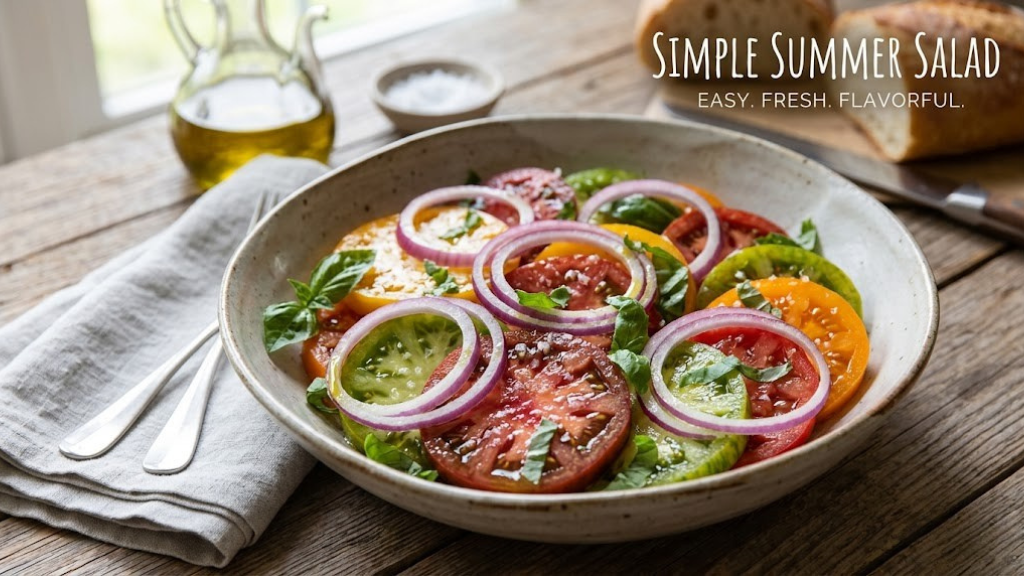
Tomato & Red Onion Salad
Slice the best tomatoes you can find into thick rounds. Arrange on a plate. Scatter with thinly sliced red onion, torn fresh basil, a drizzle of the best olive oil you own, a splash of red wine vinegar, flaky salt, and black pepper. That is it. This salad lives or dies by the quality of its tomatoes — in midsummer, with vine-ripe heirlooms, it is one of the greatest salads on earth. In January, with pale grocery store tomatoes, it is barely edible. Know the season and let the produce carry the dish.
Cucumber & Sesame Salad
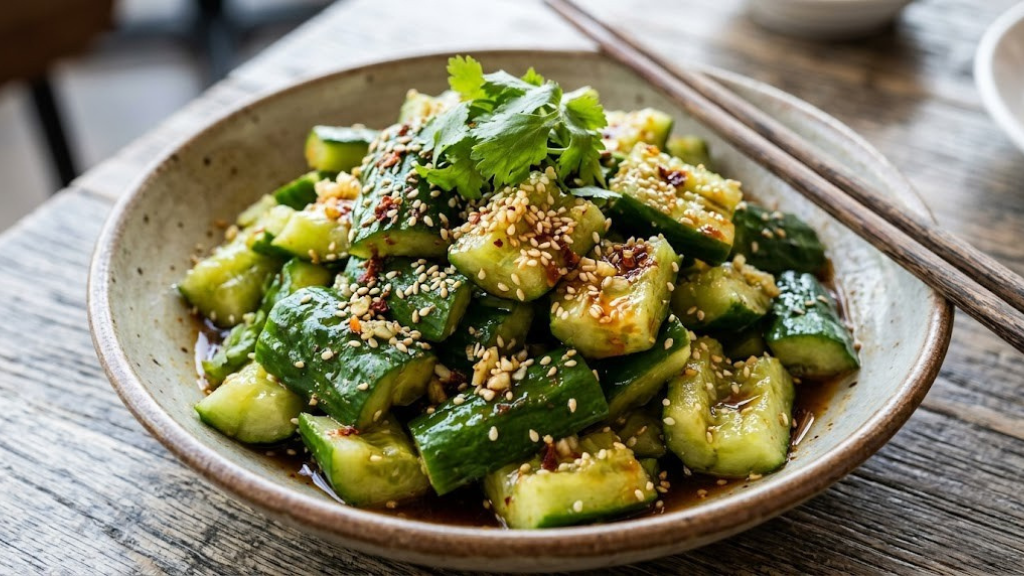
Smash English cucumbers with the flat side of a knife (this creates irregular surfaces that grab dressing better than clean cuts), tear or chop into rough pieces, and toss with rice vinegar, soy sauce, sesame oil, chili flakes, sliced garlic, and a pinch of sugar. Scatter with toasted sesame seeds and sliced scallions. Ready in five minutes, this Chinese-inspired smashed cucumber salad is one of the most addictive preparations you will ever make. The smashing technique originated in Sichuan cuisine and produces a texture that absorbs dressing into every crevice.
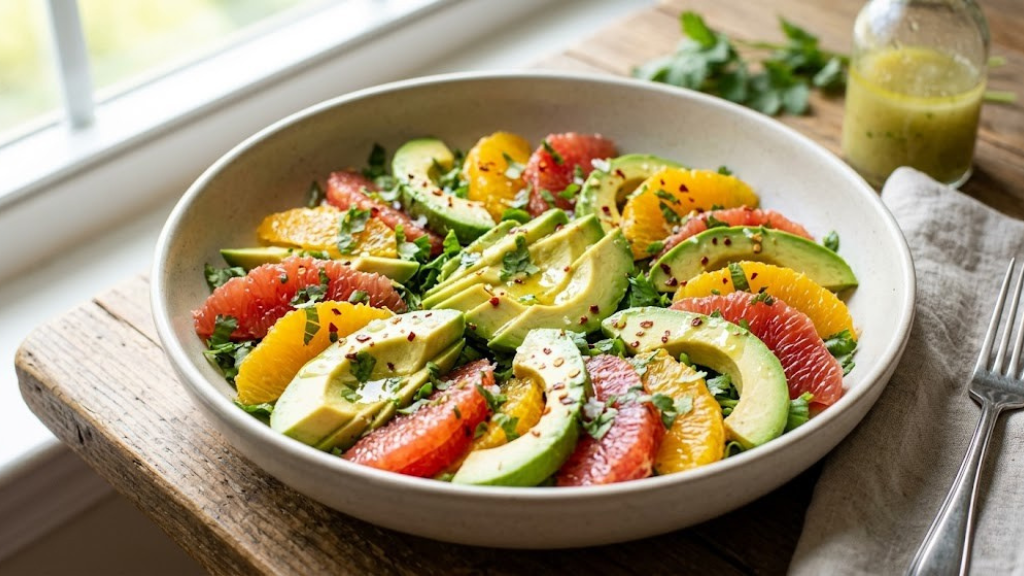
Avocado & Citrus Salad
Slice ripe avocados and arrange with segments of orange and grapefruit on a plate. Drizzle with olive oil, a squeeze of lime, a pinch of chili flakes, flaky salt, and a few fresh cilantro or mint leaves. The creamy avocado against the bright, juicy citrus creates one of the most refreshing flavor combinations in the salad universe. This works as a side dish, a light first course, or a brunch accompaniment.
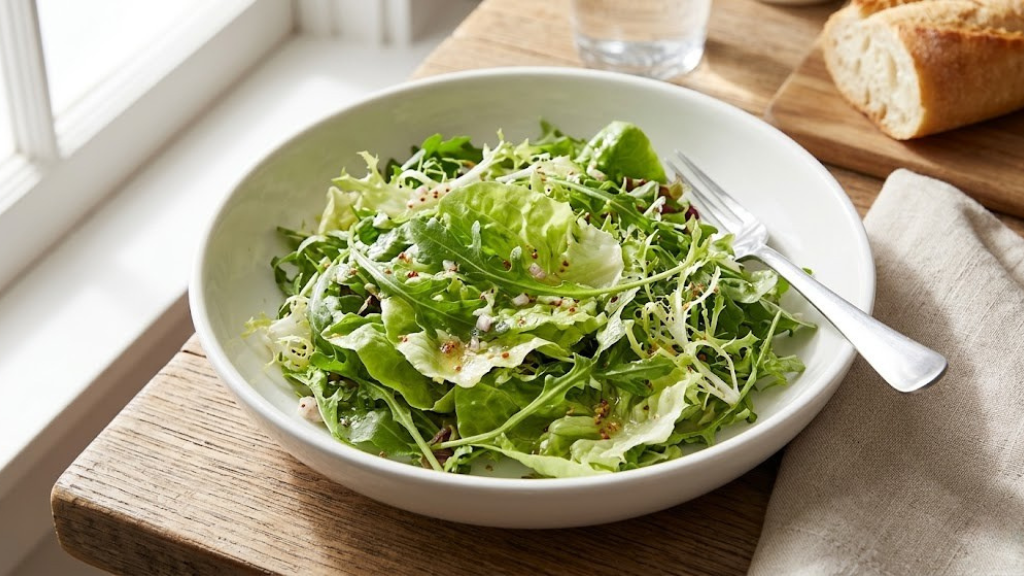
Simple Green Salad with Shallot Vinaigrette
The salad that should accompany every home-cooked dinner but rarely does. Wash and dry a generous pile of mixed greens (use a salad spinner — this is non-negotiable for a properly dressed green salad). Make a quick shallot vinaigrette: mince one small shallot, combine with red wine vinegar and a pinch of salt, let sit for 5 minutes (this mellows the shallot’s raw bite), then whisk in Dijon mustard and olive oil. Toss the greens with just enough dressing to lightly coat every leaf — you should never see pooling dressing at the bottom of the bowl. Season with salt and pepper.
This is the salad that French and Italian households serve nightly. Its beauty is in its restraint and its reliance on technique (proper washing, proper drying, proper dressing ratio) rather than ingredients.
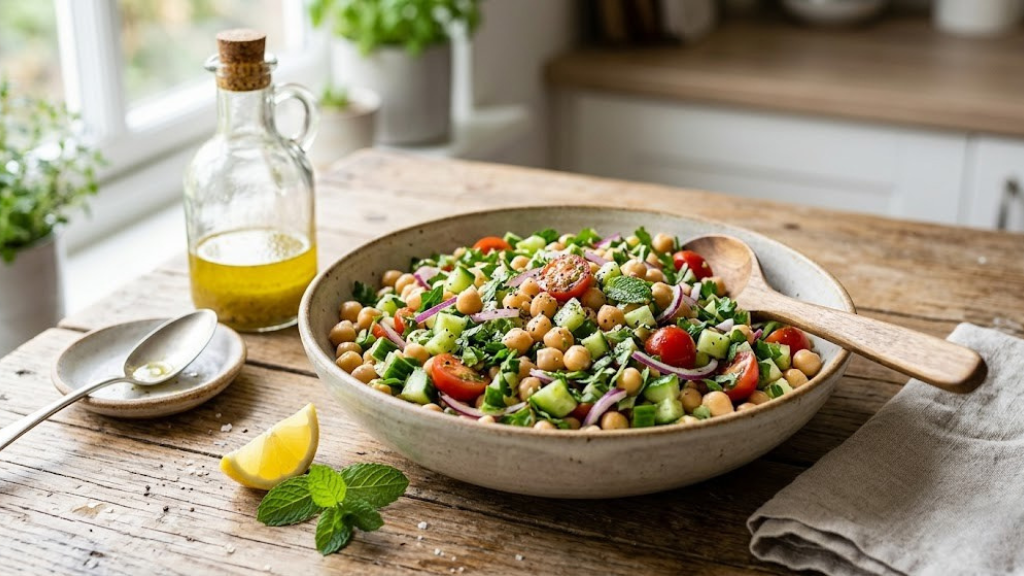
Chickpea & Herb Salad
Drain and rinse a can of chickpeas, toss with diced cucumber, halved cherry tomatoes, diced red onion, chopped parsley, chopped mint, lemon juice, olive oil, cumin, salt, and pepper. This salad takes under 10 minutes, costs almost nothing, and provides a surprisingly complete nutritional profile with plant protein, fiber, vitamins, and healthy fats. It is also one of the most versatile preparations in your repertoire — stuff it into a pita, serve it over greens, or eat it straight from the bowl.
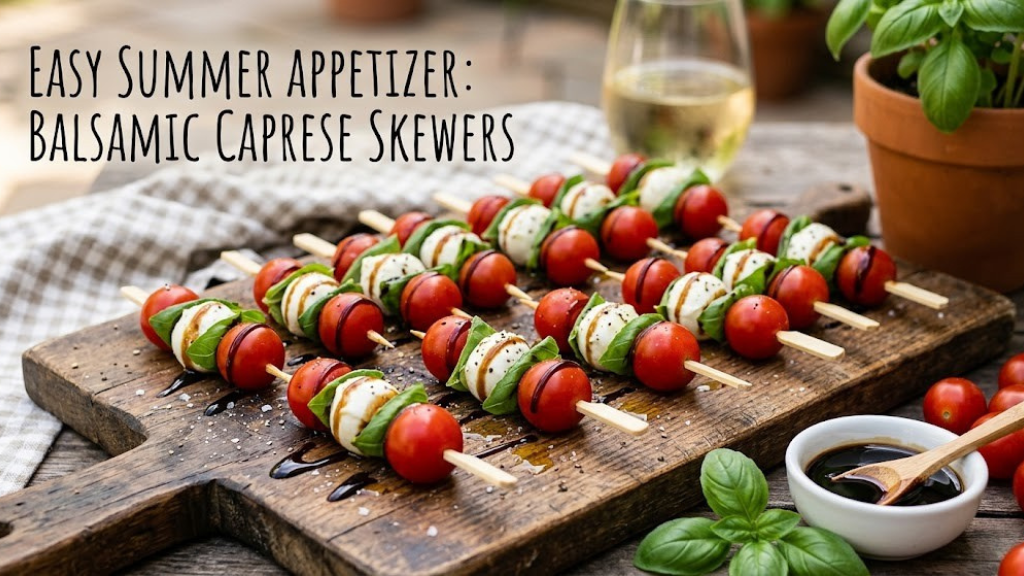
Caprese Skewers (Deconstructed)
Thread cherry tomatoes, small mozzarella balls (bocconcini), and fresh basil leaves onto short wooden skewers. Arrange on a plate, drizzle with olive oil and balsamic glaze, and sprinkle with salt and pepper. This is technically a salad that you eat with your hands, which makes it perfect for outdoor entertaining. No plates required, no utensils needed, and each skewer is a self-contained flavor bomb. They can be assembled in advance and refrigerated for up to 2 hours before serving.

Victorinox Fibrox Pro Chef’s Knife (8-inch)
The single best affordable chef’s knife — razor-sharp, comfortable, and perfect for rapid salad prep. Makes quick work of herbs, vegetables, and proteins.
Check Price on Amazon →Homemade Dressings, Toppings & Finishing Touches
Dressing is where most salads are won or lost. A great dressing transforms ordinary ingredients into something you crave, while a poor one (or, worse, no dressing at all) renders even the finest produce lifeless. Homemade dressing takes 5 minutes, costs a fraction of bottled options, contains no preservatives or added sugars, and tastes incomparably better. Once you master three or four base dressings, you will never buy bottled dressing again.
The Master Vinaigrette Formula
Every vinaigrette follows the same basic ratio: 3 parts oil to 1 part acid, seasoned with salt, pepper, and one emulsifier (usually Dijon mustard). From this foundation, you can create hundreds of variations by changing the oil, the acid, and the flavorings.
The technique: combine the acid, salt, mustard, and any aromatics (garlic, shallot, herbs) first. Let them sit for a few minutes — this dissolves the salt and mellows raw alliums. Then slowly drizzle in the oil while whisking vigorously (or shaking in a sealed jar) until the mixture is emulsified and slightly creamy. Taste and adjust. A good vinaigrette should taste slightly too acidic on its own — when tossed with ingredients, the perceived acidity drops significantly.
Essential Dressing Recipes
Classic Red Wine Vinaigrette
3 tbsp red wine vinegar, 1 tsp Dijon mustard, 1 small clove garlic (minced), ½ tsp salt, ¼ tsp black pepper, ½ cup extra-virgin olive oil. Whisk acid ingredients, drizzle in oil. Stores in the refrigerator for 2 weeks.
Lemon-Herb Dressing
¼ cup fresh lemon juice, 1 tsp Dijon, 1 tsp honey, ½ cup olive oil, 2 tbsp chopped fresh herbs (basil, parsley, chives, dill — any combination), salt, pepper. Bright, clean, and versatile — this is the dressing you want on a simple green salad or drizzled over grilled vegetables.
Creamy Tahini Dressing
¼ cup tahini, 3 tbsp lemon juice, 2 tbsp warm water (add more for thinner consistency), 1 small clove garlic (minced), ½ tsp cumin, salt to taste. Whisk until smooth and pourable. This dairy-free, vegan dressing adds rich creaminess to grain bowls, kale salads, and roasted vegetable platters.
Honey-Mustard Dressing
2 tbsp Dijon mustard, 2 tbsp whole grain mustard, 2 tbsp honey, 2 tbsp apple cider vinegar, ⅓ cup olive oil, salt, pepper. Sweet, tangy, and slightly spicy — excellent on hearty salads with grilled chicken, bacon, and sharp cheese.
Asian Sesame-Ginger Dressing
2 tbsp rice vinegar, 1 tbsp soy sauce, 1 tbsp sesame oil, 1 tsp fresh grated ginger, 1 small garlic clove (minced), 1 tsp honey, 2 tbsp neutral oil (avocado or grapeseed). Shake all ingredients in a jar. Outstanding on cabbage slaws, Asian noodle salads, and grain bowls with edamame and tofu.
Toppings That Transform
Beyond the dressing, a few well-chosen toppings turn a good salad into the best salad you have ever made. Here are the highest-impact options:
Quick-pickled red onions: Thinly slice a red onion, cover with a mixture of red wine vinegar, a pinch of sugar, and salt. Let sit for at least 20 minutes (or up to 2 weeks in the refrigerator). The onions turn bright magenta and develop a sweet-tangy flavor that enhances any salad. Make a big batch and keep them on hand at all times during summer.
Toasted nuts and seeds: Toast in a dry skillet over medium heat, shaking frequently, until fragrant and golden — about 3-4 minutes. Toasting intensifies flavor dramatically. Store extras in a sealed container at room temperature for up to a month.
Crispy shallots or garlic: Thinly slice and fry in a shallow pool of oil until golden. Drain on paper towels. These add sweet, crunchy depth to any salad and can be made ahead and stored in an airtight container for several days.
Homemade croutons: Cube day-old bread, toss with olive oil, garlic powder, salt, and herbs, and bake at 375°F until golden and crunchy — about 12-15 minutes. Infinitely better than anything from a bag, and a great way to use bread that is past its prime for sandwiches.
Shaved Parmesan: Use a vegetable peeler to create large, thin shavings. These dramatic curls of cheese look beautiful and deliver concentrated bursts of salty, umami flavor that grated Parmesan cannot match.
Dressing-to-Salad Pairing Guide
| Dressing | Best Salad Types | Flavor Profile | Shelf Life (Fridge) |
|---|---|---|---|
| Red wine vinaigrette | Green salads, pasta salads, Mediterranean | Classic, tangy, herbal | 2 weeks |
| Lemon-herb | Grain bowls, grilled veg, simple greens | Bright, clean, fresh | 1 week |
| Tahini | Kale salads, grain bowls, roasted veg | Nutty, creamy, earthy | 1 week |
| Honey-mustard | Chicken salads, spinach salads, hearty greens | Sweet, tangy, warm | 2 weeks |
| Sesame-ginger | Cabbage slaw, noodle salads, tofu bowls | Savory, aromatic, umami | 1 week |
| Caesar | Romaine, kale Caesar, grilled chicken | Rich, garlicky, anchovy-forward | 5 days |
| Balsamic | Caprese, fruit salads, grilled vegetables | Sweet, deep, mellow acid | 2 weeks |
Meal Prep, Storage & Make-Ahead Strategy for Summer Salads
The biggest obstacle to eating salad regularly is not motivation or taste — it is the daily work of washing, chopping, and assembling. Smart meal prep eliminates that barrier entirely. With a well-organized weekly prep session, you can have five days of delicious, varied salads ready to grab from the refrigerator in seconds.
The Weekly Salad Prep Blueprint
Spend 45-60 minutes on Sunday preparing salad components. Store each component separately in airtight containers. When mealtime arrives, you simply combine components and dress.
Greens: Wash, dry thoroughly in a salad spinner, and store in a container lined with paper towels. Properly dried greens stored this way last 5-7 days in the refrigerator. Moisture is the enemy — if greens are even slightly damp, they will wilt within 48 hours.
Chopped vegetables: Prep cucumbers, bell peppers, radishes, carrots, celery, and red onion. Store each in separate containers or a divided container. Most prepped vegetables hold for 4-5 days. Cherry tomatoes keep better whole than cut — halve them just before assembly. Avocado should always be cut fresh, as it oxidizes quickly.
Proteins: Grill or bake 2-3 pounds of chicken thighs, sear a batch of salmon, hard-boil a dozen eggs, or cook a pot of chickpeas. Cooked proteins store for 3-4 days in the refrigerator. Cool them completely before storing to prevent condensation and bacterial growth.
Grains: Cook a large batch of quinoa, farro, or brown rice. Cooked grains store for 5 days. Toss with a small amount of olive oil after cooking to prevent clumping. They can also be frozen in portion-sized containers for up to 3 months.
Dressings: Make 2-3 dressings in jars. Vinaigrettes last 2 weeks, creamy dressings 5-7 days. Label and date each jar.
Crunchy toppings: Toast a large batch of nuts or seeds, make croutons, or fry shallots. Store in airtight containers at room temperature. These hold for weeks.
The Mason Jar Salad Method
For portable salads that you can grab on the way to work, the mason jar method is excellent. The key is layering in the correct order to prevent sogginess. From bottom to top: dressing → hard/dense vegetables (carrots, beets, beans) → grains or pasta → softer vegetables (tomatoes, cucumbers) → cheese, nuts, proteins → greens on top. The greens stay completely dry until you pour the jar into a bowl and toss. Wide-mouth quart jars work best for adult-sized portions.
Food Safety Essentials
Summer heat creates food safety concerns that you need to respect. Cold salads left at room temperature for more than two hours enter the danger zone for bacterial growth (40-140°F). At outdoor parties in temperatures above 90°F, that window shrinks to one hour. Keep salads in coolers or on ice when serving outdoors. If a salad has been sitting out for more than two hours, discard it — no exceptions.
When transporting salads to picnics or potlucks, keep them in an insulated bag with ice packs. Mayonnaise-based salads (potato salad, pasta salad) are often blamed for food poisoning, but commercial mayonnaise is actually acidic enough to inhibit bacterial growth. The real culprits are typically proteins (chicken, eggs) and vegetables that were not properly cooled before being added to the salad.
How to Revive a Wilted Salad
If your greens are slightly wilted but not slimy or discolored, you can often revive them by soaking in ice water for 10-15 minutes. The cold water rehydrates the cells through osmosis, restoring crispness. Dry thoroughly in a salad spinner before using. This technique works best on romaine, butter lettuce, and hearty greens. It will not rescue a completely deteriorated salad, but it can save greens that are a day past their prime.
✓ Best Greens for Meal Prep
- Romaine — holds 5-7 days, extremely crisp
- Kale — lasts a week+, improves when pre-dressed
- Shredded cabbage — holds 7+ days, excellent crunch
- Spinach — lasts 4-5 days when properly dried
- Arugula — 3-4 days if completely dry
✗ Greens to Avoid for Meal Prep
- Mixed spring greens — wilt within 2-3 days
- Butter lettuce — too delicate for multi-day storage
- Watercress — wilts rapidly
- Mâche — turns mushy quickly
- Pre-washed bagged greens — shorter shelf life

Prep Naturals Glass Meal Prep Containers (Set of 5)
Airtight glass containers with snap-lock lids — keep prepped salad components crisp for days. Microwave, freezer, and dishwasher safe.
Check Price on Amazon →Bonus: More Summer Salad Recipes to Round Out Your Repertoire
Beyond the core categories above, there are dozens of additional summer salad recipes worth adding to your rotation. Each of these fills a specific niche — whether you need something for a particular occasion, a specific dietary requirement, or simply a change of pace from your usual rotation.
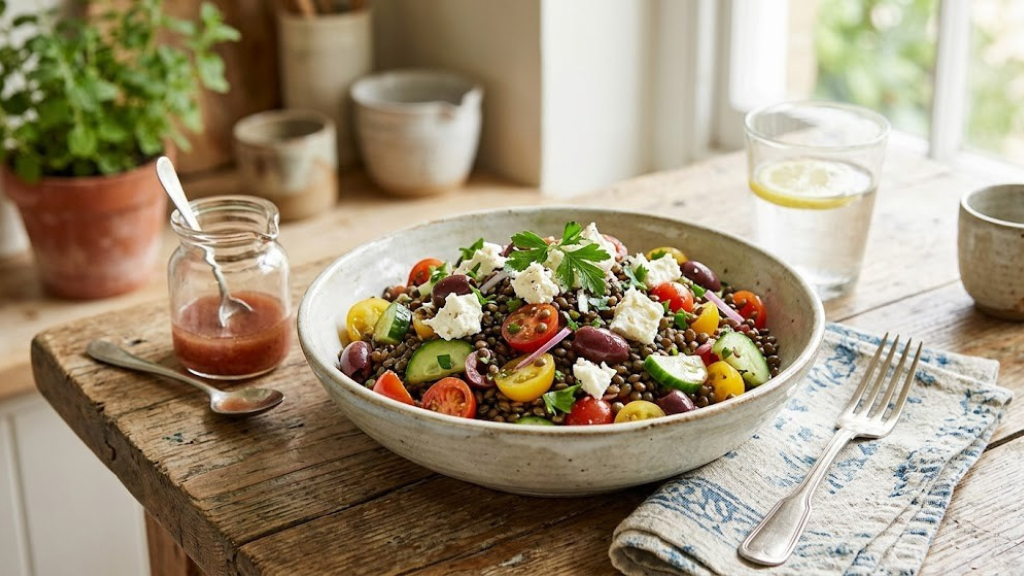
Greek Lentil Salad
French green lentils (lentilles du Puy) hold their shape after cooking and have a firm, satisfying bite that makes them ideal for salads. Cook lentils until just tender — about 20 minutes — then drain and toss while still warm with diced cucumbers, halved cherry tomatoes, diced red onion, Kalamata olives, crumbled feta, fresh parsley, and a bold red wine vinaigrette with dried oregano and garlic. Lentils absorb dressing beautifully when warm, so dress them generously while they are still hot for maximum flavor penetration.
This salad is a nutritional powerhouse: lentils provide roughly 18 grams of protein and 16 grams of fiber per cooked cup, making this one of the most filling plant-based salads in this collection. It holds in the refrigerator for up to 4 days and makes an excellent packed lunch.
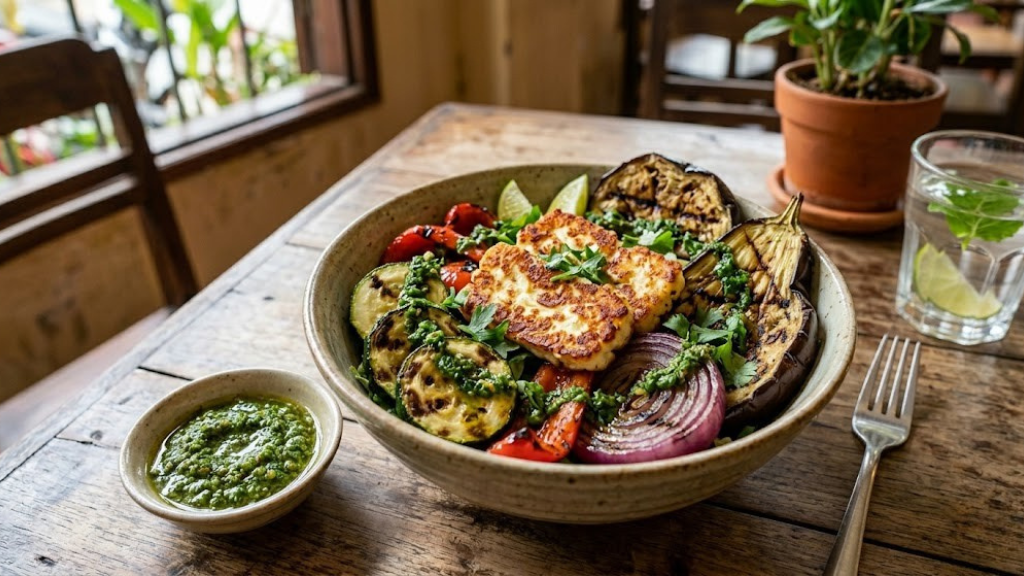
Grilled Vegetable Salad with Halloumi
When your grill is already hot for burgers or steaks, throw on a batch of thick-sliced zucchini, eggplant, red bell peppers, and red onion wedges. Brush with olive oil, season with salt and pepper, and grill until tender and charred — about 3-4 minutes per side. Arrange the grilled vegetables on a platter, top with slices of grilled halloumi cheese (which develops a golden crust without melting), and drizzle with a chermoula-inspired dressing of olive oil, lemon juice, garlic, cumin, coriander, smoked paprika, and fresh cilantro and parsley.
The smokiness of the grilled vegetables combined with the salty, squeaky halloumi and the aromatic North African dressing creates a salad with extraordinary depth. This works as a vegetarian main course or a substantial side alongside simpler grilled meats.
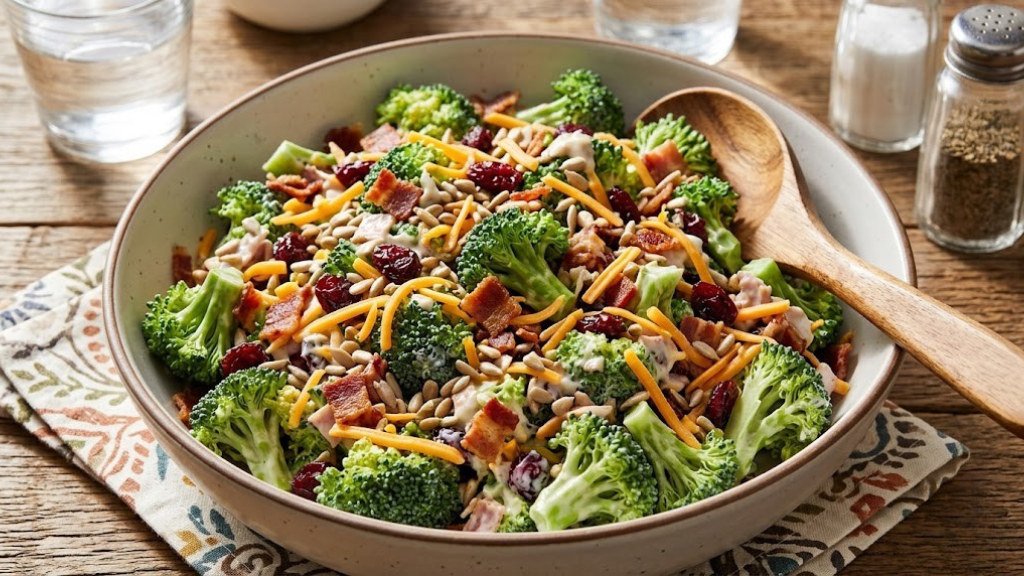
Broccoli Bacon Salad
This American potluck classic combines raw broccoli florets with crispy crumbled bacon, shredded sharp cheddar, diced red onion, sunflower seeds, and dried cranberries. The dressing is a simple mix of mayonnaise, apple cider vinegar, and sugar. While it may not win any health-food awards, it is universally beloved at summer gatherings and it holds up for hours on a buffet table without wilting. The combination of textures — crunchy broccoli, crispy bacon, chewy cranberries, and tender cheese — keeps every bite interesting.
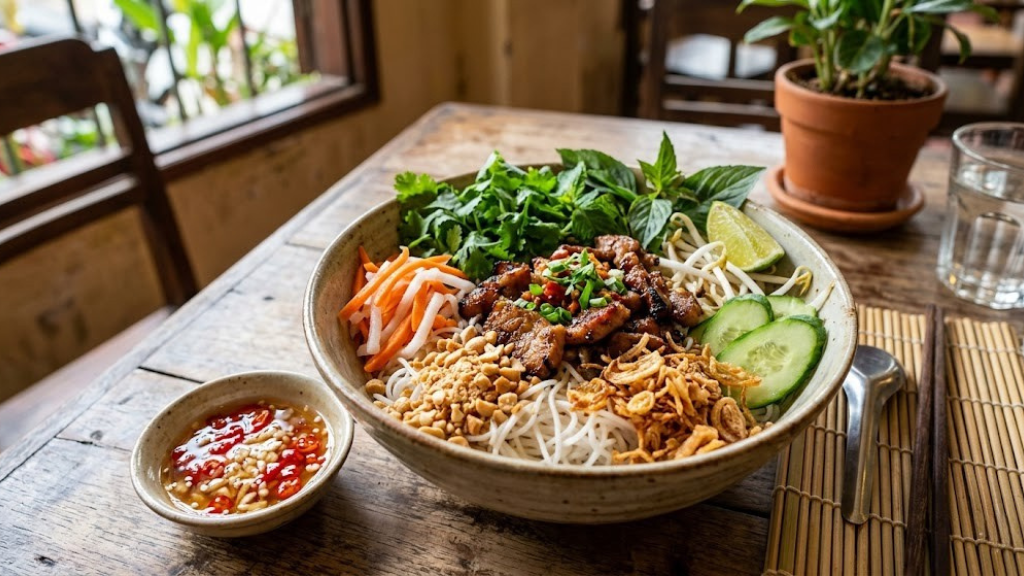
Vietnamese Vermicelli Noodle Salad (Bun)
Thin rice vermicelli noodles topped with fresh herbs (mint, Thai basil, cilantro), shredded lettuce, pickled carrots and daikon, sliced cucumbers, crushed peanuts, crispy shallots, and your choice of grilled protein — lemongrass chicken, marinated pork, shrimp, or tofu. The dressing is a traditional Vietnamese nước chấm: fish sauce, lime juice, sugar, water, garlic, and sliced chili. This is one of the most refreshing and complex-tasting salads in any cuisine, and once you discover it, it will become a warm-weather staple.
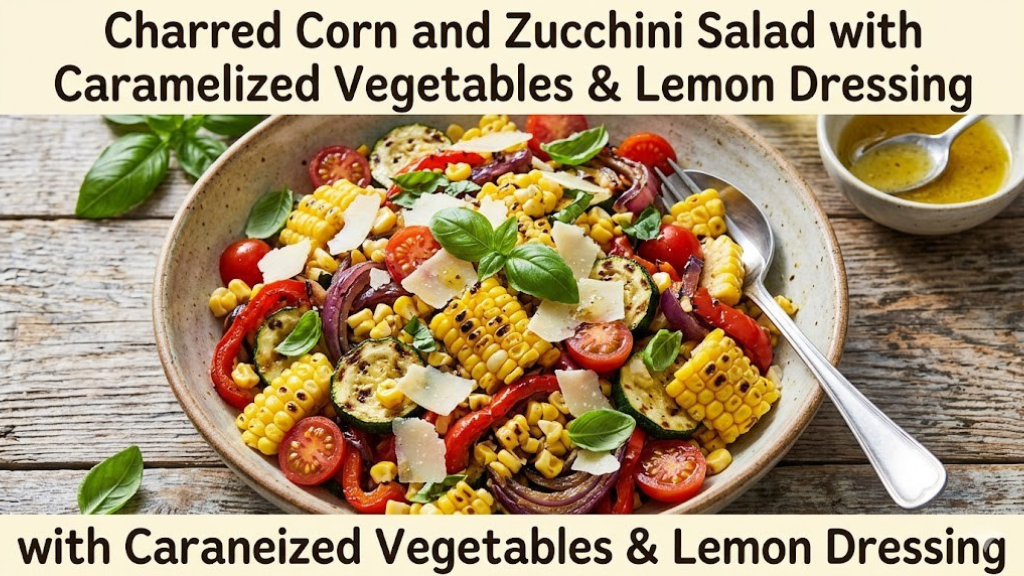
Charred Corn & Zucchini Salad with Basil
Char corn kernels and sliced zucchini in a very hot skillet until they develop deep golden-brown spots. Toss while warm with halved cherry tomatoes, torn fresh basil, a squeeze of lemon, a drizzle of olive oil, shaved Parmesan, and salt and pepper. The caramelized sweetness of the charred corn and zucchini plays beautifully against the acidic tomatoes and fragrant basil. This is a side salad that steals the spotlight from whatever protein it was supposed to accompany.
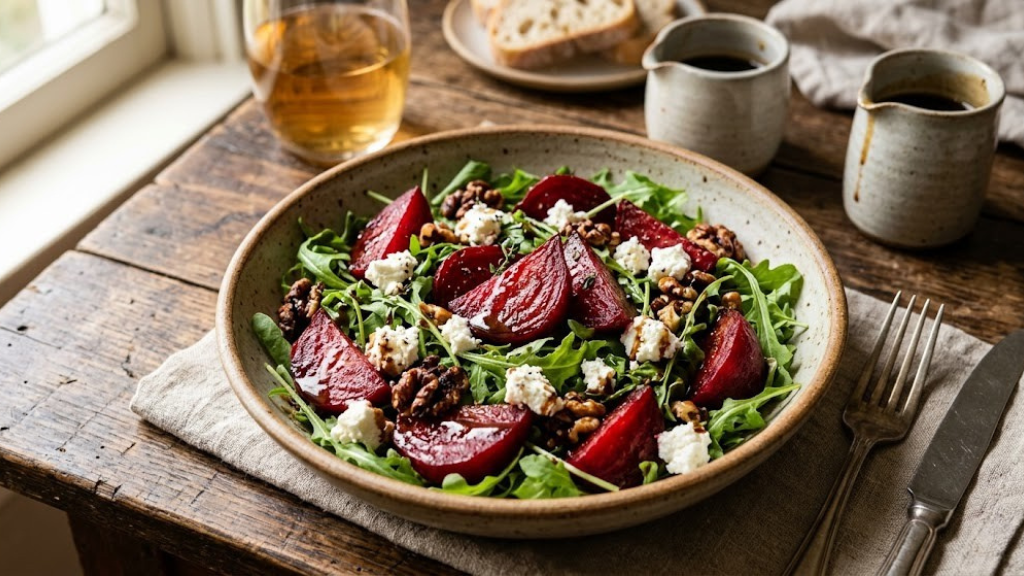
Roasted Beet & Goat Cheese Salad
Roast beets (wrapped in foil, 400°F, about 45-60 minutes until tender) until they are sweet and concentrated. Cool, peel, and cut into wedges. Arrange on a bed of arugula or mixed greens, top with generous crumbles of creamy goat cheese, toasted walnuts, and a drizzle of balsamic vinaigrette. The earthy sweetness of the beets, the tangy creaminess of the goat cheese, the crunch of the walnuts, and the peppery bite of the arugula create a salad of exceptional balance. Add a handful of fresh dill or tarragon for an aromatic lift.
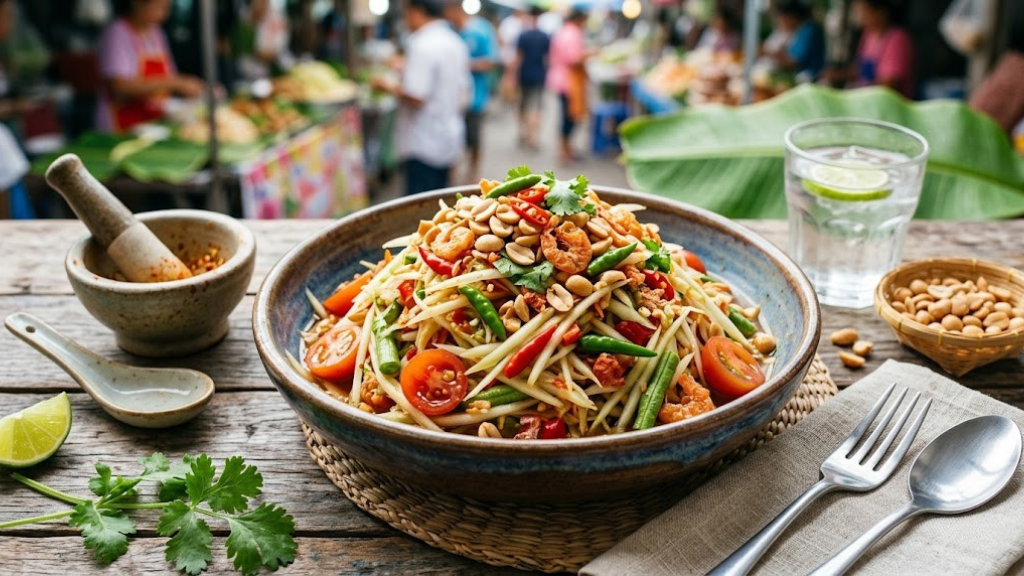
Spicy Thai Papaya Salad (Som Tum)
Green (unripe) papaya is shredded into thin strips and pounded in a mortar and pestle with garlic, Thai chili, green beans, cherry tomatoes, dried shrimp, peanuts, fish sauce, lime juice, and palm sugar. The pounding action bruises the ingredients and releases their flavors, creating a salad that is simultaneously crunchy, spicy, sour, sweet, and savory. If green papaya is unavailable, shredded green mango or even firm, unripe pears can substitute, though the texture will be slightly different.
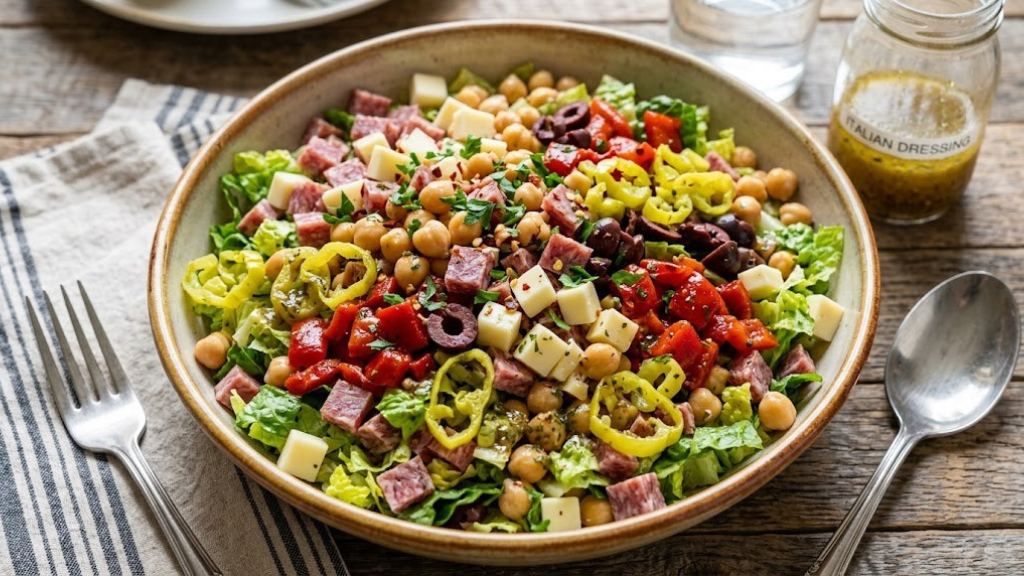
Chopped Italian Salad
Everything in this salad is chopped to a uniform, bite-sized dice, which means every forkful contains a perfect ratio of ingredients. Dice romaine, salami, provolone, chickpeas, roasted red peppers, pepperoncini, tomatoes, red onion, and olives. Toss with a zesty Italian dressing and finish with dried oregano and a generous shaving of Parmesan. This is the deli-counter salad elevated — hearty, satisfying, and packed with bold Mediterranean flavors.
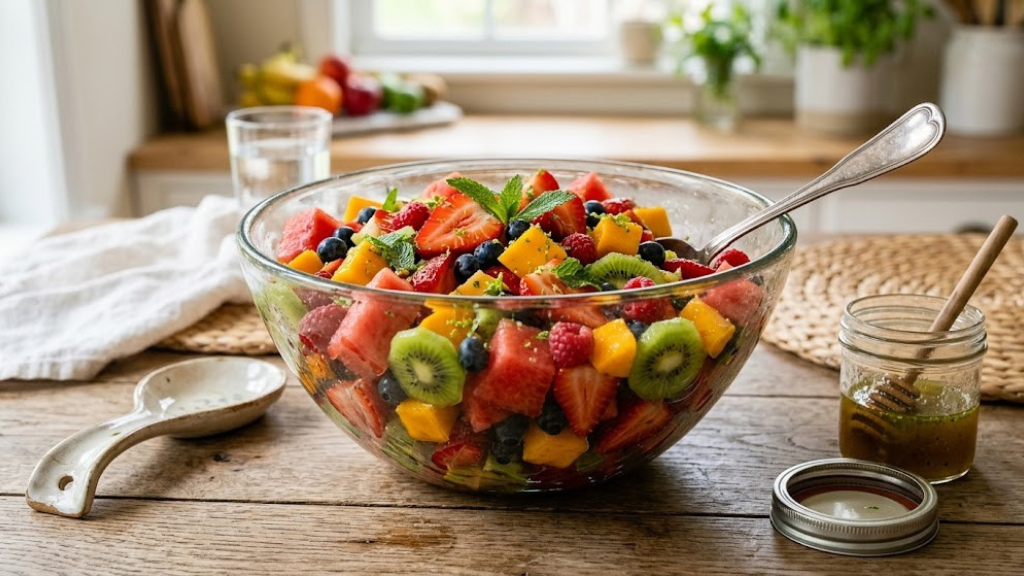
Fruit Salad with Honey-Lime Dressing
While most of this guide focuses on savory salads, a well-made fruit salad deserves its place at the summer table. Combine a variety of ripe, seasonal fruits — watermelon, cantaloupe, blueberries, strawberries, raspberries, mango, kiwi, and pineapple — in a large bowl. Dress with a simple mixture of honey, fresh lime juice, and finely chopped fresh mint. The lime juice prevents browning, the honey adds a unifying sweetness, and the mint provides an aromatic brightness that elevates the fruit from a random assortment to a cohesive dish. For a more adult version, add a splash of coconut rum or Champagne.
Seasonal Buying Guide: Picking the Best Summer Produce
Even the most skillful cook cannot make a great salad from mediocre produce. Understanding how to select, store, and handle peak-season ingredients is the invisible skill that separates good home cooks from great ones. In summer, the markets overflow with options, but not every tomato on the table is worth your money, and not every watermelon hiding in the pile is ripe. Here is how to choose with confidence.
Tomatoes
Tomatoes are arguably the single most important summer salad ingredient, and the difference between a good tomato and a great one is enormous. Look for tomatoes that feel heavy for their size — this indicates high water content and juice. They should give slightly when pressed but not feel mushy. The stem end should smell distinctly tomatoey — if you cannot smell anything, the tomato was probably picked unripe and will taste watery. Heirloom varieties like Brandywine, Cherokee Purple, Green Zebra, and Sungold cherry tomatoes offer the most complex flavors but bruise more easily and have a shorter shelf life than commercial hybrids.
Store tomatoes at room temperature, stem-side down, out of direct sunlight. Never refrigerate tomatoes unless they are fully ripe and you need to extend their life by a day or two — cold temperatures destroy the volatile compounds responsible for that characteristic tomato aroma and flavor. Once cut, use within a day. If you have too many ripe tomatoes at once (the best problem to have), make a quick batch of gazpacho, raw tomato sauce, or simply slice and freeze in a single layer on a baking sheet for winter use in cooked dishes.
Cucumbers
For salads, English cucumbers (the long ones wrapped in plastic) and Persian cucumbers are superior to standard slicing cucumbers because they have thinner skins, fewer seeds, and a crisper, less watery flesh. Look for cucumbers that are firm along their entire length with no soft spots, wrinkling, or yellowing at the ends. Smaller cucumbers tend to have fewer and smaller seeds. Store unwashed in the refrigerator crisper drawer — they last about a week. Avoid leaving them near tomatoes, bananas, or other ethylene-producing fruits, which accelerate deterioration.
Leafy Greens
When buying greens, look for vibrant color, crisp texture, and no signs of slime, browning, or wilting. Bunched greens from the farmers’ market (with roots attached, if possible) last significantly longer than pre-cut, bagged supermarket greens. When buying bagged greens, check the expiration date and feel the bag — if it is puffed up or contains visible moisture, the greens are already beginning to decompose.
Washing greens properly is critical. Fill a large bowl with cold water, submerge the greens, and swish gently to release dirt and sand. Lift the greens out (do not pour through a colander, which redeposits the dirt), change the water, and repeat until no sediment remains at the bottom of the bowl. Spin dry in a salad spinner — then spin again. Seriously. Residual moisture is the primary reason home salads taste worse than restaurant salads. Restaurants spin their greens multiple times until they are bone dry, which allows dressing to coat the leaves rather than sliding off into a puddle.
Corn
Sweet corn peaks in midsummer and is at its absolute best within 24 hours of being picked. Look for ears with bright green, tightly wrapped husks and moist, golden-brown silk at the top. Peel back a small section of husk to check that the kernels are plump, tightly packed, and produce milky juice when punctured with a fingernail. If the juice is clear, the corn is underripe; if there is no juice, it is overripe. Do not shuck corn until you are ready to cook or eat it — the husk keeps the kernels moist and sweet.
For raw salad applications, fresh sweet corn at peak season is tender and sweet enough to eat directly off the cob without cooking. Simply slice the kernels off the cob with a sharp knife and toss directly into your salad. For charred corn salad, cut the kernels off first, then sear them in a screaming-hot dry skillet or cast iron pan. This method gives you more uniform charring than grilling the whole cob.
Stone Fruits (Peaches, Nectarines, Plums)
For salads, you want stone fruits that are ripe enough to be sweet and fragrant but firm enough to hold their shape when sliced. Press gently near the stem — the fruit should yield slightly without being mushy. Smell the blossom end (opposite the stem); a ripe peach or nectarine will have a strong, sweet, floral aroma. If it smells like nothing, it is not ripe and may have been picked too early to ripen properly.
Store unripe stone fruits at room temperature until they give slightly to pressure and smell fragrant. Once ripe, refrigerate and use within 2-3 days. For grilling applications (grilled peach salad), choose fruit that is just barely ripe — slightly firm — so it holds together on the grill rather than falling through the grates into a jammy mess.
Watermelon
Selecting a great watermelon involves a few reliable indicators. Look for a yellow or cream-colored field spot — the patch where the melon sat on the ground. A white or greenish field spot indicates the melon was picked before it fully ripened on the vine. The watermelon should feel heavy for its size (high water content equals juiciness) and produce a deep, hollow sound when you tap it with your knuckles. The surface should be dull rather than shiny — a shiny rind suggests the melon is underripe.
Once cut, watermelon should be refrigerated and consumed within 3-5 days. For salads, cut watermelon into cubes or use a melon baller for a more elegant presentation. Salt the cubes lightly before adding to a salad — this sounds counterintuitive, but a pinch of salt actually intensifies the perception of watermelon’s sweetness and draws out just enough moisture to concentrate the flavor.
Avocados
Avocados for salads should be ripe but still slightly firm — yielding to gentle pressure but not squishy. The small stem nub at the top is a useful ripeness indicator: if it pops off easily and reveals green flesh underneath, the avocado is ripe. If it reveals brown flesh, the avocado is overripe and will likely be discolored inside. If the nub does not budge, it needs more time.
To ripen avocados quickly, place them in a paper bag with a banana or apple — the ethylene gas accelerates ripening. Once ripe, avocados can be refrigerated for 2-3 days to slow further ripening. To prevent cut avocado from browning, brush the exposed surface with lemon or lime juice and press plastic wrap directly against the flesh (excluding air). Always cut avocados just before serving — they are the one salad ingredient that does not benefit from advance preparation.
Fresh Herbs
Buy fresh herbs with vibrant color, a strong aroma, and no wilting, browning, or slime. Treat soft herbs (basil, cilantro, parsley, dill, mint) like cut flowers: trim the stems, place them in a jar of water, cover loosely with a plastic bag, and store in the refrigerator (basil prefers room temperature). This method can keep soft herbs fresh for up to two weeks — far longer than leaving them in the plastic clamshell they came in. Hardy herbs (rosemary, thyme, oregano) can be wrapped in a damp paper towel and stored in a sealed bag in the crisper drawer for up to two weeks.
Summer Salads for Every Diet: Adaptations & Substitutions
One of the greatest strengths of salads as a food category is their adaptability. Nearly every recipe in this guide can be modified for specific dietary needs without sacrificing flavor or satisfaction. Whether you are cooking for someone who is gluten-free, dairy-free, vegan, keto, paleo, or managing specific health conditions, the salad framework (base + crunch + creamy + acid + sweet + savory) remains the same — only the specific ingredients change.
Gluten-Free Adaptations
Most salads are naturally gluten-free or easily adapted. The primary sources of gluten in salads are croutons, pasta, couscous, soy sauce, and some commercial dressings. Replace croutons with toasted nuts, seeds, or roasted chickpeas. Swap pasta for quinoa, rice, or gluten-free pasta. Use tamari instead of soy sauce. Make dressings from scratch to avoid hidden gluten in stabilizers and thickeners. Farro and bulgur wheat contain gluten and should be replaced with brown rice, millet, or buckwheat (which, despite its name, is gluten-free).
Dairy-Free Adaptations
Cheese is the dairy ingredient that appears most frequently in salads. For creamy textures, avocado is the single best dairy-free substitute — it provides richness, healthy fat, and a neutral enough flavor to complement any cuisine. Nutritional yeast sprinkled over a salad adds a savory, cheesy flavor without any dairy. Cashew-based “ricotta” or “Parmesan” can replicate specific cheese textures and flavors with remarkable accuracy. For dressings, swap buttermilk for a combination of plant milk and lemon juice, and use tahini or cashew cream instead of sour cream or yogurt.
Vegan Adaptations
Vegan salads need extra attention to protein and satiety. The best vegan protein sources for salads include chickpeas, lentils, black beans, edamame, marinated and baked tofu, tempeh, hemp seeds, and quinoa. Nuts and seeds provide both protein and healthy fat. Avocado adds creaminess and calories. Nutritional yeast provides B vitamins and a umami, cheesy flavor. The biggest mistake in vegan salad preparation is making them too light — without the caloric density of cheese, eggs, or meat, you need to compensate with generous portions of beans, grains, nuts, and healthy oils to create a satisfying meal.
Keto & Low-Carb Adaptations
Salads are naturally suited to ketogenic and low-carb eating because leafy greens and most above-ground vegetables are very low in net carbohydrates. Focus on high-fat, moderate-protein ingredients: avocado, olive oil, nuts and seeds (macadamia, pecans, walnuts, hemp hearts), full-fat cheese, bacon, hard-boiled eggs, and fatty cuts of protein like chicken thighs with skin, salmon, or steak. Avoid grains, beans, most fruits (berries in small portions are acceptable), corn, beets, and sweet dressings. Make rich, fat-based dressings using olive oil, avocado oil, or MCT oil with vinegar and herbs.
Heart-Healthy & Blood-Sugar-Friendly Adaptations
For people managing cardiovascular health or blood sugar levels, summer salads offer tremendous advantages. The high fiber content slows glucose absorption, the potassium from leafy greens and vegetables supports healthy blood pressure, and the antioxidants from colorful produce reduce oxidative stress. Focus on extra-virgin olive oil as your primary fat (rich in heart-protective monounsaturated fats and polyphenols), increase your intake of omega-3-rich proteins like salmon and sardines, and limit sodium from cured meats and salty cheeses. These salads align well with the principles found in a comprehensive heart-healthy diabetic eating plan.
A key strategy for blood sugar management is building salads with a high fiber-to-carbohydrate ratio. This means emphasizing non-starchy vegetables (greens, cucumbers, tomatoes, bell peppers, broccoli) over starchy ingredients (potatoes, corn, pasta, bread), and choosing whole grains (quinoa, farro, barley) over refined grains when a carbohydrate component is included. Adding protein and healthy fat to every salad further flattens the postprandial glucose curve.
Dietary Adaptation Quick-Reference
| Ingredient to Replace | Gluten-Free | Dairy-Free | Vegan | Keto |
|---|---|---|---|---|
| Croutons | GF bread or roasted chickpeas | Same croutons (usually dairy-free) | Roasted chickpeas, toasted seeds | Pork rinds, toasted almonds |
| Feta / Parmesan | No change needed | Avocado, nutritional yeast | Cashew “cheese,” nutritional yeast | No change needed |
| Pasta / Grains | Quinoa, rice, GF pasta | No change needed | No change needed | Cauliflower rice, skip entirely |
| Chicken / Meat | No change needed | No change needed | Chickpeas, tofu, tempeh, lentils | Fattier cuts (thighs, steak) |
| Honey (in dressing) | No change needed | No change needed | Maple syrup, agave | Monk fruit, omit sweetener |
| Soy sauce | Tamari (check label) | No change needed | No change needed | Coconut aminos |
Plating, Presentation & Visual Impact
We eat first with our eyes. A salad that looks vibrant, intentional, and abundant is psychologically more satisfying before you ever take a bite. Professional chefs and food photographers use specific techniques to make salads look their best, and many of these techniques are simple enough to apply at home — especially when you are entertaining or want to elevate an everyday dinner.
The Foundation: Color Theory on a Plate
The most visually striking salads use color contrast. A monochromatic green salad can taste wonderful but looks uninspiring from a distance. Adding a pop of red (tomatoes, strawberries, radishes, pomegranate seeds), orange (roasted carrots, mandarin segments, bell pepper), purple (red cabbage, beets, purple onion), white (feta, mozzarella, goat cheese, shaved Parmesan), and brown (toasted nuts, grilled meat) transforms the salad from bland to beautiful.
The background matters too. White and neutral-toned serving dishes create a canvas that makes colorful salad ingredients pop. Wooden bowls and cutting boards add warmth and a rustic quality that is perfect for casual outdoor entertaining. Dark slate or matte black plates create dramatic contrast for composed salads with light-colored ingredients like burrata, citrus, and pale greens.
Composed vs. Tossed: Two Styles of Assembly
A tossed salad combines all ingredients in a bowl and mixes them together — democratic, casual, and easy. A composed salad arranges ingredients intentionally in sections, rows, or layers — more formal, more visual, and it lets each ingredient be appreciated individually before the diner combines them. The Cobb, Niçoise, and caprese are all traditionally composed salads.
When composing a salad, think about height variation. A flat arrangement looks boring. Build height by mounding greens in the center, leaning protein slices against the mound, scattering taller elements (halved cherry tomatoes, quartered eggs) at different angles, and finishing with toppings that sit on top like crowns — shaved Parmesan curls, microgreens, edible flowers, or a dramatic drizzle of reduction sauce.
The Professional Drizzle
Dressing application is where many home salads go wrong visually. Dumping dressing into the center of a composed salad creates a messy pool. Instead, use a spoon to drizzle the dressing in a controlled, artistic pattern — zigzags, concentric circles, or random scattered dots. A squeeze bottle gives you even more control. For vinaigrettes, drizzle from approximately 12 inches above the salad for a thin, even distribution. For thicker dressings like tahini or ranch, dollop small spoonfuls strategically.
Balsamic reduction is the single most impactful visual finishing touch. The dark, glossy drizzle against lighter ingredients (burrata, mozzarella, pale greens, peaches) creates dramatic contrast. You can make your own by simmering balsamic vinegar in a small saucepan until it reduces by half and thickens to a syrupy consistency — about 10-15 minutes. Store in a squeeze bottle for precise application.
Garnishing Like a Pro
A few well-placed finishing touches elevate a home salad to restaurant caliber. Fresh herb sprigs (especially basil tops, dill fronds, or microgreens) add a polished, verdant accent. A crack of black pepper from a mill creates tiny specks that suggest freshness and attention to detail. A final pinch of flaky sea salt (Maldon, fleur de sel) adds visible crystals that catch light and provide pleasant textural bursts of salinity.
Edible flowers — nasturtiums, pansies, borage, or chive blossoms — add genuine beauty to summer salads. If you grow them in your garden or find them at a farmers’ market, scatter a few across the surface of a completed salad for a touch of elegance that costs almost nothing but creates an outsized visual impact.
Serving Vessels and Utensils
Shallow, wide bowls or platters are generally better for salad presentation than deep bowls, which hide the ingredients. A large rimmed platter allows you to spread ingredients across a visible surface area, showcasing the colors and textures. For individual servings, wide, shallow pasta bowls work beautifully — they provide enough depth for dressing without burying the salad’s visual appeal.
Invest in a pair of quality salad servers — wooden, bamboo, or stainless steel with long handles and broad, slightly cupped heads. These make tossing and serving easier and look considerably better on a table than a pair of mismatched forks. For outdoor entertaining, consider serving salads in clear glass bowls, which let the colors and layers of a composed salad shine from every angle.
Essential Kitchen Tools for Summer Salad Mastery
You can make a perfectly good salad with nothing more than a knife, a cutting board, and a bowl. But a few targeted tool investments dramatically improve the quality, speed, and enjoyment of your salad preparation. These are the items that professional salad cooks rely on daily, ranked roughly by their impact on your salad game.
Salad Spinner
If you buy one tool from this entire guide, make it a salad spinner. Properly dry greens are the foundation of every great salad. When greens are wet, dressing slides off and pools at the bottom, flavors are diluted, textures become limp, and the salad degrades rapidly. A salad spinner removes water through centrifugal force far more effectively than towel-drying. Look for a model with a pump mechanism (more reliable than pull-cord designs), a large bowl capacity (to handle a full head of lettuce), and a non-slip base. The inner basket doubles as a colander, and the outer bowl can be used for serving.
Sharp Chef’s Knife
A sharp knife makes salad prep faster, safer, and more enjoyable. Dull knives crush delicate ingredients instead of cutting them cleanly, bruising herbs and vegetables and releasing moisture that accelerates wilting. You do not need an expensive knife — a quality 8-inch chef’s knife in the $30-50 range, properly maintained with a honing steel and occasional professional sharpening, will outperform a $200 knife that has never been sharpened. For salad work specifically, a sharp knife slices tomatoes without squashing them, creates thin, uniform cucumber rounds, and produces the fine herb chiffonade that gives your salads a professional finish.
Mandoline Slicer
When a recipe calls for paper-thin slices of radish, fennel, cucumber, or onion, a mandoline achieves a uniformity and thinness that even the most skilled knife work cannot match. The Japanese Benriner mandoline is the professional standard — simple, effective, and inexpensive. Always use the hand guard or a cut-resistant glove (mandoline injuries are notorious) and work with a stable cutting surface. Clean immediately after use, as dried food on the blade makes it harder to clean and can dull the edge over time.
High-Quality Cutting Board
A large, stable cutting board — at least 12 by 18 inches — gives you the workspace you need to prep multiple salad ingredients efficiently without constantly transferring chopped items to make room. Wood and quality plastic boards are both excellent choices. Wood boards are gentler on knife edges and more beautiful, while plastic boards can go in the dishwasher. Avoid glass or ceramic cutting boards, which dull knives rapidly and create an unpleasant cutting experience. Place a damp towel under your board to prevent it from sliding during prep.
Citrus Juicer
Fresh citrus juice is the backbone of summer salad dressings, and a good juicer extracts more juice with less effort than squeezing by hand. A simple handheld citrus press (the kind that looks like a hinged pair of cups) works well for lemons and limes. For larger volumes, a tabletop lever-style juicer is more efficient. Either way, the difference between fresh-squeezed lemon juice and bottled is profound — bottled lemon juice lacks the volatile aromatic compounds that make fresh citrus juice taste so vibrant and alive.
Glass Jars for Dressing
Small mason jars (8 or 12 ounce) are the perfect dressing containers. Add all vinaigrette ingredients, seal the lid, and shake vigorously for 30 seconds — no whisk needed, no bowl to clean, and the jar stores the leftover dressing in the refrigerator. Label jars with masking tape and a marker so you can quickly identify the contents and the date they were made. Keeping 2-3 dressings ready in the fridge at all times eliminates the biggest barrier to daily salad consumption.
Vegetable Peeler
A sharp Y-shaped vegetable peeler creates beautiful, wide ribbons from zucchini, carrots, asparagus, and Parmesan cheese. These ribbons add visual drama and delicate texture to salads — a pile of carrot ribbons looks and eats very differently from diced or grated carrots. A good peeler should glide through vegetables with minimal pressure and produce consistent, thin strips. Swiss-made peelers from brands like Kuhn Rikon and Victorinox are excellent and very affordable.

FineDine Stainless Steel Mixing Bowl Set (5-Piece)
Nesting bowls with lids for prep, tossing, and storage. The large 5-quart bowl is perfect for mixing big-batch salads for gatherings.
Check Price on Amazon →Summer Salads from Around the World
Every cuisine that experiences warm weather has developed its own approach to cold, refreshing salads. Exploring these global traditions expands your repertoire far beyond the standard American salad framework and introduces flavor combinations, ingredient pairings, and techniques you may never have encountered. Each of these traditions represents centuries of culinary wisdom about how to eat well in the heat.
Fattoush (Lebanon & Syria)
Fattoush is a Middle Eastern bread salad that shares DNA with Italian panzanella but uses pita instead of country bread and features a distinctly different flavor profile. Torn and fried or baked pita pieces provide crunch, and the salad includes tomatoes, cucumbers, radishes, green peppers, lettuce, purslane (if available), fresh mint, and flat-leaf parsley. The dressing features olive oil, lemon juice, and sumac — a burgundy-colored ground spice with a fruity, lemony tartness unique to Middle Eastern cooking. The sumac is what makes fattoush unmistakably Middle Eastern and gives it a brightness that European-style vinaigrettes lack.
Fattoush is traditionally served during Ramadan to break the fast because its combination of bread, vegetables, and refreshing acidity provides quick energy and hydration. Beyond religious observance, it is a perfect summer salad for any occasion — particularly alongside grilled meats, kebabs, and hummus.
Laab (Thailand & Laos)
This Southeast Asian meat salad is intensely flavored and deeply satisfying. Minced chicken, pork, duck, or mushrooms are cooked (or sometimes served raw, depending on the preparation) and tossed with fish sauce, lime juice, chili flakes, thinly sliced shallots, toasted rice powder (which adds a distinctive nutty crunch), and generous handfuls of fresh mint, cilantro, and green onions. Laab is traditionally served at room temperature alongside sticky rice and raw vegetables like cabbage leaves, long beans, and Thai basil.
The toasted rice powder is the signature element — it adds texture, a nutty aroma, and a subtle thickening effect to the dressing. To make it, dry-toast raw glutinous (sticky) rice in a skillet until golden, then grind to a coarse powder in a mortar and pestle or spice grinder.
Shirazi Salad (Iran)
This Iranian staple is strikingly simple: finely diced cucumbers, tomatoes, and red or white onion dressed with fresh lime juice (not lemon), olive oil or grape seed oil, dried mint, and salt. The key is cutting everything into a very fine, uniform dice — about a quarter-inch — so that the textures blend seamlessly and the salad eats almost like a relish. Shirazi salad appears on virtually every Iranian dining table as a refreshing accompaniment to rice, kebabs, stews, and other rich dishes. Its clean, bright flavors cleanse the palate between bites of heavier food.
Yam Woon Sen (Thailand)
Glass noodle salad is a Thai classic that deserves far more attention outside Southeast Asia. Bean thread (glass) noodles are soaked in hot water until tender, then tossed with minced pork or shrimp, cherry tomatoes, sliced shallots, celery, dried chili flakes, fish sauce, lime juice, and sugar. The dressing follows the Thai flavor-balancing principle of sour-salty-sweet-spicy in equal measure. Fresh herbs (cilantro, mint, Thai basil) and crushed roasted peanuts finish the dish. Served at room temperature or slightly chilled, this is one of the most refreshing and satisfying cold salads in any cuisine.
Salade Niçoise (France)
We covered this earlier in the dinner salad section, but it deserves recognition here as one of the world’s great composed salads. Born on the French Riviera, Niçoise celebrates the ingredients of Provence — tuna, olives, tomatoes, green beans, potatoes, eggs, anchovies, and olive oil. There are heated debates in France about what constitutes an “authentic” Niçoise (purists reject potatoes, lettuce, and cooked vegetables), but the essential spirit is a celebration of the best Mediterranean produce dressed simply and arranged beautifully.
Horiatiki (Greece)
The authentic Greek village salad is notably different from what most American restaurants call “Greek salad.” A real horiatiki contains no lettuce — just thick-cut tomatoes, cucumbers, green peppers, red onion, olives (always Kalamata or similar), and a thick slab of feta cheese placed on top (not crumbled). It is dressed only with olive oil, red wine vinegar, dried oregano, and salt. The juices from the tomatoes and cucumbers mingle with the olive oil and vinegar to create a natural dressing at the bottom of the bowl, which is traditionally sopped up with crusty bread. It is a study in simplicity and perfect ingredient balance.
Gado-Gado (Indonesia)
This Indonesian composed salad features a mixture of blanched and raw vegetables — green beans, bean sprouts, cabbage, spinach, cucumber, and tofu — drenched in a warm peanut sauce made from ground roasted peanuts, tamarind, palm sugar, garlic, chili, and coconut milk. Hard-boiled eggs and fried shallots are traditional toppings, and the salad is often served over rice or with compressed rice cakes (lontong). Gado-gado is more substantial than most Western salads and serves as a complete meal — its combination of vegetables, protein (tofu and eggs), complex carbohydrates (rice), and rich sauce provides extraordinary satiety and flavor complexity.
Tabbouleh (Lebanon)
We covered the recipe earlier, but tabbouleh deserves recognition as perhaps the most important herb-forward salad in global cuisine. What distinguishes authentic Lebanese tabbouleh from Western versions is the ratio: it should be at least 80 percent herbs and vegetables and no more than 20 percent bulgur. The parsley is the main event, not a garnish. This proportion creates a salad that is astonishingly fresh and light — nothing like the grain-heavy versions often served in Western deli counters.
Kachumber (India)
This South Asian salad appears in countless regional variations across India, Pakistan, and Bangladesh. At its most basic, it is a finely diced combination of tomatoes, cucumbers, and onions dressed with lemon juice, salt, chili powder, and fresh cilantro. Some versions add chopped green chili, roasted cumin powder, or chaat masala (a tangy, funky spice blend). Kachumber serves the same palate-cleansing function as shirazi salad in Iranian cuisine — it accompanies rich, spicy mains and provides a cooling, crunchy counterpoint.
Troubleshooting: Common Summer Salad Mistakes and How to Fix Them
Even experienced cooks make salad mistakes — and because salads seem simple, these errors often go undiagnosed. You just know the salad does not taste right, without being able to pinpoint why. Here are the most common issues, their causes, and their solutions.
Problem: The Salad Tastes Bland
This is by far the most common salad complaint, and the cause is almost always under-seasoning. Every component of a salad needs to be seasoned individually. The greens need salt. The protein needs salt and pepper. The dressing needs salt. The grains need salt. When people dress a salad and find it bland, they add more dressing — but the problem is not insufficient dressing; it is insufficient salt in the dressing and on the ingredients themselves.
The fix: taste the dressing before applying it. It should taste slightly too salty and acidic on its own — the ingredients it coats will dilute its impact. Salt your sliced tomatoes and cucumbers separately, which also draws out some water and concentrates flavor. Season your protein well before cooking or grilling. A salad whose components are individually seasoned will taste dramatically better than an unseasoned salad with double the dressing.
Problem: The Salad Is Too Wet or Soggy
This usually comes from one of three sources: greens that were not properly dried, tomatoes or other watery vegetables releasing moisture, or dressing applied too far in advance. Use a salad spinner — and spin twice. Salt juicy vegetables separately and drain off the liquid before adding them to the salad. Dress leafy salads immediately before serving.
Problem: The Dressing Pools at the Bottom
If your dressing sinks to the bottom of the bowl, your greens are too wet (see above) or you are not tossing effectively. The best technique: add dressing to the bottom of a large bowl, then add the greens and toss from the bottom up with your hands or tongs. Your hands are actually the best salad tossing tools because you can feel when every leaf is evenly coated. Less dressing applied more evenly always beats more dressing applied haphazardly.
Problem: The Salad Is Boring Texturally
If every bite feels the same, you are missing textural contrast. Add at least one crunchy element (toasted nuts, seeds, croutons, crispy shallots, raw radishes) and one creamy element (avocado, cheese, a soft-boiled egg). The contrast between crisp, soft, chewy, and crunchy creates the sensory variety that makes salads interesting to eat rather than monotonous.
Problem: The Flavors Feel One-Dimensional
You are probably missing one of the five essential flavor elements: something acidic, something sweet, something salty, something bitter or peppery, and something umami. Most one-dimensional salads lack either acid (add lemon juice, vinegar, or pickled vegetables) or umami (add Parmesan, olives, anchovies, sun-dried tomatoes, or a well-seasoned protein). The fix is almost always a small addition rather than a complete overhaul — a squeeze of lemon, a handful of olives, or a shower of shaved Parmesan can transform a flat salad into a compelling one.
Problem: Herbs Taste Overwhelmingly Grassy
If fresh herbs are dominating the salad unpleasantly, you may be using too much of a single herb without enough supporting flavors. Balance strong herbs like cilantro and dill with mild ones like parsley, and always pair herbs with sufficient acid (lemon juice, vinegar) and fat (olive oil, cheese) to round out their flavor. Tear or chiffonade herbs rather than chopping them with a dull knife, which bruises the leaves and releases bitter compounds.
Problem: The Salad Does Not Keep Well
If you are making salads ahead and finding them deteriorated by the next day, you may be choosing the wrong base. Leafy greens are not designed for extended storage once dressed. For make-ahead salads, build on sturdier bases: shredded cabbage, grain, pasta, beans, or hearty vegetables like shaved Brussels sprouts and kale. These ingredients absorb dressing without wilting and often improve over 12-24 hours as flavors meld. If you must include leafy greens in a make-ahead salad, store them separately and toss with the dressed components just before eating.
Summer Salad Entertaining: Hosting a Build-Your-Own Salad Bar
One of the most effective (and underrated) strategies for summer entertaining is setting up a build-your-own salad bar. It solves multiple hosting challenges simultaneously: it accommodates every dietary restriction without requiring you to make separate dishes, it looks spectacular as a spread, it requires almost no last-minute effort, and it feels interactive and personalized for your guests. Whether you are hosting a casual backyard barbecue, a bridal shower brunch, or a neighborhood block party, a salad bar scales effortlessly from 6 to 60 people.
Planning the Layout
Set up the salad bar in a logical flow that mirrors how people naturally build a salad: bases first, then vegetables, proteins, cheeses and toppings, and dressings last. Use bowls of varying heights and sizes to create visual interest — small ramekins for nuts and seeds, medium bowls for vegetables, and large serving bowls for greens and grains. Label everything with small cards or toothpick flags so guests can identify ingredients, especially for allergy awareness.
Keep cold items on ice or use chilled platters. A large baking sheet filled with ice, covered with parchment paper, and arranged with small bowls of toppings creates an effective cold display without expensive equipment. Refill bowls from backup containers in the kitchen as needed — a bowl that is three-quarters empty always looks less appetizing than a freshly filled one.
The Salad Bar Shopping List
For a group of 12, plan for approximately two to three heads of romaine (chopped), one pound of baby spinach, one large container of mixed spring greens, three cups of cooked quinoa, two cups of cooked farro, and one pound of cooked pasta. For toppings, prepare about two pints of cherry tomatoes (halved), four cucumbers (diced), two cans of chickpeas (drained and rinsed), one pound of shredded carrots, two cups of corn kernels, one cup of sliced radishes, two avocados (sliced just before serving), one cup each of crumbled feta and shaved Parmesan, one cup of toasted almonds, half a cup each of sunflower seeds and dried cranberries, and one jar of pickled red onions.
For proteins, grill two pounds of chicken thighs (sliced), hard-boil one dozen eggs (quartered), and have a can or two of high-quality tuna available. For dressings, make a red wine vinaigrette, a creamy Caesar or ranch, and a lemon-tahini. Three dressing options give guests enough variety without overwhelming them with choice.
Timing and Workflow
The beauty of a salad bar is that 90 percent of the work can be done well in advance. Two days before: cook grains and proteins, make dressings, pickle onions. The day before: wash and dry greens, chop vegetables, toast nuts, and organize serving bowls. Day of: set up the display, add perishable items (avocado, fresh herbs), and top off the ice. This timeline means you spend the actual party enjoying your guests rather than frantically chopping in the kitchen.
Drinks to Pair with Summer Salads
Light, refreshing beverages complement summer salads better than heavy reds or dark beers. Crisp white wines — Sauvignon Blanc, Pinot Grigio, Albariño, or dry Rosé — are natural partners for most summer salad flavors. If you are exploring wine options to complement your salad spread, understanding the basics of wine and food pairing will help you choose bottles that enhance rather than overwhelm the delicate flavors on the table.
For non-alcoholic options, sparkling water with citrus, fresh-squeezed lemonade, iced herbal tea (particularly hibiscus or mint), and cucumber-infused water all pair beautifully with summer salads. The common thread is effervescence or bright acidity, which mirrors and complements the acidic dressings in most salads.
Growing Your Own Salad Ingredients: A Starter Guide
The shortest path from garden to table is a salad, and growing even a small selection of salad ingredients at home transforms your summer eating in ways that buying from a store simply cannot match. Greens picked 30 seconds before serving have a vitality and flavor that diminishes rapidly after harvest. Herbs from your windowsill taste more potent than anything in a plastic clamshell. A warm tomato eaten straight from the vine, still carrying the heat of the afternoon sun, is a different food entirely from a refrigerated supermarket tomato.
You do not need a large garden or any gardening experience to grow excellent salad ingredients. A few containers on a sunny balcony, patio, or windowsill can supply fresh herbs, lettuce, cherry tomatoes, and radishes all summer long.
Best Salad Crops for Beginners
Lettuce and salad greens: These are among the easiest vegetables to grow. They germinate quickly, mature in 30-45 days, and can be harvested by cutting individual leaves (cut-and-come-again method) for a continuous supply. Sow seeds directly into containers or garden soil every two weeks for staggered harvests. Lettuce prefers cooler temperatures — in midsummer heat, it tends to bolt (go to seed) and turn bitter. Grow heat-tolerant varieties like oak leaf, red leaf, and romaine, and position containers in partial shade during the hottest part of the day.
Herbs: Basil, cilantro, mint, dill, chives, and parsley are essential salad herbs that grow prolifically in containers. Basil thrives in heat and sun — a single plant produces enough leaves for daily salad use all summer. Cilantro bolts quickly in heat, so sow new seeds every three weeks for continuous supply, or try the slow-bolt variety called “Santo.” Mint grows aggressively and should always be planted in a container to prevent it from taking over your garden bed. Chives are virtually indestructible perennials that return larger and more productive each year.
Cherry tomatoes: A single cherry tomato plant in a large container (at least 5 gallons) can produce hundreds of tomatoes over the summer. Sun Gold, Sweet 100, and Black Cherry are prolific, disease-resistant varieties ideal for beginners. Provide a tomato cage or stake for support, water consistently, and feed with a balanced tomato fertilizer every two weeks. Once the plant begins producing, you will have more cherry tomatoes than you can eat — which is exactly the right problem to have when you are making daily salads.
Cucumbers: Bush varieties like Spacemaster and Salad Bush produce compact plants suited to containers. They grow fast, produce abundantly, and the small fruits are perfect for salads — tender-skinned with fewer seeds than full-sized slicing varieties. Provide consistent water and a small trellis or cage for the vines to climb.
Radishes: The fastest-growing salad vegetable, radishes go from seed to harvest in as little as 25 days. Sow seeds directly into the soil or container, thin the seedlings to an inch apart, and harvest when the tops of the roots begin to push above the soil surface. French Breakfast, Cherry Belle, and Easter Egg (multicolored) varieties are all excellent for salads.
The Container Garden Salad Setup
With just four or five large containers on a sunny balcony or patio, you can grow enough salad ingredients to dramatically reduce your grocery bill and elevate the quality of your summer meals. Fill one large container with lettuce mix, dedicate individual pots to basil, cilantro, and mint, grow a cherry tomato plant in the largest container you have, and tuck radish seeds into any available gap. This modest setup costs less than $30 to establish (seeds, soil, and containers) and will provide fresh salad ingredients from June through October in most climates.
The act of stepping outside, picking a handful of greens, snipping some basil, and plucking a few cherry tomatoes to throw into tonight’s salad is one of the most satisfying rituals in home cooking. It connects you to your food in a way that scanning items at a checkout line never can, and the results speak for themselves — salads made with ingredients picked minutes ago have an aliveness and freshness that is impossible to replicate with purchased produce.
Frequently Asked Questions About Summer Salads
What are the best greens to use in a summer salad?
The best greens for summer salads include baby spinach, arugula, mixed spring greens, romaine hearts, butter lettuce, and watercress. These stay crisp in warm weather and pair well with seasonal fruit, grilled proteins, and light vinaigrettes. Avoid delicate lettuces if making ahead, as they wilt quickly. For meal prep, romaine, kale, and shredded cabbage offer the longest refrigerator life — up to a week when properly washed and dried.
How far in advance can I make a summer salad for a party?
It depends on the salad type. Grain and pasta salads can be made 24-48 hours ahead and often taste better after the flavors have melded. Bean salads improve after 4-8 hours of marinating. Slaws can be dressed up to 24 hours in advance. Leafy green salads should be assembled within 1-2 hours of serving, but you can prep and store all the components separately up to a day in advance. Always add dressing to leafy salads right before serving to prevent wilting.
What are some high-protein summer salad ideas?
For high-protein summer salads, try grilled chicken Caesar, steak and arugula salad, shrimp and avocado bowls, tuna Niçoise, chickpea and quinoa Mediterranean salads, or Asian-style edamame and tofu salads. Adding hard-boiled eggs, nuts, seeds, or crumbled feta boosts protein in any salad. A well-built dinner salad with a substantial protein source can easily provide 30-40 grams of protein per serving.
How do I keep summer salads from getting soggy?
Store dressing separately and add it just before serving. Use a salad spinner to remove excess water from greens — this is the single most important step. For composed salads, layer heavier ingredients on the bottom and delicate greens on top. If using juicy ingredients like tomatoes or watermelon, salt them separately and drain the liquid before adding to the salad. For make-ahead options, choose sturdy bases like grains, pasta, cabbage, or beans that absorb dressing without wilting.
Can I use frozen fruit in summer salads?
Fresh fruit is strongly preferable for both texture and presentation, but thawed frozen berries, mango, or pineapple can work in grain-based salads and some slaw recipes where a softer texture is acceptable. Avoid using frozen fruit in leafy green salads, as it releases significant moisture that quickly wilts the greens. If using frozen fruit, thaw completely and drain all excess juice before adding to the salad.
What is the healthiest salad dressing for summer salads?
The healthiest dressings are homemade vinaigrettes made with extra-virgin olive oil, citrus juice or vinegar, garlic, fresh herbs, and a touch of Dijon mustard for emulsification. Lemon-tahini and Greek yogurt-based dressings add creaminess with significantly less saturated fat than ranch or Caesar. Avoid store-bought dressings high in added sugars, sodium, seed oils, and artificial preservatives. A simple 3:1 ratio of olive oil to acid, seasoned with salt and pepper, is nutritious, delicious, and takes 60 seconds to make.
What fruits go best in savory summer salads?
Watermelon, strawberries, peaches, nectarines, mangoes, blueberries, and figs all pair beautifully with savory salad ingredients. The key is balancing their sweetness with salty, acidic, and bitter elements. Watermelon works well with feta and mint, peaches complement burrata and prosciutto, berries pair nicely with goat cheese and candied nuts, and mango matches beautifully with black beans, chili, and lime.
Are summer salads good for weight loss?
Yes, summer salads can be excellent for weight management when built thoughtfully. Start with a large volume of fiber-rich greens, add lean protein for satiety, include plenty of colorful vegetables, and use a moderate amount of healthy fats from olive oil, avocado, or nuts. Watch portion sizes on calorie-dense toppings like cheese, croutons, dried fruit, and creamy dressings — these can turn a 300-calorie salad into a 900-calorie meal. The high fiber and water content of salads promotes fullness with relatively few calories.
What summer salads are best for large gatherings and potlucks?
Classic coleslaw, pasta salad, potato salad, Mexican street corn salad, Mediterranean orzo salad, panzanella, and caprese platters all serve large groups exceptionally well. These recipes travel easily, can be made well in advance, and hold up on a buffet table for hours without wilting or losing quality. Plan approximately 4-5 ounces of grain, pasta, or slaw salad per person, and always prepare slightly more than you think you will need.
How can I make a summer dinner salad filling enough for a main course?
Add a substantial protein source like grilled chicken (6 oz), salmon (5 oz), shrimp, steak, chickpeas, or 2-3 hard-boiled eggs. Include a complex carbohydrate such as quinoa, farro, roasted sweet potato, or crusty bread on the side. Incorporate healthy fats from half an avocado, a generous handful of nuts or seeds, or a robust olive oil dressing. A well-built dinner salad with protein, carbs, and fat typically provides 500-650 calories and keeps you satisfied for 4-5 hours.
Your Summer Salad Season Starts Now
You now have everything you need — over sixty recipes, a master dressing formula, ingredient pairing guides, meal prep strategies, and food safety knowledge — to make this the summer you finally fall in love with salads. Not the dutiful, eat-your-vegetables kind of love, but the genuine, I-cannot-stop-thinking-about-that-watermelon-feta-salad kind.
Start small. Pick one recipe from this guide that excites you and make it this week. Then try another. Before long, you will be riffing on your own creations, confidently improvising based on what looks best at the farmers’ market that morning. That is the real goal — not to follow recipes forever, but to develop the instincts that let you build extraordinary salads from whatever summer puts in front of you.
Your greens are waiting. Your farmers’ market is stocked. The sun is out. Go make the best salad of your life.