
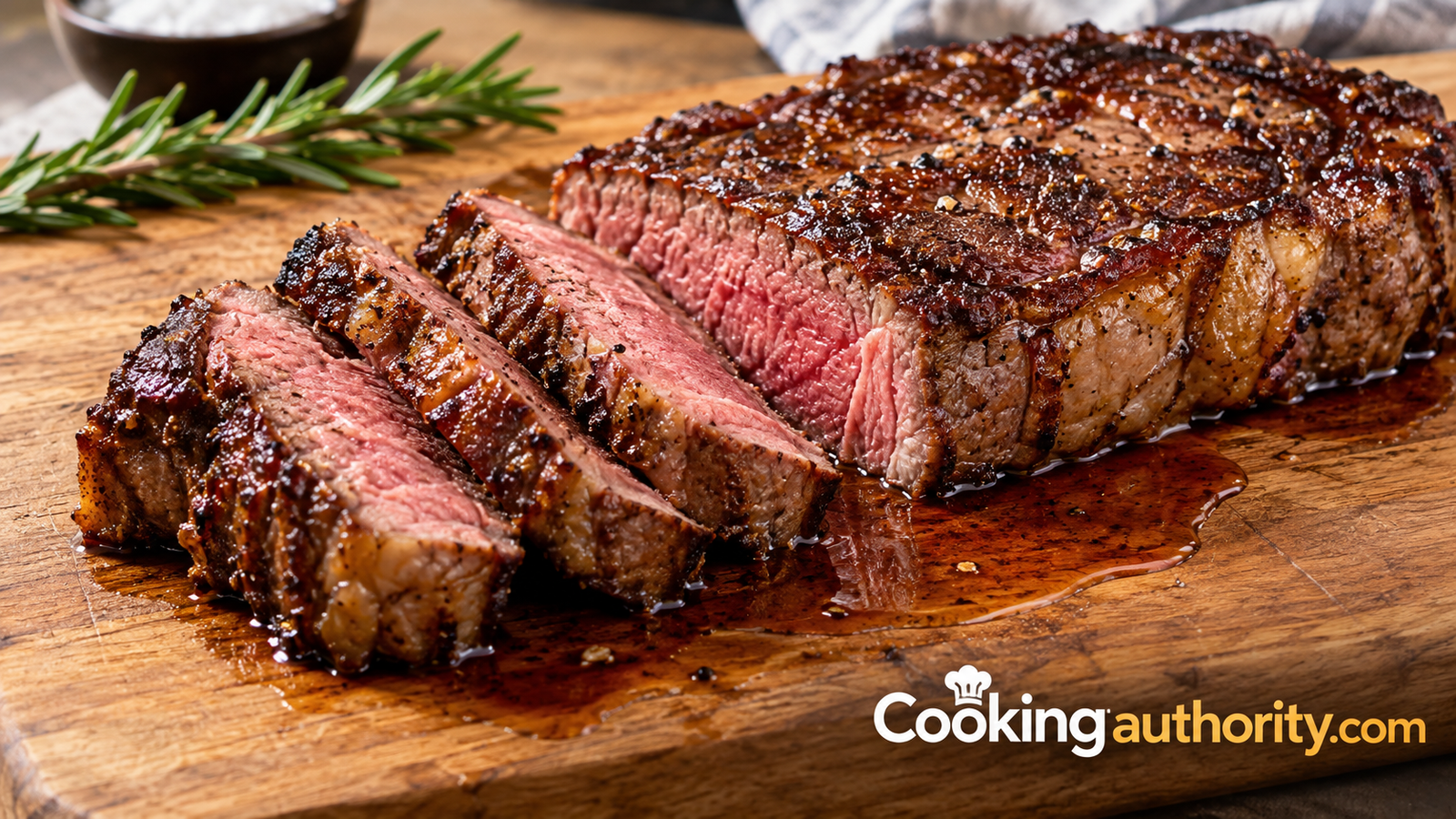
How Long Should Steak Rest After Cooking?
The honest answer, the reasoning behind it, and a practical resting plan for every cut, thickness, and cooking method you are likely to run into.
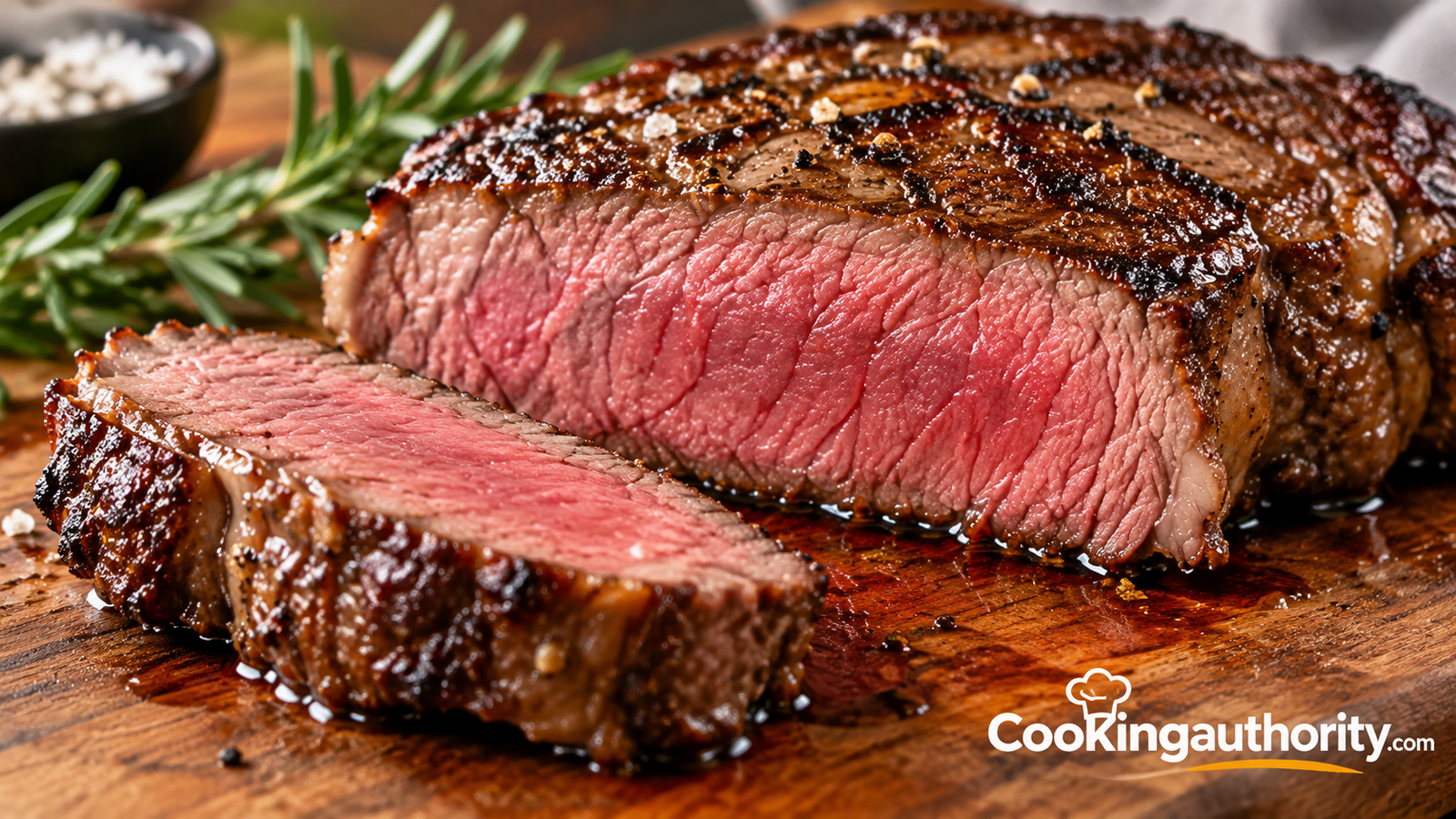
You have done the hard part. The pan is ripping hot, the crust is deeply browned, the kitchen smells like butter and garlic, and every instinct is telling you to slice in right now. Then you hear the advice that every serious cook repeats: let it rest. It feels counterintuitive. Why would you let a perfectly cooked steak sit there getting cooler while everyone at the table waits?
Most steaks should rest for about 5 to 10 minutes after cooking. Thin steaks under an inch need roughly 5 minutes, steaks between 1.5 and 2 inches thick do best with about 10 minutes, and very thick cuts or large roasts can take 15 to 20 minutes or more. A reliable rule of thumb is to rest the meat for around half the time it spent cooking, or about 5 minutes per inch of thickness.
That number is the short version. The longer version explains why resting works, why the right time changes with thickness and cooking method, how carryover heat can quietly push a medium-rare steak into medium territory, and what you can do in the meantime to keep the crust crisp and the meat warm. Once you understand the logic, you will stop following a timer blindly and start reading the steak in front of you.
This guide walks through all of it in plain language, with tables you can screenshot, a pull-temperature chart, cut-by-cut advice, and answers to the questions people actually ask at the stove.
What Resting a Steak Really Means
Resting is exactly what it sounds like. When the steak comes off the heat, you move it to a clean surface and leave it alone, uncut and untouched, for a short period before slicing or serving. It is not a cooling-off period in the sense of letting the meat go cold, and it is not a resting phase where nothing happens. Quite a lot is going on inside the muscle during those minutes, and all of it works in your favor.
Think of a steak at the moment it leaves the pan. The outside has been blasted with heat well above the boiling point of water, while the center may be sitting somewhere around 120 to 130°F. That is a steep temperature gradient, and the muscle fibers on the hot outer layers are tight and contracted. The juices inside are under pressure, pushed toward the cooler center. If you cut at that moment, much of the liquid has nowhere to go but out onto the board.
Resting gives the temperature gradient time to even out and the fibers time to relax. The result is meat that holds on to its moisture, slices cleanly, and tastes more tender and more flavorful. It costs you nothing but a few minutes of patience, which makes it the cheapest upgrade in the entire steak-cooking process.
Why this question matters
People ask how long to rest a steak because they sense that the answer is not zero, but they also worry about serving a cold dinner. Both worries are fair. Rest too little and you lose juice. Rest far too long and the steak loses heat and the crust turns soft. The goal is a window where the meat has relaxed but is still piping hot, and that window is a lot more forgiving than most people fear.
- Resting happens off the heat, on a clean surface, with the steak left whole.
- The steak stays hot throughout because meat holds heat longer than you would expect.
- The goal is juicier slices, a more even color, and better texture.
- The ideal time scales with thickness, not with how hungry everyone is.
Start with the right toolA fast instant-read thermometer takes the guesswork out of every steak you cook.
The Science Behind the Rest
There are really three things happening while a steak rests: the juices redistribute, the temperature equalizes, and the proteins relax. They overlap, and each one contributes to a better bite.
Juice redistribution
Muscle is mostly water, often around 70 percent or more. In a hot pan or on a grill, the heat causes the proteins to contract and squeeze moisture inward and outward. When you slice immediately, the moisture closest to the center is mobile and runs freely. Give the steak a few minutes and the proteins loosen their grip while the juices thicken slightly as they cool. That thicker, slightly cooler liquid is held in place more effectively by the meat, so more of it ends up on your fork instead of on the plate.
Many cooks describe this as the juices being reabsorbed. Food scientists tend to describe it a bit differently, noting that the steak is not literally sucking liquid back up like a sponge. Instead, the combination of relaxing fibers, cooling temperature, and the gelled proteins and dissolved collagen inside the meat reduces how much liquid escapes when you cut. Either way, the practical result is the same: a rested steak loses less juice.
Temperature equalization
A freshly cooked steak is hottest at the surface and coolest in the middle. During the rest, heat moves inward, which narrows that gap. This is why a steak that looked a bit too rare in the center the moment it left the pan often looks perfect after resting. The color becomes more uniform, and the eating experience improves because you are not biting through a scorching exterior and a cold core.
Protein relaxation
When muscle fibers are heated, they tighten. A steak straight off the heat is firm for this reason. After a rest, the fibers soften, and the meat feels noticeably more tender. This is subtle but real, and it is part of why a rested steak is easier to cut and to chew.
Worth knowing: Resting does not rescue an overcooked steak. It improves juiciness and texture in a properly cooked one. The biggest gains show up in thicker cuts cooked at high heat, where the temperature difference between surface and center is greatest.
What happens if you skip it
Cut into a steak immediately and you will usually see a flood of liquid spread across the board. That puddle is flavor you paid for. Cut after resting and the board stays far drier, and the slices look glossy and moist rather than gray around the edges. The difference is easy to see, which makes it a fun side-by-side experiment if you cook two identical steaks and slice one right away.
A simple side-by-side test
If you want proof, cook two identical steaks the same way on the same night. Slice the first one the moment it leaves the pan and let the second rest for the full recommended time. Place both on white plates and watch. The first will leave a visible pool of liquid and often looks grayer near the edges. The second will keep its juices, show a more even pink, and slice with less resistance. Tasting them back to back makes the case more convincingly than any article can, and it takes only a few extra minutes.
Pay attention to texture too. The rested steak tends to feel plush and cohesive, while the unrested one can feel slightly stringy and dry in the mouth even though both reached the same internal temperature. That difference is moisture retention at work.
See the difference yourselfA heavy cast iron skillet gives you the crust that makes resting worth it.
How Long Should Steak Rest After Cooking?
The most useful answer is a range tied to thickness. A steak does not care how many people are waiting, only how much mass it has and how much heat is trapped in it. Thicker steaks hold more heat and need longer to settle, while thin steaks settle quickly and cool fast.
| Steak Thickness | Recommended Rest | Notes |
|---|---|---|
| Under 1 inch | 3 to 5 minutes | Cools quickly, so keep rests short |
| 1 to 1.5 inches | 5 to 8 minutes | The classic ribeye or strip range |
| 1.5 to 2 inches | 8 to 10 minutes | Porterhouse, thick filet, bone-in ribeye |
| 2 inches and up | 10 to 15 minutes | Tomahawk, cowboy cuts, double-thick filet |
| Large roasts | 15 to 30 minutes | Prime rib, tenderloin roast, whole strip |
Two handy rules of thumb
The first rule is to rest for about five minutes per inch of thickness. A one-inch steak gets five minutes, a two-inch steak gets ten. The second rule is to rest for roughly half the cooking time. A steak that spent eight minutes on the heat gets about four minutes, while a roast that cooked for two hours can happily rest for twenty to thirty minutes. Neither rule is a law, but both land you in the right neighborhood almost every time.
What about the official guidance?
Food safety guidance for whole cuts of beef calls for cooking to an internal temperature of 145°F and then allowing a rest of at least three minutes before eating. That three-minute figure is a safety-oriented minimum, not a quality target. For flavor and texture, most cooks and chefs prefer a longer rest, often in the five-to-ten-minute range for typical steaks. If you cook to a lower doneness such as medium-rare, you are making a personal choice about risk, which is worth remembering especially when cooking for children, older adults, or anyone with a compromised immune system.
Benefits of resting 5 to 10 minutes
- Noticeably juicier slices
- More even color from edge to center
- Cleaner, easier slicing
- Time to finish side dishes and sauces
Risks of overdoing it
- Crust softens as steam builds
- Steak can cool below ideal eating temperature
- Fat begins to firm up on thin cuts
- Dinner gets cold for impatient guests
Plan your timingA simple digital kitchen timer keeps your rest consistent every single time.
Resting Time by Thickness and Weight
Thickness is the single biggest factor in how long a steak should rest, and it matters more than the weight on the package. A wide, flat steak and a short, fat steak can weigh the same but behave very differently, because heat has a shorter distance to travel in the flat one. When in doubt, measure the thickness at the thickest point with a ruler or just compare it to your fingers, since two fingers stacked is roughly an inch.
Thin steaks: under one inch
Skirt, flank, flat iron, and thin-cut sirloin fall into this category. These cook fast, lose heat fast, and have a smaller temperature gradient to resolve. Three to five minutes is plenty. Longer than that and you risk a lukewarm steak. Because these cuts often get sliced thin against the grain, a short rest followed by quick slicing keeps them hot and juicy.
Standard steaks: one to one and a half inches
This is where most home-cooked ribeyes, New York strips, and top sirloins live. A rest of five to eight minutes works beautifully. If you are juggling sides, aim toward the longer end, and if you are plating immediately, stay near five.
Thick steaks: one and a half to two inches
Thick filets, porterhouses, and bone-in ribeyes hold a lot of heat and benefit from eight to ten minutes. These are the steaks where skipping the rest costs you the most juice, and where carryover cooking is the most noticeable.
Extra-thick steaks and roasts
Tomahawks, cowboy steaks, and double-cut filets deserve ten to fifteen minutes. Roasts are a category of their own. A prime rib or beef tenderloin roast can rest for twenty to thirty minutes tented loosely and still be hot at the table, since the large mass retains heat remarkably well.
Bone-in note: Bones slow heat transfer near them, so bone-in steaks are often a touch pinker next to the bone. A rest helps even this out, and it is one more reason to lean toward the longer end of the range for T-bones and tomahawks.
Measure it rightA stainless steel ruler or thickness gauge helps you match your rest time to the cut.
Carryover Cooking and Pull Temperatures
Carryover cooking is the reason resting and doneness are tangled together. When a steak leaves the heat, the outer layers are much hotter than the center, and that stored heat keeps flowing inward. The internal temperature continues to climb for several minutes even though the steak is no longer on the pan or grill. For a typical steak, the rise is roughly five to ten degrees Fahrenheit. For a big roast, it can be ten to fifteen degrees or more.
This has a very practical consequence. If you want a finished medium-rare steak at 130 to 135°F, you should remove it from the heat a bit earlier, around 125 to 130°F. Wait until it reads your target on the thermometer and you will land somewhere past it.
| Doneness | Pull From Heat | Final Temp After Rest | Center Look |
|---|---|---|---|
| Rare | 115 to 120°F | 120 to 125°F | Cool red center |
| Medium-Rare | 125 to 130°F | 130 to 135°F | Warm red center |
| Medium | 135 to 140°F | 140 to 145°F | Warm pink center |
| Medium-Well | 145 to 150°F | 150 to 155°F | Slightly pink |
| Well-Done | 155 to 160°F | 160°F and above | Little to no pink |
Why thickness changes carryover
A thin steak has little stored heat, so it rises only a few degrees. A thick steak or roast carries a lot of thermal energy in its outer layers and keeps climbing longer. Higher cooking temperatures also increase carryover, because the outside is hotter relative to the inside. A steak seared in a screaming-hot pan will typically coast further than one cooked gently in an oven.
Watching the temperature while it rests
If you have never tracked carryover, try it once. Insert a probe into the thickest part right when the steak comes off the heat, and watch the numbers over the next several minutes. You will see the temperature rise, peak, and slowly begin to fall. The peak is your true finished doneness, and the time it takes to get there is a good clue for how long your cut wants to rest. A reliable probe is the best way to learn your own kitchen, and our guide to the best cooking thermometers covers options at every budget.
Hit your number every timeA leave-in probe thermometer lets you track carryover without opening the oven or lifting the lid.
Tools That Make Resting Easy
You can rest a steak on a plate with nothing but patience, but a few inexpensive tools make the process more reliable and the results more consistent. None of these are fancy. They simply remove variables.
An instant-read thermometer
This is the one true must-have. Guessing doneness by poking the steak or by the clock is how most overcooked steaks happen. A fast digital thermometer gives you a reading in two to three seconds and lets you pull the steak at exactly the right moment, accounting for carryover. If you are also cooking poultry, the same tool keeps you in a safe range, which is covered in our article on the safe temperature for cooking chicken.
A wire rack set over a sheet pan
Resting on a rack keeps air circulating around the whole steak, including the bottom. This preserves the crust on the underside, which otherwise steams against a flat plate or board. Any juices that escape collect in the pan below, ready to be spooned back over the slices or folded into a pan sauce.
A large cutting board with a juice groove
If you rest on a board, choose one big enough to give the steak space and deep enough to catch liquid. A groove prevents the puddle from sliding onto your counter.
Foil and a warm plate
A loose sheet of foil can help hold heat during a long rest, and a warmed plate keeps the steak hot at the table. Both are optional, but they are useful when you are serving a crowd.
The right pan
The quality of the sear affects how well the steak holds up during resting, since a thick, dark crust stays more satisfying than a pale one. Heavy pans that retain heat deliver the best crust. If you are weighing materials, our breakdown of ceramic versus stainless steel cookware is a good starting point, and anyone shopping with health in mind will want to see the best non-toxic cooking pans.
- Instant-read thermometer for accurate pull temperatures
- Wire rack and rimmed sheet pan for crust-friendly resting
- Large cutting board with a juice groove for carving
- Sharp slicing knife for clean cuts across the grain
- Heavy skillet or grill for a deep, durable crust
Resting steak for different eaters
Not everyone at the table wants the same doneness, and resting can help you manage that. If you are cooking one thick steak to share, remember that the ends will finish slightly more done than the center, while the middle slices stay pinker. Resting evens the difference a little, but it never erases it, so you can use it to your advantage by serving the pinkest slices to the guests who like rare and the end pieces to those who prefer medium.
When cooking several steaks of different thickness at once, stagger them. Start the thickest steak first, add thinner ones later, and plan for all of them to come off the heat within a minute or two of each other. Each will then rest according to its own size, and everything reaches the table hot together. A thermometer makes this juggling act far easier than guessing, and it is the main reason experienced home cooks rarely cook steak without one.
Finally, do not forget the human side of the equation. The rest is a natural moment to sit everyone down, pour drinks, and light the table. Announcing that dinner is five minutes away turns a possible source of impatience into part of the experience.
Rest like a proA wire cooling rack with a rimmed baking sheet keeps your crust crisp while the steak settles.
The Best Way to Rest a Steak
Once the steak hits your target pull temperature, the process is simple, but small choices make a difference. Here is the approach that works across nearly every cut.
Move it off the heat immediately
Do not leave the steak sitting in the hot pan or on the grill grates. The pan retains enormous heat and will keep cooking the bottom of the steak, overshooting your doneness. Transfer it right away to your resting surface.
Choose the right surface
A wire rack over a sheet pan is the gold standard because it protects the crust. A warm plate or a cutting board works fine for shorter rests. Avoid cold stone or metal surfaces that pull heat out of the steak, and avoid anything that traps the bottom in a pool of its own juices.
To tent or not to tent
This is where opinions split. Tenting with foil keeps the steak warmer but traps steam, which softens the crust. Leaving it uncovered preserves the crust but lets heat escape faster. For thin steaks resting five minutes or less, leave them uncovered. For thick steaks and roasts resting ten minutes or more, a very loose foil tent, with the edges left open so steam can escape, is a smart compromise. If you are curious how the same logic applies to poultry, see our take on whether you should cover a turkey when cooking.
Add butter and aromatics at the right moment
A pat of butter on top of the resting steak melts slowly and bastes it as it settles. A sprig of thyme or a crushed garlic clove adds fragrance without extra work. Flaky salt can go on right before slicing so it stays crunchy.
Use the time well
The rest is a gift of a few free minutes. Spoon pan drippings into a quick sauce, toss a salad, warm the plates, or pull the vegetables off the stove. Timing your sides to finish while the steak rests is how restaurants get everything hot at once.
Finish with flairA good finishing salt adds crunch and flavor to a freshly sliced steak.
Common Resting Mistakes to Avoid
Most resting problems come from a handful of predictable habits. Fixing them takes almost no effort.
Skipping the rest entirely
The most common mistake is also the most costly. Hungry cooks slice the moment the steak leaves the pan and wonder why it seems dry. Even three minutes beats none.
Resting too long
The opposite problem is real. A thin steak left for fifteen minutes will be lukewarm, and the fat will begin to set. Match the rest to the thickness and trust the numbers.
Wrapping it tightly in foil
A tight foil wrap traps steam against the crust and essentially braises the exterior. You will lose the sear you worked for. If you tent, keep it loose and leave gaps.
Resting in the pan
A hot cast iron pan keeps cooking the steak. If you must leave it in the pan, you are effectively adding cooking time, which defeats the point of pulling at a lower temperature.
Ignoring carryover
Pulling the steak at your final target means it will end up one doneness level higher than you wanted. Always subtract five to ten degrees from the finish temperature for steaks and more for roasts.
Cutting on a flat, cold board
Slicing a rested steak on a board with no groove sends juice running across your counter. Pick a board that contains the mess.
Poking and prodding
Repeatedly stabbing the steak with a fork or thermometer lets juices escape. One probe in the thickest part is all you need.
Handling raw meat before the cook
Good resting starts with good prep. Pat the raw steak dry with paper towels, and skip rinsing it under the tap. Washing raw meat spreads bacteria around your sink and counters without making the meat any safer, a point we cover in detail in our article on whether you should wash chicken before cooking. The same logic applies to beef. A dry surface also browns far better, which gives you the crust that makes a rested steak so satisfying.
Forgetting to plan the whole meal
A rest only helps if the rest of the dinner is ready when it ends. Many cooks pull the steak and then realize the potatoes are not done. Work backward from the moment you want to slice, and start your sides so they finish while the steak sits. The rest is the one built-in pause in the meal, so treat it as the finish line for everything else.
Do
- Pull early to account for carryover
- Rest on a rack when possible
- Tent loosely for long rests
- Slice against the grain
Avoid
- Slicing immediately
- Sealing tightly in foil
- Leaving it in a hot pan
- Resting thin steaks too long
Avoid the juice puddleA carving board with a deep juice groove catches every drop.
Resting Times by Cut of Steak
Different cuts have different shapes, fat levels, and textures, so they behave a little differently during a rest. Use the table below as a quick reference and the notes underneath for the reasoning.
| Cut | Typical Thickness | Rest Time |
|---|---|---|
| Ribeye | 1 to 1.5 inches | 7 to 10 minutes |
| New York Strip | 1 to 1.5 inches | 5 to 8 minutes |
| Filet Mignon | 1.5 to 2 inches | 8 to 10 minutes |
| T-Bone / Porterhouse | 1.5 to 2 inches | 8 to 12 minutes |
| Tomahawk | 2 to 2.5 inches | 10 to 15 minutes |
| Sirloin | 1 inch | 5 to 7 minutes |
| Flank / Skirt | 0.5 to 1 inch | 3 to 5 minutes |
| Flat Iron | 1 inch | 5 minutes |
Ribeye
Ribeye is rich and generously marbled, and that fat stays tender and rendered during a rest. It benefits from a full seven to ten minutes, partly because it is so juicy that an early cut can flood the board. The marbling also keeps it forgiving if you rest slightly longer than planned.
New York strip
The strip has a firm bite and a fat cap along one edge. Five to eight minutes is ideal. Because strips are a bit leaner than ribeyes, avoid going much beyond that, since the fat cap begins to firm as it cools.
Filet mignon
Filets are lean and thick, which means they hold heat well but have little fat to protect them. They are also prone to carryover surprises because of their rounded shape. Eight to ten minutes, with a pat of butter on top, keeps them juicy.
T-bone and porterhouse
These cuts combine a strip and a tenderloin with a bone between. The two sides cook at different rates, so a longer rest of eight to twelve minutes helps even them out. Slice each side off the bone before carving.
Tomahawk and cowboy steaks
These are showstoppers. They are thick, bone-in, and heavy with stored heat. Ten to fifteen minutes is the norm, often after a reverse sear. Their mass means they stay hot throughout.
Flank, skirt, and flat iron
These are quick-cooking and thin. A short rest of three to five minutes lets the juices settle, and then it is critical to slice them thinly against the grain. Resting longer than needed makes these cuts chewy and cool.
Cook it your wayShop quality steak knives for serving your rested steak at the table.
Resting by Cooking Method
How you cook the steak changes how much it needs to rest. The principle stays the same, but the temperature gradient inside the meat varies, and so does the ideal rest.
Pan-seared in cast iron
A hot skillet creates a steep gradient and a lot of carryover. Rest for five to ten minutes depending on thickness, and pull a few degrees early. Pan searing also makes smoke and splatter, so it helps to know how to handle the leftover grease. Our guide on how to dispose of cooking oil makes cleanup less of a chore.
Grilled over charcoal or gas
Grilled steaks usually face intense direct heat, so they benefit from a full rest. Move them off the grates to a rack or a warm plate and keep the lid closed on the grill if you are cooking more. A loose tent helps on breezy evenings when heat disappears quickly.
Reverse seared
Reverse searing cooks the steak gently in a low oven first and then finishes it with a hard sear. Because the interior is already evenly heated, the gradient is smaller, and the steak needs less rest, often just five minutes. Some cooks rest the steak briefly before the sear instead.
Oven-finished
Seared steaks finished in a hot oven continue to carry heat from the pan. Pull a little early and rest ten minutes for thick cuts.
Sous vide
Sous vide steaks are cooked to a uniform temperature throughout, so there is almost no gradient to equalize. You do not need a long rest after a sous vide steak is seared. A minute or two is plenty, and the crust matters most, so serve quickly.
Broiled
Broiling is high heat from above and behaves like grilling. Rest about five to eight minutes.
| Method | Carryover | Suggested Rest |
|---|---|---|
| Cast iron pan sear | High | 5 to 10 minutes |
| Grill | High | 5 to 10 minutes |
| Reverse sear | Moderate | 3 to 5 minutes |
| Oven-finished | Moderate to high | 8 to 10 minutes |
| Sous vide | Low | 1 to 2 minutes |
| Broiled | High | 5 to 8 minutes |
Master your methodGrill and pan accessories make high-heat cooking easier and safer.
Slicing, Serving, and Keeping Steak Warm
The rest is only half the story. How you slice and serve the steak determines whether all that patience pays off.
Slice against the grain
Muscle fibers run in one direction. Cutting across them shortens the fibers and makes every bite more tender. This matters most for flank, skirt, and flat iron, where the grain is obvious, but it improves any steak. Use a sharp knife and long, smooth strokes instead of sawing.
Cut only what you need
If you are serving a large steak to several people, slice only what you will serve right away. The remaining whole piece stays hotter and juicier than slices sitting on a plate.
Warm your plates
Plates straight from the cabinet pull heat from the meat. Run them under hot water, set them in a low oven, or stack them near the stove while the steak rests. It sounds fussy, yet it is one of the biggest differences between a restaurant steak and a home steak.
Spoon the juices over the top
Any liquid that gathered on the rack or board is concentrated flavor. Spoon it over the sliced steak or whisk it into a quick pan sauce with butter and a splash of wine or stock.
If the steak gets cold
If a steak cooled more than you wanted, do not microwave it. A better trick is to slice it and slide the slices into a hot skillet with a little butter for twenty seconds, or to warm the plated slices in a low oven. The goal is to warm without cooking further.
Serving a crowd
For gatherings, cook steaks in batches and rest them on a rack in a very low oven around 150°F. This keeps them warm without overcooking. Holiday dinners that feature multiple proteins benefit from the same logic, and you can read how it applies to poultry in our guide on how long a turkey should rest after cooking.
Sauces and compound butters
The rest is also the best moment to finish a sauce. Return the empty skillet to medium heat, add a spoonful of minced shallot, a splash of stock or wine, and let it reduce while the steak settles. Swirl in cold butter off the heat. Alternatively, mix softened butter with chopped herbs, lemon zest, and a pinch of salt, and let a slice of that compound butter melt over the steak as it rests. Either option adds richness and uses the pause productively.
Leftover steak
If you have leftovers, refrigerate them promptly in a shallow container. Cold sliced steak is excellent in salads, sandwiches, and fried rice. To reheat without drying it out, warm slices very gently in a low oven or in a skillet with a little broth. Never blast leftover steak in the microwave on high, which overcooks it in seconds and undoes everything the rest accomplished.
Serve it hotInsulated serving platters and plate warmers keep dinner at the right temperature.
Pro Tips and Myths About Resting Steak
Tips from experienced cooks
- Dry the steak thoroughly before cooking for a crust that survives the rest.
- Salt early, either right before cooking or at least forty minutes ahead, and avoid salting in between.
- Rest uncovered when the steak is thin and tented loosely when it is thick.
- Use the first minute of the rest to add butter and herbs.
- Let the thermometer, not the timer, tell you when to pull the steak.
- Rest the steak while your pan sauce comes together in the same skillet.
Adjusting for your own kitchen
Every stove, grill, and pan behaves a little differently, so treat the numbers in this guide as a starting point. Keep a simple note after each cook: the thickness, the pull temperature, how long you rested, and how the steak turned out. After a handful of steaks you will know exactly how much carryover your favorite skillet produces and how long your favorite cut wants to settle. That personal data is more valuable than any rule of thumb.
Also consider the starting temperature. A steak pulled straight from the refrigerator has a colder center than one that sat out briefly, which changes how long it needs to cook and how much carryover to expect. Letting a steak warm for about thirty minutes before cooking evens the gradient slightly and makes timing easier to predict. Dry-aged and well-marbled steaks may also behave differently, since lower moisture and more fat change how heat moves through them.
Myths worth retiring
Myth: Resting makes the steak cold. A properly rested steak is still hot. Meat holds heat well, and a five-to-ten-minute rest barely dents the temperature of a thick cut.
Myth: The juices flow back into the meat. It is more accurate to say the meat holds on to its juices better once it has relaxed and cooled slightly. The result is the same.
Myth: Foil is required. Foil is optional, helpful for long rests, and harmful when wrapped tightly.
Myth: Longer is always better. There is a sweet spot, and past it you are trading heat and crust for very little.
A simple resting plan
Pull the steak a few degrees below your target, set it on a rack, add butter, and set a timer for five minutes per inch of thickness. Use that time to finish sides and warm plates. Slice against the grain and serve immediately. If you are shopping for the cooks in your life, a thermometer and a good board make a thoughtful pairing, and you will find more ideas in our roundup of the best cooking gifts.
Complete your steak kitEverything for steak night, from thermometers to boards, in one place.
Frequently Asked Questions
How long should a steak rest after cooking?
Most steaks rest well for five to ten minutes. Thin cuts need around three to five minutes, while thick steaks and roasts can rest ten to twenty minutes or longer.
Is it okay to skip resting a steak?
You can, but you will lose juice and the steak will be less tender. Even a short three-minute rest noticeably improves the result.
Should I cover steak with foil while it rests?
For short rests, leave it uncovered to protect the crust. For longer rests of ten minutes or more, a loose foil tent with open edges keeps the steak warm without steaming the crust.
Will my steak get cold while resting?
Not if you rest it for the right amount of time. A thick steak stays hot for well over ten minutes, and warming your plates helps keep it hot at the table.
How long should a ribeye rest?
A one-to-one-and-a-half-inch ribeye does best with seven to ten minutes. Thicker bone-in ribeyes can rest a few minutes longer.
How long should filet mignon rest?
Plan on eight to ten minutes for a thick filet. Because it is lean, a topping of butter during the rest adds richness.
Do I need to rest a steak cooked sous vide?
Only briefly. Since the interior is already evenly cooked, a minute or two after searing is enough before serving.
What is carryover cooking?
It is the continued rise in internal temperature after the steak leaves the heat, typically five to ten degrees for steaks and more for roasts. Pull the steak early to account for it.
Should I rest steak on a plate or a cutting board?
A wire rack over a sheet pan is best. A plate or board works, but the bottom crust can steam, so move the steak occasionally or switch surfaces.
Can I rest steak for 30 minutes?
For large roasts, yes. For ordinary steaks, thirty minutes is too long and will leave the meat lukewarm and the crust soft.
Do I rest steak before or after seasoning with salt?
Season before cooking. Add a pinch of flaky finishing salt after slicing for texture, but do not salt the steak heavily during the rest.
Does resting apply to chicken, pork, and turkey?
Yes. All roasted and grilled meats benefit from a rest, though the best time varies. Check safe internal temperatures first, and see our guide on chicken cooking temperatures for poultry.
Conclusion
So, how long should steak rest after cooking? For most steaks, five to ten minutes is the answer, scaled to the thickness of the cut: roughly five minutes for every inch. Thin steaks need only a few minutes, while thick steaks and roasts reward a longer rest. Pull the steak a little early to make room for carryover cooking, rest it on a rack or warm surface, tent loosely if the rest is long, and slice against the grain.
That small pause is the difference between a good steak and a great one. It keeps the juices where they belong, evens out the color, and gives you time to finish the rest of the meal. Build the habit once and you will never rush a steak again.
Ready for your next steak night?Grab a reliable thermometer and the tools that make every steak turn out right.