Best Non Toxic Cooking Pans: 10 Safer Picks for Every Kitchen and Budget
Cast iron, stainless steel, ceramic, enameled and hybrid pans compared honestly, so you can cook with confidence and stop worrying about what is leaching into dinner.

Most of us never think about the pan until something goes wrong. A coating starts flaking, a handle loosens, or a headline about “forever chemicals” makes you glance at the skillet you have used every morning for years. If that sounds familiar, you are in the right place. This guide walks through ten of the most talked-about options for people who want cookware that is easier to trust, and it does so without hype, without scare tactics, and without pretending that one pan can do everything.
Here is the honest truth up front: there is no single perfect non toxic pan. Cast iron is nearly indestructible but heavy and a little fussy. Stainless steel is chemically stable but unforgiving with eggs. Ceramic nonstick is slick and friendly but wears out faster than anything else on this list. The “best” choice depends on how you cook, how much you want to spend, and how much maintenance you are willing to tolerate. That is why we organized this roundup by material and use case instead of simply ranking products one through ten.
Along the way you will find clear explanations of what the label claims actually mean, where the marketing gets fuzzy, and which pans are better suited for searing steaks versus scrambling eggs. We also included a couple of budget-friendly sets for anyone outfitting a first kitchen. If you are shopping for someone else, our cooking gift guide is a good companion read once you have settled on the pan.
Quick note on how we evaluated these pans: this article is a research-based roundup built on construction, materials, manufacturer specifications, and the patterns that show up in long-term owner feedback. Coating chemistry and specs can change between production runs, so always confirm the current details on the product page before you buy.
1. What “Non Toxic” Really Means in Cookware
“Non toxic” is not a regulated term. No agency stamps a pan with that phrase after a lab test. Brands use it as shorthand, and what it covers varies from one company to the next. To shop wisely, it helps to know the handful of substances people are actually worried about, and which materials involve them.
PFAS, PTFE and PFOA: the alphabet soup
PFAS is a huge family of man-made chemicals prized for resisting heat, water and grease. PTFE, the slippery polymer most people know by the brand name Teflon, belongs to that family. PFOA was a processing chemical historically used to make PTFE. In the United States, PFOA has been phased out of cookware manufacturing for years, which is why nearly every pan today carries a “PFOA-free” badge. That badge is true but not very meaningful on its own, because it says nothing about PTFE itself or about the broader PFAS group.
PTFE in a stable, intact coating is generally considered inert during normal cooking. The concerns people raise are about manufacturing and disposal, about coatings that scratch or flake, and about overheating. When an empty PTFE-coated pan is left on a hot burner, it can release fumes that cause flu-like symptoms in people and can be dangerous for pet birds. If you want to sidestep the whole conversation, choosing a pan with no PTFE coating at all is the simplest route.
Heavy metals: lead and cadmium
These matter mostly for glazes, enamels and decorative finishes, particularly on imported or very cheap pieces. Reputable brands test for them and say so. When a listing proudly states “free of lead and cadmium,” that is a good sign, and it is one reason the enameled and ceramic options in this guide appear alongside brands that make that claim openly.
Metal leaching: iron, nickel and aluminum
Some metals do transfer into food in small amounts. Cast iron adds a little dietary iron, which is helpful for many people and unwelcome for a few, such as those with certain iron-storage conditions. Stainless steel in the common 18/10 grade contains nickel, which can matter if you have a diagnosed nickel sensitivity. Bare aluminum can react with acidic foods, which is why quality aluminum cookware is anodized, clad inside stainless steel, or sealed beneath a coating. None of this is cause for panic, but it is a reason to match the pan to the person eating from it.
Our working definition
For this guide, a pan earns the “non toxic” label if it is made from a material with a long safety record, or if its nonstick surface avoids PTFE and PFAS-based chemistry, and if the brand is transparent about what is and is not in the product. We also flag, honestly, where a pan is a gray area. One product here uses a hybrid design that includes a fluoropolymer, and we explain that in its own section so you can decide for yourself.
Three myths worth retiring
Myth one: a pan that is not nonstick is unsafe to cook with. The opposite is closer to the truth. Cooks used cast iron, carbon steel and stainless for generations before coated pans existed, and those materials remain the benchmark for durability and chemical stability.
Myth two: ceramic pans last forever because they are “natural.” Ceramic coatings are made from mineral-based chemistry, but they are still thin layers applied to metal. Heat, abrasion and detergent break them down. Natural does not mean permanent.
Myth three: more expensive always means safer. Price tracks build quality, warranty and design far more than it tracks chemistry. A modest cast iron skillet can be a safer-feeling choice than a pricey coated set. What matters is transparency about materials, not the number on the tag.
Keeping these three ideas in mind makes marketing language far easier to decode. When a brand uses words like “pure,” “clean” or “toxin-free,” ask what specifically it is claiming and whether the product page backs it up with named substances such as PTFE, PFOA, lead and cadmium.
Rule of thumb: The safest pan is the one you use correctly. Moderate heat, the right utensils and proper cleaning will extend the life of any material and keep it performing the way the maker intended.
2. Cookware Materials Explained: Which Surface Suits You?
Before comparing individual pans, it is worth understanding the five material families that show up in this roundup. Each one trades convenience against longevity in a different way, and knowing the pattern makes every product page easier to read.
Cast iron
Cast iron is the grandparent of the kitchen. It is a single piece of iron, usually coated with a thin layer of polymerized oil called seasoning. There is no manufactured nonstick chemistry involved, which is exactly why it tops so many non toxic lists. It holds heat beautifully, moves from stovetop to oven to campfire, and can outlive its owner. The costs are weight, a learning curve around seasoning and a dislike of long simmers with acidic ingredients like tomato sauce or wine reductions.
Enameled cast iron
Enameled cast iron wraps the same iron core in a glassy porcelain coating. You get the heat retention without the seasoning routine, and acidic foods are no problem. The enamel is not indestructible, though. Dropping it or using metal tools aggressively can chip it, and quality varies a lot between premium and bargain brands. This is why established makers with transparent testing are worth the extra money in this category.
Stainless steel
Stainless steel is a nonreactive alloy that does not carry any coating at all. Good pans are “clad,” meaning an aluminum or copper core is sandwiched between steel layers so heat spreads evenly. Stainless is excellent for searing, building pan sauces and boiling, and it handles metal utensils and dishwashers without drama. Its weakness is food sticking when the pan is not preheated properly. If you are curious how it stacks up against slick coatings, our deep dive on whether ceramic or stainless steel is better for cooking goes into much more detail.
Ceramic nonstick
Ceramic nonstick is not the same thing as a ceramic plate. It is a silica-based coating, often described as sol-gel, applied over a metal body, typically aluminum. It avoids PTFE and PFAS entirely and gives you real nonstick performance with little oil, especially in the first year or so. The trade-off is durability. The slickness fades faster than PTFE, and high heat, metal utensils and dishwasher detergent all accelerate that fade. Think of ceramic pans as a lovely, slightly temporary pleasure.
Hybrid designs
Hybrid pans try to deliver the best of both worlds, such as a stainless steel surface with a raised pattern that protects a nonstick layer in the valleys. They are appealing because they tolerate metal utensils and high heat better than a flat coating does. The thing to read carefully is what the nonstick portion is made of, because that determines whether the pan fits your definition of non toxic.
How the materials compare
| Material | Nonstick Ability | Durability | Maintenance | Best For |
|---|---|---|---|---|
| Cast iron | Good once seasoned | Generational | Moderate | Searing, baking, frying |
| Enameled cast iron | Moderate | Very high, chip-prone | Low | Braising, stews, bread |
| Stainless steel | Low without technique | Excellent | Low | Searing, sauces, everyday use |
| Ceramic nonstick | Excellent when new | Fair to good | Gentle care required | Eggs, fish, low-fat cooking |
| Hybrid | Good | High | Low | All-purpose, metal-utensil users |
Matching material to your cooking style
If you cook a lot of eggs, pancakes and delicate fish, a ceramic pan will probably make you happiest. If you love a hard sear, crispy skin and fond for sauces, stainless or cast iron will serve you better. If your kitchen is a mix of weeknight stir-fries and weekend braises, the smartest move is to combine two or three materials instead of forcing one pan to do everything. Most experienced home cooks end up with exactly that setup: one cast iron skillet, one stainless fry pan, and one ceramic nonstick pan for the finicky jobs.
Think, too, about who you are cooking for. Households with young kids often prefer lightweight, forgiving pans that are easy to move. People with arthritis or wrist problems may find a heavy skillet more of a burden than a blessing. And anyone sharing a kitchen with roommates who treat every pan like a construction tool should lean toward stainless or cast iron, which shrug off abuse that would ruin a ceramic surface in a few months.
3. The Best Non Toxic Cooking Pans at a Glance
If you only have a minute, this is the section for you. The table below summarizes the ten pans we cover, what each one is made of, and who it suits best. Full reviews follow in the sections after this one.
| Pan or Set | Cooking Surface | Best For | Standout Trait |
|---|---|---|---|
| Lodge Seasoned Cast Iron Skillet 10.25″ | Seasoned cast iron | Searing, baking, budget buyers | Lifetime durability |
| GreenPan Chatham 10-Piece Set | Ceramic nonstick on stainless | Full-kitchen upgrade | Stainless body, ceramic surface |
| SENSARTE Ceramic 13-Piece Set | Ceramic nonstick | Large households, value seekers | Big set at a gentle price |
| All-Clad D3 Stainless 3-Ply | Bare stainless steel | Serious cooks, long-term buyers | Coating-free, professional feel |
| HexClad Hybrid Cookware | Stainless with nonstick pattern | Metal-utensil users | Sears like steel, releases like nonstick |
| Caraway Ceramic Set | Ceramic nonstick | Design-minded cooks, small kitchens | Storage organizers included |
| Our Place Always Pan | Ceramic nonstick | Apartments, solo cooks | Replaces several pieces |
| STAUB Cast Iron Stackable Set | Enameled cast iron | Braising and oven cooking | Superb heat retention, space-saving stack |
| CAROTE Granite Nonstick Set | Granite-style nonstick coating | Starter kitchens, tight budgets | Low entry price |
| GreenLife Soft Grip 16-Piece Set | Ceramic nonstick | Dorm rooms, first apartments | Colorful, comfortable, affordable |
How we narrowed down these ten
The pans in this roundup were chosen to represent every major route to a safer kitchen. We looked at the materials each product is built from, how clearly the brand explains what is and is not in the coating, how the pan handles real home cooking tasks, whether a range of budgets was covered, and how well each option fits a different type of cook. We also paid attention to the recurring themes in owner feedback, especially around coating longevity, warping and heat performance, because those long-term issues rarely show up in a quick first impression.
We avoided ranking the products from first to tenth, because the “best” pan depends so heavily on the job. A cast iron skillet is a poor substitute for a ceramic pan when you are making a delicate omelet, and a ceramic pan is a poor substitute for cast iron when you want a deep, dark sear. Grouping by purpose is more honest and more useful.
Our quick picks by category
- Best overall for longevity: Lodge Seasoned Cast Iron Skillet, because it costs little and can last for decades.
- Best coating-free everyday set: All-Clad D3, a proven stainless steel line that skips nonstick chemistry entirely.
- Best ceramic set for a full kitchen: GreenPan Chatham, which pairs a ceramic surface with a sturdier stainless body.
- Best for small spaces: Our Place Always Pan, one versatile piece doing the work of many.
- Best budget starter: GreenLife Soft Grip, followed closely by SENSARTE.
- Best for braising and slow cooking: STAUB enameled cast iron.
Which pan fits which household?
The solo cook or couple in a small apartment. Space and simplicity matter most. The Our Place Always Pan paired with a Lodge skillet covers almost every meal, and both are easy to store. Add a small stainless saucepan later if you find yourself boiling a lot of grains or making sauces.
The busy family. Families tend to cook large volumes quickly and rarely have time for fussy care. A big ceramic set such as SENSARTE or GreenPan Chatham handles breakfast and weeknight dinners, while a cast iron skillet takes over for burgers, quesadillas and pizza night. Expect to replace the ceramic pieces on a rolling basis.
The enthusiastic home chef. If you love technique, All-Clad stainless and cast iron are the pans that reward skill. Add STAUB for braising and a single ceramic pan for the occasional omelet.
The first-time buyer on a budget. Start with GreenLife or CAROTE for an inexpensive, complete setup, and add a Lodge skillet when you want something that will last. That one purchase quietly becomes the backbone of your kitchen.
The gift giver. Cast iron skillets, enameled Dutch ovens and a well-designed ceramic set all make memorable presents. Pair the pan with a few useful tools and a simple recipe card, and you have a thoughtful present without much effort.
Do not buy everything. You will notice that these pans overlap. For most households, one cast iron or stainless pan plus one ceramic nonstick pan covers nearly every task. Use this list to choose the best representative of each category rather than assembling the whole collection.
One last thought on testing claims: you will often see websites announce dramatic lab results or long-term torture tests. Be skeptical of any roundup, including this one, that implies certainty it cannot back up. Manufacturer statements, construction details and widespread owner experience are useful guides, but your own kitchen, stove and habits will ultimately decide how a pan performs for you. Buy from sellers with clear return policies so you can test a pan in your own routine for the first few weeks.
4. Cast Iron: Lodge Skillet and STAUB Stackable Set
Cast iron is where most non toxic cooking journeys end up, and for good reason. There is nothing to peel, nothing to flake and no coating chemistry to research. We picked two very different representatives: the humble, affordable Lodge skillet and the polished, enameled STAUB set.

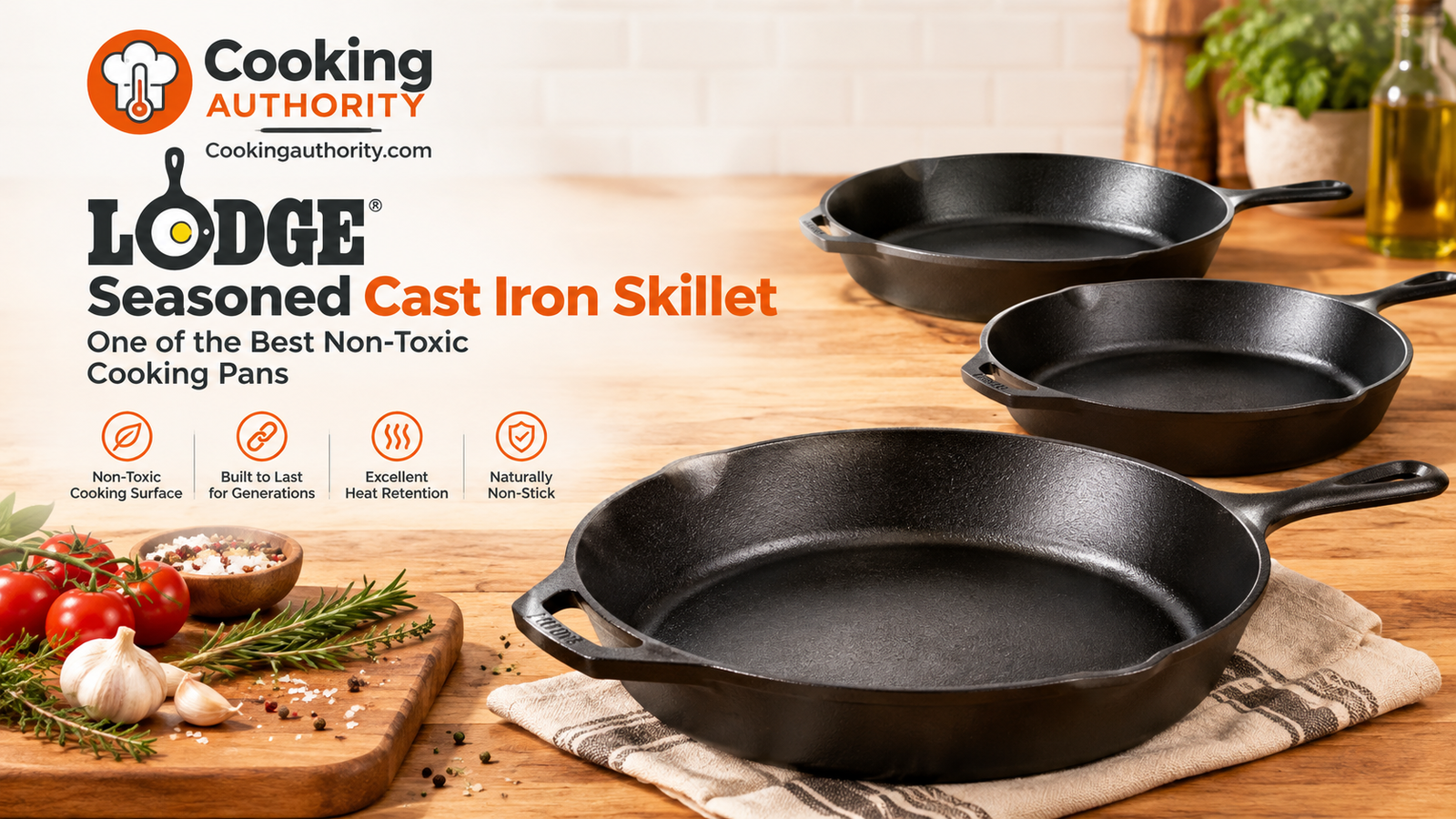
Lodge Seasoned Cast Iron Skillet 10.25″
If you could own only one pan for the rest of your life, a 10.25-inch Lodge would be a perfectly defensible choice. It arrives pre-seasoned with vegetable oil, which means you can cook in it the day it shows up. The size is the sweet spot for most kitchens: big enough for two chicken thighs or a family-sized frittata, small enough to handle without wincing.
Why the Lodge skillet earns its place
The appeal is simplicity. Lodge has been casting iron in the United States for well over a century, and the skillet is a single piece of metal with a seasoning layer that improves the more you use it. Cook bacon, then eggs, then cornbread, and the surface slowly turns darker and slicker. That is not a flaw; it is the pan getting better at its job.
Heat performance is where cast iron separates itself. It heats slowly, but once hot it stays hot, which is exactly what you want when a cold steak hits the surface. If you love a proper crust, this is the pan. Just remember to give the meat time afterward; our guide on how long steak should rest after cooking explains why that rest matters as much as the sear. The skillet moves straight into a hot oven, works on gas, electric and induction cooktops, and can even sit on a campfire grate.
What cooking feels like day to day
Expect a small adjustment period. Preheat for a few minutes over medium heat instead of cranking it to high. Add a bit more fat than you would with ceramic for delicate foods like eggs. After cooking, rinse with hot water, scrub gently, dry thoroughly on the burner and rub in a thin film of oil. That routine takes about two minutes and is the entire secret to cast iron ownership.
Acidic foods deserve a caveat. A quick tomato pan sauce is fine. A long, bubbling pot of marinara will dull the seasoning and can leave a metallic taste. For those jobs, reach for stainless or enameled cookware instead.
Seasoning and rescuing cast iron
Seasoning sounds mysterious but is really just baked-on oil. When a thin coat of oil is heated past its smoke point, it bonds to the iron and forms a hard, slick layer. Every time you cook with fat, you add a little more. To refresh a dull skillet, wash it, dry it completely, rub on a very thin coat of neutral oil, wipe off nearly all of it so the surface looks almost dry, and bake it upside down in a hot oven for about an hour. Let it cool inside the oven. Repeat once or twice if the pan looks patchy.
If you ever find rust, do not panic. Scrub it off with steel wool, wash, dry and re-season. Cast iron is among the most forgiving cookware ever made, which is exactly why you see century-old skillets still working in kitchens today. The only real enemy is neglect, particularly leaving the pan wet.
Pros
- No synthetic nonstick coating to wear out
- Excellent searing and heat retention
- Pre-seasoned and ready to use out of the box
- Oven, grill and campfire safe
- Typically the most affordable pan on this list
- Can be restored if it ever rusts
Cons
- Heavy, especially for people with wrist issues
- Needs occasional re-seasoning and careful drying
- Not ideal for long-simmered acidic dishes
- Handle gets very hot during cooking

STAUB Cast Iron Stackable Set
If the Lodge is the dependable pickup truck of cookware, STAUB is the well-tailored wool coat. Made from enameled cast iron, the pieces in this set give you cast iron’s legendary heat retention without any seasoning routine, plus a surface that handles acidic ingredients with ease.
Why enameled cast iron suits slow, flavorful cooking
STAUB is known for its matte black enamel interior, which develops a natural, slightly textured surface that helps with browning. The lids are designed to encourage moisture to circulate back over the food, which is why braises, stews and roasts taste so rich in these vessels. The stackable format is a clever bonus for anyone short on cabinet space, because the pieces nest together instead of eating up an entire shelf.
These are the pans for Sunday cooking. Think braised short ribs, a slow bean pot, a loaf of crusty bread or a whole roasting chicken. If you host holidays, a heavy lidded vessel like this also does a lovely job keeping meat moist. Our post on whether you should cover a turkey when cooking covers the moisture-versus-browning question that comes up whenever a lid is involved.
Things to know before you buy
Enameled cast iron is heavy and carries a premium price. Handle it with respect: avoid sudden temperature shocks, skip metal-on-enamel scraping, and let it cool before washing. Piece counts and sizes in stackable sets can vary by listing, so check the product page for exactly what is included. In return, a set like this can serve a household for decades and often looks good enough to go straight from oven to table.
Pros
- Enameled finish with no seasoning required
- Handles acidic ingredients like tomatoes and wine
- Superb heat retention for braising and baking
- Stackable design saves cabinet space
- Attractive enough for serving at the table
Cons
- Premium price compared with plain cast iron
- Very heavy, particularly when full
- Enamel can chip if dropped or abused
- Not the best choice for delicate egg cooking
5. GreenPan Chatham 10-Piece Ceramic Cookware Set
GreenPan Chatham 10-Piece Ceramic Cookware Set
GreenPan helped popularize ceramic nonstick for home cooks, and the Chatham collection is one of the brand’s more robust takes on the idea. Rather than a thin aluminum shell, this line uses a stainless steel body finished with a ceramic nonstick cooking surface. The goal is simple: keep the easy release of a coated pan, but build it on a sturdier foundation.
The Thermolon surface, explained
GreenPan’s coating is branded Thermolon, a mineral-based ceramic nonstick that the company states is free of PFAS, PFOA, lead and cadmium. In practice, that means it is made from a silica-derived layer instead of a fluoropolymer. When it is new, eggs glide, pancakes flip cleanly and cleanup is mostly a wipe. That alone is why ceramic sets sell so well.
The stainless exterior is the notable upgrade here. It tends to feel more substantial than featherweight aluminum sets, resists warping better and generally looks more refined on the stove. Many pans in the line are also compatible with induction cooktops, though you should confirm that detail for the exact pieces in your set listing.
What ten pieces gets you
A ten-piece set typically includes a couple of fry pans, saucepans with lids, a sauté pan or stockpot, and sometimes utensils. That is more than enough to run a weeknight kitchen. Cookware sets are also the most economical way to buy ceramic, since the per-piece cost is usually lower than purchasing individual pans.
Making a ceramic set last
No honest review of ceramic nonstick would skip this part. The surface is delicate compared with bare steel. To keep a Chatham performing for as long as possible, follow a few habits:
- Cook on low to medium heat; ceramic does not need high heat to brown.
- Use silicone, wood or nylon utensils.
- Let the pan cool before washing, and hand wash when you can.
- Use a little oil or butter even though the pan is nonstick, since a thin film protects the surface.
- Avoid aerosol cooking sprays, which can build up a sticky residue over time.
Good to know: every ceramic coating gradually loses its slickness. That is normal wear, not a defect. If you want the lowest-maintenance long-term option, pair a ceramic pan for eggs with a stainless or cast iron pan for everything else.
Pros
- PTFE-free ceramic nonstick surface
- Stainless steel body feels sturdier than basic aluminum
- Broad ten-piece range covers daily cooking
- Easy cleanup when the coating is new
- Looks polished enough to leave on the stove
Cons
- Coating slicker at first, then gradually fades
- Higher price than basic ceramic sets
- Metal utensils and harsh scrubbing are off the table
6. SENSARTE Nonstick Ceramic Cookware Set (13-Piece)

SENSARTE Nonstick Ceramic Cookware Set (13-Piece)
Not everyone wants to spend premium money on a full set, and SENSARTE has built a following among shoppers who want a big ceramic collection at a friendlier price. With thirteen pieces in the box, it is aimed squarely at households that want to replace an entire mismatched cabinet in one purchase.
What makes it appealing
The brand states that its ceramic coating is free of PTFE, PFOA, lead and cadmium, and the pans use a lightweight aluminum construction that heats quickly. Light weight is a genuine advantage if you cook a lot of one-handed meals, flip omelets, or simply do not enjoy hauling a heavy skillet around. The sets generally include fry pans, saucepans, a stockpot, a sauté pan and lids, along with a few tools or protectors depending on the version.
The handles are typically a heat-resistant composite designed to stay cooler than metal, and the lids are usually glass so you can monitor simmering food without lifting them. These are small touches, but they matter on a busy weeknight when you are juggling three things at once.
Performance in everyday cooking
Ceramic nonstick shines for low-fat cooking. Scrambled eggs, fish fillets, crepes and sautéed vegetables all come off the surface with minimal effort. Because the aluminum body heats fast, it is easy to overheat a pan by accident, so keep the burner on medium. If you want a hard sear, ceramic is not the right tool no matter the brand. Save that job for cast iron or stainless.
Induction compatibility differs among SENSARTE listings, since aluminum alone does not work on induction cooktops without a magnetic base. If you have induction, verify that the exact set advertises it before ordering.
Who should buy it
This set suits first-time homeowners, college graduates equipping a new apartment, and anyone who wants to try ceramic cookware without a large upfront commitment. It is also a sensible option for families who go through pans quickly and prefer replacing an affordable set to babying an expensive one.
Pros
- Large 13-piece collection at an approachable price
- PTFE-free ceramic nonstick surface
- Lightweight aluminum body heats quickly
- Glass lids make it easy to monitor food
- Great for low-oil breakfast and weeknight cooking
Cons
- Lighter construction can warp under heavy abuse
- Coating will gradually lose slickness
- Induction support depends on the specific set
- Not built for high-heat searing
7. All-Clad D3 Stainless Everyday 3-Ply Cookware

All-Clad D3 Stainless Everyday 3-Ply Cookware
All-Clad is the name that comes up whenever someone asks for “the pan professionals use,” and the D3 line is the classic. It has no nonstick coating, no seasoning and no enamel. It is stainless steel on the cooking surface, a heat-spreading aluminum core in the middle and a magnetic stainless exterior that works on induction.
How tri-ply construction works
The “3-ply” in the name means three bonded layers running all the way up the sides of the pan, not just across the bottom. The aluminum core spreads heat evenly, reducing the hot spots that plague thin stainless. The outer and inner steel layers provide a nonreactive, durable shell. The result is a pan that responds quickly when you adjust the burner and heats more evenly than a basic stainless pot.
Because nothing is applied to the surface, there is nothing to degrade over time. Scratches are cosmetic, metal utensils are fine and the dishwasher will not destroy it, although many owners prefer hand washing to keep the finish bright. That is the core of the long-term argument: you pay more once, then you stop replacing pans every few years.
Learning to cook without a coating
Stainless has a reputation for sticking, but the reputation is mostly about technique. The reliable method looks like this: heat the dry pan over medium heat, add oil once it is warm, wait until the oil shimmers, then add the food. Proteins will stick at first and then release naturally once a crust forms. Resist the urge to flip early.
That sear-and-release behavior is perfect for chicken. For anyone cooking poultry, pairing a good pan with a reliable thermometer matters just as much, and our reference on the safe temperature for cooking chicken will help you pull it at the right moment. Stainless also gives you fond, those browned bits stuck to the pan, which become the base of excellent sauces after a splash of stock or wine.
A note on nickel
The interior cooking surface of quality stainless steel is commonly the 18/10 grade, containing nickel. For most people that is a nonissue because stainless is highly stable, but if you have a diagnosed nickel allergy, talk with your doctor before choosing stainless, and consider cast iron or enameled options instead.
Is it worth the price?
All-Clad sits at the premium end, and cheaper clad stainless exists. The case for paying more comes down to build quality, consistent bonding, comfortable handles and a long warranty culture. If you cook frequently and plan to keep your cookware for decades, the cost per year of use is surprisingly low.
Pros
- No coating at all, so nothing to flake or wear off
- Even heating thanks to the aluminum core
- Works on gas, electric and induction cooktops
- Metal utensil friendly and dishwasher tolerant
- Excellent for searing and pan sauces
Cons
- Premium price
- Food sticks if you skip proper preheating
- Contains nickel in the common 18/10 grade
- Not the easiest pan for delicate eggs
8. HexClad Hybrid Cookware

HexClad Hybrid Cookware
HexClad has become one of the most recognizable names in modern cookware, thanks to its distinctive hexagon pattern. The idea is clever: a stainless steel surface with a laser-etched grid, where raised steel ridges protect the nonstick material sitting in the valleys between them.
The honest “non toxic” conversation
Here is where we owe you a straight answer. HexClad’s nonstick portion is based on a fluoropolymer, which is the same broad chemical family as PTFE. The company states the pans are free of PFOA, but if your definition of non toxic means avoiding PTFE and PFAS-family coatings altogether, this is a gray-area product for you. If your definition is more about avoiding flaking coatings, heavy metals and PFOA, the hybrid design is a reasonable middle ground, because the raised steel limits surface scratching.
We include HexClad because many readers ask about it, and because the decision is personal. You deserve to make it with full information instead of being steered by a catchy name.
How it cooks
The performance story is strong. Because the steel ridges take the abuse, you can use metal utensils with more confidence than on a flat coated pan. The construction is generally tri-ply with an aluminum core, so heat distribution is good and searing is much better than on a ceramic pan. Eggs release reasonably well with a bit of fat, and cleanup is easier than bare stainless.
It will not feel as effortless as a brand-new ceramic pan for eggs, since the steel ridges create friction. It is, however, more versatile, and it holds up better to the rough-and-tumble way many people actually cook.
Who should consider it
This is a smart pick for cooks who want one pan that does a bit of everything and who are comfortable with the coating question. It is not the best fit if your priority is fully fluoropolymer-free cookware. In that case, All-Clad, cast iron or a ceramic set will serve you better.
Pros
- Sears well and releases food better than plain stainless
- Raised pattern protects the nonstick material
- Tolerates metal utensils better than flat coatings
- Tri-ply build for even heating
- Typically oven friendly and induction compatible
Cons
- Nonstick component is fluoropolymer-based
- Premium price
- Not as slick as new ceramic for eggs
- May not suit strict PTFE-free shoppers
9. Caraway Nonstick Ceramic Cookware Set

Caraway Nonstick Ceramic Cookware Set
Caraway built its reputation on looks as much as chemistry. The pans come in a range of muted, modern colors, and the set usually includes magnetic pan racks and a lid holder so the whole collection stores neatly instead of becoming a clattering pile in a drawer.
What is under the color
The brand states that its ceramic coating is free of PTFE, PFOA and other PFAS, as well as lead and cadmium. The body is aluminum, which keeps the pans reasonably light, and the bottoms are designed to work on induction as well as gas and electric. The handles are metal, which means they get warm, so keep a mitt close.
Performance with eggs, fish and sautéed vegetables is the highlight. In the first months, food slides around with very little fat, and cleanup is quick. The surface will not behave like that forever, but if you treat it gently, it can stay pleasant for a good while.
The storage advantage
It is easy to dismiss organizers as gimmicks until you try to fit eight pans into a small kitchen. Caraway’s racks protect the cooking surface from scratches caused by pans stacking on top of each other, which is a real durability benefit for any coated cookware. If you live in an apartment where storage is a daily annoyance, that thoughtful detail may be worth more than a few extra pieces.
Care expectations
Like all ceramic pans, Caraway rewards gentle habits. Medium heat, wooden or silicone tools and hand washing will keep the surface healthy. Do not preheat an empty pan on high, and avoid pouring cold water into a scorching hot one.
Pros
- PTFE-free ceramic coating
- Attractive colors and cohesive design
- Includes storage organizers that protect the surface
- Works on induction cooktops
- Easy to clean when well cared for
Cons
- Mid-to-premium price for an aluminum-based set
- Coating needs gentle treatment
- Handles can get warm
- Slickness fades with time like all ceramic
10. Our Place Always Pan

Our Place Always Pan
The Always Pan is the rare product that became a conversation piece. It is a single, deep, lidded pan designed to replace a fry pan, sauté pan, saucepan, steamer and more. The pitch is minimalism, and for people with tiny kitchens it genuinely delivers.
One pan, many jobs
The shape is the trick. Sloped sides make it easy to flip and stir like a fry pan, while the depth lets you simmer sauces, boil pasta or braise a small batch of chicken. A nesting steamer basket and a spatula that rests on the rim are typically included, and the lid helps with everything from rice to steamed vegetables. You can cook an entire weeknight meal for one or two in a single vessel.
The cooking surface is ceramic nonstick on an aluminum body, and the brand states it is free of PTFE, PFOA, lead and cadmium. As with any ceramic pan, that slick surface will be at its best in the early months, and you will get more life out of it with moderate heat and gentle tools.
Who it fits, and who it does not
This pan is perfect for solo cooks, couples, dorm rooms and anyone building a minimalist kitchen. It is less suited to feeding a crowd, searing steaks for a family or making large stockpot batches. Think of it as a smart foundation piece rather than a complete kitchen on its own. Many owners pair it with a cast iron skillet for searing and baking, which creates a lean, two-pan setup that handles almost everything.
Everyday tips
- Match the burner size to the pan to avoid scorching the sides.
- Use the lid to trap moisture when steaming or simmering.
- Skip metal tongs; use the included spatula or wood and silicone tools.
- Hand wash after the pan has cooled for the best long-term performance.
Pros
- Replaces several pans in one
- PTFE-free ceramic surface
- Great for small kitchens and solo cooking
- Includes steamer basket and spatula
- Easy to clean when new
Cons
- One pan cannot do everything equally well
- Limited capacity for large households
- Ceramic wear over time
- Not a high-heat searing tool
11. Budget Picks: CAROTE Granite Set and GreenLife Soft Grip
You do not need to spend a fortune to build a safer kitchen. These two sets are aimed at shoppers who want to start fresh without a large investment. Both come with trade-offs, which we lay out below so there are no surprises.
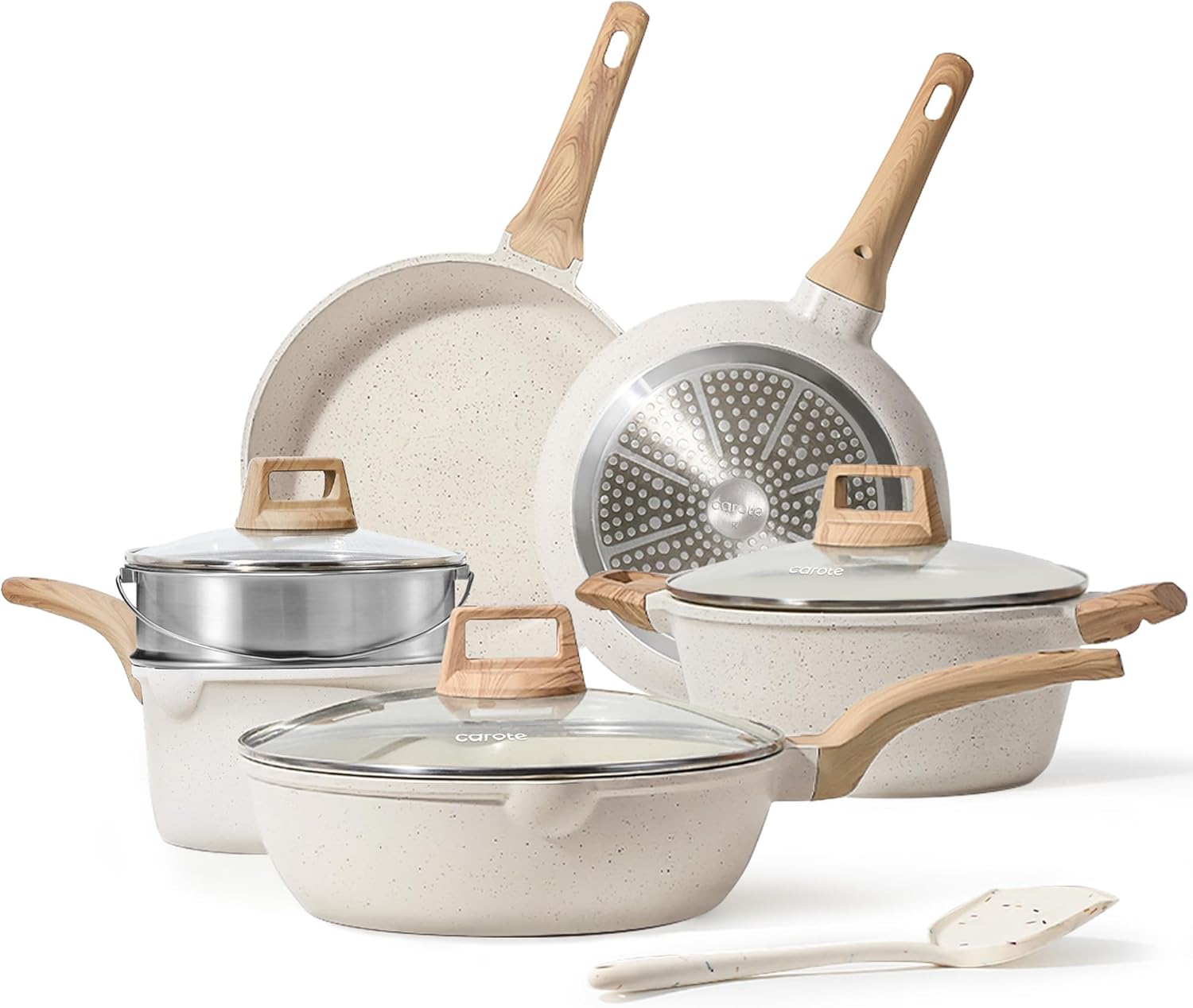
CAROTE Granite Nonstick Pots and Pans Set
CAROTE offers a big collection of pots and pans with a speckled, stone-like finish at a very low entry price. It is popular with students, first apartments and anyone who needs a full set quickly.
Reading the “granite” label carefully
“Granite” is a marketing term describing the look of the coating. It does not mean the pan is made of stone. CAROTE states its coating is free of PFOA and PFOS, which is a helpful statement, but it is narrower than a blanket claim of being PTFE-free. If avoiding PTFE is your absolute priority, read the current product description carefully, and treat this set as a budget option rather than a guaranteed fit for strict non toxic shoppers.
For what it is, the set offers decent value. Aluminum bodies heat fast, handles are usually heat-resistant, and the surface releases food easily when new. Expect to replace budget nonstick sets sooner than premium ones.
Pros
- Very affordable for a large set
- Easy food release when new
- Lightweight and quick to heat
- Good for dorms and first kitchens
Cons
- Coating chemistry is less clearly defined than ceramic claims
- Shorter expected lifespan
- Gentle care needed to avoid scratches

GreenLife Soft Grip 16-Piece Set
GreenLife is a sister brand to GreenPan, using a ceramic nonstick approach at a more accessible price. The sixteen-piece Soft Grip set stands out for its cheerful colors and its comfortable, soft-touch handles.
What you get for the price
Sixteen pieces is a lot of kitchen. Expect fry pans in multiple sizes, saucepans with lids, a stockpot, a sauté pan and a handful of utensils. The ceramic coating is marketed as free of PFAS, PFOA, lead and cadmium, and the aluminum bodies keep weight low. The handles are the design highlight, since a comfortable grip makes a real difference when you are lifting a pot full of pasta water.
As with every budget ceramic set, longevity is the question mark. You can stretch the life of the coating considerably by cooking on medium heat, using soft tools and washing gently by hand. Think of it as a very good first set, not a forever set.
Pros
- Sixteen pieces at an approachable price
- PTFE-free ceramic nonstick surface
- Comfortable soft-grip handles
- Lightweight and colorful
Cons
- Coating wears faster than premium sets
- Thin aluminum is prone to warping with heat shock
- Induction support is not guaranteed on every piece
12. Buying Guide, Care and Safety: Getting the Most From Non Toxic Pans
Choosing the pan is only half the story. The other half is how you buy, use and maintain it. A few smart habits will keep your cookware safe, performing well and out of the landfill for as long as possible.
How to choose the right pan for you
Start by listing the three meals you cook most often. If they involve eggs, pancakes or delicate fish, put ceramic nonstick on your list. If they involve steak, chicken thighs, roasted vegetables or cornbread, put cast iron or stainless first. If you love soups, stews and braises, add an enameled Dutch oven. Then decide how many pans you actually need. Many people discover that two or three well-chosen pieces beat a twenty-piece set full of items they rarely touch.
Next, consider your cooktop. Gas and electric ranges work with everything. Induction needs a magnetic base, which rules out bare aluminum and some budget ceramic pieces. Cast iron, enameled cast iron and clad stainless are naturally induction friendly, so double-check any aluminum-bodied set before ordering.
Finally, think about weight, handles and storage. A beautiful skillet that is too heavy to lift comfortably will sit unused. Look for handles that feel secure in your grip, lids that fit snugly and a storage plan that will not scratch coated surfaces.
A simple checklist before you buy
- Read the coating claim closely. “PFOA-free” is not the same as “PTFE-free” or “PFAS-free.”
- Check the oven rating. Handles and lids often limit temperature more than the pan itself.
- Look for lead and cadmium statements on anything with glaze or enamel.
- Confirm induction compatibility if you cook on induction.
- Review the warranty and return policy. Coated pans in particular should have a clear return window.
- Be realistic about maintenance. Pick a pan whose care routine you will actually follow.
Care tips by material
| Material | Do | Avoid |
|---|---|---|
| Cast iron | Dry thoroughly, oil lightly after washing, preheat gradually | Soaking, dishwasher, long acidic simmers |
| Enameled cast iron | Let it cool before washing, use wood or silicone tools | Thermal shock, metal scraping, dropping |
| Stainless steel | Preheat, use enough fat, deglaze to clean fond | Cold-pan cooking of sticky foods, harsh bleach |
| Ceramic nonstick | Medium heat, soft tools, hand wash after cooling | High heat, metal utensils, aerosol sprays, dishwasher |
| Hybrid | Moderate heat, a little oil, gentle sponge | Overheating empty, abrasive pads on coated valleys |
Kitchen safety around the pan
A safe pan still needs safe habits. Raw poultry is the classic example, and it comes with a lot of confusion about rinsing. Our explainer on whether you should wash chicken before cooking clears it up and helps you avoid spreading bacteria around your sink and counters.
Temperature accuracy matters too. Good cookware helps you control heat, but a thermometer tells you when food is actually done, so you are not guessing based on color alone. If you do not own one yet, check our roundup of the best cooking thermometer options and add one to your toolkit. It pairs especially well with cast iron and stainless, where sear marks can fool you into thinking something is finished.
What to do with cooking oil afterward
Pan frying and searing leave you with used fat, and pouring it down the drain is a plumbing disaster waiting to happen. Let it cool, strain it, and store it in a sealed container. For a clear walkthrough, see our guide on how to dispose of cooking oil. Wiping greasy pans with a paper towel before washing also protects your seasoning, your sponge and your pipes.
Cooking techniques that protect your pans
Technique is the great equalizer. A modest pan used well will outperform an expensive pan used badly, and a few small adjustments make every material on this list last longer.
Preheat patiently. Cast iron and stainless steel need a few minutes to come up to temperature evenly. Ceramic pans need far less, and they should never sit empty over a high flame. If you hear a pan sizzle violently the instant food touches it, you are probably running it too hot for ceramic and just right for a steak in cast iron.
Use the right fat. For high-heat searing, choose oils with higher smoke points, such as avocado or refined vegetable oils. Reserve butter and extra virgin olive oil for gentler cooking, or add them near the end. Burnt oil leaves a gummy residue on nonstick surfaces that can mimic wear even when the coating is fine.
Do not crowd the pan. Overloaded pans steam instead of sear, which makes food stick more and brown less. Cooking in two batches gives you better color, cleaner release and less cleanup.
Deglaze while it is hot. In stainless and enameled pieces, a splash of stock, wine or water lifts the browned bits and turns them into sauce while making the pan easier to wash. In cast iron, a quick deglaze is fine, but avoid letting acidic liquid simmer for long.
Let hot pans cool naturally. Thermal shock is a silent killer of cookware. Plunging a scorching pan into cold water can warp aluminum, crack enamel and weaken ceramic coatings. A few minutes on a trivet saves months of lifespan.
Planning your budget realistically
Cookware is an investment you make in stages. Many people try to replace everything at once and then feel stuck with pans that do not match their cooking style. A calmer plan is to buy one piece at a time, starting with the pan you use most. After a few weeks, you will know exactly what is missing from your kitchen.
It also helps to think in terms of cost per year. A premium stainless or cast iron pan may cost several times as much as a budget ceramic set, but if it lasts twenty years or more, the yearly cost is tiny. A budget ceramic set that needs replacing every couple of years has a lower sticker price but a higher long-term cost. Neither approach is wrong. Choose the one that fits your finances, your patience and your values.
When to replace a pan
Every pan has an end of life, though cast iron and clad stainless often outlast their owners. Replace coated pans when the nonstick surface is visibly scratched through, flaking, deeply discolored or when food sticks no matter what you do. Replace any pan that has warped so badly it wobbles on the burner, that has loose or cracked handles, or an enamel interior that is chipping or flaking.
Expect ceramic nonstick to last a few years with good care, sometimes less with heavy daily use. That is normal. Plan for it in your budget, and consider retiring a worn pan to low-stakes jobs like boiling water or steaming vegetables when the surface no longer releases food well.
Building a smart, minimal non toxic kitchen
If you are starting from scratch and want a recommendation that balances safety, performance and cost, here is a combination that works for a very wide range of households:
- One 10-inch cast iron skillet for searing, roasting and baking.
- One stainless steel fry pan or small set for sauces, browning and everyday cooking.
- One ceramic nonstick pan for eggs, pancakes and fish.
- One enameled Dutch oven or lidded pot for soups, stews and braises.
That quartet covers practically everything. Everything beyond it is a convenience, not a necessity. If your budget is tight, begin with the cast iron and the ceramic pan, then add stainless or enameled pieces as you can.
Small habits that make a big difference: never leave an empty pan heating unattended, use the exhaust fan when cooking at high heat, keep pet birds out of the kitchen when using any coated cookware, and let pans cool before washing. These four steps reduce risk and extend the life of everything you own.
Pairing pans for real weeknight meals
It helps to picture how these pans work together on an ordinary Tuesday. Imagine you are making salmon, roasted potatoes and a green vegetable. The potatoes go into a hot cast iron skillet in the oven, where the heavy iron gives them a deeply browned, crisp exterior. The salmon goes into a ceramic or hybrid pan over medium heat, where the delicate skin releases cleanly. The vegetables sauté in a stainless pan with a splash of water and a lid for a quick steam. Three pans, three materials, each doing the job it is best at.
Now imagine a weekend with a braise on the menu. The enameled Dutch oven handles the long, slow simmer, building flavor over hours while the stovetop stays free. A stainless saucepan makes a quick sauce on the side, and the cast iron skillet bakes cornbread in the oven alongside. That kind of division of labor is why experienced cooks rarely ask which single pan is best. They ask which pan is best for tonight.
The takeaway is encouraging for anyone worried about cost. You do not need a matched, expensive collection. A well-chosen mix, bought gradually, gives you more flexibility than a big set that locks you into one surface. If you are unsure where to begin, start with the pan that matches the meal you cook most, live with it for a month and let your habits guide the next purchase.
Finally, remember that safer cooking is a habit, not a one-time purchase. Reading labels, keeping heat moderate, replacing worn coatings and cleaning pans properly will do as much for your peace of mind as any single product. The pans in this guide are good starting points, and the care advice here will help any of them serve you well for years.
Frequently Asked Questions About Non Toxic Cooking Pans
What is the safest type of cookware to cook with?
Cast iron, enameled cast iron and stainless steel have the longest safety track records because they do not rely on a manufactured nonstick coating. For people who also want easy food release, PTFE-free ceramic nonstick is a popular alternative, with the understanding that the coating wears out sooner. The safest choice is whichever material you use correctly and maintain well.
Is ceramic cookware really non toxic?
Ceramic nonstick coatings are silica-based and are made without PTFE or PFAS when brands state it, which is why many people consider them a safer-feeling option. They are generally considered low-risk when used as directed, but they are not magic. Overheating and heavy scratching will shorten their lifespan, and quality varies between brands, so look for transparent claims about lead and cadmium as well.
Is cast iron safe to cook in every day?
Yes, for most people. Cast iron can add small amounts of dietary iron to food, which is often beneficial. People with certain iron-storage conditions should ask their doctor first. Keeping the seasoning in good condition and avoiding long acidic simmers helps minimize metallic flavors and keeps the pan performing well.
Does PFOA-free mean a pan is PFAS-free?
No. PFOA is just one chemical within the much larger PFAS family. A pan can be PFOA-free and still use a PTFE-based coating, which belongs to that family. If you want to avoid the whole group, look for explicit statements such as “PTFE-free” and “PFAS-free,” or choose coating-free materials like cast iron and stainless steel.
How long do non toxic nonstick pans last?
Ceramic nonstick pans commonly stay pleasantly slick for a few years with gentle use, though heavy daily cooking, high heat and dishwashers can shorten that considerably. Cast iron and stainless steel are very different, often lasting decades. If longevity is your top priority, lean toward uncoated materials and treat ceramic as a consumable you replace periodically.
Can I use metal utensils on ceramic pans?
It is best not to. Metal can scratch ceramic surfaces and shorten their life. Silicone, nylon and wooden tools are the safer choices. Hybrid pans with raised steel patterns tolerate metal utensils better, and cast iron and stainless steel handle them without trouble.
Is stainless steel safe for people with nickel allergies?
Common 18/10 stainless steel contains nickel, and a small amount can transfer to food, especially during cooking of acidic dishes. Most people never notice, but anyone with a diagnosed nickel sensitivity should speak with a healthcare professional before choosing stainless cookware. Cast iron and enameled cast iron are common alternatives.
Are non toxic pans dishwasher safe?
Some stainless steel pans are dishwasher safe, but cast iron should never go in the dishwasher, since it strips the seasoning and invites rust. Ceramic and hybrid pans are often labeled dishwasher safe, but hand washing will extend their life. Always follow the manufacturer’s care instructions for your specific pan.
Can non toxic pans go in the oven?
Most can, but limits vary. Cast iron, enameled cast iron and stainless steel are typically very oven friendly. Ceramic and hybrid pans have oven ratings that depend on the handle and lid materials, so check the manufacturer’s stated limit on the product page before roasting or broiling.
Do I need to season ceramic or stainless pans?
No. Seasoning is a cast iron practice. Stainless steel works best when you preheat it and use enough oil, and ceramic pans benefit from a light film of fat, but neither requires the polymerized seasoning layer that cast iron relies on.
What is the best non toxic pan for eggs?
A fresh ceramic nonstick pan is typically the easiest for eggs, because the surface releases them with very little fat. If you prefer cast iron or stainless, preheating properly and using enough butter or oil gets excellent results with a little practice.
How can I make my pans last longer?
Use moderate heat, choose the right utensils, let pans cool before washing and store them so surfaces do not scrape against one another. Avoid empty preheating on high heat, and do not use abrasive scrubbers on coated pans. Those habits matter more than the brand name on the box.
Final Verdict: Which Non Toxic Cooking Pan Should You Buy?
If there is one lesson from this roundup, it is that “non toxic” is a spectrum shaped by how you cook, not a single badge you can find on a box. The most trustworthy options are the ones with the longest histories and the fewest moving parts: cast iron, enameled cast iron and clad stainless steel. They ask more of you in technique, and in return they give you decades of use.
For most readers, a sensible shopping plan looks like this. Start with the Lodge skillet for searing and baking. Add the All-Clad D3 if you want a coating-free everyday workhorse. Bring in a ceramic pan, whether it is the GreenPan Chatham set, the Caraway set or the Always Pan, for the delicate jobs where nonstick truly earns its keep. Choose STAUB for slow braises and Sunday dinners, and consider SENSARTE, GreenLife or CAROTE when your budget calls for an affordable starter kitchen. HexClad is a compelling hybrid, as long as you are comfortable with its fluoropolymer-based nonstick component.
Whatever you choose, treat it well. Cook on sensible heat, use the right tools and give your pans a few minutes of care after dinner. That small routine is the real secret to a kitchen that feels safe, works beautifully and does not need replacing every season.
Whichever route you take, you now have the information to shop with confidence instead of guesswork. Compare the claims, match the material to your cooking style, and remember that the best pan is the one you will happily use every day.