A Toast to Tomorrow: The Ultimate Guide to Eco-Friendly Wine Storage
Every bottle of wine tells a story of the earth — a story of soil, climate, and sun, captured in glass. As wine lovers, we cherish this connection to the land. So, how can we honor that connection when we bring these bottles into our homes? The answer lies in conscious, sustainable storage. This guide is your definitive resource for exploring the world of eco-friendly wine storage, proving that you can protect your precious collection and the planet at the same time.
🌿 Table of Contents
- The Green Cellar Philosophy
- The Unchanging Principles of Wine Storage
- The Rack Revolution: Sustainable Materials
- Energy-Efficient Cooling
- Passive Cooling & Natural Storage Solutions
- Eco Certifications & Labels to Look For
- Storage by Climate Zone
- Eco Wine Storage in Small Spaces & Apartments
- Reduce & Reuse: Low-Waste Wine Lifestyle
- Sustainable Wine Bottles, Corks & Closures
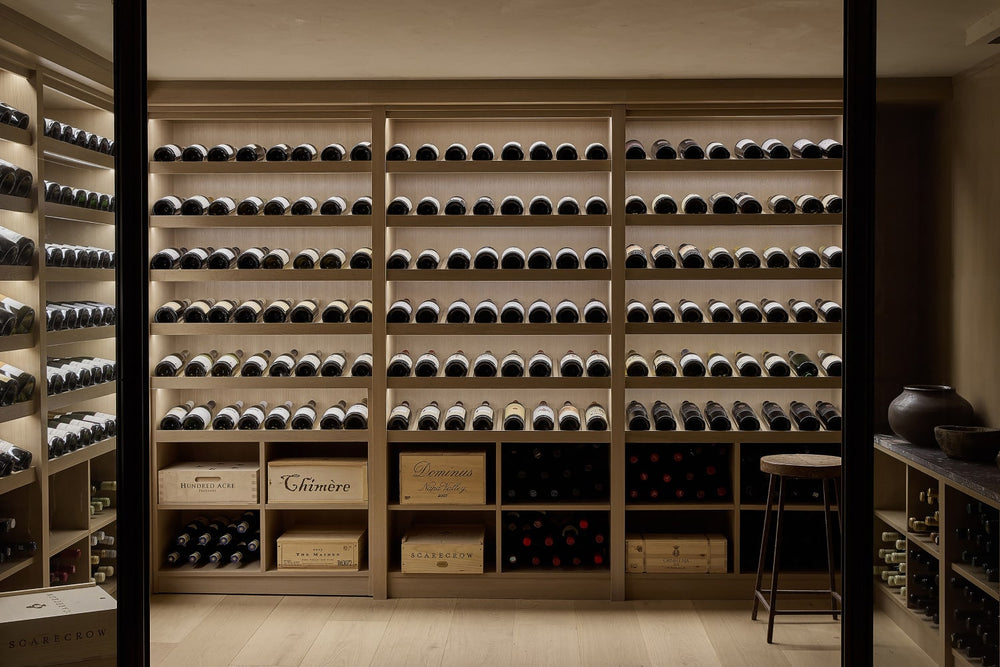
- Building a Sustainable Home Wine Cellar
- DIY & Upcycled Storage Ideas
- Common Eco Storage Mistakes to Avoid
- Frequently Asked Questions
- Conclusion
The Green Cellar Philosophy: Why Sustainable Storage Matters
The movement towards sustainability in the vineyard — organic, biodynamic, and regenerative farming — is well-established. But the lifecycle of a wine doesn’t end when it’s bottled. Our responsibility as consumers extends to how we store it. Eco-friendly wine storage isn’t just a trend; it’s a holistic approach built on four key pillars:
- Sustainable Materials: Choosing wine racks and building materials that are renewable, recycled, or reclaimed, minimizing our demand for virgin resources.
- Energy Efficiency: Selecting cooling solutions that consume less power, reducing our carbon footprint while still providing the stable temperatures wine needs to thrive.
- Waste Reduction: Adopting practices and tools that prevent wine spoilage and minimize what we send to the landfill, from the bottle to the cork.
- Mindful Consumption: Building a collection with intention and caring for it properly, ensuring every bottle is enjoyed at its peak.
Less energy required to recycle aluminum vs. producing it from virgin ore
Time for bamboo to reach full maturity vs. 25–50 years for hardwood trees
Estimated energy savings of a thermoelectric cooler vs. a comparable compressor model
Of wine wasted per household per week on average — proper preservation can eliminate this entirely
The wine industry as a whole is undergoing a profound green transformation. From lightweight bottles and alternative closures to solar-powered wineries and carbon-neutral shipping, the push towards sustainability is reshaping how wine is made, transported, and sold. As conscious consumers, aligning our storage choices with these values completes a virtuous circle that honors both the product and the planet.
First, A Refresher: The Unchanging Principles of Wine Storage
Before we go green, we must remember the fundamental needs of wine. No matter how sustainable a solution is, it’s useless if it doesn’t protect your wine. For a full breakdown, our guide on how to store wine without a wine fridge is an excellent resource. Here’s the snapshot:
- Cool & Consistent Temperature: The ideal range is 45–65°F (7–18°C), with 55°F (13°C) being close to perfect. The most important factor is consistency — avoiding rapid temperature swings.
- Darkness is Golden: UV light can degrade wine, causing it to age prematurely and develop “light-struck” flavors. Keep your bottles in the dark.
- Keep it Still: Vibrations can disturb the sediment in aging wines and may negatively impact their chemical evolution.
- Healthy Humidity: A humidity level of 50–70% is ideal to keep corks from drying out, which can let oxygen in and spoil the wine.
Why Temperature Consistency Matters More Than the Number
A wine stored at a steady 60°F will age more gracefully than one bouncing between 50°F and 70°F throughout the seasons. Rapid temperature fluctuations cause the wine to expand and contract inside the bottle, eventually pushing liquid past the cork and allowing oxidation. If you can only control one variable in your storage environment, make it consistency.
The Rack Revolution: Choosing Sustainable Materials
Your wine rack is the centerpiece of your collection. Choosing one made from eco-friendly materials is one of the most impactful decisions you can make. Beyond aesthetics, the material you choose communicates your values and contributes directly to either resource depletion or regeneration.
Bamboo: The Grass Giant
Bamboo isn’t wood; it’s a species of grass. It grows incredibly fast — some species up to three feet a day — reaches maturity in just 3–5 years, and requires no pesticides or fertilizers. It regenerates from its own roots, meaning it doesn’t need to be replanted after harvesting, which prevents soil erosion. It’s also harder and more durable than many hardwoods. Bamboo also sequesters carbon during growth at a higher rate per acre than most tree species, making it a net positive for atmospheric carbon when managed responsibly.
Pros
- Highly renewable and fast-growing
- Extremely strong and durable
- Naturally resistant to shrinking and swelling
- Modern, clean aesthetic
- Carbon-sequestering during growth
Cons
- Most bamboo is grown in and shipped from Asia, increasing its carbon footprint
- Quality can vary; look for racks made from solid Moso bamboo
- Some products use adhesives that may off-gas VOCs
Our Top Bamboo Rack Picks on Amazon

Bambusi Modular Bamboo Wine Rack
This stackable, wave-style rack is perfect for growing collections. Start with one and add more as needed, reducing waste.
View on Amazon
SONGMICS Countertop Bamboo Rack
A stylish and compact option for small spaces, holding up to 12 bottles. Its solid construction ensures stability.
View on AmazonReclaimed Wood: Stories Reborn
Reclaimed wood is salvaged from old barns, factories, warehouses, and even wine barrels. Using it prevents beautiful, character-filled wood from ending up in a landfill. It requires minimal new processing and celebrates imperfections like nail holes and saw marks, giving each piece a unique history. It’s the ultimate in “reduce, reuse, recycle.” Beyond aesthetics, reclaimed wood is often from old-growth trees that are no longer commercially harvested, meaning the timber itself is denser, more stable, and harder than most new wood available today. Wine barrels made from French or American oak that have completed their useful life in a winery are a particularly romantic source — many artisan furniture makers specialize in transforming retired staves into stunning wine racks and furniture pieces.
Pros
- Gives a second life to old materials
- Each piece is unique and full of character
- Extremely durable and stable aged wood
- Reduces deforestation
- Often locally sourced, reducing transport emissions
Cons
- Can be more expensive due to labor-intensive salvaging
- May contain old nails or require careful finishing
- Supply can be inconsistent
Reclaimed & Rustic Picks on Amazon

Del Hutson Designs Reclaimed Wood Rack
Made in the USA from reclaimed wood, this rustic wall-mounted rack saves floor space and serves as a piece of art.
View on AmazonRecycled Metal: Industrial Strength, Low Impact
Metal wine racks offer a sleek, modern, and space-efficient way to store wine. When made from recycled steel or aluminum, their environmental impact is significantly reduced. Recycling metal uses up to 95% less energy than producing it from virgin ore. These racks are incredibly durable and will last a lifetime, representing a long-term, low-waste investment. Powder-coated recycled steel is particularly attractive for those who prefer an industrial-modern aesthetic, while wrought iron designs can work beautifully in rustic or traditional settings.
Pros
- Massive energy savings over new metal
- Extremely durable and long-lasting
- Minimalist designs are great for visibility and airflow
- Resistant to pests and moisture
- Infinitely recyclable at end of life
Cons
- Can feel cold or industrial in some décor styles
- Cheaper versions can be flimsy; look for solid welds
- May be harder to verify recycled content claims
FSC-Certified New Wood: When New Wood Is the Right Choice
Sometimes reclaimed wood isn’t available in the right dimensions or quantities, particularly for large, custom cellar builds. In these cases, choosing FSC-certified (Forest Stewardship Council) wood is the responsible path. The FSC certification guarantees that the wood was harvested from forests managed to strict environmental, social, and economic standards — ensuring biodiversity protection, responsible labor practices, and sustainable yields. Pine, poplar, and alder are commonly used FSC-certified woods for wine storage, offering good structural integrity at a lower cost and environmental impact than tropical hardwoods.
Pros
- Certified sustainable sourcing
- Available in consistent quality and dimensions
- Good for custom cellar builds
- Wide variety of species and finishes
Cons
- Still requires new tree harvesting
- Certification must be verified — look for the FSC logo
Energy-Efficient Cooling: Chilling with a Conscience
For serious collectors, active cooling is a must. But a wine fridge that runs 24/7 can be an energy hog. Thankfully, technology offers greener solutions.
Thermoelectric vs. Compressor Coolers: A Deep Comparison
This is the most critical distinction in eco-conscious wine cooling. A compressor cooler works like a standard kitchen refrigerator, using a vapor compression cycle with chemical refrigerants. It’s powerful and effective even in warm ambient environments, but can be noisy, causes minor vibrations, and typically consumes more electricity. A thermoelectric cooler uses the Peltier effect — running a small electric current through a ceramic tile to transfer heat from the interior to the exterior. It’s silent, vibration-free, and uses no refrigerants.
| Feature | Thermoelectric Cooler | Compressor Cooler |
|---|---|---|
| Energy Consumption | Low — typically 30–80W | Higher — typically 80–150W+ |
| Refrigerants | None — fully solid state | Uses HFCs or newer HFOs |
| Vibration | Zero — ideal for aging wine | Low but present |
| Noise Level | Near silent | Audible hum |
| Ambient Temperature | Best in rooms under 75°F (24°C) | Works in warmer environments |
| Capacity | Best for under 50 bottles | Scales to 200+ bottles |
| Best For | Small collections, apartments, eco-conscious buyers | Large collections, warm climates, serious collectors |
Why Thermoelectric is Often Greener for Most People
For collections under 40–50 bottles, thermoelectric coolers are typically the more eco-friendly choice. They use significantly less energy, contain no harmful refrigerants, and are completely vibration-free, which is better for your wine. However, they are sensitive to ambient temperature and work best in a room that stays below 75°F (24°C).
Top-Rated Thermoelectric Coolers on Amazon
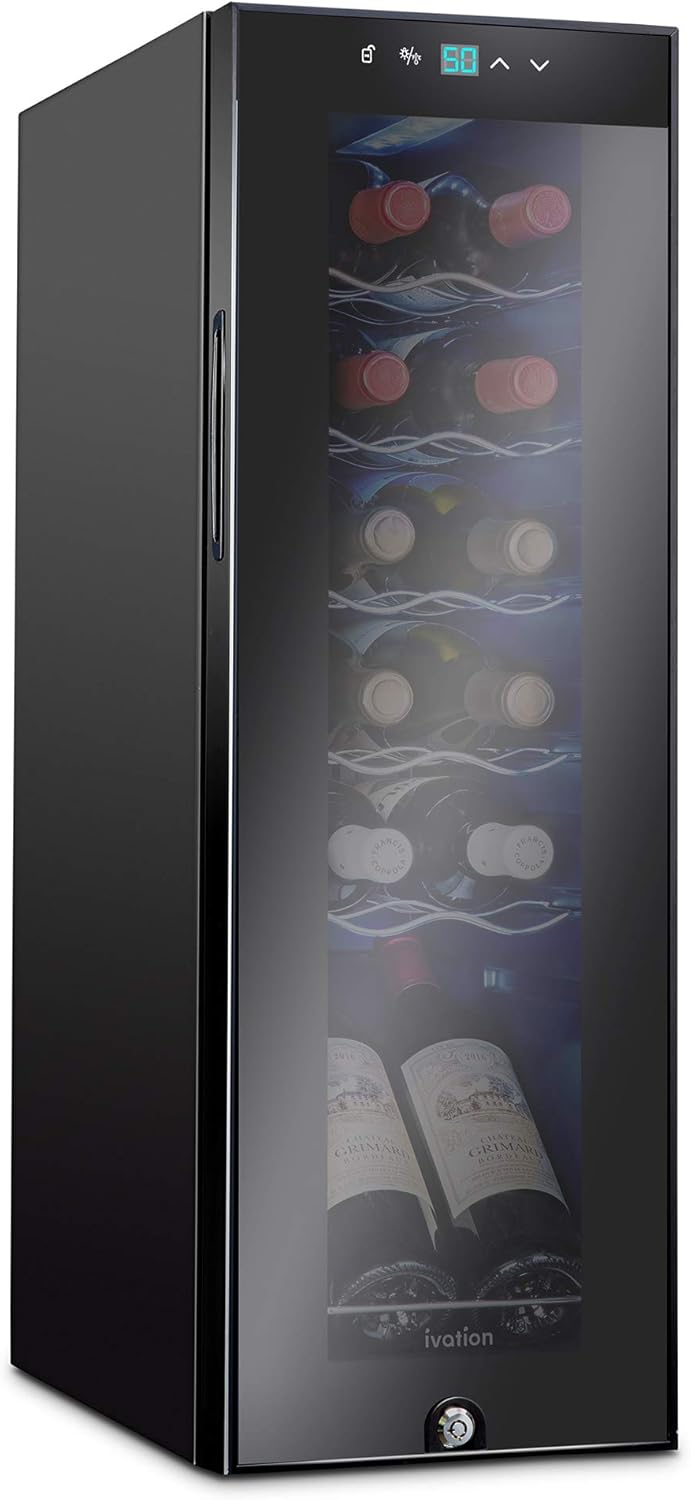
Ivation 12-Bottle Thermoelectric Cooler
This slim, quiet cooler is perfect for small apartments. Its consistent temperature and lack of vibration provide ideal conditions for your wine with minimal energy draw.
View on Amazon
NutriChef Dual Zone 18-Bottle Cooler
For those who need to store both reds and whites at their ideal serving temperatures, this dual-zone model offers flexibility with the efficiency of thermoelectric cooling.
View on AmazonSmart Wine Fridges & Energy Monitoring
A newer category of eco-conscious wine storage is the smart wine fridge, which incorporates Wi-Fi connectivity and app-based monitoring. These units allow you to track the temperature and humidity of your storage environment remotely, receive alerts if conditions drift outside ideal ranges, and monitor energy consumption in real time. Some models integrate with smart home systems like Google Home or Amazon Alexa, allowing you to schedule cooling cycles during off-peak electricity hours when the grid is drawing on greener energy sources. While smart fridges typically carry a higher upfront cost, the energy savings and reduced wine spoilage can represent genuine long-term savings — financial and environmental.
When a Compressor Cooler Is the Right Eco Choice
For collectors in hot climates, or those with collections exceeding 50 bottles, a high-efficiency compressor unit may actually be the more environmentally responsible choice in the long run. A thermoelectric unit struggling against a hot ambient environment will run its element continuously and consume as much or more energy than a properly sized compressor cooler operating within its designed parameters. Look for compressor wine fridges with an ENERGY STAR certification, which guarantees that the appliance meets EPA energy efficiency standards. Modern compressor wine fridges with inverter technology modulate their compressor speed to match demand, rather than running at full power and cycling on and off, which significantly reduces electricity consumption over time.
Passive Cooling & Natural Storage Solutions
The greenest cooling solution of all is the one that requires no electricity whatsoever. Passive wine storage — using the natural thermal properties of your home or a purpose-built structure — has been humanity’s wine preservation method for thousands of years, and it remains entirely viable for many collectors today.
The Underground Wine Cellar: Nature’s Refrigerator
Subterranean storage is the oldest and most effective passive cooling method available. Earth is an extraordinary thermal mass — below the frost line, ground temperature remains remarkably stable year-round, typically between 50–60°F (10–15°C) in temperate climates. This is almost precisely the ideal temperature for long-term wine aging. If you are fortunate enough to have a basement, crawl space, or the ability to excavate, a properly insulated and ventilated underground cellar can provide perfect wine storage with zero ongoing energy cost. The key design elements for a passive underground cellar include: thick insulation on the ceiling and any above-grade walls, vapor barriers to manage humidity, a north-facing or interior location away from heat sources, and ventilation to prevent mustiness and maintain healthy humidity levels.
The Wine Closet: Converting Existing Spaces
An under-stair closet, a north-facing pantry, or an interior hallway closet can be converted into a passive wine storage area with relatively modest investment. The goal is to create a thermally stable, dark, humidity-controlled environment. Spray foam insulation is highly effective at sealing these small spaces. Adding a temperature and humidity monitor (a simple, inexpensive device) allows you to keep tabs on conditions without active cooling. For collections stored at ambient indoor temperatures in temperate climates — say, in a climate-controlled home where the thermostat never exceeds 70°F (21°C) — short-to-medium-term storage of up to two to three years is entirely feasible without a dedicated cooling unit.
Wine Storage Pods & Spiral Cellars
For homeowners willing to invest in a purpose-built solution, spiral cellar systems (which are installed below your floor, accessible via a circular staircase) offer the ultimate in passive underground storage. These pre-cast concrete or fiberglass pods are installed beneath an existing floor or in the garden and utilize the thermal mass of the surrounding earth for cooling. They require no electricity for temperature control, are naturally humid, and can hold anywhere from 800 to 1,500+ bottles. The upfront installation cost is significant, but for a serious collector, it represents a lifetime storage solution with essentially zero ongoing energy cost and carbon footprint.
Eco Certifications & Labels to Look For
When shopping for sustainable wine storage products, a proliferation of green labels can make it hard to know what genuinely matters. Here is a guide to the most credible certifications and what they actually mean.
🌲 FSC (Forest Stewardship Council)
Guarantees wood was harvested from responsibly managed forests. Covers biodiversity, worker rights, and sustainable yields. The gold standard for wood-based products.
⚡ ENERGY STAR
EPA program certifying that an appliance meets strict energy efficiency standards — typically 15–30% more efficient than standard models. Essential when buying any powered cooling unit.
♻️ GRS (Global Recycled Standard)
Verifies that a product contains recycled content and that the entire supply chain meets responsible social, environmental, and chemical practices.
🏭 GREENGUARD Gold
Certifies that products emit low levels of volatile organic compounds (VOCs). Important for bamboo products that use adhesives or finishes, especially in enclosed storage spaces.
🇺🇸 Made in USA
Not a formal eco certification, but domestically manufactured products eliminate international shipping emissions and typically comply with stricter environmental manufacturing standards.
🌱 B Corp Certified
Companies that meet the highest standards of social and environmental performance. A growing number of wine accessories brands carry this certification.
When shopping online, don’t hesitate to search for a brand’s sustainability page or impact report. Genuine eco-commitment goes beyond a label on the product — it encompasses manufacturing processes, packaging, supply chain transparency, and end-of-life product management. A company that offers a repair or take-back program for its products is demonstrating a genuinely circular approach to business.
Eco Wine Storage by Climate Zone: Finding Your Best Approach
The optimal eco-storage strategy isn’t one-size-fits-all — it depends enormously on where you live. Your local climate determines how much active cooling you need, which passive methods are viable, and which materials will perform best over time.
🌵 Hot & Arid Climates (Arizona, Nevada, Texas)
Passive storage is challenging — a dedicated cooler is likely necessary. Prioritize well-insulated rooms, Energy Star compressor units for larger collections, or thermoelectric for smaller ones in AC’d spaces. Consider white or reflective exteriors to reduce solar heat gain.
🌿 Temperate Climates (Pacific NW, UK, Northern Europe)
The best scenario for eco-storage. North-facing cellars, under-stair conversions, and interior closets can often maintain stable temperatures year-round with minimal or no active cooling. Thermoelectric coolers are extremely effective here.
❄️ Cold Climates (Canada, Scandinavia, Northern US)
Freezing is the risk, not heat. An unheated garage or basement can drop below 32°F in winter, which can freeze and damage wine. Insulation and a gentle heater element (or a cooler set to maintain minimum temperatures) may be needed alongside cooling during summer.
💧 Hot & Humid Climates (Florida, Southeast Asia, Australia’s Coast)
Both heat and humidity need management. A cooler is essential, but managing excess humidity is equally important — too much moisture promotes mold on labels and corks. Look for coolers with active humidity regulation, and use sealed storage systems.
Eco Wine Storage in Small Spaces & Apartments
Living in an apartment or small home doesn’t mean you have to sacrifice your wine collection or your eco principles. In fact, small-scale storage is inherently more energy-efficient than large-scale solutions, and there are numerous creative, sustainable approaches purpose-built for compact living.
The Under-Counter Thermoelectric Fridge
For apartment dwellers, a thermoelectric fridge built into or slid under a kitchen counter is the most common and practical eco-storage solution. These units typically hold 6–24 bottles, consume very little power, operate silently (crucial in an open-plan living space), and don’t require ventilation clearance like a compressor unit. Look for models with a glass door featuring UV filtering, which eliminates the need for completely light-blocking covers while still protecting your wine.
The Countertop or Freestanding Bamboo Rack in a Cool Spot
If you live in a climate-controlled apartment where temperatures are consistently between 60–68°F (15–20°C) and you’re not storing wine for longer than a year or two, a countertop bamboo or recycled metal rack in the coolest, darkest part of your home — away from windows, appliances, and external walls — can work perfectly well. This is the most eco-friendly approach of all: zero electricity consumption, zero manufactured cooling, and a beautifully displayed collection.
Wall-Mounted Racks: Space Efficiency as Sustainability
Wall-mounted racks, particularly those made from reclaimed wood or recycled metal, are ideal for small spaces because they use vertical space without encroaching on floor area. They also encourage a “buy what you’ll drink” mentality — you can clearly see exactly how many bottles you have, which discourages over-purchasing. The limited capacity of a wall-mounted rack naturally supports mindful consumption, one of the four pillars of the green cellar philosophy.
Sustainable Wine Storage Furniture
A growing category of multifunctional furniture incorporates wine storage into sideboards, credenzas, media units, and dining tables. Look for pieces made from FSC-certified or reclaimed wood that incorporate insulated wine compartments. These pieces serve dual purposes, reducing the total number of objects in your home and making the most of materials already in use. Several B Corp-certified furniture brands now offer this type of storage with full supply chain transparency.
Reduce & Reuse: The Art of a Low-Waste Wine Lifestyle
Sustainability extends beyond your storage unit. It’s about a mindset of minimizing waste at every step. Properly preserving an open bottle is one of the most eco-friendly things you can do — it prevents good wine from going down the drain.
Eco-Friendly Wine Preservation
Instead of tossing a half-full bottle, invest in a reusable preservation system. These are some of the most vital wine accessories every host needs to have on hand.
- Vacuum Sealers: These simple pumps remove air from the bottle, and you seal it with a reusable rubber stopper. This can extend the life of your wine by several days.
- Inert Gas Systems: More advanced systems like Private Preserve use a spray of harmless, inert argon gas (heavier than oxygen) to create a protective blanket over the wine’s surface, keeping it fresh for a week or more.
- Wine Dispensing Systems: Counter-top argon dispensing units like those from Coravin allow you to pour wine through the cork without ever removing it, keeping the bottle completely intact. These are ideal for preserving expensive bottles — a single bottle can remain drinkable for months or even years.
- Half-Bottles: When you know you won’t finish a full bottle, decant the remaining wine into a clean, smaller bottle and seal it tightly. A half-bottle has less headspace (air) above the wine, dramatically slowing oxidation.
Recommended Preservation Tools on Amazon

The Original Vacu Vin Wine Saver
A classic for a reason. This simple, effective pump with reusable stoppers is a must-have for every wine drinker and a cornerstone of a zero-waste bar.
View on AmazonThe Zero-Waste Wine Glass
Glassware is another dimension of a low-waste wine lifestyle. Rather than purchasing cheap, fragile glasses that inevitably break and end up in landfill, invest in a smaller number of high-quality, varietal-specific glasses from brands that offer repair or replacement programs. Several European glassware manufacturers now offer crystal glasses made with recycled cullet (glass), significantly reducing the energy required for glass production. Storing glasses properly — hanging by the stem, or in padded boxes when not in use — dramatically extends their lifespan. When you do have broken glass, many municipal recycling programs accept clean, broken glass; check your local guidelines rather than defaulting to the general waste bin.
Sustainable Wine Bottles, Corks & Alternative Closures
The eco-conscious wine lover’s responsibility extends beyond storage to the packaging of the wine itself. Understanding the environmental trade-offs between different bottle types and closures can help you make more informed purchasing decisions.
Lightweight Bottles
Glass production is energy-intensive and contributes meaningfully to a wine’s carbon footprint. The wine industry has been responding with lightweight glass bottles — some producers have reduced their bottle weight by 40–50% without compromising quality. These bottles require less raw material to produce, are cheaper to ship (more bottles per pallet), and produce less packaging waste. When choosing between producers, a lighter bottle is generally a sign of greater environmental consciousness, all else being equal.
Alternative Wine Packaging
Bag-in-box wines have shed their budget reputation and are now used by quality producers in regions including Australia, France, and South Africa. A standard 3-litre box contains the equivalent of four standard bottles but uses approximately 85% less packaging material by weight. The wine is held in an oxygen-barrier bag inside a cardboard box — when the tap is opened, the bag collapses around the wine, preventing air from entering and keeping the wine fresh for up to six weeks after opening. For everyday drinking wines, bag-in-box is arguably the most eco-friendly format available.
Other innovative packaging formats include Tetra Pak cartons (popular in Sweden and growing elsewhere), PET plastic bottles (used by several major producers for festival and outdoor settings, as they are lighter and unbreakable), and canned wine (aluminum is highly recyclable and cans have a lower carbon footprint per serving than glass for short shelf-life wines). Each format has trade-offs, but they all represent a meaningful reduction in packaging material relative to standard glass.
Natural Cork vs. Screw Cap vs. Glass Stopper: The Eco Verdict
The closure debate is more nuanced than it first appears from an environmental standpoint. Natural cork comes from the bark of cork oak trees in Portugal and Spain — harvesting the bark does not kill the tree, and cork forests (known as montado in Portuguese) are among the most biodiverse and carbon-sequestering ecosystems in Europe. Natural cork is renewable, biodegradable, and supports rich wildlife habitats. When you choose a naturally corked wine, you are implicitly supporting the preservation of these extraordinary forests.
Synthetic corks are made from petroleum-derived polymers and are neither biodegradable nor particularly recyclable. They offer the convenience of easy opening without cork taint risk, but their environmental profile is poor. Screw caps (typically aluminum) are highly recyclable and eliminate cork taint entirely, but require bauxite mining for aluminum production. Glass stoppers are reusable and inert but involve energy-intensive manufacturing. For long-term aging wines, natural cork remains the most eco-friendly and technically appropriate closure. For shorter-term consumption, a high-quality screw cap is a practical and reasonably eco-sound choice — provided the aluminum is recycled at end of use.
Building a Sustainable Home Wine Cellar: A Practical Guide
For collectors ready to take the ultimate step, building a dedicated home wine cellar is a project that, done thoughtfully, can create a beautiful, functional, and genuinely low-impact storage environment for decades to come.
Planning Principles for a Green Cellar Build
- Choose the Right Location: Underground is ideal. An interior ground-floor room away from heat sources (ovens, boilers, direct sunlight) is the next best option. Every degree of natural cooling you can leverage is one less degree your cooling unit has to produce.
- Insulation First: The most eco-friendly cellar is an extremely well-insulated one. High-quality closed-cell spray foam insulation, recycled denim batts, or rigid mineral wool board dramatically reduce the thermal load on your cooling system. A well-insulated cellar can maintain stable temperatures for hours after a power outage.
- Use Sustainable Materials: Specify FSC-certified or reclaimed wood for racking, recycled aggregate for concrete pours, and low-VOC paints and finishes throughout. Source materials locally where possible to reduce transport emissions.
- Size Your Cooler Correctly: An oversized cooling unit is inefficient — it short-cycles (turns on and off rapidly), which wears out the compressor faster and consumes more energy per degree cooled. Work with a professional cellar cooling specialist to calculate the exact BTU requirement for your specific cellar volume and insulation values.
- Lighting: If you need lighting in the cellar, use LED lights exclusively. They produce minimal heat (unlike incandescent), consume very little power, and have a vastly longer lifespan. Choose LEDs with low UV output to protect your wine.
- Flooring: Reclaimed brick, slate, or stone flooring adds thermal mass to the cellar, helping to buffer temperature fluctuations passively. Salvaged materials give authentic character and require no new manufacturing.
The Sustainable Cellar Build Checklist
- Maximize insulation value — closed-cell foam or mineral wool
- Install vapor barrier on all below-grade walls
- Specify FSC-certified or reclaimed wood for all racking
- Use LED lighting with UV filter
- Size cooling unit precisely to cellar volume
- Choose an ENERGY STAR-rated cooling unit
- Install a temperature & humidity monitor
- Use low-VOC paints and finishes throughout
- Source flooring from reclaimed or salvaged materials
DIY & Upcycled Storage: Get Creative!
For the hands-on enthusiast, creating your own storage is both rewarding and incredibly sustainable. It’s about seeing the potential in everyday objects and giving them a meaningful second life.
Ideas for Your Next Weekend Project:
- Wooden Crate Display: Source old wooden wine crates (ask at your local wine shop) or fruit crates. Sand them down, stack them in a creative configuration, and secure them to each other and the wall. Crates can be left natural, stained, or painted to suit your décor.
- Industrial Pipe Rack: Use black iron pipes and fittings from a hardware store to create a sturdy, modern-industrial rack that can be configured to fit any wall space. These materials are typically manufactured from recycled steel.
- Upcycled Furniture: An old bookshelf, a vintage mail sorter, or even a large set of terracotta drainage pipes can be transformed into a unique and functional wine cellar with a little imagination. Drainage pipes are particularly effective — their cylindrical shape cradles bottles perfectly, their terracotta naturally regulates humidity, and they can be stacked in a grid pattern for a striking visual display.
- Retired Wine Barrel Rack: Contact local wineries for retired oak barrels that are no longer usable for aging wine. A halved barrel makes a stunning floor-standing rack, while individual staves can be cut and shaped into wall-mounted holders. This approach connects your storage beautifully back to the world of wine itself.
- Pallet Wine Rack: Reclaimed wooden pallets are ubiquitous and often free from warehouses, supermarkets, and garden centers. With basic woodworking skills, they can be disassembled, sanded, and reassembled into surprisingly elegant wine racks. The irregular, weathered character of pallet wood adds authenticity and warmth to any space.
No matter the project, remember the core principles: ensure stability, keep it away from heat and light, and make sure the bottles are stored on their side to keep the corks moist. Your unique creation is more than storage; it’s a conversation piece that tells the story of your values. When you’re ready to share these wines with friends, a durable, reusable carrier from our list of the best wine bags is the perfect sustainable transport solution.
Common Eco Storage Mistakes to Avoid
Enthusiasm for sustainability is wonderful, but a few well-intentioned choices can actually undermine both your wine and your eco goals. Here are the most common pitfalls to avoid.
- Buying an Oversized Cooler “For Future Growth”: An oversized unit short-cycles, consumes more energy, and stresses the compressor. Buy the size you need now; upgrade when the time comes.
- Storing Wine Near the Kitchen or Boiler: These are the hottest, most vibration-prone rooms in most homes. Even the most beautiful bamboo rack will not help your wine if it’s sitting next to the oven.
- Using Fluorescent or Incandescent Lighting in a Cellar: These bulbs produce heat and UV radiation that can damage wine over time. LED-only in any wine storage area.
- Ignoring Humidity: Too dry (below 50%) and corks dry out; too wet (above 75%) and mold proliferates on labels and potentially penetrates corks. A simple hygrometer keeps you informed.
- Storing Short-Term Wines Long-Term: Not every wine benefits from aging — the majority of wines produced globally are designed to be consumed within 1–3 years. Aging everyday wines past their optimal window wastes the wine and the energy that kept it cool.
- Purchasing Cheap Bamboo Without Checking Adhesives: Some bamboo products use formaldehyde-based adhesives. In an enclosed wine space, this can off-gas and potentially affect aromas. Look for GREENGUARD Gold or similar low-VOC certifications.
- Failing to Insulate an Existing Space Before Installing a Cooler: Adding a cooler to an under-insulated space means it runs constantly and at high load. Even a moderate investment in spray foam insulation before installing cooling can halve energy consumption.
Build Your Complete Eco Wine Toolkit
The most sustainable collection is one where nothing is wasted — from the rack that stores it to the glass that holds it. Explore our full guide to wine varietals explained and how to pair wine with food for a complete sustainable wine lifestyle.
Frequently Asked Questions About Eco-Friendly Wine Storage
Is bamboo actually more eco-friendly than wood for wine racks?
In most respects, yes — bamboo’s extraordinary growth speed, its ability to regenerate without replanting, and its lack of need for pesticides or fertilizers give it a significantly lower environmental footprint than most commercial hardwoods during the production stage. It is also harder and more dimensionally stable than many woods commonly used for wine racks. However, the full lifecycle picture is nuanced: virtually all commercial bamboo is grown in China, meaning it travels thousands of miles to reach consumers in Europe, North America, or Australia. This transport footprint partially erodes the production-stage advantage. If local or regional reclaimed wood is available to you, it may have a lower overall carbon footprint despite bamboo’s superior production credentials.
Can I store wine in my garage eco-consciously?
Garages are generally one of the worst places to store wine due to extreme temperature swings, vibrations from vehicles, and exposure to fumes. However, with sufficient insulation and a properly sized thermoelectric or small compressor cooler, a corner of an insulated garage can be converted into an effective wine storage space. The key is investing in the insulation first — a well-insulated mini-cellar within the garage dramatically reduces the energy load on the cooler. If you live in a temperate climate with mild winters and summers, and your garage is attached to a temperature-controlled home, you may find the thermal fluctuation is modest enough to manage with just a thermoelectric unit.
How long can wine be stored without a wine fridge?
This depends entirely on the wine type and your storage conditions. A wine stored in a consistently cool (below 65°F), dark, and vibration-free environment — such as a well-insulated cellar or interior closet — can age beautifully for many years without active cooling. Most everyday red wines will hold perfectly well for 3–5 years in such conditions; quality red wines with good structure can age for 10–20 years or more. White wines are more sensitive to temperature and typically have shorter aging windows, but even a quality white Burgundy can evolve gracefully for 5–10 years in a properly managed passive cellar. The critical variable is temperature consistency — a wine at a steady 62°F will fare far better than one oscillating between 55°F and 72°F seasonally.
What is the most eco-friendly wine packaging?
For immediate consumption (within days to weeks), bag-in-box is arguably the most eco-friendly format — it uses approximately 85% less packaging material than glass bottles, the cardboard is recyclable, and the wine stays fresh for up to six weeks after opening due to the oxygen-barrier bag. Aluminum cans are also highly eco-efficient for casual drinking wines, as aluminum is infinitely recyclable. For wines intended for aging (months to years), standard glass with a natural cork closure remains the most appropriate and, in the context of aging wines, defensible eco choice. Lightweight glass bottles represent the best balance for quality wines consumed within a few years of purchase.
Are thermoelectric wine fridges really more eco-friendly than compressor ones?
For small collections (under 40–50 bottles) in temperate or climate-controlled rooms, thermoelectric coolers are generally more eco-friendly: lower energy consumption, no chemical refrigerants, and no vibrations. However, this advantage erodes in warm or poorly insulated environments, where a thermoelectric unit has to work harder and may ultimately consume more energy than a well-matched compressor unit. For larger collections or warmer climates, an ENERGY STAR-certified compressor cooler with inverter technology is typically the more efficient choice overall. The most important question isn’t thermoelectric vs. compressor — it’s right-sized vs. wrong-sized. A properly matched cooler for the specific cellar environment is always the greenest choice.
How should I dispose of old wine fridges or racks responsibly?
For wine fridges containing refrigerants, many local municipalities offer appliance recycling programs where refrigerants are safely extracted and neutralized rather than venting into the atmosphere. Retailers that sell new appliances are often required by law to accept old ones for recycling — check with the retailer when purchasing a replacement. For wooden wine racks, consider donating to local charity shops, listing on Freecycle or Facebook Marketplace, or disassembling for use in a new DIY project. Metal racks can be taken to a local scrap metal recycler. The key principle: anything with a potential second life should be given that opportunity before being discarded.
Conclusion: Storing with Intention
Creating an eco-friendly home for your wine is a deeply rewarding endeavor. It reframes storage from a simple necessity to a conscious choice — a choice that reflects the same care and respect for the earth that a great winemaker pours into every vintage. Whether you choose a simple bamboo rack, invest in an energy-efficient thermoelectric cooler, build something beautiful with reclaimed wood, or excavate a proper passive cellar beneath your home, you’re doing more than just protecting your wine. You’re ensuring that your passion for what’s in the glass is matched by your respect for the world it came from.
The sustainable wine journey doesn’t start and end with storage, of course. It encompasses how you choose the wines you buy — supporting producers who farm organically, biodynamically, or regeneratively — how you transport and carry bottles (a reusable bag from our guide to the best wine bags beats single-use packaging every time), how you preserve open bottles to eliminate waste, and how you learn about the wines themselves. From understanding wine varietals explained to mastering how to pair wine with food, every aspect of a mindful wine lifestyle reinforces the same value: deep pleasure and deep responsibility are not opposites. They are, in the world of wine at least, the same thing.