
Best Cooking Thermometer: Honest Picks for Steaks, Roasts, Turkey, Candy and Everything In Between
Instant-reads, leave-in probes and wireless smart thermometers compared side by side, so you can stop guessing and start cooking with confidence.
Quick answer: for most home cooks, the best cooking thermometer is a fast, accurate instant-read, and the ThermoWorks Thermapen ONE is the one we would hand to a friend. If you want to walk away from a roast or a smoker, a wireless probe like the MEATER Plus or MEATER Pro is the better tool. And if your budget is tight, the TempPro TempSwift line, the Alpha Grillers and the KIZEN prove that a reliable reading does not have to cost a fortune.
That is the short version. The rest of this guide explains why, walks through every thermometer on the list, and helps you match the right one to the way you actually cook.

Why a Cooking Thermometer Changes Everything
Most of us learned to cook by feel. We pressed on a steak and compared it to the fleshy part of a palm, we jiggled a chicken leg, we poked a cake with a toothpick, and we trusted the cookbook when it said “bake for 45 minutes.” Sometimes it worked. Often it did not, and we never quite knew why. The chicken that looked perfect was pink at the bone. The pork loin that “felt done” turned out to be dry as a cracker. The expensive ribeye you were so careful with went from medium rare to medium well while you were answering a text.
The culprit is almost always the same: time and appearance are poor proxies for what is actually happening inside the food. Ovens run hot or cold. A cut of meat that is an inch and a half thick behaves nothing like one that is two inches thick. A chicken pulled straight from the fridge cooks differently from one that sat on the counter. Even the color of cooked meat can mislead you, because color depends on pH, age, and the way the animal was raised as much as on temperature. The only thing that tells you the truth is the internal temperature, and the only way to read it is with a thermometer.
Food safety is the first reason
The most important reason to own a thermometer is safety. Harmful bacteria such as Salmonella and Campylobacter are destroyed when food reaches the right internal temperature, and the reading is far more trustworthy than juice color or cooking time. If you have ever wondered about the exact number for poultry, our guide on the safe temperature for cooking chicken breaks it down, and the short answer is 165°F measured at the thickest part of the meat. Without a thermometer you are guessing at that number. With one, you know.
Quality is the second reason
Safety sets the floor, but flavor and texture are where a thermometer really earns its keep. A chicken breast cooked to 165°F is safe and a little firm; pulled at 160°F and rested, it is just as safe and noticeably juicier thanks to carryover cooking. A steak is the difference between a tender, rosy center and a gray, chewy disappointment by a margin of ten degrees. A custard sets at one temperature and scrambles at another. Sugar syrup becomes soft caramel, chewy toffee or glassy hard candy across a span of just a few dozen degrees. Precision is not fussiness; it is the entire game.
Consistency is the third reason
Once you cook by temperature rather than time, your results stop being a coin flip. You can repeat a great meal next week, scale a recipe up for a crowd, and troubleshoot when something goes wrong. Professional kitchens have understood this for generations, which is why a thermometer sits in nearly every chef’s pocket. Home cooks have simply had to wait for the tools to become affordable, fast and easy to use. They finally are.
It saves money, too
Overcooked roasts and dried-out chicken are expensive mistakes. A prime rib or a holiday turkey can easily cost more than the thermometer that would have saved it. Over a few seasons of grilling, roasting and baking, even a mid-priced thermometer pays for itself in food you do not ruin. That is also why a quality thermometer makes such a thoughtful present, and if you are shopping for the cook in your life, our roundup of the best cooking gifts is a good companion to this guide.
So why so many choices?
Walk into any kitchen store or open a search results page and you will find dozens of thermometers that look similar but behave very differently. Some read in a second; others take ten. Some are tethered by a wire; others are fully wireless and talk to your phone. Some are built for a quick check on a burger, while others live inside a roast for hours. The ten products in this guide were chosen because together they cover nearly every real-world need, from a quick weeknight chicken thigh to a twelve-hour smoked brisket. We will show you where each one shines, where each one falls short, and how to avoid paying for features you will never use.
Ready to browse? Compare current prices on top-rated cooking thermometers.
Shop Cooking Thermometers on AmazonOur Top Picks at a Glance
If you are in a hurry, this section is for you. Below is a quick look at all ten thermometers, what each does best, and who should buy it. After the table you will find a short list of “best for” winners, followed by full reviews of every product further down the page.
| Thermometer | Type | Best For | Standout Trait |
|---|---|---|---|
| ThermoWorks Thermapen ONE | Instant-read | Serious everyday cooking | Speed and trusted accuracy |
| MEATER Plus | Wireless probe | Roasts and grilling | Truly wire-free, long range |
| MEATER Pro | Wireless probe | High-heat grilling and smoking | Multi-sensor probe, higher heat tolerance |
| TempPro TempSwift 0.5 | Instant-read | Fast checks on a budget | Quick response time |
| TempPro TempSwift 1 | Instant-read | Value-minded home cooks | Solid speed for the price |
| Alpha Grillers Instant Read | Instant-read | Beginners and gift-giving | Simple, popular, affordable |
| KIZEN Instant Read | Instant-read | Backup or second thermometer | Easy to use, budget friendly |
| TempPro TempTrack Dual Probe | Leave-in, dual probe | Oven roasting and smoking | Monitor two things at once |
| CHEF iQ Sense | Smart wireless probe | App-driven guided cooking | Guided cooking in the app |
| ThermoMaven Smart Bluetooth | Smart wireless probe | Tech-friendly cooks | Smart features and alerts |
Best overall
The ThermoWorks Thermapen ONE earns the top spot because it combines blistering speed, dependable accuracy and a build that survives real kitchens. It is the one you will reach for every single day.
Best wireless
Between the two MEATER models, the MEATER Plus is the easy, proven choice for roasts and grilling, while the MEATER Pro steps up for cooks who want more sensors and more heat tolerance.
Best on a budget
The TempPro TempSwift 1 and Alpha Grillers Instant Read deliver the core job of a fast, readable temperature for a fraction of premium prices. They are ideal if you are buying your first thermometer.
Best for oven roasting and smoking
The TempPro TempTrack Dual Probe is the practical pick when you want to leave a probe in the food, set an alarm and keep an eye on both the meat and the cooking chamber.
Best for smart-home fans
If you love app-driven cooking, the CHEF iQ Sense and ThermoMaven Smart Bluetooth bring guided cooking and notifications straight to your phone.
Product features, specifications and pricing can change between versions and over time, so always double-check the current listing before you buy.
See today’s price on our top overall pick, the ThermoWorks Thermapen ONE.
Check the Thermapen ONE on AmazonTypes of Cooking Thermometers Explained
Before we dig into individual products, it helps to understand the main families of cooking thermometers. They are not interchangeable. A tool that is brilliant for flipping burgers can be useless for a six-hour roast, and vice versa. Most serious home cooks eventually own at least two types, and understanding the differences will keep you from buying the wrong one first.
Instant-read thermometers
An instant-read thermometer is a handheld probe you insert into food for a quick check, read the number, and then remove. Good ones settle on an accurate reading in one to three seconds. They are the workhorses of the kitchen: you use them on steaks, chicken thighs, burgers, fish, bread, custards, deep-frying oil, and nearly anything else that needs a fast answer. The Thermapen ONE, both TempPro TempSwift models, the Alpha Grillers and the KIZEN all belong to this family.
The key limitation is that an instant-read is not meant to stay in a hot oven or on a grill. Leave it in and the housing, display and cable can be damaged, and your hand will not enjoy hovering over a hot grate either. It is a spot-check tool, and a very good one.
Leave-in probe thermometers
A leave-in thermometer has a heat-resistant probe on a braided metal cable. You insert the probe, run the cable out of the oven or smoker, and plug it into a base unit that sits on the counter. The unit tracks the temperature continuously and sounds an alarm when your target is reached. Many models, like the TempPro TempTrack Dual Probe, include two probes so you can watch a roast and the cooking chamber, or two separate cuts, at the same time.
These are fantastic for roasts, whole chickens, turkeys, smoked brisket and pork shoulder, where the cook is long and you would rather not open the oven door every fifteen minutes. The tradeoff is the wire: you have to thread it carefully so the door can still close, and you must keep the cable away from direct flame.
True wireless thermometers
Wireless thermometers remove the cable altogether. A slim metal probe goes into the meat, and it communicates over Bluetooth, and sometimes Wi-Fi, to a phone app or a small display. The MEATER Plus, MEATER Pro, CHEF iQ Sense and ThermoMaven belong here. They are wonderful on rotisserie chickens, rotating spits, and anything you need to wrap, turn or move without wrangling a cord. Most also estimate remaining cook time and send alerts to your phone, so you can step away to chat with guests.
Their downsides are cost, battery management and the reliance on an app. They also tend to be a little slower to set up than simply pulling an instant-read from your pocket, and the probe itself has to be cleaned and charged between uses.
Candy and fry thermometers
Clip-on candy thermometers are built for sugar work and deep-frying, where you need a continuous reading in a pot over a flame. A fast digital probe can handle many of the same jobs, which is why we will point out where an instant-read doubles as a candy and oil thermometer. For dedicated candy making, however, a clip-on model is still a handy specialist.
Oven and grill dial thermometers
You have probably seen the classic dial thermometer with a metal stem and a round face. Inexpensive and old fashioned, these are slow to respond and often wildly inaccurate unless carefully calibrated. They are fine as a rough gauge of oven air, but we do not recommend relying on them for doneness.
Infrared thermometers: a special case
Infrared “laser” thermometers measure the surface temperature of whatever they are pointed at. They are excellent for checking a hot pan or pizza stone, but they cannot tell you what is happening inside a roast. Surface readings are not a substitute for internal temperatures, and relying on one for meat safety is a mistake.
| Type | Speed | Stays in Food? | Best Use |
|---|---|---|---|
| Instant-read | 1 to 3 seconds | No | Quick spot checks on almost anything |
| Leave-in probe | Continuous | Yes (with cable) | Roasts, smoking, long cooks |
| True wireless | Continuous | Yes (no cable) | Rotisserie, grilling, hands-off cooking |
| Candy / fry | Continuous | Clipped to the pot | Sugar work, deep-frying |
| Infrared | Instant | No (surface only) | Pans, griddles, pizza stones |
If you are only going to buy one thermometer, buy a good instant-read. If you are going to buy two, add a leave-in or wireless probe. That pairing handles roughly 95 percent of everything most home cooks will ever make.
Looking for a fast instant-read for everyday cooking? Browse top-rated options.
Shop Instant-Read ThermometersWhat to Look For Before You Buy
It is easy to be dazzled by feature lists, so let us strip things back to what actually matters. These are the factors we weighed when choosing and ranking the thermometers in this guide, and they are the ones worth checking on any thermometer you consider.
1. Accuracy
A thermometer that is fast but wrong is worse than none at all. Look for a stated accuracy of about plus or minus one degree Fahrenheit or better, and ideally a brand that provides a calibration certificate or a clear way to test and verify the unit. Premium models tend to publish tighter tolerances, while budget models often quote a looser figure, such as two degrees. For most cooking, a two-degree margin is acceptable, but it is the reason premium thermometers are favored for delicate work like custards and sous vide.
2. Speed of response
Response time is the number of seconds it takes the display to settle on a stable, accurate reading. Faster is better for two reasons. First, you spend less time with the oven door open or your hand over a hot grill. Second, a fast thermometer lets you check several spots in a roast or several pieces on a grill without anything overcooking in the meantime. For instant-reads, aim for three seconds or less. The Thermapen ONE and the TempSwift line are explicitly built around this idea.
3. Probe length and thickness
A longer probe reaches the center of thick roasts and large birds, while a thin tip leaves a smaller hole and loses fewer juices. Very short probes force your fingers uncomfortably close to hot food. For steaks and chicken parts you do not need a monster probe, but for a whole turkey or a big roast you will appreciate extra length. Also check where the sensor sits; the measuring point is usually within the last half inch of the tip, so you need to insert the probe deep enough to cover it.
4. Display quality
You will be glancing at the display in dim kitchens, over smoky grills and in bright sunlight outdoors. A backlit display is genuinely useful. So is an auto-rotating screen, which flips the numbers so they are readable whether you are holding the thermometer in your left or right hand, or reading it from above. Big, high-contrast digits beat tiny ones every time.
5. Water resistance and durability
Kitchens are wet, greasy and unforgiving. Look for a water-resistant or waterproof rating so you can rinse the probe under the tap without worry. A sturdy housing, a hinge that does not wobble and a cable that does not fray are all signs of a thermometer built to last. Remember that water resistance is not the same as being safe for the dishwasher; most manufacturers recommend hand-washing the probe.
6. Temperature range
Make sure the range covers your cooking. Standard meat work lives between about 100°F and 500°F, but candy making, deep-frying and searing push higher. If you want to monitor grill or smoker air temperature as well, check that the thermometer or its ambient sensor is rated for those readings.
7. Connectivity and app quality (wireless models)
With wireless thermometers, the app is half the product. A great probe is frustrating if the app is clunky, disconnects frequently or requires an account for basic features. Consider the connection type, whether it is Bluetooth or Wi-Fi, and the real-world range, which is usually shorter once walls, appliances and metal grill lids get in the way. Also check whether you can still use the thermometer with a basic display if your phone is not at hand.
8. Battery life and charging
Instant-reads usually run for months or years on a single battery. Wireless probes rely on rechargeable batteries or a charging case, so look at the hours of use between charges and how quickly the probe tops up. Nothing is more annoying than a dead probe on the morning of a holiday roast.
9. Ease of cleaning
Raw chicken juices and sticky barbecue sauce make for messy probes. A smooth stainless steel probe that wipes clean and rinses easily is a clear advantage. Cleanliness matters for safety too, so wash any probe thoroughly after touching raw meat and before you use it on food that is already cooked.
10. Warranty and support
A multi-year warranty signals confidence. It also gives you a way to get help if the unit ever develops a fault. Budget thermometers often come with shorter coverage, which is part of the tradeoff for the lower price.
Worth paying more for
- Tighter accuracy and a calibration option
- Speed under two seconds
- Strong waterproofing and sturdy construction
- A good warranty and reliable app support
Often not worth paying for
- Dozens of preset food menus you will never use
- Multiple probes if you only cook one thing at a time
- Flashy colors or novelty designs
- Wi-Fi when Bluetooth range is plenty for you
Compare features, accuracy and prices across leading digital kitchen thermometers.
Compare Digital ThermometersThermoWorks Thermapen ONE: The Instant-Read Benchmark

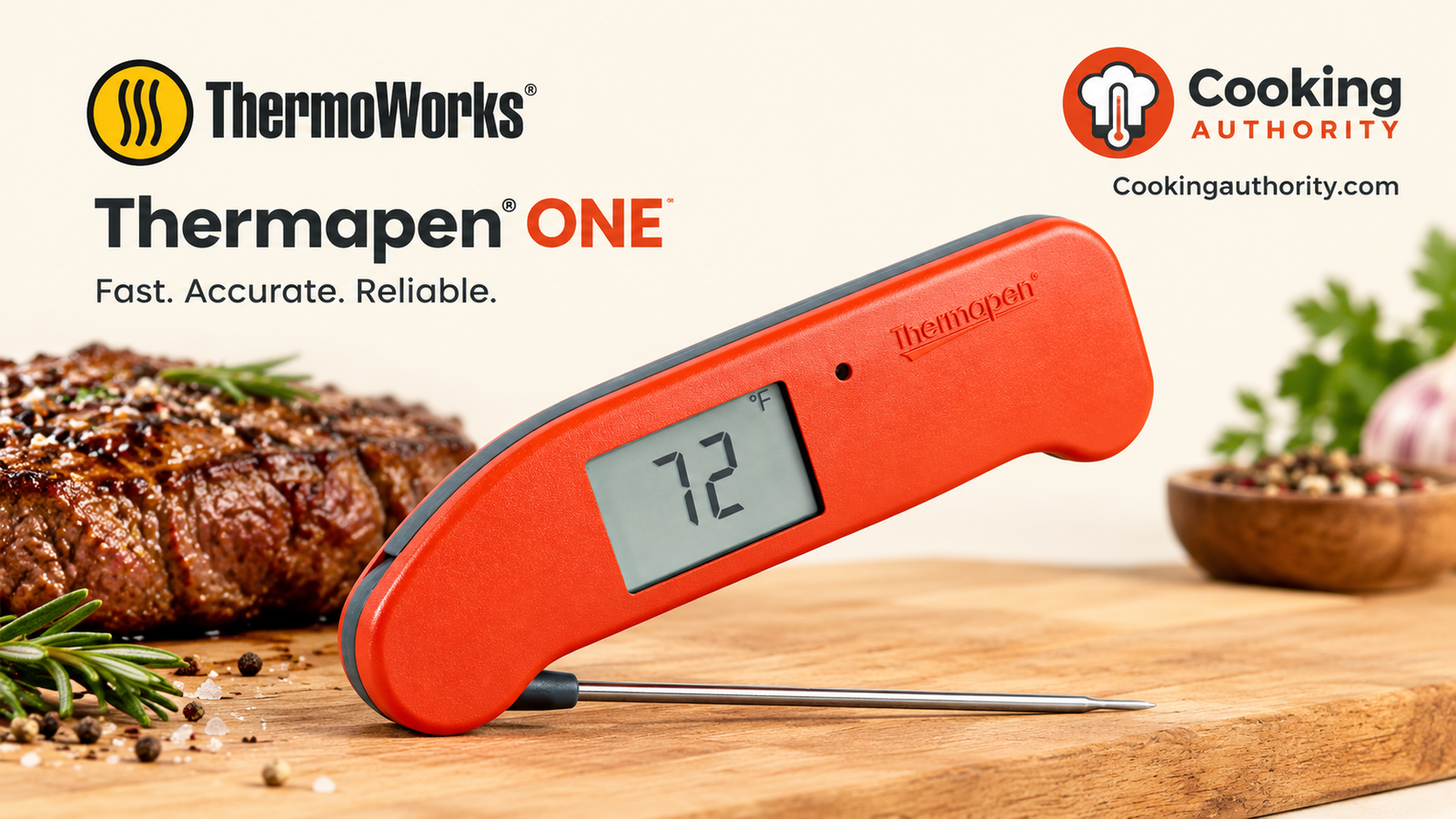
ThermoWorks Thermapen ONE
A professional-grade instant-read that is fast, accurate and built to survive years of daily use.
Mention instant-read thermometers to anyone who cooks seriously and the Thermapen name comes up within seconds. ThermoWorks has spent years refining this design, and the ONE is the version that brings the formula to a near-perfect balance of speed, accuracy and everyday usability. If you cook often and you want a thermometer you will not have to think about, this is the one most experienced cooks and barbecue fans recommend.
Speed that changes how you cook
The headline feature is speed. The Thermapen ONE is built to deliver a stable reading in about a second, which feels almost instantaneous once you are used to it. That matters more than it sounds. When you are checking six pieces of chicken on a hot grill, a one-second reading means you can test each piece and get on with things. When you are checking a roast through an open oven door, you are not letting the heat escape for ten or fifteen seconds. Speed also makes you far more likely to take multiple readings, and multiple readings are the secret to never serving an undercooked center.
Accuracy you can trust
ThermoWorks quotes a tight accuracy specification, on the order of half a degree Fahrenheit, which is among the best you will find in a handheld unit. The brand is known for supplying a calibration certificate with its professional thermometers, and the design makes it easy to confirm accuracy yourself with an ice-water test, which we describe later in this guide. For delicate tasks such as custards, sous vide checks, tempering chocolate or baking bread to the correct internal temperature, that kind of precision is exactly what you want.
Display and usability
The display is bright, large and backlit, and it automatically rotates so the numbers are right-side up however you hold the thermometer. A motion sensor puts the unit to sleep when you set it down and wakes it when you pick it up, so you rarely have to touch a power button. The probe folds into the handle, which doubles as protection when it is tossed into a drawer. If you cook in dim light, at an evening barbecue or in a poorly lit kitchen, you will appreciate the backlight in particular.
Build and water resistance
The ONE is designed to withstand splashes and rinsing, and its rubberized housing is easy to grip even when your hands are wet or greasy. It is not delicate. Throw it into a toolbox-style kitchen drawer and it will still be there, working perfectly, a couple of years later. The probe is thin enough to leave a small hole and long enough to reach the center of most cuts that you would cook at home.
Who it is for
The Thermapen ONE suits home cooks who cook several times a week, grillers who want to check many items quickly, bakers who care about internal bread temperatures and anyone who has been burned by a cheap thermometer that drifted out of calibration. It is also a superb gift for a cook who already has “everything,” which is why it appears so often on gift lists like our roundup of the best cooking gifts.
Things to consider
It is a premium-priced instant-read, and the extra cost buys you speed, accuracy and durability rather than new features. If you only grill a couple of times each summer, a budget model will be fine. The Thermapen is also a hand-held tool rather than a leave-in probe, so it will not replace a wireless thermometer for long roasts and smoking.
Pros
- Extremely fast response, around one second
- Tight, trusted accuracy
- Auto-rotating, backlit display
- Motion-sensing wake and sleep
- Durable, water-resistant build
- Easy to use one-handed
Cons
- Higher price than most instant-reads
- Not designed to stay in a hot oven or grill
- No wireless or app features
Verdict: Buy it once and use it for years. For the way most people actually cook, the Thermapen ONE is the closest thing to a perfect everyday thermometer.
Get the benchmark instant-read thermometer trusted by serious home cooks.
View ThermoWorks Thermapen ONE on AmazonBest Budget Instant-Read Thermometers
You do not need to spend premium money to stop guessing. A handful of well-reviewed, affordable instant-reads give you the one thing that matters most: a quick, readable temperature. In this section we look at four of the most popular budget-friendly options: the TempPro TempSwift 0.5, the TempPro TempSwift 1, the Alpha Grillers Instant Read and the KIZEN Instant Read. They overlap quite a bit, so we will explain the subtle differences and who each one suits best.
Specifications for budget thermometers change often between production runs. Check the listing for current accuracy, response time and warranty details before you buy.
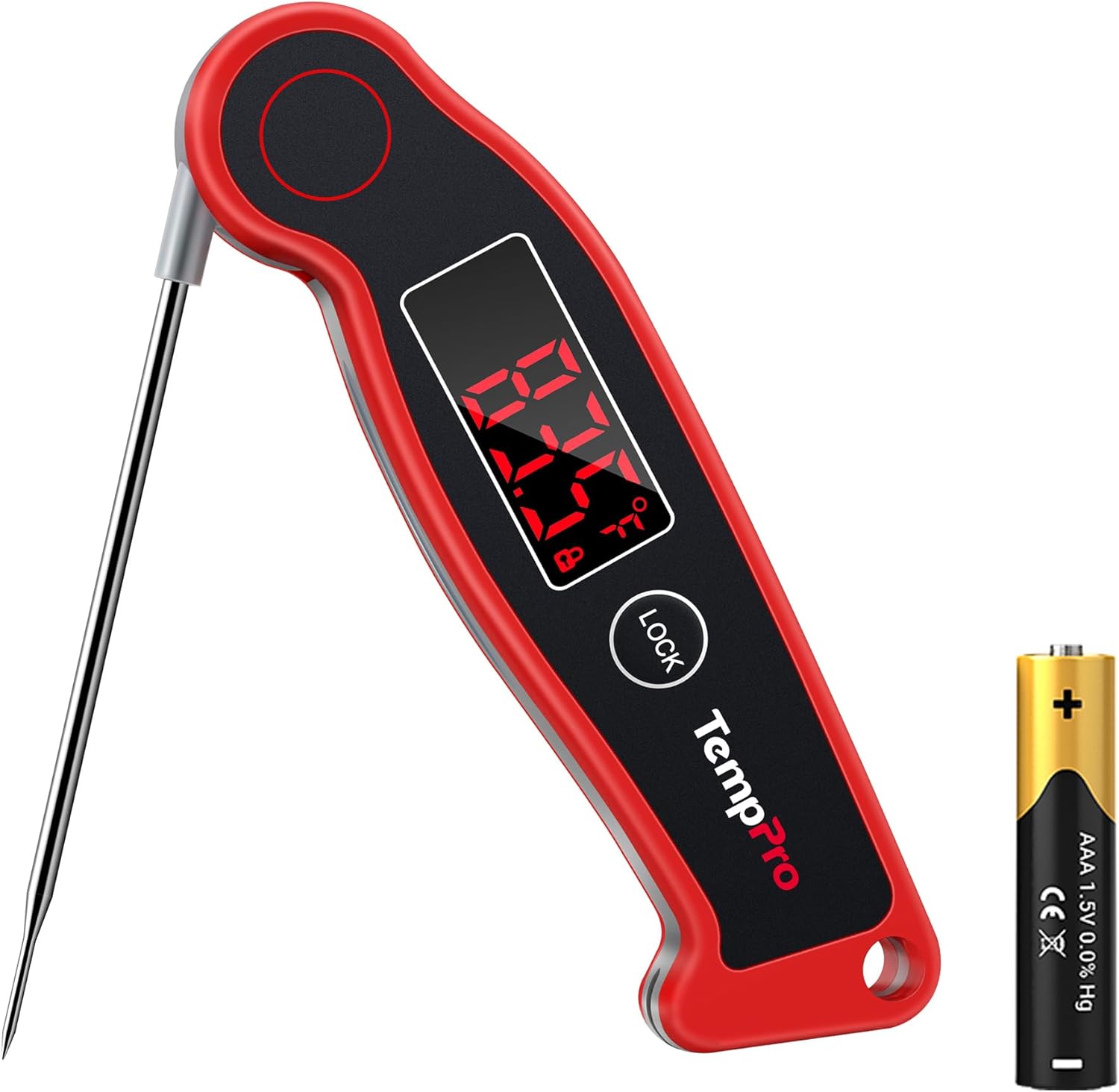
TempPro TempSwift 0.5
Built around a quick response time, aimed at cooks who want speed without paying a premium.
The TempSwift 0.5 takes its name from its target response time, a half-second claim that puts it in the same conversation as far pricier thermometers. In practice, the real-world feel is that the numbers settle quickly enough that you can poke, read and pull out of food without hesitation. That makes it a strong choice for grilling, where you may be juggling burgers, sausages and chicken pieces at once, and for anyone who hates standing with the oven door open.
Like most thermometers in this class, it offers a clear display and a compact folding design. It is a good fit for cooks who want to move up from the cheapest options without committing to a professional-grade unit. If speed is your top priority and you are watching your budget, this is where we would start.
See the current price on the TempPro TempSwift 0.5.
View TempSwift 0.5 on Amazon
TempPro TempSwift 1
A well-rounded, affordable instant-read for everyday meats, baking and frying.
The TempSwift 1 is the slightly more relaxed sibling, aiming for a one-second response rather than half a second. For the vast majority of kitchen tasks, that difference is imperceptible. What you really notice is the overall feel: a readable display, a sturdy probe and a straightforward button layout that does not require a manual to understand.
If you look at the pair side by side, the TempSwift 1 is usually the more economical choice, and for many cooks it is the smarter buy. Unless you check dozens of items in one cooking session, the extra speed of the 0.5 is a nice-to-have rather than a necessity. We find the TempSwift 1 hits a sweet spot between price and performance, making it an easy recommendation for first-time thermometer owners.
Pick up an affordable, fast instant-read for everyday cooking.
View TempSwift 1 on Amazon
Alpha Grillers Instant Read Meat Thermometer
A hugely popular, no-fuss thermometer that also happens to make an easy gift.
Alpha Grillers has built a loyal following by offering simple, approachable thermometers at a friendly price. The Instant Read Meat Thermometer is designed for exactly the cook who has never owned one before: a clear display, a backlight for evening grilling, a foldable probe and a no-nonsense layout. It is often packaged nicely, which is why you will see it recommended as a stocking stuffer and a gift for new homeowners.
The tradeoff, as with most budget models, is that it may not be as fast or as precisely specified as a premium unit. It will not replace a Thermapen for a professional-minded cook. But for the weekday chicken breast, the weekend steak or the holiday ham, it does the job and keeps you on the safe side of undercooked food.
A simple, popular thermometer that makes a great gift for new cooks.
View Alpha Grillers on Amazon
KIZEN Instant Read Meat Thermometer
An easy-to-use, budget-friendly option that makes a handy second thermometer for the kitchen or the grill.
The KIZEN follows a similar formula to the Alpha Grillers: quick readings, a clear screen and a price that does not sting. It is a sensible second thermometer to keep by the grill while your main one lives in the kitchen drawer, and it is a good “just in case” unit to toss into a camping or tailgating bag where a premium thermometer might be at risk of getting lost or scratched.
Because it sits in the same neighborhood as the other budget thermometers, the decision between them often comes down to availability, current price and personal preference for the look and feel of the handle. All of them will be a dramatic upgrade over cooking by guesswork.
Add an affordable backup thermometer to your kitchen or grill kit.
View KIZEN on AmazonBudget instant-reads compared
| Model | Speed Focus | Best For | Our Rating |
|---|---|---|---|
| TempPro TempSwift 0.5 | Fastest in this group | Busy grills and fast checks | Excellent |
| TempPro TempSwift 1 | Fast, balanced | First-time buyers wanting value | Excellent |
| Alpha Grillers Instant Read | Standard | Beginners and gifts | Very good |
| KIZEN Instant Read | Standard | A backup or travel thermometer | Very good |
Budget instant-read pros
- Much cheaper than premium models
- Fast enough for nearly all home cooking
- Simple, beginner-friendly controls
- Good for gifts and second thermometers
Budget instant-read cons
- Looser accuracy tolerances than premium units
- Less rugged construction
- Shorter warranty coverage in many cases
Explore more affordable instant-read thermometers.
Browse Budget Instant-ReadsMEATER Plus and MEATER Pro: Truly Wireless Cooking
MEATER helped popularize the idea of a thermometer with no wires at all. A single slim probe goes into the meat, the cooking happens, and your phone tells you what is going on. No cable to thread through the oven door, no base unit to babysit, and no tangle when you need to flip a roast or rotate a rotisserie. Two models appear in our list, the MEATER Plus and the MEATER Pro, and they suit slightly different kinds of cooks.

MEATER Plus
A proven, easy-to-use wireless probe with strong Bluetooth range and a simple app.
How the MEATER Plus works
The MEATER Plus is a single wireless probe that lives in a small charging case. You pull it out, insert it into your roast, steak or whole chicken, and open the app. Inside the probe are two sensors: one at the tip that measures the internal temperature of the meat, and another near the handle end that measures the ambient temperature of the oven or grill around it. The app combines both readings to estimate how much longer the cook will take, and it can alert you when it is time to pull the food and when it should be finished resting.
Range and connection
The “Plus” in the name refers to extended Bluetooth range compared with the original model, thanks to a Bluetooth repeater built into the charging case. That means you can stay in the living room, or even the backyard, while the roast is in the oven, as long as the case sits within range of the probe. Walls and metal can cut the range, so do not expect to be able to take a long walk around the neighborhood, but for a typical home it is more than enough.
The app experience
The MEATER app is one of its best selling points. You choose the type of meat and your preferred doneness, and the app suggests a target temperature and a rest time. It graphs the temperature curve as the cook progresses and sends a notification when you are approaching the target. For anxious or newer cooks this is reassuring, and for experienced cooks it is a convenient way to monitor a long roast without hovering.
Where it excels
The MEATER Plus is at its best on oven roasts, whole chickens, thick steaks, pork shoulder and rotisserie meats. Because there is no cable, you can wrap a brisket in butcher paper or foil, move a roast between oven and grill, or spin a chicken on a rotisserie without any fuss. It is also useful for anyone who cooks in a kitchen where running a cord out of an oven door is awkward.
Limits to know about
A single probe means you can only track one piece of meat at a time unless you buy additional probes. The temperature the internal sensor can handle is lower than the ambient sensor, so you should not leave the end of the probe sitting in direct flame or against a scorching grate. And you must keep the probe inserted to the proper depth so that the internal sensor is fully in the meat while the ambient sensor stays out in the air. Follow the maximum insertion and minimum insertion lines on the probe and you will be fine.
Pros
- Completely wire-free design
- Dual sensors track meat and ambient temperature
- Long Bluetooth range via the charging case
- Friendly app with guided cook estimates
- Works well on rotisserie and wrapped meats
Cons
- One probe tracks only one cut at a time
- Relies on your phone and the app
- Probe must be kept charged and clean
- Higher cost than basic leave-in thermometers
Cook roasts without wires or guesswork.
View MEATER Plus on Amazon
MEATER Pro
A more advanced MEATER built for serious grilling, searing and smoking.
What is different about the MEATER Pro?
The MEATER Pro takes the idea behind the Plus and pushes it further. Instead of a pair of sensors, it includes multiple sensors along the length of the probe to monitor the internal temperature at several points, plus an ambient sensor, and it is designed to tolerate a considerably higher heat environment. That makes it a better match for hot grills, high-temperature roasting and the rigors of live-fire cooking, where a standard probe could be pushed to its limits.
Why multiple sensors matter
Every piece of meat has a cold spot, and it is almost never where you insert the probe. Irregular cuts such as a leg of lamb, a bone-in pork shoulder or a thick brisket can vary by many degrees from one end to the other. A probe that checks several points and reports the coolest one is more reliable at telling you when the entire piece is actually done, not just the section near the tip.
Built for the grill and smoker
If you spend your weekends at the grill or smoker, the MEATER Pro’s higher heat tolerance is genuinely valuable. It lets you leave the probe in a steak through a reverse-sear, monitor a brisket through a long smoke and keep the probe in place when you finish a roast with a blast of high heat. Pair it with the app’s cook guidance and you have a hands-off system that is hard to beat for hobbyists who love live-fire cooking.
Is it worth upgrading from the Plus?
If you mostly roast chicken and cook the occasional steak in the oven, the Plus is plenty. If you smoke, grill hot or cook large, irregular cuts, the Pro is a meaningful step forward. Think of the Plus as the best everyday wireless probe and the Pro as the enthusiast upgrade.
Whichever MEATER you choose, take a moment to learn the insertion lines on the probe. Putting it in too shallow, or too deep, is the most common reason for confusing readings.
Pros
- Multiple internal sensors for more reliable doneness
- Higher heat tolerance for grilling and smoking
- No cable to snag or burn
- Polished app with alerts and estimates
Cons
- Costs more than the Plus
- Still depends on app and Bluetooth connection
- More capability than casual cooks may need
Step up to a multi-sensor probe for grilling and smoking.
View MEATER Pro on AmazonCHEF iQ Sense and ThermoMaven: Smart Wireless Thermometers
The MEATER pair are not the only wire-free options. The CHEF iQ Sense and the ThermoMaven Smart Bluetooth Wireless Thermometer both take the “smart” approach: a slim probe, a companion app, and plenty of guidance to help you hit your target. They are especially appealing if you enjoy tech, like experimenting with recipes or want your phone to act as a cooking coach.
Smart thermometers receive frequent app updates, so features and capabilities can differ between product versions. Confirm current details on the listing.

CHEF iQ Sense Smart Wireless Thermometer
A smart probe paired with an app that coaches you from prep to plate.
The CHEF iQ approach
CHEF iQ built its reputation on smart kitchen gadgets, and the Sense carries that philosophy into the world of thermometers. You pair the probe with the app, select what you are cooking and your desired doneness, and the app guides you with target temperatures, estimated cook times and alerts. The app also includes recipes and step-by-step instructions, which makes it a friendly option for people who want help not only with temperature but with the whole meal.
Strengths
The biggest advantage of the CHEF iQ Sense is its focus on guidance. A newer cook who is a little nervous about holiday roasts will appreciate that the app tells them when to start checking, when to take the meat off the heat and how long to rest it. Because the probe is wireless, it works for rotisserie, grilling, oven roasting and many other cooking styles, with no cable to manage.
Limits
As with any smart thermometer, the experience is only as good as your phone connection and the app. If you prefer to cook without screens, or you dislike creating accounts and downloading software, an instant-read or a leave-in with a base display will be simpler. It is also best used as a complement to, rather than a replacement for, a trusty instant-read thermometer for quick checks.
Pros
- Guided cooking with doneness suggestions
- Wire-free design for flexible cooking
- Alerts keep you free to socialize
- Good fit for beginners who want coaching
Cons
- Depends heavily on the app and phone
- Not as quick for spot checks as an instant-read
- Probe needs charging and careful cleaning
Let your phone guide the roast from start to finish.
View CHEF iQ Sense on Amazon
ThermoMaven Smart Bluetooth Wireless Thermometer
A feature-rich wireless probe aimed at cooks who enjoy data, alerts and flexibility.
The ThermoMaven approach
ThermoMaven is a newer name than some of the heavyweights, but its smart Bluetooth wireless thermometer has attracted attention for packing in a lot of capability. It follows the familiar wireless pattern: a slim stainless probe, a charging case or dock, and an app that charts your cook and sends notifications. For people who enjoy watching a temperature curve and fine-tuning their method, it offers plenty to play with.
Strengths
Wireless freedom is the main draw. You can wrap, rotate and reposition meat without being tied to a cable, and you can monitor progress from another room. Because the thermometer comes from a company that specializes in cooking tools rather than a general gadget maker, the app is built around real cooking use cases, from steaks and roasts to whole poultry and larger smoked cuts.
Limits
With any smart probe, you must be willing to manage a rechargeable battery and trust the connection. Bluetooth range varies, so a thick masonry wall or a closed metal grill lid can interrupt the signal. Treat the wireless probe as one tool in a two-thermometer toolkit, with an instant-read nearby for confirmation, and you will rarely be caught off guard.
Pros
- Wire-free freedom for flexible cooking
- App alerts and temperature tracking
- Good for roasts, grilling and larger cuts
- Appealing for gadget-loving cooks
Cons
- Requires a charged probe and a working connection
- Range can drop around walls and metal
- Less brand history than the best-known names
CHEF iQ Sense vs. ThermoMaven vs. MEATER
| Feature | MEATER Plus | MEATER Pro | CHEF iQ Sense | ThermoMaven |
|---|---|---|---|---|
| Wire-free | Yes | Yes | Yes | Yes |
| Phone app | Yes | Yes | Yes | Yes |
| Best for | Everyday roasts | Grilling and smoking | Guided cooking | Tech-savvy cooks |
| Ease of use | Very easy | Easy | Easy | Easy |
| Our pick for | Most people | Enthusiasts | Beginners wanting coaching | Gadget fans |
Prefer a smart thermometer with plenty of features? Take a look at ThermoMaven.
View ThermoMaven on AmazonTempPro TempTrack Dual Probe: The Practical Leave-In
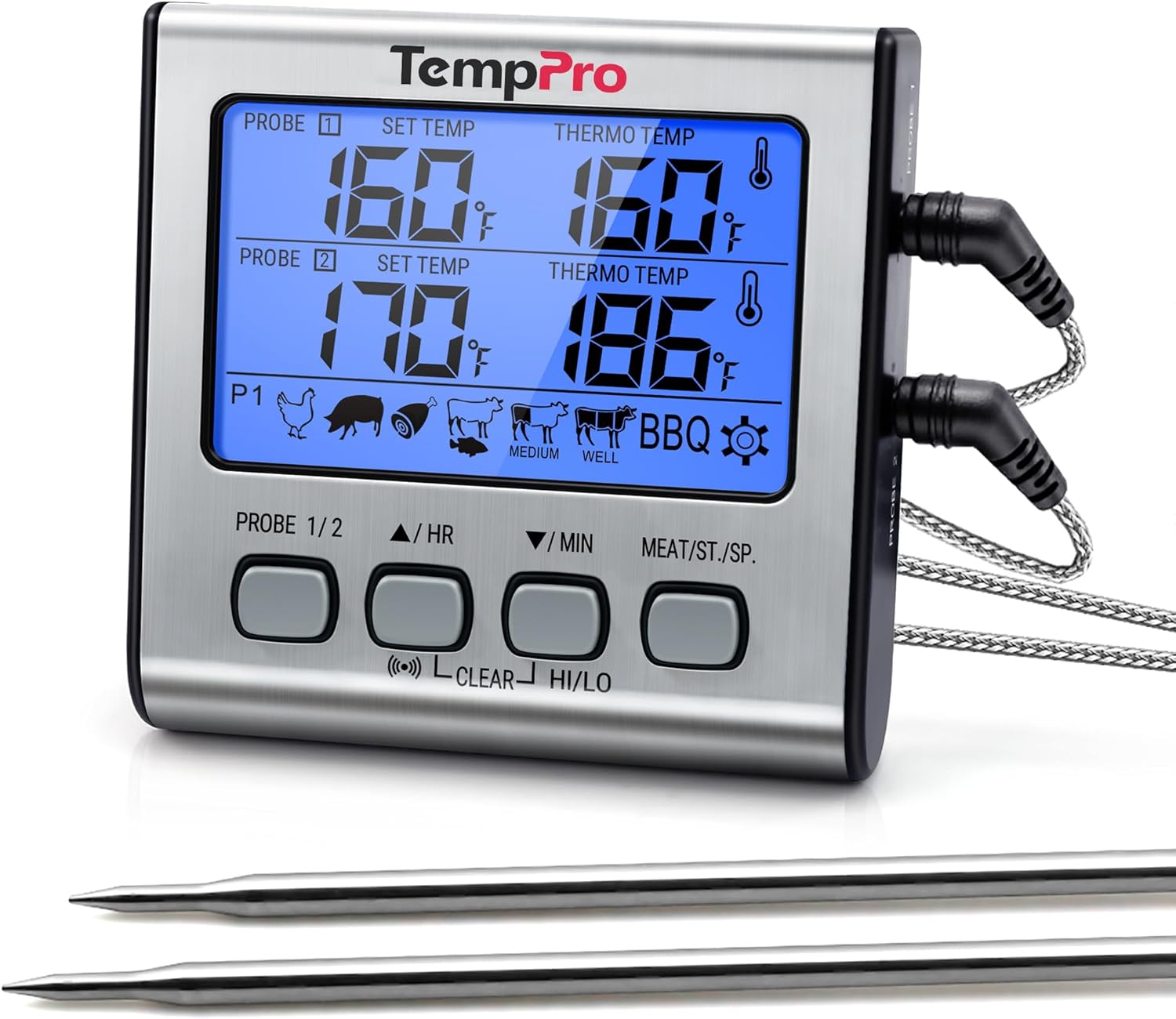
TempPro TempTrack Dual Probe
A classic leave-in design that lets you monitor two temperatures at once.
Not everyone needs, or wants, a thermometer that talks to their phone. For plenty of cooks the ideal setup is simpler: a probe on a heat-safe cable, a display on the counter and an alarm that goes off at the right moment. The TempPro TempTrack Dual Probe delivers this approach, and the second probe adds real flexibility.
Why two probes are better than one
The classic use for two probes is monitoring the meat and the oven (or grill) at the same time. Oven thermostats can be off by twenty-five degrees or more, so knowing the real air temperature around your roast helps you diagnose a cook that is running slow or fast. The second use is tracking two separate pieces of meat, such as two chicken breasts of different sizes, or the thickest and thinnest ends of a roast. That kind of insight is something a single instant-read poke simply cannot offer.
How to get the most from it
Insert the meat probe into the thickest part of the cut, away from bone and fat, and clip the cable so it runs cleanly out of the oven. Place the ambient probe near the meat but not touching it. Set an alarm slightly below your final target to account for carryover cooking, which we explain in the temperature guide below. As the display counts up, you can see at a glance whether you are on schedule, without opening a door or lifting a lid.
Who should buy it
The TempTrack is a great fit for cooks who roast regularly, bake large items like meatloaf and casseroles, or smoke meats on a budget. It is also a good option for people who like a physical display and physical buttons rather than a phone app, and for households where phones are not welcome at the stove.
Things to consider
A wired probe means you need to handle the cable with care and avoid letting it touch a direct flame or a red-hot heating element. You will also give up the freedom of a fully wireless probe on rotisserie cooks. Still, for long, stationary cooks the cable is rarely a problem, and the simplicity of the system is part of its charm.
Pros
- Two probes: meat plus oven, or two cuts
- No phone or app required
- Alarm alerts you when it is time to pull
- Typically more affordable than smart probes
Cons
- Cable can be fiddly in tight ovens
- Not suited to rotisserie or spit cooking
- Base unit takes up counter space
Monitor your roast and your oven at the same time.
View TempTrack Dual Probe on AmazonSafe Temperatures, Doneness and Resting: Your Cheat Sheet
A thermometer is only as useful as the numbers you compare it against. Here is a practical reference for the temperatures you will use most often, along with the reasoning behind them. Safe minimum internal temperatures come from food safety guidance, while the doneness ranges for steaks and roasts reflect taste and texture. Both matter, so we separate them.
Safe minimum internal temperatures
| Food | Safe Minimum Internal Temperature |
|---|---|
| Chicken, turkey and all poultry | 165°F |
| Ground beef, pork, lamb and veal | 160°F |
| Ground poultry | 165°F |
| Beef, pork, lamb and veal steaks, chops and roasts | 145°F, followed by a three-minute rest |
| Fish and shellfish | 145°F |
| Egg dishes | 160°F |
| Leftovers and casseroles | 165°F |
For chicken specifically, our deep dive on the safe temperature for cooking chicken explains where to place the probe, how to handle thighs versus breasts and why juices are not a reliable sign of doneness.
Steak doneness by temperature
| Doneness | Pull Temperature | Final Temperature After Rest | Center Appearance |
|---|---|---|---|
| Rare | 115 to 120°F | 120 to 125°F | Cool red center |
| Medium rare | 125 to 130°F | 130 to 135°F | Warm red center |
| Medium | 135 to 140°F | 140 to 145°F | Warm pink center |
| Medium well | 145 to 150°F | 150 to 155°F | Slightly pink |
| Well done | 155 to 160°F | 160°F and above | Little or no pink |
Steaks cooked below the 145°F safe minimum carry more risk, particularly for young children, older adults, pregnant people and anyone with a weakened immune system. Cook to the level you are comfortable with, and consider the guidance for your household.
Understanding carryover cooking
Food does not stop cooking the moment you take it off the heat. The hot outer layers continue to push heat toward the center, and the internal temperature keeps rising for several minutes. A thin steak might climb five degrees, while a large roast or turkey can rise ten to fifteen degrees. This is why chefs pull meat early. It is also why a thermometer matters so much: you can watch the climb and make a calculated decision rather than a hopeful one.
Why resting matters
Resting lets muscle fibers relax and the juices redistribute through the meat instead of running onto your cutting board. It also gives carryover cooking time to finish the job. How long to rest depends on size. If you are cooking a steak, our guide on how long steak should rest after cooking covers the timing in detail. For the holiday bird, see how long a turkey should rest after cooking, which also explains how to keep it warm without drying it out.
Roasts, poultry and smoked meats
| Cook | Target Temperature | Notes |
|---|---|---|
| Whole turkey | 165°F in the thickest part of breast and thigh | Check the innermost thigh and the wing joint as well |
| Whole chicken | 165°F in the thigh | Avoid touching the bone |
| Pork loin or chops | 145°F, then rest | Slightly pink centers can be safe at this temperature |
| Prime rib (medium rare) | Pull around 120 to 125°F | Rises significantly while resting |
| Brisket and pork shoulder | 195 to 205°F | Cook until probe-tender, not just to a number |
| Fish fillets | 145°F | Check the thickest part |
Holiday cooks often ask whether the bird should be tented. The answer depends on the stage of the cook, and our article on whether you should cover a turkey when cooking walks through when foil helps and when it hurts. Whichever approach you take, a thermometer is how you know it is working.
Beyond meat: baking, candy and frying
Do not leave the thermometer in the meat drawer. Bread is typically done when the interior reaches about 190 to 210°F, depending on the dough. Custards and quiches set around 160 to 175°F. Deep-frying generally happens between 350 and 375°F, and candy making relies on defined stages: soft ball is around 235 to 245°F, and hard crack is around 300 to 310°F. A fast, accurate thermometer can handle all of it, which is one more reason to invest in a good one.
Keep a reliable thermometer handy for roasts, steaks, baking and frying.
Shop Meat ThermometersAccuracy, Calibration, Technique and Care
Even the best thermometer will let you down if it is used poorly or neglected. A few simple habits will keep your readings trustworthy for years, and they cost nothing.
How to check accuracy with ice water
The easiest test uses a glass of ice water. Fill a glass to the top with ice, add cold water and let it sit for a few minutes, stirring now and then. Insert the probe so that the sensing area is fully submerged, without touching the sides or bottom of the glass. A properly working thermometer should read about 32°F. If it is off by a couple of degrees, check whether your model can be recalibrated, and if not, make a mental note of the offset.
The boiling-water test
You can also test in boiling water, which at sea level is 212°F. At higher altitudes the boiling point drops, by roughly one degree for every five hundred feet of elevation, so adjust your expectations if you live in the mountains. The ice-water test is usually easier and more consistent, which is why we recommend it as the primary check.
Where to insert the probe
Always aim for the geometric center of the thickest part of the food, away from bones, which conduct heat and can give false readings, and away from big pockets of fat. For poultry, check the thickest part of the breast and the innermost part of the thigh. For thin items like burgers and chops, insert the probe sideways through the side rather than from the top so that the sensing zone sits in the middle. For a whole turkey, take multiple readings in different places.
Common mistakes to avoid
- Not inserting deep enough. The sensor sits near the tip, and a shallow poke measures the cooler outer layer.
- Touching bone or the pan. Both will give you a misleadingly high reading.
- Checking too late. Start measuring well before the expected finish so you do not overshoot.
- Forgetting carryover cooking. Pull meat a few degrees below your target when it will rest.
- Leaving an instant-read in a hot oven. It is not designed for it and can be damaged.
- Skipping cleaning between raw and cooked food. Cross-contamination is a real risk.
Cleaning and cross-contamination
Wash the probe in hot, soapy water after every use, and wipe it with a clean cloth. Do not put raw chicken into a bowl, then use the same unwashed probe on food that has finished cooking. Handling raw poultry safely goes beyond the thermometer; if you have ever wondered about rinsing, our explainer on whether you should wash chicken before cooking explains why splashing water around can actually spread bacteria around your sink and counter.
Storage and battery care
Store your thermometer in a drawer or a hook where the probe will not get bent, and keep its cover on if it has one. For battery-powered units, replace the battery at the first sign of dimming or slow performance rather than waiting until it dies. For wireless probes, charge them fully before big cooks and wipe the contacts clean from time to time so that charging remains reliable.
When to replace a thermometer
If your thermometer repeatedly fails an ice-water test, has a cracked probe, shows erratic readings or takes noticeably longer to settle than it used to, it is time to retire it. A bad thermometer is more dangerous than no thermometer, because it gives you false confidence.
Test your thermometer every few months, and always before a major holiday cook. Five minutes with a glass of ice water can save a meal.
Need a reliable replacement? Browse highly rated probe thermometers.
Browse Probe ThermometersWhich Cooking Thermometer Should You Buy?
After looking at all ten, the question remains: which one belongs in your kitchen? The answer depends on how you cook, how often you cook and how much you value convenience versus simplicity. Here is how we would match each type of cook to the right tool.
If you cook several times a week
Get the ThermoWorks Thermapen ONE. You will use it daily, so the extra speed, accuracy and durability will pay off many times over.
If you are buying your first thermometer
Start with the TempPro TempSwift 1 or the Alpha Grillers Instant Read. They are affordable, easy to use and good enough to stop most cooking mishaps.
If you love roasts and holiday cooking
Choose the MEATER Plus for a hands-off wireless probe, or the TempPro TempTrack Dual Probe if you prefer a traditional display and an alarm. Either one lets you keep the oven door closed while the bird does its thing.
If you grill and smoke
The MEATER Pro is made for you, thanks to its multi-sensor design and heat tolerance. A fast TempSwift 0.5 alongside it makes a superb pairing for quick checks.
If you love apps and guided cooking
Look at the CHEF iQ Sense or the ThermoMaven Smart Bluetooth. They suit cooks who enjoy tracking data and getting helpful nudges.
If you need a backup or a gift
The KIZEN Instant Read and Alpha Grillers are friendly-priced and practical. For a more luxurious present, pair a Thermapen ONE with ideas from our list of best cooking gifts.
The ideal two-thermometer kit
If we had to build the ideal kit for a keen home cook, it would be a fast instant-read for spot checks plus a leave-in or wireless probe for long cooks. That pairing is flexible, dependable and covers everything from Tuesday night chicken to a Sunday brisket. And since good cooking tools are only half the equation, it is worth upgrading the pans your food cooks in as well. If you are rethinking cookware, our guide to the best non-toxic cooking pans is a natural next read.
Final comparison
| If You Want… | Choose |
|---|---|
| The best all-around thermometer | ThermoWorks Thermapen ONE |
| Fast and affordable | TempPro TempSwift 0.5 |
| Best value for a first thermometer | TempPro TempSwift 1 |
| A simple, giftable thermometer | Alpha Grillers Instant Read |
| An inexpensive backup | KIZEN Instant Read |
| Easy wireless roasting | MEATER Plus |
| High-heat grilling and smoking | MEATER Pro |
| Wired alarm with two probes | TempPro TempTrack Dual Probe |
| Guided, app-based cooking | CHEF iQ Sense |
| Feature-rich smart probe | ThermoMaven Smart Bluetooth |
Ready to choose? See current prices on the best cooking thermometers.
Find Your Thermometer on AmazonFrequently Asked Questions About Cooking Thermometers
What is the best cooking thermometer for home cooks?
For most people, a fast and accurate instant-read thermometer is the best all-around choice, and the ThermoWorks Thermapen ONE is our top pick for its speed, accuracy and durability. If you cook long roasts or smoke meat, add a leave-in or wireless probe like the MEATER Plus or TempPro TempTrack. Together they cover nearly everything.
What is the difference between an instant-read and a leave-in thermometer?
An instant-read is a handheld tool you insert briefly to check temperature, then remove. A leave-in thermometer has a probe that stays in the food while it cooks and connects to a display or app that tracks the temperature continuously and sounds an alarm at your target. Instant-reads are better for quick checks, and leave-ins are better for long, hands-off cooks.
Are wireless meat thermometers worth it?
They are worth it if you cook roasts, rotisserie chicken or smoked meats often, or if you like the idea of monitoring a cook from another room. They also remove the cable hassle of traditional probes. If you mostly cook steaks and chicken on the stove, a good instant-read will probably serve you better and cost less.
How accurate are cooking thermometers?
Quality thermometers are typically accurate to within one or two degrees Fahrenheit, with premium models like the Thermapen claiming tighter tolerances. Accuracy can drift over time or after a drop, so test yours periodically with an ice-water bath. A properly working thermometer should read about 32°F in well-mixed ice water.
What temperature is chicken safe to eat?
Chicken and other poultry should reach an internal temperature of 165°F, measured in the thickest part of the meat without touching bone. For more detail on where to measure and how thighs compare with breasts, read our guide to the safe temperature for cooking chicken.
Where should I insert the thermometer in a turkey?
Check the thickest part of the breast, the innermost part of the thigh and the thickest part of the wing, avoiding bone. All should read at least 165°F. After cooking, let the bird rest; our article on how long a turkey should rest after cooking explains the timing.
How long should I let steak rest after cooking?
Most steaks benefit from several minutes of rest so the juices settle, and thicker cuts need a little longer. Watch the temperature as it rises through carryover cooking. See how long steak should rest after cooking for the full breakdown by thickness.
Can I leave an instant-read thermometer in the oven?
Generally no. Instant-read thermometers are designed for brief checks and the electronics can be damaged by prolonged heat. Use a leave-in probe thermometer, such as the TempPro TempTrack Dual Probe, or a wireless probe like the MEATER Plus, when you want to monitor the temperature during the whole cook.
Do I need to calibrate my thermometer?
It is smart to check it every few months and before big cooks. Use the ice-water test: a correctly working thermometer reads about 32°F. Some models can be recalibrated; if yours cannot and it is off by more than a couple of degrees, replace it.
Can I use a meat thermometer for candy, bread or frying oil?
Often yes, as long as its temperature range covers your needs. Many instant-read thermometers handle frying oil, bread and custards well. For long candy-making sessions, a clip-on candy thermometer is more convenient. If you fry regularly, you may also want to know how to handle used oil, which our guide on how to dispose of cooking oil covers.
How do I clean a cooking thermometer?
Wash the probe with hot, soapy water after each use and wipe dry. Avoid submerging the entire unit unless it is rated for it, and do not put it in the dishwasher unless the manufacturer says it is safe. Clean the probe between raw and cooked foods to prevent cross-contamination.
Is it worth paying more for a premium thermometer?
If you cook often, yes. Premium models offer faster response, tighter accuracy, tougher construction and longer warranties. If you cook occasionally, a budget option like the TempPro TempSwift 1 or Alpha Grillers will do the job at a lower cost.
Still comparing? Browse top-rated cooking thermometers and read verified reviews.
See Top-Rated ThermometersFinal Verdict: Cook With Confidence
The right cooking thermometer is one of the few kitchen tools that pays you back every single time you use it. It protects your family, rescues your dinners and helps you hit the exact texture you are after, whether that is a juicy chicken thigh, a pink-centered steak or a falling-apart brisket. The ten thermometers in this guide span every budget and cooking style, and any of them beats guessing.
To recap, the ThermoWorks Thermapen ONE is the best all-around choice, the MEATER Plus and MEATER Pro lead the wireless pack, the TempPro TempSwift models, Alpha Grillers and KIZEN offer wonderful value, the TempPro TempTrack is a practical wired companion for roasts, and the CHEF iQ Sense and ThermoMaven bring smart guidance to the party. Pick the one that fits the way you cook, learn to use it well, and test it now and then.
Your next great meal is a few degrees away. Choose a thermometer, stick it in the thickest part, and enjoy food that comes out right every time.
Upgrade your cooking today with a thermometer you can trust.
Shop the Best Cooking Thermometers