What Does BBQ
Stand For?
The word barbecue has traveled 500 years across oceans, languages, and continents. Here’s everything behind those three famous letters.
BBQ is an abbreviation — not a true acronym. Each letter does not stand for a separate word. The full word is “barbecue,” and BBQ is simply its shortened written form. The word itself comes from the Taíno language of the Caribbean, not from any English, French, or Spanish phrase.
What BBQ Actually Stands For — And What It Doesn’t
This is one of those questions where the popular answer and the correct answer diverge dramatically. Ask most people what BBQ stands for and you’ll get a confident response about a French phrase, a reference to a whole pig cooked “from beard to tail,” or some other clever-sounding derivation. These stories are compelling, memorable, and almost universally wrong.
BBQ is not an acronym. It does not stand for “Bar Beef Quarter,” “Bring Beer Quick,” or any other phrase where each letter represents a separate word. It is simply an abbreviation of the word barbecue, the same way “Dr.” abbreviates “Doctor” or “St.” abbreviates “Street.” The letter Q substitutes for the “-cue” ending in the same way informal phonetic spelling often works in English — “cue” sounds like “Q,” so BBQ becomes a natural shorthand.
The real story of what “barbecue” means — and where it actually came from — is far more interesting than any acronym theory, and it stretches back centuries across multiple continents and cultures.
The True Etymology: Where the Word Barbecue Came From
The linguistic trail of the word “barbecue” is one of the most well-documented etymological journeys in the English language, and it leads directly to the indigenous peoples of the Caribbean — specifically the Taíno, who inhabited the islands that Christopher Columbus and subsequent Spanish explorers encountered in the late 15th century.
The Taíno used the word barabicu (sometimes recorded as barabicoa) to describe a raised wooden framework or grating made from green sticks. This structure served two primary purposes: as an elevated platform for sleeping (keeping the occupant above insects, moisture, and predators), and as a cooking apparatus over which meat, fish, and other foods were placed to smoke and dry over a low fire. The concept of slow-cooking food on a raised grate over smoky heat — which is the technical definition of barbecue as a cooking method — was already fully developed in Taíno culture long before any European arrived.
Spanish explorers encountered this practice and recorded it. Gonzalo Fernández de Oviedo y Valdés, a Spanish historian who documented Caribbean indigenous life extensively, recorded the word barbacoa in 1526 in his natural history of the Indies. This is the earliest known written record of the word in any European language. The Spanish adopted barbacoa primarily to refer to the wooden structure itself, and the word gradually expanded in meaning to encompass the entire cooking practice.
From Spanish, the word migrated into French as the French established colonies in the Caribbean, and from French into English during the 17th century. The first known English written use of “barbecue” appears in approximately 1661 in Edmund Hickeringill’s Jamaica Viewed. By the early 18th century, the word was in common usage in American colonial writing, including in the writings of George Washington, who recorded attending “barbecues” as social events.
Taíno barabicu → Spanish barbacoa (1526) → French barbecue → English “barbecue” (c.1661) → American colonial usage → Universal abbreviation “BBQ.” Five hundred years, four languages, one great cooking method.
The Caribbean Taíno people created the concept. Their word barabicu described a raised cooking framework — the ancestor of every grill and smoker on earth.
Spanish explorers adapted barbacoa and spread it across their Caribbean and American colonial territories. It entered the written record in 1526.
French colonists in the Caribbean encountered the word and brought it back to Europe, where it shifted toward describing the cooking event rather than just the structure.
The first English use dates to 1661. By the 1700s, American colonists were using “barbecue” to describe both the cooking method and the community social event.
American Southern culture absorbed, transformed, and codified barbecue into its most celebrated form — slow-smoked meat over wood, with regional variations that became distinct culinary traditions.
The “BBQ” abbreviation became standard in the 20th century as the word appeared on signage, menus, and packaging where space was limited. The Q phonetically substitutes for “-cue.”
A Timeline of Barbecue Through History
The history of barbecue is the history of human civilization’s relationship with fire, food, and community. Here is the documented journey from the Caribbean to the global phenomenon it is today.

Monitor your BBQ from up to 500ft away. Dual probes, app-connected, 500-hour battery. The tool every pitmaster needs. See our full BBQ tools guide for more picks.
The French Theory: “De Barbe à Queue” — True or Myth?
If you’ve ever looked up the origin of the word “barbecue,” you’ve almost certainly encountered this theory: that it derives from the French phrase de barbe à queue, meaning “from beard to tail” — a description of cooking a whole animal from nose to tip. The theory is elegant, memorable, and widely repeated. It is also almost certainly wrong.
Etymologists and historians who have studied the word’s origins carefully consistently reject the French phrase theory as a backronym — a creative explanation invented after the fact to make an existing word seem to have a logical derivation. Several problems undermine it:
-
1The Chronology Doesn’t WorkSpanish records of barbacoa predate French colonial contact with the practice by decades. If the word came from a French phrase, you would expect French records to predate or at least coincide with Spanish ones. They don’t — Spanish usage is clearly earlier and independent.
-
2No “De Barbe à Queue” in Historical French TextsDespite the widespread repetition of this theory, no French historical text has been found actually using the phrase de barbe à queue in connection with cooking. It appears in modern etymology discussions but not in the historical record itself — a significant red flag.
-
3The Taíno Source Is Well-DocumentedThe Taíno word barabicu is documented by multiple independent Spanish observers across different decades and locations. The evidence for this origin is solid. When a well-documented origin exists, competing folk etymologies that lack comparable documentation should be treated skeptically.
-
4The French Theory Is a “Just-So Story”Linguists use the term “folk etymology” for invented explanations of word origins that feel logical but lack historical support. “De barbe à queue” is a classic folk etymology — it makes intuitive sense as an explanation for a cooking method, which is exactly why it spread and why it’s wrong. Real etymology is messier and less poetic than folk etymology suggests.
The scientific consensus among etymologists is clear: “barbecue” comes from the Taíno word barabicu, not from any French phrase. The de barbe à queue story is almost certainly a post-hoc invention — a clever story attached to an existing word. Engaging to tell, but historically unfounded.
How America Made BBQ Its Own
While the word “barbecue” arrived in North America via Caribbean and European intermediaries, what happened to the practice once it took root on American soil was a genuinely new creation. American barbecue is not a European import with a Native American name. It is a unique synthesis of Native American, West African, and European culinary traditions, forged over centuries of shared and forced proximity in the American South.
Native American peoples across the South and Southeast had their own traditions of pit cooking and slow-smoking meat for preservation long before European settlement — traditions that the arriving colonists encountered, adapted, and incorporated. But the most decisive influence on what American barbecue became came from enslaved West Africans, who were frequently assigned the role of pitmaster at large plantation and community barbecue events because of their culinary expertise and existing traditions of smoke-cooking back home.
The seasonings, the sauces, the specific techniques of managing fire and smoke over very long periods, the understanding of how different woods produce different flavors — much of what defines American barbecue today was refined and perfected by enslaved and later free Black pitmasters whose names are largely absent from the official historical record but whose contributions are inseparable from the food itself.
American barbecue culture has a documented history of crediting white restaurant owners and promoters while erasing the Black pitmasters who created and refined the techniques. This is beginning to be corrected — food historians like Adrian Miller have written extensively about this erasure — but the acknowledgment remains incomplete in mainstream BBQ culture.
By the 19th century, barbecue had become deeply embedded in American political and social culture. Political barbecues were major campaign events — voters were fed slow-cooked meat, and the politician who hosted the most impressive barbecue gained tangible community goodwill. Abraham Lincoln, Andrew Jackson, and virtually every major Southern politician of the era hosted or attended barbecues as essential parts of their public life.
BBQ vs. Grilling vs. Smoking: What the Words Really Mean
One of the most persistent sources of confusion in outdoor cooking is the casual interchangeability of “BBQ,” “grilling,” and “smoking” in everyday conversation. In the American South, calling something grilled “BBQ” is not just inaccurate — it’s the kind of thing that starts arguments. Here is the precise distinction.
| Method | Heat Type | Temperature | Time | Smoke? | Typical Food |
|---|---|---|---|---|---|
| True BBQ | Indirect, low | 225°F–300°F | 4–18+ hours | Essential | Brisket, ribs, pork shoulder, whole hog |
| Smoking | Indirect, very low | 180°F–250°F | 6–24+ hours | Central | Same as BBQ — overlaps significantly |
| Grilling | Direct, high | 400°F–600°F+ | 5–30 minutes | Optional | Burgers, steaks, chicken breasts, hot dogs |
| Roasting | Indirect, moderate | 300°F–450°F | 1–4 hours | No | Whole chicken, prime rib, vegetables |
The key distinction is simple: grilling is fast and hot; BBQ is low and slow. Grilling uses high direct heat to quickly cook food — it is what most backyard cooks do when they fire up the grill for burgers on a Tuesday evening. True BBQ uses low indirect heat and wood smoke over many hours to break down tough collagen in cheaper cuts of meat into rich, gelatinous, flavorful results that quick cooking could never achieve.
In common everyday speech — particularly outside the American South — “BBQ” often just means any outdoor cooking. Australians having a “barbie” are typically grilling on a flat griddle. Brits having a “BBQ” might be doing anything from burning sausages under direct flame to genuinely smoking ribs low and slow. The word has expanded globally to encompass a much broader category of outdoor cooking than its technical American definition suggests.
For a deeper technical understanding of the difference — including the heat and flavor mechanics that make them distinct — our detailed comparison of grilling vs. smoking heat and flavor mechanics breaks down exactly what happens to food under each method and why it matters.
- ✓ Deep smoke penetration and flavor
- ✓ Transforms tough, cheap cuts into luxury
- ✓ Complex bark and smoke ring formation
- ✓ The authentic tradition with centuries of history
- ✓ Produces the most celebrated BBQ dishes
- ✗ Can’t produce proper BBQ results
- ✗ Limited smoke penetration
- ✗ Works for tender cuts only
- ✗ No bark or smoke ring possible
- ✗ What most people do but call “BBQ”

If you’re going to do real BBQ (low and slow, real wood smoke), an offset smoker is the authentic choice. Compare all types in our best smokers guide.
The Four Kingdoms: Regional American BBQ Styles
American BBQ is not one thing. It is a collection of fiercely distinct regional traditions, each with its own preferred meats, specific smoking woods, sauce philosophies, and cultural identity. Understanding these regions is essential to understanding what “BBQ” means as more than just a cooking method — it is a statement of place, history, and identity.
- Meat: Beef brisket above all else. Also beef ribs, sausage.
- Wood: Post oak primarily, pecan secondary.
- Sauce: Minimal or none. The meat speaks for itself.
- Rub: Salt and black pepper. Nothing else in Central Texas.
- Serve: On butcher paper, with white bread and pickles.
- Icons: Franklin Barbecue (Austin), Snow’s BBQ.
- Meat: Everything — beef, pork, chicken, turkey, lamb.
- Wood: Hickory most commonly.
- Sauce: Thick, sweet, tomato-and-molasses based. Poured generously.
- Rub: Complex sweet-spicy blends. Heavy bark.
- Signature: Burnt ends — the caramelized brisket point pieces.
- Icons: Arthur Bryant’s, Joe’s Kansas City.
- Meat: Pork — whole hog in the East, shoulder in the West.
- Wood: Hickory and oak.
- Sauce (East): Thin, sharp apple cider vinegar and pepper. No tomato.
- Sauce (West): Vinegar base with some ketchup. Slightly sweeter.
- Signature: Pulled pork on a plain white bun with coleslaw.
- Icons: Skylight Inn, Lexington Barbecue.
- Meat: Pork ribs above all else. Pulled pork sandwiches.
- Wood: Hickory, primarily.
- Sauce (Wet): Brushed on during and after cooking. Tangy-sweet.
- Sauce (Dry): Rub only — no sauce. The purist approach.
- Signature: Dry-rub ribs ordered “wet” or “dry” — your choice.
- Icons: Rendezvous, Central BBQ.
American BBQ has more than four styles. Alabama is famous for its white sauce (mayonnaise-based) on smoked chicken. South Carolina has a mustard-based sauce tradition with roots in German immigrant cooking. Kentucky is known for smoked mutton (sheep). Hawaii has its own kālua pork tradition using underground pit cooking. The regional diversity of American BBQ is essentially endless once you look beyond the four most recognized traditions.
BBQ Around the World: How Other Cultures Do It
The word “BBQ” belongs to American English, but the practice of cooking meat over fire has been independently developed by virtually every culture on earth. What’s remarkable is how many of these traditions share the core principle that makes barbecue special — slow cooking over live fire produces flavors that no other method can replicate — while arriving at completely different results in terms of flavor, technique, and cultural meaning.
The braai (from Afrikaans braaivleis, meaning “grilled meat”) is South Africa’s defining food tradition. Built exclusively over wood fire — never gas — it is as much a social institution as a cooking method. Boerewors sausages, lamb chops, and marinated chicken are staples. Braai culture transcends race, class, and politics in post-apartheid South Africa in a way few other things do.
The Australian “barbie” is culturally omnipresent but technically quite different from American BBQ — it’s typically a flat iron griddle (Aussies call it a “hotplate”) or a gas grill used for quick cooking. Prawns, snags (sausages), and steaks. The “throw another shrimp on the barbie” stereotype, attributed to a tourism ad from the 1980s, is mostly fiction — Australians call them prawns, not shrimp.
Japan has two distinct live-fire traditions. Yakiniku (grilled meat) involves cooking thinly sliced beef and pork over charcoal or gas at the table — precise, social, and focused on quality of individual cuts. Yakitori is skewered chicken grilled over binchōtan charcoal — an art form in itself, with specialized restaurants dedicated exclusively to it.
Argentine asado is the most beef-focused BBQ tradition in the world. Whole sides of beef and lamb are cooked horizontally over wood-fueled cross-shaped iron frames beside open fires for hours. The asador (the person managing the fire) is a position of significant social prestige. Asado is the defining social ritual of Argentine culture — families gather for Sunday asado the way Americans gather for Thanksgiving.
Korean BBQ, or gogi-gui, involves grilling thin slices of marinated beef, pork belly, and other cuts on a grill built into the dining table. The experience is communal and interactive — everyone cooks their own food. Bulgogi (fire meat) and galbi (marinated short ribs) are the most celebrated cuts. Korean BBQ restaurants have spread globally and are now a major influence on American BBQ culture.
Mexican barbacoa is the direct descendant of the Taíno barabicu — the same word, barely changed, five centuries later. Traditional barbacoa involves wrapping meat (typically beef cheeks, lamb, or goat) in maguey leaves and slow-cooking it in a sealed underground pit for 8–10 hours. The result is impossibly tender, deeply flavored, and served in tacos with salsa, cilantro, and onion.
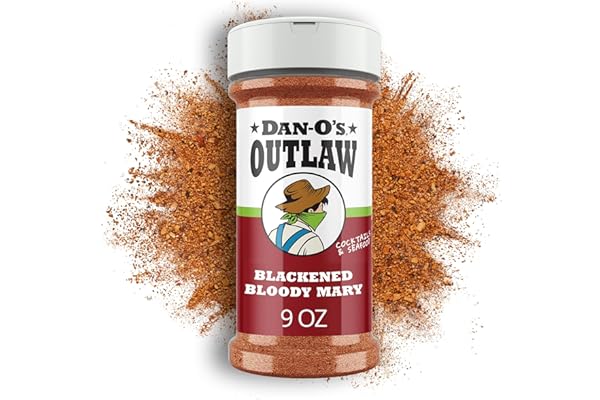
From brisket to ribs to pulled pork — the right rub transforms your BBQ. Our best BBQ rubs guide breaks down the top competition-grade options for every style.
BBQ, Bar-B-Q, Barbeque: Which Spelling Is Correct?
The word “barbecue” has accumulated more spelling variants than almost any other common English culinary term, and the question of which is “correct” is more nuanced than it might appear.
| Spelling | Status | Common Usage | Notes |
|---|---|---|---|
| barbecue | Standard / Preferred | Formal writing, dictionaries | The most widely accepted standard form in major English dictionaries |
| BBQ | Universal abbreviation | Signage, menus, casual use | Ubiquitous worldwide; the Q phonetically substitutes for “-cue” |
| barbeque | Accepted variant | Regional American, informal | More common in the South; listed as variant in most dictionaries |
| Bar-B-Q | Stylized form | Restaurant names, branding | Deliberate stylization for commercial identity; not standard writing |
| bar-b-que | Informal | Menus, packaging | Phonetic breakdown used in commercial contexts; not standard |
| barbie | Regional slang | Australia primarily | Australian informal. Widely understood internationally. |
| barbacoa | Spanish original | Mexican cuisine | The ancestral form of the word, still used in Mexico for pit-cooked meat |
In formal writing, use “barbecue.” In everyday use, “BBQ” is universally understood and accepted. “Barbeque” is fine informally. “Bar-B-Q” is for your restaurant sign, not your article. None of these are technically “wrong” — English has never had a spelling police — but “barbecue” remains the closest to the dictionary standard.
BBQ as Culture, Identity, and Community
The reason people feel so passionately about barbecue — to the point of genuine regional pride, heated arguments, and lifelong loyalty to a specific style — has nothing to do with food science and everything to do with what barbecue represents culturally. Barbecue is one of the few foods that carries genuine historical weight, community meaning, and personal identity all at once.
In the American South, knowing your local pitmaster by name is a mark of community belonging. A barbecue joint that has operated in the same building for 60 years is not just a restaurant — it is a civic institution. The same family recipes, the same wood, the same smoker seasoned by decades of use — these things matter to people in a way that goes far beyond the food itself.
Barbecue has been used for political organizing (19th century campaign barbecues), community healing (church fundraisers after disasters), cultural expression (the art of the pitmaster), and simple human connection (the Sunday family cook) across its entire American history. The food is the vehicle; community is the destination.
The rise of competition BBQ culture — with organizations like the Kansas City Barbeque Society sanctioning hundreds of events per year and prize money running into the tens of thousands — has created a parallel world where barbecue is treated with the seriousness of professional sports. Teams travel thousands of miles with custom-built smokers to compete for trophies and titles. This competitive culture has both elevated the technical standards of American BBQ and helped spread regional styles nationally and internationally.
The World’s Championship Bar-B-Que Contest in Memphis (Barbecue on the River) attracts hundreds of teams and hundreds of thousands of visitors annually. The American Royal World Series of Barbecue in Kansas City is the largest BBQ competition in the world. These events function as serious professional competitions with rigorous judging criteria, and the techniques developed on the competition circuit consistently elevate the standard of backyard and restaurant BBQ.
BBQ in the Modern Era: From Tradition to Global Phenomenon
Barbecue in 2026 exists in a fascinating tension between deep tradition and constant innovation. At one pole, pitmasters like Aaron Franklin in Austin are celebrated for making brisket that is technically as close to the 19th-century tradition as modern food safety allows — maximum smoke, minimum intervention, the same cut, the same wood, the same approach that made the food famous. At the other pole, a new generation of cooks are taking BBQ techniques global, fusing them with Japanese, Korean, Indian, and Middle Eastern flavor profiles in ways that would be unrecognizable to a Texas pit traditionalist.
The proliferation of pellet smokers, WiFi-connected temperature controllers, and precision cooking apps has made achieving consistently good BBQ far more accessible than it was even 15 years ago. The trade-off, in the eyes of traditionalists, is that the learning curve that once distinguished the serious pitmaster from the casual cook has been substantially reduced — and with it, some of the romance and difficulty that made the achievement meaningful.
The best barbecue grills available today represent a spectrum that would have been unimaginable to previous generations — from $80 charcoal kettles capable of producing genuinely excellent results to $5,000 pellet smokers with industrial-grade temperature precision. The barrier to entry has never been lower, which means more people are doing BBQ better than ever before — and the conversation about what it means to do it “right” has never been more interesting.
WiFi-connected thermometers, PID temperature controllers, and app-managed pellet smokers have democratized precision BBQ. You can now monitor and control a 12-hour brisket cook from your phone in another room. Traditionalists debate whether this eliminates or simply redistributes the skill involved.
Plant-based BBQ has gone from niche novelty to mainstream category. Smoked brisket-style jackfruit, smoke-roasted cauliflower steaks, and BBQ tempeh are now staples at progressive smoke houses. The low-and-slow technique transforms vegetables as dramatically as it does meat.
Korean-influenced BBQ tacos, Japanese yakiniku-style American beef, and Indian spiced smoked lamb ribs represent the new wave of BBQ fusion that’s expanding the definition of what “BBQ” means globally. The technique is traveling; the flavors are transforming.
From Anthony Bourdain’s pilgrimage to Franklin Barbecue to Netflix’s “BBQ with Franklin” and countless YouTube channels with millions of subscribers, BBQ has become compelling media content. The visibility has driven pilgrimage tourism to great BBQ destinations and raised expectations nationally.

Sample all four regional American styles — Texas, Kansas City, Carolina, and Memphis — in one pack. See which tradition wins your taste test. Also check if your BBQ sauce is gluten-free.
Frequently Asked Questions
BBQ is an abbreviation of “barbecue” — it is not a true acronym where each letter represents a separate word. The Q phonetically substitutes for the “-cue” ending, making BBQ a natural shorthand. The full word “barbecue” traces back to the Taíno word barabicu, used by indigenous Caribbean people long before European contact. BBQ does not stand for “Bring Beer Quick,” “Bar Beef Quarter,” or any other phrase — these are jokes, not etymology.
The word traces directly to the Taíno people of the Caribbean, who used barabicu to describe a raised wooden framework used for cooking and sleeping elevated above the ground. Spanish explorers recorded the word in the early 16th century — the first known written appearance is in Gonzalo Fernández de Oviedo’s 1526 Historia General y Natural de las Indias. From Spanish, it moved through French into English, appearing in written English by 1661. The word has been evolving in meaning and usage ever since, but its Caribbean Taíno origin is well-documented and not seriously disputed by historians.
No — this is a popular folk etymology that lacks historical support. The phrase means “from beard to tail” in French and is said to describe cooking a whole animal. The problems are multiple: Spanish records of the word predate French contact; no French historical text has been found using de barbe à queue in connection with cooking; and the Taíno origin is well-documented through independent sources. Most etymologists classify de barbe à queue as a backronym — a clever story invented to explain a word that already existed for other reasons.
These terms are often used interchangeably in everyday speech but describe technically distinct cooking methods. Grilling uses direct high heat (400°F–600°F+) for short periods — minutes, not hours. Smoking uses very low indirect heat (180°F–250°F) with wood smoke for extended periods, often 6–24 hours. True BBQ sits between these definitions but is closest to smoking — low, indirect heat with wood smoke, typically 225°F–300°F, for 4–18+ hours. In formal American BBQ tradition, calling grilled food “BBQ” is technically incorrect, though the distinction is widely ignored in casual usage.
The word carries significantly different meanings across cultures. In the American South, BBQ specifically means slow-smoked meat over wood or charcoal — a specific, technically defined cooking method. In Australia, “barbie” refers to any outdoor cooking event, usually on a gas or charcoal grill, not necessarily slow-smoked. In South Africa, the equivalent is “braai” — a wood-fire centered tradition with deep cultural significance. In the UK, “barbecue” typically means any outdoor cooking event regardless of method. In Mexico, barbacoa specifically means slow-cooked pit meat, preserving the original Caribbean meaning more faithfully than most other uses.
The earliest known English use of “barbecue” appears in approximately 1661, in Edmund Hickeringill’s work Jamaica Viewed. The word was in broader common use in American colonial writing by the early 18th century — George Washington’s diaries contain references to attending barbecues as social events. The Spanish precursor barbacoa was recorded much earlier, with Gonzalo Fernández de Oviedo’s 1526 text being the first known written appearance in any European language.
Both spellings are considered acceptable in modern English, though “barbecue” is the form most consistently preferred in major English dictionaries and is generally considered the standard. “Barbeque” is a common variant, especially in regional American usage. “BBQ” is the universal abbreviation accepted everywhere. “Bar-B-Q” is a stylized commercial form. In formal writing, “barbecue” is the safe choice; in informal contexts, the variant spellings are all understood and none are considered wrong.
The four most recognized American BBQ regions are: (1) Texas — beef-focused, especially brisket and beef ribs, seasoned with salt and pepper, smoked over post oak, minimal to no sauce; (2) Kansas City — all meats welcome, thick sweet tomato-molasses sauce, hickory smoke, famous for burnt ends; (3) Carolina — pork-focused, divided into Eastern (whole hog, vinegar sauce, no tomato) and Western/Lexington (shoulder, slightly tomato-tinged vinegar sauce); (4) Memphis — pork ribs as the centerpiece, ordered “wet” (with sauce) or “dry” (rub only), hickory smoked. Each style has passionate defenders who will cheerfully argue about the others.
Yes. The Taíno people of the Caribbean were using the barabicu framework to slow-cook and smoke-dry food long before Columbus arrived. Many other Native American peoples across North and South America also had traditions of pit cooking and smoking meat for preservation. The specific word and technique that entered European languages and eventually American culture came primarily from the Caribbean Taíno, as documented by Spanish explorers from the late 15th century onward. American BBQ as it exists today is also deeply indebted to West African cooking traditions brought by enslaved people.
Southern BBQ culture developed over centuries through a convergence of Native American, West African, and European cooking traditions. The practice of slow-cooking inexpensive tough cuts — the cuts affordable to enslaved people and poor working families — into something extraordinary gave BBQ democratic roots. It became central to community gatherings, political events, and church socials, carrying the weight of shared history and identity. The technique was largely refined by Black pitmasters whose contributions have historically been underacknowledged. Today, BBQ in the South is simultaneously a food, a cultural identity, a community practice, and a connection to historical memory — which is why disputes about style and authenticity run so deep.
The Bottom Line: Three Letters, Five Centuries of Story
BBQ is an abbreviation of “barbecue.” It does not stand for anything. But those three letters carry more history, more cultural meaning, and more human story than almost any other abbreviation in the English language.
From a Caribbean island in the pre-Columbian world, to Spanish explorers’ journals, through the social fabric of American colonial life, into the smokehouses and church socials of the American South, and out across the world to become a global culinary phenomenon — the journey of this word is the journey of human civilization’s relationship with fire, food, and community.
The key things to remember:
- BBQ = abbreviation of “barbecue.” Not an acronym. Not three separate words.
- Origin: Taíno people, Caribbean. The word barabicu gave us everything.
- The French theory is myth. De barbe à queue is a clever story without evidence.
- True BBQ = low and slow with smoke. Grilling is not BBQ, whatever the packaging says.
- American BBQ has four great regional traditions — Texas, Kansas City, Carolina, Memphis — each worth understanding and defending.
- BBQ is bigger than food. It is history, identity, community, and memory cooked over a slow fire.
Whether you’re firing up your first kettle grill or maintaining a seasoned offset smoker that’s been in the family for thirty years, you’re participating in a tradition that stretches back 500 years and touches every continent. That’s what BBQ stands for. Explore our full BBQ guide hub to go deeper into the gear, the technique, and the culture.