Vinotemp Wine Cooler Reviews: A Deep Dive into the 28, 51, 155, and 300-Bottle Series
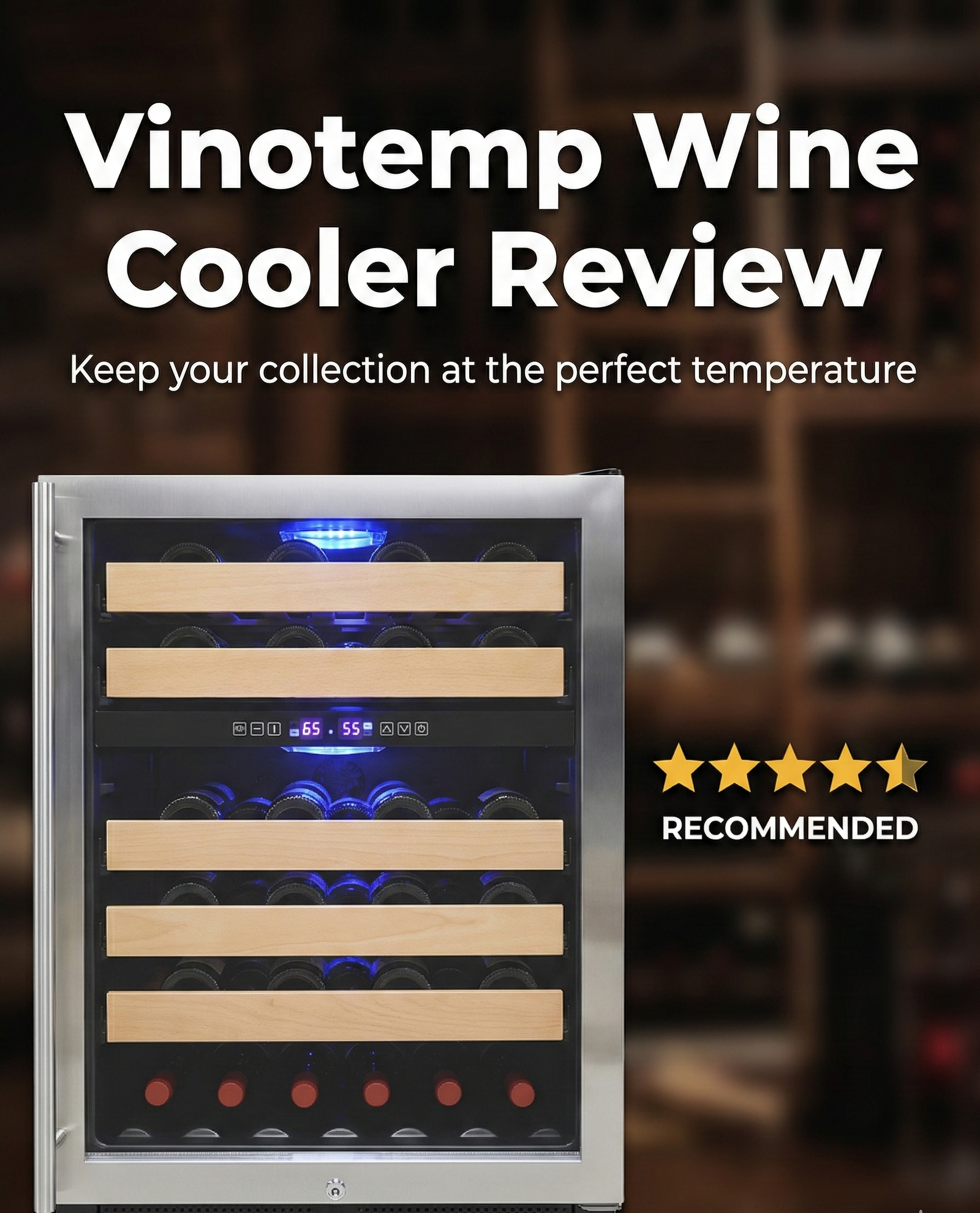
Vinotemp’s lineup spans from compact 28-bottle countertop units to full cellar-replacement 300-bottle dual-zone cabinets.
Temperature is not a preference in wine storage — it is a non-negotiable. Every degree of fluctuation risks accelerating aging, breaking down tannins, and flattening aromatics that took years in a barrel to develop.
In the world of wine storage, few names have the retail ubiquity of Vinotemp. You have likely seen them while strolling through the aisles of Costco or browsing high-end appliance catalogs. But does availability equate to quality? Are these units truly capable of protecting your investment in organic and natural wines, or are they merely glorified mini-fridges?
This comprehensive Vinotemp wine cooler review dissects the brand’s most popular models, ranging from compact 28-bottle units to the massive 300-bottle dual-zone cabinets. We analyze their cooling technology, noise levels, shelving durability, long-term reliability, humidity management, energy draw, installation requirements, and how they stack up against the competition.
If you are serious about learning how to store wine at home, the equipment you choose matters. A fluctuating compressor can ruin a delicate Pinot Noir faster than you can uncork it. Let’s determine if Vinotemp deserves a spot in your cellar.
Brand Overview: The “Costco” Factor and Build Quality
Vinotemp has been a player in the wine industry for decades, offering everything from modular wine rack systems to fully customized cellar cooling units. They occupy a unique space in the market: more premium than standard big-box brands like Magic Chef, but often more accessible than luxury-tier brands like EuroCave.
Many readers specifically ask about Vinotemp wine cooler Costco reviews. The models sold at Costco (often identified by specific SKU variations) are generally identical to their mainline counterparts but sold at aggressive price points. The advantage here is not just the price, but the return policy. Buying a large appliance like a 155-bottle fridge is risky; having a solid retailer backing the purchase offers genuine peace of mind.
It is also worth noting that Vinotemp is a family-owned business headquartered in California. This matters because their customer support line — 1-800-777-VINO — connects you with real product specialists rather than overseas call centers. For an appliance that may need troubleshooting years after purchase, that kind of brand continuity counts for a great deal.
Patented Racking Systems: A Genuine Differentiator
One feature that sets Vinotemp apart is their shelving. Unlike the flimsy wire racks found in cheaper alternatives, many Vinotemp models feature their patented black metal racking with wood fronts. This design is crucial for minimizing vibration — a silent killer of wine that disturbs sediment and interrupts the enzymatic processes responsible for proper aging. (Learn more in our wine terminology guide).
Beyond standard racking, select models in the higher-tier Private Reserve and Butler Series include Ouzo-style sliding racks — curved cradles that hold bottles at a slight downward angle. This geometry keeps the cork perpetually in contact with the wine, preventing oxidation from dry cork shrinkage. For collections that include age-worthy bottles, this design detail is not superficial; it directly impacts the long-term quality of the wine.
BioBlu LED Interior Lighting
Vinotemp’s proprietary BioBlu LED lighting system deserves special mention because it addresses a concern most buyers overlook: the spectral quality of interior light. Standard white LEDs emit a small amount of UV radiation. Over time, UV exposure can degrade wine through a process known as light strike — particularly damaging to delicate white wines and sparkling varieties in clear glass bottles. BioBlu LEDs are specifically calibrated to minimize UV output while providing the blue-tinted, show-quality illumination that makes a cooler’s contents visually compelling. The practical result is that your wines can be lit without the subtle photochemical damage that accumulates over months and years.
Dual-Pane Tinted Glass Doors
Every serious Vinotemp model uses double-paned, UV-filtered glass. The dual-pane construction serves two purposes. First, it creates an insulating air gap that reduces thermal exchange between the interior and the ambient room temperature. This means the compressor cycles less frequently, uses less electricity, and produces less heat and noise. Second, the tinted outer pane blocks the spectrum of light most responsible for premature wine oxidation. If you are installing a cooler in a bright kitchen or near a window, this glass specification moves from nice-to-have to essential.
Compressor vs. Thermoelectric: Which Technology Should You Choose?
One of the most consequential decisions you will make when purchasing a Vinotemp is the cooling mechanism. Both compressor and thermoelectric options appear across the Vinotemp lineup, and confusing the two is one of the most common mistakes buyers make. Understanding the engineering behind each system helps you avoid a purchase you will regret.
🔇 Thermoelectric Cooling
Uses the Peltier effect — passing electrical current through two dissimilar semiconductors to create a temperature differential. No moving parts means near-total silence.
- Noise: Near-silent (0–20 dB)
- Cooling range: ~20°F below ambient
- Best for: Apartments, bedrooms, offices
- Limitation: Struggles in warm rooms above 77°F
- Vibration: None
❄️ Compressor Cooling
Uses the same refrigerant-cycle technology found in household refrigerators. A mechanical compressor circulates refrigerant, creating reliable cold temperatures regardless of ambient conditions.
- Noise: 38–45 dB (low hum)
- Cooling range: Reaches down to 38°F
- Best for: Kitchens, garages, dedicated wine rooms
- Limitation: More vibration than thermoelectric
- Vibration: Low (dampened in Vinotemp models)
Important: If your home reaches temperatures above 77°F in summer — common in the American South, Southwest, or any home without central air — a thermoelectric unit simply cannot maintain safe wine storage temperatures. A compressor model is the only viable option for warm environments.
How Vinotemp Manages Compressor Vibration
The criticism most often leveled at compressor wine coolers is vibration. When a compressor cycles on, its mechanical action creates low-frequency vibrations that can travel through the unit’s body into the bottles. Over months and years, this constant micro-agitation disturbs sediment in older red wines and disrupts the chemical reactions that drive aging.
Vinotemp addresses this through several design interventions. Their compressor units feature rubber-isolated compressor mounts that absorb the majority of mechanical vibration before it reaches the cabinet walls. The patented wooden racking further dampens any residual movement. In practice, Vinotemp compressor models produce measurably less bottle vibration than budget alternatives from brands like Frigidaire or Costway, though they do not match the absolute stillness of a thermoelectric unit or a purpose-built cellar with a remote cooling system.
Air Cooling vs. Direct Cooling Systems
Within the compressor category, Vinotemp further differentiates between direct cooling (used in freestanding models like the VT-28TS) and fan-assisted air cooling (used in built-in styles like the VT-155SBB). In a direct cooling system, the evaporator is exposed inside the cabinet and cold air circulates by natural convection. The temperature differential between the top and bottom of the cabinet can be as much as eight degrees. In a fan-assisted system, a fan behind the evaporator actively circulates air throughout the cabinet, reducing that differential to approximately three degrees. For aging wines where temperature consistency is paramount, fan-assisted units offer a meaningful advantage — particularly in larger-capacity models.
The Entry Level: Vinotemp 28-Bottle Wine Cooler Review
For those living in apartments or just starting their collection with the best affordable wines, a 300-bottle behemoth is overkill. The 28-bottle series fits the bill for countertop or freestanding use.

Vinotemp 28-Bottle Thermoelectric/Compressor Series
Best For: Casual drinkers, apartments, home bar shelving, and gift recipients.
Cooling Type: Available in Thermoelectric (silent) or Compressor (colder and more consistent).
Check Price on AmazonPerformance in Real-World Conditions
The 28-bottle units are typically single-zone. If you opt for the thermoelectric version, be aware that it can only cool about 20°F below the ambient room temperature. If your apartment gets warm in summer, your wine might suffer. We always recommend compressor models for temperature stability, even if they are slightly louder.
Real-world tests show the thermoelectric Vinotemp 28 maintaining 55°F consistently when the room is at 70–72°F. However, on a day when the room reaches 80°F — not unusual in a sun-facing apartment — the internal temperature can creep to 62–64°F, which is acceptable for short-term storage but not ideal for long-term aging. If you plan to hold bottles for more than six months, the compressor version is worth the modest price premium.
Shelf Configuration & Bottle Fit
The 28-bottle Connoisseur Series features black wire racking with a stainless lip. Each shelf holds four standard Bordeaux bottles. The shelves are removable to accommodate taller bottles, though doing so reduces capacity significantly. Burgundy-shaped bottles (wider shoulder) and Champagne bottles will require shelf adjustment. With mixed formats, a realistic capacity is closer to 18–22 bottles.
- Compact footprint for countertops or undershelf installation
- Available in thermoelectric for bedroom or office use
- Elegant stainless trim elevates bar aesthetics
- Entry-level price point with brand-backed warranty
- Thermoelectric version struggles in warm rooms
- Single zone only — no separate reds/whites compartment
- Capacity drops significantly with non-Bordeaux bottles
If you are tight on space, you might also consider a portable wine cooler for travel, but for home use, the Vinotemp 28 provides a more permanent aesthetic than simple wine bags or open racks.
The Built-In Standard: Vinotemp 51-Bottle Wine Cooler Review
The 50-to-60 bottle capacity is the industry standard for under-counter installation in kitchens. The Vinotemp 51-bottle wine cooler is a direct competitor to the Wine Enthusiast under-counter series and the popular Kalamera 46-bottle unit.
🔑 Key Feature: Front-Venting Architecture
Unlike cheaper freestanding units that vent heat from the back, the 51-bottle Vinotemp is designed to breathe from the front toe-kick. This means you can slide it directly between cabinets without overheating the compressor — a feature that is genuinely rare at this price point and makes built-in kitchen integration possible without hiring a contractor to cut new ventilation.
Dual-Zone Configuration Explained
The 51-bottle dual-zone model divides its interior into two independent temperature compartments, typically with the upper zone holding 14 bottles and the lower zone holding 37. The upper zone is calibrated for serving whites and rosés at 45–50°F, while the lower zone maintains long-term storage temperatures of 52–58°F for reds and age-worthy bottles. The zones are separated by an insulated divider panel, and each has its own digital thermostat accessible via the front touchscreen control panel.
Storage Reality: While advertised as 51 bottles, this assumes standard Bordeaux sizing. If you collect Champagne or wide-bottomed Pinot Noirs, expect the real-world capacity to drop to around 35–40 bottles. (See wine varietals explained for bottle shape differences).
- True front-venting for flush cabinet installation
- Dual-zone control for reds and whites simultaneously
- 24-inch width matches standard cabinet openings
- Digital touchscreen with clear zone temperature display
- Door lock included as standard
- Upper zone capacity (14 bottles) is limiting for frequent entertainers
- Advertised capacity assumes only Bordeaux bottle shapes
- Installation in existing cabinetry may require minor trimming
The Collector’s Choice: Vinotemp 155-Bottle Wine Cooler Review
Stepping up to the “Private Reserve” territory, the Vinotemp 155-bottle wine cooler is where the brand shines. This is a serious piece of hardware for those who have moved beyond wine gift ideas and are now curating a vertical collection or managing a small commercial inventory.
Dual-Zone Capability
Most 155-bottle units feature dual zones. This allows you to store your Cabernets at 55°F in one section while keeping your Sauvignon Blancs at serving temperature (45°F) in another. This eliminates the need for a separate electric wine chiller when guests arrive.
The VT-155SBB Examined Closely
The flagship VT-155SBB uses fan-assisted air cooling — the same principle as the climate-controlled storage systems found in professional wine warehouses. The fan cycles air across the evaporator and distributes it evenly throughout the cabinet, reducing the zone-temperature differential to three degrees compared to eight degrees in direct-cool systems. For a collection that spans young tannic reds that benefit from slightly warmer storage alongside mature bottles that require cooler, stable conditions, this precision is commercially relevant.
The unit’s door features a double-pane, UV-tinted glass panel set in a stainless steel frame. A magnetic seal runs the perimeter of the door, and the gasket quality is one area where Vinotemp clearly outspends budget manufacturers. A failing gasket is the single most common cause of temperature inconsistency in wine coolers; a firm, even seal is not cosmetic — it is structural.
- Capacity: Excellent storage-to-footprint ratio for serious collectors.
- Aesthetics: BioBlu LED interior lighting makes labels pop without UV damage.
- Locking Door: Essential for keeping teenagers or roommates away from prize vintages.
- Fan-Assisted Cooling: Tighter temperature differential across zones.
- Front-Exhaust: Built-in or freestanding installation options.
- Noise: The compressor is powerful and audible in very quiet rooms at night.
- Shelf Tightness: Sliding shelves can scrape labels on larger bottles.
- Weight: Fully loaded, this unit requires two people to move or install.

The Cellar Replacement: Vinotemp 300-Bottle Dual Zone Review
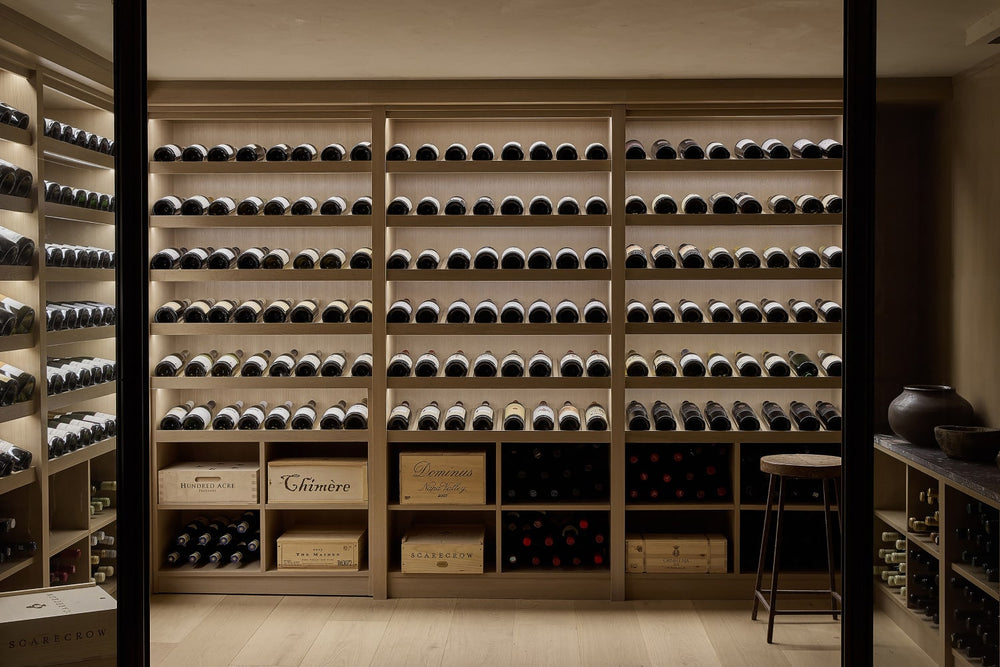
If you lack the budget or space to build a custom cellar with full wine cellar essentials, the Vinotemp 300-bottle wine cooler is the ultimate alternative. These are often double-wide units or tall, single-column behemoths designed for restaurant or high-end residential use.
The Butler Series EL-300TS
Vinotemp’s flagship 300-bottle unit — the Butler Series EL-300TS — represents the brand’s engineering apex. It features nine sliding Ouzo-style wine racks with black lip and one bulk storage section at the base, accommodating larger-format bottles like magnums (1.5L) and Jeroboams (3L). The all-glass seamless door design, with its digital temperature controller mounted at the top, allows temperature adjustment without cracking the door and disrupting the internal climate — a detail you appreciate after the first time a budget cooler loses 5°F every time you check the thermometer.
Why Buy This Over Building a Cellar?
- Cost: A custom cellar costs $15,000+. This unit costs a fraction of that.
- Portability: You can take it with you when you move.
- Climate Control: It is easier to control humidity in a sealed unit than an entire room.
- Speed: A cooler is operational the day it arrives. A cellar build takes weeks or months.
- Consistency: The cooler is not affected by seasonal humidity swings in the way a poorly insulated basement cellar might be.
Structural Note: These units are heavy when fully loaded. A 300-bottle cooler, filled, can weigh upwards of 600–700 lbs. Ensure your floor can support the combined weight. Delivery requires white-glove service and two strong installers. If you are struggling with overflow, check our guide on how to store wine without a fridge for short-term solutions, but for 300 bottles, this cooler is the answer.
- Genuine cellar-replacement capacity at a fraction of construction cost
- Bulk storage section for magnums and large-format bottles
- Front-exhaust design supports built-in installation in custom millwork
- Temperature control accessible without opening the door
- BioBlu LED lighting standard across the series
- Requires white-glove delivery and professional installation
- Heavy floor loading requirements must be assessed before purchase
- Higher initial investment than smaller series
- Compressor noise is noticeable in open-plan living spaces
The Complete Wine Storage Temperature Guide
One of the most persistent myths in wine storage is that there is a single “correct” temperature for all wines. The reality is more nuanced and depends on whether you are storing wine long-term for aging or holding it at serving temperature for near-term consumption. The following reference table covers the most common varietals and the storage conditions that allow them to develop optimally.
| Wine Type | Long-Term Storage | Serving Temp | Notes |
|---|---|---|---|
| Cabernet Sauvignon | 54–57°F | 60–65°F | Tannins soften over time at stable temps |
| Pinot Noir | 52–55°F | 55–60°F | Most temp-sensitive red; avoid fluctuations |
| Syrah / Shiraz | 54–58°F | 60–65°F | Tolerates slightly higher storage temps |
| Chardonnay | 50–54°F | 48–55°F | Oaked examples benefit from slightly warmer storage |
| Sauvignon Blanc | 46–50°F | 44–50°F | Aromatics degrade quickly above 55°F |
| Champagne / Sparkling | 50–55°F | 42–48°F | Requires pre-chilling 2 hrs before serving |
| Dessert / Port / Sherry | 55–60°F | 58–65°F | High sugar content provides some thermal buffer |
| Rosé | 46–52°F | 44–50°F | Best consumed young; store at serving temperature |
Pro Tip: If your Vinotemp dual-zone model can only be set to one storage temperature, 55°F is the widely accepted compromise that works reasonably well for most reds and whites simultaneously. It is not perfect for any single wine, but it preserves all of them adequately.
The Risk of Temperature Fluctuation
More damaging than the absolute storage temperature is temperature fluctuation. When a wine cooler cycles between 50°F and 65°F repeatedly — due to a failing thermostat, inadequate insulation, or improper installation that causes the unit to overheat — the liquid inside the bottle undergoes repeated expansion and contraction. Over time, this stresses the cork seal, can cause seepage (visible as a sticky residue on the capsule), and accelerates chemical aging. A Vinotemp unit with a well-calibrated thermostat maintains temperatures within a 2°F variance — a specification competitive with units costing twice as much.
Installation Guide: Built-In vs. Freestanding
Correctly installing your Vinotemp is as important as selecting the right model. Incorrect installation is the leading cause of compressor overheating, premature failure, and temperature inconsistency — the very problems that buying a quality wine cooler is supposed to prevent.
Freestanding Installation
Freestanding models vent heat from the rear of the unit. This means you must leave a minimum of six inches of clearance behind the unit and two inches on each side. Sliding a rear-venting Vinotemp into a closed cabinet aperture is one of the most common and costly mistakes buyers make. The compressor will run continuously in an attempt to fight the heat it is generating, dramatically shortening its lifespan and driving up your electricity bill.
- Choose the Location: Select a level surface in an insulated room, away from direct sunlight, ovens, and exterior walls in climates with extreme temperatures.
- Measure Clearances: Mark 6 inches behind the intended rear wall position and 2 inches on each side. The unit must be able to “breathe.”
- Check the Floor: Verify the floor is level with a spirit level. An unlevel unit can cause the door to hang open slightly, compromising the seal.
- Plug Into a Dedicated Circuit: Wine coolers should not share a circuit with high-draw appliances. Use a dedicated 15-amp grounded outlet.
- Allow 24 Hours Before Loading: Let the unit run empty for 24 hours to verify the temperature stabilizes at your target setting before loading your collection.
Built-In / Undercounter Installation
Built-in Vinotemp models (like the 51-bottle and 155-bottle series) feature front exhaust ventilation through the toe-kick panel. This design allows the unit to be installed flush within cabinetry without any rear clearance. However, several installation details must still be managed carefully.
Dimension Check: Standard kitchen cabinet openings are 24 inches wide and 34.5 inches tall. Confirm your Vinotemp model’s dimensions precisely against your opening — including the handle, which adds projection. Even a half-inch discrepancy can require cabinet modification.
The toe-kick exhaust must remain unobstructed. After installation, verify that no kick plate, decorative trim, or flooring material blocks the front vent. Additionally, the unit should be secured to the cabinet walls with the anti-tip bracket supplied in the installation package — particularly important if you have young children in the home.
Garage Installation: What You Need to Know
Many buyers consider installing a Vinotemp in a garage for space reasons. This is viable under specific conditions. The garage must be climate-controlled or insulated well enough that temperatures do not fall below 40°F in winter (which can cause the compressor to short-cycle and fail) or rise above 85°F in summer (which overtaxes the compressor). Additionally, the unit should be protected from the vibration produced by garage door opener motors — a prolonged low-frequency vibration source that can affect wine quality. If garage installation is necessary, mount the cooler on rubber anti-vibration pads and position it away from the garage door mechanism.
Humidity Control and Vibration Management
Why Humidity Matters
Most wine cooler reviews overlook humidity, but it is the second most critical environmental variable after temperature. The ideal relative humidity for wine storage falls between 50% and 70%. Below 50% RH, natural corks begin to desiccate. A drying cork loses its elasticity and micro-pores develop — allowing oxygen ingress that can turn a perfectly aged Burgundy into vinegar. Above 70%, mold growth becomes a risk on labels and potentially on corks, compromising both the aesthetic and the structural integrity of the bottle seal.
Wine coolers are not dehumidifiers. In most climates, a quality sealed unit will maintain natural humidity at acceptable levels simply because the wine itself contributes moisture to the enclosed atmosphere. However, in very dry climates — the American Southwest, high-altitude regions, or heated indoor spaces in winter — you may need to place a small open cup of water inside the cooler to supplement moisture. Conversely, in very humid climates, a silica gel desiccant pack can absorb excess moisture.
The Vinotemp 155 and 300 series models use fan-assisted cooling that circulates air more actively than direct-cool units. This improved circulation helps prevent moisture hot spots and the localized mold growth that can occur near the cold wall of a direct-cool system. For serious collectors, this is a genuine technical advantage.
Understanding Vibration and Its Effects
Vibration in wine storage is a compound problem. At the molecular level, agitation accelerates chemical reactions within the wine — the very reactions that, when allowed to proceed at a measured pace, produce complexity and character. A wine aged in a vibrating environment develops too quickly and unevenly, losing the tertiary aromatic compounds that distinguish a $100 bottle from a $20 one.
At the macro level, vibration in sediment-bearing red wines stirs fine particles back into solution, clouding the wine and creating an astringent mouthfeel. For wines like aged Barolo, Vintage Port, or Napa Cabernet, this is a genuine problem that can render a decade’s worth of careful aging commercially disappointing.
Vinotemp’s compressor models use vibration-isolating compressor mounts and their wooden shelf system (which is softer than metal-on-metal contact) to mitigate transfer. For maximum vibration isolation on the 28-bottle thermoelectric models, placement on a solid concrete or tile floor rather than a wooden countertop or shelf is recommended, as wood can act as a resonator and amplify ambient vibrations from foot traffic or appliances.
Cleaning & Long-Term Maintenance
A wine cooler is an investment that can last fifteen or more years with proper care. The following maintenance schedule has been distilled from Vinotemp’s official guidelines and real-world collector experience.
Routine Cleaning (Every 3 Months)
- Interior Walls: Wipe down interior walls with a mixture of baking soda and warm water (1 tablespoon per quart). This neutralizes odors without leaving chemical residues that can taint wine aromas. Never use bleach, abrasive cleaners, or acetone-based products inside the cabinet.
- Shelves and Racks: Remove wooden shelf fronts and wipe with a damp cloth. Allow to air-dry completely before reinstalling — damp wood can harbor mold.
- Door Gasket: Inspect the magnetic gasket for cracks, tears, or areas that have lost their magnetic pull. Clean with a mild soap solution. A failing gasket causes the compressor to run continuously and is the most common source of elevated energy bills.
- Glass Door: Clean with a non-streaking glass cleaner. The double-pane glass should not be cleaned between panes — if condensation appears between the panes, the door seal has failed and the door should be examined by a service technician.
Annual Maintenance
- Condenser Coils: On freestanding models, carefully slide the unit out and vacuum the condenser coils on the rear panel with a soft brush attachment. Dust-coated coils dramatically reduce heat exchange efficiency, causing the compressor to work harder and consume more electricity.
- Leveling Check: Re-verify the unit is level. Settlement in older homes can shift the floor slightly over time, causing the door to hang unevenly.
- Temperature Calibration: Use a secondary thermometer placed in a glass of water inside the cooler overnight to verify the digital thermostat is accurately reflecting the actual internal temperature. A discrepancy of more than 2°F indicates the thermostat sensor may need calibration or replacement.
Maintenance Tip: Never use an extension cord with your Vinotemp wine cooler. Vinotemp explicitly advises against this. If an extension cord is absolutely necessary due to outlet placement, use a UL Listed 3-wire grounding type rated at 115V, 15A, no longer than 15 feet.
Energy Consumption & Annual Running Costs
Energy efficiency is an underappreciated selection criterion for wine coolers. Unlike a television that you switch off at night, your wine cooler runs continuously, every hour of every day. The compressor cycles approximately 30–40% of the time on a well-insulated, correctly installed unit. That cycling percentage rises with ambient temperature, improper installation, or failing insulation.
| Model Series | Avg. Wattage | Est. Daily kWh | Est. Annual Cost* | Energy Star |
|---|---|---|---|---|
| Vinotemp 28 (Thermoelectric) | 60–70W | 0.7–0.9 kWh | $30–40/yr | Not rated |
| Vinotemp 28 (Compressor) | 80–100W | 0.5–0.8 kWh | $22–35/yr | Not rated |
| Vinotemp 51-Bottle | 85–120W | 0.6–1.0 kWh | $27–45/yr | Select models |
| Vinotemp 155-Bottle | 120–180W | 1.0–1.5 kWh | $45–65/yr | Select models |
| Vinotemp 300-Bottle | 200–280W | 1.5–2.2 kWh | $65–100/yr | Not rated |
*Estimates based on U.S. average electricity rate of approximately $0.13/kWh. Actual costs vary by region, installation quality, and ambient temperature.
The thermoelectric 28-bottle unit is counterintuitively less energy-efficient than the compressor version in many conditions because it runs continuously at full draw rather than cycling on and off. Compressor units, despite the larger motor, average lower actual consumption because of their duty cycle. This is a nuance that marketing materials rarely clarify and that can affect purchase decisions when energy cost is a factor.
If energy efficiency is a primary concern, prioritize models that carry an Energy Star certification. Vinotemp offers Energy Star-rated units in certain capacity ranges — these are identifiable by the certification label and typically feature enhanced door insulation and more efficient compressor technology.
Vinotemp vs. The Competition: How Does It Stack Up?
No wine cooler review is complete without positioning the brand against its primary competitors. The wine cooling market at Vinotemp’s price point has several credible alternatives, each with distinct strengths and weaknesses. We have evaluated four key competitors across the same capacity and installation categories.
| Brand | Price Tier | Cooling Tech | Racking Quality | Vibration Isolation | Warranty | Verdict |
|---|---|---|---|---|---|---|
| Vinotemp Our Pick | Mid–Premium | Compressor / Thermoelectric | Excellent (wood + metal) | Good (rubber mounts) | 2 Year Limited | Best overall balance |
| EuroCave | Luxury | Compressor | Exceptional (solid beech) | Excellent | 3 Year | Best quality, premium price |
| Wine Enthusiast | Mid | Compressor | Good (display shelf focus) | Average | 1 Year | Better aesthetics, less durable |
| Kalamera | Budget–Mid | Compressor | Average (wire only) | Below Average | 1 Year | Good value, lower build quality |
| NewAir | Budget | Compressor / Thermoelectric | Below Average | Below Average | 1 Year | Entry-level only |
Vinotemp vs. EuroCave
EuroCave, the French manufacturer, is widely regarded as the gold standard of wine storage. Their sealed limestone-composite interiors maintain natural humidity without any intervention, their beech wood racks are visually stunning, and their vibration isolation is arguably the best available in a freestanding unit. However, a comparably sized EuroCave costs two to three times more than its Vinotemp equivalent. For collectors aging museum-quality wines worth hundreds of dollars per bottle, that premium is justified. For most homeowners building a collection of under $50 bottles, Vinotemp delivers 85% of the EuroCave experience at 35–50% of the cost.
Vinotemp vs. Wine Enthusiast
Wine Enthusiast models are aesthetically competitive and sell aggressively through Williams-Sonoma and their own catalog. Their display shelves with label-forward presentation are visually impressive. However, independent testing has found Wine Enthusiast units less consistent in temperature control under variable ambient conditions, and their gasket quality shows degradation more rapidly than Vinotemp’s equivalents. Vinotemp’s commercial racking heritage gives it an edge in durability for serious collectors. (Read our full Wine Enthusiast comparison here).
Vinotemp vs. Kalamera
Kalamera offers compelling value in the 15–50 bottle range and has developed a strong following among entry-level buyers. Their compressor technology is competent and their price points are aggressive. However, their all-wire racking (with no wooden contact surfaces) produces measurably more bottle vibration, and their thermostats show a wider temperature variance in real-world use. For a casual buyer storing wines they will drink within two years, Kalamera is an acceptable choice. For a collector storing age-worthy wines for five-plus years, Vinotemp’s construction quality is materially superior.
Placement Guide: Where to Install (and Where Never To)
The placement of your wine cooler has as much impact on its performance and longevity as the unit’s own specifications. The following guidelines are drawn directly from Vinotemp’s installation documentation and field experience with real collector setups.
Ideal Locations
- Kitchen: The most common location for built-in models. Ensure the ambient temperature near the cooler does not spike from the oven. Position away from the range and dishwasher heat exhaust.
- Dedicated Wine Room or Butler’s Pantry: Ideal for the 155 and 300-bottle units. Stable ambient temperature and minimal traffic means the compressor runs less frequently.
- Dining Room or Living Room: Acceptable for display models. Ensure they are not in direct sunlight.
- Home Bar: Excellent for the 28 and 51-bottle series. Keep units away from ice makers or other appliances that radiate heat.
- Insulated Basement: Naturally stable temperatures make basements one of the best environments for wine cooler performance.
Locations to Avoid
- Direct Sunlight: UV light degrades wine through the glass regardless of the door’s UV coating, and solar heat loading will cause the compressor to run continuously.
- Uninsulated Garage: Unless climate-controlled, temperature extremes will shorten compressor life and compromise wine quality.
- Near Heat Sources: Ovens, boilers, dryers, and HVAC units all radiate heat that forces the compressor to compensate.
- Damp Outdoor Areas or Patios: Moisture ingress can corrode electrical components. Vinotemp units are not rated for outdoor use.
- Unstable or Uneven Surfaces: Beyond door seal issues, an uneven surface can cause oil in the compressor to pool incorrectly, leading to mechanical wear.
Magnum & Large Format Bottle Storage
Large-format bottles are among the most prized items in a serious collector’s cellar. A magnum (1.5L), containing the equivalent of two standard bottles, ages more slowly due to the lower ratio of oxygen to wine — meaning a well-stored magnum of first-growth Bordeaux will outlive the equivalent wine in standard bottles by decades. Jeroboams (3L), Imperials (6L), and Methuselahs (6L Burgundy) command enormous premiums at auction, partly for their rarity and partly for exactly this aging potential.
Standard Vinotemp shelves are configured for 750ml Bordeaux bottles — 3 inches in diameter and approximately 12 inches tall. Magnums are 4.5 inches in diameter and 14 inches tall. Storing them in a standard shelf configuration requires removing one shelf to create a double-height bay, which halves the number of bottles in that section. The 300-bottle Butler Series addresses this directly with a dedicated bulk storage section at the base of the cabinet — a floor-to-first-shelf bay of approximately 16 inches that can accommodate Jeroboams laid on their sides.
For the 51 and 155 series, check whether your specific model includes a bulk storage bay (some SKU variants do; others do not). If your collection regularly includes magnums, confirm with the retailer before purchasing. The absence of dedicated large-format storage in a unit does not make it unsuitable, but it does require shelf reconfiguration that reduces effective capacity.
📏 Large Format Storage Guide
Magnum (1.5L): Requires single-shelf removal. Reduces 4-bottle row to 3 large-format bottles.
Jeroboam (3L): Requires dedicated bulk bay or double shelf removal. Best suited to 300-bottle series.
Champagne / Sparkling: Standard shelves are too tight. Remove one shelf and store horizontally in the resulting double-height bay.
Commercial & Restaurant Use Cases
Vinotemp explicitly markets several of its models for commercial use in restaurants, bars, country clubs, and hotels. The commercial viability of a wine cooler depends on factors that residential users rarely consider: access frequency (how many times per hour the door opens), ambient heat load from a commercial kitchen, code compliance for ventilation, and service continuity expectations.
What Makes a Vinotemp Suitable for Commercial Use?
The 155 and 300-bottle units, with their fan-assisted compressor systems and heavy-gauge metal construction, can tolerate the frequent door openings of a restaurant service environment significantly better than lighter residential alternatives. A restaurant pouring 30 bottles per service will open a wine cooler door dozens of times during service — each opening introduces warm, moist ambient air that the unit must actively condition. A compressor system with sufficient BTU capacity (cooling power) recovers from these thermal intrusions within minutes; an underpowered unit may take 20–30 minutes to restabilize, during which stored wines are at elevated temperature.
For sommeliers managing a by-the-glass program, the dual-zone 155-bottle is particularly effective as a service station — holding whites and sparkling wines at serving temperature in the upper zone while maintaining reds at cellar temperature in the lower zone. The locking door prevents staff from accidentally misplacing bottles or leaving the door ajar during service.
Considerations for Commercial Buyers
- NSF Certification: Some jurisdictions require food service refrigeration equipment to carry NSF (National Sanitation Foundation) certification. Vinotemp residential models do not carry this certification. Confirm local requirements before installing in a licensed food service establishment.
- Service Contracts: For commercial applications, a service contract through an authorized refrigeration technician is advisable. Vinotemp’s warranty covers parts and labor for residential use; commercial applications may require separate arrangements.
- Ventilation Load: Commercial kitchens generate significant heat. Ensure the ventilation and air conditioning system in the dining room or service area can offset the ambient heat added by the cooler’s exhaust before selecting a model.
Quick Comparison: Which Vinotemp is Right for You?
| Model Series | Ideal Capacity | Zones | Installation | Cooling Tech | Best For |
|---|---|---|---|---|---|
| Vinotemp 28 | 20–28 Bottles | Single | Freestanding | Thermoelectric or Compressor | Beginners / Apartments |
| Vinotemp 51 | 35–51 Bottles | Dual | Built-In / Undercounter | Compressor | Kitchen Renovations |
| Vinotemp 155 | 110–155 Bottles | Dual | Built-In / Freestanding | Compressor (Fan-Assisted) | Serious Collectors |
| Vinotemp 300 | 250–300 Bottles | Multi / Dual | Freestanding (Wall Anchor) | Compressor (Fan-Assisted) | Cellar Replacements |
Enhancing Your Experience
Buying the fridge is step one. To truly enjoy your collection, ensure you have the right tools. We recommend pairing your Vinotemp with:
- Preservation: If you open a bottle from your 300-bottle collection, make it last. Read our debate on Coravin vs Vacu Vin.
- Service: A quality wine decanter is mandatory for older reds stored in these coolers to help them breathe.
- Organization: Use label reading guides to organize your shelves by region or varietal.
- Hosting: Don’t forget a best wine serving tray to transport bottles from the cooler to the table safely.
Warranty & Customer Service
Vinotemp provides a two-year limited warranty on most of its wine cooler models — double the industry-standard one-year coverage offered by most competitors in the mid-tier segment. Understanding the specifics of this warranty can save considerable frustration if issues arise.
What the Warranty Covers
The two-year limited warranty covers defects in materials and workmanship for all internal components including the compressor, thermostat, electronic controls, and BioBlu LED lighting. Cosmetic issues such as door handle scratches or minor shelf imperfections are typically excluded unless attributable to manufacturing defects present upon delivery. Damage from improper installation — including failure to maintain required ventilation clearances — voids warranty coverage.
What the Warranty Does Not Cover
- Damage from extension cord use (explicitly prohibited in owner’s manual)
- Damage caused by power surges or improper electrical supply
- Commercial use on residential-grade units
- Damage from unauthorized modification or service
- Consumable parts such as door gaskets after one year
Customer Service Experience
Vinotemp’s customer service line (1-800-777-VINO) is staffed by product specialists during Pacific Standard Time business hours. Online community reviews consistently cite Vinotemp’s customer service as more accessible and knowledgeable than competitors at the same price point. Replacement parts including gaskets, thermostats, and shelving are available directly through Vinotemp’s website — a meaningful advantage over brands that discontinue parts support three years after purchase, forcing buyers to either accept a failing unit or replace it entirely.
Service Tip: Before calling Vinotemp support, consult the online troubleshooting chart at vinotemp.com/pages/tr-coolers. It covers the most common issues — temperature inconsistency, failure to cool, compressor cycling problems, and control panel lock states — and resolves the majority of complaints without a service call.
How to Buy: New vs. Refurbished, Retail vs. Amazon
Buying New: Amazon, Costco, and Direct
For the 28 and 51-bottle models, Amazon offers competitive pricing, reliable logistics, and the ability to compare multiple SKU variants side-by-side. Customer reviews on Amazon for Vinotemp products tend to be specific and useful — pay particular attention to reviews from users who have owned the unit for 12 months or more, as early-life failures are rare and long-term performance is the meaningful data point.
Costco carries Vinotemp models periodically, often in the 51 and 155-bottle capacity range. Costco’s return policy — famously generous for appliances — provides a safety net that Amazon’s standard 30-day return window does not. If a 155-bottle unit develops a fault in month five, a Costco purchase is significantly more protected than a direct or Amazon purchase beyond the return window.
Buying directly through Vinotemp.com gives access to the full model range, including custom and commercial configurations not available through retail channels. Direct purchases may also qualify for promotional pricing during seasonal sales events.
Refurbished Units: Worth Considering?
Certified refurbished Vinotemp units occasionally appear on eBay and through liquidation channels. For budget-conscious buyers, a refurbished 155-bottle unit at significant discount is appealing. However, the risk profile is different from buying new. Compressor wear, gasket degradation, and thermostat drift are all age-related and may not be addressed in a basic refurbishment. If purchasing refurbished, insist on the following: a full temperature verification test across both zones, a new door gasket, and confirmation that the unit was factory-refurbished (not simply resold as used). A refurbished unit without a credible warranty is rarely worth the risk for wine storage where the cost of a failed cooler ruining a collection can far exceed the savings on the unit itself.
Timing Your Purchase
Wine cooler pricing follows predictable seasonal patterns. Major sales events in the fall (Black Friday, Cyber Monday) and post-holiday January clearances consistently produce the largest discounts — often 15–25% off retail prices. If your collection can wait, timing a purchase to coincide with these windows is the most reliable way to maximize value at any capacity tier.
Frequently Asked Questions (FAQ)
Most compressor-based Vinotemp models operate between 38–45 decibels. You will hear a low hum when the compressor cycles on, similar to a kitchen refrigerator. Thermoelectric models are near-silent but less powerful and less consistent in warm ambient conditions.
Yes, but standard wine coolers do not get as cold as dedicated beverage centers. Wine is stored at 55°F, while beer is typically served at 35–40°F. Ensure the specific Vinotemp model you choose has a minimum temperature setting that reaches 38°F. The compressor models generally have wider temperature ranges than thermoelectric versions.
Common causes include blocked ventilation (if a rear-venting unit has been placed in an enclosed cabinet), dirty condenser coils reducing heat exchange efficiency, a failed thermostat sensor, or a compromised door gasket. Check the gasket seal first by placing a folded piece of paper in the door and attempting to pull it out — it should offer resistance. If it slides freely, the gasket has lost its seal. For more complex diagnostics, visit vinotemp.com/pages/tr-coolers for the full troubleshooting guide.
Standard shelves are configured for 750ml Bordeaux-shaped bottles. Champagne bottles are wider at the base and taller, requiring shelf removal to create adequate clearance. Expect to lose one standard shelf row for every row of Champagne bottles you need to accommodate, reducing capacity accordingly.
Vinotemp is comparable in overall quality and superior in construction durability at equivalent price points. Vinotemp offers more rugged, commercial-heritage racking and better gasket longevity. Wine Enthusiast focuses more on display aesthetics and offers label-forward shelving that looks impressive but does not necessarily improve storage conditions. (Read our full Wine Enthusiast comparison).
With proper installation and routine maintenance, a Vinotemp compressor wine cooler should provide 10–15 years of reliable service. The compressor is the most likely component to require service or replacement, typically after 8–12 years of continuous operation. Annual condenser coil cleaning and door gasket inspection significantly extend service life.
It can, provided the garage is reasonably climate-controlled and temperatures remain between 40°F and 85°F year-round. Protect the unit from vibration produced by the garage door opener by mounting it on rubber anti-vibration pads and positioning it away from the door track mechanism.
BioBlu is Vinotemp’s proprietary LED lighting technology, calibrated to minimize UV wavelength output. Standard white LED lighting emits trace UV radiation that can cause light strike — a photochemical oxidation reaction particularly damaging to white wines and sparkling wines in clear glass. BioBlu lighting illuminates the interior attractively while reducing this cumulative UV exposure.
A single-zone cooler maintains one temperature throughout the entire cabinet — suitable if you store only one category of wine or are comfortable with a compromise storage temperature. A dual-zone cooler features two independently controlled temperature compartments, allowing simultaneous optimal storage of reds (52–58°F) and whites (45–50°F) without compromise.
Most Vinotemp units passively maintain 50–70% relative humidity in a properly sealed cabinet. In very dry climates or heated interiors in winter, place a small open cup of distilled water inside to supplement moisture. In very humid environments, a silica gel desiccant packet absorbs excess moisture and prevents label mold. Avoid placing food items that release strong odors inside the cooler, as wine corks absorb ambient aromas.
Final Verdict
Vinotemp offers a reliable, mid-premium solution for wine storage that punches above its price class. They are not the ultra-luxury European imports that cost as much as a car, but they are materially better than entry-level appliance brands in every dimension that matters for wine quality: temperature stability, vibration isolation, humidity management, and UV protection.
Their BioBlu LED lighting, dual-pane UV-filtered glass, patented wooden racking, and vibration-isolated compressor mounts represent genuine engineering investment rather than cosmetic differentiation. The two-year limited warranty and accessible customer support add a layer of post-purchase confidence that most competitors in the segment do not match.
- For casual drinkers and apartment dwellers: the 28-bottle thermoelectric or compressor series delivers form and function at an accessible price.
- For kitchen renovations and growing collections: the 51-bottle dual-zone built-in is the most practical unit in the lineup.
- For serious collectors: the 155-bottle fan-assisted dual-zone is where Vinotemp’s engineering shines most clearly.
- For those replacing a cellar: the 300-bottle Butler Series delivers genuine cellar-proximity conditions at a fraction of the construction cost.
Measure your installation space precisely, confirm whether you need front-venting or rear-venting, and verify bottle-format compatibility before ordering. Do those three things, and a Vinotemp will reward you with many years of properly stored, expertly protected wine.
Shop All Vinotemp Coolers on Amazon