Top Rated Wine Bottle Opener: The Ultimate Review
From high-tech electric gadgets to the classic sommelier’s blade—find the perfect tool to uncork your next bottle with ease.
Introduction: Don’t Let a Stuck Cork Ruin the Night
There is a specific kind of panic that sets in when a cork breaks halfway out of the bottle. You have likely been there: standing in the kitchen with guests waiting, staring at a mangled piece of cork, wondering how to open a wine bottle without a corkscrew if this goes south. It’s a moment that turns a relaxing evening into a rescue mission.
Finding the top rated wine bottle opener isn’t just about convenience; it is about preserving the wine and the experience. Whether you are opening a budget-friendly bottle from our list of best affordable wines of 2025 or a vintage Bordeaux that has been aging for a decade, the tool you use matters.
In this guide, we have tested and reviewed the market leaders across five distinct categories: Electric, Waiter’s Friend, Lever, Ah-So, and Preservation Systems. We will help you navigate the features, avoid the gimmicks, and find the opener that deserves a permanent spot in your host’s accessory kit.
Quick Comparison: Which Style Fits You?
Before deep-diving into specific models, understand the mechanics. Different openers suit different lifestyles.
| Type | Best For | Pros | Cons |
|---|---|---|---|
| Electric | Beginners & Arthritis Sufferers | One-touch operation, consistent, no strength needed | Requires charging, bulky storage |
| Waiter’s Friend | Sommeliers & Purists | Pocket-sized, tactile control, built-in foil cutter | Requires technique and grip strength |
| Lever (Rabbit) | Gadget Lovers | Fast extraction, looks impressive | Takes up drawer space, can break corks if misaligned |
| Wing / Butterfly | Casual Home Drinkers | Easy intuitive motion, widely available | Auger-style worm tears corks, limited control |
| Ah-So (Two-Prong) | Vintage Collectors | Rescues fragile/old corks without drilling through | Tricky to learn, slow process |
| Coravin / Preservation | Serious Collectors | Opens without removing cork; bottle lasts years | High upfront cost, ongoing capsule expense |
1. The Electric Powerhouse: Effortless Extraction
If you host parties frequently or simply hate the physical wrestling match with a bottle, the electric opener is the undisputed king of convenience. These devices have evolved significantly, now featuring longer battery lives and sleek designs that look great next to your best wine coolers.
Top Pick: Secura Electric Wine Bottle Opener
The Secura remains a bestseller for a reason. It is reliable, durable, and handles both natural and synthetic corks with ease. The transparent shell allows you to see the cork being extracted, removing the guesswork.
This category is ideal for anyone who struggles with hand strength. We have a dedicated guide on the best electric wine openers, but if you want the quick answer: get a model with a charging base rather than battery-operated ones to ensure you are never powerless.
✅ Pros
- Opens 30+ bottles on a single charge.
- Built-in foil cutter often included.
- Blue LED light adds a modern aesthetic.
- Handles natural, synthetic, and aged corks.
❌ Cons
- Motor can be noisy.
- Not portable for picnics or travel.
- Not suitable for Champagne or sparkling wine.

How to Use an Electric Wine Opener: Step by Step
- Remove the foil capsule using the built-in foil cutter or a dedicated foil cutter — cut below the lower lip of the bottle neck for a clean presentation.
- Place the opener over the bottle neck and press down firmly so the base ring sits flush on the bottle rim. If it’s wobbly, the worm will enter at an angle and risk breaking the cork.
- Press the down button and hold — the motor drives the worm into the cork automatically. You will hear the motor pitch change slightly when the worm is fully seated.
- Press the up button and hold — the motor reverses, drawing the cork smoothly out of the bottle. The cork deposits itself inside the opener’s barrel.
- Press down again to eject the cork from the opener barrel. You are ready to pour.
2. The Waiter’s Friend: The Sommelier’s Choice
Walk into any Michelin-starred restaurant, and you won’t see an electric gadget. You will see a “Waiter’s Friend.” This double-hinged fulcrum tool is the gold standard for professionals. It is lightweight, reliable, and offers the user complete control over the extraction angle.
Why do pros love it? Feedback. You can feel if a cork is tight, loose, or crumbling. This is essential when opening valuable bottles like a delicate Pinot Noir where finesse is key.
Top Pick: Pulltap’s Double-Hinged Corkscrew
Beware of cheap knock-offs. The genuine Pulltap’s mechanism has a patented double hinge that allows for a two-step pull, keeping the worm vertical and preventing the cork from snapping.
Crucial Feature: The Foil Cutter. A good waiter’s friend has a serrated blade to slice the foil cleanly. If yours is dull, consider upgrading to a dedicated best wine foil cutter for a cleaner presentation.
✅ Pros
- Extremely affordable.
- Portable — fits in your pocket.
- Lasts a lifetime (no batteries).
- Tactile feedback prevents cork damage.
❌ Cons
- Requires practice to use smoothly.
- Can be difficult for those with arthritis.
- Blade is a TSA carry-on restriction.

Mastering the Waiter’s Friend: Professional Technique
- Cut the foil below the second lip — use the blade in a single rotating score around the neck, then lift the top piece away. Never cut above the first lip; residue on the pouring edge will touch the wine.
- Position the worm at the center of the cork — angle it slightly toward you to keep it vertical as it enters. A centered entry prevents the worm from exiting the side of the cork.
- Twist in five to six full rotations — stop one coil before the bottom of the worm disappears. Drilling all the way through risks puncturing the bottom of the cork, introducing crumbs.
- Hook the first fulcrum step on the bottle lip and lever the cork up approximately halfway — you will feel resistance ease. This is the double-hinge advantage over single-hinge models.
- Move to the second fulcrum step and lever to complete the extraction smoothly. The cork should slide free without a loud pop — a sign of control and technique.
- Finish by hand — grasp the cork and twist gently for the final release, allowing any remaining seal gas to escape quietly rather than abruptly.
3. The Lever Style (The Rabbit): Speed Demon
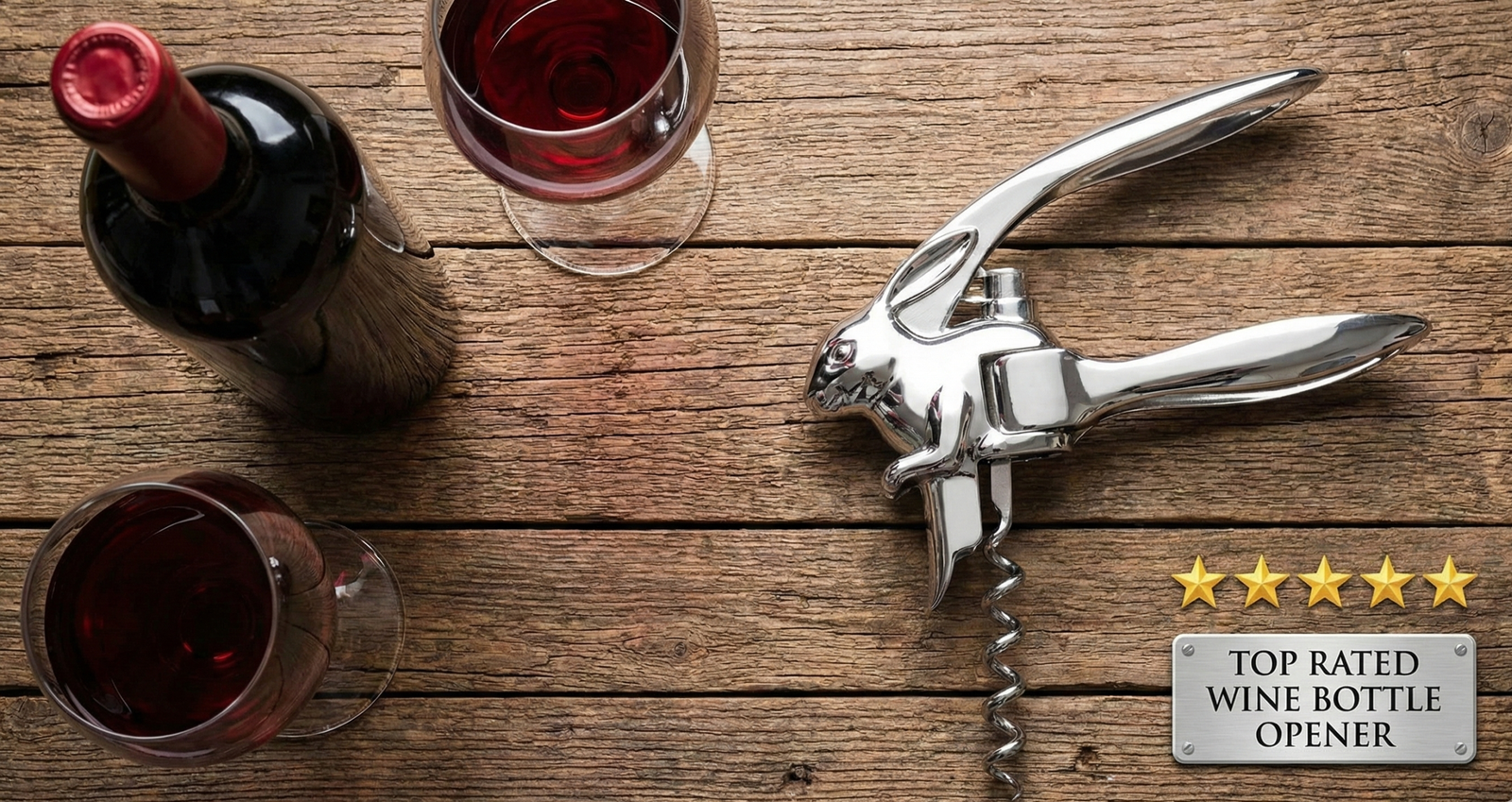
For those who want the manual feel without the twisting, the Lever (often called “The Rabbit”) is the solution. It uses simple physics: clamp, pull down, pull up. The cork is out in three seconds flat.
Top Pick: Rabbit Original Lever Corkscrew
This tool is impressive to watch. It is heavy-duty and clamps onto the neck of the bottle securely. However, it requires a bit of counter-pressure. Ensure you are holding the bottle firmly, or use a steady wine serving tray to prevent slips.
✅ Pros
- Fastest opening method available — under 3 seconds.
- Ergonomic handles reduce strain significantly.
- Usually comes in a gift set with extra worms.
- No technique required once set up correctly.
❌ Cons
- Bulky and hard to store in small drawers.
- Mechanism can wear out over years of heavy use.
- Can snap corks if the clamp isn’t centered precisely.
💡 Lever Opener Tip
Always ensure the clamp arms are fully and symmetrically seated on the bottle neck before operating. An off-center clamp tilts the worm angle and dramatically increases the chance of a snapped cork — the most common complaint from lever corkscrew users.
4. The Wing Corkscrew (Butterfly Opener): The One to Avoid
The wing corkscrew — often called a butterfly opener because of its two rising arm “wings” — is the most ubiquitous wine opener in the world. It is sold in every supermarket, gifted in every housewarming basket, and found in virtually every kitchen drawer. It is also, among wine professionals, the most criticized design on the market.
Understanding why wine experts dislike it so strongly — and knowing when it is and isn’t acceptable — will save your corks and your wine.
How It Works
The wing corkscrew operates via an auger-style spiral (a solid, drill-like helix with cutting edges) driven into the cork by rotating the top handle. As the spiral descends, two “wing” arms rise on either side. Once fully inserted, you press the arms down, using them as levers to pull the cork upward through a simple mechanical advantage.
The motion is intuitive — press down on both arms simultaneously — which explains its popularity with casual drinkers and gift-givers. No technique required, no learning curve.
The Critical Flaw: The Auger Worm
Here is the problem: the auger spiral is a drill, not a hook. Its sharp, solid edges cut through the cork rather than weaving between the cork’s cellular structure. This tearing action weakens the cork’s integrity from the inside out, dramatically increasing the likelihood of:
- Cork crumbling and falling into the wine.
- The spiral punching completely through the bottom of the cork.
- The cork splitting in half during extraction.
- Cork debris contaminating the wine, requiring filtration through a wine decanter.
A quality waiter’s friend uses a “wire helix” — an open, coiled design that spirals through the cork’s cellular matrix rather than shredding it. If you currently own a wing corkscrew, examine the spiral: if it looks like a solid drill bit, it is an auger; if it looks like a thin, hollow coil of wire with space in the center, it is a wire helix.
⚠️ When to Retire Your Wing Corkscrew
If you are opening any bottle worth more than $20, or any bottle with an older natural cork, retire the wing corkscrew immediately. The money you save buying a $40 Pulltap’s waiter’s friend will prevent dozens of ruined corks and contaminated wines over its lifetime. The wing corkscrew is acceptable only for very fresh, inexpensive bottles that will be consumed immediately.
5. The Ah-So Two-Prong Opener: Savior of Vintage Corks
If the waiter’s friend is the sommelier’s everyday tool, the Ah-So is the sommelier’s emergency instrument — brought out specifically when a cork cannot be safely drilled. Named for the exclamation of relief uttered upon successfully extracting an otherwise impossible cork, the Ah-So is one of the most clever mechanical solutions in the wine world.
How the Ah-So Works
The Ah-So has two flat, flexible metal prongs of slightly different lengths attached to a handle. Rather than entering the cork from the top by drilling through it, the prongs slide down between the cork and the glass neck of the bottle, gripping the cork from the outside. A gentle rocking, push-and-twist motion works both prongs progressively deeper until they have gripped the full length of the cork. The cork is then twisted and pulled free — intact, undamaged, and undrilled.
The genius of this approach is that it works on the exact types of cork that drilling would destroy: ancient, brittle, crumbly corks that would shatter under a worm. For any bottle aged more than 15–20 years, the Ah-So should always be your first consideration.
The Ah-So Learning Curve
The Ah-So requires patience and practice. The most common mistake is pushing both prongs in simultaneously with equal force — this won’t work. The correct technique alternates pressure: push the longer prong slightly, then the shorter, then back, rocking the prongs progressively deeper in a gentle seesaw motion. Forcing it causes the cork to push further into the bottle rather than being gripped for extraction.
- Remove the foil completely from the bottle neck — the prongs need unobstructed access to the glass-cork gap.
- Insert the longer prong first, positioning it at the widest gap between cork and glass — usually detectable by gentle probing around the circumference.
- Rock the prongs alternately, applying slight downward pressure first to the longer prong, then the shorter, in a controlled seesaw motion. Never force — let the prongs find their path.
- Check depth every few millimeters — you want both prongs seated at least two-thirds of the cork’s length before attempting extraction.
- Twist while pulling gently upward — the twisting motion is essential. It breaks any sticky adhesion between old cork and glass while the upward pull extracts. Alternate clockwise and counterclockwise if resistance is high.
- Ease the cork free slowly. Very old, crumbly corks may still leave small fragments — have a fine-mesh strainer or a wine decanter with a filter ready to catch any debris.
The Durand: Ah-So + Waiter’s Friend Combined
Professional sommeliers who regularly open museum-quality bottles often use a tool called the Durand — a combination device that pairs a traditional waiter’s friend worm with an Ah-So two-prong system simultaneously. The worm provides grip from the center while the prongs stabilize from the outside, preventing any single point of failure. At approximately $120, the Durand is a specialized investment justified only for collectors regularly opening 20+ year old bottles.
6. The High-Tech Preservation: Coravin Explained
This isn’t technically an “opener” because it doesn’t remove the cork. The Coravin system inserts a medical-grade needle through the cork, extracts wine, and replaces the empty space with Argon gas. When the needle is removed, the cork reseals itself.
Who is this for? The collector. If you have a $200 bottle and only want one glass, this is the only tool that allows the rest of the bottle to survive for years. Compare this to vacuum systems in our Coravin vs Vacu Vin analysis.
How Coravin Works in Detail
The Coravin’s hollow needle is thin enough to pass through a natural cork without permanently damaging it. Natural cork is elastic — when the needle is removed, the cork’s cellular structure contracts back around the microscopic puncture point, creating an effective reseal. The Argon gas Coravin uses is inert: it does not react with wine, carries no taste or aroma, and most importantly, contains no oxygen — so the wine in the bottle cannot oxidize after the needle is withdrawn.
The practical implication is extraordinary: a bottle accessed via Coravin can theoretically continue aging in the bottle for years, as if it was never opened. A 2010 Burgundy accessed via Coravin in 2026 will still be the same 2010 Burgundy in 2030. No other wine preservation technology offers this level of protection.
Coravin Models and Capsule Costs
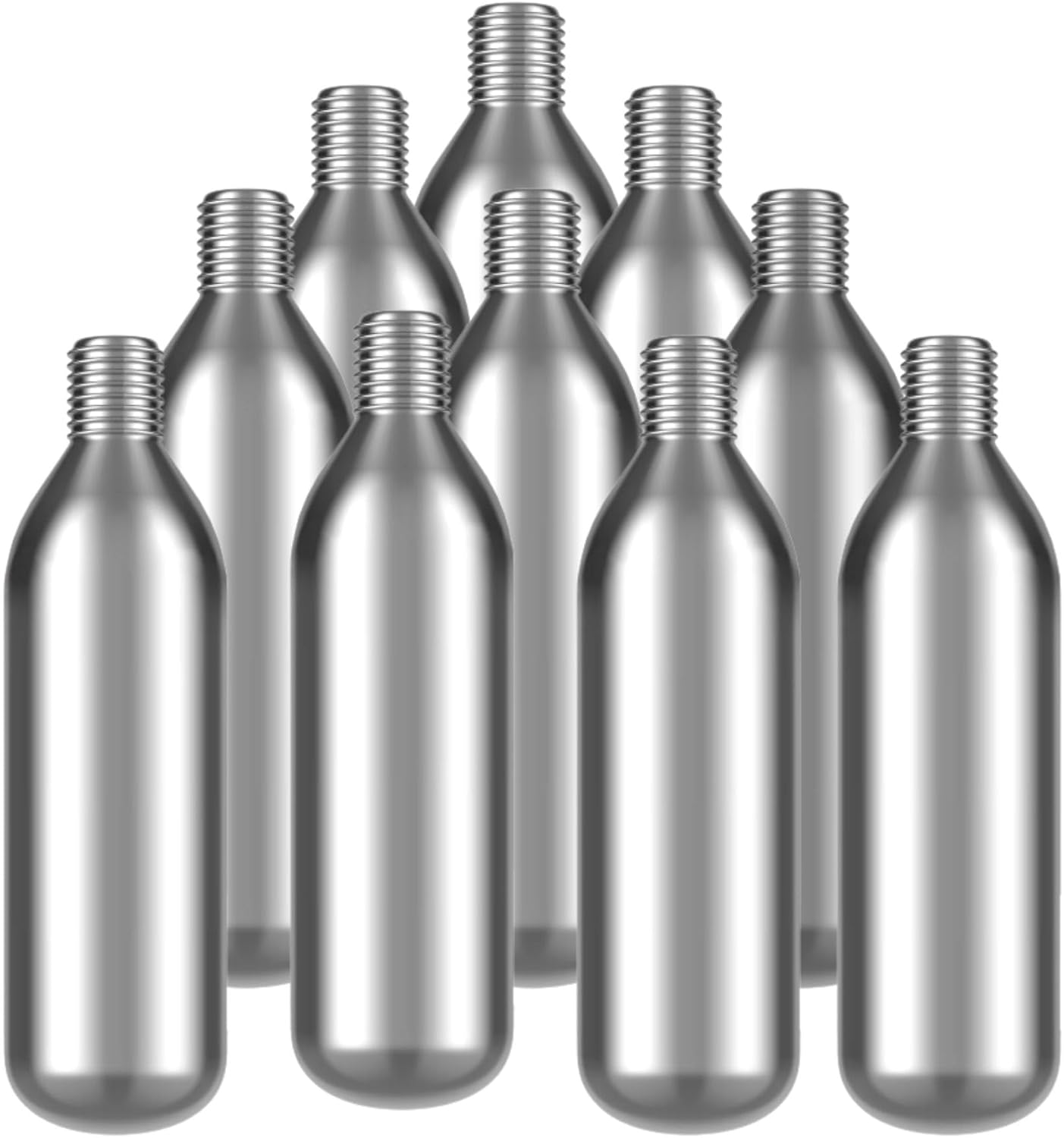
Coravin offers several model tiers that differ in needle quality, pressure control, and capsule compatibility. The capsules (small pressurized Argon cartridges) are the ongoing running cost of the system. Each capsule provides approximately 15 pours of 5oz. A pack of three capsules costs approximately $15, making each pour’s Argon cost about $0.33 — a negligible addition to the cost of premium wine.
⚠️ Coravin Limitations
Coravin only works with natural cork closures. It cannot be used with synthetic corks, screw caps, or Champagne/sparkling wine cages — the pressurized carbonation makes needle insertion dangerous. For sparkling wine preservation after opening, use a Champagne stopper and consume within 2–3 days.

How to Open Champagne and Sparkling Wine Safely
Champagne and sparkling wine are sealed with a different closure system entirely — a natural cork compressed into the bottle neck and held in place by a wire cage (muselet) — and they require a completely different opening approach than still wines. No corkscrew of any type is used. The internal pressure of a Champagne bottle is approximately 90 psi — three times the pressure of a car tyre — and an improperly opened bottle is a genuine projectile hazard.
The Safe Champagne Opening Technique
- Chill the bottle to 45–48°F first — cold Champagne has lower internal pressure and is dramatically safer and easier to open than warm. A warm bottle can erupt the moment the cage is loosened.
- Remove the foil capsule by pulling the tab or using a foil cutter. Keep a thumb or palm over the cork at all times from this point forward.
- Loosen the muselet (wire cage) by twisting the small loop six half-turns counterclockwise — exactly six is the universal standard. Do not remove the cage yet; leave it draped over the cork as an extra safety layer.
- Tilt the bottle at 45 degrees, pointing away from people, lights, and anything fragile. This increases the headspace, reducing the force of any sudden release.
- Grip the cork and cage together with one hand, and hold the bottle base firmly with the other. Do NOT grip only the cork — hold the cage too for maximum control.
- Rotate the bottle slowly — not the cork. This is the professional technique: hold the cork still and turn the bottle beneath it, allowing the internal pressure to push the cork gently outward as you control the rotation.
- Ease the cork out with a soft sigh — the release should sound like a gentle exhale, not a loud bang. A loud pop means you lost control of the release speed. For non-celebratory service, the “whisper” release is the mark of proper technique.
Champagne Sabre Opening: The Theatrical Alternative
Sabrage — opening Champagne with a saber blade — is a Napoleonic-era tradition still practiced at formal celebrations. A smooth, firm slide of a blade along the bottle’s seam strikes the annular ring at the bottle neck, separating the neck cleanly with the cork still in it. This is genuinely impressive when executed correctly and completely safe in the right setting. It is, however, an art form requiring practice and a suitable blade — not a party trick for amateurs with kitchen knives.
How to Open Wax-Sealed Wine Bottles Without Making a Mess
Wax-dipped bottle necks are increasingly common among artisan, natural wine, and premium producers who use dipped wax as both a stylistic statement and an extra seal layer. They are beautiful — and they intimidate a surprising number of wine drinkers who aren’t sure whether to scrape, melt, or drill through the wax.
The answer is simpler than you think: drive your corkscrew directly through the wax. Do not try to remove it, scrape it, or melt it. Here’s the complete approach:
- Do not score or remove the wax — attempting to peel or scrape wax off usually cracks it unevenly and sends fragments into the bottle opening. Leave it completely intact.
- Use a waiter’s friend corkscrew — electric openers can struggle with the extra resistance wax adds. The manual control of a waiter’s friend allows you to feel and manage the added friction.
- Position the worm tip at the center of the wax-covered cork and apply firm, steady downward pressure as you twist. The worm will penetrate the wax and enter the cork — you will feel the transition from the harder wax to the softer cork.
- Insert to the standard depth (one coil before the worm disappears) and extract using the fulcrum method as normal. The wax will crack naturally around the insertion point — this is expected and does not harm the wine.
- Wipe the bottle neck with a clean cloth after extraction to remove any loose wax fragments before pouring. Small wax pieces will not harm the wine if they fall in, but they are unpleasant to encounter in the glass.
💡 Very Thick Wax Capsules
Some producers use extremely thick wax (3–5mm) that even a waiter’s friend struggles to penetrate. In these cases, briefly dip the bottle neck in warm (not hot) water for 30 seconds to slightly soften the wax, or carefully score a small cross in the wax over the cork center with a knife to give the worm an entry point before driving it in.
Broken Cork Rescue: How to Recover When Things Go Wrong
Even with the best openers and perfect technique, corks occasionally break. An old, dry cork, a misaligned entry angle, or an unusually dense synthetic cork can all lead to the familiar sinking feeling of a cork snapping halfway through extraction. Knowing exactly how to respond transforms a potential disaster into a minor interruption.
Scenario 1: The Cork Broke and Half Is Still in the Neck
This is the most common breakage scenario. The lower half of the cork remains lodged in the bottle neck, and the worm is still holding the upper fragment.
First, do not panic — and do not push down. Pushing the remaining cork fragment into the bottle is always an option but should be a last resort, as it risks contaminating the wine with cork particles and making the wine undrinkable from the bottle. Instead:
- Carefully reinsert your worm into the remaining fragment, angling slightly off-center from the original entry point to find fresh, undamaged cork material to grip.
- Extract very slowly, using the lever method to minimize lateral force on the weakened cork.
- If the fragment is too thin to safely receive the worm, switch to an Ah-So and work the prongs down around the fragment from the outside.
Scenario 2: The Cork Is Pushed Into the Bottle
If the cork has already fallen into the bottle — whether accidentally pushed or beyond salvage — the wine is not ruined. Decant it. Pour the entire contents through a fine-mesh strainer or a coffee filter into a quality wine decanter, which will catch all cork particles while simultaneously aerating the wine. The decanting process may even improve a young tannic wine that could have benefited from breathing anyway.
Scenario 3: Cork Crumbles Are in the Wine
Cork particles in wine are harmless — they carry no taste or aroma and will not make you sick. The inconvenience is purely textural. Options: decant through a fine strainer; pour carefully by holding the bottle at a tilted angle so particles settle to the punt (bottom indentation); or simply accept a few small pieces in the glass — experienced wine drinkers do this routinely without concern.
Prevention is Better Than Recovery
Most broken corks are caused by one of three things: a dull or worn worm (the coil has lost its helix shape and tears rather than spirals), an off-center entry angle, or a genuinely old and dry cork that should have been opened with an Ah-So. Inspect your worm regularly — a corkscrew that has opened hundreds of bottles may have subtly bent or dulled its helix. Replacement worms for most waiter’s friends cost under $5.
Natural Cork vs Synthetic Cork vs Screw Cap: What Each Closure Means
The closure on a wine bottle is not a random choice by the producer — it reflects deliberate decisions about aging philosophy, price point, and target market. Understanding the difference between closure types helps you choose the right opener, set accurate aging expectations, and interpret what a closure signals about the wine inside.
Natural Cork
Harvested from the bark of the cork oak tree (Quercus suber) in Portugal and Spain, natural cork has sealed wine bottles for over 400 years. Its compressibility, elasticity, and micro-permeability allow tiny, controlled amounts of oxygen exchange between the wine and the outside world — a property that many winemakers believe is essential for the slow, graceful development of complex aged wines.
Natural cork’s primary disadvantage is TCA (2,4,6-trichloroanisole) contamination — the cause of “corked” wine, which smells of wet cardboard and is completely undrinkable. Studies suggest 3–5% of natural cork-sealed bottles are affected to some degree. Despite this, natural cork remains the closure of choice for virtually all premium and collectable wines.
Best opener: Waiter’s friend for young bottles; Ah-So or Durand for aged bottles.
Synthetic Cork
Made from polyethylene or other polymers, synthetic corks look and feel like natural cork but are manufactured to a consistent density and are free from TCA contamination. They are significantly denser than natural cork, which means they provide an airtight seal with zero oxygen exchange — ideal for wines designed for early consumption but potentially limiting for wines intended for extended aging.
Synthetic corks are considerably harder to extract than natural cork, particularly after 2–3 years in a bottle when compression has tightened their grip on the glass neck. This is the scenario where electric openers occasionally struggle and waiter’s friends earn their reputation.
Best opener: Waiter’s friend, fully charged electric opener.
Screw Cap (Stelvin)
The aluminum screw cap, marketed under the brand name Stelvin, provides a perfect hermetic seal with virtually zero oxygen ingress. It eliminates TCA contamination entirely and is the dominant closure in New Zealand and Australia. No opener of any kind is required — the cap twists off by hand. Despite long-standing perception as a “cheap wine” indicator, screw caps are now used by many premium producers for wines specifically designed to preserve freshness and fruit character without oxidative development.
The debate about whether screw caps allow quality aging (without the micro-oxidation of natural cork) is genuinely ongoing among winemakers and researchers. For wines designed to be consumed within 5 years, the screw cap is arguably the most reliable and fault-free closure available.
Glass Closure (Vino-Lok)
A small number of premium German and Austrian producers use a borosilicate glass closure sealed with a food-grade O-ring. It is visually elegant, completely inert, and reusable. It requires no opener — the glass stopper lifts free — and represents the newest chapter in the centuries-long search for a perfect wine seal.
Top Wine Opener Brands Compared
The wine opener market spans from $8 supermarket tools to $350 professional systems. Knowing which brands genuinely deliver on their claims — and which trade on aesthetic rather than engineering — prevents expensive mistakes.
🏆 Pulltap’s
The gold standard waiter’s friend. Patented double-hinge mechanism is widely imitated but rarely matched. Used by competitive sommeliers worldwide. The genuine article retails for $10–$20 — anything cheaper is likely a counterfeit without the true double-hinge engineering.
🏆 Coravin
The unchallenged leader in wine preservation systems. No competitor offers the same argon-needle technology at equivalent reliability. Their model range from Standard to Pivot covers all collector needs.
🥈 Laguiole
French-made luxury corkscrews, often in gorgeous bone, wood, or resin handles. The bee emblem on the cap indicates authentic manufacture. Beautiful objects that also function exceptionally well — and make outstanding gifts at the $30–$150 range.
🥈 OXO Good Grips
The best ergonomic corkscrew line for users with arthritis, limited grip strength, or mobility considerations. Their soft-touch handles and mechanically advantaged designs reduce required force dramatically while maintaining reliability.
🥈 Secura
The value-leader in electric wine openers. Their charging base model consistently outperforms competitors at twice the price. Excellent motor longevity, clear barrel design, and reliable operation make it the default electric recommendation.
🥉 Rabbit
Defined the lever corkscrew category and still makes the most imitated design. Their original lever corkscrew is reliable for high-volume use in entertaining settings. Replacement worm kits are widely available, extending product life significantly.
Best Wine Openers by Budget: What Every Price Point Gets You
One of the most useful frameworks for wine opener purchasing is understanding what each price tier genuinely delivers. The price-to-quality relationship in this category is not linear — a $12 waiter’s friend competes credibly with a $40 model for most use cases, while the jump from $100 to $300 delivers very specific specialist benefits.
💚 Under $20: Budget Tier
At this price, a genuine Pulltap’s double-hinge waiter’s friend is the clear choice. Avoid electric and lever tools at this price — the mechanisms will fail within months. A $10–$15 Pulltap’s will outlast a $15 electric opener by years. Also consider the OXO Steel lever-action corkscrew at the higher end of this range for arthritis sufferers.
💜 $20–$80: Mid-Range
This is where electric openers become genuinely reliable (Secura, EZBASICS). Laguiole waiter’s friends enter the range with beautiful aesthetics. A quality Ah-So from Franmara ($15–$25) belongs in every collector’s drawer. The Rabbit lever corkscrew flagship lives at the upper end and delivers its speed advantage reliably.
🔴 $80+: Premium Tier
Coravin Pivot ($100+) transforms how you interact with your collection. The Durand ($120) is the definitive tool for vintage bottle opening. Laguiole en Aubrac hand-crafted corkscrews ($80–$300) are heirloom objects. At this level, you are paying for longevity, craftsmanship, and capabilities unavailable at lower price points.
Wine Opener Maintenance: Making Your Tools Last
A quality wine opener — particularly a waiter’s friend — can last decades with basic care. The components that fail earliest are the worm (helix), the knife blade, and the hinge mechanism. Understanding how to identify wear and perform basic maintenance extends the life of any opener significantly.
When to Replace the Worm
The worm is the most critical and most overlooked component of any manual corkscrew. Inspect it regularly for these signs of wear:
- Straightening of the coil — the helix loses its circular cross-section and starts to straighten. A straight worm cannot grip cork fiber; it slides rather than spirals.
- Tip damage — the point becomes blunt or bent. A blunt tip crushes cork cells rather than parting them, dramatically increasing resistance and cork breakage risk.
- Rust or corrosion — even small spots of rust on a worm create friction that tears cork. Clean regularly with a dry cloth immediately after use and store in a dry location.
Replacement worms for most waiter’s friends and lever corkscrews cost $3–$8 and are universally available. Replacing a worn worm is the single highest-value maintenance action for any manual opener.
Electric Opener Care
- Wipe the exterior with a damp cloth after each use — wine splashing into the motor housing is the leading cause of failure.
- Never submerge any part in water or run under a tap.
- Clean the worm with a cotton swab dampened with isopropyl alcohol if wine residue builds up — dried wine residue creates friction and strains the motor.
- Store on the charging base when not in use — partial charges repeated over time degrade lithium battery capacity faster than full charge cycles.
- If the motor feels sluggish, check for hair or fiber wrapped around the worm shaft — this is a common and easy-to-fix problem.
Knife Blade Sharpening
The serrated foil-cutting blade on a waiter’s friend dulls over time. A dull blade tears foil rather than cutting it cleanly, leaving ragged edges that fall into the glass. Ceramic knife sharpeners work well on small blades; alternatively, a leather strop maintains edge quality between uses. If the blade is beyond restoration, most waiter’s friend manufacturers sell replacement units, or a dedicated foil cutter eliminates the need for the blade entirely.
Travel Corkscrews and TSA Rules: Everything You Need to Know
Wine travel — whether for a winery tour in Napa, a wine region holiday in Burgundy, or simply wanting reliable tools at a BYOB restaurant — requires understanding which corkscrews can legally travel in which luggage, and which tools are best suited to travel’s constraints of size and weight.
TSA Rules for Corkscrews (USA)
The TSA evaluates corkscrews based on whether they include a blade (the foil-cutting knife found on most waiter’s friends):
- Corkscrews with a blade: Prohibited in carry-on bags. Allowed in checked baggage only. This applies to virtually all waiter’s friend models, which include a serrated blade.
- Bladeless corkscrews: May be allowed in carry-on — the TSA uses officer discretion. A simple worm-only device without a blade attachment is the safest carry-on option.
- Electric wine openers: Generally allowed in carry-on (no blade). Check battery watt-hour restrictions for lithium batteries.
- Ah-So two-prong openers: Generally allowed in carry-on — no cutting edge, and prongs are blunt. Verify before travel as individual officer discretion applies.
International Travel Note
Rules outside the USA vary significantly. EU and UK airports apply similar blade restrictions. Australia and New Zealand are generally more restrictive. When in doubt, always pack corkscrews in checked luggage — the cost of confiscation is the corkscrew itself, which may be harder to replace abroad than at home.
Best Travel Corkscrew Options
Bladeless waiter’s friend models designed specifically for carry-on travel exist from several brands — they use a fold-away worm without any blade element. These are the most compact and airline-safe option for carry-on travel.
Two-piece waiter’s friends (worm body + separate foil cutter) allow you to pack only the worm in your carry-on and the foil cutter in checked luggage — giving you at least partial functionality if your checked bag is delayed.
Key-ring corkscrews — tiny, single-piece worm tools — are technically bladeless and fit on a keychain. They lack the leverage system of a full waiter’s friend but are functional in a pinch and completely worry-free for security screening.
Buying Guide: What Matters Most?
When searching for the top rated wine bottle opener, consider these key factors:
1. The “Worm” (Spiral)
Look for a worm that looks like a coiled snake, not a drill bit. A “wire helix” worms its way into the cork. An “auger” (solid metal with sharp edges) tears the cork apart, leading to crumbs in your wine. If you do get crumbs, you might need to filter them out using one of the best wine decanters.
2. Bottle Compatibility
Standard bottles are easy, but wax-dipped or wide-flange bottles can be tricky. A waiter’s friend handles everything. Electric openers can struggle with unusually wide bottle necks often found on heavy Bordeaux bottles.
3. Storage and Travel
Are you taking wine to a BYOB restaurant? You need a waiter’s friend. Are you keeping it on your home bar next to your modular wine rack system? An electric opener on a charging stand looks elegant.
4. Grip Comfort and Accessibility
Often overlooked: how the tool feels in your hand during the specific motions required. A beautiful Laguiole with a thin handle can be surprisingly uncomfortable for users with larger hands or reduced grip strength. Try handles in person where possible, or specifically seek out OXO’s ergonomic line if hand comfort is a priority.
Don’t Forget the Accessories
Opening the bottle is just step one. To fully enjoy the wine, consider the full workflow:
- Aeration: Once open, does the wine need to breathe? Check our guide on wine aerator vs decanter.
- Chilling: If it’s a white wine, keep it cool using the best wine chiller sleeve.
- Saving Leftovers: If you don’t finish the bottle, how long will it last? Read how long wine lasts after opening and use effective wine stoppers.
- Pouring cleanly: A wine pourer ring or drip-stop collar eliminates the red wine stain risk on tablecloths and counters when pouring from an open bottle.
Wine Opener Gift Sets: What Makes a Great Gift?
Wine opener gift sets are among the most universally appreciated wine accessories gifts — practical, attractive, and suitable for any level of wine knowledge. But the quality variance between gift sets is enormous: some offer genuine value through curated, complementary tools, while others pad cheap items into impressive-looking boxes.
What a Quality Gift Set Should Include
The best wine opener gift sets pair tools that work together across the bottle-opening workflow — not just openers, but the full experience from seal to pour. Look for sets that include:
- A quality waiter’s friend (double-hinged, wire helix worm) — the foundational tool that every wine drinker uses.
- A dedicated foil cutter — faster and cleaner than a blade for non-professional use.
- A wine pourer / aerator — adds immediate functional value at the glass.
- A wine stopper — practical for preserving open bottles; every household needs several.
- A drip-stop ring or pour collar — small but genuinely useful for anyone who pours regularly.
Sets that include cheap electric openers as the centerpiece of a gift box often prioritize visual impact over quality. A beautifully packaged Laguiole waiter’s friend with a matching foil cutter delivers more real-world value than a budget electric opener that will fail within a year.

Frequently Asked Questions
For those with arthritis or limited hand strength, electric wine openers are the top-rated choice as they require zero physical torque. Alternatively, a high-quality lever (rabbit-style) opener uses mechanics to remove corks with a simple push-pull motion. The OXO Good Grips lever corkscrew is specifically designed with soft, oversized handles to minimize hand strain.
Sommeliers prefer the waiter’s corkscrew because it provides tactile feedback, allowing them to control the angle and speed of extraction to prevent cork breakage. It is also portable, durable, includes a foil cutter, and requires no charging or batteries. Mastery of the waiter’s friend is considered foundational to wine service.
Yes, most top-rated electric wine openers can handle synthetic corks. However, synthetic corks are considerably denser than natural cork — they grip the bottle glass very tightly, particularly in bottles opened after 2+ years. Ensure your electric opener is fully charged before attempting synthetic corks, and have a waiter’s friend as backup if the motor struggles.
Do not use a standard spiral corkscrew — it will drill through and fragment the brittle cork. Instead, use an Ah-So (two-prong) opener, which slides between the cork and the glass to grip the cork from the outside. For extremely valuable old bottles, the Durand tool combines an Ah-So with a corkscrew worm for maximum control. Decant the wine through a fine strainer after opening to catch any fragments.
It depends on the type. Corkscrews with blades (foil cutters) are prohibited in carry-on luggage by the TSA but are allowed in checked baggage. Bladeless corkscrews may be allowed in carry-on at officer discretion. Electric openers are generally carry-on safe. All corkscrews are permitted in checked bags — when in doubt, always check.
The most common causes are: an off-center worm entry that exited the side of the cork; a worn or damaged worm that tears rather than grips; a dry, aged cork that should have been opened with an Ah-So; or a wing-style corkscrew with an auger worm that shredded the cork’s internal structure. To prevent dry corks, store bottles horizontally so the wine keeps the cork moist.
Insert your corkscrew worm directly through the wax — do not try to remove the wax first. The wax will crack naturally as you insert and extract. Use a waiter’s friend for best control. Wipe the bottle neck clean of any loose wax fragments before pouring. Very thick wax may benefit from a brief 30-second dip in warm water to soften it slightly.
Chill the bottle first (cold reduces internal pressure). Remove the foil, then loosen the cage 6 half-turns but leave it over the cork. Tilt the bottle 45 degrees away from people. Grip the cork and cage together with one hand, then slowly rotate the bottle with the other hand — not the cork. Ease the cork out with a soft sigh rather than a loud pop for the safest and most professional technique.
It depends entirely on your use case. A genuine Pulltap’s double-hinge waiter’s friend at $12 performs the same fundamental task as a $60 Laguiole — the difference is craftsmanship, materials, and longevity, not opening performance. However, a Coravin at $100+ offers a capability (pouring without removing the cork) that no cheaper tool can replicate. Buy up when the premium buys a new capability; buying purely for aesthetics is a personal choice.
Wipe the exterior with a damp cloth immediately after use. Never submerge in water. Clean the worm spiral with a cotton swab dampened with isopropyl alcohol to remove wine residue that dries and creates friction. Store on the charging base between uses for optimal battery health. Check for any fiber or debris wrapped around the worm shaft if the motor feels sluggish.
Final Verdict: Which Opener Should You Buy?
Our Recommendations by Profile
For Most People: Buy the Pulltap’s Waiter’s Friend. Mastering this $12 tool connects you to the ritual of wine service, works on every bottle type, requires no charging, and will last a decade with care.
For Ease & Convenience: Buy the Secura Electric Opener. It is foolproof, impressive to guests, and handles the vast majority of natural and synthetic corks without any technique required.
For Vintage Collectors: Add an Ah-So to your drawer. At $15–$25, it is the only tool that can safely open a 25-year-old bottle with a brittle cork. No collector should be without one.
For Serious Collectors: Invest in the Coravin. It pays for itself the first time it saves an expensive bottle from premature oxidation.
Whatever you choose, ensure it’s durable and comfortable. Life is too short to struggle with a bottle of good wine. Cheers!