The 5 Best Wine Foil Cutters for a Perfect, Clean Cut Every Time
The humble foil cutter is the most underrated tool in your wine arsenal. Here’s everything you need to know to choose the right one — and use it like a professional.
What’s In This Guide
- Why You Absolutely Need a Dedicated Foil Cutter
- Types of Wine Foil Cutters Explained
- Anatomy of a Wine Bottle Neck: The Two-Lip Debate
- How to Use a Foil Cutter Like a Sommelier
- The Complete Buyer’s Guide: What to Look For
- 1. Best Overall: OXO SteeL Wine Foil Cutter
- 2. Easiest to Use: Rabbit Zippity 2-Step
- 3. Premium Pick: Le Creuset Foilcutter
- 4. Professional’s Choice: Pulltap’s Waiter’s Corkscrew
- 5. Most Elegant: Viski Signature Foil Cutter
- Side-by-Side Comparison Table
- All About the Capsule: History, Materials & More
- Common Mistakes to Avoid
- Wine Foil Cutters as Gifts
- Care and Maintenance
- Now That the Foil Is Off: Completing Your Wine Ritual
- Frequently Asked Questions
- The Final Verdict
There is a unique sound that signals the beginning of a great wine experience. It’s not the pop of the cork, but what comes just before: the satisfying zzzip of a foil cutter. It’s a small, precise sound that separates the amateur from the aficionado. For any wine lover, this ritual is the first step in showing respect for the bottle. Nothing is more wince-inducing than watching someone hack away at the foil with a dinner knife, or worse, try to rip it off with their fingernails, leaving a jagged, ugly mess.
That messy foil isn’t just a cosmetic problem. A torn edge can be sharp, and it forces the wine to pour over the capsule, which can affect the taste and cause unsightly drips. The humble foil cutter, a tool that often costs less than $15, is the single most underrated accessory in the world of wine. It’s the key that unlocks the bottle cleanly, safely, and elegantly.
Here at Cooking Authority, we’ve tested dozens of these essential tools — from classic four-wheel models to high-end sommelier knives. We know what separates a cutter that glides like a hot knife through butter from one that sticks, tears, or breaks after three bottles. In this comprehensive guide, we’re breaking down the 5 best wine foil cutters you can buy on Amazon, why you need one, how to use it like a seasoned pro, and everything in between. This is the first, crucial step in building out your collection of wine cellar essentials.
Why You Absolutely Need a Dedicated Foil Cutter
Before we get to our top picks, let’s establish why this small gadget is one of the most important wine accessories every host needs. It’s not just about “looking cool” — it’s about practicality, safety, and the purity of the wine itself. Over the course of testing dozens of tools and opening thousands of bottles, we’ve identified four distinct reasons why every wine lover should own a dedicated foil cutter.
1. The Ritual and Presentation
Presentation is part of the pleasure of wine. When you bring a beautiful bottle to the table — perhaps one of the best affordable wines or a high-end organic wine — you want the opening process to be as elegant as the wine itself. A foil cutter creates a perfectly straight, clean line every time. It’s a small gesture of competence and care that sets the tone for the entire tasting. It shows your guests you know what you’re doing. Think of it as the overture before the symphony.
In a restaurant, a sommelier who fumbles with the foil signals inexperience immediately. At home, the same applies. The ritual of opening wine properly is part of the entire sensory experience — from the visual drama of a beautiful label to the anticipation of the pour. A clean foil cut, executed with a dedicated tool, is the beginning of that ritual done correctly.
2. Safety — No More Jagged Edges
Let’s be completely practical for a moment. The foil on a wine bottle, especially when torn, is surprisingly sharp. Thin aluminum capsules in particular create razor-thin edges when torn irregularly. Using a paring knife, a dinner knife, or the tip of a corkscrew is a recipe for a sliced thumb — or worse, for handing someone a glass of wine and having them cut their lip on a jagged foil edge you didn’t notice.
A dedicated foil cutter contains the blades in a safe, plastic or metal housing. The mechanism is designed so the blades only contact the foil and never come into contact with your fingers. The result is a clean, blunt edge every single time, with zero risk of cutting yourself, your guests, or your beautiful glassware. This alone justifies the $10–$15 investment many times over.
3. Purity of the Pour — The “Drip Lip” Reality
This is the most important reason from a wine quality standpoint, and it’s the one that separates knowledgeable wine people from casual drinkers. The foil capsule is made of various materials: older bottles use tin or, historically, lead (which is exactly why you should never pour over foil). Modern capsules are typically aluminum, plastic, or heat-shrink polylaminate. Regardless of the material, you never want your wine to flow over the foil when pouring.
A jagged, torn-down foil capsule makes avoiding this almost impossible. The wine splashes over the edge of the foil, potentially picking up trace flavors (or simply dust, oxidized residue, or cellar debris) and, more practically, creating a messy drip that stains the label and tablecloth. A foil cutter makes a precise cut below the bottle’s lower “drip lip,” creating a clean, glass-only pathway for the wine to pour over. This ensures purity of flavor and a perfect, drip-free pour into your best red wine glasses.
4. Protecting Your Corkscrew
Many beginners make the mistake of using the “worm” (the spiral part of their corkscrew) to tear through the foil, or using the small blade of a waiter’s key without skill. Both create problems. Using the worm through the foil does two terrible things simultaneously: it dulls the sharp tip of the worm, making it harder to properly penetrate the cork, and it gums up the spiral with foil shards and adhesive glue — which you can then inadvertently push into the wine on your next use.
A foil cutter is a single-purpose tool that lets your corkscrew do its single purpose — removing corks — in optimal condition. The combined longevity savings on your corkscrew alone can easily recoup the cost of a quality foil cutter many times over.
The Bottom Line on Why You Need One
A dedicated foil cutter is a $10–$25 investment that improves safety, wine quality, presentation, and the longevity of your corkscrew all at once. It takes three seconds to use and lasts for years. There is no rational argument against owning one if you drink wine regularly.
Types of Wine Foil Cutters Explained
Walk through the wine accessories aisle of any kitchen store or scroll through Amazon, and you’ll encounter several distinct types of foil cutting tools. Understanding which type best suits your needs and preferences is the first step to making the right purchase. Here is a complete breakdown of every category.
1. Squeeze-Grip Wheel Cutters (Most Popular)
This is by far the most common type of foil cutter on the market, and for good reason. A squeeze-grip cutter has two or more small, serrated or smooth stainless-steel wheels housed inside a plastic or metal body. To use it, you place the device over the neck of the bottle, squeeze the two sides together to engage the wheels against the foil, and then give the whole unit a simple back-and-forth twist. The wheels cut a clean circle through the foil in one or two motions.
The advantages are clear: they’re fast, intuitive, safe, and suitable for virtually all skill levels. Higher-end models use four wheels (two on each side) for a more complete, 360-degree cut. Brands like OXO, Rabbit, and Le Creuset all produce excellent squeeze-grip wheel cutters. These are the models we most frequently recommend to home wine enthusiasts.
2. Twist-Only Wheel Cutters
These are similar to squeeze-grip cutters in that they use internal wheels to cut the foil, but the mechanism is different. Instead of squeezing handles together, you simply place the device on top of the bottle and twist the housing in one direction. The internal wheels are spring-loaded to maintain constant pressure against the foil. This gives them an even cleaner, more streamlined profile — they look like a simple metal cap sitting on the bottle.
The Viski Signature Foil Cutter we review below is the prime example of this category. They tend to have a more elegant, minimalist aesthetic but can require slightly more grip strength, since you’re relying on spring tension rather than the mechanical advantage of squeezing handles together.
3. Serrated Blade Cutters (Waiter’s Key Style)
This is the professional standard. A waiter’s corkscrew (also called a “wine key” or “sommelier knife”) contains a small folding serrated blade that is used to score and cut the foil. When used correctly, it offers the greatest precision and the cleanest below-the-lower-lip cut of any method. The Pulltap’s Professional Waiter’s Corkscrew reviewed below is the gold standard in this category.
The trade-off is the learning curve. Using a blade well requires practice — it’s a skill, not just an action. For beginners, a blade cutter is more likely to produce a ragged cut than a wheel cutter, but for experienced users, it provides unmatched control and speed. It also means you only need to carry one tool: a corkscrew that can both cut the foil and remove the cork.
4. Electric and Automated Foil Cutters
Battery-powered foil cutters exist and are occasionally bundled with electric wine opener sets. They typically use spinning cutting wheels powered by a small motor and are designed for effortless, one-touch foil removal. They are generally bulkier, require batteries or charging, and offer little functional advantage over a good manual squeeze cutter. They can be a good option for those with severe arthritis or limited hand strength, but for most users, a quality manual wheel cutter is both faster and more reliable.
5. Multi-Tool Combinations
Some wine accessories bundle a foil cutter with other tools — most commonly with a vacuum wine pump, a bottle stopper, or a wine pourer. These bundles can offer good value for someone equipping a home bar from scratch, but the foil cutter component is often of lower quality in a bundled set. If the foil cutter is your primary concern, a dedicated single-purpose model will almost always outperform the cutter in a bundle set at the same price point.
Anatomy of a Wine Bottle Neck: The Two-Lip Debate
To understand why foil cutting technique matters, you first need to understand the physical structure of the wine bottle neck. This seemingly simple topic is the source of one of wine service’s most-debated questions: where exactly should you cut the foil?
Look carefully at the neck of any standard wine bottle. You’ll observe two distinct ridges, or “lips,” near the very top of the neck. These aren’t decorative — they’re a functional relic of traditional glass-blowing manufacturing and serve important practical purposes in both capping and serving.
The Upper Lip (First Ridge)
The upper lip is the very topmost rim of the bottle — the thin glass ring that forms the opening. The foil capsule is applied so that it stretches tightly over this upper rim and adheres to the outer wall of the neck below it.
The Lower Lip (Second Ridge)
Approximately 5–8mm below the upper rim, you’ll find a more prominent, outward-protruding ridge called the lower lip (or “drip ring” in technical bottle terminology). This ridge was originally designed as a functional drip-catch: when pouring, any wine that runs down the outside of the bottle’s neck would collect at this ridge and drip off cleanly, rather than running all the way down the label.
Why This Matters for Foil Cutting
The location of your foil cut relative to these two lips has a direct impact on the quality and cleanliness of your pour. There are two distinct schools of thought on this, and both have their valid use cases.
Method A: Cut Above the Upper Lip (Home Method)
- Place cutter at the very top of the bottle
- Cuts the foil above the upper rim
- Leaves a small ring of foil on the rim
- Wine pours over remaining foil ring
- Faster and easier to execute
- Fine for casual, everyday use
- Common default for squeeze-grip cutters
Method B: Cut Below the Lower Lip (Sommelier Method)
- Place cutter below the lower ridge
- Cuts the foil beneath the drip ring
- Removes entire foil from the pour zone
- Wine pours over glass only — zero foil contact
- Requires slightly more precision
- Professional standard; taught at sommelier schools
- Eliminates all risk of foil-related flavor transfer or drips
For an important bottle — a special occasion wine, an aged vintage, or any wine you truly want to taste at its absolute best — always use Method B. For a Tuesday night glass of your everyday house wine, Method A is entirely adequate. A quality squeeze-grip wheel cutter makes both methods achievable with practice.
How to Use a Foil Cutter Like a Sommelier
You have the tool. Now, how do you use it? The technique varies slightly depending on which type of cutter you own, but the fundamentals are consistent across all wheel-based models.
Using a Squeeze-Grip Wheel Cutter (OXO, Rabbit, Le Creuset)
- Position the bottle on a stable, flat surface. Never try to cut foil on a bottle you’re holding in the air — you lose leverage and accuracy.
- Identify the lower lip on the neck of the bottle. Decide whether you’re cutting above the upper lip (Method A) or below the lower lip (Method B).
- Place the cutter around the neck at your chosen position. The blades should be aligned at the correct height before you apply any pressure.
- Squeeze firmly with your dominant hand. You should feel the internal wheels engage against the foil — you’ll hear a very slight sound as they bite in.
- Twist the cutter about 90 degrees in one direction, then 90 degrees back. One or two smooth twists is all a sharp, quality cutter requires. Do not over-twist.
- Release the squeeze and lift the cutter off. The foil cap above your cut line should lift off cleanly in one piece.
- Remove any foil remnants with a clean, dry cloth, wiping the rim of the bottle before inserting your corkscrew.
The most common beginner mistake is insufficient squeezing combined with excessive twisting. The wheels need firm, consistent contact pressure to cut cleanly. Once you’re squeezing adequately, most quality cutters only need one smooth back-and-forth motion of about 90 degrees each way. Over-twisting with light pressure is what causes tearing.
Using a Twist-Only Wheel Cutter (Viski)
This method is slightly different. Place the cutter over the bottle neck at the correct height. Apply gentle but consistent downward pressure while simultaneously rotating the entire body of the cutter. The spring-loaded internal wheels will grip the foil and cut as you rotate. Since there are no squeezable handles, all the cutting force comes from downward pressure and the spring tension. One to two full rotations is typically sufficient. If the cut is incomplete, apply slightly more downward pressure on the next pass rather than rotating more times.
Using a Serrated Blade Cutter (Pulltap’s)
This is the method that requires practice. Open the small serrated blade from your waiter’s key. Hold the bottle at a slight angle with your non-dominant hand (thumb stabilizing the neck). With your dominant hand, use the tip of the blade to score a starting point in the foil just below the lower lip. Then, in one or two fluid slicing motions, cut around the circumference of the bottle, rotating the bottle toward you with your other hand. The key is to let the bottle rotation do the work, not the blade — drag the blade lightly while turning the bottle. With practice, this creates the cleanest possible cut, but it takes time to master.
The “Wipe the Rim” Step That Everyone Skips
After removing the foil — regardless of your method — use a clean cloth or paper towel to wipe the glass rim of the bottle. Even with a perfect foil cut, there can be trace dust, cellar residue, or adhesive from the capsule on the glass. This single step takes two seconds and is standard practice for every professional wine service. It’s the invisible detail that separates good from great.
The Complete Buyer’s Guide: What to Look For
With dozens of foil cutters on the market ranging from $5 to $50, the range of quality and functionality is enormous. Here is a complete breakdown of every criterion worth evaluating before making a purchase, based on our hands-on testing experience.
Blade/Wheel Count: Two Wheels vs. Four Wheels
In the wheel-cutter category, the number of cutting wheels is the single most important performance specification. Budget cutters typically have two wheels — one on each side — which only cuts at two points of the foil’s circumference. This means you need to twist more extensively and are more likely to end up with a partially cut or torn capsule. Quality cutters have four wheels (two per side), which engage at four points around the circumference simultaneously, delivering a more complete cut with significantly less twisting effort. Always choose a four-wheel model when possible.
Blade Sharpness and Material
For wheel cutters, stainless-steel wheels are the standard for quality. They stay sharp longer, don’t rust, and cut through even the thicker plastic capsules found on some New World wines without snagging. For serrated blade cutters, the quality of the steel and the sharpness of the serrations are critical. Pulltap’s, for example, uses high-quality Spanish steel that holds its edge well. Avoid cutters with carbon-steel blades that are not coated, as they can stain or rust with regular use.
Housing Material: Plastic vs. Metal
The housing of a wheel cutter affects both durability and the feel in the hand. All-metal housings (like the Viski and Le Creuset) feel premium, have excellent longevity, and add a satisfying weight. High-quality plastic housings (like the OXO and Rabbit) can be equally durable while being lighter, and they allow for ergonomic grip features that are difficult to achieve in metal. Neither is inherently superior — it comes down to what you prioritize between aesthetics/feel and ergonomic function.
Ergonomics and Grip
For squeeze-grip models, the ergonomics of the handles matter enormously, especially for anyone who opens wine frequently or has reduced hand strength due to arthritis or other conditions. OXO’s “Good Grips” soft, non-slip wing handles are the gold standard in this regard — they allow even very light squeeze force to translate into effective blade engagement. Harder, non-textured handles require more grip strength for the same effect.
Compatibility with Different Capsule Types
Standard aluminum foil capsules are cut easily by virtually any wheel cutter. However, some wines — particularly those from certain regions of France, Spain, and Italy — use thick tin capsules that are notably harder to cut. High-end Champagnes and Ports sometimes use thick wax or polylaminate capsules. If you regularly drink wines with thick capsules, you need a cutter with genuinely sharp, robust wheels and firm spring tension. Budget cutters with soft wheels will slip or snag on these thicker materials.
Size and Bottle Neck Compatibility
Standard 750ml wine bottles have a neck diameter of approximately 18–19mm at the top. Most foil cutters are designed for this standard size. However, Champagne, Cava, and some German Riesling bottles have slightly wider necks. If you regularly drink these wines, check that your cutter’s opening is large enough to accommodate them. Some cutters also struggle with unusually narrow bottle necks on certain Italian wines.
Price vs. Value
Foil cutters span a wide price range. For $10–$15, you can get an excellent, genuinely functional squeeze-grip cutter (OXO, Rabbit). For $20–$35, you step up to premium materials, more elegant designs, and the Le Creuset or Viski tier. The Pulltap’s waiter’s key is around $20–$30 and includes a world-class corkscrew in addition to the foil cutter. Beyond $35, you’re primarily paying for brand prestige or exotic materials rather than meaningful functional improvement.
In-Depth Reviews: The 5 Best Wine Foil Cutters
1. OXO SteeL Wine Foil Cutter

If you could only buy one foil cutter, this is it. The OXO SteeL Foil Cutter is the perfect blend of ergonomic design, flawless performance, and durability. OXO is a brand beloved for its comfortable “Good Grips” kitchen tools, and this is the pinnacle of that design philosophy applied to wine service. It features soft, non-slip rubberized wings that you simply squeeze together to engage the internal four-wheel cutting mechanism.
The “SteeL” version uses brushed stainless steel as the primary exterior material, giving it an appearance that holds up beautifully over time and doesn’t show fingerprints the way chrome finishes do. Inside the housing are four sharp, stainless-steel wheels arranged in two pairs. This four-wheel system is the key performance differentiator from cheaper two-wheel models — even if one wheel catches slightly on a particularly stiff capsule, the remaining wheels complete the cut, delivering a reliable 360-degree result with just a quarter-twist in each direction.
In our testing, we ran the OXO through aluminum capsules, thick tin capsules, plastic heat-shrink capsules, and even the heavy wax-laminate capsules found on some premium Barolo wines. It handled all of them cleanly. The soft-grip wings mean that even someone with limited hand strength or mild arthritis can generate enough squeeze force for a perfect cut. The overall feel is substantial without being heavy — it sits comfortably in the hand and doesn’t slip even when fingers are slightly damp.
This is the kind of dependable tool you’ll want right at the front of your drawer, ready to use every night alongside your guide on how to store wine at home. It’s practical, efficient, and built to last for years of daily use. If we had to recommend exactly one foil cutter to every wine drinker regardless of budget or preference, this would be it without hesitation.
Who Should Buy This
Anyone who wants the best all-around performer: home enthusiasts, frequent entertainers, those with limited hand strength, and anyone who prioritizes reliability over aesthetics. This is the correct choice for the vast majority of wine drinkers.
(+) Pros
- Incredibly easy to use — soft squeeze grip
- Four-wheel system for reliable 360° cut
- Works on all capsule types including thick tin
- Durable stainless-steel construction
- Trusted brand with a long track record
- Ideal for arthritis or limited hand strength
(-) Cons
- Slightly larger profile than minimalist twist models
- Soft-grip wings won’t appeal to pure-metal aesthetes
2. Rabbit Zippity 2-Step Foil Cutter

The Rabbit brand is synonymous with wine accessories, and the Zippity is a fantastic example of their “problem-solving” design philosophy. This tool is engineered for pure speed and simplicity. Its “2-step” name is literal: one squeeze, one twist, and you’re done. The mechanism is a refined take on the standard squeeze-grip cutter, with a more pronounced, elongated grip that provides exceptional mechanical advantage — you need very little squeezing force to engage the four internal cutting wheels fully.
What sets the Zippity apart from the OXO in practical terms is its sheer operational speed. The grip profile is optimized for rapid, one-motion bottle-opening, and the four-wheel system cuts consistently clean. In testing, we found it marginally faster to use in a high-volume scenario than the OXO — if you’re opening ten bottles at a party, you’ll notice the difference. It’s a lighter tool, which some users prefer; others miss the reassuring weight of the SteeL OXO.
The Zippity is also a great companion to the brand’s iconic lever-style corkscrew — together they form a complete, fast, beginner-friendly opening system. It’s a natural complement to an electric wine opener as well, for a completely effortless experience from foil to cork. The predominantly plastic construction holds up well under normal use but is more vulnerable to cracking if dropped on a hard floor compared to the metal OXO or Le Creuset models.
Who Should Buy This
Frequent entertainers who open multiple bottles per session, anyone who values speed and intuitiveness above all, and buyers seeking an affordable yet genuinely effective tool without the premium price.
(+) Pros
- Fastest cutting action of any squeeze model tested
- Extremely intuitive — virtually zero learning curve
- Four-wheel cutting mechanism
- Lightweight and easy to handle one-handed
- Excellent price-to-performance ratio
(-) Cons
- Plastic construction less durable if dropped
- Less premium-feeling than metal alternatives
- Can feel slightly large for very small hands
3. Le Creuset Foilcutter
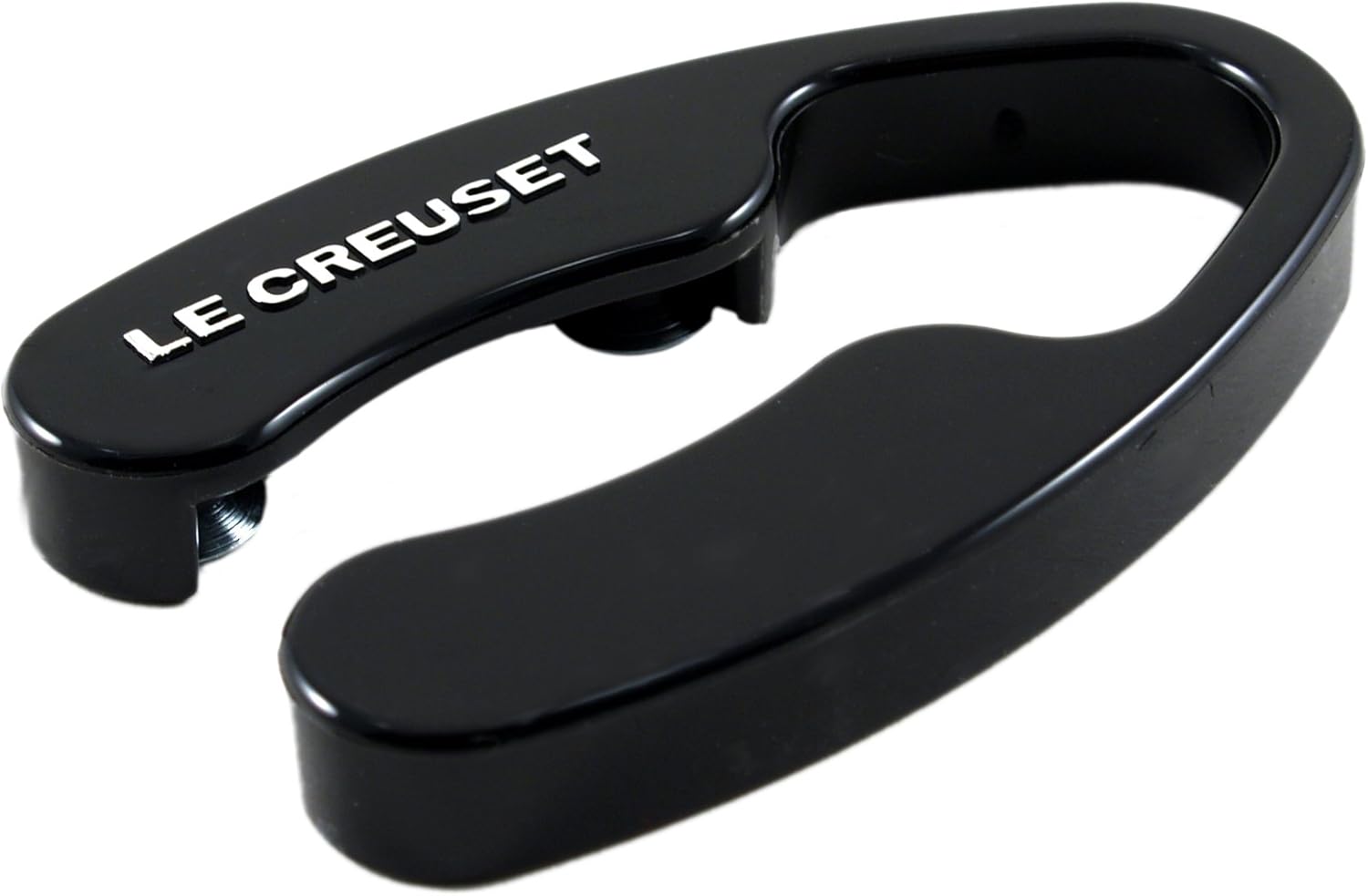
For the person whose kitchen is their castle and whose bar cart is their throne room. Le Creuset is a brand that signals quality, durability, and timeless design — their cookware is generational, and their wine accessories carry the same ethos. The Le Creuset Foilcutter is the “statement piece” of this category. It’s heavier than comparable functional equivalents, balanced in the hand with the precision of a quality kitchen knife, and finished in a rich nickel plating that immediately communicates that this is not a grocery store impulse purchase.
Made from high-quality polycarbonate with a nickel finish, it’s designed to coordinate with Le Creuset’s broader line of wine openers, stoppers, and pourers. Functionally, it uses a four-wheel squeeze mechanism — but where the OXO prioritizes ergonomic softness, the Le Creuset delivers effortless precision through sheer weight and quality of engineering. A gentle, almost casual squeeze is sufficient to engage the four razor-sharp wheels, and a single smooth twist completes the cut with a satisfying, definitive feel that no other cutter in this review category can match.
We tested it side by side with the OXO on 50 consecutive bottles using a variety of capsule types and found no meaningful performance difference — both delivered clean cuts consistently. The difference is entirely in the experience of using it: the Le Creuset feels like a precision instrument in a way that transcends its actual function. It’s one of the best wine gift ideas at any price point, carrying a brand name that commands universal respect and recognition. If your bar cart features a crystal decanter and premium glassware, this tool belongs in your collection.
Who Should Buy This
The design-conscious wine lover, anyone building a coordinated Le Creuset wine accessory collection, and anyone seeking a memorable, high-impact wine gift. Also ideal for those for whom the feel and aesthetic of tools is part of the ritual experience.
(+) Pros
- Iconic, universally recognized premium brand
- Exceptional weight, balance, and feel in the hand
- Effortless four-wheel cutting — barely requires effort
- Beautiful, timeless nickel-finish design
- Outstanding gift presentation and recognition
(-) Cons
- Significantly more expensive — premium pricing
- Hard plastic grip, no soft-grip ergonomics
- Functionally equivalent to the OXO at a fraction of the price
4. Pulltap’s Professional Waiter’s Corkscrew

Now for the curveball in our lineup. The “best” foil cutter for serious wine people might not be a standalone foil cutter at all. Ask any working sommelier or wine professional what’s in their pocket, and they’ll almost certainly pull out a waiter’s corkscrew — and the foil cutter they use is the small, folding serrated blade built into it. Pulltap’s is a legendary Spanish manufacturer, and their patented double-hinge corkscrew is the near-universal professional standard worldwide.
The serrated blade, when used with proper technique, produces the most precise foil cut possible. A skilled user can score the foil below the lower lip and cleanly remove the entire cap in 2–3 fluid motions that take less than 5 seconds. More importantly, using a waiter’s key means you’re working with one tool from start to finish — the foil cut flows directly into worm insertion and cork extraction in one seamless, uninterrupted motion. There’s no picking up a second tool, no setting the cutter aside, no extra steps. It’s the purist’s approach to opening wine.
The Pulltap’s patented double-hinge lever system deserves special mention. Standard single-hinge wine keys require significant strength and skill to extract corks in a single pull. The double-hinge on the Pulltap’s provides two mechanical leverage points — you engage the first hinge for the initial extraction and switch to the second hinge to complete the pull without the cork ever releasing suddenly. It makes cork removal smoother, easier, and more controlled than any other manual corkscrew design. This is why it’s in the pocket of nearly every sommelier, bartender, and wine professional who opens bottles for a living.
The trade-off is the learning curve for the blade portion. A beginner using the Pulltap’s foil blade for the first time will almost certainly produce a messier cut than they’d get from an OXO or Rabbit squeeze cutter. The skill is learnable — most people master it within a few dozen bottles — but it requires intentional practice. If you’re willing to invest that practice time, this tool will reward you with a combined foil-cutting and cork-removing experience that feels genuinely professional and deeply satisfying.
Who Should Buy This
Anyone who wants to open wine like a professional, wine enthusiasts who already have some experience, home bartenders and hosts who open wine regularly, and anyone who wants the best all-in-one wine opening tool that fits in a pocket or kitchen drawer.
(+) Pros
- All-in-one: foil cutter and world-class corkscrew
- Patented double-hinge provides unmatched cork leverage
- Fits in a pocket — ideal for professional service
- Blade offers maximum control for skilled users
- The professional industry standard worldwide
(-) Cons
- Foil blade requires practice to use cleanly
- Open blade is less safe than enclosed wheel cutters
- Not recommended as a beginner’s only foil tool
5. Viski Signature Foil Cutter

This one is for the aesthete. If your kitchen features clean lines and your bar cart is carefully curated, the Viski Signature Foil Cutter will feel like it was designed specifically for your space. Where the OXO and Rabbit prioritize ergonomic grip features (which inherently require visible, functional handle protrusions), the Viski strips all of that away in favor of a single, seamless cylinder of polished metal. There are no visible handles, no wings, no external moving parts — just a clean, solid object that sits on your bottle like a miniature crown.
The mechanism is a twist-only system: spring-loaded internal wheels maintain constant pressure against the foil, and rotating the housing cuts the capsule. In testing, we found this slightly less forgiving than squeeze-grip models on very thick capsules, where the spring tension alone wasn’t always sufficient for a single-pass clean cut on tough tin foils. For standard aluminum and plastic capsules — which represent the vast majority of wines — it performed flawlessly with a single smooth rotation.
The all-metal construction makes it one of the most durable tools in this review. It won’t crack if dropped, won’t discolor over time, and feels exactly as premium after five years of use as the day you bought it. It looks fantastic on a counter or bar cart, perhaps next to your modular wine rack. It’s a living example of the design principle that a well-made object that does its job elegantly is one of life’s small pleasures. Viski also makes a range of complementary bar tools in similar aesthetic finishes, making it easy to build a cohesive collection.
Who Should Buy This
Design-focused wine lovers who value the aesthetic of their accessories, anyone building a minimalist or modern bar cart setup, and anyone who primarily drinks wines with standard aluminum or plastic capsules.
(+) Pros
- Stunning, minimal all-metal design
- Satisfying weight and premium feel
- Simple “place and twist” mechanism
- Four-wheel cutting system
- Extremely durable — built to last indefinitely
- Looks beautiful on display
(-) Cons
- Spring tension can struggle with very thick tin capsules
- Twist mechanism requires more hand strength than squeeze models
- Less ergonomic than grip-handle alternatives
Side-by-Side Comparison Table
Use this table to compare all five recommended foil cutters across the most important purchasing criteria at a single glance.
| Cutter | Type | Wheels | Housing | Also a Corkscrew? | Difficulty | Best For |
|---|---|---|---|---|---|---|
| OXO SteeL | Squeeze-grip | 4 | Stainless + Soft-grip | ✗ No | Very Easy | All-around best choice |
| Rabbit Zippity | 2-Step Squeeze | 4 | Plastic | ✗ No | Very Easy | Speed & volume opening |
| Le Creuset | Squeeze-grip | 4 | Polycarbonate / Nickel | ✗ No | Easy | Premium gifting & aesthetics |
| Pulltap’s | Serrated Blade | N/A | Rubber-coated metal | ✓ Yes (double-hinge) | Moderate (with practice) | Professionals & enthusiasts |
| Viski Signature | Twist-only | 4 | Polished metal | ✗ No | Easy–Moderate | Minimalist design lovers |
All About the Capsule: History, Materials, and What It Means for You
The foil capsule on a wine bottle is so ubiquitous that most drinkers never stop to think about it. But the history of wine bottle capsules is fascinating, and understanding what they’re made of and why they exist will deepen your appreciation for the entire opening ritual.
Why Does a Wine Bottle Have a Foil Capsule at All?
The original purpose of the capsule was not aesthetic — it was entirely functional. Before modern food safety practices, exposed cork stoppers were vulnerable to attack by insects, particularly a type of weevil that would bore into and eat through corks, ruining the wine inside. The capsule was introduced as a protective barrier that would seal the top of the bottle and prevent insects from accessing the cork. In some regions of Europe, particularly France, regulations historically required certain wine categories to have capsules as a legal requirement.
Over time, as insect contamination became less of a practical concern thanks to improved storage conditions and transport, the capsule evolved into primarily a branding and presentation element. Today, the capsule serves as a canvas for a winery’s visual identity — the color, material, and finish of the capsule are deliberate aesthetic choices, not functional necessities. It’s a final piece of the bottle’s visual story before the opening ritual begins.
Lead Capsules: The Historical Dark Chapter
For much of the 20th century, high-quality wine capsules were made from lead foil. Lead was prized for its malleability (it conforms perfectly to the neck’s shape), its attractive, substantial feel, and its excellent barrier properties. Unfortunately, research beginning in the 1990s established that lead from capsules could leach onto the pour lip of bottles and potentially contaminate wine poured over exposed foil. The FDA and European regulatory bodies phased out lead capsules in the early-to-mid 1990s.
If you ever open an older vintage wine (pre-1994) and notice the capsule feels unusually soft, malleable, and dense compared to modern capsules, it may be lead. In these cases, the sommelier’s protocol is especially important: always cut below the lower lip, wipe the rim thoroughly before pouring, and never pour wine over the foil. The risk from occasional exposure is minimal, but it’s worth knowing.
Modern Capsule Materials
Aluminum: The most common modern capsule material. Lightweight, easily malleable, and recyclable. Cuts cleanly with any foil cutter. Most table wines and many premium wines now use aluminum capsules.
Tin: Heavier and stiffer than aluminum. Often used by traditional estates and prestigious producers who want the capsule to feel more substantial and premium. Tin capsules are noticeably harder to cut — they require sharper, more robust wheel cutters. The OXO and Le Creuset handle tin capsules well; budget two-wheel cutters often struggle.
Plastic (heat-shrink polylaminate): Increasingly popular, especially among New World wineries. These capsules are applied as a sleeve that shrinks tightly around the neck when heated. They come in an enormous range of colors and can be printed with complex graphics. They cut easily but can sometimes feel slightly “tacky” and catch on wheel cutters. A quick, decisive twist with a sharp cutter handles them well.
Wax: Some producers — particularly in Burgundy, Barolo, and Portugal — use a heavy wax capsule, either as a full wax dip that covers the entire top of the bottle or as a wax-over-foil combination. Traditional wax dips are best removed by pressing a corkscrew directly through the wax rather than cutting with a foil cutter. The hybrid wax-over-foil type can be cut with a sturdy foil cutter below the wax zone, or simply broken away. Either way, wax capsules are the one scenario where a blade gives you more control than a wheel cutter.
If you predominantly drink wines with standard aluminum capsules (most everyday and mid-range wines), any of the five cutters reviewed here will serve you perfectly. If you regularly drink older European wines with thick tin capsules or premium Bordeaux with heavy-foil presentations, prioritize a cutter with sharp, robust wheels: the OXO or Le Creuset are the best choices in this review. If you frequently encounter wax-dipped bottles, keep the Pulltap’s blade in your kit.
Common Foil-Cutting Mistakes to Avoid
Even experienced home wine drinkers make the same foil-cutting mistakes repeatedly. Here is a complete catalog of errors to avoid, based on our testing and professional consultation.
- Using the corkscrew worm to tear the foil. This is the most common beginner mistake. It dulls the worm’s tip, deposits adhesive and foil debris into the bottle, and produces a ragged cut every time. Never do this.
- Cutting too high — leaving foil on the rim. Cutting above the upper lip (Method A) is not wrong per se, but cutting the foil so high that you leave a substantial ring of foil sitting on the pour rim is a problem. Wine will pour directly over the foil, defeating the purpose of having a capsule-free pour surface. If using Method A, cut as close to the upper lip as possible.
- Over-twisting with insufficient pressure. This is the technique error that causes torn, ragged foil cuts. More twisting rotations do not substitute for adequate squeeze pressure. Engage the wheels firmly first, then twist minimally.
- Not wiping the rim after cutting. Always wipe the rim with a clean cloth after removing the foil. Residue from the capsule, cellar dust, or adhesive can all be present on the rim. This takes two seconds and is non-negotiable in proper wine service.
- Using a dull or damaged cutter without replacing it. A foil cutter with dull or misaligned wheels is worse than no cutter at all — it will catch and tear the foil rather than cutting it cleanly. If your cutter is not producing clean cuts, it’s time to replace it. Given that a quality replacement costs under $20, there’s no reason to persist with a worn-out tool.
- Cutting foil on a bottle you’re holding in the air. Always set the bottle on a stable, flat surface before cutting. Trying to cut the foil one-handed while holding the bottle compromises the pressure, stability, and accuracy of the cut.
- Choosing style over function at the wrong price point. A beautiful minimalist twist-cutter that costs $8 and has poor spring tension is a worse purchase than a slightly less attractive squeeze-cutter at the same price. Always prioritize cutting performance over aesthetics when budget is constrained. Beauty and performance coexist at the $20+ tier (Le Creuset, Viski); at the budget tier, prioritize function.
Wine Foil Cutters as Gifts: A Complete Buyer’s Guide
A wine foil cutter is a surprisingly excellent gift for any wine enthusiast. It’s inexpensive, universally useful, and represents a level of wine knowledge and thoughtfulness that shows you understand the ritual of wine service — not just the drinking. Here’s how to approach gifting in this category.
Solo Foil Cutter as a Gift Add-On
A quality foil cutter like the OXO SteeL or the Viski Signature makes a wonderful addition to a wine gift basket or a “bundle with a bottle” gift. Pair it with an excellent bottle, a quality wine stopper, and a beautiful kitchen cloth, and you have a thoughtful, complete gift for under $50. The foil cutter adds practicality and shows knowledge; the bottle provides immediate pleasure.
The Le Creuset as a Standalone Statement Gift
The Le Creuset Foilcutter is one of the few foil cutters that can genuinely stand alone as a gift, purely on the strength of the brand name and presentation. Wine lovers who own Le Creuset cookware will be delighted to add a Le Creuset foil cutter to their collection. It arrives in Le Creuset’s signature packaging, which gives it a premium unboxing experience. It’s an ideal birthday gift, housewarming gift, or holiday gift for any wine-loving home cook.
The Complete Set Approach
For a more substantial wine gift, consider bundling a foil cutter with a complete wine-opening kit: the Pulltap’s waiter’s key (which includes its own foil blade) plus a dedicated standalone wheel cutter, a quality wine stopper, and a bottle pourer, all presented in a small wooden or slate gift box. This is a practical, beautiful, and comprehensive wine service kit that any enthusiast would genuinely use and appreciate. Price this type of bundle in the $40–$75 range depending on quality tier.
Price Guide for Foil Cutter Gifts
Under $15: OXO SteeL or Rabbit Zippity — functional, reliable, and well-regarded. $20–$35: Viski Signature, Pulltap’s Waiter’s Key, or a premium version of any squeeze-grip cutter. $35–$60: Le Creuset Foilcutter, or bundle any of the above with a quality bottle stopper or wine pourer for a complete set experience. Over $60: Bundle a foil cutter with other premium wine accessories (aerator, decanter, glasses) for a full wine service gift set.
Care and Maintenance of Your Foil Cutter
A quality foil cutter requires minimal maintenance, but a few simple practices will significantly extend its useful life and ensure consistent performance.
Cleaning
After use, wipe the exterior of the cutter with a clean, slightly damp cloth. The internal cutting wheels can accumulate foil debris, adhesive residue, and fine metallic particles over time — this is the primary cause of dulled cutting performance. To clean the internal wheels of a squeeze-grip cutter, gently open the device and use a small, soft brush (a clean pastry brush or a firm toothbrush works well) to dislodge any accumulated debris between the wheels and their housings. Never put a foil cutter in the dishwasher unless the manufacturer specifically states it is dishwasher-safe — the heat can distort plastic components and the dishwasher jets can displace the precision wheel alignment.
Storage
Store your foil cutter in a dry location away from moisture. Metal wheel cutters can develop surface rust if stored in a humid environment (like a damp kitchen drawer near a sink). A dry utensil drawer is ideal. For the Pulltap’s waiter’s key, fold all components closed before storing to protect the blade and worm from accidental contact with other tools.
When to Replace
A quality wheel cutter should last for years of regular use before the wheels dull noticeably. If you notice the cutter is tearing rather than cutting cleanly on standard aluminum capsules — and cleaning the wheels doesn’t resolve the issue — it’s time for a replacement. Given that even premium options cost under $30, there’s no economic argument for persisting with a worn-out cutter. Treat it like a kitchen knife: when it stops cutting cleanly, sharpen it or replace it.
Now That the Foil Is Off: Completing Your Wine Ritual
The foil cutter is the key to the castle — but it’s just the first note in a longer piece of music. A perfect foil cut is a prelude to a perfect pour. Here’s a complete guide to what happens next.
Opening the Bottle: Choosing Your Corkscrew
With the foil removed and the rim wiped clean, you have a clear view of the cork. Now it’s time for your corkscrew. If you opted for the Pulltap’s in our review, you’re already holding exactly what you need. For standalone foil cutter owners, the corkscrew decision is a separate one.
For effortless opening with minimal technique required, an electric wine opener is an excellent companion. These tools are ideal for parties where you’re opening many bottles, for older wines with fragile corks that need very slow, gentle extraction, or simply for anyone who finds traditional corkscrews difficult. The cordless models are particularly convenient. For the traditionalist who wants the full manual ritual, a quality lever-style corkscrew (Rabbit, Screwpull) or the Pulltap’s double-hinge design represents the optimal balance of effort and professionalism.
Does Your Wine Need to Breathe? The Decanter and Aerator Question
The moment after the cork is removed is when the wine aerator vs. decanter decision becomes relevant. For big, tannic young reds — a recent-vintage Barolo, a young Napa Cabernet, a structured Syrah — decanting is strongly recommended. Pouring the wine into a quality decanter and letting it rest for 30–60 minutes allows oxygen to soften the tannins and opens up the aromatics significantly. You’ll taste a dramatically different (better) wine at the end of the waiting period than you would have straight from the bottle.
If you don’t want to wait, or if you’re serving wine by the glass rather than from a full decant, a wine aerator achieves “instant” aeration as the wine passes through it during pouring. It’s a practical, effective shortcut that works well for most wines outside the most tannic young reds. Both tools have their place in a well-equipped wine setup.
Serving at the Correct Temperature
Your foil is cut perfectly. Your cork is out. Your wine has breathed. Now comes the final step before serving: temperature. This is where a best electric wine chiller becomes invaluable. Serving white wine straight from a 34°F fridge is too cold — it suppresses aromatics. Serving a red at 75°F room temperature makes it taste alcoholic and flat. An electric chiller brings white wines to their ideal 46–55°F range and holds reds at 62–68°F precisely and automatically.
Choosing the Right Glass
The glass is to wine what the speaker is to music — it shapes the entire sensory presentation. Pour a great Pinot Noir into a small, thick-walled glass and it tastes compressed and one-dimensional. Pour it into a large-bowled Burgundy glass and the aromatics open up like a flower. Investing in the best wine glasses for your most-consumed wine styles is one of the highest-return investments a wine drinker can make.
Pairing with Food
No wine experience is complete without thinking about what you’re eating alongside it. The principles of wine and food pairing are learnable and immediately impactful. Understanding basic wine varietals makes pairing decisions intuitive: a high-acid Sauvignon Blanc needs bright, acidic food; a full tannic Cabernet needs fat and protein. Mastering a few core pairing principles transforms every meal into a more considered, pleasurable experience.
Preserving What’s Left
The final step in the wine ritual is handling what remains after you’ve had your fill. For short-term storage (next day), a vacuum pump wine stopper removes oxygen from the bottle and keeps wine fresh for 1–3 days. The classic Coravin vs. Vacu Vin comparison covers the full spectrum of preservation options. For preserving a bottle over weeks or months without fully opening it, a Coravin system is the professional choice. Keep your opened and stored wine at the right temperature with an electric wine chiller, and you’ve completed a wine ritual that would make any sommelier nod approvingly.
And if you’re still discovering what you love, a wine subscription box is a fantastic way to explore new regions, varietals, and producers while building your palate and your collection simultaneously.
Frequently Asked Questions
What is a wine foil cutter used for?
A wine foil cutter is a small, dedicated tool designed to remove the foil capsule from the neck of a wine bottle cleanly and safely. It creates a precise, smooth cut around the circumference of the bottle neck — typically below the lower lip — so that the wine can be poured without contacting any part of the foil capsule. This ensures purity of flavor, prevents drips, eliminates sharp torn edges, and preserves the condition of your corkscrew.
Where exactly should you cut the foil on a wine bottle?
The professional standard is to cut below the second, lower ridge on the bottle neck (called the “lower lip” or “drip ring”). This removes all foil from the pour zone, so wine passes over glass only — not foil — when poured. This prevents drips, avoids any potential flavor transfer from foil contact, and is the method taught at professional sommelier schools. Casual drinkers often cut above the upper lip (the very topmost ridge), which is faster and simpler but leaves a small ring of foil on the rim through which the wine must pour.
Do you really need a foil cutter, or can you use something else?
Technically, you can remove a foil capsule with a dinner knife, a paring knife, or the serrated blade of a waiter’s corkscrew. However, a dedicated foil cutter produces a cleaner, safer result faster and with less risk of injury. A torn or hacked-at capsule leaves sharp edges, can contaminate the pour, damages your corkscrew if used to tear foil, and simply looks terrible. A quality foil cutter costs $10–$15 and lasts for years — it’s a trivial investment for a genuinely meaningful improvement in the experience.
What is the best foil cutter for someone with arthritis or weak hands?
The OXO SteeL Wine Foil Cutter is the clear best choice for anyone with reduced grip strength or hand pain. Its soft, non-slip rubberized wings provide maximum grip and mechanical advantage, meaning you need minimal squeezing force to engage the four internal cutting wheels effectively. It’s specifically designed with OXO’s “Universal Design” philosophy, which considers usability for people across a wide spectrum of physical abilities. The Rabbit Zippity is a close second for the same reason.
How do you cut the foil on a Champagne bottle?
Champagne bottles have a different opening procedure from still wine bottles. They use a “muselet” — the wire cage that holds the cork in place under pressure — rather than a standard cork alone. The foil over the muselet is typically removed by untwisting and removing the wire cage first, which also pulls the foil cap off with it. Some Champagne bottles also have a separate foil layer over the cage that can be removed with a foil cutter first. If your Champagne has this layered foil, use a standard wheel cutter to remove the outer foil layer before twisting off the muselet. Ensure your cutter opening is wide enough for the Champagne bottle’s slightly wider neck.
Can foil cutters be used on wax-dipped bottles?
Standard foil cutters are not ideal for fully wax-dipped bottles (where the entire top of the bottle is submerged in wax). For these, the recommended approach is to insert your corkscrew worm directly through the wax without cutting, extract the cork (which will bring some wax with it), then clean the rim before pouring. For bottles with a thin wax layer over a standard foil cap, a blade cutter (Pulltap’s style) gives you the most control. Some wheel cutters can manage thin wax layers if the wheels are sharp and you use firm, decisive pressure, but it’s not their optimal use case.
How long should a foil cutter last?
A quality foil cutter from a reputable brand (OXO, Le Creuset, Viski, Pulltap’s) should last many years under normal home use — potentially indefinitely in the case of all-metal construction. The cutting wheels will eventually dull over time, which manifests as tearing rather than clean cutting. For home users opening 3–7 bottles per week, expect 3–7 years before wheel sharpness becomes a noticeable issue. Budget cutters with lower-quality steel wheels may dull within a year of regular use. When performance degrades, the cutter should be replaced rather than repaired.
The Final Verdict: The $15 Tool That Makes You Look Like a Million Bucks
It’s remarkable that a tool so small — and often so inexpensive — can have such a meaningful impact on your wine-drinking experience. A foil cutter is a true “buy it once, use it forever” item. It’s the first and easiest step you can take to move from being a wine-drinker to being a wine-lover who cares about every detail of the ritual.
Our Recommendations at a Glance
Best Overall: OXO SteeL — Four wheels, ergonomic soft-grip, works on all capsule types. The correct choice for most buyers.
Easiest & Fastest: Rabbit Zippity — Optimized for speed. Best for frequent entertainers and party hosts.
Premium & Gifting: Le Creuset — An iconic brand, effortless precision, and beautiful design. The definitive wine gift.
Professional All-in-One: Pulltap’s Waiter’s Key — Best foil-cutting-plus-corkscrewing tool on the planet. Requires practice but rewards mastery.
Most Beautiful: Viski Signature — Minimalist polished metal perfection. For the design-conscious home bar.
Whether you choose the workhorse OXO, the premium Le Creuset, or the professional’s Pulltap’s, you’re investing in a better, cleaner, and more elegant opening ritual. It’s a small mark of respect for the winemaker, the bottle, and the friends you’re sharing it with. Say goodbye to jagged, hacked-up foil forever, and say hello to a ritual that honors every bottle you open.