Chill Out: The 5 Best Electric Wine Chillers for the Perfect Pour
There are few culinary sins as common—or as tragic—as serving a great bottle at the wrong temperature. An electric wine chiller solves that problem permanently. Here’s everything you need to know.
📋 What’s Inside This Guide
- Why Serving Temperature Matters More Than You Think
- Types of Electric Wine Chillers Explained
- The Science of Chill: How Electric Coolers Work
- The Complete Buyer’s Guide: What to Look For
- The Top 5: In-Depth Reviews
- Side-by-Side Comparison Table
- The Ultimate Wine Temperature Guide
- Which Chiller Is Right for Your Lifestyle?
- Expert Tips for Getting the Most from Your Chiller
- Common Mistakes to Avoid
- Electric Wine Chiller vs Wine Fridge: Which Do You Need?
- Gifting a Wine Chiller: What to Consider
- Care, Cleaning, and Maintenance
- Frequently Asked Questions
- The Final Verdict

Why Serving Temperature Matters More Than You Think
There are few culinary sins as common—or as quietly devastating—as serving a good bottle of wine at the wrong temperature. A beautiful, crisp Sauvignon Blanc served warm becomes flabby and lifeless. A complex, elegant Pinot Noir served at room temperature tastes soupy and alcoholic. Temperature isn’t just a suggestion; it’s a critical component of a wine’s flavor architecture. While ice buckets are messy and refrigerators are imprecise, the electric wine chiller has emerged as the ultimate tool for the modern enthusiast.
I was hosting a summer barbecue and had what I thought was a brilliant idea. I’d bought a fantastic, slightly-oaked Chardonnay to pair with grilled chicken. I put it in the fridge in the morning, confident it would be perfectly chilled by the time guests arrived. But the day was chaotic. The fridge was constantly being opened for drinks and condiments. By the time I pulled out the Chardonnay, it was barely cooler than room temperature.
I plunged it into a makeshift ice bucket, but it was too little, too late. I ended up pouring glasses of lukewarm, underwhelming wine. The bright acidity was gone; the subtle oak notes were muddled by the warmth. It was embarrassing, and it was entirely avoidable.
That night, I vowed to never let temperature ruin a good bottle again. My research led me to the world of electric wine chillers. I was intrigued by the promise of a “set it and forget it” solution. The first time I used one—a simple countertop model—and it held a bottle of rosé at a perfect, crisp 50°F for an entire evening, I was hooked. This guide is for anyone who has ever suffered through a glass of warm Chardonnay and is ready for a better way.
The Temperature-Flavor Connection: A Quick Science Lesson
Serving temperature directly affects how aromatic compounds volatilize off the wine’s surface, how tannins feel on your palate, and how acidity registers on your tongue. Warm wine amplifies the perception of alcohol, making it taste “hot” and unbalanced. Overly cold wine suppresses aromatics and makes tannins feel harsh and grippy. The sweet spot is narrow—often just a 5–10 degree range—and an electric chiller is the only device that can reliably hit and hold it.
Types of Electric Wine Chillers Explained
Not all wine chillers are created equal. Before diving into specific product reviews, it’s important to understand the fundamental categories. Choosing the wrong type for your needs is the most common mistake buyers make. Here is a complete breakdown of every type of wine chiller on the market today.
1. Thermoelectric Single-Bottle Countertop Chillers
These are the classic “electric wine chiller” — a sleek sleeve or cradle that holds one standard 750ml bottle. They use the Peltier effect (more on this below) to actively draw heat from the bottle and maintain a set temperature. They are typically the quietest option, have no moving parts, and are ideal for someone who opens one bottle at a time and wants it at a perfect, consistent temperature throughout the evening. The Waring Pro reviewed in this guide is the best example of this category.
2. Multi-Bottle Thermoelectric Coolers
These are essentially compact wine refrigerators that use thermoelectric technology instead of a compressor. They hold anywhere from 4 to 18 bottles and maintain a consistently cool internal temperature. They are ideal for the serious wine drinker who wants to keep a small collection ready to serve at any time. Unlike a full-size wine fridge, they’re compact enough to sit on a countertop or in a cabinet. The Cuisinart Private Reserve 8-Bottle Cooler is the standout in this category.
3. Rapid-Chill Active Chillers
These machines are in a completely different performance category. Rather than using thermoelectric cooling, they combine rotation and contact with ice water to actively and rapidly pull heat from a bottle. They can take a room-temperature bottle from 77°F to 43°F in minutes. The Cooper Cooler is the definitive product in this space. They are not designed for long-term temperature maintenance but for on-demand, emergency chilling when time is of the essence.
4. Vacuum-Insulated Passive Chillers
These devices don’t use any electricity and have no active cooling mechanism. Instead, they use advanced vacuum-insulation technology — the same technology found in premium Yeti or Hydro Flask tumblers — to maintain the temperature of a bottle that is already cold. They are beautiful, portable, and completely mess-free (no condensation, no ice). The Huski Wine Chiller Bucket and the thermal component of the Oster set are examples of this type. They are excellent for tableside service but cannot bring a warm bottle down to temperature.
5. Combination Sets
These are gift-oriented packages that bundle a wine opener (usually electric) with a passive chiller and sometimes a foil cutter and wine stoppers. The Oster Electric Wine Opener and Chiller Set is the best example. These sets are less about optimizing a single function and more about providing a complete, cohesive, beautiful wine experience as a gift or a lifestyle accessory.
The Key Distinction: When shopping, always determine whether you need an active chiller (one that actually lowers the temperature of a warm bottle) or a passive chiller (one that simply maintains the temperature of an already-cold bottle). Confusing these two types is the single most common source of buyer’s remorse in this category.
The Science of Chill: How Electric Coolers Work
Understanding the technology behind these devices is key to appreciating their value and knowing their limitations. Unlike a wine fridge that uses a compressor and refrigerant like a standard refrigerator, most single-bottle and multi-bottle countertop wine chillers use a quiet, efficient technology called thermoelectric cooling.
- The Peltier Effect: At the heart of the chiller is a thermoelectric module. When an electric current is passed through it, one side of the module gets cold while the other side gets hot. This is called the Peltier effect, named after the French physicist Jean Charles Athanase Peltier who discovered it in 1834.
- Heat Transfer: The cold side is connected to the metal chamber that holds your wine bottle, drawing heat away from the wine through direct thermal contact. The more efficiently this contact is made, the faster and more effectively the bottle is chilled.
- Heat Dissipation: The hot side is connected to a heat sink and a small, quiet fan that dissipates the accumulated heat into the surrounding air. This is why a thermoelectric chiller will feel slightly warm on the outside — it’s working correctly.
The benefits of this system are significant: it’s virtually silent, has no moving parts (besides the fan), is vibration-free (which is crucial for wine, as vibration disturbs sediment and can degrade quality over time), and is very energy efficient. It’s a key technology in modern eco-friendly wine storage solutions.
Thermoelectric vs. Compressor Cooling
Compressor cooling, the technology found in your kitchen refrigerator and full-size wine fridges, uses a refrigerant gas that is compressed and then allowed to expand, which absorbs heat in the process. It is significantly more powerful and can cool to much lower temperatures than thermoelectric systems. However, it also creates vibration, generates noise, and consumes more electricity. For single-bottle or small multi-bottle applications where the goal is to reach and maintain a specific serving temperature (not store wine for years), thermoelectric is superior in every way that matters for the experience.
How Rapid Chillers Work Differently
Rapid chillers like the Cooper Cooler operate on a fundamentally different principle: convective heat transfer. By rotating the bottle, the wine inside is kept in constant motion, which means the entire volume of liquid is continuously brought into contact with the cold inner walls of the bottle. This process is dramatically more efficient than leaving a bottle stationary in ice water, where a layer of cold wine at the glass surface acts as insulation and slows cooling. The rotation eliminates this insulating layer, making the heat transfer continuous and rapid. It’s physics, and it’s why the Cooper Cooler can chill a bottle in 6 minutes what would take a standard ice bucket 20-30 minutes.
The Complete Buyer’s Guide: What to Look For
With so many options on the market, it can be difficult to know which features truly matter and which are marketing fluff. After extensive testing, here are the criteria we believe every buyer should evaluate before making a purchase decision.
1. Cooling Power and Temperature Range
The most important specification is the temperature range. Most thermoelectric single-bottle chillers can reach temperatures between 39°F and 68°F (4°C–20°C). This covers virtually the entire spectrum of wine serving temperatures, from sparkling wine to full-bodied red. Be wary of budget models that can only cool to 50°F or below — they won’t be useful for maintaining cooler temperatures like those required for sparkling wines and Champagne.
Also consider the temperature differential — thermoelectric coolers can typically only cool 20–40°F below the ambient room temperature. If your kitchen is 85°F in summer, a cooler that normally reaches 45°F in a 70°F kitchen might only get down to 55°F on a hot day. In very warm environments, this can be a meaningful limitation.
2. Active vs. Passive: Know Your Needs
As discussed above, this is the most fundamental question. If you’re disciplined enough to always remember to put your wine in the fridge an hour or two before serving, then a passive chiller might be all you need. But if you’re a spontaneous opener — the type who decides at 7pm that you want a cold glass of white by 7:30pm — you absolutely need an active chiller (thermoelectric or rapid-chill). Be honest with yourself about your habits.
3. Bottle Compatibility
Standard 750ml Bordeaux-style bottles (the classic shape for Cabernet Sauvignon, Merlot, Chardonnay, and most popular wines) will fit in virtually every chiller. But if you regularly drink Burgundy-style bottles (the broader-shouldered shape used for Pinot Noir and many white Burgundies), Champagne bottles (which are particularly wide and heavy), or large-format bottles like Magnums, you need to verify compatibility before buying. Many single-bottle chillers only accommodate standard Bordeaux bottles.
4. Temperature Display and Controls
A clear, accurate temperature display is important because it tells you not just where you set the temperature, but what the actual current temperature of the chamber is. This lets you know when your wine has reached its target and is ready to serve. Touch controls are sleek and modern, while dial controls are more tactile and intuitive. The Waring Pro takes this a step further with its pre-programmed varietal settings, which removes the need to know exact temperature numbers at all.
5. Noise Level
For a countertop device that will sit near your dining table, noise level matters significantly. Thermoelectric chillers are generally very quiet — just a soft hum from the cooling fan. Rapid chillers like the Cooper Cooler are louder because they operate as an active machine with rotating parts and a water pump. Passive chillers make no noise at all. If you’ll be using the chiller during dinner conversations or quiet evenings, a thermoelectric or passive model is strongly preferable.
6. Form Factor and Aesthetics
A wine chiller will sit on your countertop. It should look good there. Designs range from sleek brushed stainless steel that fits into a modern kitchen to more traditional chrome and black finishes. Passive insulated buckets like the Huski are arguably the most universally beautiful objects in this space, while multi-bottle units like the Cuisinart have a more appliance-like footprint that trades visual elegance for functional capacity.
7. Price and Value
Electric wine chillers span an enormous price range, from under $50 for basic passive insulators to several hundred dollars for precision multi-bottle systems. In general, you get what you pay for in terms of build quality, temperature accuracy, and longevity. The sweet spot for most buyers is the $80–$180 range, where you can get a genuinely excellent thermoelectric chiller with precise controls and a durable build. We’ve curated our list to cover the best options at every relevant price point.
- Determine if you need active or passive cooling — Do you always remember to chill wine ahead of time, or do you need on-demand cooling?
- Count how many bottles you typically serve at once — Single-bottle units are perfect for most home use; frequent entertainers should consider multi-bottle models.
- Identify your primary wine types — White/sparkling drinkers need chillers that reach 38–45°F; red wine drinkers need coverage up to 65–68°F.
- Check bottle shape compatibility — If you regularly drink Burgundy or Champagne, verify your chiller can accommodate those shapes.
- Consider your environment — A very warm kitchen limits the performance of thermoelectric coolers. Consider a rapid chiller or insulated passive bucket in hot climates.
- Set your budget — The best value options are in the $80–$180 range; passive insulators start much lower for a different use case.
The Top 5: In-Depth Reviews of the Best Electric Wine Chillers
1. Cuisinart Private Reserve 8-Bottle Countertop Cooler
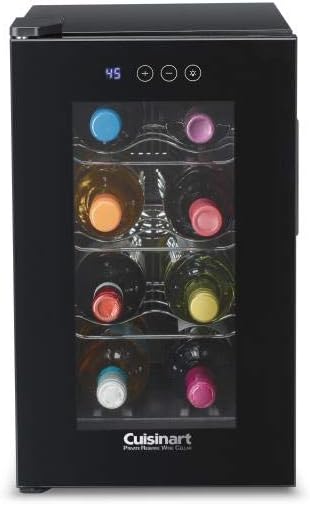
While a single-bottle chiller is great for the occasional glass, the Cuisinart Private Reserve offers a massive leap in functionality for a very reasonable price. This isn’t just a chiller; it’s a compact, 8-bottle wine cellar for your countertop. Using efficient thermoelectric cooling, it allows you to set a precise temperature (between 39°F and 68°F) and hold up to eight bottles in perfect serving condition.
The touch-screen controls are intuitive and responsive, and the soft interior lighting showcases your collection beautifully, turning it into a small display piece as much as an appliance. The wire shelving is well-designed and can be adjusted to accommodate different bottle heights and neck shapes.
This model is the perfect solution for the serious wine drinker who doesn’t have the space or need for a full-size wine fridge but wants to keep multiple bottles ready to serve. You can keep your whites and rosés perfectly chilled alongside reds that are held at a cool cellar temperature. It’s a game-changer for anyone serious about proper wine storage at home and is a cornerstone of any well-stocked collection of wine cellar essentials.
Who is this best for?
The wine enthusiast who wants to keep a small collection of various wines at their ideal serving temperatures simultaneously. Also ideal for frequent dinner hosts who want to have both a red and white always ready to pour.
- Stores and chills up to 8 bottles simultaneously
- Precise, adjustable temperature control (39–68°F)
- Quiet and vibration-free thermoelectric cooling
- Sleek design with touchscreen and interior lighting
- Excellent value for a multi-bottle cooler
- Fits both Bordeaux and many Burgundy-style bottles
Pros
- Takes up more counter space than single-bottle models
- May not fit oversized Champagne bottles or Magnums
- Single temperature zone (all bottles held at same temp)
Cons
2. Oster Electric Wine Opener and Chiller
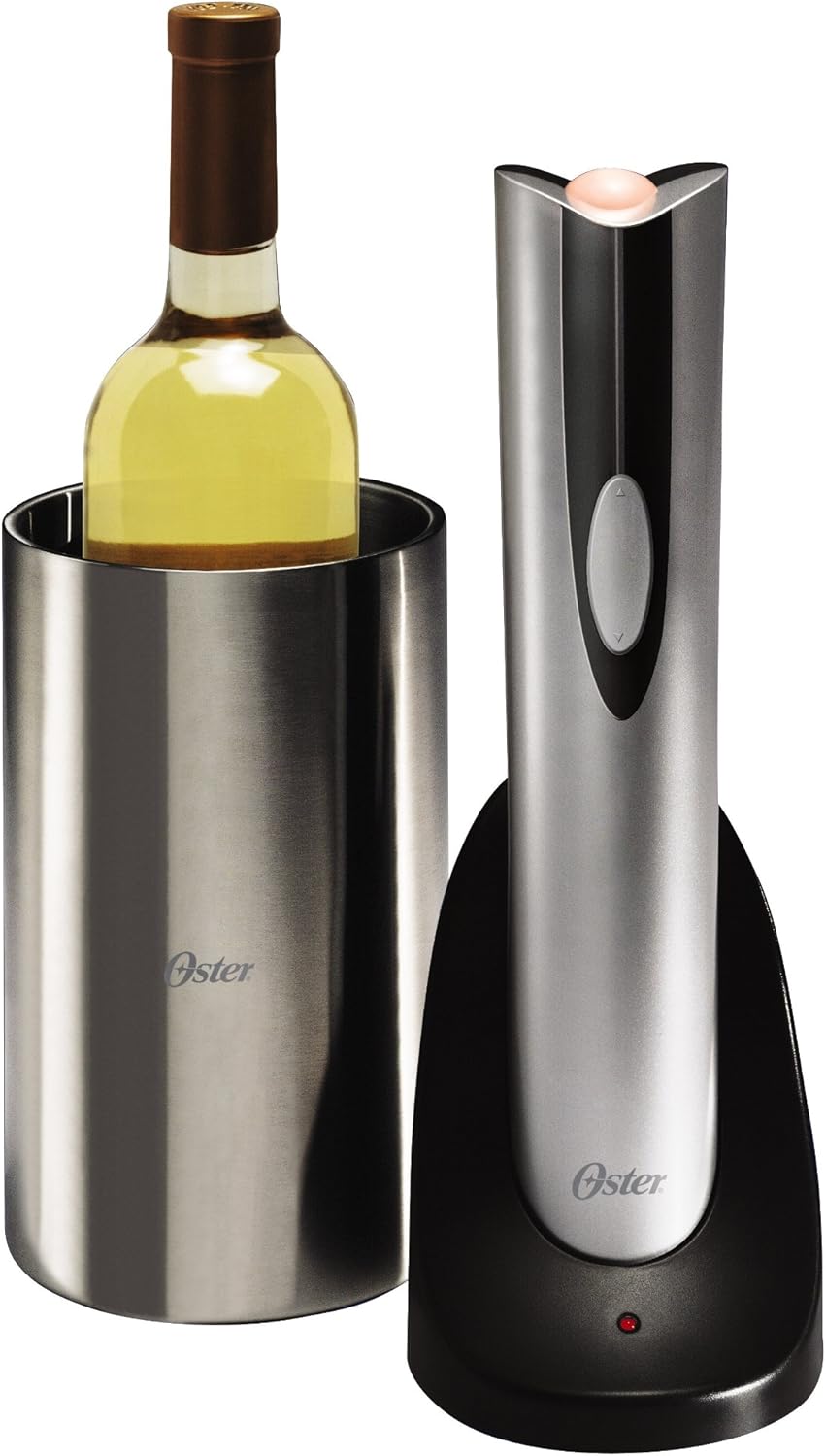
This offering from Oster is less a single device and more a complete wine-opening experience. The centerpiece is a cordless electric wine opener that effortlessly removes corks with the push of a button. It comes with a foil cutter and a charging base. But the brilliant addition is the included thermal wine chiller — a handsome stainless steel vacuum-insulated bucket that keeps a pre-chilled bottle cold for hours without any ice, power, or condensation.
While it doesn’t actively chill a warm bottle, it excels at maintaining the temperature of a bottle you’ve just taken out of the fridge. For a dinner party or an evening on the patio, this function is absolutely ideal — you pull your chilled bottle from the fridge, slip it into the chiller, and it stays at serving temperature for hours.
As a complete package, it’s one of the absolute best wine gift ideas you can find, providing several essential tools in one stylish set. The matching aesthetic between the opener and the chiller gives it a premium, coordinated look that’s far more impressive than individual pieces.
Who is this best for?
Anyone looking for the perfect wine gift set, or the host who needs a stylish and effective way to keep an already-chilled bottle cold at the table without ice or mess.
- Complete set: opener, foil cutter, and chiller in one
- Chiller requires no ice and creates zero condensation
- Excellent at maintaining chill temperature for hours
- Sleek, coordinated stainless steel design
- Incredible value as a bundled gift set
Pros
- Chiller is passive — cannot actively cool a warm bottle
- Electric opener battery life requires regular charging
- Not ideal for impulsive, spontaneous bottle opening
Cons
3. Waring Pro Professional Wine Chiller

For the wine lover who appreciates precision, the Waring Pro is a fantastic single-bottle thermoelectric chiller. Its standout feature is its library of pre-programmed temperatures for 33 different wine varietals, from Chardonnay to Chianti to Cabernet. You simply scroll through the blue-backlit screen, select your wine, and the chiller automatically cools the bottle to its ideal, expert-recommended serving temperature.
The device also allows manual temperature adjustment for those who have a specific preference outside the pre-programmed settings. Its thermoelectric system is reliable and quiet, making it ideal for use during dinner. The elegant cylinder form factor means it takes up minimal counter space while making a visual statement. The cooled interior is lined with a fine-ribbed metal that ensures maximum contact with the bottle for efficient heat transfer.
This device takes all the guesswork out of serving temperatures. Whether you’re opening an exciting find from a wine subscription box or an old favorite, the Waring Pro ensures it’s presented at its absolute best. We found its temperature readings to be consistently accurate within ±1°F of the displayed target — exceptional precision for a countertop device.
Who is this best for?
The wine enthusiast who wants foolproof, expert-calibrated temperature control for a wide variety of wines without needing to memorize temperature charts or consult reference guides.
- Pre-programmed temperatures for 33 wine varietals
- Precise thermoelectric cooling (±1°F accuracy)
- Elegant, compact design with easy-to-read LCD
- Quiet and efficient — barely audible during dinner
- Manual override for custom temperature setting
Pros
- Only holds one standard 750ml bottle at a time
- Slower to chill a room-temperature bottle vs. an ice bath
- Does not accommodate wider Burgundy-style bottles well
Cons
4. Cooper Cooler Rapid Beverage Chiller

What if you forgot to chill the wine and your guests arrive in 10 minutes? The Cooper Cooler is your emergency solution. This isn’t a passive chiller or even a conventional thermoelectric model — it’s an active, rapid-cooling machine that operates on a different principle entirely. It works by rotating your bottle horizontally while simultaneously spraying it with ice-cold water. This combination of rotation and convective heat transfer is dramatically more effective than any other portable chilling method.
The numbers are genuinely impressive: it can chill a 750ml bottle of wine from room temperature (77°F) down to refrigerator temperature (43°F) in approximately 6 minutes. A can of beer or soda is ready in just one minute. In our testing, we found these claims to be accurate within about 30-60 seconds depending on the starting temperature and the freshness of the ice.
It solves the practical problem of how to store wine without a wine fridge and still serve it cold on demand. An important feature is its gentle rotation mode for carbonated beverages — it spins the bottle slowly enough that there’s no risk of it fizzing over when opened, which is a real concern with other rapid-chill methods.
Who is this best for?
The frequent entertainer, the forgetful host, or anyone who values speed above all else and wants the ability to chill a bottle to the perfect temperature in minutes rather than hours.
- Chills a full wine bottle in approximately 6 minutes
- Chills cans of beer or soda in just 1 minute
- Special gentle mode for carbonated beverages
- Simple, intuitive push-button operation
- Works with a variety of bottle sizes and shapes
Pros
- Requires a supply of ice and water to operate
- Noticeably louder than thermoelectric models
- Not designed for ongoing temperature maintenance
- Larger footprint due to ice/water chamber
Cons
5. Huski Wine Chiller Bucket

Similar to the thermal component of the Oster set, the Huski is a high-performance passive chiller — but it has been internationally recognized for its stunning design and engineering quality. Made from marine-grade stainless steel with double-walled vacuum insulation, it’s built like a premium Yeti tumbler for your wine bottle. It will keep a pre-chilled bottle cold for up to 6 hours without any ice, condensation, or power.
The standout design feature is the adjustable flex-lock top, which expands to fit most bottle shapes — from standard Bordeaux to wider Burgundy profiles — and holds them securely so the bottle won’t tip or fall when the bucket is moved. The exterior stays completely dry; there is no sweating or dripping, making it ideal for tablecloths and outdoor furniture.
For pure, simple, and beautiful temperature maintenance, the Huski is a champion. It’s perfect for bringing a bottle of organic wine out to the patio, keeping a Champagne cold through an entire multi-course dinner, or traveling with wine to a picnic or park. The minimalist design aesthetic fits in any decor, from modern to rustic.
Who is this best for?
The design-conscious host who wants a beautiful, simple, and highly effective way to keep a bottle cold at the table or on the go — without any ice, mess, electricity, or complexity.
- Keeps bottles cold for up to 6 hours — no ice needed
- Beautiful, internationally award-winning design
- Zero condensation — no drips on tablecloths
- Adjustable top accommodates most bottle shapes
- Marine-grade stainless: built to last years
- Completely portable — no power needed
Pros
- Passive only — cannot actively chill a warm bottle
- Premium price point for a passive device
Cons
Side-by-Side Comparison Table
Use this table to quickly compare all five recommended wine chillers across the most important decision criteria at a glance.
| Chiller | Type | Bottles | Temp Range | Chill Time | Requires Ice? | Noise | Best For |
|---|---|---|---|---|---|---|---|
| Cuisinart Private Reserve | Thermoelectric | 8 | 39–68°F | 45–90 min | ✗ No | Quiet | Multi-bottle storage |
| Oster Set | Passive insulated | 1 | Maintains temp | N/A (passive) | ✗ No | Silent | Gifting & tableside |
| Waring Pro | Thermoelectric | 1 | Varietal presets | 45–75 min | ✗ No | Very Quiet | Precision & variety |
| Cooper Cooler | Rapid rotation | 1 | To ~43°F | 6 min | ✓ Yes | Moderate | Speed & emergencies |
| Huski Bucket | Passive insulated | 1 | Maintains temp | N/A (passive) | ✗ No | Silent | Design & portability |
The Ultimate Wine Temperature Guide
Understanding exactly what temperature to serve each style of wine is the foundational knowledge that separates a casual wine drinker from a true enthusiast. The temperature ranges below are expert-recommended and reflect the temperatures at which each wine style reaches its full flavor potential. Use these as your reference guide when programming your electric chiller.
For a quick and reliable serving temperature adjustment without any equipment: take your white wine out of the fridge 15 minutes before serving to let it warm slightly from fridge-cold (34°F) to ideal serving temperature. For red wine, put it in the fridge for 15–20 minutes before serving to bring it down from warm room temperature to a fresher, more enjoyable serving temperature. An electric chiller just makes this process automatic, precise, and permanent.
Why “Room Temperature” is a Myth for Red Wine
The phrase “red wine is best served at room temperature” is one of the most persistent and damaging myths in wine culture. The concept originated in pre-centrally-heated European wine regions, where the ambient temperature of a well-insulated wine cellar or dining room would be in the range of 60–65°F — the actual ideal serving temperature for full-bodied reds. Modern living rooms, homes, and restaurants in most of the world are kept at 70–75°F or warmer. Serving a Cabernet Sauvignon at 74°F doesn’t just mean it’s “not cold enough” — it actively makes the wine taste worse. The elevated temperature dramatically amplifies the perception of alcohol, making it taste harsh, hot, and “baked.” The tannins feel loose and astringent rather than structured. A 15-minute stay in an electric chiller, bringing a red wine from 74°F down to 65°F, can transform the same bottle from awkward and flat to elegant and expressive. This is the most underappreciated benefit of owning a wine chiller.
Which Chiller Is Right for Your Lifestyle?
The best wine chiller is the one that fits your actual habits, not the one with the most features. Here’s a practical guide to matching your lifestyle with the right type of device.
🍽️ The Regular Home Cook & Dinner Host
- You open wine 3–5 times per week with meals
- You drink a mix of white, rosé, and red
- You want wine ready without thinking ahead
- Recommendation: Cuisinart 8-Bottle (keep everything ready) or Waring Pro (if you only open one bottle at a time)
🎉 The Frequent Entertainer
- You host dinner parties or casual gatherings regularly
- You often have multiple bottles open at once
- Presentation matters to your guests
- Recommendation: Cuisinart 8-Bottle for utility; Huski for beautiful tableside presentation
🏖️ The Outdoor & Lifestyle Wine Drinker
- You enjoy wine on patios, picnics, and camping
- You need something portable and robust
- No access to power outlets required
- Recommendation: Huski Wine Chiller Bucket — no power, no ice, no drips
⏰ The Last-Minute Host (Forgetful Opener)
- You spontaneously decide to open wine
- You regularly forget to chill bottles ahead of time
- Speed is your number one priority
- Recommendation: Cooper Cooler — it chills a bottle in 6 minutes
🎁 Shopping for a Wine Lover as a Gift
- You want something that looks impressive
- You want a complete, coordinated set
- Budget is secondary to presentation
- Recommendation: Oster Electric Wine Opener & Chiller Set
🍷 The Wine Geek & Varietal Explorer
- You drink a wide variety of wine styles and regions
- You want expert-recommended temperatures automatically
- You care deeply about the tasting experience
- Recommendation: Waring Pro with its 33-varietal preset library
Expert Tips for Getting the Most from Your Wine Chiller
Owning a great wine chiller is only part of the equation. Here are the professional-level habits and practices that will elevate your wine experience from good to exceptional.
Pre-Chill Your Bottles in the Fridge First
Thermoelectric single-bottle chillers are not rapid coolers. They excel at maintaining or fine-tuning temperature, not at dramatically lowering it from room temperature in a short window. If you’re using a thermoelectric chiller, the best strategy is to pre-chill your bottle in the regular refrigerator for 30–45 minutes first, then transfer it to the chiller to be brought to its precise serving temperature and held there. This dramatically reduces the time you need to wait before serving.
Use the Correct Setting for the Grape
Even without a device like the Waring Pro with preset temperatures, you should invest 5 minutes in learning the ideal temperature ranges for the wines you drink most frequently. Memorize the four-category framework: Sparkling (38–45°F), Whites & Rosé (45–55°F), Light Reds (55–60°F), and Full Reds (60–68°F). Knowing which category your bottle falls into is all you need to set any chiller correctly.
Remove the Bottle from the Fridge 10 Minutes Before Setting Your Chiller
This might seem counterintuitive, but many thermoelectric single-bottle chillers work most efficiently when the starting temperature of the bottle is within their operating range. If your bottle comes straight from a very cold fridge (34°F) and you want to bring it to 50°F, the chiller is actually doing the opposite of what it’s designed for — adding heat rather than removing it. While most devices can manage both warming and holding, letting the bottle approach room temperature slightly before placing it in the chiller set to 50°F will give you the fastest, most accurate result.
Keep Your Chiller on a Hard, Level Surface
For thermoelectric coolers with an internal fan, proper ventilation is essential for performance. Keep at least 3–4 inches of clearance around the unit, especially at the back and sides where heat is vented. Placing it in an enclosed cabinet or directly against a wall will significantly reduce its cooling efficiency. A hard, level surface is also important for bottle stability and for the efficient function of the cooling module.
Serve Sparkling Wine Colder Than You Think
The common mistake with Champagne and sparkling wine is serving it too warm. The bubbles in a properly cold glass (around 38–42°F) are tighter, more persistent, and more refined. The mousse (the creamy layer of foam) is more stable and silkier. A warmer serving temperature makes the bubbles rush to the surface aggressively, dissipate quickly, and gives the wine a flatter, more alcoholic character. If your chiller goes down to 38°F, use it for your sparkling wines — you’ll be astonished at the improvement.
Don’t Neglect Rosé Temperature
Rosé wine is one of the most temperature-sensitive styles of wine and one of the most commonly served too warm. The ideal range for a dry Provençal rosé or a crisp Tavel is 46–52°F — cold enough to be refreshing but not so cold that the delicate berry and mineral flavors are suppressed. A standard refrigerator at 34–38°F is too cold; room temperature is far too warm. This is exactly the kind of precise temperature problem that an electric chiller solves beautifully.
Consider the Glass, Not Just the Bottle
Even with a perfectly chilled bottle, your wine will warm up quickly in the glass — especially in a warm room or outdoor setting. Wide-bowled red wine glasses warm up the wine faster due to the larger surface area exposed to air. To extend the drinking window of a perfectly chilled pour, consider keeping white wine glasses in the fridge for 10 minutes before serving, and keep your bottle in its chiller on the table so each refill is at the correct temperature.
Common Wine Chilling Mistakes to Avoid
Even enthusiastic wine lovers with good equipment make the same temperature-related mistakes repeatedly. Here are the most common errors and how to correct them.
- Serving white wine straight from the refrigerator. Your fridge is set to ~34–38°F to keep food fresh. This is too cold for virtually all white wines, which benefit most from temperatures between 45–55°F. Straight-from-the-fridge white wine has suppressed aromas and muted flavors. Always let it warm for 10–15 minutes or set your chiller to the correct range.
- Serving red wine at actual “room temperature.” As discussed in the temperature guide section, modern room temperature is too warm for red wine. Fifteen minutes in the fridge or 20–30 minutes in a thermoelectric chiller set to 65°F transforms the experience.
- Over-chilling sparkling wine out of habit. Some people keep their Champagne in the freezer as a quick-chill shortcut. This risks actually freezing the wine, ruining the cork seal, and altering the carbonation structure permanently. Use a rapid chiller or pre-plan adequately.
- Buying a passive chiller expecting it to actively cool. This is the most common purchase mistake and has been mentioned throughout this guide because it’s so important. Read the product description carefully. If it says “maintains temperature,” it does not make warm wine cold — it only keeps already-cold wine cold.
- Ignoring the ambient room temperature’s effect on your chiller. On a hot summer day, a thermoelectric chiller working in an 85°F room will not reach the same minimum temperature as it would in a 70°F kitchen. In very hot climates or during summer, consider a rapid chiller or use more ice-based pre-chilling before using your thermoelectric device.
- Not cleaning the chiller between uses. Condensation, wine residue from spills, and dust can accumulate inside single-bottle chillers and multi-bottle units, affecting both hygiene and the unit’s ability to maintain accurate temperatures. A quick wipe-down after each use significantly extends the life and performance of the device.
- Using the wrong chiller for the occasion. A beautiful passive insulated bucket like the Huski is not the answer when you have a room-temperature bottle and guests arriving in 20 minutes. Match your device to your actual scenario.
Electric Wine Chiller vs. Wine Refrigerator: Which Do You Actually Need?
This is one of the most common questions wine enthusiasts face when building out their home setup. The answer depends entirely on your goals, volume, and budget. Here’s a direct comparison of the two approaches.
🧊 Electric Wine Chiller (Countertop)
- Compact — designed for countertop or tableside use
- 1–8 bottle capacity typically
- Thermoelectric: quiet, vibration-free
- Ideal for: current drinking, serving, short-term chilling
- Price range: $30–$250
- Best for: people who buy wine to drink soon
- Does NOT replace a wine cellar for long-term aging
🍾 Wine Refrigerator / Wine Fridge
- Larger capacity: 12–200+ bottles
- Often compressor-based (more powerful)
- Designed for storage and/or serving zones
- Ideal for: collectors, aging, large households
- Price range: $150–$3,000+
- Best for: people who buy wine in quantity and age it
- Dual-zone models can store both reds and whites
The bottom line: if you buy wine a few bottles at a time, open it within weeks of purchase, and want a clean, simple serving solution, an electric wine chiller is the perfect — and significantly more affordable — choice. If you’re buying cases of wine at auction, collecting vintages to age for 5–15 years, or want a dedicated storage solution for 50+ bottles, a proper wine refrigerator is the investment to make. Many serious enthusiasts own both: a wine fridge for aging and storage, and an electric chiller on the counter for bringing bottles to serving temperature.
Electric wine chillers — even multi-bottle thermoelectric units — are not designed for long-term wine aging. They maintain serving temperatures (which are often too cold or too variable for proper aging), and thermoelectric units are sensitive to ambient temperature changes. If you want to age wine properly, invest in a dedicated wine fridge or cellar with stable temperatures around 55°F, humidity control, and vibration isolation.
Gifting a Wine Chiller: A Complete Buyer’s Guide for Gift-Givers
An electric wine chiller or wine chiller set is one of the most appreciated and genuinely useful gifts you can give to a wine lover. Unlike a bottle of wine — which is consumed and forgotten — a quality chiller is a daily-use luxury that keeps on giving. Here’s everything you need to know to choose the perfect wine chiller gift.
Consider Their Lifestyle First
The best gift is the one that fits the recipient’s actual habits. A beautifully designed passive chiller like the Huski is a wonderful gift for someone who frequently entertains outdoors or at the table. For the host who loves to entertain at home, the Cuisinart 8-Bottle is the gift that keeps on giving. For the wine geek who is obsessive about getting every detail right, the Waring Pro with its varietal preset library will delight them. For the friend who loves gadgets and “life hacks,” the Cooper Cooler will be a conversation piece at every gathering.
Presentation Matters
Most electric wine chillers come in their own branded packaging, which is already fairly presentable. For a premium gifting experience, consider pairing the chiller with a complementary item: a high-quality wine stopper, a beautiful set of wine glasses, a curated selection of wine accessories, or — best of all — a bottle or two of excellent wine appropriate for the chiller.
When in Doubt, Choose the Oster Set or the Huski
For gifting specifically, the Oster Electric Wine Opener & Chiller Set is the most “complete feeling” gift of the options reviewed here. It arrives as a coordinated system with multiple useful components, has a premium presentation, and works beautifully right out of the box. The Huski is the ideal choice for a minimalist who values quality and design — it’s the kind of object that people admire and use every day. Both make outstanding wine gifts for housewarmings, birthdays, wedding registries, and holiday gifting.
Price Brackets for Every Budget
Budget under $50: Look for a quality passive insulated wine chiller sleeve or basic single-bottle chiller. Budget $50–$100: The Oster set or a solid thermoelectric single-bottle chiller like a mid-range Cuisinart. Budget $100–$200: The Waring Pro, the Huski, or the Cooper Cooler. Budget $200+: The Cuisinart 8-Bottle Private Reserve, or bundle a quality chiller with premium wine glasses and a bottle of excellent wine for a complete gift experience.
Care, Cleaning, and Maintenance
A quality wine chiller is an investment that, with minimal care, should last for many years of daily use. Here are the key maintenance practices that will keep your device performing at its best.
Regular Cleaning
For thermoelectric single-bottle chillers, wipe down the interior chamber with a damp cloth after each use to remove any residue from the bottle’s base. Never submerge the device in water or put it in the dishwasher. For multi-bottle units like the Cuisinart, remove the shelving periodically and wipe down the interior walls with a mild vinegar-and-water solution to prevent mold or odor buildup. Ensure the interior is completely dry before replacing the shelving and inserting bottles.
Ventilation and Placement
As mentioned in the tips section, thermoelectric coolers need adequate ventilation around the unit to function efficiently. Check periodically that the ventilation grilles are not blocked by dust or debris. If the unit has an accessible fan grille, gently cleaning it with a soft brush or vacuum attachment annually will maintain performance.
For Passive Insulated Chillers (Huski, Oster)
Hand wash with warm, soapy water. Never put in the dishwasher as high heat can compromise the vacuum insulation layer. Rinse thoroughly and allow to air dry completely before storing with the lid/top in place. For the Huski specifically, the exterior finish is marine-grade stainless steel that is highly resistant to staining and corrosion, but wiping dry after use will maintain its appearance.
For the Cooper Cooler
Empty the water reservoir completely after every use to prevent stagnant water and mold growth. Wipe the interior with a dry cloth and leave the lid open slightly to allow it to air out. Periodically run a diluted white vinegar cycle (fill with water and a splash of white vinegar, run the machine for 1–2 minutes, then empty and rinse) to keep the internal components clean and free of mineral deposits from hard water.
Storage When Not in Use
If you’re storing a thermoelectric chiller for an extended period (for example, during the winter months), ensure it is clean and dry. Store in a location that doesn’t experience extreme temperature swings, as repeated thermal cycling can stress the electronic components. Keep the power cable neatly coiled and avoid storing heavy objects on top of the unit.
Your Chilling Questions, Answered
How does an electric wine chiller work?
Most countertop electric wine chillers use a technology called thermoelectric cooling, or the Peltier effect. It’s a solid-state method that uses electricity to transfer heat from one side of a device to the other. The “cold side” is in contact with the chamber holding your wine, pulling heat away from it, while the “hot side” dissipates that heat into the air with the help of a small fan. This method is wonderfully quiet and vibration-free, making it perfect for wine. Rapid chillers like the Cooper Cooler work differently, using rotation and cold water contact to rapidly remove heat from a bottle through convective heat transfer.
Are electric wine chillers better than an ice bucket?
They excel at different tasks. An ice bucket is a “brute force” method that is faster for an initial rapid chill of a warm bottle. However, it’s messy, can make the bottle wet and drippy, and often over-chills the wine, muting its flavors and aromas. An electric chiller is a “finesse” method. It excels at bringing a bottle to a precise temperature and holding it there for hours. It’s the superior tool for control, consistency, and a clean, mess-free experience. Many serious wine enthusiasts use both in combination: a rapid ice bath or Cooper Cooler for the initial chill, and an electric or passive chiller for tableside temperature maintenance.
Can you chill red wine in an electric chiller?
Yes, and you absolutely should. The idea of “room temperature” red wine is an old concept from before central heating, referring to a cellar temperature closer to 60–65°F. Most modern homes are significantly warmer than that. Serving a Cabernet or Merlot too warm makes it taste overly alcoholic and “flabby.” Chilling it down to around 65°F in an electric chiller will make it taste fresher, more structured, and allow the fruit notes to shine. For lighter reds like Pinot Noir and Gamay, an even cooler temperature around 55–60°F is ideal. This is a crucial step in proper wine and food pairing.
How long does it take to chill a bottle in an electric chiller?
This depends on the starting temperature of the wine and the type of chiller. For a standard thermoelectric single-bottle chiller cooling a bottle from room temperature (77°F) to ideal white wine temperature (50°F), expect 45–90 minutes. Thermoelectric units are best used to fine-tune and maintain temperature, not to dramatically chill warm bottles quickly. If you need fast results, pre-chill in your regular fridge for 30 minutes first, then transfer to the electric chiller. For near-instant results from room temperature, a rapid chiller like the Cooper Cooler is the only device that can deliver a perfectly chilled bottle in approximately 6 minutes.
What is the difference between a wine chiller and a wine fridge?
A wine chiller (countertop model) is designed for serving temperature management — bringing wine to the right temperature and holding it there for hours while you drink it. Wine fridges are designed for storage — maintaining a consistent 55°F for aging wine over months or years. Wine chillers are compact (1–8 bottles) and often use thermoelectric technology; wine fridges are larger (12–200+ bottles) and usually compressor-based. Many wine enthusiasts use both: a wine fridge for aging their collection and a countertop chiller for bringing bottles to serving temperature before opening.
Do electric wine chillers use a lot of electricity?
No. Thermoelectric wine chillers are among the most energy-efficient cooling appliances you can own. A typical single-bottle thermoelectric chiller consumes between 8–25 watts during operation — comparable to a low-wattage LED light bulb. Even a larger 8-bottle unit uses only 40–60 watts. Compare this to a full-size compressor wine fridge (80–150 watts) or a standard kitchen refrigerator (150–400 watts). Passive insulated chillers use zero electricity. The cost of running an electric wine chiller is genuinely negligible.
Can you use an electric wine chiller for Champagne and sparkling wine?
Yes, but you should check two things first. First, bottle compatibility: Champagne bottles are wider and heavier than standard Bordeaux bottles. Many single-bottle thermoelectric chillers are designed for Bordeaux-style bottles only and will not accommodate a Champagne bottle. Check the product specifications carefully. Second, temperature range: Sparkling wine should be served at 38–45°F. Make sure the chiller you own can reach these lower temperatures. Multi-bottle units like the Cuisinart can typically reach these temperatures and have enough interior space for Champagne bottles.
What is the best electric wine chiller for gifting?
For gifting, the Oster Electric Wine Opener & Chiller Set is our top recommendation because it arrives as a complete, coordinated package that looks impressive and provides immediate value right out of the box. It includes an electric wine opener, a foil cutter, and a thermal wine chiller — everything a wine lover needs in one cohesive, elegant set. The Huski Wine Chiller Bucket is a close second for a more design-focused gift, and the Waring Pro Professional Chiller is ideal for the serious wine enthusiast who would appreciate the varietal temperature preset library.
The Final Verdict: The Smartest Way to Chill
Serving wine at the correct temperature is one of the simplest and most impactful ways to elevate your drinking experience. An electric wine chiller takes the guesswork out of the equation, providing a reliable, elegant, and mess-free solution that ensures every sip is as the winemaker intended. After extensive testing across categories, here is our final summary.
For the serious enthusiast who wants to keep a variety of bottles at the ready, the Cuisinart Private Reserve 8-Bottle Cooler offers unbeatable versatility and value, acting as a mini wine cellar on your counter. It is our Best Overall recommendation because it solves the most problems for the widest range of wine lovers in the most elegant way.
If you’re looking for precision and a “set it and forget it” experience for a single bottle, the Waring Pro Professional Wine Chiller with its built-in temperature library is a fantastic, user-friendly choice that takes all the guesswork out of serving. For those moments of sheer panic when you realize you forgot to chill the Champagne, the Cooper Cooler is a party-saving superhero that no host should be without. For gifting, the Oster Set remains the most complete and impressive option. And for pure, portable beauty, the Huski is simply in a class of its own.
Stop letting temperature be an afterthought. Invest in a quality chiller, and you’ll unlock a new level of nuance, flavor, and enjoyment in every bottle you open.
Our Top Picks at a Glance
Best Overall: Cuisinart Private Reserve 8-Bottle — Multi-bottle versatility, precise thermoelectric cooling, beautiful design.
Best for Speed: Cooper Cooler — Chills a full bottle in 6 minutes. No other device comes close.
Best for Precision: Waring Pro Professional — 33 varietal presets, ±1°F accuracy.
Best Gift Set: Oster Electric Wine Opener & Chiller — Complete, coordinated, impressive.
Best Design: Huski Wine Chiller Bucket — Award-winning, portable, ice-free. No power needed.