Pinot Grigio vs. Sauvignon Blanc: Which Crisp White Wins?
From the rolling hills of Italy to the zest of New Zealand, we break down every nuance of these two summer staples.
It is the quintessential dilemma of the summer patio, the seafood dinner, and the wedding reception open bar: Pinot Grigio vs. Sauvignon Blanc. To the uninitiated, they might look identical — pale, chilled, and served in the same glass. But lift them to your nose, and you are transported to two completely different worlds.
While both are dry white wines, they cater to very different palates. One is a master of subtlety and refreshment, famously easy-drinking and neutral. The other is loud, aromatic, and aggressive, punching you with notes of fresh herbs and tropical fruit. Understanding the difference is not wine snobbery — it is the key to ensuring you do not accidentally ruin your dinner pairing.
The Cheat Sheet: At A Glance
If you are standing in the wine aisle right now and just need to know what to buy, this table is for you. We compare the standard style of each — typically Italian Pinot Grigio vs. New Zealand Sauvignon Blanc.
| Feature | Pinot Grigio | Sauvignon Blanc |
|---|---|---|
| Primary Flavors | Lemon, Green Apple, Pear, White Blossom | Grapefruit, Lime, Passion Fruit, Fresh Cut Grass |
| Acidity | Medium-High (Crisp) | Very High (Zesty / Tart) |
| Aromatic Intensity | Low / Neutral | High / Pungent |
| Body | Light-Bodied | Light to Medium-Bodied |
| ABV Range | 11.5–13.5% | 12–14% |
| Tannins | None | None |
| Oak Aging | Rare (standard style) | Rare (Fumé Blanc is the exception) |
| Aging Potential | 1–4 years (most); Alsace PG up to 15 years | 1–5 years (most); Sancerre up to 10 years |
| Best Food Pairing | Delicate Fish, Salads, Chicken, Pasta Bianco | Goat Cheese, Spicy Thai, Herb Sauces, Sushi |
| Best for Beginners? | Yes — approachable and non-aggressive | Yes — aromatic and memorable |
Origins & Grape DNA: Surprisingly Different Lineages
For two wines that share the same shelf position and the same general “crisp dry white” category, Pinot Grigio and Sauvignon Blanc come from fascinatingly different genetic origins. Understanding where each grape came from helps explain why they taste and behave so differently despite superficial similarities.
Pinot Grigio: A Mutation of Pinot Noir
Pinot Grigio is not an ancient indigenous variety — it is a natural color mutation of Pinot Noir, one of the world’s great red wine grapes. At some point in the Middle Ages, likely in Burgundy, a mutation occurred in a Pinot Noir vine that altered the skin pigmentation from deep purple-black to a pinkish-grey-pink hue. Because the mutation affected only skin color and not the fundamental chemistry of the grape, Pinot Grigio retains the same basic DNA as Pinot Noir — which is why the grape is classified within the Pinot family alongside Pinot Blanc (a white mutation) and Pinot Meunier. The genetic closeness to Pinot Noir is reflected in some of Pinot Grigio’s characteristics: its relatively low acidity compared to other white wines, its tendency toward delicate, subtle aromatics rather than aggressive expression, and its preference for cooler climates where Pinot Noir also thrives.
The name itself tells the genetic story: “Gris” in French and “Grigio” in Italian both mean “grey” — a reference to the grape’s distinctively grey-pink skin, which is unlike the standard pale green of most white wine grapes. It was this grey skin, and the amber-tinged wine it traditionally produced through skin contact, that gave the variety its identity before modern Italian winemakers in the Veneto stripped out the skin contact and created the pale, neutral style we know today.
Sauvignon Blanc: Parent of Cabernet Sauvignon
Sauvignon Blanc’s genetic story runs in the opposite direction. Rather than being descended from a red wine parent, it is actually the white wine parent of a famous red. DNA research confirmed that Cabernet Sauvignon is a natural crossing of Cabernet Franc (a red grape) and Sauvignon Blanc — making Sauvignon Blanc the white-wine ancestor of the world’s most commercially important red. The name “Sauvignon” derives from the French word sauvage, meaning “wild” — a reference to the grape’s naturally vigorous growth habit in the vineyard and its tendency to produce dense, unruly shoots if not carefully managed.
Unlike Pinot Grigio’s ancient Burgundian mutation, Sauvignon Blanc’s exact origin is less precisely documented. It is believed to have emerged in southwestern France — either in Bordeaux or the Loire Valley — and was already well established as a variety by the time of the French Revolution. The grape’s extraordinary aromatic potency, which distinguishes it from nearly every other white variety, is a genetic characteristic that expresses itself strongly regardless of where the grape is grown, though climate dramatically shapes which aromatic compounds dominate.
Pinot Grigio is a color mutation of Pinot Noir (red). Sauvignon Blanc is one of the parents of Cabernet Sauvignon (red). Both of the world’s most popular crisp white wines are genetically linked to famous red grapes — a fact that explains more about their character than most drinkers realize.
Grape Anatomy: How the Berry Shapes the Wine
The physical characteristics of each grape variety — its skin color, thickness, cluster density, and natural ripening tendency — directly influence the wine’s structural characteristics before the winemaker has made a single decision.
Pinot Grigio’s Distinctive Grey-Pink Skins
Pinot Grigio’s most notable physical feature is its grey-pink skin — significantly darker than the pale green skins of most white wine grapes. This coloration means that if the grape is left in contact with the juice during fermentation (as was traditional before modern Italian winemaking practices removed skin contact), the wine takes on a distinctive copper-amber hue and additional texture. The grey skin also reflects the grape’s thin-skinned, delicate nature — shared with its Pinot Noir parent — which makes it susceptible to various vine diseases and rot in humid conditions. This fragility is one reason Pinot Grigio performs best in well-drained mountain soils with good air circulation, like Alto Adige’s Alpine vineyards, rather than the humid, flat Veneto floor where much mass-market production occurs. Pinot Grigio clusters are relatively compact and tight — which increases disease risk but also concentrates flavor compounds in each berry when yields are kept low.
Sauvignon Blanc’s Vigorous Green Clusters
Sauvignon Blanc’s berries are a bright, vivid green — significantly lighter in color than Pinot Grigio’s grey-pink. The grape grows in dense, tightly packed clusters and is a vigorous grower, capable of producing large crops if not carefully managed in the vineyard. This vigor means that left to itself, Sauvignon Blanc will over-produce — diluting the berry concentration that produces interesting wine. Canopy management (controlling the leaf cover to regulate sunlight exposure) and yield reduction (removing excess fruit before harvest) are essential viticultural practices for quality Sauvignon Blanc production. The grape ripens early in the season — which is why it can be grown at higher latitudes and cooler temperatures where later-ripening varieties would not ripen fully. Sauvignon Blanc’s thin skins contribute to its high sensitivity to sunlight and temperature during ripening, which is why the aromatic profile shifts so dramatically between cool-climate (herbaceous, citrus) and warm-climate (tropical fruit, rounded) expressions.
Deep Dive: Sauvignon Blanc
Sauvignon Blanc is not a wine for the shy. The name translates roughly to “Wild White,” and it lives up to the moniker. Originating in the Bordeaux and Loire Valley regions of France, it has found a second, explosive home in Marlborough, New Zealand.
The “Green” Factor
What makes Sauvignon Blanc unique is a class of chemical compounds called pyrazines — flavor molecules also found in bell peppers and jalapeños. This gives the wine its signature “green” aroma: fresh-cut grass, gooseberry, nettle, and asparagus. In cooler climates like New Zealand, these herbaceous notes are accompanied by intense tropical fruit from a different class of compounds called thiols. Together, pyrazines and thiols create one of the most distinctive and instantly recognizable aromatic signatures in the wine world.
Sauvignon Blanc has very high acidity — it makes your mouth water on contact. This acidity is why it cleanses the palate so effectively and why it remains one of the most food-versatile white wines in existence despite its aggressive aromatic personality.

Keep The Zest Cold
Sauvignon Blanc loses its trademark “zing” if it gets too warm. This Le Creuset cooler sleeve keeps the bottle at the perfect temperature on your patio table.
Check PriceThe Chemistry: Pyrazines, Thiols, and Why SB Smells Like That
Sauvignon Blanc has one of the most chemically distinctive aromatic profiles of any wine grape — and it is the direct result of two specific classes of aromatic compounds whose concentrations, proportions, and interactions determine almost everything about how the wine smells. Understanding these compounds explains not only why Sauvignon Blanc smells so distinctive but also why it smells so different from region to region and year to year.
Methoxypyrazines: The Green Compounds
Methoxypyrazines — commonly abbreviated as MPs or “pyrazines” in wine discussions — are nitrogen-containing aromatic compounds that occur naturally in Sauvignon Blanc berries. The primary compound is isobutyl methoxypyrazine (IBMP), which has an aroma detection threshold in wine of approximately 2 parts per trillion — an extraordinarily low threshold that explains why its characteristic smell (green pepper, grass, nettle, asparagus) is so pervasive even in small concentrations. Pyrazines are present in the highest concentrations in unripe berries and decrease as the grapes ripen and sugar accumulates. In cool climates where grapes ripen slowly (Loire Valley, New Zealand’s Marlborough, parts of California’s coastal regions), pyrazines remain at higher levels in the final wine, contributing the distinctive herbaceous character that defines these styles. In warm climates where rapid ripening depletes pyrazines quickly, the herbaceous notes are minimal or absent — leaving the tropical fruit aromas to dominate without competition.
This is why the same Sauvignon Blanc grape produces such dramatically different wines in different climates: the Loire Valley’s long, cool growing season preserves pyrazines for a mineral, herbaceous, green-pepper-and-flint style; Marlborough’s intense sunlight and temperature swing between warm days and very cool nights creates a rapid ripening profile that reduces pyrazines while maximizing the second class of aromatic compounds — the thiols.
Volatile Thiols: The Tropical Fruit Compounds
Volatile thiols (also called mercaptans) are sulfur-containing organic compounds that produce the tropical fruit aromas — passion fruit, grapefruit, black currant, guava — associated with Marlborough Sauvignon Blanc in particular. The primary thiols in Sauvignon Blanc are 3-mercaptohexan-1-ol (3-MH, producing grapefruit and passion fruit notes) and 3-mercaptohexyl acetate (3-MHA, producing box tree, passion fruit, and guava notes). These compounds are present in the grape berries as non-aromatic precursors — bound to amino acids — and are only released by yeast enzymes during fermentation, converting the odorless precursors into the intensely fragrant free thiols detected in the finished wine.
The thiol release reaction is temperature-sensitive and yeast-strain sensitive, which is why the choice of fermentation conditions and yeast strain significantly affects how tropical and aromatic a Sauvignon Blanc turns out. Winemakers in Marlborough who want maximum tropical thiol expression ferment at specific low temperatures with yeast strains selected for high thiol-releasing enzyme activity. Producers seeking a more restrained, mineral style use different conditions that reduce thiol expression and allow terroir-derived mineral character to dominate.
The “cat pee” aroma sometimes noted in high-quality Sauvignon Blanc — usually described diplomatically as “blackcurrant leaf” or “boxwood” — comes from a specific thiol compound called p-mentha-8-thiol-3-one. Far from being a fault, this compound at appropriate concentrations is considered a positive quality indicator in the Marlborough and Loire Valley styles. High concentrations make the wine seem feral; the right level adds complexity and distinctiveness.
Deep Dive: Pinot Grigio (and Pinot Gris)
Pinot Grigio is the comfort food of the wine world — reliable, refreshing, and rarely offensive. Born from a mutation of the red Pinot Noir grape (the skins are actually grey-pink, hence “Gris” or “Grigio”), this wine is all about texture, delicacy, and versatility.
Two Names, Two Styles
It is crucial to understand that Pinot Grigio and Pinot Gris are the same grape, but the names imply dramatically different styles:
- Italian Style (Grigio): Harvested early to retain acidity. Light, neutral, and reliably thirst-quenching. The standard supermarket style of the variety — refreshing, unchallenging, broadly versatile.
- French Alsace Style (Gris): Grapes left on the vine longer. The resulting wine is richer, fuller-bodied, more oily in texture, often with notes of honey, ginger, rose, and spice. These can range from bone-dry to luxuriously sweet (in the SGN dessert wine category).
- Oregon Style: A stylistic bridge between Italy and Alsace — fruitier and rounder than Italian Grigio, lighter and crisper than Alsatian Gris. Oregon Pinot Gris is one of the state’s signature wines.
The Veneto Mass-Market History
Understanding why most supermarket Pinot Grigio is simple and neutral requires knowing its history. Pinot Grigio was traditionally made with some skin contact in Friuli, producing copper-tinged, textured wines of real character. In the Veneto region in the latter decades of the 20th century, producers discovered that a pale, crisp, immediately accessible style fermented without skin contact and kept in stainless steel could be produced in enormous volumes at very low cost and sold easily to export markets — particularly the United States — as a neutral, versatile white. The resulting mass-market flood of cheap, watery Veneto Pinot Grigio became the dominant image of the grape, obscuring the genuinely complex wines being made in Alto Adige and Friuli. When people say they “don’t like Pinot Grigio,” they almost always mean they have only encountered this mass-market style — not the mountain-grown wines of Alto Adige or the rich Alsatian Gris expressions that bear no resemblance to supermarket Pinot Grigio.
Winemaking Differences: How Each Wine Is Made
The choices winemakers make in the cellar can be as influential on the final wine as the terroir and grape variety. Both Pinot Grigio and Sauvignon Blanc are typically produced in ways that preserve freshness and aromatics, but the specific techniques differ and the exceptions reveal fascinating stylistic possibilities.
Fermentation Vessel
Stainless Steel (Standard for both): The dominant fermentation vessel for both varieties in their standard commercial expressions. Stainless steel is temperature-controllable, completely neutral in flavor, and allows winemakers to preserve the grape’s pure, fresh aromatic character without any wood-derived complexity. Cold fermentation in stainless — at temperatures of 50–60°F (10–15°C) — slows yeast activity and preserves delicate aromatic compounds that would be driven off at higher fermentation temperatures. Most Italian Pinot Grigio and most New Zealand Sauvignon Blanc are entirely stainless-steel fermented and aged, which is why they retain such vivid, fresh, primary fruit character.
Oak (Exception for both): When Sauvignon Blanc is fermented and/or aged in oak barrels, it becomes a different wine — richer, creamier, more complex, and less immediately aromatic. This style, popularized by Robert Mondavi under the name “Fumé Blanc” in California, produces wines with vanilla, toast, and peach alongside Sauvignon Blanc’s typical citrus and herb notes. White Bordeaux — typically Sauvignon Blanc and Sémillon blended — is frequently oak-aged, producing wines of extraordinary aging potential and complexity. Similarly, Alsatian Pinot Gris may see some oak aging in larger, neutral barrels, contributing to its richer, more textured character. Neither variety responds well to aggressive new oak — which tends to overwhelm both at the aromatic level.
Malolactic Fermentation (MLF)
Malolactic fermentation — the bacterial conversion of sharp, green-apple-tasting malic acid into softer, creamier lactic acid — is deliberately avoided in standard Pinot Grigio and Sauvignon Blanc production. Both wines depend on their natural high acidity for structure and food-pairing versatility. Allowing MLF to proceed would reduce acidity and produce a flatter, softer wine that loses the refreshing zip that makes both varieties so popular. The rare exceptions are in Alsace (where Pinot Gris may undergo partial MLF to enhance its textural richness) and in oaked Sauvignon Blanc styles where a creamier texture is intentionally sought.
Lees Aging
Aging wine on its lees (the spent yeast cells that settle after fermentation) is a technique that adds textural richness, a biscuity or yeasty complexity, and enhanced palate weight without the need for oak. While not common in standard Italian Pinot Grigio production, lees aging is increasingly used by quality-focused producers in both categories. A Sauvignon Blanc aged on fine lees for 4–6 months develops a noticeably richer, more textured palate feel while retaining its aromatic freshness. Top Sancerre producers frequently use some lees contact for exactly this reason — it adds complexity without masking the mineral terroir character that makes their wine distinctive.
Acidity, Sweetness & Body: The Technical Differences
Both wines are described as “dry” — meaning negligible residual sugar — but they differ meaningfully in how acidic they taste, how full they feel in the mouth, and what that means for drinking and pairing.
The Acidity Gap
Sauvignon Blanc is one of the most acidic white wine varieties — typically reaching pH values of 3.1–3.3, with total acidity of 7–9 g/L. This produces the lively, mouth-watering, almost tart sensation that is Sauvignon Blanc’s defining textural characteristic. The high acidity is why this wine is so food-friendly and so refreshing on a hot day — it stimulates salivation and creates a sensation of thirst-quenching freshness. Pinot Grigio, while also an acidic wine, is meaningfully lower — typical pH values of 3.2–3.4, total acidity of 5.5–7.5 g/L. The acidity is crisp and pleasant but does not produce the same aggressive, saliva-stimulating mouthfeel. When you taste them side by side, the Sauvignon Blanc will produce noticeably more salivation — a reliable textural distinguishing feature in blind tasting.
Body and Texture
Standard Italian Pinot Grigio is genuinely light-bodied — on the palate, it has minimal weight and a slick, clean finish. Alsatian Pinot Gris, by contrast, is medium to full-bodied — almost waxy or oily in texture, with real palate presence that resembles a lighter version of Chardonnay. Sauvignon Blanc sits in between — typically light to medium-bodied, though oaked versions (Fumé Blanc, White Bordeaux) can develop significant textural richness. The wine’s high acidity creates an impression of crispness and cut that can mask its actual body weight — Sauvignon Blanc seems “lighter” on the palate than it actually is because the acidity provides structure that appears weightless.
The Beginner’s Blind Tasting Test: Pour both wines without labels and taste them. Sauvignon Blanc will cause noticeably more salivation — that mouth-watering response is a reliable indicator of higher acidity. Pinot Grigio’s finish is clean and neutral; Sauvignon Blanc’s finish lingers with herbaceous or citrus notes. If you can smell grass, grapefruit, or gooseberry from across the room: that is Sauvignon Blanc. Minimal aroma from a distance: that is Pinot Grigio.
Old World vs. New World: How Climate Changes Everything
Climate dictates flavor. The battle between Pinot Grigio and Sauvignon Blanc changes drastically depending on where the grapes were grown — and each variety has regions where it peaks and regions where it merely survives.
Sauvignon Blanc Regions
- Loire Valley, France (Sancerre & Pouilly-Fumé): The gold standard. Mineral-driven, flinty, elegant, and relatively restrained in fruit. Loire SB is shaped by limestone and silica soils that give it a distinctive chalk-and-flint quality alongside green citrus and subtle herb notes.
- Marlborough, New Zealand: A fruit explosion. Massive acidity, intense passion fruit and grapefruit, and concentrated grassy notes. The coolness of the nights (extreme diurnal range) combined with intense daytime sunshine creates a unique ripening profile unlike any other region.
- California (Napa & Sonoma): Often aged in oak (Fumé Blanc), giving a creamier, peachy richness. Less aggressive and more rounded than Marlborough; more fruit-forward and less mineral than the Loire.
- South Africa (Stellenbosch, Constantia): Produces fresh, tropical Sauvignon Blanc with distinctive gooseberry and blackcurrant leaf character that competes with New Zealand at lower prices.
Pinot Grigio Regions
- Alto Adige (Südtirol), Italy: The finest Italian Pinot Grigio. Mountain air, Alpine soils, and significant diurnal temperature swings create wines of real minerality and complexity — lemon, almond, white peach, with a saline finish.
- Veneto, Italy: The source of mass-market Pinot Grigio. The flat valley floor and high yields produce neutral, high-volume wines lacking in concentration or character. Drinkable and inoffensive but rarely interesting.
- Alsace, France: Produces the richest, most complex Pinot Gris in the world — ranging from bone-dry to lusciously sweet (Vendange Tardive and Sélection de Grains Nobles styles). A completely different wine from Italian Grigio.
- Oregon, USA: Produces a stylistic bridge between Italian and Alsatian — fruitier than Italy, lighter than Alsace. Oregon Pinot Gris is one of that state’s most distinctive and food-friendly wines.
Region Deep-Dives: The Best Expressions of Each
Sancerre vs. Pouilly-Fumé: The Loire SB Distinction
These two appellations face each other across the Loire River and are both made entirely from Sauvignon Blanc, yet produce distinctly different wines due to their soil differences. Sancerre sits on the western bank and its finest vineyards are planted on Kimmeridgian limestone and silex (flint) soils that produce wines of intense mineral precision — flinty, chalky, with a mouth-watering freshness and moderate aromatic intensity. Pouilly-Fumé on the eastern bank also has silex (gun-flint) soils but with more gravel and clay, producing wines that are typically slightly more aromatic than Sancerre with pronounced smoky, mineral character alongside citrus and white currant. The “Fumé” in Pouilly-Fumé refers to this smoky, flinty quality — not to oak aging, a common misconception. Both appellations produce some of the world’s most age-worthy Sauvignon Blanc, capable of developing in the bottle for five to ten years.
Alto Adige: Italy’s Best Pinot Grigio Secret
Most wine drinkers who claim they “don’t like Pinot Grigio” have never tasted a quality bottle from Alto Adige. The region sits in Italy’s extreme northeast, bordered by Austria to the north and the Dolomite Alps on three sides. The combination of high altitude (vineyards planted at 400–800 meters above sea level), Alpine soils, and a dramatic diurnal temperature range creates growing conditions that produce a fundamentally different grape than the flat Veneto floor. Alto Adige Pinot Grigio has genuine structural acidity, mineral depth from the stony porphyry and dolomitic soils, and aromatic complexity — fresh almond, white peach, lemon zest — that no amount of technological intervention in the Veneto can replicate. Producers like Elena Walch, Tramin, and Tiefenbrunner consistently produce Alto Adige Pinot Grigio that challenges French Alsace Pinot Gris at a fraction of the price.
Sancerre & Pouilly-Fumé
Sauvignon BlancLimestone soils. Flinty, mineral, restrained. Age-worthy (5–10 years). The intellectual benchmark for the variety. Elegant rather than aromatic.
Marlborough, NZ
Sauvignon BlancCool nights, intense sun. Explosive passion fruit, grapefruit, cut grass. High thiol concentration. Best consumed young within 2–3 years.
Napa / Sonoma, CA
Sauvignon BlancOften oak-aged (Fumé Blanc). Peachy, rounded, creamy. Less herbaceous than NZ or Loire. Some examples age well for 5–7 years.
Alto Adige, Italy
Pinot GrigioAlpine mineral precision. Lemon, almond, white peach. Best quality Italian Grigio. Worth seeking at the $18–$35 price point for the step-change in quality.
Veneto, Italy
Pinot GrigioMass-market, neutral. The dominant style globally. Inoffensive and reliable but lacks complexity. Best under $12 for value; step up for quality.
Alsace, France
Pinot GrisRich, spiced, full-bodied. Honey, ginger, rose. Ranges from dry to lusciously sweet (VT, SGN). Ages 10–20+ years. A completely different wine from Italian Grigio.
Full Tasting Notes: Primary, Secondary & Tertiary
Both varieties have aromatic profiles that vary significantly by style and origin. Here is a complete tasting note reference for all major expressions of each.
Sauvignon Blanc: Complete Aroma Profile
- Cool-climate primary (Loire, Marlborough): Lime, lemon zest, green apple, grapefruit, gooseberry, passion fruit, kiwi, cut grass, green bell pepper, nettle, elderflower, blackcurrant leaf
- Warm-climate primary (California, Chile): Ripe grapefruit, white peach, guava, melon, mango, reduced herbal character
- Mineral / terroir (Loire Valley): Flint, chalk, gun smoke, wet stone, saline
- Oak-aged secondary (Fumé Blanc, White Bordeaux): Vanilla, toast, butter, cream, nutmeg, honey
- Aged tertiary (aged Sancerre, White Bordeaux): Honeysuckle, beeswax, dried herbs, light toast, quince
Pinot Grigio/Gris: Complete Aroma Profile
- Italian Grigio primary: Lemon, lime, green apple, pear, white peach, almond, honeysuckle, white blossom
- Alto Adige mineral primary: Lemon zest, green almond, mineral/chalk, slate, white nectarine
- Alsace Gris primary: Yellow peach, apricot, quince, orange peel, rose petal, ginger, white pepper, honey
- Alsace Gris aged: Truffle, smoke, dried apricot, spiced honey, nutmeg, toast
- Oregon Gris: Nectarine, melon, pear, light spice — bridging Italian freshness and Alsatian richness
The Third White: Where Does Chardonnay Fit In?
Any serious comparison of Pinot Grigio and Sauvignon Blanc requires positioning them against the world’s dominant white wine variety — Chardonnay. Understanding the three-way relationship helps buyers navigate the entire crisp-to-rich spectrum of white wine.
| Feature | Pinot Grigio | Sauvignon Blanc | Chardonnay |
|---|---|---|---|
| Body | Light | Light–Medium | Medium–Full |
| Acidity | Medium-High | Very High | Medium (unoaked) / Medium-Low (oaked) |
| Aromatic Intensity | Low | Very High | Medium (unoaked) / High (oaked) |
| Oak Use | Rare | Occasional | Common (often defining) |
| Primary Notes | Lemon, pear, almond | Lime, passion fruit, grass | Apple, peach, butter (oaked) |
| Best Food Match | Delicate seafood, salads | Goat cheese, spicy food | Roast chicken, rich pasta |
| Beginner-Friendly? | Very | Very | Very (wide style range) |
If you love Pinot Grigio’s lightness but want more complexity: try an unoaked Chardonnay or a quality Alto Adige Grigio. If you love Sauvignon Blanc’s aromatics but want more body: try a White Bordeaux or Pouilly-Fumé. If you love both but want a richer experience: explore Alsatian Pinot Gris or oaked Chardonnay. The three-way comparison reveals that Sauvignon Blanc and unoaked Chardonnay share acidity-focused structure while Pinot Grigio and oaked Chardonnay share textural richness at different ends of the flavor spectrum.
The Ultimate Pairing Guide
This is where the rubber meets the road. Choosing the wrong wine can make your food taste metallic or bland. Because Sauvignon Blanc has such high herbal notes, it is the king of “green” food pairings.
When to Choose Sauvignon Blanc
- Goat Cheese: This is the classic pairing — its acidity cuts the creaminess perfectly. Check our Cheese Pairing Chart for more details.
- Sushi & Sashimi: The wasabi and pickled ginger love the wine’s zesty acidity.
- Green Sauces: Pesto pasta, chimichurri on chicken, or salsa verde with fish. The herb-matching principle — match the wine’s herbaceous character to the dish’s green herbs — is exceptionally reliable here.
- Spicy Food: Thai curries, Mexican dishes, Korean food. The wine’s fruitiness tempers heat while its acidity refreshes between bites.
- Asparagus: One of the hardest vegetables to pair with wine (metallic reaction with many reds), asparagus is a natural match for Sauvignon Blanc’s own vegetal, herbaceous notes.
- Oysters: The mineral, flinty character of Loire Valley Sauvignon Blanc — particularly Muscadet and Sancerre — is a classic oyster accompaniment.
- Fresh Herbs: Any dish dominated by dill, tarragon, basil, chives, or cilantro resonates with Sauvignon Blanc’s aromatic profile.
When to Choose Pinot Grigio
- Shellfish: Mussels, clams, scallops, and prawns. The wine is neutral enough not to overpower delicate seafood. Read more on Seafood Pairing.
- Light Pasta: Spaghetti alle Vongole, carbonara (Italian Grigio for the carbonara is controversial but works), or a simple lemon-butter chicken pasta.
- Salads: A vinaigrette salad that would be overwhelmed by a heavier wine is perfect with Pinot Grigio’s lightness.
- Pizza Bianca: The clean, fresh profile of a good Pinot Grigio is an ideal companion to white-sauced pizza with subtle, delicate toppings.
- Mild Cheeses: Fresh mozzarella, mild Brie, young Gruyère — cheeses that would be overwhelmed by Sauvignon Blanc’s aggression are comfortable with Pinot Grigio’s restraint.
- Cooking Wine: Pinot Grigio’s neutrality makes it the gold standard for cooking — it adds needed acidity to a pan sauce without introducing herbal or tropical notes that would clash with the dish.
When Each Fails: Foods to Avoid
Sauvignon Blanc fails with: Red meat (tannin-free, too light-bodied), very rich cream sauces (the acidity can seem sharp and unpleasant against fat without a protein mediator), and dishes with strong umami-plus-sweetness combinations (the herbaceous notes clash).
Pinot Grigio fails with: Spicy food (the wine is too neutral to balance heat and provides no protective sweetness), strong-flavored cheeses (the wine is simply overwhelmed), and any dish with bold, assertive flavors that need a wine with its own strong personality to stand up.
Serving Temperature & Glassware
Both wines suffer if served too warm (flabby, alcoholic) or too cold (flavors mute completely). The sweet spot is 45–49°F (7–9°C) for standard Italian Pinot Grigio and New Zealand Sauvignon Blanc — slightly warmer than a standard refrigerator, so take the bottle out 10–15 minutes before serving.
For Alsatian Pinot Gris and Loire Valley Sauvignon Blanc (both more complex, textured styles), a slightly warmer serving temperature of 50–55°F (10–13°C) allows the wine’s aromatic complexity and palate weight to fully express. Ice-cold service mutes the complexity that makes these wines worth the higher price.
For glassware, shape matters. A narrower bowl for both varieties concentrates delicate aromas and directs the wine to the front of the tongue to highlight acidity. Our guide on Red vs White Wine Glasses explains the physics behind this.

The Specialist Glass
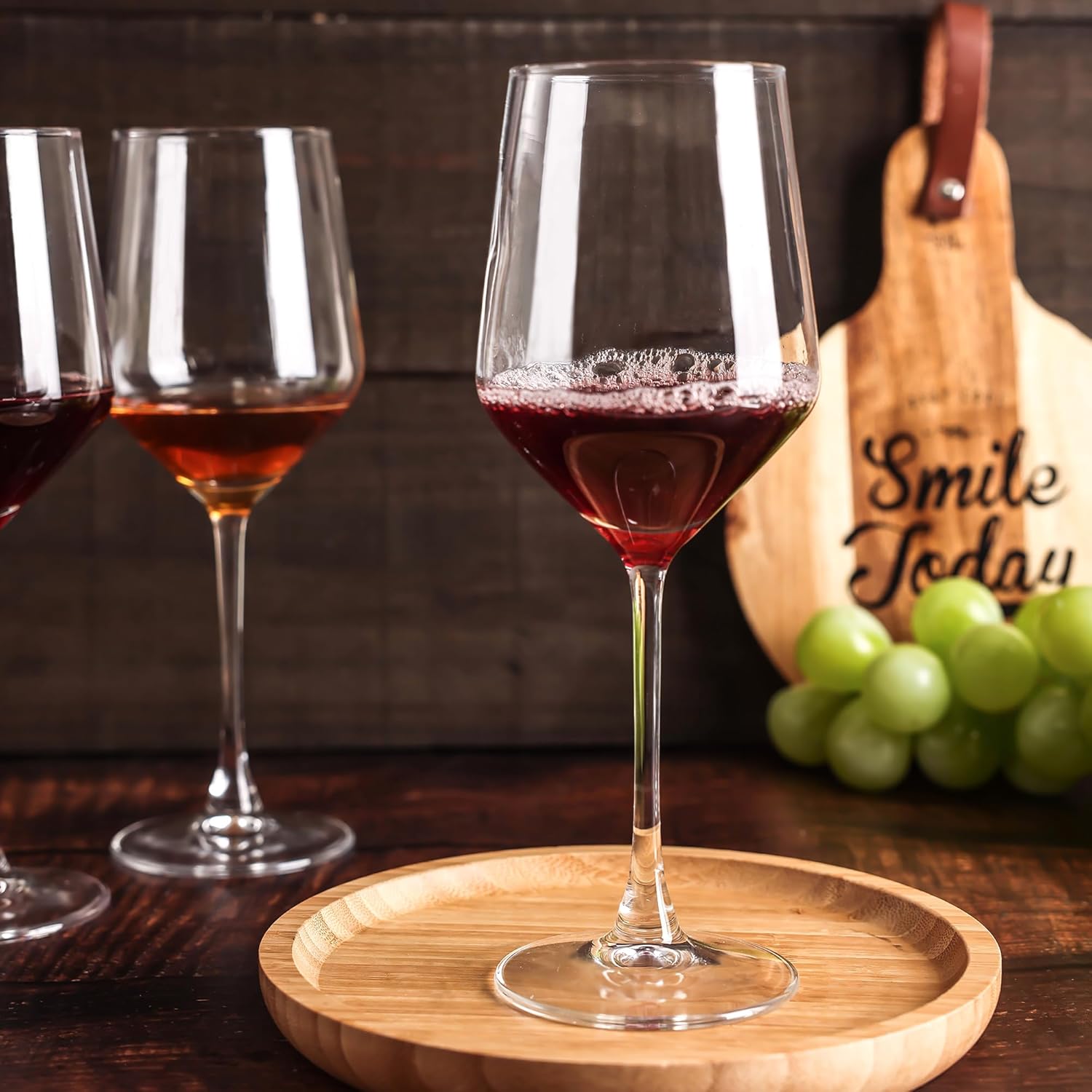
Riedel makes a glass specifically shaped for Sauvignon Blanc. The geometry directs the flow of wine to minimize tartness and maximize the fruit and mineral character.
See the GlassFor serious storage between occasions, see our reviews for the best freestanding wine refrigerators to keep your collection ready to pour at the correct temperature.
Aging Potential: Can Either Wine Improve in the Bottle?
The short answer for most examples of both wines is: drink them young. Both Pinot Grigio and Sauvignon Blanc are primarily designed for freshness and immediate aromatic appeal — the citrus, tropical fruit, and herbaceous notes that make them exciting in youth fade with age, replaced by generic wine flavor rather than the complex tertiary development that makes aging old Burgundy or Bordeaux worthwhile. However, the picture is meaningfully more complex for premium examples of both.
When Sauvignon Blanc Ages
Premium Loire Valley Sauvignon Blanc — particularly Sancerre and Pouilly-Fumé from quality producers in good vintages — can develop beautifully over five to ten years. The initial aggressive aromatics (grass, gooseberry) soften into a more subtle, complex character: honeysuckle, dried herbs, lanolin, quince, and a distinctive waxy, honeyed quality. The mineral, chalky backbone that underpins Loire SB provides the structural framework for this development. These aged Sancerres are among the wine world’s great underappreciated pleasures — genuinely complex and evolved in a way that fresh-release examples cannot approach.
Standard Marlborough Sauvignon Blanc is not designed to age. Its appeal is immediate, vivid, and primary — the passion fruit and grass that excite on release fade within three to four years, leaving a generic, slightly flat white. Drink these within two to three years of vintage.
When Pinot Grigio Ages
Standard Italian Pinot Grigio has essentially zero aging benefit — drink within two years of vintage for maximum freshness. Alsatian Pinot Gris is a different story entirely. The finest Vendange Tardive and Sélection de Grains Nobles examples from great producers (Zind-Humbrecht, Trimbach, Hugel) can age magnificently for fifteen to twenty-five years, developing extraordinary complexity — truffle, smoke, dried apricot, beeswax, spiced honey — while retaining surprising freshness from the grape’s naturally high acidity.
Never age supermarket Pinot Grigio or mass-market New Zealand Sauvignon Blanc. These wines are engineered for immediate consumption and will decline rather than develop with age. The aging potential described above applies only to premium examples from quality producers in specific appellations. If the bottle cost under $15, drink it within a year of purchase.
Price & Value Guide: What to Expect at Every Budget
Both varieties span an extraordinary price range — from under $8 to over $100 for the finest examples. Here is a realistic guide to what quality level and style to expect at each price point for both wines.
| Price | Pinot Grigio Quality | Sauvignon Blanc Quality |
|---|---|---|
| Under $12 | Veneto mass-market. Neutral, light, inoffensive. Best for parties where the wine is background. | NZ or Chilean entry-level. Fresh, fruity, enjoyable. Good everyday drinking. |
| $12–$20 | Friuli or Trentino producers. Noticeably more mineral and complex than Veneto. Good QPR tier. | Quality NZ Marlborough or South African. Genuine aromatic complexity, excellent food pairing. |
| $20–$40 | Alto Adige single-vineyard or quality Alsace Pinot Gris. Step-change in complexity. Genuinely interesting. | Entry Loire Valley (village Sancerre, quality Pouilly-Fumé). Mineral, elegant, age-worthy 3–5 years. |
| $40–$80 | Premier Cru Alsace, top Alto Adige, organic Friuli. Outstanding quality with real terroir character. | Named-vineyard Sancerre, quality White Bordeaux, premium Napa Fumé Blanc. World-class examples. |
| $80+ | Zind-Humbrecht Alsace Gris SGN, rare Vendange Tardive. Trophy wines for dessert or aging. | Grand Cru Sancerre, top-tier White Bordeaux (Domaine de Chevalier). Age-worthy 10+ years. |
Reading the Label: DOC, IGT, AOC, and What They Tell You
Both wines come from regions with legally defined quality designations that communicate useful information about what is in the bottle — if you know how to read them.
For Pinot Grigio Labels
DOC (Denominazione di Origine Controllata) is the standard Italian quality designation. Pinot Grigio DOC wines must come from the named appellation — “Pinot Grigio delle Venezie DOC” is the most common, covering most of northern Italy. More specific appellations like “Alto Adige DOC” or “Collio DOC” indicate higher quality requirements and more restricted geographic origin — always a positive signal. IGT (Indicazione Geografica Tipica) is the lower tier, covering broad regional designations. Many perfectly good wines are labeled IGT, but the best tend to carry DOC status. On French Alsace labels, AOC Alsace is standard, with Alsace Grand Cru indicating wine from one of 51 classified vineyard sites — always a quality upgrade. Vendange Tardive (VT) and Sélection de Grains Nobles (SGN) on Alsace Pinot Gris labels indicate late-harvest and botrytized-berry sweet wines respectively — the richest and most age-worthy expressions of the grape.
For Sauvignon Blanc Labels
French Loire SB labels use the appellation name rather than the grape variety — look for Sancerre, Pouilly-Fumé, Menetou-Salon, or Quincy (all 100% Sauvignon Blanc). The absence of a grape variety name on the label is a reliable Old World indicator. New World Sauvignon Blanc labels state the grape variety prominently. “Marlborough” or a specific sub-appellation (“Wairau Valley,” “Awatere Valley”) on a New Zealand SB label indicates quality consideration — the sub-appellations have distinct flavor profiles (Wairau = riper, more tropical; Awatere = leaner, more mineral). California labels using “Fumé Blanc” indicate an oak-aged SB style with richer, less herbaceous character.
The Beginner’s Buying Guide: Which to Start With?
If you are new to white wine or trying to figure out which of these two suits your palate, the practical guidance below will help you make a confident first purchase and a logical progression through the styles.
Start Here Based on Your Existing Preferences
- If you usually drink sparkling water with lots of lemon/lime: You will likely love Sauvignon Blanc — its high acidity and citrus character will feel familiar and refreshing.
- If you prefer subtle, non-assertive flavors: Italian Pinot Grigio is your entry point — its neutrality is a feature for palates that prefer restraint over expression.
- If you like fruity, aromatic drinks: New Zealand Sauvignon Blanc will be immediately appealing — its tropical fruit intensity is accessible and exciting for those coming from sweeter beverage backgrounds.
- If you want a food wine that works with almost everything: A quality Italian Pinot Grigio from Friuli or Alto Adige is the most versatile choice — its neutrality is a genuine asset at the dinner table.
A Suggested Progression for Each Variety
For Sauvignon Blanc: Start with an affordable New Zealand Marlborough SB ($12–$18) for an immediate, impactful introduction. Then try a South African version (Stellenbosch or Constantia) for comparison. Next, step up to an entry-level Sancerre ($25–$35) to understand how climate restraint transforms the variety’s character. Finally, try a quality Pouilly-Fumé for the mineral, smoky expression that is the Loire’s most distinctive signature.
For Pinot Grigio: Start with a quality Friuli or Trentino Grigio ($14–$20) — a meaningful step above mass-market Veneto. Then try an Alto Adige Grigio ($18–$28) for the mineral, Alpine character. Then compare with an Alsatian Pinot Gris ($20–$30) to experience what the same grape produces under radically different conditions. Finally, try an Oregon Pinot Gris ($18–$25) for the New World expression that bridges both styles.
The Golden Rule: For both wines, the $15–$30 tier represents the true quality step change. Mass-market Veneto Pinot Grigio under $10 and basic NZ Sauvignon Blanc under $12 are fine for casual occasions. But spending an extra $8–$12 moves you into a completely different level of complexity and regional character. The jump from $10 to $20 is far more rewarding in both categories than the jump from $20 to $50.
Frequently Asked Questions
Both are dry wines with very little residual sugar. However, Sauvignon Blanc often tastes fruitier — particularly in its tropical, passion-fruit-driven Marlborough style — which some beginners confuse for sweetness. Pinot Grigio is typically drier and more neutral. If you want genuine sweetness in either variety, look for Alsatian Vendange Tardive Pinot Gris or a deliberately off-dry Sauvignon Blanc from a cool-climate producer.
They are almost identical. A standard 5oz glass of either wine contains approximately 120–125 calories and 3–4 grams of carbohydrates. The driest, lowest-alcohol versions (some Italian Grigio at 11.5% ABV, light Loire SB) will have slightly fewer. The difference is negligible — neither wine is significantly better or worse than the other for calorie-conscious drinkers.
Yes — Fumé Blanc is a marketing term invented by California winemaker Robert Mondavi, who noticed that the name “Sauvignon Blanc” was not selling well with American consumers. Inspired by the “Blanc Fumé” name used in Pouilly-Fumé on the Loire, he renamed his oak-aged Sauvignon Blanc “Fumé Blanc” and saw immediate sales improvement. Today the term specifically refers to a richer, oak-influenced style of Sauvignon Blanc produced primarily in California, though legally any producer can use the term for any Sauvignon Blanc regardless of oak influence.
This is genuinely considered a mark of quality rather than a fault. The compound responsible — p-mentha-8-thiol-3-one — is a naturally occurring volatile thiol in Sauvignon Blanc that wine tasters politely call “boxwood,” “blackcurrant leaf,” or “tom cat.” At low concentrations it adds complexity and distinctiveness; at high concentrations it can become overpowering. It is most pronounced in New Zealand Marlborough and Loire Valley examples and is associated with the thiol-rich aromatic profile that defines these styles.
Pinot Grigio is the definitive cooking white wine. Its neutrality adds needed acidity to pan sauces, risotto, and pasta dishes without introducing herbal or tropical notes that would alter the dish’s flavor. Sauvignon Blanc can be used in cooking but requires care — its strong herbaceous notes can clash with delicate dishes. It works well in herb-forward reductions and sauces but avoid using high-quality Sauvignon Blanc for cooking as the heat drives off its finest aromatic compounds.
They are the same grape variety but not the same wine — the stylistic difference is enormous. Pinot Grigio (Italian style) is light, crisp, and neutral with citrus and pear notes, typically under 13% ABV. Pinot Gris (Alsatian French style) is rich, full-bodied, and complex with stone fruit, honey, and spice notes, often over 14% ABV, ranging from dry to lusciously sweet. Thinking of them as the same wine is like thinking of an Italian espresso and a French café au lait as the same drink because they both use coffee beans.
For a crowd, Pinot Grigio is the safer choice — its neutrality and refreshing lightness appeals broadly, offends nobody, and pairs well with the diverse foods typically served at outdoor events. If your guests are wine-engaged and adventurous, Sauvignon Blanc — particularly a quality Marlborough or quality Sancerre — will be more memorable and generate more conversation. For hot weather, both should be served properly chilled (45–49°F); both are refreshing at this temperature.
Most Sauvignon Blanc — particularly New Zealand Marlborough — should be consumed within two to three years of vintage for maximum aromatic freshness. However, premium Loire Valley examples (quality Sancerre, Pouilly-Fumé, Menetou-Salon) from good producers can age meaningfully for five to ten years, developing honeysuckle, beeswax, and mineral complexity that is genuinely rewarding. White Bordeaux blends (Sauvignon Blanc with Sémillon) can age for fifteen to twenty years or more.
Sauvignon Blanc has a significant advantage with vegetarian cuisine. Its herbaceous, green character resonates with vegetable-forward dishes — roasted asparagus, spinach dishes, herb-based sauces, grilled courgette, and green salads all pair beautifully. The high acidity also cuts through the richness of vegetarian cheese-based dishes (Parmesan risotto, cheese tart) in a way that lighter Pinot Grigio cannot manage. For very delicate vegetarian dishes — light salads, simple steamed vegetables — Pinot Grigio’s neutrality is preferable.
Both varieties have strong organic and natural wine producers. For organic Sauvignon Blanc, Henri Bourgeois in Sancerre and Domaine Vacheron produce biodynamically certified Loire SBs of exceptional quality. In New Zealand, Seresin Estate in Marlborough has been producing certified biodynamic Sauvignon Blanc for years. For organic Pinot Grigio/Gris, Zind-Humbrecht in Alsace is among the most celebrated biodynamic producers of Pinot Gris globally. In Italy, Livio Felluga and Bastianich in Friuli both produce organically farmed Pinot Grigio with noticeably more character than conventional mass-market examples.