No Wine Fridge? No Problem: A Definitive Guide to Storing Wine at Home
You’ve just brought home a beautiful bottle of Cabernet Sauvignon. Maybe it’s one of the best affordable wines, a gift from a friend, or a special selection from your favorite wine subscription box. The instinct is to put it on the kitchen counter, but you hesitate. You’ve heard that wine needs special care, but the idea of a bulky, expensive wine fridge seems like overkill. As a wine lover who has navigated tiny city apartments and sprawling suburban homes, I can tell you this: you absolutely do not need a wine fridge to properly store and protect your wine. You just need a little knowledge and creativity.
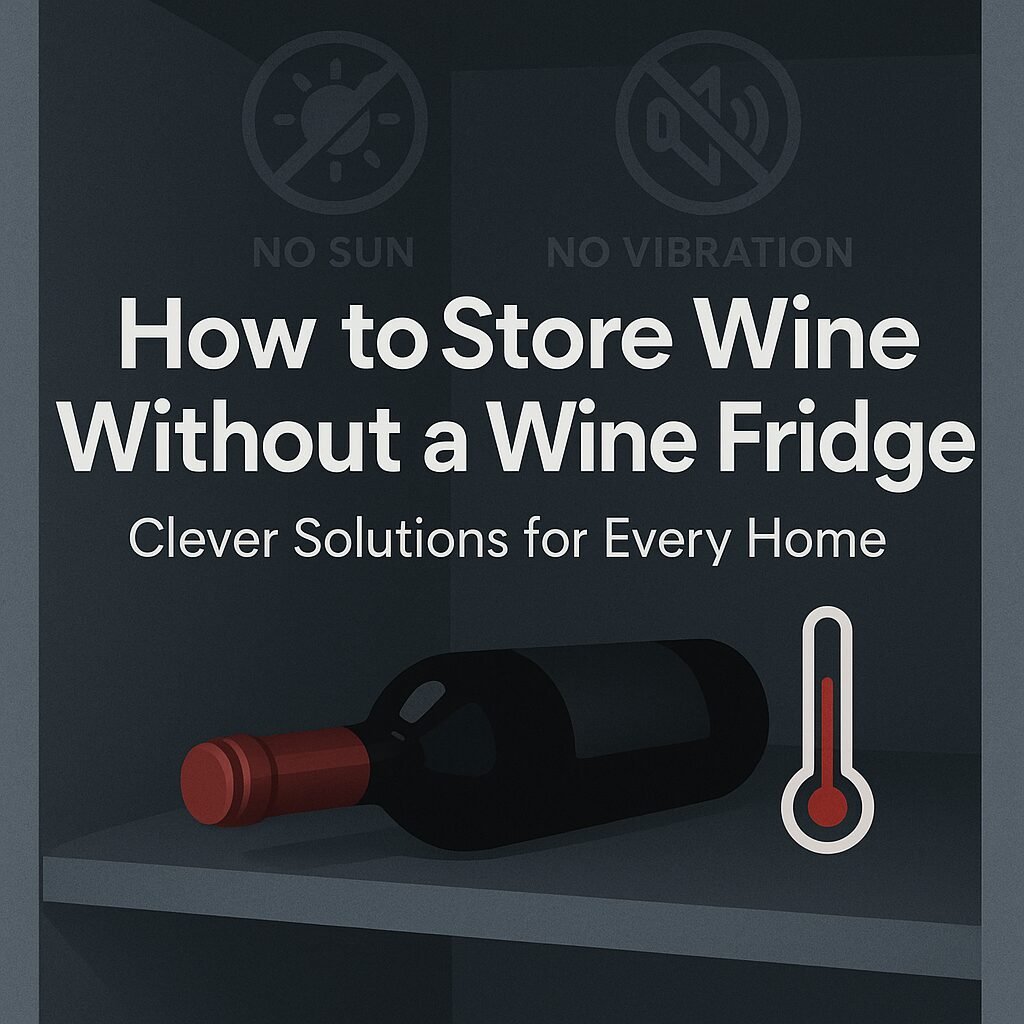
This guide is your masterclass in protecting your liquid treasures. We’ll dive deep into the science of why wine storage matters, uncover the golden rules that govern its well-being, and scout out the perfect (and worst) storage spots right in your own home. Forget the high-tech gadgets; we’re going back to basics to ensure every bottle you open is as delicious as the winemaker intended.
Affiliate Disclosure: This post contains affiliate links from Amazon. If you make a purchase through these links, we may earn a small commission at no extra cost to you. This helps support our mission to bring you the best wine advice. We only recommend products we genuinely believe in. Cheers!
The Science of Spoilage: Why Proper Wine Storage Isn’t Just for Snobs
Before we turn your closet into a makeshift cellar, it’s crucial to understand why these storage rules exist. It’s not about arbitrary tradition; it’s about chemistry. Wine is a living, breathing entity. Inside that bottle is a complex cocktail of chemical compounds—phenols, esters, tannins—that are constantly evolving. Proper storage isn’t about stopping this evolution; it’s about guiding it gracefully so the wine develops beautiful new flavors and aromas, a process we call “aging.” Improper storage fast-forwards this process in the worst way possible.
There are four main enemies of wine:
- Heat: Wine’s number one nemesis. When wine gets too warm (above 70°F / 21°C), the aging process goes into overdrive. Delicate flavors are “cooked,” resulting in a flat, jammy, or raisin-like taste. The alcohol and acids can become more pronounced, creating a harsh, unbalanced profile. Even worse, heat causes the liquid to expand, pushing the cork out and allowing oxygen to seep in.
- Light: UV rays from the sun degrade the organic compounds in wine, particularly the delicate tannins that give red wine its structure. This phenomenon is known as “light strike.” It can make a wine taste dull and create unpleasant aromas—wet cardboard or cabbage. This is why most wine bottles are made of colored glass: built-in sunscreen.
- Vibration: Constant jiggling disturbs the sediment in older wines, preventing it from settling and reintegrating it into the liquid, which creates a gritty glass. More importantly, it can speed up chemical reactions in the bottle, prematurely aging the wine and disturbing its delicate flavor profile.
- Oxygen: While a little oxygen is beneficial during winemaking and when you first open a bottle (this is why we use the best wine decanters), prolonged exposure causes oxidation—the same process that turns a sliced apple brown. Oxidized wine loses its fresh, fruity character and develops nutty, bruised-fruit flavors, eventually turning to vinegar.
The 5 Golden Rules of Storing Wine (Without a Fridge)
If you remember nothing else, remember these five principles. They are the foundation of all good wine storage, whether you have a multi-million dollar cellar or a tiny apartment closet.
- Keep It Cool: Aim for a temperature between 45–65°F (7–18°C).
- Keep It Dark: Avoid direct sunlight and bright artificial lights at all costs.
- Keep It Still: Minimize vibrations from appliances or heavy foot traffic.
- Keep It Sideways: Store bottles horizontally to keep the cork moist.
- Keep It Consistent: Avoid rapid and extreme temperature fluctuations.
For a deeper dive into creating the perfect environment, check out our guide to wine cellar essentials, which breaks down these principles in even more detail.
Golden Rule Deep Dive: Mastering the Art of Passive Cellaring
Let’s take a closer look at each of those five rules and explore the practical steps you can take to follow them in a typical home.
1. Keep It Cool (But Not Too Cold)
The ideal temperature for long-term wine storage is around 55°F (13°C). However, for short-to-medium term storage (anything from a few days to a year), a consistent temperature anywhere between 45°F and 65°F (7–18°C) is perfectly acceptable. The key word is consistent.
Why it matters: Heat is the fastest way to ruin wine. It accelerates chemical reactions, stewing the delicate flavors. A regular refrigerator (typically 35–40°F / 2–4°C) is too cold for long-term storage—it can stunt the wine’s development, and the lack of humidity can dry out the cork over many months. For a few days before serving? Fine. For a year? Not ideal.
Your Home Solution: Find the coolest, most stable spot in your house. Think like a root cellar. Basements are often perfect. An interior closet (one that doesn’t share a wall with the outside of the house) on the lowest floor is another excellent candidate. Even the space under a bed or stairs can work if it’s away from heating vents.
<45°F Ideal
45–65°F Caution
65–70°F Danger
>70°F
Temperature guide for long-term passive wine storage
2. Keep It Dark
Darkness is your wine’s best friend. Treat your bottles like vampires; they need to be shielded from the light, especially direct sunlight.
Why it matters: UV rays penetrate even dark glass and break down the complex molecules responsible for the flavor and aroma of your wine. Light strike can happen surprisingly quickly—a bottle left on a sunny windowsill for even a few weeks can be noticeably damaged. Fluorescent lights also emit a small amount of UV, so a constantly lit pantry isn’t ideal for the long term.
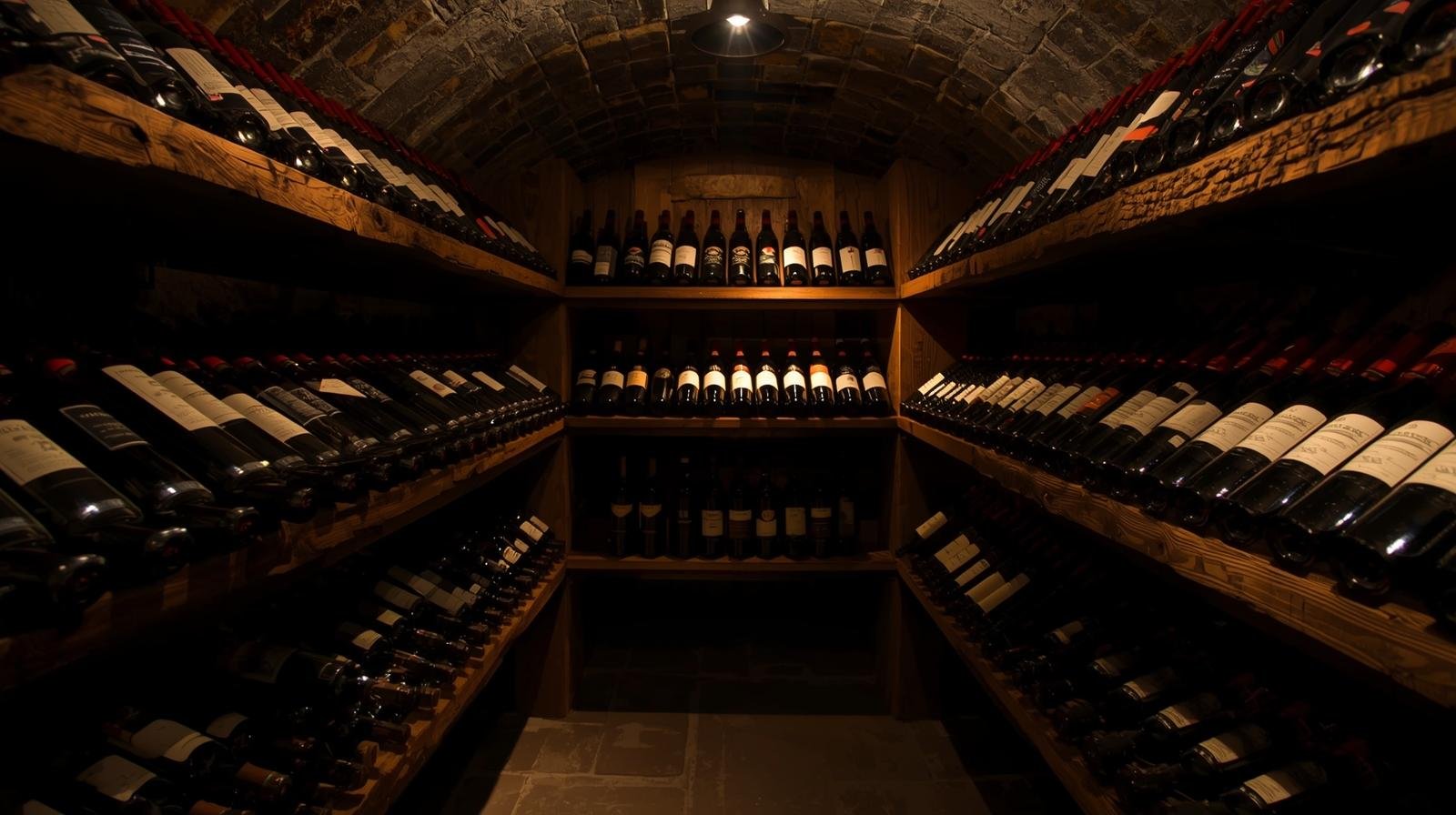
Your Home Solution: Closets, cabinets, and basements all work perfectly. If you must store your wine in a room with windows, put the bottles inside a cardboard box or wrap them in cloth. Never store wine on a kitchen counter or on an open rack next to a window.
3. Keep It Still
Wine prefers a tranquil, undisturbed existence. Constant movement and vibration are subtle enemies that cause harm over time.
Why it matters: Constant vibration agitates the wine, speeding up chemical reactions and causing it to age prematurely. For older red wines that naturally develop sediment, vibrations prevent settling, leading to a gritty glass. The constant hum and rattle of a washing machine, dryer, or dishwasher can have a cumulative negative effect.
Your Home Solution: Choose a storage spot away from major appliances. Don’t store your wine rack on top of your regular refrigerator, next to the laundry machines, or near a subwoofer. A quiet closet, a cool basement corner, or a dedicated cabinet are all great vibration-free zones.
4. Keep It Sideways (For Corked Wines)
This is one of the most well-known rules, and for good reason. If a bottle has a natural cork, it should be stored on its side.
Why it matters: Storing a bottle horizontally ensures the wine is in constant contact with the cork, keeping it moist and expanded, maintaining a tight seal. If the bottle is stored upright for a long time, the cork can dry out, shrink, and become brittle. This allows tiny amounts of oxygen to seep into the bottle, leading to oxidation. A dry cork is also more likely to crumble when you try to open it. For wines with screw caps or synthetic corks, this rule doesn’t strictly apply, but horizontal storage is still good practice for organization.
Your Home Solution: A simple wine rack is the easiest way to ensure all your bottles are stored correctly. You don’t need anything fancy—a basic rack that holds the bottles horizontally is all you need.
5. Keep It Consistent
Perhaps the most important and often overlooked rule is consistency. A wine stored at a constant 68°F is far better off than a wine that swings from 50°F in the winter to 80°F in the summer.
Why it matters: Drastic and frequent temperature swings cause the wine in the bottle to expand and contract repeatedly. This constant change in pressure stresses the cork and compromises its seal. Imagine a bottle stored in a garage: cool at night, baking during the day. This daily cycle of expansion and contraction is a death sentence for wine. Stability is more important than achieving the “perfect” 55°F.
Your Home Solution: Interior spaces are far superior to exterior ones for this reason. A basement is king because it’s naturally insulated by the earth. An interior closet on the lowest floor is the next best thing. Avoid attics, garages, and sheds at all costs.
Does the Type of Wine Change How You Should Store It?
The five golden rules apply universally to all wine, but understanding the nuances of how different wine types respond to storage helps you prioritize what needs the most care—and what can live on a shelf without much fuss.
Red Wine Storage
Red wines are generally the most forgiving for long-term storage because their higher tannin content acts as a natural preservative and antioxidant. This is why the world’s most age-worthy wines—Bordeaux, Barolo, Brunello di Montalcino, Ribera del Duero—are all reds. Their tannins polymerize slowly over time, transforming from grippy and astringent in youth to silky and complex in maturity. For home storage without a wine fridge, red wine is your best candidate for keeping 1–5 years in a properly cool, dark, stable space. The ideal serving temperature for red wine (60–65°F) is close to most room temperatures, which also makes the transition from storage to glass easier.
White Wine Storage
White wines are generally less tannic than reds, which means they have less structural protection against the effects of time and improper storage. Most white wines are meant to be enjoyed within 1–3 years of their vintage date, with the exception of highly structured whites like white Burgundy (Chardonnay), aged Riesling, and white Bordeaux (Sémillon-dominant blends), which can develop magnificently over a decade or more. For everyday whites, the priority is simply keeping them cool and dark until you’re ready to drink. If you’re storing a white wine for more than a few months, a basement or consistently cool closet is essential.
Rosé Wine Storage
Rosé is the most time-sensitive of the main wine categories. The vast majority of rosé wines—particularly the delicate, pale Provence-style rosés that have become so fashionable—are engineered for freshness and should be consumed within 1–2 years of their vintage. The delicate aromatics (strawberry, peach, white flowers) that make them so appealing begin to fade quickly, and the wine can take on a flat, oxidized character. There is no benefit to aging most rosés. Buy them, store them cool and dark, and drink them young. The exception would be high-quality, complex rosés from producers who intend them for aging, but these are rare.
Sparkling Wine & Champagne Storage
Sparkling wine requires the most careful storage of any wine type, primarily because of its carbonation. Always store sparkling wine on its side (even more critical here than with still wine), as horizontal storage maintains the cork’s seal, which is the only thing keeping the carbon dioxide inside. Store it in the coolest, most vibration-free spot you can find—vibration agitates the dissolved CO2 and can cause the wine to “fizz out” more quickly when opened. Non-vintage Champagne and Prosecco are designed for immediate consumption; vintage Champagne from top houses can age for years or even decades. Keep sparkling wines away from the freezer—a brief chill before serving is fine, but leaving them to freeze will destroy both the cork and the wine.
Fortified Wine Storage (Port, Sherry, Madeira)
Fortified wines are the toughest of all. Their elevated alcohol content (typically 15–22%) acts as a powerful preservative, making them far more resistant to the effects of improper storage than table wines. An unopened bottle of Port, Sherry, or Madeira stored in a cool, dark place will keep for years. Once opened, the rules change significantly. Dry Sherries (Fino, Manzanilla) are delicate and should be treated like a fine white wine—refrigerated and consumed within a week of opening. Richer styles like Amontillado and Oloroso can last several weeks after opening. Vintage Port can last a month or more after decanting. Madeira, remarkably, can last for months after opening—its oxidative production process makes it nearly indestructible.
Natural & Low-Sulfite Wines
Natural wines present a unique storage challenge. Because they are made with little or no added sulfur dioxide (SO2)—the preservative used in conventional winemaking for centuries—they have far less protection against oxidation and microbial spoilage. A natural wine stored in a warm environment will deteriorate much more quickly than a conventional wine stored under the same conditions. If you drink organic and natural wines, prioritize keeping them in the coolest spot available, drink them within a year or two of vintage, and never expose them to heat. They are worth the extra care.
| Wine Type | Storage Temp | Storage Duration | Key Sensitivity |
|---|---|---|---|
| Full-Bodied Red (Cab, Barolo) | 55–65°F (13–18°C) | 1–20+ years | Heat, oxygen |
| Light-Bodied Red (Pinot Noir, Gamay) | 55–60°F (13–16°C) | 1–5 years | Heat, light |
| Full-Bodied White (oaked Chardonnay) | 50–55°F (10–13°C) | 1–10 years | Heat, temperature swings |
| Crisp White (Sauvignon Blanc, Pinot Grigio) | 45–55°F (7–13°C) | Drink within 1–2 years | Heat, oxidation after opening |
| Rosé | 45–55°F (7–13°C) | Drink within 1–2 years | Heat, light, age |
| Sparkling / Champagne | 50–55°F (10–13°C) | NV: 3–5 yrs; Vintage: 10+ yrs | Vibration, heat, upright storage |
| Fortified Wine | 55–65°F (13–18°C) | Indefinite unopened | Minimal; dry styles more sensitive |
| Natural / Low-SO2 Wine | 50–58°F (10–14°C) | Drink within 1–2 years | Heat, temperature swings, light |
Scouting Your Home: Best & Worst Places for Wine Storage
Now that you’re armed with the five golden rules, let’s go on a mission to find the perfect non-fridge “wine cellar” in your home. Every home is different, but the principles remain the same: cool, dark, still, and stable.
✅ Best Spots (Your Makeshift Cellars)
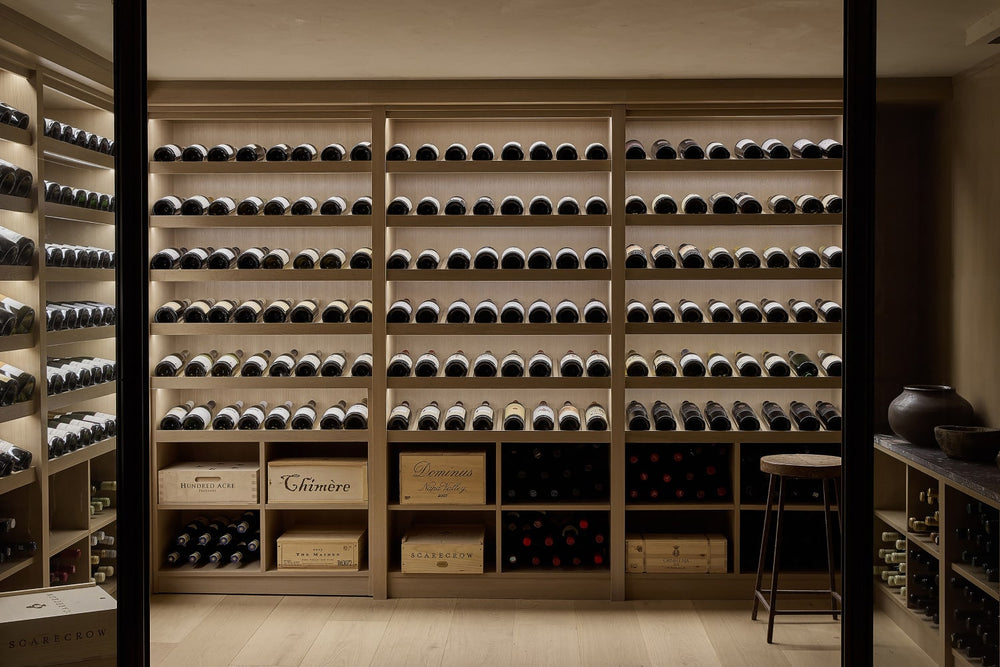
- A Basement: The undisputed champion. Naturally cool, dark, and temperature-stable year-round. Any corner away from the furnace is prime real estate.
- An Interior Closet: A closet on the ground floor that doesn’t share walls with the outside. Bedroom and hall closets are often perfect.
- Under the Stairs: This often-unused space is usually dark, untrafficked, and maintains a stable temperature.
- A Deep Pantry or Cabinet: Away from the oven, stove, and dishwasher. Works well for short-term storage (a few months).
- A Cool Bedroom Corner: If you keep your bedroom cool, an interior corner away from windows can work for a small collection.
❌ Worst Spots (The Wine Killers)
- The Kitchen Countertop: The absolute worst. Heat from cooking, bright light, and constant vibrations converge here.
- On Top of the Refrigerator: Warm from heat coils, vibrates from the compressor, and exposed to light. Triple threat.
- The Garage or Shed: Not insulated. Wild temperature swings with the seasons—far too hot in summer, too cold in winter.
- The Attic: A heat trap. Summer temperatures can soar well over 100°F, effectively cooking your wine in hours.
- Next to a Window: Direct sunlight causes light strike rapidly. Even a few weeks on a sunny sill causes damage.
Room-by-Room Storage Guide: Finding the Hidden Cellars in Your Home
Let’s walk through your home room by room and identify every opportunity for smart, free wine storage—along with every trap to avoid. This practical walkthrough will give you a specific action plan regardless of whether you live in a studio apartment or a four-bedroom house.
The Kitchen
The kitchen is, paradoxically, both the most common place people store wine and one of the worst. The ambient heat from cooking, the constant light, the vibrations from the dishwasher and refrigerator—all conspire against wine quality. The only acceptable storage in a kitchen is a dedicated, insulated wine cabinet or a built-in wine fridge. Open racks on the counter or above the refrigerator are not suitable for anything you plan to keep more than a week or two. If you have a deep lower cabinet that is insulated from the oven and away from any appliance heat, it can serve as a short-term home (a month or two) for everyday drinking wines. However, for anything you’re keeping longer, move it out of the kitchen entirely.
The Living Room or Dining Room
Living rooms often feature open wine racks as decorative pieces, and they can work acceptably if a few conditions are met. The room must be climate-controlled (air-conditioned in summer, not too close to a radiator in winter). The rack must not be in a path of direct sunlight from windows. It must not be next to a sound system with a powerful subwoofer. For wines you plan to drink within one to three months, a stylish living room rack in a climate-controlled space is perfectly adequate. For wines you plan to keep longer than that, find a better spot. A decorative display bottle is lovely; a storage rack for aging wine in a warm, bright room is not.
The Bedroom
This is an underutilized storage option that many apartment dwellers overlook. Bedrooms are almost always interior rooms, maintained at a comfortable sleeping temperature (which is often close to the ideal wine storage temperature), and kept dark for most of the day. A closet shelf or floor area in a bedroom—particularly in a building with central air conditioning—can be an excellent short-to-medium term storage solution. Place your wine on a simple horizontal rack on the closet floor, away from any exterior walls, and you have a surprisingly capable cellar. The main downside is the visual reminder every time you open your closet, which some people find either convenient or tempting.
Under the Bed
Under a bed on the ground floor of a cool house is a genuinely excellent storage location. It’s dark, it’s still (unless you’re particularly active sleeper), it’s at floor level where temperatures are naturally more stable and cooler, and it’s out of the way. A flat, low-profile wine rack or even just the original cardboard shipping cases (which also protect from light) laid on their side works perfectly. This is one of the best-kept secrets of apartment wine storage and can accommodate a surprisingly large collection with the right organizers.
The Hallway or Landing
A hallway or landing—particularly one that is away from exterior doors and windows—maintains one of the most stable temperatures in a home. It sees little direct sunlight and is rarely near heat sources. A wall-mounted wine rack in a dark hallway is both a design statement and a practically sound storage choice for everyday drinking wines. The main consideration is vibration—if the hallway is above a busy road or near a door that slams frequently, the accumulated vibration may be problematic for long-term storage.
The Basement
As mentioned, the basement is the ideal free storage solution. But not all basements are created equal. A finished, climate-controlled basement is perfect. An unfinished basement in a northern climate will be naturally cool in winter but may warm up significantly in summer if it lacks insulation. Check the temperature in your basement in both summer and winter using a thermometer before committing to it as a long-term cellar. The ideal is a consistent temperature between 50–60°F year-round. If your basement is naturally in this range, congratulations—you have a cellar that many wine lovers would envy, and it cost you nothing.
How Long Should You Actually Store Wine? A Practical Drinking Window Guide
One of the most important—and most misunderstood—aspects of wine storage is knowing when to open a bottle. Storing wine too long is just as common a mistake as not storing it properly. The romantic notion of buying a case of wine and aging it for decades is appealing, but the reality is that the vast majority of wine is made to be enjoyed within a few years of its release, not decades later. Here is a practical guide to drinking windows.
Drink Now: The 90% Rule
Wine professionals estimate that roughly 90% of all wine produced globally is made for immediate consumption—within one to three years of the vintage date. This includes the vast majority of everyday drinking wines: most Pinot Grigio, Sauvignon Blanc, rosé, Beaujolais, entry-level Cabernet Sauvignon, commercial Prosecco, and everything labeled as a “table wine” or “vino de mesa.” These wines are crafted to deliver their best flavors young and fresh. Holding them past their drinking window does not improve them; it diminishes them. If you bought a wine to drink at dinner this week, keep it somewhere cool and open it within a few months.
Worth Aging: The 10% Rule
Only about 10% of wines produced are genuinely designed to improve with age. These are wines with the structural components—tannins, acidity, sugar, or alcohol—that allow them to evolve gracefully over time. Identifying these wines is part art and part knowledge. Broad guidelines: top-tier Bordeaux and Rhône reds (8–25+ years), Barolo and Barbaresco from Piedmont (8–20+ years), white Burgundy from premier or grand cru vineyards (5–15 years), aged Riesling (5–20+ years), vintage Champagne from top houses (5–20+ years), and Sauternes (10–30+ years). If you’re investing in wines like these, proper storage is not optional—it is essential to realizing the value of the wine.
The Danger of Over-Aging
Even wines designed for aging have a peak, after which they decline. An over-aged wine doesn’t just fail to improve—it actively deteriorates. Primary fruit flavors fade entirely, structure collapses, and the wine can develop unpleasant vegetal, medicinal, or overly oxidized notes. Researching the specific drinking window of any wine you plan to cellar for more than five years—through resources like the Wine Spectator Vintage Chart or producer notes—is time very well spent. The joy of opening a wine at its peak is one of the greatest pleasures in all of gastronomy. Opening it five years too late is one of the great disappointments.
How to Store Opened Wine: Making the Most of Every Bottle
Proper storage of an unopened bottle is only half the battle. Once you pull that cork, the clock starts ticking—and oxygen immediately begins its work. Here is a comprehensive guide to preserving opened wine as long as possible, whether you have basic tools or more advanced systems.
The First Line of Defense: Re-Cork Immediately
The simplest thing you can do is re-insert the cork the moment you pour your last glass. Don’t leave the bottle sitting open on the counter while you enjoy dinner. Every minute the bottle sits open with significant headspace, oxygen is dissolving into the wine. Re-corking—even with just the original cork, placed back in upside-down for hygiene—significantly slows this process.
Put It in the Refrigerator Regardless of Wine Type
This is a common misconception worth addressing directly: once a bottle of wine is opened, it should go into the refrigerator regardless of whether it is red, white, or rosé. The cold temperature dramatically slows oxidation and microbial activity, buying you an extra day or two of drinkable wine. For a red wine, simply take it out of the fridge 30–45 minutes before you want to continue drinking it, and it will come back up to a pleasant serving temperature. The cold will not harm an already-open wine.
General Drinking Windows for Opened Wine
Even under ideal conditions (re-corked, refrigerated), opened wine has a limited lifespan. Here are realistic expectations:
| Wine Type | Refrigerated (Re-corked) | With Vacuum Pump | With Coravin / Argon |
|---|---|---|---|
| Sparkling Wine / Champagne | 1–3 days (use a sparkling stopper) | Not applicable | Not applicable |
| Crisp White / Rosé | 3–5 days | 5–7 days | Weeks to months |
| Full-Bodied White | 3–5 days | 5–7 days | Weeks to months |
| Light-Bodied Red | 2–3 days | 3–5 days | Weeks to months |
| Full-Bodied Red | 3–5 days | 5–7 days | Months to years |
| Fortified Wine (Port, Sherry) | Weeks (depends on style) | Extended further | Not typically needed |
| Natural / Low-SO2 Wine | 1–2 days max | 2–3 days | Weeks |
The Often-Forgotten Factor: Humidity and Its Role in Wine Storage
While temperature gets most of the attention, humidity is a critical but frequently overlooked component of wine storage—particularly for anyone planning to keep bottles for several years or more.
Why Humidity Matters
The purpose of maintaining appropriate humidity (ideally 60–70% relative humidity) in a wine storage space is to protect the cork. A cork is a natural, slightly porous material harvested from the bark of cork oak trees. When exposed to very dry conditions over an extended period, a cork will slowly lose moisture, shrink, and lose its elasticity. A shrunken cork no longer forms a perfect seal with the neck of the bottle, allowing small but damaging amounts of oxygen to seep in. This leads to premature oxidation—the wine that was supposed to peak in fifteen years may be past its prime in five.
What Happens with Too Much Humidity
On the opposite end, excessively high humidity (above 80%) doesn’t harm the wine itself—but it can damage the labels on bottles (causing mold growth and label deterioration) and, over time, encourage the growth of mold in the storage space itself. For a casual home collector, slightly high humidity is a far lesser concern than low humidity. Mold on a label is cosmetically unpleasant but doesn’t affect the wine; a dried-out cork is a genuine quality threat.
Practical Humidity Solutions
Most basements naturally maintain humidity in the 50–70% range, which is ideal for wine storage. If your storage space is too dry—particularly relevant for interior closets in dry climates—placing a small bowl of water in the space can raise ambient humidity. A small humidifier is a more controlled solution. To measure your storage space’s humidity, the Govee thermometer/hygrometer recommended below tracks both temperature and humidity and is the ideal tool for monitoring your makeshift cellar over time.
5 Common Wine Storage Myths—Debunked
Wine mythology is rampant, and some of the most widely held beliefs about wine storage are simply wrong. Here are the most persistent myths and the truth behind them.
Myth 1: “You Should Store Wine Upright”
The Truth: For wines sealed with a natural cork, storing upright is one of the worst things you can do for long-term storage. An upright bottle allows the cork to dry out, which compromises the seal and invites oxidation. The rule to store bottles horizontally exists precisely to prevent this. The only exception: if you’re planning to drink the bottle within a week or two, upright storage is fine. For anything longer than that, lay it on its side. (Note: for screw-cap wines, upright or horizontal storage is equally valid, as there is no cork to dry out.)
Myth 2: “Older Wine Is Always Better Wine”
The Truth: As established above, approximately 90% of wine is made for immediate consumption and actually diminishes with age. “Older” is only “better” for the small percentage of wines specifically crafted with the structural integrity to evolve gracefully—and even those have a peak beyond which they decline. A ten-year-old bottle of a wine designed to be consumed young will taste flat, oxidized, and disappointing. Always research a specific wine’s drinking window before assuming that more age equals more quality.
Myth 3: “A Regular Fridge Is Fine for Long-Term Wine Storage”
The Truth: A standard household refrigerator is too cold (35–40°F vs. the ideal 55°F), too dry (dehumidifiers in fridges protect food, not wine), and subjected to constant vibration from the compressor. It also absorbs food odors over time, which can permeate the cork and taint the wine. It is an acceptable short-term solution for a bottle you’re planning to drink within a week, or for chilling a white before serving—but it is not a substitute for proper wine storage for any bottle you intend to keep for months or years.
Myth 4: “The More Expensive the Wine, the Better It Will Age”
The Truth: Price and aging potential are correlated but not synonymous. Some inexpensive wines—a well-made Portuguese Alentejo red, a modest Côtes du Rhône, a quality Cru Beaujolais—can develop beautifully with a few years of proper storage. Conversely, some expensive wines are meant to be enjoyed young and fresh (top-tier Provence rosé, prestige Champagne blanc de blancs in some vintages). The best guide to a wine’s aging potential is not its price but its structure: high tannins, high acidity, high sugar (in sweet wines), or high alcohol (in fortified wines) are the indicators of longevity.
Myth 5: “Wine Stored in a Cool Place Will Last Indefinitely”
The Truth: Cool storage dramatically extends a wine’s lifespan and protects its quality, but no storage condition prevents a wine from eventually declining. Even wines cellared in perfect 55°F, 70% humidity, vibration-free conditions will eventually reach their peak and begin to fade. Great storage simply ensures a wine reaches its peak in the best possible condition and gives you the maximum window to enjoy it. The goal of storage is not immortality—it’s optimizing the window of peak enjoyment.
How to Start Building a Home Wine Collection From Scratch
The storage principles you’ve learned in this guide are most valuable when they are put in service of a thoughtful, curated home collection. Here is a practical roadmap for building a collection that is both enjoyable to drink and properly cared for, starting from zero.
Step 1: Define Your Purpose
Before you buy a single bottle, answer two questions: What is this collection for, and how long do I want to keep these wines? If you want everyday drinking wines to have on hand at a moment’s notice, you’ll curate differently (and store differently) than if you want a cellar of special bottles to open for milestone occasions. Most home collectors benefit from thinking in terms of “tiers”: everyday wines (drunk within weeks), special-occasion wines (kept for months), and true cellar wines (kept for years). Knowing your tiers helps you allocate your storage space accordingly.
Step 2: Start with a Range of Styles
A well-rounded starter collection covers a range of styles to match different moods and occasions. A practical starter collection of 12–24 bottles might include: 2–3 bottles of a crisp white (Sauvignon Blanc or Albariño) for summer evenings and seafood; 2–3 bottles of a full-bodied white (Chardonnay or white Burgundy) for richer dishes; 1–2 bottles of rosé for casual entertaining; 3–4 bottles of an accessible red (Pinot Noir or Merlot) for versatile pairing; 2–3 bottles of a structured red (Cabernet Sauvignon or Barolo) for red meat and special occasions; and 1–2 bottles of something sparkling (Champagne or Cava) for celebrations. Explore our list of the best affordable wines to fill these slots without breaking the bank.
Step 3: Buy What You Will Drink
The most common mistake new collectors make is buying wines they feel they “should” own rather than wines they genuinely enjoy. A cellar full of prestigious bottles you find too tannic to drink is not a collection—it’s a storage problem. Start with wines you already love, then gradually expand your range. A good wine subscription box is an excellent way to discover new styles without committing to full cases of unfamiliar bottles. Check out the best wine subscription boxes for curated discovery without the guesswork.
Step 4: Keep Records
As your collection grows, a simple system for tracking what you have, where it is, when you bought it, and when you plan to drink it becomes invaluable. This can be as simple as a spreadsheet or a dedicated wine tracking app. Recording when you tasted each wine and what you thought of it helps you identify patterns in your palate, recognize when to open age-worthy bottles, and avoid the tragedy of forgetting about a bottle until it’s past its peak.
Step 5: Invest in the Right Tools
As your collection grows from a case to several cases, investing in better organization and monitoring tools pays dividends. The products below represent the essential toolkit for any serious home collector—from the basic (a thermometer to monitor your cellar) to the game-changing (a Coravin to taste your aging wines without committing to opening them).
Your Wine Storage Toolkit: Essential & Affordable Products
You don’t need to spend a fortune to create a great storage setup. Here are the key items, all available on Amazon, that will transform any suitable space into a proper home for your wine.
1. The Foundation: A Sturdy Wine Rack
A wine rack is non-negotiable for keeping your bottles stored safely on their side. It’s also a fantastic and practical item from our list of wine gift ideas for her (or him!).
 Best for Small Spaces
BAMBOO 12-BOTTLE WINE RACK
Simple, sustainable, and sturdy. This classic wave design is perfect for countertops (in a dark corner!) or fitting inside a closet or cabinet. Easy to assemble and looks great.
Check Price on Amazon Best Modular Pick
STACKABLE MODULAR WINE RACK
Start small and grow your collection. These modular racks stack in various configurations to fit your space perfectly, whether it’s under the stairs or in a large closet.
Check Price on Amazon Best Wall-Mount
WALL-MOUNTED METAL WINE RACK
If floor space is at a premium, go vertical! Mount this on an interior wall in a dark hallway or pantry. It turns your wine collection into a piece of functional art.
Check Price on Amazon2. The Guardian: A Digital Thermometer/Hygrometer
How do you know if your chosen spot is truly stable? You measure it. A simple digital thermometer that also measures humidity is an essential tool. Place it in your storage area and monitor it for a few days to see the real temperature and humidity range—you may be surprised by how much it fluctuates.
 Highest Rated
Govee Thermometer Hygrometer
A bestseller for a reason. Accurate, large easy-to-read display, and connects to your phone via Bluetooth to track temperature trends over time. Perfect for monitoring your makeshift cellar and alerting you to dangerous spikes.
Check Price on Amazon3. The Saver: Wine Preservation Tools
What about after you’ve opened a bottle? Your enemy is now oxygen, and you need to fight back to preserve the wine for a few more days. While it’s always best to enjoy wine with a set of the best wine glasses for red wine, sometimes you can’t finish the bottle in one sitting.
 Best Classic Pump
Vacu Vin Wine Saver Pump
A classic for a reason. This simple pump removes air from the bottle, and the rubber stopper creates a vacuum seal. It can preserve an open bottle for up to a week. An absolute must-have for any wine lover.
Check Price on Amazon Best Budget Saver
Rabbit Wine and Beverage Bottle Stoppers
For short-term preservation (1–2 days), a simple airtight stopper is often enough. These silicone stoppers create a tight seal, are easy to use, and prevent spills if you store the bottle on its side in the fridge.
Check Price on AmazonWhen Should You Actually Upgrade to a Wine Fridge?
This entire guide has been premised on the idea that you don’t need a wine fridge—and for most casual wine drinkers storing everyday bottles for a few months, that is absolutely true. But there are specific circumstances in which a dedicated wine refrigerator transitions from a luxury to a genuine necessity.
You’re Starting to Accumulate Age-Worthy Bottles
If you find yourself buying wines specifically to cellar for five, ten, or fifteen years—premier cru Burgundy, classified Bordeaux, vintage Barolo, prestigious Napa Cabernet—the stakes of improper storage are significantly higher. A wine that cost $80–$200 and is meant to be opened in 2035 deserves the precise, consistent conditions that only a dedicated appliance can guarantee. The cost of a quality wine fridge amortized over the value of the bottles it protects is trivial.
Your Home Has No Naturally Cool Space
If you live in a warm climate, in a high-rise apartment, or in a newer construction home with no basement, you may simply not have any naturally cool space that meets the temperature requirements. In these cases, the only way to store wine properly is with a dedicated appliance. A single-zone countertop wine cooler holding 18–24 bottles is available for well under $200 and provides a genuinely controlled environment that no amount of creative closet-scouting can replicate.
Your Collection Exceeds 24–36 Bottles
Once your collection grows beyond what can fit in a closet or under a bed, the organizational and environmental advantages of a dedicated wine fridge become compelling. A proper wine refrigerator also provides at-a-glance visibility of your entire collection, making it easier to track what you have, plan what to drink next, and avoid the frustrating experience of “losing” bottles in the back of a dark closet. If you’re ready to upgrade, our review of the best wine fridges covers top options at every price point, from compact countertop models to full-size dual-zone units.
You’re a Serious Connoisseur Who Wants Perfection
Ultimately, if wine has become a genuine passion—if you’re buying multiple cases a year, attending tastings, and planning your collection with the intention of aging bottles for a decade or more—then a wine fridge is not an extravagance. It is the appropriate tool for the level of engagement you’ve chosen. Consider it the same way a serious photographer considers a proper camera bag or a serious cook considers a quality knife set. The right tools are an expression of taking the craft seriously.
Pre-Storage Checklist: Is Your Space Ready?
Before placing a single bottle in your chosen storage spot, run through this quick checklist. All five should be “yes” for a storage space you’ll use for more than a month or two.
- Temperature is consistently between 45–65°F (measured with a thermometer over 48+ hours, not estimated)
- The space is dark, or bottles will be in a box or cabinet that blocks all light
- The space is away from all major appliances, HVAC vents, and significant vibration sources
- Bottles can be stored horizontally (a rack is in place or is ordered)
- There is no risk of freezing in winter (for unheated basements in cold climates)
Frequently Asked Questions (FAQ)
How long can I store wine without a wine fridge?
If you follow the 5 golden rules and find a cool, dark, stable spot (like a basement), you can successfully store most wines for 1–5 years. Truly age-worthy, high-end wines meant for decades of cellaring really do benefit from the perfect conditions of a dedicated wine fridge or cellar, but for the vast majority of wines people buy, a good passive storage spot is more than sufficient.
Can I store red and white wine together?
Yes, absolutely. While the ideal serving temperatures differ, the ideal long-term storage temperature of around 55°F (13°C) is perfect for all types of wine—red, white, rosé, and sparkling. Store them all together in your chosen spot without concern.
What about those special organic or natural wines?
Some organic and natural wines are made with very low levels of sulfur dioxide, making them more fragile and sensitive to heat and temperature fluctuations. For these wines, following the storage rules is even more critical. They are generally meant for earlier consumption, so aim to drink them within a year or two of purchase unless the producer states otherwise.
Is my regular kitchen refrigerator really that bad for wine?
For long-term storage (more than a month or two), yes. The temperature is too cold, which can stunt a wine’s aging potential. More importantly, the refrigerator creates a low-humidity environment that dries out corks over time, leading to oxidation. It also absorbs food odors. It’s fine for storing an open bottle for a few days or for chilling a white wine before serving, but it’s not a substitute for a proper cellar.
Do I need to worry about humidity?
For most people storing wine for a few years, humidity isn’t a primary concern unless you live in an extremely arid climate. The ideal humidity is around 60–70% to keep corks from drying out. Most basements naturally fall in a good range (50–80%). If your corks seem brittle, placing a small bowl of water in your storage area can help. A Govee hygrometer lets you monitor this precisely.
How do I know if a wine has gone bad from improper storage?
A wine damaged by heat or oxidation shows distinct signs. The color may look brownish rather than vibrant (particularly noticeable in whites, which turn deep amber, and reds, which develop a brick-orange rim). The smell will be flat, lacking fresh fruit aromas, and may have a nutty, sherry-like, or stewed quality. On the palate, it will taste dull, lacking the acidity and vibrancy it should have. A truly “cooked” wine from heat damage can smell and taste like raisins, prunes, or overcooked jam. Once a wine is damaged by storage, nothing can reverse it—prevention is the only cure.
What’s the difference between a wine rack and a wine cellar?
A wine rack is simply a physical structure that holds bottles horizontally—it provides no temperature, humidity, or light control on its own. A wine cellar is a dedicated storage space (or appliance) that maintains the optimal environmental conditions for wine aging: consistent temperature, appropriate humidity, darkness, and minimal vibration. A wine rack placed in a properly cool, dark, stable space effectively becomes a cellar. The rack is the furniture; the cellar is the environment.
Should I store wine I received as a gift differently than wine I bought?
The same storage principles apply regardless of how you acquired the wine. However, gifted wines often come without accompanying information about the producer’s recommended drinking window. If it’s an everyday bottle (standard supermarket pricing), drink it within a year or two. If it’s a special bottle (clearly premium, vintage-dated, from a notable producer), do a quick search for the producer’s recommended drinking window before assuming you should cellar it indefinitely. When in doubt, our wine glossary for beginners is a great starting point for decoding the label.
Conclusion: Your Wine Is Safer Than You Think
The world of wine can sometimes feel intimidating, with its specialized gadgets and complex terminology. But as you’ve seen throughout this guide, the principles of proper wine storage are refreshingly simple and achievable for anyone. You don’t need expensive equipment—just a thoughtful approach to the environment you already have.
By finding a space that is cool, dark, still, and stable, investing in a simple rack to keep your bottles on their side, and monitoring your storage environment with an inexpensive thermometer/hygrometer, you are giving your wine a 99% chance of a long and happy life. You’re protecting your investment, whether it’s a $15 bottle of Malbec or a $100 bottle of Bordeaux, and ensuring that when you’re finally ready to pop that cork, the wine will be vibrant, delicious, and exactly what you were hoping for.
So go on—explore that closet, scout that basement, and build your own little sanctuary for your wine. Pair it with the right glasses (see our guide to the best wine glasses for red wine), use the right tools to open it (consider one of the great wine accessories in our gift guide), and always refer back to our wine glossary for beginners when the label leaves you puzzled. Your palate will thank you for it. Cheers!