Champagne Flute vs. Coupe: The Battle of Bubbles and Style
Is the Great Gatsby aesthetic ruining your expensive Champagne? We break down the physics of fizz, the anatomy of effervescence, and every sparkling wine style in between.
Choosing the right vessel for your sparkling wine is about more than just aesthetics; it is a battle between physics and fashion. On one side, we have the Champagne Flute, the tall, slender icon of modern celebration. On the other, the Coupe, the shallow, saucer-like glass that evokes the roaring era of jazz and excess.
But which one actually makes your wine taste better? If you are spending $60+ on a bottle of Veuve Clicquot, pouring it into the wrong glass can kill the carbonation and mute the aromas instantly.
A Tale of Two Eras
The Coupe (or saucer) dates back to 17th-century England but was popularized in France. Legend has it the shape was modeled on the breast of Marie Antoinette, though historians consistently debunk this. It became the symbol of Jazz Age excess — perfect for building towers and sipping quickly at parties.
The Flute rose to prominence in the mid-20th century but truly dominated the period when wine appreciation became more scientific. Drinkers realized the coupe was letting all the bubbles escape. The flute was designed to preserve the “bead” (the train of bubbles) and showcase the wine’s vertical travel.
Understanding glass shapes is crucial not just for sparkling wine. For still wines, the bowl shape dictates oxygen exposure. Read our comparison of Red Wine Glasses vs. White Wine Glasses to see how bowl width affects tannin perception.
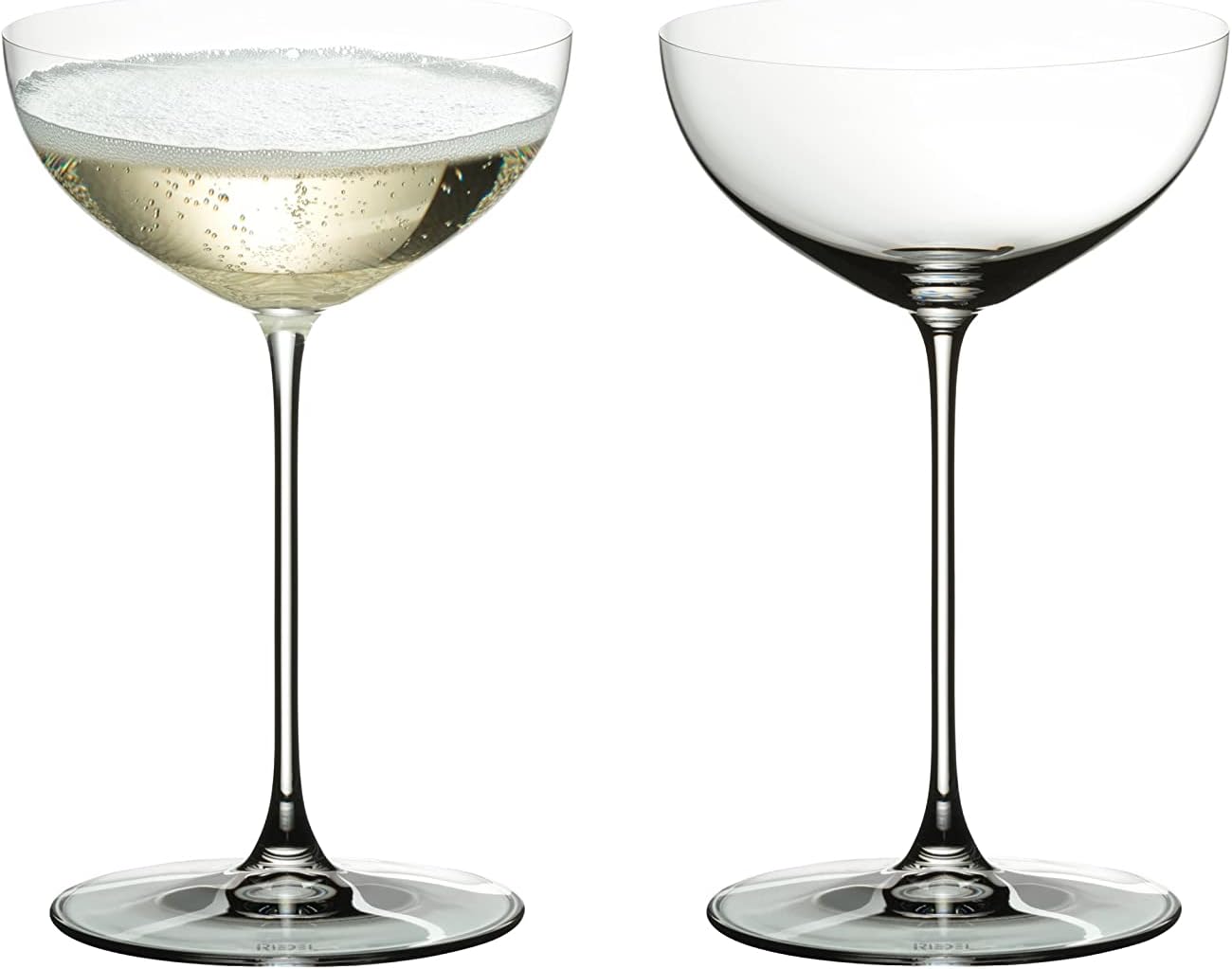
Riedel Veritas Coupe/Cocktail (Set of 2)
If you want the Gatsby look with modern crystal quality, these Riedel coupes are stunning. Perfect for Champagne towers or craft cocktails.
Check Price on AmazonGlass Anatomy: Know Your Vessel Before You Choose
To understand why a flute and a coupe produce such radically different drinking experiences, you first need to understand the vocabulary of glassware design. Every component of a sparkling wine glass has a functional purpose, and small changes in each measurement produce dramatically different sensory outcomes.
The Base
The flat foot that stabilizes the glass. Must be heavy enough to balance the bowl, which is particularly important on wide-bowled coupes that tip easily on crowded tables.
The Stem
The narrow shaft you hold to keep body heat away from the wine. Flutes have longer stems; coupes typically shorter. A longer stem keeps your hand further from the bowl, slowing temperature rise.
The Bowl
The most functionally critical component. Its width determines how much wine is exposed to air (and therefore how fast CO₂ escapes), and how much aroma collects before reaching your nose.
The Shoulder
The point where the bowl begins tapering inward toward the rim. A sharper inward taper (as in a tulip) traps aromatic vapor; a very wide-open shoulder (as in the coupe) releases it freely.
The Chimney
The vertical space between the wine’s surface and the rim. In a flute, this tall column is where bubbles travel and where you observe the bead. In a coupe, there is almost no chimney — wine sits near the rim immediately.
The Rim
Where wine contacts your lips. Thinner rims (crystal) create less physical interruption and allow smoother flow onto the tongue. The diameter of the rim relative to bowl width determines where wine lands on the tongue first.
The Nucleation Point
A microscopic rough patch — usually laser-etched — at the base of quality flute bowls. This provides a surface for dissolved CO₂ to gather and form a continuous, rising bead of bubbles. Without it, carbonation escapes less elegantly.
Bowl-to-Rim Ratio
The ratio of widest bowl diameter to rim diameter is the single most functionally significant measurement. A wide coupe has a 1:1 ratio; a tulip’s dramatic taper creates a funnel that concentrates aromatic vapor precisely under your nose.
When comparing glasses in a store, hold the rim up to light and look at the edge. A rim thinner than 1mm (quality crystal) feels barely present on the lips. A rolled rim thicker than 2mm (standard glass) feels like drinking over a ledge. For sparkling wine especially, the rim experience matters enormously.
The Science of Bubbles: Perlage, Bead, and Mousse Explained
Sparkling wine has its own vocabulary for describing effervescence, and understanding these terms helps explain why glass selection matters so profoundly. The bubbles in Champagne and other sparkling wines are not merely decorative — they are the primary vehicle by which aromatic compounds are delivered from the wine’s surface to your nose. Every time a bubble bursts at the surface, it propels a tiny jet of wine droplets into the aromatic space above the glass. The finer and more numerous the bubbles, the richer and more continuous this aromatic delivery mechanism.
The Three Bubble Terms
- Bead: The trail of individual bubbles rising from the nucleation point to the surface. A strong bead in a quality Champagne is fine, continuous, and rises in an elegant vertical column. A coarse bead indicates either lower-quality production, an improper glass, or both.
- Perlage: From the French word for “string of pearls.” Refers specifically to the sustained chain-like quality of bubbles over time. A wine with excellent perlage maintains a fine, lively stream for many minutes after pouring; poor perlage fades quickly to a few sporadic bubbles.
- Mousse: The frothy, creamy head that forms at the top of the wine immediately after pouring. In Champagne made by the traditional method (méthode champenoise), the mousse is persistent and fine-textured. In tank-method wines like Prosecco, the mousse is typically lighter and dissipates faster.
How Glass Shape Affects the Bead
CO₂ dissolved in sparkling wine wants to escape as a gas. The rate at which it escapes is directly proportional to the surface area exposed to air. A coupe, with its wide saucer-like surface, presents a dramatically larger exposure area than a flute’s narrow column. The consequence is immediate and measurable: a flute preserves carbonation significantly longer than a coupe filled with the same volume of wine.
Research conducted by University of Reims physicists (the institution geographically embedded in the Champagne region) demonstrated that the number of dissolved CO₂ molecules in a flute drops approximately four times more slowly than in a coupe. In practical terms: a flute of Champagne can remain actively effervescent for 30 to 40 minutes; the same wine in a coupe may be largely flat within 10 to 12 minutes. For a simple, affordable sparkling wine, this matters enormously. For a complex vintage Champagne where you are spending time with the wine, it matters less — you will drink it faster and the aromatics are more important than carbonation retention.
Why Bubble Size Matters for Flavor
Larger, coarser bubbles deliver CO₂ more aggressively to the palate — creating a sharper, more prickly sensation that can actually mask delicate flavors. Finer bubbles deliver a softer, creamier texture that integrates with the wine’s fruit and mineral notes rather than dominating them. The nucleation point in a quality flute generates fine, consistent bubbles precisely because the etched surface provides thousands of tiny initiation points that produce smaller bubbles than the random rough patches on unprocessed glass.
The coupe, with no chimney to organize and present the bead, generates a diffuse effervescence across the entire bowl surface — producing a wide variety of bubble sizes rather than a focused column of fine beads. For cocktails, where the aesthetic of fizz rather than its precision matters, this is fine. For a serious vintage Champagne, it is suboptimal.
The Surface Area Rule
Flavor is approximately 80% aroma. To fully taste wine, you must smell it effectively. The coupe lets aromas escape into the room; the narrow flute traps them too tightly to smell. This is why master sommeliers often reject both traditional options in favor of a tulip or white wine glass — a vessel designed to concentrate aroma while still allowing the wine to breathe.
The Flute: Precision & Fizz
The flute is engineered for one primary purpose: carbonation retention. The small surface area at the top minimizes the loss of CO₂, keeping your drink fizzy for longer. Most high-end flutes also have a nucleation point — a tiny laser-etched scratch at the bottom of the bowl — that generates a steady stream of bubbles.
Pros
- Maintains carbonation (fizz) the longest.
- Visually stunning to watch bubbles rise.
- Harder to spill than a coupe.
- Keeps wine cooler longer than a coupe (smaller surface area, longer stem).
- Better suited to younger, more carbonation-forward sparkling wines.
Cons
- The “Nose” Problem: Because the opening is so narrow, you cannot get your nose inside to smell the aromas properly.
- Muted Flavor: Without oxygen interaction, complex vintage Champagnes taste one-dimensional and closed.
- Difficult to Swirl: The narrow bowl makes it nearly impossible to swirl the wine to release aromatic compounds.
- Storage: Tall, narrow profiles tip easily on crowded surfaces and stack awkwardly in cabinets.
The flute is the right tool for young, entry-level to mid-range sparkling wines where carbonation is the star of the experience — Prosecco at a brunch, Cava at a large party, or Crémant d’Alsace as an aperitif. For a complex NV or vintage Champagne meant to be savored, the flute undersells the wine’s potential. Reach for a tulip or white wine glass instead.
The Coupe: Vintage Glamour
The coupe is all about style. It feels substantial in the hand and looks incredible in photos. However, from a technical wine tasting perspective, it has significant limitations for sparkling wine.
The extremely wide surface area allows carbonation to escape almost instantly. Within minutes, your crisp Champagne becomes noticeably less effervescent. Furthermore, the wide bowl allows aromas to disperse into the room rather than being funneled toward your nose — the opposite of what you want from a fragrant vintage Champagne.
That said, the coupe is not without purpose. Its wide bowl exposes the wine to oxygen more aggressively than a flute, and some experts argue this actually benefits the aromatic complexity of certain styles — particularly oxidative Champagnes, blanc de noirs, and rich prestige cuvées where the bouquet is expansive and robust enough to survive the dispersal. It is also the correct choice for sparkling wine cocktails, where the presentation and the drink’s mixed ingredients matter more than preserving a delicate bubble train.
Glass quality matters as much as shape. Thin-rimmed crystal will always outperform thick, rolled-rim glass. Check out our guide to the best wine glasses for recommendations on crystal manufacturers like Zalto and Riedel.

Schott Zwiesel Tritan Crystal Flute
The industry standard for durability and performance. These flutes use a laser-etched nucleation point for the perfect bubble stream.
Shop Best SellerThe Science of Taste: Head-to-Head
The Surface Area Rule
Flavor is 80% aroma. To taste wine, you must smell it. The Coupe lets smells escape; the Flute traps them too tightly. This is why sommeliers often reject both for a third option.
| Feature | Flute | Coupe | Tulip (Hybrid) |
|---|---|---|---|
| Carbonation | High Retention | Low Retention | Medium-High |
| Aroma | Trapped / Muted | Lost to Air | Focused / Concentrated |
| Stability | High | Low (Spill Prone) | High |
| Best For | Prosecco / Cava | Cocktails / Towers | Vintage Champagne |
| Aroma Access | Poor (narrow opening) | Dispersed | Excellent (funnel effect) |
| Temperature Control | Good (long stem) | Poor (wide bowl warms fast) | Good |
| Bead Visibility | Excellent | Poor (no chimney) | Good |
Flute
Strengths
- Best carbonation retention
- Elegant visual presentation
- Stable, hard to spill
- Long stem preserves temperature
Weaknesses
- Cannot nose the wine properly
- Unsuitable for complex vintages
- Cannot swirl to release aromas
Coupe
Strengths
- Iconic, photogenic aesthetic
- Wide bowl opens some aromatics
- Ideal for cocktails and towers
- Easy to drink from
Weaknesses
- Carbonation escapes rapidly
- Aromas disperse into the air
- Tips over easily
- Wine warms quickly
The Tulip & the White Wine Glass: The Sommelier’s Real Choices
If you visit a high-end winery in Épernay today, they won’t serve you in a flute or a coupe. They will use a Tulip Glass or a standard white wine glass — and there are very good reasons for both.
The Tulip Glass
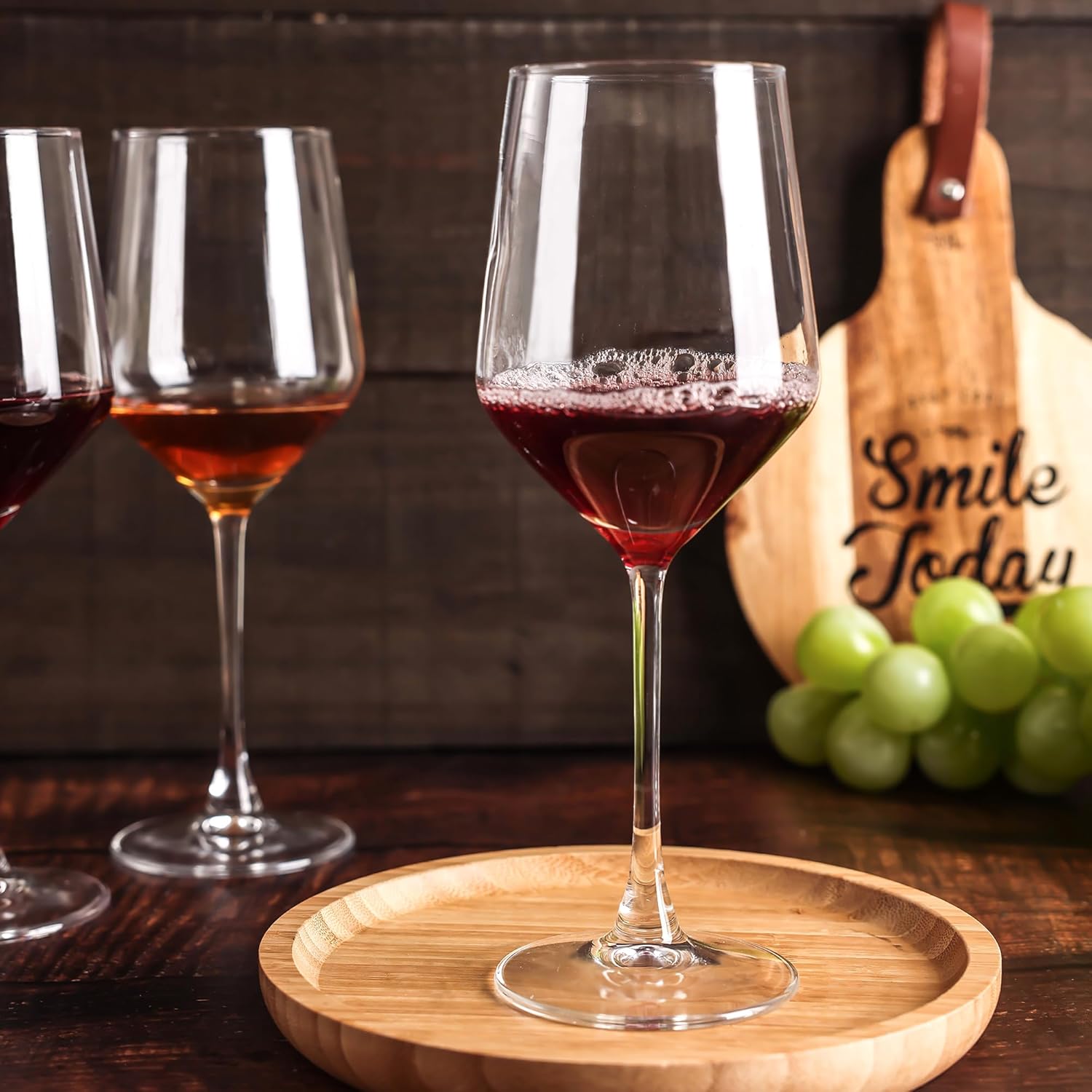
The Tulip features the height of a flute (to keep bubbles) but curves outward at the bowl and narrows again at the rim. This allows the wine to breathe and aromas to concentrate, offering the best of both worlds. The inward taper at the rim creates a funnel effect that collects volatile aromatic compounds — the toasted brioche, yeast, citrus, and chalk notes of serious Champagne — and directs them precisely to the nose just as the wine reaches the lips.
The tulip’s anatomy solves both of the traditional options’ core problems: the coupe’s carbonation loss (the taller structure retains CO₂ longer) and the flute’s aromatic suppression (the wider bowl allows the wine to breathe and reveal complexity). For the majority of Champagnes and sparkling wines, the tulip is the most technically sophisticated choice available.
The White Wine Glass
The white wine glass is increasingly the choice of master sommeliers for fine vintage Champagne. The reasoning is straightforward: a mature prestige cuvée has evolved far beyond simple effervescence as its primary virtue. The complex brioche, honey, hazelnut, and chalk notes of an aged Dom Pérignon or Krug have more in common with a rich white Burgundy than with a party flute of Prosecco. Serving it in a medium-sized white wine glass honors those evolved aromatics while the wider bowl allows gradual aeration that reveals the wine’s complexity over the course of a dinner.
Riedel’s own Superleggero collection includes a Champagne glass that deliberately mimics the white wine glass shape — a direct acknowledgment from the world’s most influential glassware designer that the traditional flute is not the optimal vessel for serious sparkling wine.
Keeping these specialized glasses pristine is a challenge. Delicate rims chip easily. We recommend reading our tips on how to clean delicate glassware to ensure your crystal lasts a lifetime.
Which Glass for Which Sparkling Wine? A Complete Style Guide
Not all sparkling wines are Champagne, and not all sparkling wines suit the same glass. The appropriate vessel depends on the wine’s production method, its pressure level, its aromatic complexity, and its intended experience. Here is a comprehensive guide to matching every major sparkling style with its optimal glass.
Traditional Method Sparkling Wines
Traditional method wines (méthode champenoise or méthode traditionnelle) undergo their secondary fermentation inside the bottle, creating finer, more persistent bubbles and developing complex autolytic notes — biscuit, brioche, toast, almond — from extended contact with the spent yeast cells. These wines have the most complex aromatics of any sparkling style and benefit from a vessel that can capture and concentrate those notes. The tulip or a medium-sized white wine glass is the optimal choice.
- Champagne (France): Tulip or white wine glass for NV; white wine glass for vintage and prestige cuvée
- Crémant d’Alsace, d’Bourgogne, de Loire: Tulip — these are traditional method wines that deserve better than a simple flute
- Cava (Spain): Flute or tulip — Cava’s earthier, more rustic character suits both
- Franciacorta (Italy): White wine glass or tulip — Italy’s most Champagne-like sparkling wine deserves the same treatment
- English Sparkling Wine (Nyetimber, Ridgeview, Chapel Down): White wine glass — the high acidity and orchard fruit character of English sparkling wine opens beautifully in a wider bowl
Tank Method Sparkling Wines
Tank method wines (Charmat or Martinotti process) undergo secondary fermentation in large, pressurized tanks rather than individual bottles. The resulting wines are fruitier, fresher, and have larger, more forward bubbles. The lack of extended lees contact means they have less autolytic complexity and more immediate, primary fruit character. For these wines, the flute is actually quite appropriate — it showcases their effervescence without requiring complex aromatic delivery that a wider bowl would provide.
- Prosecco (Italy): Flute — the fresh, apple, pear, and white flower aromatics are vibrant enough to express through the flute’s narrower opening, and the effervescence is the star
- Moscato d’Asti: A slightly wider glass, almost a white wine shape — the delicate, low-alcohol sweetness needs more aroma access than a narrow flute provides
- Lambrusco (sparkling red): A short, wide-mouthed glass — the rustic, fruity character benefits from aeration
Ancestral Method (Pét-Nat) Sparkling Wines
Pétillant-Naturel (Pét-Nat) wines are among the most ancient sparkling styles — bottled before primary fermentation is complete, they finish fermenting in the bottle without the addition of a liqueur de tirage. The result is a lightly fizzy, often slightly cloudy wine with primary fruit character, very low pressure, and a rustic, natural quality. Because Pét-Nat has significantly lower carbonation pressure than Champagne (approximately 1.5–2.5 bar versus Champagne’s 5–6 bar), the carbonation retention argument for a flute is less compelling. A small white wine glass or tulip preserves the gentle fizz while allowing the fresh, often funky aromatic character to express fully.
Rosé Sparkling Wines
Sparkling rosé — whether Champagne rosé, Crémant rosé, or Cava rosado — benefits from a glass that showcases both its color and its aromatic complexity. The tulip is ideal: the pink color is visible through the narrower column, the red fruit and floral notes are concentrated by the taper, and the effervescence is preserved effectively. The coupe is particularly destructive to rosé sparkling wines because the color is diluted visually across the wide, shallow bowl, and the delicate strawberry and rose aromatics disperse too quickly.
| Sparkling Wine Style | Production Method | Recommended Glass | Why |
|---|---|---|---|
| NV Champagne | Traditional | Tulip | Balances fizz preservation and aroma concentration |
| Vintage / Prestige Cuvée Champagne | Traditional | White wine glass | Complex evolved aromatics need a wider bowl |
| Prosecco | Tank (Charmat) | Flute | Showcases fresh effervescence; primary fruit is robust |
| Cava | Traditional | Flute or tulip | Earthy rustic character suits both; tulip for aged Reserva |
| Franciacorta | Traditional | White wine glass or tulip | Complexity rivals Champagne; deserves the same treatment |
| English Sparkling | Traditional | White wine glass | High acidity and orchard fruit expand in wider bowl |
| Crémant | Traditional | Tulip | Traditional method complexity deserves aroma access |
| Pét-Nat | Ancestral | Small white wine glass | Low pressure; rustic aromatic character needs open bowl |
| Sparkling Rosé | Various | Tulip | Color visibility + aromatic concentration + fizz |
| Moscato d’Asti | Tank | Slightly wider flute or tulip | Delicate sweetness needs more aroma access |
Vintage vs Non-Vintage Champagne: Does the Glass Change?
The difference between non-vintage (NV) Champagne and vintage Champagne is not merely one of price — it reflects a fundamentally different wine at a fundamentally different stage of development. Understanding this distinction directly informs glass selection.
Non-Vintage Champagne
NV Champagne is a blend of multiple harvests, crafted to deliver a consistent house style year after year. It is designed to be accessible, immediate, and dependably expressive of fresh fruit, yeast, and crisp acidity. The house blender’s art ensures that NV Champagne is always ready to drink from release. For NV Champagne, a quality tulip glass is optimal — it preserves the lively carbonation that is a defining pleasure of the style, while providing enough bowl width to allow the fresh citrus and brioche notes to reach the nose.
Vintage Champagne
Vintage Champagne is produced only in exceptional harvest years from a single year’s grapes. It spends significantly longer on its lees (often six or more years for prestige cuvées) and undergoes more complex autolytic development. By the time it reaches your glass, a mature vintage Champagne is as much about depth, complexity, and evolved tertiary notes — honeyed autolytic character, roasted nuts, truffle, chalk, dried citrus — as it is about effervescence.
For vintage Champagne, the white wine glass increasingly earns its place. The wider bowl allows these evolved aromatic compounds to express themselves over time, the way a mature white Burgundy reveals itself slowly in a generous bowl. The carbonation in a well-aged vintage Champagne is typically softer and more integrated than in NV — it has had time to settle — and the risk of losing too much carbonation in a wider glass is less acute. Many sommeliers at prestigious Champagne houses specifically serve vintage Champagne and prestige cuvées (Dom Pérignon, Krug, Cristal, Salon) in a white wine glass rather than a flute for exactly this reason.
For any Champagne over approximately $80 per bottle — Dom Pérignon, Krug Grande Cuvée, Bollinger R.D., Louis Roederer Cristal, Salon Le Mesnil — use a white wine glass or a wide tulip. You are paying for exceptional complexity that a narrow flute will suppress. The effervescence in these wines is a supporting player, not the main attraction.
Serving Temperature: The Other Half of the Glass Equation
The choice of glass is inextricably linked to serving temperature. Get one right and the other wrong, and the wine’s potential remains unrealized. Sparkling wine is more temperature-sensitive than virtually any other wine style — a few degrees difference profoundly affects carbonation behavior, aroma expression, and palate freshness.
| Sparkling Style | Ideal Serving Temp | Too Cold Effect | Too Warm Effect |
|---|---|---|---|
| NV Champagne | 45–48°F (7–9°C) | Aromas shut down; tastes austere | Flat, flabby; foam overflows on pour |
| Vintage / Prestige Champagne | 50–54°F (10–12°C) | Evolved complex notes go mute | Alcohol too forward; loses elegance |
| Prosecco | 41–46°F (5–8°C) | Fresh aromatics suppressed | Quickly goes flat; tastes sweet |
| Cava | 43–48°F (6–9°C) | Earthy notes disappear | Loses freshness quickly |
| Sparkling Rosé | 46–50°F (8–10°C) | Red fruit aromas muted | Thin and alcoholic on palate |
| Pét-Nat | 50–55°F (10–13°C) | Natural character suppressed | Low pressure accelerates flat |
Notice the critical interaction with glass choice: the coupe’s wide bowl warms wine approximately twice as fast as a flute at normal room temperature. If you serve a Champagne at the correct 47°F in a coupe, it will reach 60°F and be perceptibly warm within 15 to 20 minutes. The flute’s narrower bowl and longer stem slow this warming significantly, keeping the wine closer to serving temperature throughout the session. This is yet another reason the coupe, for all its charm, actively works against the wine’s best interests.
How to Chill Champagne Correctly
Proper chilling is as important as glass selection. The way you bring a sparkling wine to serving temperature affects both the wine itself and how it behaves when poured.
The Ice Bucket Method (Best for Parties)
Fill a bucket with half ice and half cold water — not ice alone. Water conducts cold far more effectively than air, and a fully ice-packed bucket with no water will take twice as long as an ice-and-water mixture. Submerge the bottle up to the neck (not the capsule). A standard 750ml bottle reaches serving temperature in 20 to 25 minutes in this setup. Twist the bottle periodically to accelerate chilling. This is the method used by professional sommeliers at the table for good reason — it is fast, even, and controllable.
The Refrigerator Method (Best for Planning Ahead)
A standard domestic refrigerator set to 38–40°F (3–4°C) will bring a room-temperature bottle to serving temperature in approximately 3 to 4 hours. However, this is colder than the ideal serving temperature for most sparkling wines — particularly vintage Champagne. If chilling overnight, remove the bottle from the refrigerator 15 to 20 minutes before serving to allow it to warm slightly to the ideal range.
Long-term storage of sparkling wine in a domestic refrigerator is inadvisable. The extremely low temperature (well below the ideal storage range of 50–55°F for serious Champagne), the vibration from the compressor, and the dry environment can all harm wine quality over weeks and months. Use a wine fridge for storage and the domestic refrigerator for same-day chilling only.
What to Avoid
- The freezer: A 20-minute freeze will chill Champagne, but the extreme temperature shocks the wine and can cause CO₂ to become unstable. The bottle may overflow dramatically on opening if frozen and then warmed. Never freeze sparkling wine.
- Dry ice: Effective but requires precise timing. A bottle left too long in dry ice can freeze solid and crack under the internal pressure.
- Pre-chilling glasses: Avoid placing crystal glasses in a freezer to pre-chill them. The thermal shock of pouring room-temperature wine into a frozen crystal glass is a reliable way to crack the base. Instead, briefly rinse glasses in cold water before filling.
Never store Champagne or any sparkling wine long-term in a domestic refrigerator. The cold temperature, vibration, and low humidity are all damaging over weeks and months. Only chill sparkling wine in the refrigerator on the day you intend to drink it — ideally for no more than 3 to 4 hours before serving.
How to Pour Champagne Like a Sommelier
Even with the right glass at the right temperature, a poor pour can undermine the experience. Professional Champagne service follows a specific technique that minimizes foam overflow, preserves carbonation, and presents the wine at its best.
Step-by-Step Pouring Technique
- Tilt the glass at 45 degrees. Hold the flute or tulip at an angle and pour the Champagne down the inside wall of the glass rather than directly into the base. This dramatically reduces the foaming cascade that results from a direct, vertical pour into the bottom of the glass.
- Pour slowly in two stages. Fill the glass to approximately one-third to start. Allow the initial foam to settle for 10 to 15 seconds, then top up to between one-half and two-thirds of the bowl’s capacity. Never fill above two-thirds — you need chimney space for the bead and for aromatic concentration.
- For a coupe, pour to no more than half full. The wide, shallow bowl means a fuller pour is extremely prone to spillage when the glass is lifted. The two-stage pour is particularly important for coupes, where the initial agitation creates very active foam across the entire broad surface.
- Control the temperature of the bottle. A warm bottle poured into a cold glass foams aggressively. A chilled bottle poured into a room-temperature glass also foams. Both glass and bottle should be at compatible temperatures.
- Wrap the bottle in a cloth. Professional sommeliers always wrap the bottle in a white service cloth during pouring — this prevents the hand from warming the bottle during service and provides a clean, professional presentation.
Fill Levels by Glass Type
| Glass Type | Fill Level | Volume (approx.) | Why |
|---|---|---|---|
| Flute (200ml bowl) | Half to two-thirds full | 100–130ml | Allows chimney space for bead and aroma to accumulate |
| Coupe (180–240ml bowl) | No more than half | 80–100ml | Prevents spillage; a full coupe is an unstable coupe |
| Tulip (280–350ml bowl) | One-third to half | 100–130ml | Wider bowl amplifies aeration; overfilling wastes aromatic space |
| White wine glass (350–500ml bowl) | One-quarter to one-third | 100–130ml | Wide bowl needs maximum headspace for aroma collection |
Champagne Cocktails: Which Glass for Which Drink?
Sparkling wine and Champagne form the base of some of the most elegant and beloved cocktails in existence. Each cocktail has a traditional glass pairing that serves both function and aesthetics — and in many cases, the choice between a flute and a coupe changes the character of the drink meaningfully.
Classic Champagne Cocktails by Glass
Flute Cocktails
- French 75: The definitive flute cocktail. Gin (or Cognac), lemon juice, simple syrup, and Champagne. The tall flute showcases the rising bubbles through the pale gold liquid and preserves the effervescence that gives this cocktail its distinctive zing. A lemon twist garnish draped over the rim is the classic presentation.
- Kir Royale: Crème de cassis with Champagne. The deep purple-red of the cassis layering through golden Champagne in a tall flute is one of the most visually striking drinks in existence. The flute’s height presents the color gradient beautifully.
- Mimosa: Orange juice and Champagne in equal parts. The flute’s narrow bowl limits the surface area for the juice, keeping the Champagne component more lively. Always pour the Champagne over the juice, not the reverse.
- Blood Orange Mimosa: As with the standard mimosa but with blood orange juice, creating a deep ruby-orange color that is best presented in the visual column of a flute.
- Bellini: White peach purée and Prosecco. The flute is traditional for this Venetian classic. The thick purée mixed with lively Prosecco benefits from the tall column that allows the effervescence to integrate with the fruit.
Coupe Cocktails
- Champagne Tower: The coupe’s defining purpose. The flat bottom and consistent shape allow a stable pyramid. Standard tower ratios: 1 glass at the top, 4 below, 9 below that, and so on. The coupe’s stability in a stacked formation is impossible with flutes.
- Classic Champagne Cocktail: Sugar cube soaked in Angostura bitters, Cognac, and Champagne. The coupe suits this old-fashioned, vintage-style drink — it belongs to the same era and the wide bowl displays the bitters-stained sugar cube beautifully.
- Sparkling Cosmopolitan: Vodka, triple sec, cranberry juice, and Champagne. The coupe’s wide rim works well for cocktails where the sparkling wine is a supporting ingredient rather than the star, allowing all components to express simultaneously.
- Aperol Spritz (elevated): Typically served over ice in a large wine glass, but a generous coupe without ice makes an elegant table presentation for a dinner party.
When Champagne or sparkling wine is a primary ingredient (contributing 50% or more of the liquid), glass shape matters for carbonation and aroma — use a flute or tulip. When sparkling wine is a finishing ingredient in a spirit-forward cocktail (contributing 30% or less), the coupe’s aesthetics take priority and the fizz question is secondary. Use whichever glass suits the cocktail’s visual presentation best.
Food Pairing by Glass Shape and Wine Style
The glass you choose should reflect both the wine and the food it accompanies. Because different glass shapes deliver wine to different parts of the palate — the flute directing wine toward the front and sides, the wider tulip allowing a more complete palate engagement — the glass choice subtly shifts how the pairing interacts with your food.
Classic Champagne Pairings by Glass
Flute Pairings (Fresh, Effervescence-Forward)
The flute’s ability to deliver a lively, carbonation-forward experience makes it ideal for pairing with foods where the bubbles do the heavy lifting — cutting through fat, refreshing the palate, and cleansing between bites. These are the snack and starter pairings where effervescence is more important than aromatic complexity.
- Fried foods: Fried chicken and Champagne is one of the great high-low pairings of the wine world. The bubbles skim the fat from the lips and reset the palate between bites. A flute preserves enough carbonation to make this work through an entire serving.
- Potato chips and salty snacks: The salt amplifies the wine’s fruit; the bubbles cleanse the oil. Simple, brilliant.
- Sushi and sashimi: The clean, mineral, acid-forward character of NV Champagne in a flute mirrors the clean flavor of raw fish. The fizz mimics the refreshing role of palate-cleansing ginger.
- Oysters: The classic pairing. The briny, oceanic character of raw oysters and the citrus and chalk of a Blanc de Blancs Champagne in a flute is one of the most celebrated food-and-wine combinations that exists.
Tulip / White Wine Glass Pairings (Complex, Aromatic)
The tulip and white wine glass, by delivering more aromatic complexity, are better suited to the richer, more complex food pairings that benefit from a wine with genuine flavor depth rather than just refreshing bubbles.
- Caviar with blinis and crème fraîche: Prestige cuvée Champagne in a white wine glass. The wide bowl reveals the brioche, chalk, and aged complexity that matches caviar’s intense, luxurious richness.
- Roast chicken and cream sauces: A full NV or vintage Champagne or a Franciacorta in a tulip. The wine’s autolytic notes (butter, toast, pastry) echo the richness of the dish.
- Aged hard cheeses: Comté, aged Gruyère, and Parmigiano-Reggiano with vintage Champagne in a white wine glass. The nutty, crystalline character of the cheese harmonizes with the evolved brioche and hazelnut notes of an aged Champagne.
- Mushroom risotto: Blanc de noirs Champagne or earthy Crémant in a tulip. The earthiness of the mushroom and the pinot-derived depth of a blanc de noirs create a surprisingly profound pairing.
Coupe Pairings (Cocktail and Party Context)
- Canapés and passed hors d’oeuvres: The coupe is the party glass. For heavy-traffic entertaining where guests circulate, the aesthetic of a coupe-filled tray and its stability when held makes it the practical choice for light canapes, smoked salmon blinis, and simple cheese crackers.
- Cocktail accompaniments: When the glass contains a Champagne cocktail rather than straight Champagne, pair with anything that suits the cocktail’s flavor profile regardless of glass choice.
Stemless Champagne Glasses: When Are They Acceptable?
Stemless glasses have become popular for wine in general, and stemless flutes and tulips are now widely available. The appeal is obvious — they are harder to knock over, store easily in standard cabinets, and feel more casual and approachable. But for sparkling wine specifically, stemless glasses carry meaningful tradeoffs that are worth understanding before you buy a set.
The Temperature Problem
The stem on a wine glass serves one primary function: it gives your hand somewhere to hold that is not the bowl. Because the bowl of a glass contains the wine and the warm air above it, any hand contact transfers body heat (approximately 91°F / 33°C skin surface temperature) directly into the wine. For sparkling wine served at 45–50°F, the temperature difference between the wine and your palm is extreme — a bare-handed stemless glass in a warm room can raise the wine’s temperature by 5 to 8 degrees within a few minutes of holding.
For a simple Prosecco at a casual outdoor gathering, this is an acceptable tradeoff. For a $100 vintage Champagne, it is a noticeable waste. If you use stemless sparkling glasses, hold them by the base rather than the bowl wherever possible, and serve in smaller quantities that can be consumed before the wine warms.
When Stemless Works
- Outdoor summer parties where breakage risk is high and beverage temperature is a secondary concern
- Casual mimosa brunch situations where the juice component already warms the drink quickly
- Households with children or accident-prone guests where crystal stems are impractical
- Camping, picnics, and informal settings where the alternative is a plastic cup
When to Use Stemmed
For any serious sparkling wine — a quality NV Champagne, a vintage, a prestige cuvée, or any bottle over $30 — always use stemmed glassware. The stem is not merely decorative; it is a functional component that preserves the wine at its intended serving temperature and allows a clean, fingerprint-free view of the bead and color.
The Champagne Tower: How to Build One Correctly
The Champagne tower (or coupe pyramid) is one of the great theatrical gestures of celebration culture. Done properly, it is genuinely spectacular. Done incorrectly, it is an expensive, soggy disaster. Here is the complete guide.
Why Only Coupes Work for Towers
The coupe’s flat base and low center of gravity make it stackable. Coupes of the same manufacturer and style are manufactured to consistent dimensions, allowing their bases to rest stably on the rims of the glasses below. Flutes, tulips, and white wine glasses are all impossible to stack in this manner — their tall, narrow profiles and round bases create no stable stacking surface. The coupe’s design, while suboptimal for drinking serious Champagne, is perfectly engineered for this specific theatrical purpose.
Step-by-Step Tower Construction
- Use matching coupes from the same manufacturer. Mixing brands or styles creates uneven stacking surfaces that destabilize the tower. Buy a dedicated set specifically for tower use — these do not need to be expensive crystal.
- Stack on a flat, stable surface. A tablecloth adds softness that can shift; a hard surface is more stable. The base layer must be absolutely level.
- Build in layers from the bottom up: 16 glasses on the base (4×4), 9 in the second tier (3×3), 4 in the third tier (2×2), 1 on top. This creates a 4-tier tower for 30 glasses total. Larger towers (6×6 base and above) require professional setup.
- Pour Champagne into the top glass only. The wine will overflow the top glass, cascade into the second tier, and flow down through all layers. This is the effect. Do not attempt to individually fill lower glasses.
- Use an affordable sparkling wine. A tower is for presentation, not for savoring complexity. Prosecco, Cava, or an entry-level Crémant are all entirely appropriate and dramatically more economical than NV Champagne at tower volumes.
A 30-glass coupe tower contains approximately 3 to 4 liters of wine and represents a significant weight and balance challenge. Always construct towers at table level, never on a raised surface. Have a second person steady the structure during construction. Wet glass bases are extremely slippery — have cloths ready to dry the base of each glass before placing it on the level below. Never attempt a tower on a surface that will be disturbed by people passing nearby.
Crystal vs Standard Glass: Does It Matter for Sparkling Wine?
For sparkling wine specifically, the crystal versus glass debate has a clearer answer than it does for still wines. Rim thinness — crystal’s primary functional advantage — directly affects how the wine flows from the glass onto the palate, and that flow matters particularly for carbonated wines where a thick rim can create unwanted turbulence and uneven bubble delivery.
What Separates Crystal from Glass
Modern lead-free crystal (using barium oxide, titanium oxide, or zinc oxide rather than the traditional lead oxide) achieves two things that standard glass cannot: it can be spun dramatically thinner at the rim (0.5–0.8mm versus 1.5–2.5mm in standard glass), and it has a higher refractive index that produces the characteristic sparkle and brilliance associated with fine stemware.
A thin rim means less physical interruption between the wine and the tongue. For sparkling wine, this is particularly meaningful because the fine bubbles in quality Champagne are tiny, delicate structures. A thick glass rim creates a “ledge” that the wine must flow over, and this transition creates turbulence that breaks up the bubble stream before it reaches the palate. A razor-thin crystal rim allows the wine to flow smoothly off the edge, delivering the bead intact.
The Practical Answer
For entertaining at scale — parties of eight or more, tower construction, casual outdoor events — standard glass sparkling flutes are entirely adequate and dramatically more economical. Breakage at large gatherings is inevitable, and the financial and emotional cost of breaking high-end crystal is significant.
For intimate settings where you are serving fine Champagne to a small number of people who will genuinely appreciate the experience, good crystal — Riedel Vinum at minimum, Zalto or Grassl at the pinnacle — makes a perceptible difference that compounds the quality of the wine itself.
Budget Buying Guide: What to Spend and Where
Sparkling wine glassware spans an extraordinary price range — from $3 per glass to $120 per glass for hand-blown crystal. Here is a frank breakdown of where spending more actually makes a functional difference and where it does not.
Entry Level
Brands: IKEA Svalka, Amazon Basics, Libbey. Standard machine-made glass. Fine for large parties, coupe towers, and casual mimosa brunches. Thick rims but adequate function for everyday Prosecco and Cava.
Mid-Range
Brands: Spiegelau, Riedel Vinum, Schott Zwiesel Tritan. The functional step-change tier. Crystal quality noticeably improves the experience of quality NV Champagne. Best value tier for regular enthusiasts. Often dishwasher-tolerant.
Premium
Brands: Zalto Denk’Art, Grassl Liberté, Riedel Sommeliers. Hand-blown, ultra-thin crystal that transforms the experience of fine vintage Champagne. Hand-wash only. Measurably better aromatic delivery and rim feel.
Collector
Brands: Riedel Superleggero, bespoke artisan pieces. For those who regard stemware as an expression of the same care invested in the wines themselves. Diminishing functional returns but extraordinary craftsmanship.
How Many to Buy
- Couple or solo drinker: 4 tulip glasses (versatile, covers both Champagne and Prosecco use cases) plus 4 coupes if you entertain.
- Regular dinner parties (6–8 guests): 8 tulip glasses and 8 coupes minimum. Consider 12 of each to cover breakage.
- Champagne tower entertaining: 30 matching coupes (entry-level quality) plus a separate set of quality flutes or tulips for drinking from before and after the tower pour.
Cleaning Crystal
Whether you choose the flute for the fizz or the coupe for the vibe, maintenance is key. Soap residue is the enemy of bubbles — it kills the surface tension needed for effervescence and can coat the nucleation point that creates the bead. Always wash with hot water and minimal detergent, or better yet, hot water alone for crystal glasses used exclusively for sparkling wine.
- Washing: Avoid standard dish soap if possible; it leaves a residue that kills bubbles in sparkling wine and alters flavor. Use hot water and a dedicated brush.
- Drying: Never air dry. Water spots are mineral deposits that etch the glass surface over time and, crucially, can coat or block the nucleation point — destroying the bead effect that is the entire reason to own a quality flute. Use a specialized microfiber cloth immediately after washing.
- Handling: Hold by the stem, not the bowl. This prevents fingerprints and keeps body heat away from the wine during service.
- Storage: Store flutes and tulips upright wherever possible rather than inverted. Inverted storage can trap wood or cabinet odors in the bowl, which crystal’s porous surface absorbs. If storing inverted on a shelf, ensure the shelf surface is clean and smooth — abrasive shelf liners will gradually chip the rim.
- Polishing the Nucleation Point: Never scrub the interior base of a flute with an abrasive — you will remove the laser-etching that creates the bead. Use only a soft cloth or brush and rinse with hot water.
To get that streak-free shine that makes the bubbles sparkle, never air dry. Use a specialized microfiber cloth. See our review of the best wine glass polishing cloths to finish the job like a pro.

Riedel Large Microfiber Polishing Cloth
Don’t use paper towels on expensive glass. This cloth removes grease and dries without leaving lint or scratches. Essential for maintaining the nucleation point in quality flutes.
Get the ClothFrequently Asked Questions
The coupe has a very wide surface area, which allows Carbon Dioxide (CO₂) to escape rapidly. Research shows carbonation in a coupe dissipates approximately four times faster than in a flute. It is physically the worst shape for retaining carbonation — by design, not by accident. The coupe was created before the modern understanding of CO₂ dynamics in sparkling wine, and its wide, shallow profile simply cannot compete with the narrow flute for effervescence preservation.
Yes — and many experts actively prefer it, particularly for fine vintage Champagne. A medium-sized white wine glass allows the complex, evolved aromatics of a mature vintage Champagne to open up in ways that a narrow flute suppresses entirely. Riedel’s own Superleggero collection includes a Champagne glass shaped deliberately like a white wine glass for exactly this reason. The tradeoff is slightly faster carbonation loss, which is acceptable when the wine’s complexity is more valuable than its effervescence.
A nucleation point is a tiny etched mark — usually laser-cut — at the very bottom of a quality flute’s bowl. It provides a rough surface for dissolved CO₂ to gather and form bubbles, creating the steady, vertical bead of rising fizz that defines a well-served glass of sparkling wine. Without a nucleation point, bubbles form randomly across the bowl surface rather than in a focused, elegant column. This is why the nucleation point should never be scrubbed with abrasive materials — removing it destroys the bead effect.
Water spots are caused by minerals in tap water drying on the glass surface. They are not merely aesthetic — mineral deposits can partially block the nucleation point and reduce the bead quality over time. Prevent them by drying glasses immediately after washing with a lint-free microfiber polishing cloth. Never air dry sparkling wine glasses. If spots have formed, a brief wipe with a cloth dampened with white wine vinegar followed by a fresh hot-water rinse and immediate drying resolves them.
Typically, a coupe holds slightly more (around 180–240ml at capacity) versus a standard flute (around 180–200ml). However, proper serving amounts are significantly less than capacity for both: a flute should be filled to about 100–130ml (half to two-thirds), while a coupe should never be filled more than half to prevent spillage. In practice, a properly served flute delivers a similar volume per pour to a properly served coupe — the coupe just looks like it holds more because its wide bowl is visible while sitting on a table.
For Prosecco, the flute is genuinely the best choice — and this is one area where the flute’s traditional role is well-supported. Prosecco’s appeal is its fresh, lively effervescence and primary fruit character (apple, pear, white peach). It lacks the complex autolytic notes of traditional-method Champagne that require a wider bowl to express. A flute showcases Prosecco’s best qualities — the bead, the freshness, the fruit — without needing the aroma-concentrating properties of a tulip or white wine glass. For premium Valdobbiadene Superiore Prosecco DOCG, a tulip glass rewards you with more aromatic complexity.
Yes — a tulip glass is ideal for Champagne rosé. The tulip’s taper concentrates the delicate red fruit, rose petal, and strawberry aromatics that define rosé Champagne, while the slightly wider bowl than a flute also displays the beautiful copper-pink color to full effect. A coupe actively harms rosé Champagne: the wide bowl disperses both the color (making it look pale and diluted across the broad surface) and the aromatics before they reach the nose.
Indirectly, yes. Glass shape affects how quickly you consume a sparkling wine (a coupe empties faster because it is shallower and you drink larger sips), and serving temperature affects how much you consume (warmer Champagne feels less refreshing and people often drink more quickly to “finish it before it goes flat”). The coupe’s combination of faster carbonation loss and faster consumption rate means you are likely to drink more Champagne more quickly from coupes than from flutes, which correlates with greater subsequent effects. The glass does not change the chemistry of the wine — but it influences consumption behavior.