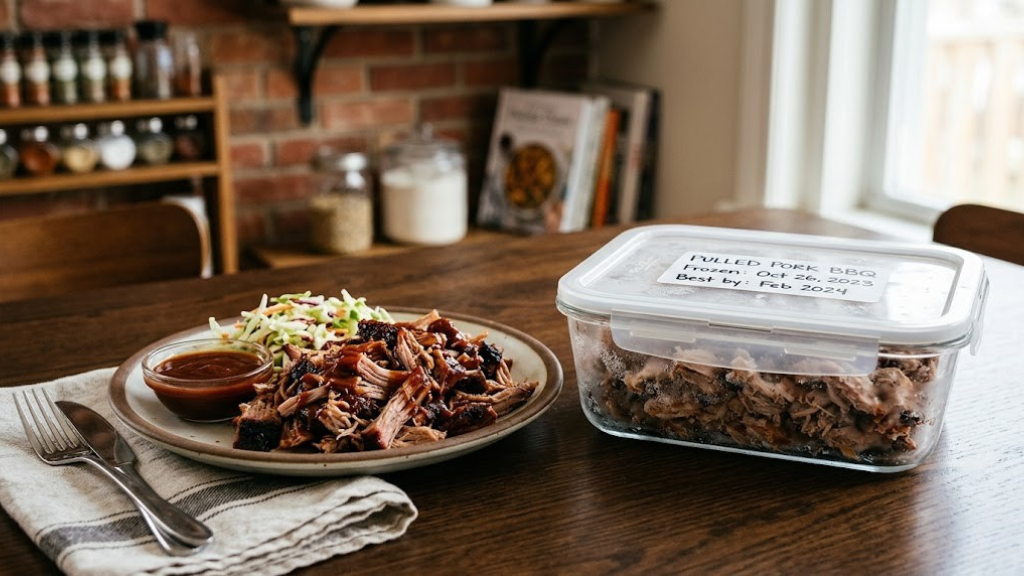
The answer is an unqualified yes — and pulled pork is one of the most freeze-friendly BBQ meats you can make. The high fat content and collagen-rich connective tissue in pork shoulder protect moisture through the freeze-thaw cycle better than leaner cuts. A batch of pulled pork you smoked last weekend can come out of the freezer six months from now tasting nearly identical to the day it was made — if you store it correctly.
This guide covers everything: the science of why pork freezes so well, exactly how to package and freeze it for maximum quality, sauce-on versus sauce-off freezing, the safest thawing methods, how to reheat without drying it out, and a batch cooking strategy that fills your freezer with months of BBQ-ready meals from a single smoking session.
The Short Answer — and the Science Behind It
You can absolutely freeze pulled pork barbecue, and you should. The real question isn’t whether it’s possible but how to do it in a way that preserves the texture, moisture, and smoky flavor that made it worth making in the first place.
Pulled pork is made from pork shoulder — also called pork butt or Boston butt — a cut with a high percentage of intramuscular fat and collagen-rich connective tissue. During the long smoking or slow-cooking process, that collagen converts to gelatin, which surrounds the muscle fibers and keeps the meat moist and tender. That same gelatin is what makes pulled pork so freezer-resilient. When you freeze the pork, the gelatin solidifies and acts almost like a protective barrier around the muscle fibers. When you thaw and reheat, the gelatin re-liquefies and re-basters the meat from the inside.
Compare this to a lean cut like chicken breast or pork tenderloin, which have minimal fat or connective tissue. Those cuts lose moisture readily through the formation of ice crystals during freezing and suffer noticeably in texture after thawing. Pulled pork simply doesn’t have this problem at the same scale, which is why experienced pitmasters have been batch-cooking and freezing pulled pork as a meal prep strategy for decades.
The USDA on frozen cooked pork: According to USDA food safety guidelines, frozen cooked pork maintains best quality for 2–3 months but is safe to eat indefinitely at 0°F or below. Quality — not safety — is the limiting factor. Most pitmaster experience suggests excellent quality up to 6 months with proper packaging.
What Affects Quality in Frozen Pulled Pork?
The two main enemies of frozen pulled pork quality are freezer burn and temperature fluctuation. Freezer burn occurs when moisture escapes from the surface of the meat and sublimates directly to vapor, leaving dry, discolored patches with degraded flavor and texture. It happens when packaging allows air contact with the meat surface. Temperature fluctuation — the freeze-thaw cycling that occurs when you open a freezer frequently or when it’s in an unconditioned garage — accelerates ice crystal growth and damages muscle fiber structure.
Both of these problems are entirely preventable with proper packaging and storage location — which we cover in detail in sections 5 and 6 below.
| Storage Method | Quality Duration | Safety Duration | Risk Level |
|---|---|---|---|
| Counter / Room Temp | 2 hours max | 2 hours (1 hr if >90°F) | Danger Zone — never |
| Refrigerator (36–40°F) | 3–4 days | 3–4 days | Use quickly |
| Zip bag freezer (0°F) | 2–4 months | Indefinite | Good with care |
| Vacuum-sealed freezer | 6–12 months | Indefinite | Excellent |
| Deep freeze (−10°F) | 12–18 months | Indefinite | Best long-term |
Why Pulled Pork Handles Freezing Better Than Other Meats
Understanding why pulled pork freezes so well helps you understand the right way to treat it. The key is the difference between connective tissue proteins and muscle fiber proteins when exposed to ice crystal formation.
When any meat freezes, water inside and between the muscle cells forms ice crystals. As these crystals grow, they can pierce cell walls and disrupt the structural integrity of the muscle fibers. When the meat thaws, moisture that was previously held inside the cells leaks out — this is the “drip loss” you see when thawing meat, and it corresponds to texture degradation and dryness in the cooked product.
In a lean cut, the cells are tightly packed and the only moisture is what’s inside the muscle fibers themselves. When freezing damages those fibers, there’s no backup moisture source. In pulled pork, the converted collagen gelatin forms a semi-continuous moisture network throughout the meat. When ice crystals damage some muscle fibers during freezing, the surrounding gelatin matrix cushions the impact. When the meat reheats, the gelatin liquefies and essentially re-moisturizes any fibers that did sustain damage during freezing.
The practical upshot: Pulled pork is one of those meats that actually gets a slight pass from a pitmaster’s standpoint when it comes to freezing. You will almost certainly not be able to tell the difference between freshly-made and properly-frozen pulled pork once it’s been reheated correctly. This cannot be said of many other BBQ proteins.
How Pulled Pork Compares to Other BBQ Meats for Freezing
| BBQ Meat | Freeze Quality | Why | Recommend? |
|---|---|---|---|
| Pulled Pork | Excellent | High fat, collagen gelatin matrix protects moisture | ✓ Highly recommended |
| Beef Brisket (sliced) | Very Good | High fat cap and intramuscular fat; slice thinly before freezing | ✓ Recommended |
| Smoked Ribs | Good | Fat and collagen help but bone attachment can cause uneven thaw | ✓ Freeze without sauce |
| Smoked Chicken | Moderate | Breast meat dries out significantly; thighs hold up much better | ✓ Thighs only ideally |
| Smoked Turkey Breast | Moderate | Very lean — freezes acceptably but texture suffers more than pork | ⚠ Careful reheating required |
| Smoked Sausage | Excellent | High fat content, pre-cured; handles freezing as well as raw sausage | ✓ Highly recommended |

FoodSaver Vacuum Sealer — The Gold Standard for BBQ Freezer Storage
Vacuum sealing is the single most effective upgrade for freezing pulled pork. Removing all air eliminates freezer burn and extends quality from 2–3 months (zip bag) to 6–12 months. The FoodSaver is the most widely used vacuum sealer among serious pitmasters for exactly this purpose.
🛒 Check Price on AmazonHow Long Does Frozen Pulled Pork Really Last?
The USDA’s official guidance for frozen cooked pork is 2–3 months for best quality. But the USDA guidelines are written for standard zip-lock bag storage in average home freezers — not for vacuum-sealed storage in a dedicated chest freezer. Real-world pitmaster experience, backed by food science, suggests much longer quality windows with better packaging.
Temperature stability matters as much as duration: A freezer that fluctuates between 0°F and 20°F (common in an older garage freezer or a frost-free model that runs frequent defrost cycles) will degrade pulled pork quality much faster than a stable-temperature chest freezer, regardless of how it’s packaged.
Sauce On vs. Sauce Off — Which Is Better for Freezing?
This is one of the most debated questions among people who freeze pulled pork regularly, and it has a real answer backed by both food science and practical experience. The short version: freeze without sauce if possible, or with a minimal amount of cooking juices.
✅ Freezing Without Sauce
- Sauce tastes fresher and brighter when added after reheating
- More flexibility — use different sauces for different meals
- Unsauced pork can be used in tacos, fried rice, soups, and more
- Avoids caramelization and textural changes from sauce’s sugars during reheating
- Better for long-term storage — sauces can separate or change texture over months
⚠ Freezing With Sauce
- Convenient — ready to reheat and serve directly
- Sauce’s sugars can become gummy after reheating, especially at high heat
- Limits how you can use the pork in other applications
- Some sauces (tomato-based) can become more acidic after long freezing
- Harder to adjust flavor after thawing
The Pitmaster’s Compromise — Freeze With Cooking Juices
The best of both worlds: freeze the pulled pork with a portion of its own cooking juices and rendered fat, not with sauce. Those natural juices — which you’ve collected from the bottom of the smoker pan or the slow cooker — provide the moisture-retention benefits of a liquid without the sugar-caramelization problems of sauce.
When you’re pulling the pork, reserve the cooking liquid and strain it. Skim the visible fat if you prefer, or leave it — the fat is flavor and a moisture barrier. Add 2–3 tablespoons of this liquid per pound of pulled pork before packaging for the freezer. It will solidify into a protective gel around the meat during freezing and re-liquify as basting liquid during reheating.
No cooking juices saved? No problem — substitute with a splash of apple cider vinegar, chicken broth, or even a small amount of the BBQ sauce you’ll be serving with it. The key is adding some liquid before freezing, not freezing the pork dry in a bare bag.
If you’re into pairing the perfect sauce with your pulled pork, check out our guide to the best BBQ sauces — we cover everything from classic Kansas City styles to Carolina vinegar and Alabama white sauce, so you’ve got options waiting when you pull those frozen bags out.

Ziploc Freezer Bags (Gallon, Heavy Duty) — Best Budget Freezer Option
When a vacuum sealer isn’t available, heavy-duty Ziploc freezer bags are the next best thing. The key is squeezing out maximum air before sealing and double-bagging. Gallon size holds 1.5–2 lbs of pulled pork per bag — perfect portion size for a single family meal.
🛒 Check Price on AmazonHow to Freeze Pulled Pork: Step-by-Step
The freezing process matters as much as the storage container. How you cool, portion, and package the pulled pork before it goes into the freezer determines how well it emerges six months later.
-
01Cool the pork to room temperature firstNever put hot food directly in the freezer — it raises the freezer temperature, partially thaws neighboring items, and causes your pulled pork to freeze slowly (which grows larger ice crystals). Spread the pork on a sheet pan and allow it to cool to room temperature, 68–75°F, within one hour. Move it to the refrigerator to finish cooling to 40°F before packaging.
-
02Add cooking juices before portioningWhile the pork is still warm enough to absorb moisture easily, toss it with 2–3 tablespoons of reserved cooking liquid per pound. This is the single step most home freezers skip — and the one that makes the biggest difference to reheated quality.
-
03Portion into single-meal sizesFreeze in portions you’ll use in one meal — typically 1–2 lbs per bag for a family of four. Never freeze one giant 8 lb block if you’ll only need 2 lbs at a time. Freezing in large blocks means you’ll need to thaw more than you need, and you’ll lose quality on the remainder if you refreeze it.
-
04Package and remove all airVacuum seal if possible, or use heavy-duty freezer zip bags pressed as flat as possible with all air squeezed out. For zip bags: double-bag, pressing firmly to remove all air pockets. Label each bag with the weight, date frozen, and whether sauce is included.
-
05Flash-cool in the refrigerator overnight before freezingPlace the portioned, packaged pork in the refrigerator (not the freezer) overnight. Starting the freezing process from a fully chilled 38°F state produces smaller ice crystals than freezing from room temperature, which better preserves muscle fiber integrity.
-
06Freeze flat for faster freezing and easier storagePlace flat bags on a sheet pan in the freezer until fully solid (6–8 hours), then stack or organize vertically. Flat freezing speeds the initial freeze time and makes the bags easier to slot into limited freezer space.
-
07Store in the coldest part of your freezerThe back of a chest freezer or the bottom shelf of an upright freezer maintains the most stable, coldest temperature. Avoid the freezer door shelf for long-term storage — door temperature fluctuates with every opening.
Best Containers for Freezing Pulled Pork
The container you choose is the primary determinant of how long your frozen pulled pork maintains quality. Here’s the full spectrum from best to worst.
Vacuum-Sealed Bags
No air = no freezer burn. Extends quality to 6–12 months. Bags freeze flat for efficient storage. Requires a vacuum sealer ($30–$100 investment that pays for itself quickly with batch cooking.
Heavy-Duty Freezer Zip Bags
Double-bag and squeeze out all air. Quality maintained for 2–4 months reliably. The most accessible option — available in any grocery store. Use gallon size for flexibility.
Rigid Airtight Containers
Glass or BPA-free plastic with locking lids. Good option if you want to avoid plastic bags. Fill to minimize headspace. Works well but harder to freeze flat and takes more freezer space.
Aluminum Foil (Double Wrapped)
Works in a pinch for short-term storage (4–6 weeks). Foil can develop micro-tears at folds, allowing air contact over time. Better than nothing; not ideal for 3+ months.
Takeout/Styrofoam Containers
Not airtight, not moisture-proof, and can absorb off-odors from the freezer. Fine for the refrigerator for 24 hours; not suitable for freezer storage beyond a few days.
Plastic Wrap Alone
Plastic wrap tears easily and doesn’t provide an adequate moisture or vapor barrier for long-term frozen storage. Always combine with a bag or container.
The labeling rule: Always write on the bag or container: (1) what it is, (2) the date frozen, (3) the weight in pounds, and (4) whether sauce is included. Six months from now, you won’t remember which bag is which, and mystery meat is nobody’s ideal weeknight dinner.
How to Thaw Frozen Pulled Pork Safely
How you thaw pulled pork matters almost as much as how you froze it. Improper thawing — either at unsafe temperatures or too rapidly — can undo everything you accomplished with careful freezing.
| Thaw Method | Time Required | Quality Impact | Safety | Best For |
|---|---|---|---|---|
| Refrigerator overnight | 8–16 hours | Best — slow, even thaw | Safe | Planned meals; everyday use |
| Cold water bath (sealed bag) | 1–2 hours | Very Good | Safe if water is changed every 30 min | Same-day last-minute meals |
| Microwave (defrost setting) | 8–15 min | Moderate — edges may cook | Safe if reheated immediately after | Emergency quick meals only |
| From frozen in oven | Goes straight to reheating | Good — low oven method | Safe | When you forget to thaw in advance |
| Counter at room temperature | 2–4 hours | Acceptable but risky | Unsafe — bacterial growth above 40°F | Never — avoid |
The Overnight Refrigerator Method: Why It’s Best
Slow, cold thawing in the refrigerator produces the best results for a simple reason: ice crystals melt slowly, giving the water time to be reabsorbed by the muscle fibers rather than dripping away as liquid loss. The meat stays cold throughout the process, preventing any bacterial multiplication. Plan the night before any pulled pork meal — move the bag from the freezer to the refrigerator before you go to bed, and it’s perfectly thawed by dinner time the next evening.
Never thaw pulled pork on the counter. Room temperature thawing puts the outer layers of the meat in the bacterial danger zone (40°F–140°F) while the center is still frozen. This is a genuine food safety risk that the USDA specifically advises against. The convenient 2-hour option is either the cold water bath or moving directly from frozen to a low-temperature oven.
How to Reheat Frozen Pulled Pork Without Drying It Out
Reheating is where most people lose the quality they worked hard to preserve during freezing. High heat applied too quickly is the enemy. Pulled pork that survived freezing perfectly can be ruined in five minutes of aggressive microwave reheating.
Low Oven (250°F, Covered)
Place thawed or frozen pork in a covered Dutch oven or foil-covered baking dish. Add 2–3 tbsp broth or apple cider vinegar. Heat at 250°F for 30–45 min (thawed) or 60–90 min (frozen). Nearly impossible to dry out. Preserves best texture.
Slow Cooker on Low
Add thawed pork to slow cooker with a splash of liquid. Cook on low 2–3 hours. The controlled, moist heat environment is ideal for keeping pulled pork tender. Can also go from frozen — cook 4–5 hours on low.
Sous Vide (165°F, 45 min)
Reheat vacuum-sealed bag directly in 165°F water bath for 45–60 min. Produces the most consistent, evenly reheated pulled pork of any method. No moisture loss possible since the bag stays sealed until serving.
Stovetop (Low Heat, Covered)
Add thawed pork to a skillet or Dutch oven over low heat with a small amount of liquid. Stir occasionally and cover between stirring. Quick (10–15 min), good results if you don’t rush it with high heat.
Microwave (50% Power)
Use 50% power in 1–2 minute intervals. Add a tablespoon of liquid and cover with a damp paper towel. Best only for small portions. Can easily create dry edges with the center still cold. Acceptable for solo servings only.
Full-Power Microwave
Drives moisture out aggressively and heats unevenly, leaving some sections overcooked and dry while others are still cold. The fastest way to ruin good pulled pork. Never use full microwave power for reheating.
🔥 Pitmaster’s Oven Reheat Method — Step by Step
This is the method used by competition pitmasters and professional BBQ catering operations to reheat pre-smoked pulled pork. It works equally well from thawed or still-frozen state.
- Preheat oven to 250°F (120°C). Do not go higher — this is not a speed cook.
- Place thawed pulled pork in a heavy Dutch oven, cast iron pot, or deep baking dish. Add ¼ cup of liquid per pound of pork — use reserved cooking juices, chicken broth, apple cider vinegar, or a combination.
- Sprinkle with a pinch of smoked paprika and a tiny dash of garlic powder to refresh the surface seasoning.
- Cover tightly with a lid or heavy-duty foil sealed at the edges. No steam should escape.
- Heat for 30–45 minutes for thawed pork or 60–90 minutes for frozen pork, until internal temperature reaches 165°F and the meat is hot throughout.
- Add your BBQ sauce during the last 10 minutes only, or serve on the side for individual saucing.
- Rest covered for 5 minutes before serving. The resting time lets moisture redistribute through the meat.
If you’re smoking a large batch specifically for freezing, the type of smoker you use affects the end product significantly. Our comparison of the best BBQ smokers covers offset, pellet, and electric smokers across every budget — useful if you’re thinking about upgrading your setup to handle larger pork shoulders more efficiently.
Serving Frozen-and-Reheated Pulled Pork: Getting It Back to Its Best
Even perfectly frozen and reheated pulled pork benefits from a few finishing touches that restore freshness and restore some of the qualities that freezing and reheating slightly flatten. None of these steps are mandatory — the pork will be good without them — but they elevate frozen-pulled-pork from “good” back to “impressive.”
The Finishing Touches That Make the Difference
- A hit of fresh acid: A splash of apple cider vinegar (1 tsp per lb) stirred in just before serving lifts the flavor and cuts through any flatness that long storage can introduce. This is particularly effective for tomato-based Kansas City-style pork.
- Fresh sauce vs. frozen sauce: If you froze the pork without sauce, add fresh sauce at the table. The difference between sauce that’s been through the freeze-reheat cycle and fresh sauce is noticeable — fresh always wins.
- Finishing rub: A light sprinkle of your original BBQ rub just before serving adds aromatic freshness that long-stored pork can lose. Use sparingly — you’re refreshing, not re-seasoning from scratch.
- Rest time before serving: Give reheated pulled pork 5–10 minutes covered off the heat before serving. This allows the moisture to redistribute through the fibers rather than pooling at the bottom of the dish.
- Texture refresh on the smoker or grill: For really special occasions, spread reheated pulled pork on a sheet pan and blast it under a broiler for 2–3 minutes, or on a medium-heat grill for 5 minutes. This creates some surface caramelization that mimics fresh bark and genuinely elevates the presentation and texture.
Best Uses for Frozen Pulled Pork Beyond the Classic Sandwich
One of the genuine advantages of having frozen pulled pork on hand is its versatility. While a classic sandwich is always a strong option, pulled pork works in dozens of applications that take the pressure off always needing the pork to be absolutely perfect as a standalone centerpiece.
- Pulled pork nachos — slightly softer texture is completely undetectable under toppings and cheese
- Pulled pork fried rice — the fat and smoke flavors are excellent in fried rice; any texture variation disappears in the wok
- Pulled pork pizza — brilliant with red onion, pickled jalapeños, and smoked gouda
- BBQ baked beans — use older frozen portions (6+ months) here; the beans absorb and refresh the flavor beautifully
- Pulled pork tacos or quesadillas — high-heat applications where texture matters less than flavor
- Pulled pork loaded baked potatoes — the potato provides all the texture you need

BBQ Meat Shredding Claws — Essential for Batch Pulled Pork Prep
When you’re pulling an 8 or 10 lb pork shoulder for batch freezing, these shredding claws make the process dramatically faster and easier than two forks. Heavy-duty stainless steel, dishwasher safe, and work on hot meat without burning your hands. A must-have if you batch cook regularly.
🛒 Check Price on Amazon10 Common Pulled Pork Freezing Mistakes (and How to Avoid Them)
| # | Mistake | Why It Hurts | The Fix |
|---|---|---|---|
| 1 | Freezing while still hot | Raises freezer temp, slow-freezes the pork, creates large damaging ice crystals | Cool to room temperature, then refrigerate before freezing |
| 2 | Freezing one giant portion | Forces you to thaw more than needed; leftover thawed pork often gets refrozen or wasted | Freeze in 1–2 lb single-meal portions |
| 3 | Freezing dry (no cooking juices) | Pork reheats drier than necessary; freezer burn more likely | Add 2–3 tbsp cooking liquid per pound before packaging |
| 4 | Using inadequate packaging | Air contact causes freezer burn within weeks | Vacuum seal or double-bag heavy-duty freezer zip bags |
| 5 | Not labeling with date | You won’t remember how old it is; may use past-peak pork for a special occasion | Label every bag with date, weight, sauce status |
| 6 | Thawing at room temperature | Food safety risk; bacterial growth in the outer layers | Always thaw in the refrigerator or cold water bath |
| 7 | Reheating at high temperature | Drives out moisture rapidly; creates dry, stringy texture | Use 250°F oven or slow cooker on low; never high microwave power |
| 8 | Reheating without added liquid | Pork dries out during reheating without moisture replacement | Always add broth, ACV, or cooking juices before reheating |
| 9 | Storing in the freezer door | Door temperature fluctuates with every opening; accelerates quality decline | Store in the back of a chest freezer or bottom shelf of upright |
| 10 | Refreezing thawed pork | Double quality degradation; potential food safety concern | Freeze in single-use portions so you never need to refreeze |
For the best smoke flavor that survives the freeze-reheat process, the type of smoker you use plays a big role. Our guide on smoker selection for low-and-slow cooking breaks down which smokers deliver the deepest, most persistent smoke penetration — relevant because smoke flavor is one of the first characteristics to fade over long-term freezer storage.
The Batch Cooking Strategy: Smoke Once, Eat for Three Months
If you’re going to freeze pulled pork anyway, the most efficient approach is to commit fully to batch cooking. The amount of active effort required to smoke a 10 lb pork shoulder is barely more than smoking a 4 lb shoulder — you’re doing the same setup, the same fire management, the same monitoring. The only difference is the cook time and the yield.
A single 10 lb bone-in pork shoulder yields approximately 6–7 lbs of finished pulled pork after bone removal and trim. At 1.5 lbs per serving for a family of four, that’s 4–5 fully-loaded family meals from a single Sunday smoke session. Portioned into freezer bags, that’s 4–5 evenings of great BBQ dinners requiring nothing more than a refrigerator transfer the night before and 30 minutes of oven reheating.
The Batch Cook Protocol
-
01Source the right cutBone-in pork shoulder (pork butt) 8–12 lbs. Look for good fat marbling and a thick fat cap. The bone-in version yields better flavor for freezing because the bone’s collagen contributes to the cooking liquid you’ll freeze with the meat.
-
02Apply a generous rub 12–24 hours aheadA heavy rub applied the night before builds a better bark and ensures seasoning penetrates deeply. The bark’s caramelized exterior is one of the flavors that survives freezing best — protect it by freezing flat and not compressing the meat.
-
03Smoke low and slow to internal 205°F225–250°F smoker temperature, target 203–208°F internal. The higher internal temperature converts maximum collagen to gelatin — critical for freeze resilience. Wrap in butcher paper at 165°F to retain moisture through the stall.
-
04Rest fully before pullingA minimum 1-hour rest (2+ hours is better) allows juices to redistribute and the gelatin to set throughout the meat. This improves both same-day eating and the moisture retention during freezing.
-
05Pull and allocate deliberatelySet aside one portion for same-day eating. Sauce the rest lightly with cooking juices only (not BBQ sauce) and portion into labeled freezer bags. Cool completely before refrigerating overnight.
-
06Freeze from refrigerator — not from room temperatureTransfer from refrigerator to freezer the next morning. Freeze flat on a sheet pan until solid, then consolidate into your freezer’s main storage area. You now have 3–5 meals ready for whenever you need them.
The payoff math: A 10 lb pork shoulder typically costs $15–$25. One batch cooking session of 4–6 hours of active smoker management produces 4–5 complete family dinners, each reheatable in 30–45 minutes of oven time. That’s roughly $4–$6 per meal for pulled pork that rivals any restaurant. The smoker pays for itself in the first year of batch cooking alone.
Pairing a good batch cooking strategy with the right tools makes everything smoother. Our guide to the best BBQ tools covers the specific equipment — thermometers, injectors, wrapping material, and storage gear — that experienced pitmasters use for exactly this kind of large-volume low-and-slow cooking.
Final Verdict — Everything You Need to Know in One Place
Pulled pork barbecue freezes beautifully. It’s one of the most forgiving meats for the freeze-thaw cycle, owing to its high fat and collagen content. Done correctly, frozen and reheated pulled pork is genuinely excellent — not a compromise you settle for when fresh isn’t available, but a fully valid, delicious meal that you can access on any weeknight with zero smoke session required.
| Question | Answer |
|---|---|
| Can you freeze pulled pork? | Yes — it freezes exceptionally well |
| How long does it last frozen? | 2–3 months (zip bag); 6–12 months (vacuum sealed) |
| Sauce on or sauce off? | Sauce off — freeze with cooking juices instead |
| Best freezer container? | Vacuum-sealed bags; heavy-duty zip bags as runner-up |
| Best thaw method? | Refrigerator overnight — 8–16 hours |
| Best reheat method? | 250°F covered oven with added liquid; slow cooker on low |
| Can you refreeze it? | Technically yes (if thawed in fridge); best to avoid — portion correctly upfront |
| Does texture change? | Marginally softer — most people prefer it; not detectable in sandwiches |
Bottom line for your next smoke session: Cook twice as much as you need. Freeze half using vacuum-sealed portions with a splash of cooking juices. Label everything. Six months from now you’ll have restaurant-quality pulled pork available on any weeknight without lighting a single coal.
Frequently Asked Questions
Conclusion: Freeze It, Every Time
The answer to “can you freeze pulled pork barbecue?” is not just yes — it’s “yes, and you should be doing this as a matter of BBQ habit.” Every pitmaster who has discovered batch-cooking-and-freezing pulled pork will tell you the same thing: once you’ve had a week-night dinner of restaurant-quality pulled pork that cost you nothing but a refrigerator transfer the night before, you’ll never look at a half-smoked shoulder the same way again.
The keys are simple: cool completely before packaging, add cooking juices before sealing, vacuum seal or double-bag with all air removed, portion into single-meal sizes, label everything, thaw in the refrigerator, and reheat gently at 250°F with moisture. Follow those steps, and you have a freezer full of BBQ dinners waiting for you any time you want them.
Ready to Get More From Your Smoker?
Explore our full BBQ guides — from the best smokers for low-and-slow cooking to the tools and rubs that make every batch better.

ThermoWorks Thermapen ONE — Essential for Pulled Pork to 205°F
Hitting the right internal temperature (203–208°F) is what determines whether your pulled pork has the collagen-to-gelatin conversion that makes it freeze so well. The Thermapen ONE reads in under 1 second and is the most accurate instant-read thermometer on the market — the one tool pitmasters say is non-negotiable for low-and-slow cooking.
🛒 Check Price on Amazon