The Connoisseur’s Carrier: The Best Wine Bags for Every Occasion
Whether you’re heading to a sunset picnic, a friend’s dinner party, or a BYOB restaurant, find the perfect carrier that blends form, function, and finesse.
Whether you’re heading to a sunset picnic, a friend’s dinner party, or a BYOB restaurant, the challenge remains the same: how to transport your precious bottle of wine safely and in style. We’ve journeyed through the world of wine transport to find the carriers that blend form, function, and finesse. Say goodbye to clanking bottles and hello to chilled, secure, and sophisticated arrivals.
📋 Table of Contents
- Top Picks at a Glance
- How We Chose the Best Wine Bags
- In-Depth Reviews: All 10 Wine Bags
- Ultimate Buyer’s Guide
- Types of Wine Bags Explained
- Insulation Deep Dive
- Best Wine Bag for Every Occasion
- Wine Bags for Travel
- Wine Bags as Gifts
- Personalized & Custom Wine Bags
- Care & Maintenance Guide
- Wine Temperature Guide
- Eco-Friendly Wine Bags
- Wine Bag vs. Wine Cooler vs. Ice Bucket
- Frequently Asked Questions
- Conclusion
Our Top Picks at a Glance
| Product | Capacity | Material | Insulation | Best For | Check Price |
|---|---|---|---|---|---|
| Tirrinia 2-Bottle Wine Tote | 2 Bottles | Polyester | PEVA Lining | Overall Value | View on Amazon |
| Kato 2-Bottle Insulated Tote | 2 Bottles | 600D Polyester | PEVA Lining | Durability | View on Amazon |
| Legacy ‘Piccadilly’ Picnic Tote | 2 Bottles + Food | Canvas/Faux Leather | Water-resistant | Picnics & Outings | View on Amazon |
| PortoVino Wine Purse | 1.5L (2 Bottles) | Faux Leather | Insulated Pouch | Discreet Transport | View on Amazon |
| BUILT NY 1-Bottle Neoprene Tote | 1 Bottle | Neoprene | Neoprene | Solo Bottle Protection | View on Amazon |
| Wine Enthusiast 6-Bottle Tote | 6 Bottles | Canvas | Padded Dividers | Bulk Transport | View on Amazon |
| Generic Leather Wine Carrier | 2 Bottles | Genuine Leather | Felt Lining | Luxury Gifting | View on Amazon |
| Lazenne Wine Check Luggage | 12 Bottles | Cordura Nylon | Foam Inserts | Air Travel | View on Amazon |
| Vina 4-Bottle Wine Carrier | 4 Bottles | 600D Polyester | PEVA Lining | Serious Collectors | View on Amazon |
| OPUX Premium 1-Bottle Carrier | 1 Bottle | Polyester | PEVA Lining | Everyday Carry | View on Amazon |
How We Chose the Best Wine Bags: Our Expert Criteria
Selecting the perfect wine bag is more than just picking a pretty carrier. Our team, with years of experience in wine tasting and hospitality, approached this task with a rigorous methodology. We focused on the key attributes that separate a flimsy carrier from a trustworthy travel companion for your wine. Our E-E-A-T (Experience, Expertise, Authoritativeness, Trustworthiness) framework guided our selection process.
- Insulation Performance: The primary function of many wine bags is to maintain temperature. We prioritized bags with high-quality insulation like thick PEVA lining or neoprene that could keep a pre-chilled white wine cool for several hours.
- Durability and Material Quality: A wine bag must be robust. We evaluated the stitching, handle strength, zipper quality, and the resilience of materials like 600D polyester, canvas, and leather against wear and tear.
- Design and Portability: We considered the ergonomics of each bag. Is it comfortable to carry? Does it have a shoulder strap? How bulky is it? Style was also a factor; a great wine bag should look as good as it performs.
- Capacity and Versatility: We included a range of sizes, from single-bottle sleeves to 12-bottle travel cases. We also looked for extra features like pockets for a corkscrew, stoppers, or snacks.
- User Reviews and Trustworthiness: We scoured thousands of real-world user reviews on Amazon to gauge long-term satisfaction and identify any potential flaws, ensuring our recommendations are trusted and proven.
In-Depth Reviews: The 10 Best Wine Bags for Every Occasion
1. Tirrinia 2-Bottle Wine Tote Carrier — Best Overall Value
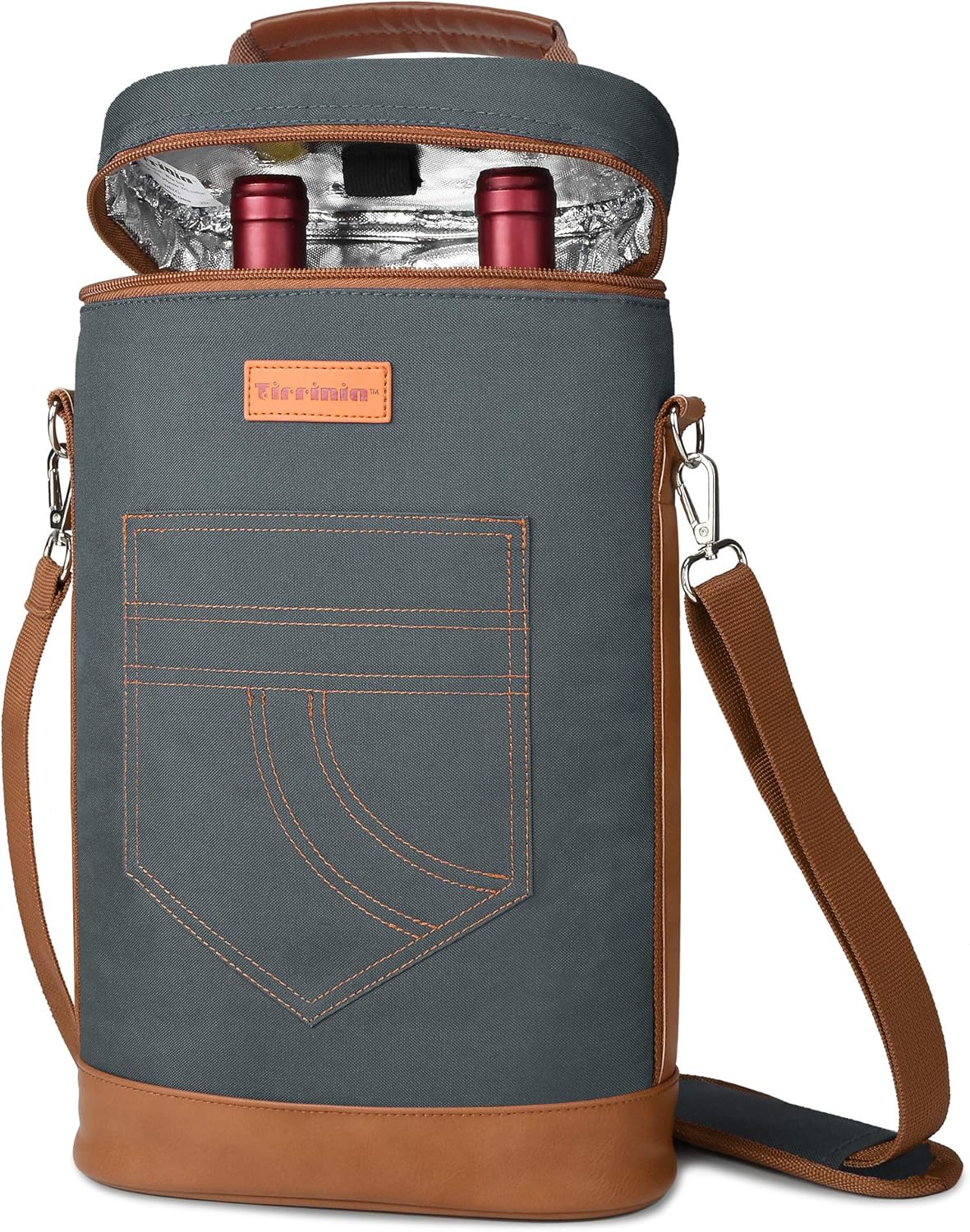
The Tirrinia 2-Bottle Wine Tote is the quintessential workhorse of wine bags, striking a perfect balance between price, performance, and practicality. It’s the bag we find ourselves reaching for most often, and for good reason. The design is simple yet effective: a sturdy polyester exterior houses a thick, insulated PEVA lining, which is not only excellent for temperature control but also easy to wipe clean in case of a dreaded spill.
What truly sets it apart is the padded central divider. This isn’t just a flimsy piece of fabric; it’s a substantial cushion that prevents your bottles from clanking together, offering genuine peace of mind during transport. We tested it with a chilled Sauvignon Blanc and a room-temperature Pinot Noir, and after a 3-hour journey to a picnic, the white was still pleasantly cool. The front pocket is just large enough for a waiter’s corkscrew. For its price point, the quality and functionality are simply unmatched.
Pros
- Excellent insulation keeps wine chilled for hours
- Thick, padded divider prevents bottle clatter
- Durable polyester construction
- Lightweight and easy to carry
- Exceptional value for the price
Cons
- Shoulder strap is basic and non-padded
- May not fit larger, unusually shaped bottles
2. Kato 2-Bottle Insulated Wine Tote Bag — Most Durable

If you need a wine bag that can handle more than just a trip across town, the Kato Insulated Tote is your champion. Constructed from high-density 600D polyester—the same kind of material used in heavy-duty backpacks—this bag is built to last. The stitching is reinforced, the zippers are robust, and it feels substantially more rugged than its competitors.
The insulation is top-notch, comparable to the Tirrinia, but the Kato’s real advantage is its thoughtful design. It features both a padded handle and a detachable, adjustable shoulder strap, offering versatile carrying options. The “leakproof” claim holds up; we let an ice pack melt inside, and not a drop escaped. The divider is also removable, allowing you to use it as a small, general-purpose cooler. It’s a fantastic choice for beach trips, camping, or any situation where your wine needs extra protection from the elements.
Pros
- Extremely durable 600D polyester fabric
- Versatile carrying options (handle and shoulder strap)
- Excellent leakproof insulation
- Removable divider for flexibility
- Sturdy, high-quality zippers
Cons
- Slightly bulkier than other 2-bottle carriers
- Front pocket is a bit tight
3. LEGACY ‘Piccadilly’ Picnic Tote for Two — Best for Picnics

The LEGACY ‘Piccadilly’ elevates the concept of a wine bag into a full-blown picnic experience. This isn’t just a carrier; it’s a statement piece. The stylish canvas and faux leather design exudes a classic, sophisticated vibe. Inside its dual compartments, you’ll find a dedicated, insulated section for two bottles of wine.
The other compartment houses a complete picnic set for two: two wine glasses, two napkins, a corkscrew, a bottle stopper, and even a small cheese board with a knife. This all-in-one solution is brilliantly convenient. It ensures you never forget an essential item. It’s the perfect companion for a concert in the park or a day trip. While the insulation is more for short-term chilling, the sheer convenience and style make it a standout choice for planned outings.
Pros
- All-in-one picnic and wine solution
- Includes glasses, corkscrew, cheese board, and more
- Elegant and stylish design
- Separate compartments for wine and food
- Makes an incredible gift
Cons
- Insulation is less effective than dedicated coolers
- Heavier and bulkier due to included accessories
4. PortoVino Wine Purse — Best for Discreet Transport

The PortoVino Wine Purse is less of a bag and more of a magic trick. On the outside, it’s a fashionable and functional handbag with plenty of room for your wallet, keys, and phone. But hidden within is a secret, insulated compartment that holds a 1.5-liter beverage pouch (included)—the equivalent of two full bottles of wine.
A cleverly concealed spout allows you to pour a glass without ever opening the bag. It’s a game-changer for events where bringing your own beverages is encouraged but carrying a bottle is cumbersome. The pouch is BPA-free and easy to fill and clean. While it won’t fit a standard glass bottle, its purpose is different: to carry your favorite boxed or pre-poured wine with unparalleled discretion and style. It’s fun, functional, and always a conversation starter.
Pros
- Completely discreet way to transport wine
- Stylish design looks like a regular purse
- Holds two full bottles of wine (1.5L)
- Easy-to-use dispenser spout
- Functional purse with extra pockets
Cons
- Does not carry standard glass bottles
- Cleaning the beverage pouch requires care
5. BUILT NY One-Bottle Neoprene Wine Tote — Best for Single Bottle Protection

Sometimes, all you need is one perfect bottle. For those times, the BUILT NY Neoprene Tote is an iconic and brilliant solution. Made from the same material as wetsuits, neoprene is an excellent insulator and provides fantastic shock absorption. This tote stretches to snugly fit any standard 750ml bottle, from a slender Riesling to a broader Champagne.
Its genius lies in its simplicity. There are no zippers or flaps—just slide the bottle in. The soft-grip handles make it comfortable to carry, and it stores completely flat, taking up virtually no space in a drawer or car. While its insulation won’t last all day, it’s more than sufficient for keeping a wine chilled on the way to a party. It’s also our top choice for presenting a bottle as a gift; it’s a reusable and thoughtful upgrade to a standard paper gift bag.
Pros
- Excellent protection from bumps and drops
- Stretchy material fits most bottle shapes
- Good short-term insulation
- Stores flat and is machine washable
- Available in dozens of colors and patterns
Cons
- Insulation is not for long-term chilling
- Only holds one bottle
6. Wine Enthusiast 6-Bottle Weekend Tote — Best for Bulk Transport

For the enthusiast heading to a vacation rental or returning from a winery tour, the Wine Enthusiast 6-Bottle Tote is an essential piece of gear. This bag is all about capacity and protection. The design is utilitarian but incredibly effective. A durable exterior opens to reveal a fully padded interior with six individual compartments, keeping each bottle securely separated.
The padded dividers are thick, and the whole bag feels solid, providing confidence that your collection is safe. It features both carry handles and a shoulder strap for managing the heavier load. While it’s not insulated for temperature control, its primary job is safe, bulk transport, and it excels at that. For those who need to have various wine varietals on hand for every course, this bag ensures you arrive prepared.
Pros
- Safely carries up to six bottles
- Thick padding in every compartment
- Durable construction for heavy loads
- Folds down for easy storage when empty
- Includes a utility pocket for accessories
Cons
- Not insulated for temperature control
- Can be heavy when fully loaded
7. Generic Leather 2-Bottle Wine Carrier — Best for Luxury Gifting
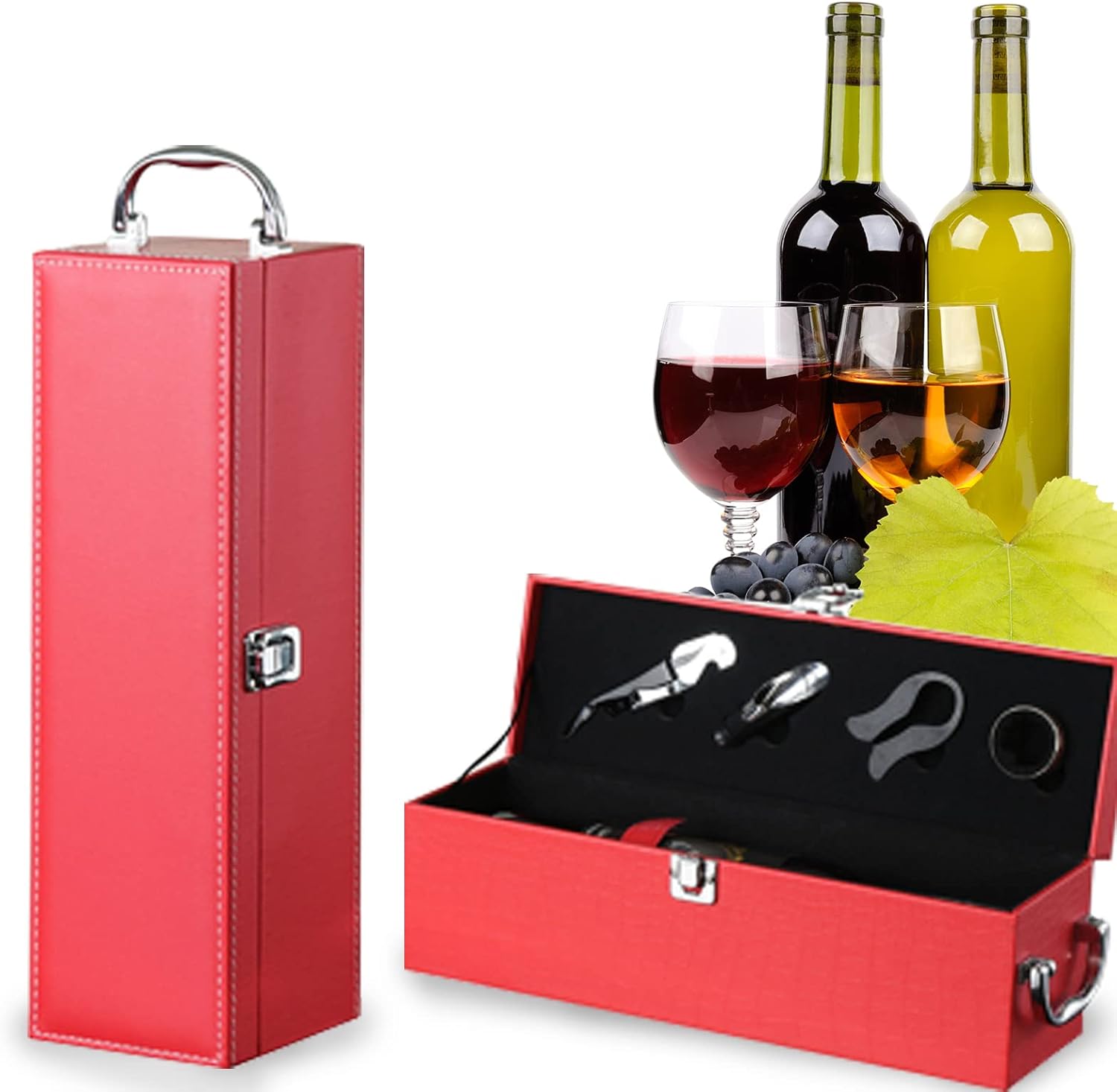
When you need to make an impression, this Leather Wine Carrier delivers. This is more than a wine bag; it’s a piece of luggage for your finest bottles. Crafted from genuine top-grain leather, it looks, feels, and smells incredible. The magnetic clasps and antique brass hardware add to its premium, timeless aesthetic.
Inside, a soft felt lining and a sturdy leather divider protect two bottles with care. This carrier isn’t about thermal insulation; it’s about unparalleled style and protection. It’s the ultimate way to present a gift of two special bottles for a wedding, anniversary, or to a valued client. It tells the recipient that the contents are just as important as the vessel carrying them. It’s an heirloom-quality piece that any wine lover would be thrilled to own.
Pros
- Stunning genuine leather craftsmanship
- Luxurious look and feel
- Secure magnetic clasps
- Soft interior lining prevents scratches
- The ultimate high-end gift
Cons
- No thermal insulation
- Significantly more expensive
8. Lazenne Wine Check 12-Bottle Luggage — Best for Air Travel

Have you ever visited a wine region and wished you could bring a case of your favorite discovery home? The Lazenne Wine Check is the definitive solution, trusted by sommeliers and collectors worldwide. This is a specialized piece of luggage designed to safely transport up to 12 bottles of wine in an airplane’s cargo hold.
The concept is simple: a durable, padded Cordura nylon bag fits over a standard 12-bottle styrofoam shipper (the kind wineries use). The bag adds wheels, a telescoping handle, and straps, transforming a simple box into checkable luggage. It’s FAA and EASA approved and, when fully packed, typically weighs under the 50 lb (23 kg) airline limit. We’ve personally used this to bring back wine from Napa and Italy without a single broken bottle.
Pros
- The safest way to fly with a case of wine
- Approved by major airlines
- Durable construction with wheels and handle
- Folds for easy storage
- Reusable for many trips
Cons
- Requires a separate foam shipper insert
- A significant investment for occasional travelers
9. Vina 4-Bottle Wine Carrier Tote — Best for Serious Collectors
When two bottles aren’t enough and six is too many, the Vina 4-Bottle Carrier hits the sweet spot. This tote is perfect for the wine enthusiast attending a tasting group or a dinner party where multiple wine pairings are on the menu. It combines the thermal insulation of smaller totes with a larger, yet still manageable, capacity.
The build quality is excellent, with a tough exterior and thick insulation. The internal dividers are well-padded and can be reconfigured or removed, allowing you to carry three bottles and a stack of cheese or four bottles of varying shapes. The padded shoulder strap makes carrying the weight of four bottles comfortable. It’s a highly practical and well-designed bag for those who take their wine sharing seriously.
Pros
- Perfect mid-range capacity
- Thick insulation and padded dividers
- Comfortable to carry even when full
- Configurable interior space
- Sturdy and well-constructed
Cons
- Can be a bit cumbersome for casual use
- Dividers can be tricky to reposition
10. OPUX Premium Insulated 1-Bottle Carrier — Best for Everyday Carry

The OPUX single-bottle carrier is a significant step up from a simple neoprene sleeve. It offers the structure and superior insulation of a larger bag in a compact, single-bottle format. If you frequent BYOB restaurants, this carrier is your perfect companion. It looks sophisticated and discrete, and its thermal insulation ensures your white wine arrives at the table perfectly chilled.
The carrier features a sturdy handle and an adjustable shoulder strap for hands-free carrying. The hard-sided design provides excellent protection against bumps. It’s also an elegant way to gift a bottle, offering more protection and reusability than any gift wrap.
Pros
- Excellent insulation for a single bottle
- Durable, semi-rigid construction for protection
- Includes both handle and shoulder strap
- Sleek and discreet appearance
- Great price point
Cons
- A tight fit for very wide bottles like Champagne
- Front pocket is very small
The Ultimate Buyer’s Guide to Choosing Your Perfect Wine Bag
With so many options, how do you choose the right one? This guide will break down the key factors to consider, empowering you to select a wine bag that perfectly suits your lifestyle.
Capacity: How Many Bottles Do You Need?
- Single-Bottle Totes: Ideal for bringing wine to a BYOB restaurant, as a host gift, or for a solo picnic. They prioritize portability and protection for one special bottle.
- Two-Bottle Carriers: The most popular and versatile option. Perfect for dinner parties (one red, one white), couples’ picnics, or for when you want a choice.
- Four to Six-Bottle Bags: For the serious enthusiast. These are great for wine tasting groups, weekend trips, or for stocking a vacation home. They balance capacity with portability.
- 12+ Bottle Solutions: These are specialized luggage, designed specifically for air travel. A must-have for anyone who buys wine on their travels.
Insulation and Temperature Control
Maintaining the right temperature is crucial. A warm Chardonnay is as disappointing as an overly chilled Cabernet. Understanding insulation is key to preserving the experience your winemaker intended.
- PEVA Lining: This is a common, effective, and food-safe insulation. Look for bags with thick PEVA foam for the best thermal performance, keeping wines chilled for 4–6 hours.
- Neoprene: The material used in wetsuits. It’s excellent for short-term insulation (1–3 hours) and provides superior padding and protection against bumps.
- Non-Insulated: Some bags, especially luxury leather or bulk carriers, are not insulated. Their purpose is protection and stylish transport, not temperature control.
Material, Durability, and Style
- Polyester (e.g., 600D): A highly durable, water-resistant, and easy-to-clean synthetic fabric. It’s the workhorse of the wine bag world.
- Canvas: Offers a classic, casual look. It’s sturdy but can be more susceptible to stains than polyester.
- Leather (Genuine or Faux): Unmatched in style and sophistication. Leather bags are about making a statement and are often chosen for gifting and special occasions.
- Neoprene: Flexible, protective, and available in a huge range of colors and patterns.
Extra Features: The Little Things That Matter
- Included Accessories: Many picnic-style bags come with corkscrews, stoppers, and glasses. This adds incredible value and convenience.
- Pockets: An external pocket is invaluable for carrying a corkscrew, foil cutter, or wine charms.
- Adjustable Straps: A padded, adjustable shoulder strap makes carrying heavier loads much more comfortable.
- Padded Dividers: For multi-bottle carriers, a thick, padded divider is non-negotiable. It’s the only thing preventing a disastrous collision.
Types of Wine Bags: A Complete Breakdown
The world of wine bags is surprisingly diverse. From the humble neoprene sleeve to rolling airline luggage designed to survive airport baggage handlers, understanding the different types is the first step to finding the right one for you. Below, we’ve broken down every major category so you can shop with confidence.
1. Insulated Wine Tote Bags
The insulated wine tote is by far the most common and versatile type of wine bag on the market. These bags are purpose-built to do two jobs simultaneously: protect glass bottles from breakage and maintain the wine’s temperature for as long as possible. The construction of a quality insulated wine tote typically consists of three layers: a durable outer fabric (most often 600D polyester or canvas), a thick layer of foam insulation, and an inner PEVA (polyethylene vinyl acetate) lining.
The PEVA lining is particularly important. It is food-safe, BPA-free, and forms a near-airtight seal that reflects heat away from the wine. When you pre-chill your bottle and slip an ice pack into the bag alongside it, a high-quality insulated tote can maintain a safe serving temperature for white wines (45–55°F or 7–13°C) for up to six hours. This makes them ideal for long picnics, day trips, beach outings, and carrying wine to a party across town.
Insulated totes come in 1-bottle, 2-bottle, 4-bottle, and 6-bottle configurations. The two-bottle format is the most popular, offering a balance of capacity and portability. Most also include a front accessory pocket for a corkscrew and a bottle stopper—the two accessories you should never leave home without.
2. Neoprene Wine Bottle Sleeves
Think of a neoprene sleeve as a second skin for your wine bottle. Made from the same closed-cell foam rubber used in wetsuits and laptop sleeves, neoprene wraps snugly around a single bottle, providing excellent shock absorption and moderate short-term insulation. The material is naturally stretchy, meaning a single sleeve can accommodate a range of bottle shapes and sizes—from a narrow Pinot Grigio bottle to a wider Burgundy or even a Champagne bottle.
The greatest advantage of the neoprene sleeve is its simplicity and footprint. When not in use, it collapses completely flat and can slide into a bag, a kitchen drawer, or a glove compartment without taking up any meaningful space. Neoprene totes are also often machine washable, making them extremely easy to maintain. They come in an enormous variety of colors, patterns, and designs—from solid neutrals to playful, artistic prints—making them one of the most popular choices for gifting a bottle of wine. The reusability also makes them a more thoughtful and eco-conscious alternative to single-use gift bags and tissue paper.
3. Wine Carrier Backpacks
For the wine lover who is also an adventurer, the wine carrier backpack is a game-changing piece of gear. These backpacks feature dedicated, heavily padded compartments designed to safely cradle bottles of wine while your hands remain completely free. They are designed for hikers, cyclists, and outdoor enthusiasts who want to bring a quality bottle to a summit, a remote beach, or a lakeside camping spot.
The best wine carrier backpacks combine wine storage with general-purpose backpack utility: multiple zippered pockets for food and gear, padded shoulder straps with a chest clip, and a design that distributes the weight of bottles evenly across your back. Some models are insulated to keep wine chilled during a hike; others focus purely on protection. If you’re planning a wine-and-cheese hike or a cycling trip through wine country, a dedicated wine carrier backpack will transform the experience. It’s one of the most underrated and fast-growing niches in the wine accessories market.
4. Luxury and Leather Wine Carriers
When function gives way to form, the luxury leather wine carrier takes center stage. These carriers are crafted from genuine top-grain leather, full-grain leather, or high-quality faux leather alternatives, and they are designed primarily for presentation and style. The focus is on creating a vessel so beautiful that it becomes part of the gift itself.
Luxury wine carriers often feature beautifully stitched handles, antique brass or gold hardware, magnetic or buckle closures, and soft felt or suede interior linings that prevent bottle scratches. They carry two bottles and are shaped more like briefcases or vanity cases than traditional totes. They do not offer meaningful thermal insulation, but this is rarely their purpose. A leather wine carrier communicates appreciation, care, and an elevated sense of taste. They are the first choice for corporate wine gifts, wedding presents, anniversary celebrations, and high-end holiday gifting.
5. Wine Purses and Concealed Wine Bags
A niche but growing category, the wine purse reimagines the traditional handbag as a covert wine transportation device. From the outside, it looks like any other stylish tote or crossbody bag. On the inside, however, is a concealed, insulated compartment designed to hold a flexible beverage pouch. The bag comes with a reusable, BPA-free bladder (typically holding 1.5 liters—equivalent to two standard bottles), along with a hidden dispenser spout.
The wine purse is popular at outdoor concerts, wine festivals, sporting events, and theaters where carrying a full bottle may be inconvenient or against the rules. The convenience of being able to pour a glass from your purse without removing anything is remarkable. While they do not accommodate standard glass bottles, they are ideal for those who favor wines available in Tetra Pak or bag-in-box format, or who are happy to fill the pouch directly from a bottle before heading out.
6. Wine Travel Cases and Checked Luggage Systems
For the truly serious wine traveler—the person returning from a tour of Bordeaux, the Douro Valley, or the Barossa—a dedicated wine travel case is non-negotiable. These are not casual wine bags; they are purpose-engineered protective systems designed to survive the rigors of commercial airline baggage handling.
The gold standard in this category is the system pioneered by Lazenne: a padded, wheeled outer bag that encases a standard 12-bottle foam shipper. This approach is elegant in its simplicity. The foam inserts (which wineries use to safely ship bottles via courier) do the actual work of protecting each individual bottle in its own sealed cell. The outer bag adds rollability, carry handles, TSA-approved locks, and the structural integrity needed to be thrown, stacked, and dragged through an airport without incident. If you travel to wine country even once a year, the investment in a quality wine travel case pays for itself the first time you bring home a dozen bottles safely.
7. Reusable Wine Gift Bags
The reusable wine gift bag sits at the intersection of practicality and presentation. Unlike one-time-use paper or fabric gift bags, a quality wine tote made from cotton canvas, jute, or premium non-woven fabric is designed to be used again and again by the recipient. Many feature festive or elegant designs—seasonal patterns, witty phrases, or classic monograms—that make them feel special while still being genuinely functional as a daily wine carrier.
The appeal of a reusable gift bag is increasingly important to eco-conscious consumers. Single-use wrapping creates unnecessary waste; a beautiful canvas wine bag that the recipient uses every time they bring wine to a party gives the original gift ongoing life. When selecting a wine bag as a gift wrapper, look for one with a bottle divider (if carrying two bottles) and a gusseted bottom so it stands upright on a table or countertop for an elegant presentation.
Insulation Deep Dive: How Wine Bags Actually Keep Wine Cold
Understanding the science behind wine bag insulation will help you make smarter purchase decisions and get the most out of whatever bag you own. Not all insulation is equal, and knowing the difference between a bag that keeps wine cold for two hours and one that lasts for six hours could mean the difference between a perfect glass and a disappointment.
The Four Factors That Determine Insulation Performance
1. Lining Material and Thickness. The PEVA (polyethylene vinyl acetate) lining found in most quality wine bags is a reflective material that works similarly to the foil lining in emergency blankets. It reflects radiant heat away from the wine rather than absorbing it. The thicker the PEVA foam, the better the insulation. Budget bags often use a very thin layer that offers minimal thermal protection. Look for bags that specifically advertise “thick PEVA foam lining” or provide measurements; a foam layer of at least 6–8mm provides noticeably better performance than a thinner 2–3mm layer.
2. Pre-Chilling Your Bottle. A wine bag is not a refrigerator; it cannot cool wine down. It can only slow the rate at which the wine warms up. This means the starting temperature of your wine is critical. A bottle that has been refrigerated to 40°F (4°C) will stay acceptably chilled far longer than one that starts at 55°F (13°C). Always chill your bottle thoroughly—ideally for at least two hours in the refrigerator—before placing it in an insulated wine bag.
3. Using an Ice Pack or Ice. Adding a slim ice pack to your wine bag dramatically extends its cooling performance. A standard gel ice pack alongside a pre-chilled bottle in a quality PEVA-lined tote can maintain serving temperature for up to 8–10 hours. Alternatively, if you don’t have a dedicated ice pack, wrapping a handful of ice cubes in a zip-lock bag works nearly as well for shorter durations. Some wine bags are specifically designed with a dedicated compartment for an ice pack to prevent unwanted moisture contact with the bottle’s label.
4. Ambient Temperature and Sun Exposure. The insulating performance of any wine bag degrades faster in extreme heat. A bag left in a hot car or in direct sunlight in 95°F (35°C) summer heat will warm up much faster than the same bag carried in 70°F (21°C) shade. When possible, keep your wine bag in the shade and avoid leaving it in a closed, parked car, which can quickly reach temperatures well above the outside ambient level.
💡 Pro Tip: The Wet Newspaper Trick
Don’t have an ice pack handy? Wrap your pre-chilled bottle in two or three layers of wet newspaper before placing it in the wine bag. As the water evaporates, it draws heat away from the bottle through evaporative cooling—a technique that can extend your chill time by an additional 30–45 minutes. It’s an old sommelier trick that still works beautifully.
Neoprene vs. PEVA: Which Insulation is Better?
This is one of the most common questions we receive, and the honest answer is: it depends on what you need. Both materials are excellent insulators, but they behave differently and suit different use cases.
PEVA (with foam backing) performs better for long-duration chilling. The foam layer traps air—a poor conductor of heat—and the reflective PEVA surface bounces radiant heat away. A bag with a thick PEVA foam lining will outperform neoprene over a 4–8 hour window. These bags are better suited for day-long outings, picnics, or transport that involves extended time outside the refrigerator.
Neoprene excels at short-duration chilling (1–3 hours) and shock protection. Because the material is stretchier and more conforming, it wraps closely around the bottle, eliminating air gaps that reduce insulation efficiency for short trips. It also cushions the bottle far better than any foam-lined bag. For BYOB restaurants or bringing a bottle to a party a short drive away, neoprene is an excellent choice. Its ability to handle any bottle shape and its machine-washable nature are additional significant advantages.
Best Wine Bag for Every Occasion
Different occasions demand different carriers. Below is a comprehensive reference guide to help you match the right wine bag to every situation you’ll encounter as a wine lover.
🧺 Picnic or Park
You need insulation, style, and ideally a bag that also carries your glasses and snacks. An all-in-one picnic tote with accessories is the perfect solution.
Best Pick: LEGACY ‘Piccadilly’🍽️ BYOB Restaurant
A single, polished carrier that keeps your bottle chilled through the taxi ride and looks elegant arriving at the table is ideal.
Best Pick: OPUX Single Carrier🎉 Dinner Party Host Gift
The bag is part of the gift. A neoprene tote or a leather carrier elevates a simple bottle into a thoughtful, lasting present.
Best Pick: BUILT NY Neoprene🏖️ Beach or Outdoor Concert
You need rugged insulation that handles sand, splashes, and sun. A leakproof, padded tote with a shoulder strap is essential.
Best Pick: Kato 2-Bottle Tote🎵 Festival or Stadium
Discretion is key. A wine purse lets you carry your favorite wine without drawing attention or managing a clunky bag.
Best Pick: PortoVino Wine Purse✈️ Flying Home from a Winery
Only a proper travel case with foam inserts can handle the checked baggage carousel. Don’t risk your prized bottles.
Best Pick: Lazenne Wine Check🍷 Wine Tasting Group
When you need to bring four different bottles for a comparative tasting, a 4-bottle carrier with padded dividers is indispensable.
Best Pick: Vina 4-Bottle Carrier🏡 Weekend Getaway
For a long weekend at a rental home, a 6-bottle carrier lets you bring a full selection without worry.
Best Pick: Wine Enthusiast 6-Bottle💼 Corporate Gift
A leather carrier with two bottles of premium wine makes a stunning, memorable corporate gift that won’t be forgotten.
Best Pick: Leather 2-Bottle CarrierThe Complete Guide to Traveling with Wine
Whether you’re driving across the state or flying internationally, bringing wine along requires a little planning to ensure your bottles arrive safely, legally, and at their best. Here is everything you need to know about traveling with wine—from the back seat of a car to the hold of a commercial aircraft.
Traveling with Wine by Car
Road trips and wine country drives present the most common wine transport scenario. Your biggest enemies on a long car drive are heat and vibration. The temperature inside a parked car on a warm day can rise extremely quickly, so the most important rule is never to leave wine in a parked car in warm weather. For the journey itself, place your wine bag with an ice pack in the trunk or footwell rather than on the back seat, where it may slide and tip.
If you’re returning from a winery with multiple cases, consider a collapsible 6-bottle or 12-bottle carrier to prevent bottles from rolling around in the trunk. Many experienced winery visitors also bring their own styrofoam shippers for this purpose. Most wineries will provide shippers if you ask at the tasting room, but having your own guarantees you’re never caught unprepared. For road trips under two hours, any quality insulated 2-bottle tote with a pre-chilled bottle and an ice pack provides more than adequate protection.
Traveling with Wine by Air: The Complete Guide
Flying with wine is completely legal in most jurisdictions, but there are important rules and practical considerations to understand before packing your bottles.
Carry-On Restrictions: TSA (and most international equivalents) prohibit liquids over 3.4 oz (100ml) in carry-on luggage. A standard 750ml bottle of wine is 750ml, which means wine cannot be carried through airport security in your carry-on bag. The only exception is wine purchased after passing through security in the terminal’s duty-free shop, which can be transported in a sealed security bag for your connecting flight (check specific airline rules for international connections).
Checked Luggage Rules: Wine can be packed in checked luggage. The legal limit is typically 5 liters per person for personal consumption when crossing international borders, though domestic travel within your own country generally has no volumetric limit (only the airline’s weight limit of 50 lb / 23 kg per bag applies). Always check the specific import rules for your destination country.
Packing Wine Safely in Checked Luggage: Simply placing bottles in your suitcase surrounded by clothing is extremely risky. The impact forces during baggage handling can cause bottles to shatter even when cushioned by clothing, and a broken bottle of red wine can ruin an entire suitcase of belongings. The proper solution is a purpose-built wine travel case (like the Lazenne Wine Check) that uses foam inserts to isolate each bottle in its own protective cell. These foam shippers are tested to withstand significant impact forces.
⚠️ Important: Sparkling wine, Champagne, and Prosecco are under pressure and are more susceptible to leakage at altitude due to changes in cabin pressure, even in the cargo hold. Always ensure sparkling wine bottles are sealed with their original cork and wire cage intact, and consider placing them in a zip-lock bag inside the foam shipper as an extra precaution.
International Wine Travel: What You Need to Know
Bringing wine home from an international wine trip—from Bordeaux, Tuscany, the Douro, Napa, Mendoza, or Marlborough—is one of the great joys of wine tourism. But different countries have different import rules regarding alcohol, and it pays to research your destination’s customs regulations before you fly. Most countries allow travelers to bring in a reasonable quantity of wine for personal consumption (often 1–2 bottles) duty-free. Quantities above these thresholds may require a customs declaration and payment of import duty.
For serious buyers who acquire a case or more, most wineries offer international shipping services, often using specialized wine couriers that understand temperature-controlled logistics. However, not all wineries ship to all countries due to licensing restrictions. If you plan to buy significant quantities, ask the winery about their export programs and shipping options before you make your purchases.
The Art of Gifting Wine: Why the Bag Matters as Much as the Bottle
A bottle of wine is a universally appreciated gift—but the way it’s presented can elevate it from a thoughtful gesture to a truly memorable experience. The bag, sleeve, or carrier you choose to present the bottle in communicates care, attention to detail, and genuine thoughtfulness. It tells the recipient: “I didn’t just grab a bottle; I put thought into this entire presentation.”
The Problem with Standard Wine Gift Bags
The paper wine gift bag with tissue paper is ubiquitous, affordable, and instantly recognizable—which is also its greatest weakness. It’s disposable. After a single use, the tissue paper is crushed and the bag is typically discarded. For an environmentally-conscious recipient, this wastefulness can diminish the gift. For a recipient who loves wine, it offers nothing beyond the bottle itself.
The reusable wine bag flips this equation entirely. A beautiful canvas tote, a quality neoprene sleeve, or a leather carrier becomes a permanent part of the recipient’s wine-loving toolkit. Every time they use it—to bring a bottle to a party, to a restaurant, or to a picnic—they’ll think of you. The bag that keeps giving creates a lasting connection between the giver and the recipient that a disposable paper bag simply cannot.
Wine Bags Paired with the Perfect Bottle: Gift Ideas by Occasion
Housewarming: A classic 2-bottle insulated tote paired with a bottle of Champagne for the house toast and a bottle of red for the first dinner is one of the most thoughtful and practical housewarming gifts imaginable. The tote will be used every time the new homeowners host guests.
Wedding or Anniversary: A luxury leather wine carrier with two bottles of the couple’s favorite wine, a quality corkscrew tucked in the front pocket, and two wine glasses makes an extraordinary and personal gift. It looks stunning and communicates sophistication. If you know the couple is planning a honeymoon to wine country, pair it with the Lazenne Wine Check so they can bring bottles home safely.
Corporate Gift: The leather wine carrier exudes professionalism and taste. For a client gift or an end-of-year thank-you, a premium carrier with two bottles of well-regarded wine makes a strong impression without being ostentatious. It’s practical, lasting, and universally appreciated.
Birthday: Match the bag style to the person’s personality. A fun-patterned neoprene sleeve for a casual wine lover; a sophisticated canvas picnic tote with a set of included glasses for a social butterfly; a serious 4-bottle carrier for a dedicated enthusiast.
Holiday Gift: A festive-themed wine tote bag loaded with a bottle of seasonal wine, some chocolate, a good corkscrew, and a few wine charms creates an impressive gift basket that costs less than most people expect and will be remembered for years.
Personalized and Custom Wine Bags: The Ultimate Thoughtful Gift
If a high-quality wine bag is a great gift, a personalized wine bag is an extraordinary one. Customization transforms a functional accessory into an heirloom keepsake—something the recipient may use and keep for years specifically because it has their name, a meaningful date, or a personal message on it.
What Can Be Personalized on a Wine Bag?
The possibilities for personalizing a wine bag are broader than most people realize. Embroidery is the most durable and premium option, particularly on canvas or cotton bags. A monogram, name, initials, or short phrase embroidered in a complementary thread color adds an undeniably personal and high-quality touch that will not fade with washing. Many Etsy sellers and specialty gift shops offer embroidered wine bags with quick turnaround times.
Printing (screen printing or heat transfer) offers more design flexibility—logos, full text, photographs, or complex artwork can all be applied to a fabric wine bag. This option works particularly well for corporate gifts or large-order situations where consistent branding is needed. For corporate wine bags, printing the company logo on a high-quality canvas tote alongside a bottle of fine wine creates a branded gift that actually gets used.
Leather embossing is available on premium leather wine carriers and takes the concept of personalization to its most luxurious extreme. An embossed initials panel or a small engraved brass name plate on a leather carrier turns the piece into something that could be passed down through generations.
Monogrammed Wine Bags for Weddings
Personalized wine bags have become popular as wedding favors, bridesmaids’ gifts, and groomsmen’s gifts. A monogrammed canvas wine tote with each wedding party member’s initials is a practical and appreciated keepsake—far more useful than the traditional options of cufflinks or photo frames. It’s also well-suited as a vessel for the bottles of wine given to the wedding party as a thank-you. Pair the bag with a bottle of the couple’s favorite wine, and you have a complete, thoughtful, and personal gift that recipients will use long after the wedding.
Care and Maintenance: How to Keep Your Wine Bag in Perfect Condition
A quality wine bag is an investment, and like any investment, it rewards proper care. The right maintenance routine will keep your bag looking and performing at its best for years to come.
Cleaning Different Types of Wine Bags
Polyester and Canvas Bags with PEVA Lining: These are the most common type and the easiest to care for. For routine maintenance, remove any crumbs or debris from the interior and exterior with a soft brush. For spot cleaning, use a damp cloth with a small amount of mild dish soap and gently scrub the affected area, then wipe clean with a damp cloth and allow to air dry completely before storing. Do not submerge these bags in water or put them in the washing machine, as soaking can damage the foam insulation inside the walls and cause the PEVA lining to delaminate. Most importantly, always leave the bag open to dry completely after use, especially if any condensation from a chilled bottle has accumulated on the interior lining. Mold can develop in a closed, damp bag surprisingly quickly.
Neoprene Sleeves and Totes: Neoprene is the easiest material to care for. Most neoprene wine bags can be machine washed on a gentle cycle with cold water and a mild detergent. Never use hot water or put neoprene in the tumble dryer, as heat will cause the material to shrink and lose its elasticity. Always air dry flat. For spot cleaning between washes, a quick wipe with a damp sponge and a tiny drop of dish soap is sufficient. Neoprene is naturally resistant to stains and odors, making it one of the lowest-maintenance materials available.
Leather Wine Carriers: Genuine leather requires slightly more care to maintain its appearance and prevent cracking. Wipe the exterior regularly with a dry or very slightly damp cloth to remove dust and surface dirt. Do not use water directly on leather, as it can cause staining and cracking. Every three to six months (or when the leather begins to look dry), apply a quality leather conditioner or beeswax-based leather balm. This keeps the leather supple, prevents cracking, and maintains its rich appearance. Store leather carriers away from direct sunlight and heat sources, which will cause the leather to dry out and fade over time. For the interior felt lining, use a dry soft brush or a lint roller to remove any dust or debris.
Dealing with Wine Spills Inside Your Bag
Despite all precautions, occasional spills inside a wine bag are an occupational hazard of the wine-loving life. Responding quickly is key to preventing stains and odors. For PEVA-lined bags, remove the bottle immediately and use a damp cloth to soak up as much of the wine as possible. Then fill the bag with a mixture of cold water and white vinegar (equal parts), swish it around, and pour it out. This neutralizes wine odors effectively. Rinse thoroughly with clean water and leave the bag open to air dry completely. For a lingering smell, a small piece of activated charcoal or a handful of dry baking soda left inside the closed bag for 24 hours works wonders at absorbing residual odors.
Wine Serving Temperature Guide
One of the most powerful arguments for owning a quality insulated wine bag is that it helps you serve wine at the correct temperature—something that dramatically affects how the wine tastes and how much you enjoy it. Wine is extraordinarily sensitive to temperature; even a few degrees in the wrong direction can suppress its aromatics, throw its balance out of alignment, or amplify undesirable characteristics. Here is a comprehensive guide to the ideal serving temperatures for major wine styles.
| Wine Type | Examples | Ideal Serving Temp | Fridge Time | Notes |
|---|---|---|---|---|
| Champagne & Sparkling | Champagne, Prosecco, Cava | 40–50°F / 4–10°C | 3+ hours | Colder enhances mousse and crispness |
| Light White Wines | Pinot Grigio, Sauvignon Blanc, Riesling | 45–50°F / 7–10°C | 2–3 hours | Preserves bright acidity and aromatics |
| Full-Bodied Whites | Chardonnay, Viognier, White Burgundy | 50–55°F / 10–13°C | 1.5–2 hours | Slightly warmer enhances texture & oak |
| Rosé Wine | Provence Rosé, White Zinfandel, Grenache Rosé | 48–55°F / 9–13°C | 2 hours | Cold enhances crispness; don’t over-chill |
| Light Red Wines | Beaujolais, Pinot Noir, Schiava | 55–60°F / 13–16°C | 30–45 min | Slight chill enhances fruitiness |
| Medium Red Wines | Merlot, Malbec, Sangiovese | 60–65°F / 16–18°C | 15–20 min | Classic “room temperature” serving |
| Full-Bodied Reds | Cabernet Sauvignon, Shiraz, Barolo | 62–68°F / 17–20°C | None needed | Tannins become harsh if too warm |
| Dessert Wines | Sauternes, Port, Tokaji | 45–57°F / 7–14°C | 1–2 hours | Cooler temp balances sweetness |
🌡️ The “Too Warm” Problem Is More Common Than You Think
The traditional instruction to serve red wine at “room temperature” was coined in medieval Europe, where room temperature averaged around 60–65°F (15–18°C)—significantly cooler than today’s centrally heated homes and restaurants, which typically hover around 68–72°F (20–22°C). This means most red wine today is served too warm, which emphasizes alcohol, suppresses fruit, and makes the wine taste flat or harsh. Placing a red wine in the refrigerator for 15–20 minutes before serving can dramatically improve the drinking experience.
Eco-Friendly Wine Bags: Sustainable Choices for the Conscious Wine Lover
The wine industry has made significant strides in sustainability in recent years, from biodynamic farming and organic viticulture to lighter-weight bottles and recycled labels. It’s fitting that the accessories used to carry wine are following the same trajectory. Today’s eco-conscious wine lover has excellent options for wine bags that minimize environmental impact without compromising performance.
Reusable vs. Single-Use: The Core Argument
The most important sustainability argument for any wine bag is reusability. A single quality wine tote that is used 100 times over several years has an environmental footprint far smaller than 100 disposable paper gift bags, 100 plastic bags, or even 100 individual paper shopping bags. When you invest in a good wine bag and use it regularly, you are making a genuinely meaningful contribution to reducing single-use packaging waste. This is the primary eco-argument for owning and using a dedicated wine carrier.
Sustainable Materials to Look For
Organic Cotton Canvas: Canvas wine bags made from certified organic cotton are grown without synthetic pesticides or fertilizers, reducing the environmental impact of the raw material. Organic cotton canvas is durable, biodegradable at end-of-life, and has a classic aesthetic that ages beautifully. Look for GOTS (Global Organic Textile Standard) certification when shopping for organic cotton products.
Jute and Natural Fibers: Jute is one of the most sustainable natural fibers available—it grows rapidly, requires minimal water and pesticides, and is fully biodegradable. Jute wine bags have a rustic, artisanal aesthetic that pairs beautifully with natural wine labels and artisan producers. They are excellent for carrying wine to a market or a casual gathering but do not offer thermal insulation.
Recycled Polyester (rPET): Many manufacturers now offer wine bags made from recycled polyester derived from post-consumer plastic bottles (rPET). These bags perform identically to virgin polyester in terms of durability and water resistance but reduce reliance on petroleum-based raw materials and divert plastic waste from landfills. An increasing number of brands are offering PEVA-lined insulated totes made from rPET outer fabric.
Cork-Accented Accessories: While not a bag material per se, cork is increasingly used for trim, handles, and decorative elements on wine accessories. Cork is a renewable resource harvested from the bark of cork oak trees without felling the tree, making it one of the most sustainable materials on earth. Cork-accented wine bags support the cork industry, which is directly linked to the preservation of cork oak forests—crucial biodiversity habitats in the Mediterranean.
The End-of-Life Consideration
Sustainability doesn’t end at purchase. Consider what happens to a wine bag when it eventually wears out. Canvas, cotton, and jute bags are compostable in industrial composting facilities (though the thread may need removal). Leather bags, if made from genuine leather, will biodegrade naturally over a long period. Synthetic materials like polyester and neoprene are not biodegradable, though they can sometimes be recycled through specialist textile recycling programs. If end-of-life sustainability matters to you, prioritize natural fiber wine bags when your primary use case doesn’t require thermal insulation.
Wine Bag vs. Wine Cooler vs. Ice Bucket: Which Do You Actually Need?
One of the questions we receive most often is: “If I have a wine cooler or an ice bucket, do I actually need a wine bag?” It’s a fair question, and the honest answer is that they serve genuinely different purposes with almost no overlap. Understanding these differences will help you build a complete wine-serving toolkit.
The Wine Bag: Your Mobile Solution
A wine bag’s value lies entirely in transport and mobility. It is the solution for getting wine from one location to another while protecting the bottle and, if insulated, maintaining temperature. A wine bag cannot chill wine below its starting temperature; it can only slow the rate at which wine warms up. It has no electrical components, no ice-making capability, and no moving parts. Its value is portability, protection, and convenience on the go.
The Wine Cooler or Wine Fridge: Your Storage Solution
A wine cooler (or wine refrigerator) is the definitive solution for storing wine at home at a precisely controlled temperature over days, weeks, or months. Unlike a standard kitchen refrigerator—which is typically kept at 35–38°F (2–3°C) and has high vibration, dry air, and strong odors that can affect wine—a dedicated wine cooler maintains the correct cellar temperature (typically 55°F / 13°C) with appropriate humidity and minimal vibration. A wine cooler is an investment in the long-term storage and preservation of wine. It is not portable and does not replace the need for a wine bag when you want to take wine somewhere.
The Ice Bucket: Your Table Service Solution
An ice bucket’s purpose is entirely different from either a wine bag or a wine cooler. It is a service tool—designed to maintain a wine’s temperature at the table during a meal. A bottle of white wine placed in an ice bucket filled with ice and a small amount of water (which accelerates cooling far more effectively than ice alone) will remain at serving temperature throughout an entire meal. A wine bag cannot do this job; it is not designed for extended temperature maintenance at the table. An ice bucket cannot transport wine. These three tools—the wine bag, the wine cooler, and the ice bucket—are complements to each other, not substitutes.
✅ The Ideal Complete Wine Toolkit
For the serious wine lover, the complete toolkit looks like this: a wine fridge for long-term storage at home, an insulated wine bag for transporting wine to any location, and an ice bucket for table service. Each has a unique role, and owning all three ensures you are always prepared to serve wine perfectly, wherever you are.
The Wine Lover’s Pre-Trip Checklist
Before you head out the door with your wine bag, run through this quick checklist to ensure your wine arrives in perfect condition and you have everything you need for a great experience.
- Wine bottle is properly chilled (at least 2 hours in the refrigerator for whites and rosés)
- Ice pack or slim ice packs are frozen and ready
- Wine bag’s PEVA lining is clean and dry
- Bottle cap or foil is intact and the cork is properly seated
- Corkscrew or wine key is packed in the front pocket
- Bottle stopper is included (in case you don’t finish the bottle)
- Wine glasses are packed if not provided at your destination
- Wine charms are included if sharing multiple bottles with a group
- For air travel: foam inserts are secured around each bottle
- For international travel: customs declaration forms are ready
Frequently Asked Questions (FAQ)
How long can an insulated wine bag keep wine cold?
A good quality insulated wine bag with a PEVA lining can typically keep a pre-chilled bottle of wine cool for 4 to 6 hours, depending on the ambient temperature. For best results, chill your wine thoroughly in the refrigerator beforehand. Adding a small, slim ice pack can extend this time significantly—up to 8–10 hours in moderate ambient temperatures.
Are wine bags allowed on airplanes?
You cannot carry a full bottle of wine in your carry-on luggage due to liquid restrictions (bottles over 100ml are prohibited through security). However, you can pack wine in your checked luggage. For this, you need a specialized, highly protective solution like the Lazenne Wine Check or a similar product designed to withstand the handling of baggage systems. Simply wrapping a bottle in clothes is extremely risky and frequently results in breakage.
How do I clean my wine bag?
Most polyester or canvas bags with PEVA linings should be spot-cleaned with a damp cloth and mild soap. Avoid submerging them in water, as this can damage the insulation. Neoprene totes are often machine washable on a gentle cycle (check the manufacturer’s tag), but should always be air-dried flat. Leather bags should be cleaned with a dry cloth and conditioned regularly with a leather-specific product.
Can a wine bag fit Champagne or other sparkling wine bottles?
It depends on the bag. Champagne and many Prosecco bottles are wider and taller than standard wine bottles. Flexible neoprene totes can usually stretch to accommodate them. For rigid or multi-bottle carriers, check the product description or reviews to see if they are designed to fit larger “magnum” style bottles before purchasing.
What is the difference between a wine tote and a wine purse?
A wine tote is a bag specifically designed to carry standard glass bottles of wine. A wine purse, like the PortoVino, is a functional handbag with a secret, hidden compartment that holds a beverage pouch and has a built-in spout for dispensing. You cannot put a glass bottle in a wine purse; you pour the wine into the provided pouch before heading out.
What is the best wine bag for a beach day?
For the beach, you need a bag with rugged, durable construction, strong leakproof insulation to handle warm temperatures, and easy-to-clean materials. The Kato 2-Bottle Insulated Tote is our top recommendation for beach outings. Its 600D polyester exterior handles sand and splashes well, its leakproof PEVA lining keeps wine cold even in the sun, and its removable divider lets you add extra ice packs alongside your bottles.
Can I use a wine bag to keep wine warm instead of cold?
Yes! The same insulating properties that slow warming also slow cooling. If you are transporting a red wine from a warm storage space to a cold outdoor event in winter, an insulated wine bag will help maintain the wine’s room temperature. For this use case, placing a hand warmer (wrapped in cloth) alongside the bottle inside the bag can extend the wine’s warmth for outdoor winter entertaining.
How do I choose a wine bag as a gift if I don’t know the recipient’s taste?
When in doubt, a quality neoprene single-bottle sleeve is a universally appealing wine gift accessory. It works for any bottle, stores flat when not in use, comes in dozens of colors and patterns so you can match the recipient’s personality, and is priced accessibly. If you have a higher budget and want something more impressive, a 2-bottle insulated tote in a neutral, elegant color (navy, black, or burgundy) is sophisticated and practical for anyone who drinks wine.
Are there wine bags specifically designed for sparkling wine?
While most wine bags accommodate standard 750ml bottles, some manufacturers offer bags with wider, gusseted bottle compartments specifically designed for Champagne bottles, which are approximately 30mm wider at the base than a standard Bordeaux bottle. Neoprene sleeves are generally the most universally compatible option for sparkling wine due to their stretchy, conforming construction.
How much should I spend on a wine bag?
For everyday use, an excellent insulated 2-bottle wine tote can be had in the $15–$30 range (like the Tirrinia or Kato), representing exceptional value. Mid-range options with more features or better construction fall in the $30–$60 range. Luxury leather carriers and serious travel systems range from $60–$200+. Match your budget to your use case: if you carry wine somewhere once a week, investing in a $40–$60 bag is very reasonable. If it’s for occasional gifting, a $15–$20 neoprene sleeve is perfect.
Carry with Confidence
A great wine bag is more than just an accessory; it’s a vital tool for any wine lover. It protects your investment, ensures your wine is served at the proper temperature, and adds a touch of class and preparedness to any occasion. From the incredible all-around value of the Tirrinia 2-Bottle Tote to the travel-ready security of the Lazenne Wine Check, there is a perfect carrier for every need and budget.
By investing in the right bag, you’re not just transporting a bottle—you’re preserving the experience that the winemaker intended. So choose the one that fits your life, pack your favorite bottle, and get ready to share the joy of wine, wherever your journey takes you.