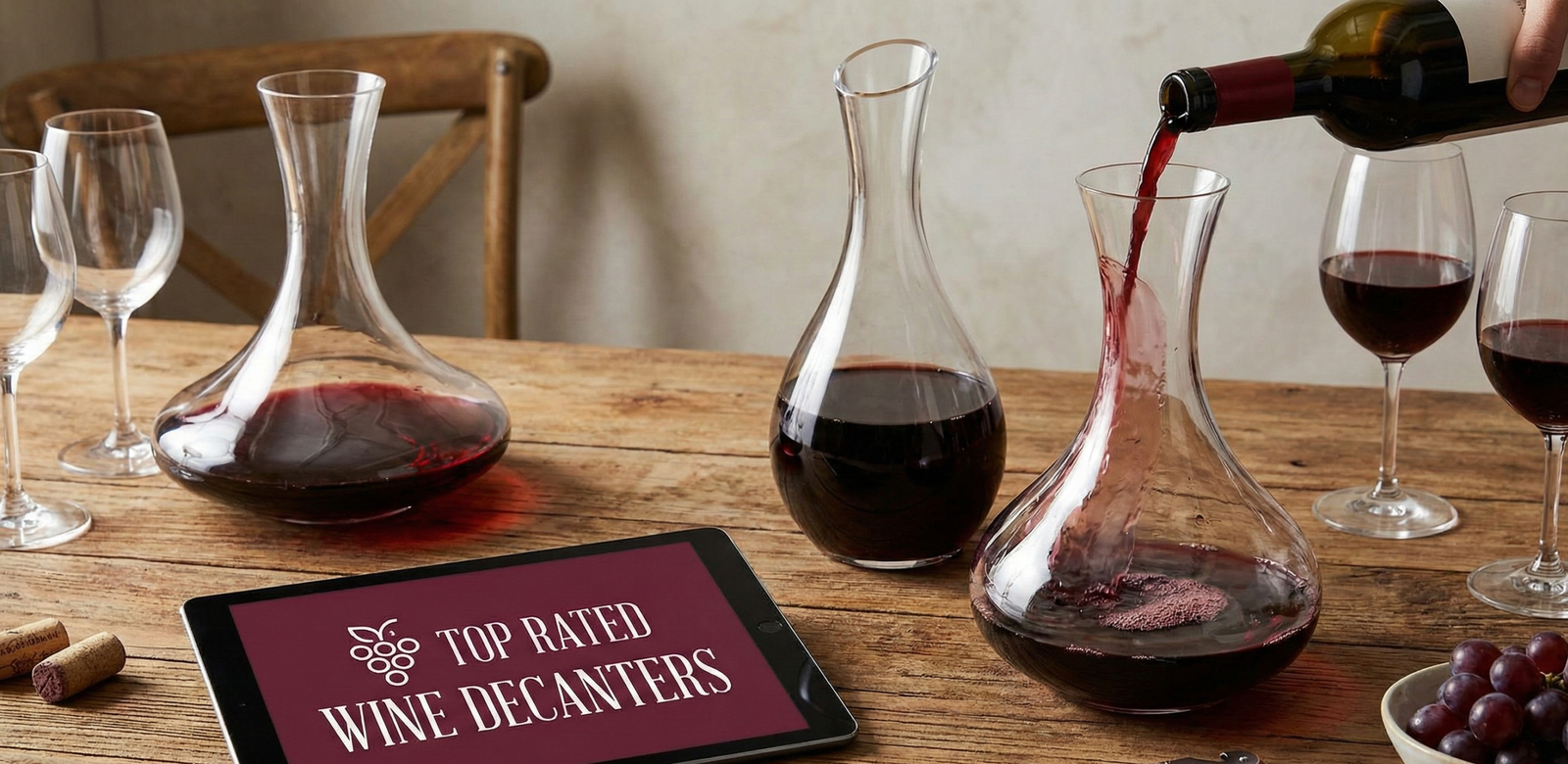
Top Rated Wine Decanters: Elevate Your Pour
Transform your wine from “good” to “unforgettable.” We review the best vessels to aerate tannins, separate sediment, and look stunning on your table.
Introduction: The Art of Breathing
There is a moment of theater when a host pours a bottle of red wine into a sweeping, crystalline vessel. It looks beautiful, certainly, but it is not just for show. The top rated wine decanters are functional tools designed to alter the chemistry of your wine before it even hits your lips.
Whether you are uncorking one of the best affordable wines of 2025 or a vintage collector’s item, decanting serves two primary purposes: aeration and sediment removal. For young wines, oxygen exposure softens astringent tannins. For older wines, the vessel allows you to separate the clear liquid from the bitter solids that accumulate over time.
While you might be tempted to use a top rated wine aerator for speed, nothing beats the gentle, controlled evolution that happens in a decanter. In this guide, we’ve tested the market leaders — from classic wide-base shapes to modern swan designs — to find the perfect vessel for your next dinner party.
At a Glance: The Best Decanters of 2025
| Model Style | Material | Best Application | Pour Difficulty |
|---|---|---|---|
| Wide-Base (Captain’s) | Lead-Free Crystal | Young, bold reds (Cabernet, Syrah) | Easy |
| Swan / U-Shape | Hand-Blown Crystal | Elegant presentation & pouring | Medium |
| Standard Carafe | Glass | White wines & casual reds | Very Easy |
| Breather Hybrid | Glass/Silicone | Quick double-decanting | Easy |
| Duck / Teardrop | Hand-Blown Crystal | Statement piece, young bold reds | Medium |
| Magnum Decanter | Glass or Crystal | 1.5L & 3L bottles | Difficult |
1. The Classic Wide-Base: Le Chateau Wine Decanter
When you picture a wine decanter, this is likely the shape you imagine. The wide base is engineered for maximum surface area — when you pour a 750ml bottle into this vessel, the wine sits at the widest point of the bowl, exposing the maximum amount of liquid to oxygen.
Performance: Ideally suited for young, tight wines. If you are drinking a heavy Bordeaux blend that feels “closed off,” 45–60 minutes in this decanter will open up the nose significantly. The slanted spout ensures a drip-free pour, protecting your tablecloth.
Design: Made from 100% lead-free crystal, it is lightweight yet substantial. It pairs perfectly with large Bordeaux glasses.
✅ Pros
- Maximum aeration surface area.
- Lead-free crystal is safe and brilliant.
- Slanted top makes pouring easy and drip-free.
- Easy to rinse and clean the wide opening.
❌ Cons
- Takes up significant table space.
- Difficult to dry inside without a drying stand.
- Not ideal for fragile aged wines — too much oxygen.

2. The Swan Shape: Riedel Cornetto
If you want to impress guests, the swan (or Cornetto) shape is the way to go. The long neck creates a natural handle and serves a functional purpose: it allows precise, controlled pouring when separating sediment.
Performance: This shape introduces less oxygen than the wide-base models, making it better for older, more fragile wines. It is excellent for Burgundy varietals like Pinot Noir that can overwhelm with too much aeration.
Ergonomics: Holding the neck allows for very precise tilting when monitoring sediment at the bottle neck. A favorite among sommeliers for separating vintage Port.
✅ Pros
- Stunning, artistic table centerpiece.
- Easier to hold and pour precisely than wide bases.
- Takes up less horizontal table space.
- Ideal oxygen exposure for aged and delicate wines.
❌ Cons
- Narrow neck is harder to clean.
- Premium price vs standard carafes.
- Not for maximizing aeration of young bold reds.

The Science of Decanting: What Actually Happens to Your Wine
Decanting is not wine mysticism — it is applied chemistry. Understanding the precise mechanisms at work in a decanter explains why different shapes produce different results and why timing matters so critically. Once you understand the science, every decanting decision becomes intuitive rather than guesswork.
🔬 Aeration vs. Oxidation: A Critical Distinction
These two words are used interchangeably but describe different processes. Aeration is the short-term, beneficial exposure to oxygen that volatilizes harsh aromatic compounds, softens tannin structure, and allows secondary aromas to emerge. Oxidation is the extended, destructive process where oxygen breaks down the wine’s fruit compounds, producing flat, vinegary, or sherry-like notes. Decanting is about maximizing aeration while minimizing oxidation — threading the needle with timing.
What Oxygen Does to Tannins
Tannins — polyphenolic compounds responsible for the drying, gripping sensation in young red wines — are the primary reason young reds are decanted. In their natural state, tannins exist as long polymer chains that bind to proteins on the surface of your mouth, creating astringency. When exposed to oxygen, these chains undergo polymerization: they bind to each other and form larger, heavier molecules that precipitate out of the wine. The result is a perceptibly softer, rounder, more integrated mouthfeel — not because the tannins are gone, but because their structure has changed.
This process takes time, which is why a 10-minute decant often produces little noticeable change in a young Barolo, while a 90-minute decant of the same wine produces a dramatically different, more approachable wine. Higher-tannin wines (Cabernet Sauvignon, Nebbiolo, Tannat) benefit from longer decanting; lower-tannin wines (Pinot Noir, Gamay) need far less time and can be damaged by excessive oxygen exposure.
What Oxygen Does to Aromas
Beyond tannin structure, oxygen volatilizes certain reductive compounds that can make a wine smell “closed,” “muted,” or in severe cases, of sulfur, struck match, or rubber. These reduction aromas — caused by hydrogen sulfide, mercaptans, and other sulfur compounds formed during fermentation in low-oxygen environments — dissipate rapidly on contact with air. A wine that smells unpleasantly closed from the bottle often transforms dramatically within 15–30 minutes in a wide-surface decanter simply from the release of these masking compounds.
Surface Area: The Key Variable in Decanter Performance
The rate of aeration in any decanter is directly proportional to the surface area of wine exposed to air. This is why decanter shape matters so profoundly. A standard carafe with a 3-inch diameter opening exposes approximately 7 square inches of wine surface. A wide-base decanter with a 6-inch diameter base exposes approximately 28 square inches — four times as much. The wide-base decanter aerates at four times the rate of the carafe, which is why the same wine that needs 60 minutes in a carafe may only need 20–25 minutes in a wide-base decanter.
Every Decanter Shape Explained: Which Is Right for Your Wine?
The proliferation of decanter shapes is not purely aesthetic — each shape encodes specific functionality. Understanding what each shape does allows you to match your decanter to the wine you are drinking with precision.
Wide-Base / Captain’s
Maximum aeration via enormous base surface area. The definitive choice for young, high-tannin reds. Not ideal for aged or fragile wines.
Swan / Cornetto
Long neck as handle enables precise sediment pouring. Moderate aeration. Best for aged reds, delicate Pinot Noir, and vintage Port.
Duck / Teardrop
Sculptural statement piece with an angled neck. Good aeration with theatrical presentation. A conversation starter at dinner parties.
Standard Carafe
Simple, cylindrical, easy to clean and store. Lower aeration surface area. Ideal for whites, rosés, and lighter reds. Most affordable option.
U-Shape / Magnum
Designed for 1.5L–3L bottles. Wide base handles larger volumes. Spectacular for celebratory settings and collector magnums.
Breather / Hybrid
Silicone base with cap allows inverted placement directly on the bottle for hands-free aerating. Modern convenience design for everyday use.
The Angle of the Neck: Why It Matters for Pouring
The angle at which a decanter’s neck meets the body controls the flow rate during pouring. A steeply angled neck (like a traditional wide-base decanter) slows the pour and reduces splashing — important when transferring wine from the decanter into glasses gracefully. A swan neck’s gentle curve creates a natural stopping point for the pour and gives the pourer tactile feedback about flow rate. An upright carafe allows the fastest pour but with the least control — fine for casual use, challenging for sediment management.
How Long to Decant Every Wine: The Complete Timing Guide
Decanting time is not a fixed rule — it is a function of the wine’s age, tannin level, aromatic profile, and the surface area of your specific decanter. These guidelines assume a standard wide-base decanter with approximately 20–25 square inches of surface area.
⚠️ The Over-Decanting Risk
More time is not always better. An old, delicate wine that has lost its natural tannin structure through aging has nothing to “soften” — only aromatic compounds to express. These wines can go from profound to flat within 30–60 minutes of decanting. If you are unsure about an aged wine, taste it every 15 minutes from a small pour and make your assessment. The window between “perfect” and “faded” in a 25-year-old Pinot Noir can be as short as 20 minutes.
How to Taste-Test While Decanting
Professional sommeliers never rely on timing alone — they taste. Pour a small amount into a glass immediately after decanting begins. Taste it. Then taste again at 20 minutes, 40 minutes, and so on. You are looking for the moment when harsh tannin has softened, secondary aromas (earth, spice, dried fruit) have emerged, and the fruit feels integrated rather than raw. That is your serving moment — and it will vary by bottle, vintage, and storage conditions, not just by type.
When NOT to Decant: Situations Where It Hurts More Than It Helps
The enthusiasm for decanting has created a common misconception that all wine benefits from decanting, all the time. In reality, there are several important situations where decanting is actively harmful to the wine or simply pointless. Knowing when to leave the bottle alone is as important as knowing when to decant.
Very Old, Fragile Wines
Wines aged 20+ years have typically resolved their tannins naturally over time — the harsh compounds that decanting is designed to address have already softened through the slow, controlled oxidation of long bottle aging. Decanting these wines in a wide-surface vessel exposes them to more oxygen than they can benefit from, causing the delicate aromatic compounds (the prized “bouquet” of tertiary aromas like earth, mushroom, leather, and dried fruit) to dissipate rapidly. A 30-year-old Burgundy may have only a 30-minute window of peak aromatic expression — spending those minutes in a decanter rather than a glass is wasteful.
For very old wines, the Ah-So technique or the Durand opener allows you to remove the cork intact, pour directly into a glass, and assess the wine’s state before deciding whether any decanting is warranted. Often, the correct answer is: none.
Sparkling and Champagne
Never decant sparkling wine. The entire point of a sparkling wine is its CO2 — the dissolved carbon dioxide that creates bubbles, carries aromas to the nose, and creates the characteristic textural sensation. A decanter’s wide surface area releases CO2 rapidly, turning your Champagne into still wine within minutes. Pour Champagne directly from the bottle into chilled flutes or a white wine glass. The only exception is if a sparkling wine has been accidentally over-pressurized — and even then, the solution is a different tool, not a decanter.
Light, Aromatic Whites
Crisp, fresh whites like Sauvignon Blanc, Riesling, Muscadet, and Pinot Grigio are wines whose primary appeal is their vivid, delicate aromatics and refreshing acidity. Decanting these wines accelerates the loss of those aromatics and warms the wine above ideal serving temperature. The elegant, transient fragrance of a Mosel Riesling — all peach blossom and river stone — is best experienced poured directly from a cold bottle into a clean glass, not introduced to a room-temperature crystal bowl.
Wines You Want to Serve Cold
Any wine being served at a specific cold temperature will warm rapidly in a decanter at room temperature. If you have carefully chilled a Beaujolais to 56°F or a rosé to 48°F, decanting it will bring it to room temperature within 20–30 minutes. If you need both aeration and cold service, use a decanter that has been pre-chilled in the refrigerator, or opt for an aerator that allows you to pour directly into a cold glass.
Decanting White, Rosé, and Sparkling Wines
Decanting is associated almost exclusively with red wines in most people’s minds — yet some of the most dramatic improvements from decanting happen with full-bodied whites. Understanding when and how to decant non-red wines unlocks a layer of wine service that most enthusiasts overlook entirely.
White Wines That Benefit from Decanting
Oaked Chardonnay is the white wine most likely to benefit from short decanting. Big, buttery, high-alcohol examples from Burgundy, Napa, or Australia often show a “closed” quality directly from the bottle — the oak compounds and creamy malolactic fermentation aromas need a brief oxygen exposure to fully express. A 15–20 minute decant in a narrow carafe (to limit temperature rise) can transform a muted, slightly harsh Chardonnay into a generous, expressive wine.
Viognier and Roussanne, both full-bodied aromatic whites, can benefit similarly. Their floral, oily aromatics often take time to open. Orange wines (skin-contact whites) frequently benefit from more aggressive decanting — their phenolic tannins (unusual for whites) respond to aeration in the same way red wine tannins do.
Aged white Burgundy is a special case. Old white Burgundy stored in a cool cellar can smell of sulfur or reduction directly from the bottle — a 15-minute decant in a clean carafe often resolves this entirely, revealing the extraordinary complexity beneath.
How to Decant White Wine Without Warming It
Temperature management is the critical challenge of white wine decanting. Solutions: pre-chill the decanter in the refrigerator for 30 minutes before use; use a narrow carafe with less surface area (limiting both aeration rate and heat absorption); keep the decanting time to 15–20 minutes maximum; and place the decanter in an ice bucket for the last 5 minutes before serving. A decanter that has been rinsed with cold water immediately before use will maintain the wine’s temperature significantly better than a room-temperature vessel.
Rosé and Decanting
Dry Provence-style rosé rarely benefits from decanting — it is designed for immediate freshness and cold service, and a decanter undermines both. However, richer, more complex rosés — aged Bandol rosé, Tavel, or high-quality Spanish rosado — can benefit from a very brief (10 minute) cool decant. These wines have more structural complexity and can show better with a small amount of aeration.
Decanting Port, Dessert Wines, and Fortified Wines
Fortified wines — Port, Madeira, Sherry, Marsala — have a more complex relationship with decanting than standard still wines, primarily because their elevated alcohol content (18–22%) changes the dynamics of both sediment formation and aeration requirements. Getting fortified wine decanting right delivers some of the most rewarding results in all of wine service.
Vintage Port: Sediment is Everything
Vintage Port is the fortified wine most demanding of careful decanting. Declared only in exceptional years and aged in bottle for decades, Vintage Port develops substantial sediment — a crust of tannin, pigment, and tartrate crystals that adheres to the inside of the bottle. This sediment is completely harmless but bitter and texturally unpleasant.
Stand Vintage Port bottles upright for at least 24–48 hours before opening to allow sediment to settle to the bottom. Use a candle or flashlight technique when decanting (described below), and expect to leave 50–100ml of wine in the bottle when the sediment cloud reaches the neck. The reward: a clarified, brilliantly colored, aromatic fortified wine that is dramatically better in the glass than wine consumed with sediment.
Ruby and LBV Port: Aeration Is the Goal
Non-vintage Ruby Port and Late-Bottled Vintage (LBV) Port are typically filtered before bottling and carry little sediment. For these wines, decanting is primarily about aeration: a 30–45 minute decant in a medium-width decanter opens the dried fruit, chocolate, and spice aromas that can be muted directly from the bottle. This is one of the easiest decanting wins — a modest wine becomes noticeably better with almost no effort.
Sherry and Madeira: Rarely Need Decanting
Sherry (Fino, Manzanilla, Amontillado, Oloroso) is inherently an oxidatively aged wine — air contact is part of its production philosophy, not a risk. It does not need decanting and will not substantially change in the decanter. Serve directly from the bottle, chilled for Fino and Manzanilla, at room temperature for aged Oloroso. Madeira is similarly self-sufficient — it is one of the most oxidation-stable wines in the world and needs no decanting assistance.
The Complete Sediment Separation Technique
Separating sediment from an aged wine is one of the most satisfying practical skills in wine service — and one of the most frequently done incorrectly. The technique requires patience, the right lighting, and the right sequence of preparation steps.
Preparation: Before You Even Open the Bottle
- Stand the bottle upright for 24–48 hours before service — sediment that has accumulated along the bottle’s side during horizontal storage must be given time to fall to the bottom. Rushing this step means distributing sediment throughout the wine before you’ve even opened it. For very old bottles, 48 hours is better than 24.
- Prepare your light source — a single candle, a small flashlight, or a phone flashlight placed flat on the table beneath where the bottle neck will pass works perfectly. The light source should illuminate the bottle neck from below, not from the side.
- Select the right decanter — a swan-neck or narrow-neck decanter is actually easier for sediment separation than a wide-base model, because the narrow opening slows the pour rate and gives you more precise control. The funnel shape directs wine away from the sediment more reliably.
- Open the bottle without shaking it using an Ah-So or waiter’s friend with minimal vibration. Avoid electric openers for very old bottles — the motor vibration can disturb sediment that has taken days to settle.
The Pour: Using Light to See the Sediment
- Hold the bottle at a 45-degree angle over the light source, with the bottle neck positioned directly above the candle or flashlight. The light should pass through the bottle neck, illuminating the wine inside.
- Begin pouring slowly and continuously — do not stop and start, as the interruption of flow can dislodge sediment that has been flowing safely along the bottom of the tilted bottle. A steady, controlled stream is far safer than a cautious stop-start pour.
- Watch the neck, not the decanter — your attention should be entirely focused on the illuminated bottle neck. The sediment will appear as a dark cloud or shadow moving toward the neck as the bottle empties. In a well-lit neck, even very fine particles are visible.
- Stop the moment the sediment cloud reaches the bottle shoulder — leave the remaining 50–100ml of wine in the bottle rather than risk contaminating the decanted portion. The small loss of wine is worthwhile; sediment in a decanted vintage wine ruins the entire exercise.
💡 The Cheesecloth Safety Net
For very old bottles with abundant fine sediment (vintage Ports, old Rhône wines), place a single layer of clean cheesecloth or a coffee filter over the decanter’s opening and pour through it. The fabric catches any fine particles that slip past visual monitoring. This is considered belt-and-suspenders technique — meticulous visual monitoring should catch most sediment, but the filter provides insurance for priceless bottles.
Double Decanting and Hyper-Decanting: Advanced Techniques
Beyond standard single decanting, two advanced techniques — double decanting and hyper-decanting — offer specific benefits for different situations. Both are increasingly used by sommeliers and serious home enthusiasts to achieve results that single decanting cannot.
Double Decanting: Presentation with Aeration
Double decanting — or “backward decanting” — involves pouring wine from the bottle into a decanter, allowing it to aerate, and then pouring it back into the thoroughly rinsed original bottle before serving. This technique achieves two goals simultaneously: it aerates the wine fully before service while allowing the wine to be presented and poured from its original bottle at the table (useful for formal service, restaurant settings, or situations where the bottle’s label is part of the presentation).
The return pour from decanter to bottle actually provides additional aeration in itself — the wine is exposed to oxygen twice, and the turbulent transfer creates fine aeration similar to the effect of an aerator. For a tight, tannic young red, the combined aeration of double decanting can compress a 2-hour single-decant wait into 45–60 minutes.
Hyper-Decanting: Speed Aeration with an Aerator
Hyper-decanting combines an aerator with a standard decanter for maximum, rapid aeration. Wine is poured from the bottle through a handheld aerator directly into the decanter. The aerator introduces thousands of oxygen micro-bubbles throughout the stream as it falls, while the decanter then continues conventional aeration on the wine’s surface.
This combined approach can produce aeration results in 20–30 minutes that would take 90 minutes with a decanter alone. It is the ideal technique for young, tight wines when you are time-constrained — a guest brings an unknown $30 Cabernet to dinner and you have 20 minutes before the first course. Hyper-decanting is also the technique most effective at eliminating sulfite-related reduction odors, as the aerator’s turbulent action disperses hydrogen sulfide rapidly.
Is Hyper-Decanting Controversial?
Some purists argue that hyper-decanting over-oxidizes wine and strips delicate aromatics. This concern is valid for aged, fragile wines where controlled, slow aeration is appropriate. For young, fruit-forward, tannic red wines designed for early consumption, hyper-decanting produces reliably better results than either tool used alone, with no discernible downside. Use it for everyday wines; use gentle single decanting for your treasured bottles.
The Complete Decanter Cleaning Guide
Decanter maintenance is, for many owners, the most frustrating aspect of decanter ownership. A beautiful swan-neck crystal decanter is an intimidating object to clean — narrow, irregularly shaped, and too delicate for aggressive scrubbing. But a dirty decanter ruins wine: residual tartrate crystals alter the wine’s chemistry, old stains create off-flavors, and mold (in extreme cases of neglect) is a genuine contamination risk. Getting cleaning right protects your investment and your wine simultaneously.
The Cleaning Arsenal: What You Need
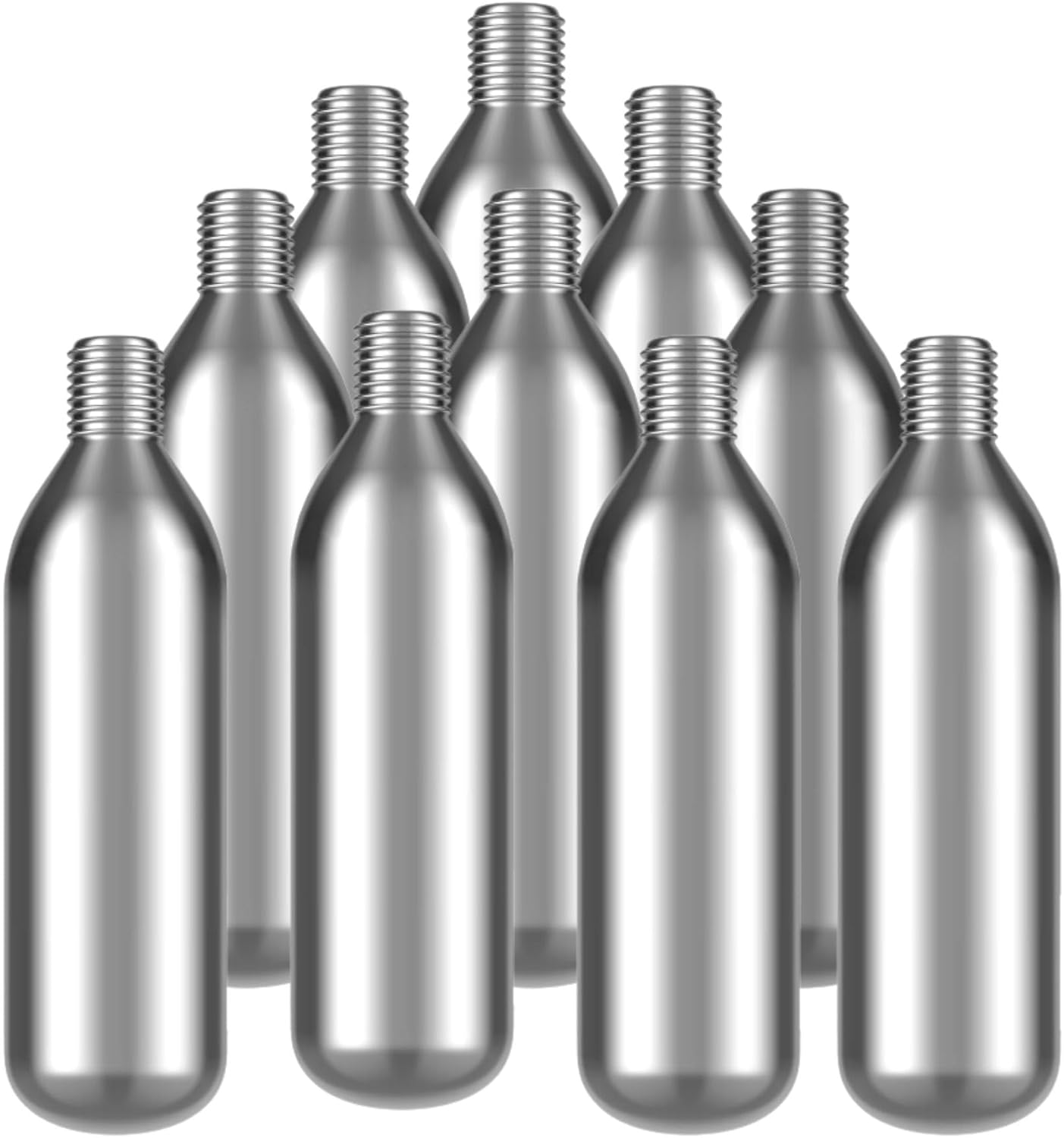
- Stainless steel cleaning beads — small food-safe metal spheres that, combined with warm water, act as a gentle abrasive when swirled inside the decanter. These are the most effective tool for removing wine stains and tartrate buildup from the base and walls without any chemical.
- Flexible decanter brush — a long, flexible wire brush that can navigate narrow necks and curved interiors. Essential for swan-neck and cornetto-style decanters where beads alone cannot reach the neck curves.
- Decanter drying stand — an angled stand that holds the decanter inverted at a drip-dry angle after rinsing. Without this, moisture trapped inside a narrow-neck decanter evaporates very slowly and leaves water spots that are difficult to remove after they mineral-deposit.
- White wine vinegar solution — a 50/50 mix of white wine vinegar and warm water, swirled inside the decanter for 15 minutes, dissolves calcium and mineral deposits that beads cannot dislodge. Safe, food-grade, and effective.
Step-by-Step Cleaning After Each Use
- Rinse immediately after emptying — warm water, never hot (thermal shock cracks crystal). Rinsing within minutes of finishing the wine prevents tannins and pigments from setting into the glass surface. A stain that takes 30 seconds to rinse away takes 30 minutes with cleaning beads if left overnight.
- Add cleaning beads and warm water — approximately one cup of water with 2–3 tablespoons of stainless beads. Swirl vigorously for 60 seconds, allowing the beads to work across the entire interior surface. The swirling motion should be circular and then figure-eight for full coverage.
- Pour out beads through a strainer — use a fine-mesh strainer to catch all beads. Never pour beads directly down a drain without a strainer.
- Rinse thoroughly three times — residual cleaning agent (even just water-metal from the beads) can affect wine flavor in subsequent uses. Three full warm-water rinses ensures complete clearance.
- Drain inverted on a drying stand — allow to drip dry completely before storing. If you must dry faster, use a decanter drying funnel with a lint-free cloth wrapped around the insert to absorb moisture.
⚠️ Never Use Soap in a Decanter
Dish soap leaves microscopic residue in the porous surface of crystal that is nearly impossible to fully rinse out. This residue affects the taste of wine in subsequent uses and also suppresses the formation of wine bubbles in sparkling wine (surfactants break surface tension). If a decanter smells “soapy” before use, a rinse with a splash of the wine you are about to decant (“seasoning the decanter”) before the main pour will coat the interior and neutralize residual soap odors.
Crystal vs Glass vs Borosilicate: Which Material Matters?
The “crystal vs glass” question is the most debated topic in decanter purchasing. Marketing materials for premium decanters claim that crystal’s superior properties transform wine — critics respond that the difference is imperceptible in a blind test. Here is an honest, evidence-based assessment of what each material actually provides.
🔮 Lead Crystal (Vintage)
Traditional high-status material. The lead oxide content (24%+) creates exceptional clarity, light refraction, and allows ultra-thin walls. Beautiful but carries lead-leaching risk for extended wine storage (hours, not minutes). Now largely replaced by lead-free alternatives at quality manufacturers. Still found in antique decanters — do not use these for prolonged wine contact.
💠 Lead-Free Crystal
The modern premium standard. Lead replaced by barium, zinc, or titanium oxides while preserving the optical clarity and workability of traditional lead crystal. Riedel, Zalto, and Spiegelau all use lead-free crystal. Allows walls as thin as 1mm. Can be hand-blown into complex shapes. Safe for all wine contact durations.
🪟 Borosilicate Glass
Laboratory-grade glass used for its thermal shock resistance and chemical inertness. Often dishwasher-safe. Heavier and thicker-walled than crystal. Less optically brilliant. Excellent for daily use, casual entertaining, and kitchens with children. Significantly more durable than crystal — drops that shatter crystal may only chip borosilicate.
🍶 Standard Soda-Lime Glass
The budget option — found in entry-level decanters and carafes. Heavier, less clear, and less thermally resistant than borosilicate. Perfectly functional for casual wine service. Not appropriate for formal entertaining or for wines where visual color assessment matters, as the slight green tint of soda-lime glass distorts color perception.
Does Material Actually Affect the Wine?
The functional difference between lead-free crystal and quality borosilicate glass on the wine itself is negligible. Both are chemically inert to wine contact over dining timescales (hours, not days). The perceived difference between them is primarily sensory: the thinner walls of crystal create a more elegant drinking and pouring experience; the superior optical clarity makes wine color assessment more accurate; the lighter weight creates a more refined handling experience.
These differences are real and worth paying for at premium price points. They are not, however, improvements to the wine’s chemistry. A wine decanted in a $15 borosilicate carafe and a $200 lead-free crystal decanter of identical shape will be identical in the glass if given the same decanting time. The crystal makes the experience better; it does not make the wine chemically different.
Top Decanter Brands Compared: Who Makes the Best Vessels?
🏆 Riedel
The most recognized wine glass and decanter brand globally. Their varietal-specific shapes — designed in collaboration with winemakers — represent genuine functional innovation. The Cornetto and Mamba decanters are design icons. Austrian-made lead-free crystal. Premium pricing ($50–$300) is justified by craftsmanship and functional design research.
🏆 Zalto
The sommelier’s choice for ultra-thin, featherweight hand-blown crystal. Zalto decanters are almost impossibly light for their volume — a 1.5L decanter weighs under 400g. Exceptional optical clarity and balance. Austrian-made. Premium ($80–$250). Fragile — handle with care, but the experience is unmatched.
🥈 Spiegelau
Owned by Riedel but positioned as the accessible quality alternative. Lead-free crystal at lower price points than parent brand. Their wine-style specific decanters deliver genuine functional value. Good balance of performance, durability, and aesthetics at $25–$80. Machine-made but optically excellent.
🥈 Plumm
Australian brand with an innovative modular system — glass tops attach to different bases, allowing style customization. Quality lead-free crystal. Strong aesthetic vision. Available in a wider range of contemporary designs than European competitors. Good value at $40–$120.
🥉 Le Chateau
The best-selling entry-level lead-free crystal decanter on major retail platforms. Consistently strong performance at accessible prices ($15–$35). Not hand-blown, but well-formed machine-made crystal. The classic wide-base shape delivers genuine aeration performance. Ideal first decanter for any household.
Buying Guide: Features That Matter
1. Material: Crystal vs Glass
Lead-free crystal allows thinner walls, better clarity, and more elegant proportions. For formal entertaining or when wine color assessment matters, it is the correct choice. Borosilicate glass is thicker, more durable, and often dishwasher-safe — better for daily table wine use. Check our guide on wine cellar essentials for more on material choices.
2. Size and Surface Area
- Wide-base decanters (6+ inch diameter) are best for aeration of young, bold reds.
- Medium-base decanters (4–5 inch diameter) suit medium-bodied reds like Merlot or Sangiovese.
- Narrow-base carafes are best for old wines, white wines, and rosé where minimal oxidation and temperature retention matter.
3. Cleaning Practicality
This is the biggest real-world pain point. A narrow-neck decanter requires cleaning beads and a drying stand. Without these accessories, you will accumulate water spots, stains, and eventually odors. Factor the cleaning investment into your budget — a $25 cleaning bead set extends any decanter’s lifespan indefinitely.
4. Stopper Compatibility
Some decanters come with stoppers for extended use — if you plan to serve wine over several hours (a long dinner or a slow evening), a stopper allows you to limit oxygen exposure between pours. Ensure the stopper is food-safe silicone or crystal, not rubber (which can impart odors to the wine).
Best Decanters by Budget: What Each Price Point Actually Gets You
💚 Under $30: Daily Use
Le Chateau-style wide-base lead-free crystal decanters deliver genuine aeration performance. Machine-made but functional. A $20 decanter properly used outperforms a $200 decanter that’s never taken off the shelf. Prioritize shape and cleaning simplicity at this tier. Pair with a $8 cleaning bead set.
🟠 $30–$80: Serious Enthusiast
Spiegelau and lower-range Riedel models enter here. Noticeably better optical clarity, more considered shapes, and genuine varietal-specific design research. The Riedel Cabernet/Merlot decanter at this tier is a genuinely well-engineered product. The jump from $20 to $50 produces a perceptible quality difference.
🔴 $80+: Collector Grade
Zalto and premium Riedel. Hand-blown, featherweight, extraordinary optically. These are tools and objects simultaneously — they elevate any table setting. For collectors regularly opening $50+ bottles, the investment is reasonable. The Zalto in particular is an experience that makes every opening feel ceremonial.
Decanter vs. Aerator: Do You Need Both?
We have covered this extensively in our wine aerator vs decanter comparison, but here is the summary:
Use a decanter when: You have an older wine with sediment; you want beautiful table presentation; you have 30+ minutes before serving; you are aerating a full bottle.
Use an aerator when: You are drinking a young, inexpensive wine that needs softening immediately; you are only pouring one glass; you are in a rush and have under 15 minutes.
Use both (hyper-decanting) when: You want maximum aeration in minimum time — pour through the aerator directly into the decanter for combined effect.
Decanter Gift Sets: What Makes a Perfect Gift?
A decanter is one of the most thoughtful wine gifts because it elevates the drinking experience immediately, works with any wine the recipient already enjoys, and sits beautifully on display. The best gift sets combine a quality decanter with the accessories that make it practical to use daily.
💚 Under $40 Gift
A Le Chateau wide-base decanter + stainless steel cleaning beads + a drying stand. This practical trio sets the recipient up to use the decanter correctly from day one. Far more thoughtful than a beautiful decanter alone.
🟠 $40–$100 Gift
A Spiegelau or lower Riedel decanter + a set of 2 matching crystal glasses + cleaning accessories. Pairing decanter and glasses from the same brand creates a cohesive, elegant service set. Include a bottle of quality red wine to complete the gift.
🔴 $100+ Gift
A Zalto or premium Riedel decanter presented with the brand’s sommelier cleaning brush, a drying stand, and a bottle of aged red wine. The ultimate wine service gift — a complete experience from opening to serving for a serious wine enthusiast.
The 6 Most Common Decanting Mistakes
- Decanting too early and leaving wine too long. More oxygen is not always better. Set a timer based on the wine type and taste-test periodically. An over-decanted wine is flat and lifeless.
- Not standing the bottle upright before decanting. Sediment distributed throughout the bottle cannot be separated — it pours straight into the decanter regardless of technique. Stand old bottles upright 24 hours in advance without exception.
- Using soap in the decanter. Soap residue affects wine flavor and suppresses bubbles. Use only warm water, cleaning beads, or a vinegar solution. If you must use a tiny drop of unscented dish soap for a stubborn stain, rinse 5+ times and season with wine before use.
- Decanting Champagne or sparkling wine. This destroys the wine’s defining characteristic — its effervescence. Pour sparkling wine directly from the bottle into a chilled glass, always.
- Storing wine in a decanter overnight. Wine left in a decanter past 4–6 hours is typically over-oxidized. If you cannot finish the wine, pour it back into the bottle, seal with a wine stopper, and refrigerate.
- Choosing a decanter based purely on aesthetics. A beautiful swan-neck decanter is terrible for aerating a young tannic red — it doesn’t have the surface area. Match the decanter shape to the wine type you most frequently drink before considering appearance.
Frequently Asked Questions
It depends on the wine’s age and body. Young, tannic reds (Cabernet Sauvignon, Barolo, Syrah) often need 1–2 hours. Medium-bodied reds benefit from 45–60 minutes. Light reds like Pinot Noir need only 15–30 minutes. Older, delicate wines (10+ years) may only need 15–30 minutes for sediment removal — too much oxygen can spoil them. Taste at 20-minute intervals to find the ideal window.
Yes. Lead-free crystal is stronger and can be formed much thinner, creating a more elegant vessel with exceptional optical clarity. The thinness creates a refined handling experience and better visual color assessment. Standard borosilicate glass is thicker, more durable, and often dishwasher-safe. For daily use, quality borosilicate glass performs perfectly well. Crystal is the right choice for formal entertaining and for enthusiasts who value the complete experience.
Generally no, but full-bodied whites like oaked Chardonnay or Viognier can benefit from 15–20 minutes in a narrow, pre-chilled carafe to open their aromas. Orange wines (skin-contact whites) often benefit from more aeration similar to red wine. Aromatic, delicate whites (Riesling, Sauvignon Blanc, Pinot Grigio) should not be decanted — it dissipates their primary appeal.
Add stainless steel cleaning beads with warm water, swirl vigorously, and pour out through a strainer. A specialized flexible decanter brush handles the neck curves. For mineral deposits, a white wine vinegar solution (50/50 with warm water) swirled for 15 minutes dissolves buildup that beads cannot reach. Always rinse thoroughly — at least three times — and dry inverted on a dedicated drying stand to prevent water spots.
An aerator is faster and works well for young wines when you need one glass immediately. A decanter is better for sediment separation in older bottles and for aerating a whole bottle before a meal. For maximum effect, pour through an aerator into a decanter — this is hyper-decanting and is the fastest way to aerate a young, tannic wine before service.
Do not decant: very old, fragile wines for extended periods (they can fade within 30 minutes); sparkling and Champagne (destroys the effervescence); light aromatic whites (dissipates their delicate aromatics); wines you want to serve cold (a room-temp decanter warms the wine rapidly). When in doubt with an old bottle, taste directly from the bottle first and assess whether any aeration is warranted.
Double decanting involves pouring wine from the bottle into a decanter for aeration, then pouring it back into the thoroughly rinsed original bottle before serving. This allows full aeration while presenting the wine in its original bottle — useful for formal service and restaurant settings. The return pour also provides additional turbulent aeration, equivalent to using an aerator.
Wine oxidizes quickly once in a wide-surface decanter. If you can’t finish it within 4–6 hours, pour it back into the bottle using a funnel and seal it with good wine stoppers. Refrigerate and consume within 2–3 days. Do not leave wine in the decanter overnight — the next morning’s wine will be flat and lifeless.
If wine is stored in a lead crystal decanter for extended periods (many hours or days), yes, detectable lead migration occurs. However, for typical decanting timescales (1–4 hours during dinner service), the risk is negligible and below safety thresholds. Most modern crystal is lead-free — using titanium or barium oxide instead — eliminating this concern entirely. If you own older lead crystal decanters, use them only for same-evening decanting, never for overnight storage.
Final Verdict: Which Decanter Should You Choose?
Our Recommendations by Profile
For the Everyday Drinker: The Le Chateau Wide-Base is unbeatable at its price point. Durable, effective, and it handles everything from Tuesday Merlot to Saturday Syrah.
For the Collector: Invest in a Riedel or Zalto. Varietal-specific shapes and hand-blown craftsmanship genuinely refine the tasting experience and double as striking table objects.
For Old Bottles: A swan-neck decanter (Riedel Cornetto or similar) gives you the precise pouring control needed for sediment separation. Pair with a candle or flashlight for the full professional technique.
For Gift Giving: Any quality decanter paired with cleaning beads and a drying stand. The accessories make the decanter practical; without them, it will sit unused and spotted.
Whichever you choose, make decanting a habit. Even a modest wine tastes better with a little air. Equip yourself with the right host accessories, pour with confidence, and enjoy the full potential of your cellar.
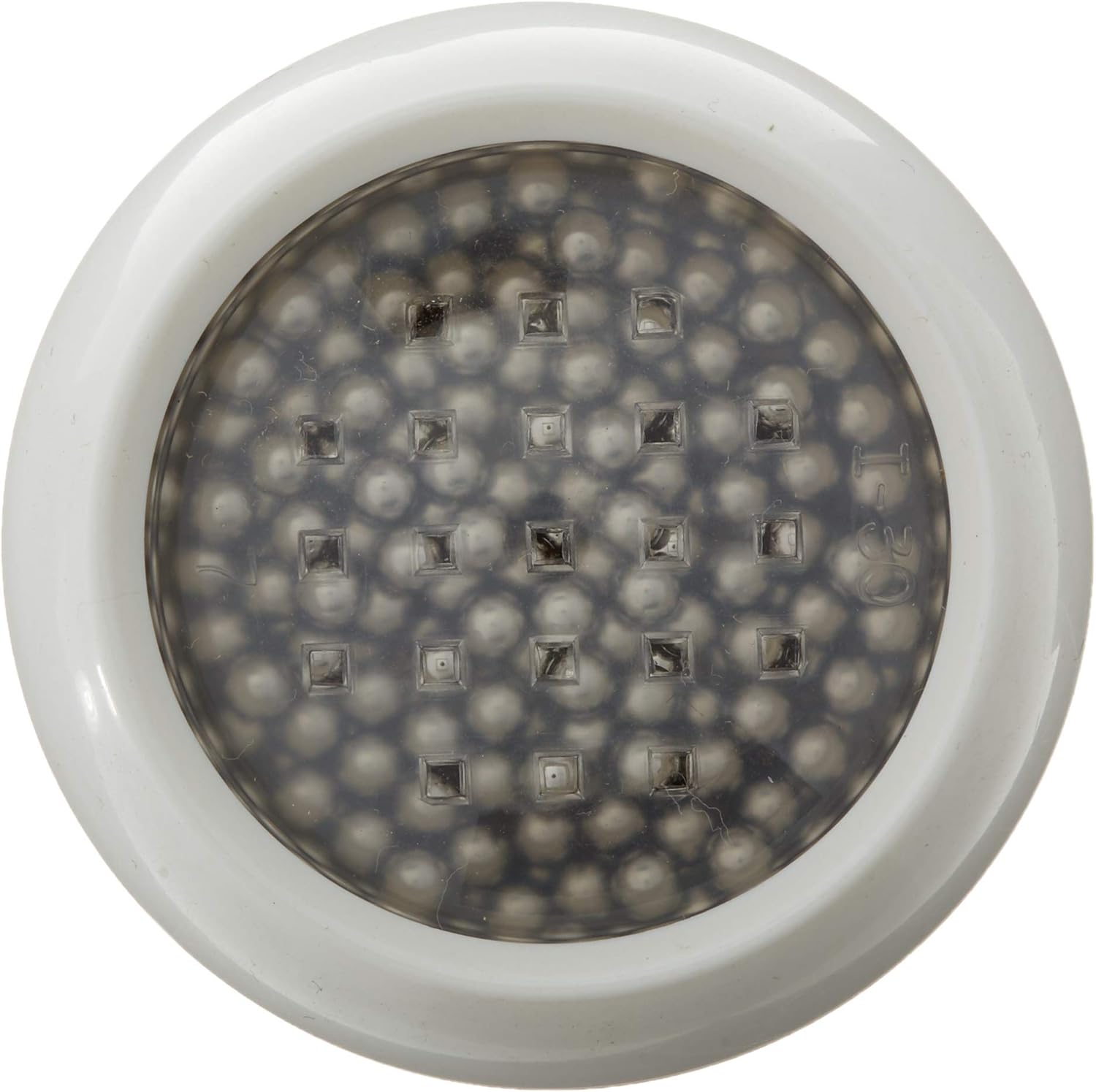
Don’t Forget Maintenance: Stainless Steel Cleaning Beads
Keep your crystal sparkling without harsh chemicals.
Check Price on Amazon