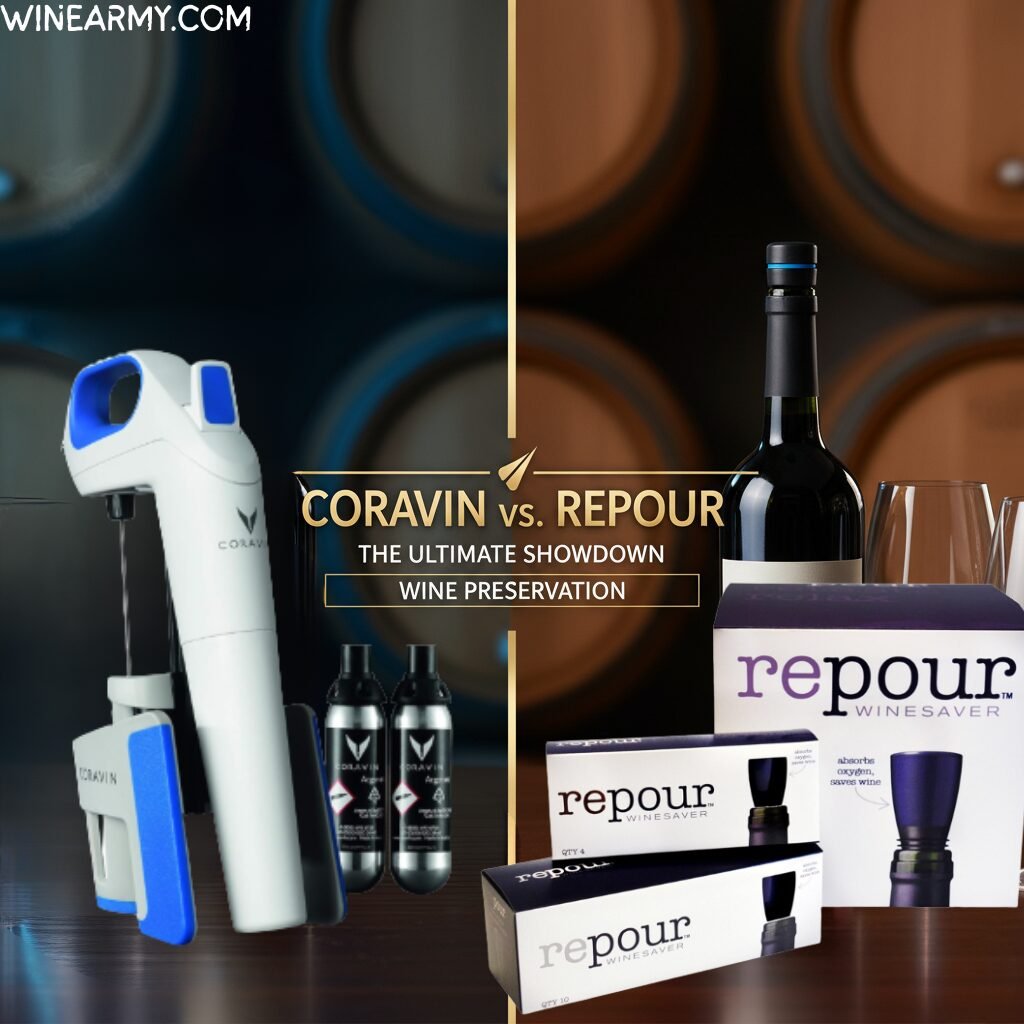
Coravin vs. Repour: The Ultimate Showdown of Wine Preservation
It’s the timeless dilemma of every wine lover: you crave just one perfect glass of that special Cabernet Sauvignon on a Tuesday night, but you hesitate. Opening the bottle means starting a countdown. A race against oxidation that threatens to turn your beautiful wine into a shadow of its former self by tomorrow. For decades, we’ve battled this foe with flimsy vacuum pumps and crossed fingers. But today, two champions have emerged, each with a radically different approach to keeping wine fresh: the high-tech Coravin and the brilliantly simple Repour. Which one truly deserves a place in your kitchen? We put them to the ultimate test to find out.
The ‘One Glass’ Fallacy: How I Stopped Wasting My Best Wines
I used to have two categories of wine at home: “weekday wine” and “weekend wine.” Weekday wines were the affordable bottles I wouldn’t feel guilty about if I didn’t finish them. Weekend wines were the special, expensive bottles I’d been saving. The problem was, I often wanted to drink the good wine during the week, but couldn’t justify opening a $50 bottle for a single glass. So, my best bottles would sit on my rack, gathering dust, waiting for a “special occasion” that might never come. It felt like I was saving my best life for later.
This all changed when I started seriously exploring wine preservation. I wanted to break the “one bottle, one night” rule. I started with vacuum pumps, but was always disappointed. Then I discovered Coravin and Repour. Suddenly, I could have a glass of that cellar-worthy Napa Cab on Monday and know it would be just as good on Friday. I could sample a delicate, unfiltered bottle of organic wine without committing to the whole thing. It was liberating. It completely changed my relationship with wine, turning every night into a potential “special occasion.” This guide is for anyone who wants to stop saving their best wine and start enjoying it.
The Deep Science of Wine Spoilage: Know Your Enemy in Detail
Before we can judge the soldiers, we must understand the war in depth. Wine spoilage is a multi-stage biological and chemical process that doesn’t happen all at once — it unfolds in predictable phases, each more damaging than the last. Understanding this progression gives you a much clearer picture of what each preservation system is actually fighting, and at what point in the battle it intervenes.
⚗️ Phase 1: Initial Oxidation (0–24 hrs)
The moment the cork is pulled, dissolved oxygen in the wine reacts with ethanol and polyphenols. In young, robust wines, this is actually beneficial — it’s the “opening up” effect that releases primary fruit aromas. Iron and copper ions present in most wines act as catalysts, accelerating the reaction. At this stage, the change is reversible in some sense: an aerator can encourage this process deliberately, while a preservation system can pause it.
🍂 Phase 2: Phenolic Degradation (1–4 days)
As oxygen continues to work, it attacks the wine’s most complex molecules — the anthocyanins (red pigments), flavonoids, and tannin polymers. Red wine begins losing its vibrant ruby color, shifting toward brick or brown at the edges. The nose starts to lose its bright fruit character, replaced by notes of dried flowers, hay, or bruised fruit. This phase is where most vacuum pump systems begin to fail — they slow the process but rarely stop it.
🍎 Phase 3: Aldehyde Formation (3–7 days)
Oxygen reacts directly with ethanol to form acetaldehyde, the same compound responsible for headaches after drinking too much. In wine, acetaldehyde manifests as a stale, bruised-apple, or sherry-like aroma. This is the unmistakable smell of “oxidized wine.” At low concentrations, some winemakers actually use it intentionally (as in Sherry production), but in a regular table wine, it signals irreversible damage.
🧫 Phase 4: Acetic Acid Production (7+ days)
The final and terminal stage of spoilage. Acetobacter bacteria — present in trace amounts in virtually every opened bottle — use the available oxygen to convert alcohol into acetic acid (vinegar) and ethyl acetate (nail polish remover). Once a wine reaches this stage, it is unsalvageable. The best use at this point is as a cooking wine or, literally, as homemade vinegar.
The Critical Insight: The enemy isn’t just the oxygen that rushes in when you pull the cork — it’s the cumulative oxygen exposure over time. A wine exposed to 10ml of oxygen over 30 days ages far more gracefully than one exposed to the same 10ml over 3 days. This is why slow, gradual oxidation in a sealed bottle over years produces complexity, while rapid oxidation in a half-empty bottle produces ruin. The best preservation systems minimize total oxygen exposure and, crucially, the rate at which it occurs.
To understand these processes better, check out our wine terminology guide. The goal of any preservation system is to limit the wine’s exposure to oxygen as much as possible, thereby dramatically slowing down this inevitable decay.
The Headspace Problem: Why It Matters So Much
One of the most underappreciated factors in wine preservation is “headspace” — the volume of air trapped between the surface of the wine and the bottom of the stopper or cork. The more wine that has been poured, the larger the headspace, and the more oxygen is in direct contact with the wine. A half-empty bottle has roughly twice the oxidation risk of a three-quarters-full one. This is why preservation becomes exponentially more critical as the bottle empties — and it’s a key factor in evaluating both Coravin and Repour.
Our two contenders fight this battle in completely different ways:
- The Coravin Method (Displacement): Coravin’s philosophy is to never let a significant amount of oxygen into the bottle in the first place. It uses a needle and inert gas to create a closed system.
- The Repour Method (Absorption): Repour accepts that the bottle has been opened and oxygen is present. Its philosophy is to aggressively remove that oxygen from the bottle after it’s been sealed.
The Full Landscape: Every Wine Preservation Method Compared
Coravin and Repour are the stars of this guide, but they don’t exist in a vacuum (pun intended). Understanding how they stack up against the full range of available preservation methods gives important context and helps you decide whether you need one of these two or whether a simpler solution might already be sitting in your kitchen drawer. Here’s a candid, experience-based assessment of every method available to the modern wine drinker.
The Default Option
Putting the original cork back in the bottle and storing it in the refrigerator. Works for roughly 24 hours in a full bottle before noticeable degradation. Convenient since it requires nothing, but offers virtually no protection beyond slowing the process with cold temperature. Not recommended for anything beyond next-morning use.
The Classic Choice
The old standby. By removing most of the air from the bottle’s headspace, vacuum pumps slow oxidation meaningfully. A good vacuum pump extends wine life by 2–4 additional days. However, the pumps also remove some of the aromatic volatile compounds along with the oxygen, potentially muting the wine’s nose. Better than nothing; outclassed by both Coravin and Repour.
The Budget Coravin
A canister of mixed inert gases (argon, carbon dioxide, nitrogen) that you spray into the bottle before resealing. Creates a protective blanket over the wine similar to Coravin’s method. Very affordable, works reasonably well for 5–7 days. The downside: you’re guessing at how much gas to use, and you need to re-spray each time you open the bottle. More finesse than a vacuum pump; less reliable than Repour or Coravin.
The Everyday Champion
Oxygen absorption technology in a simple stopper. No guesswork, no equipment, no gas. Insert, forget, drink fresh wine days later. Works until its oxygen-absorbing capacity is reached. Our test winner for everyday bottles and wines consumed within 2 weeks.
The Professional Standard
The gold standard for long-term, non-invasive preservation. Unmatched for special bottles you want to sample repeatedly over months or years. The most significant upfront investment; the most significant return for the serious wine collector. Unrivaled when used correctly on quality natural corks.
The Accessible Middle Ground
The “everyday Coravin” — replaces the standard cork with a special stopper, then inserts Argon gas through that stopper as you pour. No needle, no cork-resealing magic, but reliable 4-week preservation at a lower entry price. Excellent for households that regularly open good bottles but don’t collect aged wines.
Myth: “The Refrigerator Preserves Open Wine Just as Well as Any Device”
Cold temperatures do slow oxidation — roughly halving the rate compared to room temperature storage. But the refrigerator doesn’t prevent oxidation; it merely delays it. A re-corked bottle in the fridge will still be noticeably degraded within 3–4 days and genuinely unpleasant within a week. The cold-storage myth leads many people to waste wine they could have easily preserved with a Repour stopper. Use the fridge as a partner to your preservation device, not as a substitute for one.
The Contenders: In-Depth Reviews and Analysis
1. The Coravin System (The Surgical Strike)

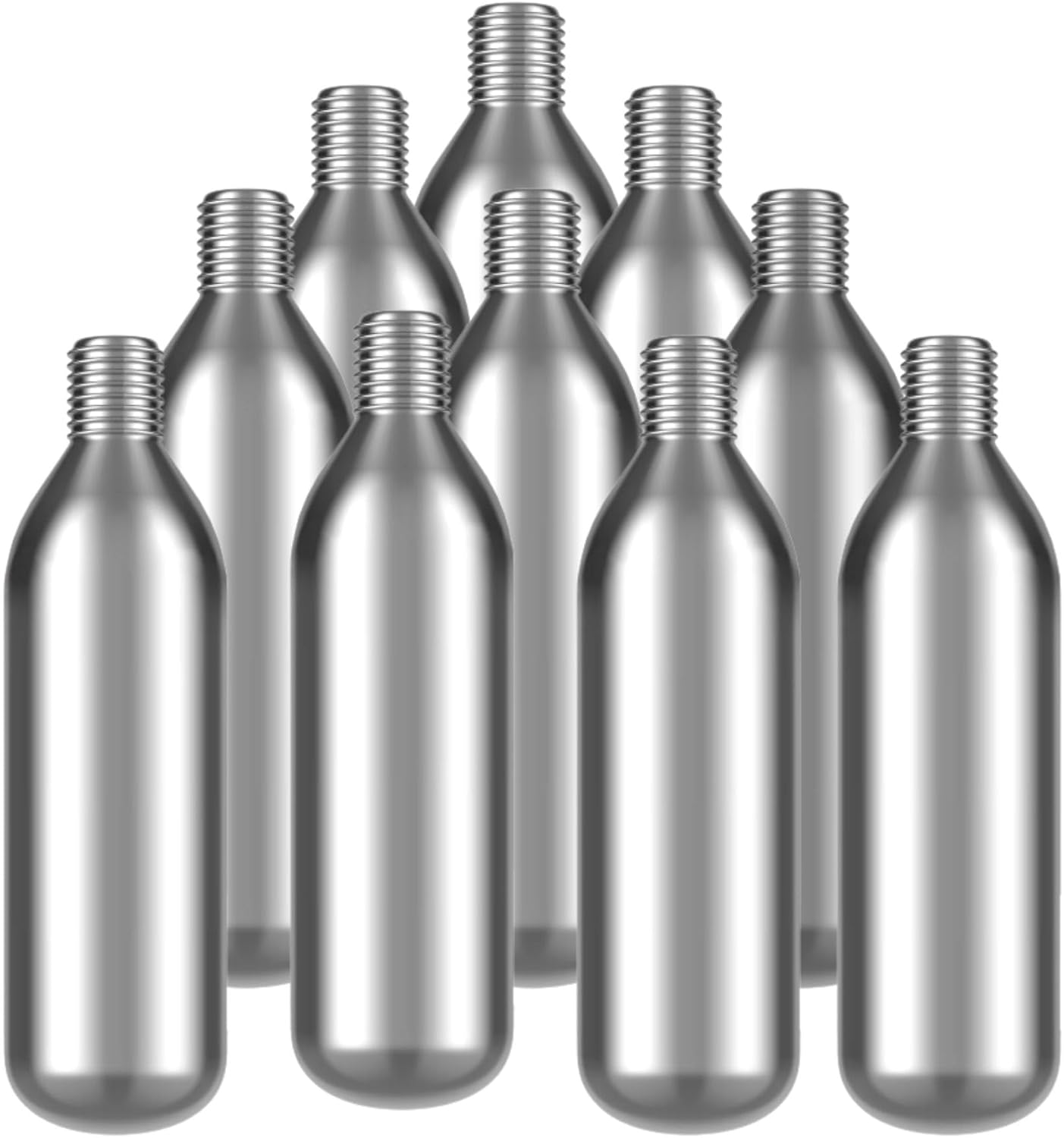
The Coravin is a marvel of engineering, a high-tech solution that feels like something out of a science fiction movie. The flagship “Timeless” system allows you to pour wine without ever removing the cork. It works by piercing the cork with a very thin, hollow medical-grade needle. As you tilt the bottle to pour, the system injects pure, inert Argon gas from a small capsule. Because Argon is heavier than air, it displaces the wine being poured and forms a perfect protective blanket over the remaining wine in the bottle. When you remove the needle, the natural elasticity of the cork reseals the hole, and the wine inside never knows it was touched.
The “Pivot” system is a more accessible version for everyday wines. You replace the cork or screw cap with a special Pivot stopper. The device then inserts through the stopper to pour and inject Argon, keeping the bottle perfectly preserved for up to four weeks. It’s an amazing piece of technology and one of the ultimate wine cellar essentials for any serious collector.
Who is this best for?
The serious wine collector, the connoisseur who wants to sample their aging wines over time, or anyone who frequently enjoys high-end bottles and wants the absolute longest preservation possible.
- Unmatched long-term preservation (months to years)
- Allows you to pour wine without pulling the cork
- Lets you sample and track the evolution of a single bottle
- Works with screw caps (with accessory)
- Feels and looks incredibly impressive
Pros
- Very high initial investment
- Ongoing cost of proprietary Argon gas capsules
- Has a slight learning curve to use correctly
- Not suitable for sparkling wines
Cons
Which Coravin Model Is Right for You? A Complete Breakdown
The Coravin lineup has grown significantly and now spans multiple price points and use cases. Choosing the right model is as important as choosing the brand itself — over-buying on features you won’t use is a common and expensive mistake. Here’s a clear breakdown of each system to help you decide.
The foundational Coravin experience. Includes one Argon capsule and one aerator. Needle system only — works on natural corks. Ideal for first-time Coravin buyers who want to try the system before committing to a higher-spec model.
The sweet spot for serious enthusiasts. Includes three Argon capsules, a faster-pour aerator, and a more refined build. The recommended starting point for anyone with a collection of 20+ bottles or who entertains regularly.
The hospitality-grade version. Six capsules, the highest-spec aerator, premium construction, and a dedicated carry case. Used by restaurants and serious collectors who access their bottles weekly. The capsule included represents significant upfront value.
The Coravin without the needle magic. Uses a reusable stopper instead of piercing the cork. 4-week preservation window per bottle. Lower entry price and works on any bottle including those with synthetic corks (which the Timeless cannot use). The practical choice for modern wine drinkers who don’t collect aged bottles.
The only Coravin designed for Champagne, Cava, and Prosecco. Maintains bottle pressure while allowing you to pour without losing carbonation. A completely separate technology from the still wine systems. Essential for anyone who regularly pops a bottle of sparkling for a single glass.
💡 Pro Tip: The Capsule Economics
Each Coravin Argon capsule costs approximately $8–10 and provides roughly 15 “pours” (a standard 5oz glass). That’s about $0.55–0.65 per pour in ongoing gas costs. For a $20 bottle, that capsule cost represents meaningful overhead. For a $80 bottle, it’s negligible insurance. The math strongly favors Coravin for bottles in the $40+ range and becomes more questionable for everyday wines — which is precisely why owning both a Coravin and a Repour makes financial sense.
2. The Repour Wine Stopper (The Silent Guardian)

If Coravin is the high-tech surgical laser, Repour is the brilliantly simple, low-tech solution that just works. From the outside, it looks like a simple plastic bottle stopper. But inside that stopper is a special material that actively absorbs oxygen. The science is straightforward: when you pour your glass of wine and replace the cork with a Repour stopper, the material inside immediately begins to bind with all the free oxygen in the bottle’s headspace, removing it from the equation. It continues working until there is virtually no oxygen left to damage the wine.
There are no buttons, no needles, no gas capsules. You simply use it like a regular stopper. Each Repour stopper is designed to absorb all the oxygen from one 750ml bottle. This means you can pour a glass, seal it with Repour, open it again a few days later, pour another glass, and seal it again. It will keep working until its oxygen-absorbing capacity is used up. It’s a fantastic tool for enjoying the best affordable wines without the pressure to finish the bottle quickly.
Who is this best for?
The everyday wine drinker who typically finishes a bottle within a week or two and wants a foolproof, affordable, and highly effective way to prevent waste.
- Incredibly simple to use — just a stopper
- Very affordable per use
- Highly effective at preserving wine for days or weeks
- No ongoing hardware or gas costs
- Small and easy to store or travel with
Pros
- Each stopper is single-use per bottle
- Does not prevent the initial rush of oxygen upon opening
- Less “wow factor” than a Coravin
Cons
Not All Wines Are Equal: How Wine Style Affects Preservation Strategy
One of the most important and frequently overlooked dimensions of wine preservation is that different wine styles have dramatically different vulnerabilities to oxidation. A highly tannic, high-acid Barolo is naturally more resilient than a delicate, low-sulfite orange wine. A full-bodied, oaked Chardonnay behaves very differently under the same conditions as a crisp, unoaked Sauvignon Blanc. Your preservation strategy should account for these differences — using the same approach for every bottle is a missed opportunity.
🍷 Full-Bodied Red Wine
Oxidation vulnerability: Low to moderate. High tannin content and often higher alcohol levels provide natural protection. These wines can often survive 3–5 days with a good vacuum pump, making them the most forgiving for preservation failures.
Ideal system: For collectible bottles (Napa Cab, Barolo, Burgundy), the Coravin Timeless is transformative — you can sample these bottles over years and track their evolution. For everyday reds, Repour performs excellently within the typical 3–5 day consumption window.
🥂 Crisp White Wine
Oxidation vulnerability: High. White wines contain fewer protective tannins and polyphenols than reds, making them significantly more susceptible to rapid flavor loss. A delicate Riesling or Sauvignon Blanc can show meaningful oxidation within 24–48 hours without protection.
Ideal system: Repour combined with refrigeration is excellent for most white wines. Coravin Pivot is a strong choice if you frequently open good white Burgundy or white Rhône wines. Temperature management is also critical — always keep whites refrigerated after opening, even with a preserver.
🌸 Rosé Wine
Oxidation vulnerability: High. Rosé shares white wine’s lack of protective tannins and is typically designed for fresh, delicate fruit expression — exactly the flavors that oxidation destroys first. A rosé left unprotected overnight can lose its defining strawberry and raspberry freshness entirely.
Ideal system: Repour is the practical everyday choice for rosé. Because most rosé is consumed relatively quickly (within a week), the Repour stopper’s absorption window is ideally matched. Coravin is rarely justified for rosé unless you’re dealing with a premium aged Provence Rosé.
🌿 Natural & Orange Wine
Oxidation vulnerability: Complex. Many natural wines contain minimal sulfites, which would normally act as antioxidants. However, many natural and orange wines are also deliberately made in an oxidative style — some have spent months in open-top vessels. These wines can be paradoxically more stable than expected, or extremely fragile depending on the producer’s methods.
Ideal system: When in doubt, always use Repour. Its gentleness (no gas injection, no mechanical interaction) makes it ideal for fragile, low-intervention wines. Avoid aggressive vacuum pumping on natural wines — the process can strip volatile aromas that make these wines distinctive. The safest approach: use Repour and plan to finish the bottle within 3–4 days.
💡 The Sulfite Connection
Sulfur dioxide (SO₂) is the wine industry’s primary antioxidant preservative, added at bottling to protect wine from oxidation and microbial spoilage. Wines labeled “low sulfite” or “no added sulfites” have significantly less built-in protection, making them far more dependent on good preservation practices after opening. If you regularly drink low-intervention or organic wines, investing in the best preservation tools isn’t optional — it’s essential to getting the experience the winemaker intended.
Head-to-Head: The Ultimate Taste Test Showdown
Reviews and specs are one thing, but the only thing that matters is how the wine tastes. To find a definitive winner, I conducted a multi-week, side-by-side experiment. I took three identical bottles of a quality, mid-range Cabernet Sauvignon.
- Bottle A (Control): Opened, poured one glass, and re-corked with its original cork.
- Bottle B (Repour): Opened, poured one glass, and sealed with a fresh Repour stopper.
- Bottle C (Coravin): Poured one glass using the Coravin Pivot system (to simulate a typical “open bottle” scenario).
All three bottles were stored under ideal conditions, following the best practices for how to store wine at home. I then tasted a small sample from each bottle on Day 3, Day 7, and Day 14.
The Results
- Day 3: The Control bottle was already showing signs of fading, the fruit notes becoming dull. Both the Repour and Coravin bottles were nearly indistinguishable from a freshly opened bottle — vibrant, aromatic, and fresh.
- Day 7: The Control bottle was clearly oxidized and unpleasant. The Repour bottle was still tasting remarkably fresh, perhaps losing just a tiny bit of its aromatic intensity but otherwise excellent. The Coravin bottle was, for all intents and purposes, perfect.
- Day 14: The Repour bottle was still drinkable but had lost a significant amount of its character, tasting a bit flat. The Coravin bottle was still holding strong, tasting almost as good as it did on Day 1.
← Scroll to see full comparison →
| Feature | Coravin | Repour |
|---|---|---|
| Preservation Method | Inert Gas (Argon) Displacement | Oxygen Absorption |
| Effective Timeframe | Weeks, Months, even Years (Timeless) | Days to 2–3 Weeks |
| Ease of Use | Requires a short learning curve | As easy as using a bottle stopper |
| Initial Cost | High ($100–$400+) | Very Low (~$10 for a pack) |
| Ongoing Cost | Argon Capsules (~$8–10 each) | New stopper for each new bottle (~$2–3) |
| Best For | Sampling fine/aged wines, long-term preservation | Finishing a bottle over several days or a week |
| Versatility | Works on corks and screw caps (with accessory) | Works on any standard 750ml bottle |
| Sparkling Wine | Separate system required (Coravin Sparkling) | Not suitable (dedicated Champagne stopper needed) |
| Environmental Impact | Argon capsules create waste; reusable device | Disposable per bottle; minimal packaging |
The Real Cost: A Brutally Honest Financial Analysis
Wine accessories are notoriously easy to over-invest in without a clear picture of the true long-term economics. The sticker price of a Coravin can feel shocking compared to a pack of Repour stoppers, but the per-use cost over time tells a much more nuanced story. Here’s the complete financial breakdown across several realistic usage scenarios.
Cost Per Preserved Pour: The Real Numbers
Coravin Timeless Three+ (50 bottles over 2 years)
~$0.65/pourDevice ($200) ÷ 300 pours + capsule cost ($0.65/pour) = approximately $1.30/pour in year 1. By year 2, hardware cost amortizes to ~$0.33/pour, leaving $0.65/pour ongoing gas cost. Long-term: ~$0.75–0.80/pour average.
Repour (50 bottles over 2 years)
~$0.35/pourEach stopper ($2.50) covers one 750ml bottle — approximately 5 glasses per bottle = $0.50/pour from the stopper alone, with zero hardware cost. For bulk multi-packs the stopper cost drops to ~$1.75 per bottle ($0.35/pour). Zero hardware amortization needed.
Vacuum Pump (50 bottles over 2 years)
~$0.08/pourDevice ($25) ÷ 300 pours = $0.08/pour. Nearly free per use. But factor in the wine wasted due to inadequate preservation (estimated 30–40% of opened bottles) and the true “cost of imperfect preservation” erases this apparent saving.
Control (No Preservation)
~$2.50+/pour wastedIf 40% of opened bottles are partially wasted due to oxidation, and the average bottle costs $20, that’s $8 wasted per bottle — or approximately $400 in wasted wine per year for someone who opens 2 bottles per week. No device cost is as expensive as this.
The Most Expensive Preservation Strategy: None at All
The economics consistently point to the same conclusion: the cost of any preservation device is dramatically less than the cost of the wine wasted without one. Someone who opens two bottles of $25 wine per week and wastes a third of each bottle is losing approximately $430 per year to oxidation. A $25 vacuum pump would save most of that. A $10 pack of Repour stoppers would save nearly all of it. The device that costs nothing is always the most expensive option in the long run.
The Beginner’s Guide to Wine Preservation: Where Do You Start?
If you’re new to wine preservation, the range of options — from simple stoppers to elaborate gas injection systems — can feel like overkill for what seems like a simple problem. Here’s the honest truth: you don’t need to spend a lot to preserve wine well. The right starting point depends almost entirely on your current relationship with wine and how quickly you typically finish bottles. Follow this decision path to find your natural entry point.
If you’re new to preservation and drink 1–2 bottles per week of wines in the $15–$35 range. Maximum impact, minimum complexity. Master this before anything else.
Always refrigerate open bottles regardless of color. A corked red in the fridge + Repour stopper is dramatically better than a red left on the counter. Bring it to temp 20 minutes before the next pour.
Once you’re regularly opening $40+ bottles and want to savor them over 3–4 weeks rather than 3–4 days. The Pivot is the most accessible Coravin entry point.
When you begin collecting age-worthy wines you want to track over months or years. This is the tool that transforms you from a wine drinker into a wine collector in the fullest sense.
For Champagne lovers who regularly open bottles for a glass or two and want to preserve the bubbles for another occasion. A remarkably specialized but genuinely game-changing tool.
Preservation + Storage: The Complete System
Preservation devices work best as part of a complete wine storage philosophy, not as standalone solutions. The most effective approach pairs the right preservation tool with the right storage environment. Understanding how these elements interact gives you a genuinely holistic wine care system that maximizes both the quality and longevity of every bottle you own.
🌡️ Temperature
Store unopened bottles at 10–15°C. After opening, refrigerate regardless of wine color. Cold dramatically slows oxidation, acting as a partner to your preservation device — not a substitute for it.
📐 Bottle Position
Store corked wines horizontally to keep corks moist and sealed. After opening and resealing with Repour or a Coravin Pivot stopper, store upright to minimize liquid contact with the stopper seal.
🌑 Light Avoidance
UV light accelerates oxidation and can create “light strike” in sensitive whites and sparklings. Store in a dark location or a wine fridge with UV-filtering glass. This matters even for bottles used within a week.
🔇 Vibration
Vibration agitates wine molecules and disturbs sediment. Keep your Coravin-preserved bottles away from appliances, speakers, or high-traffic areas. Stillness is particularly important for old wines with settled sediment.
💧 Humidity
60–70% relative humidity keeps corks pliable. Too dry, and corks shrink — undermining even the best preservation device by allowing slow oxygen ingress around the seal. A wine fridge maintains this automatically.
🗓️ Consumption Timeline
Match your preservation device to your intended consumption timeline. Repour for bottles you’ll finish in 1–2 weeks. Coravin Pivot for 2–4 weeks. Coravin Timeless for months or years. Mismatching this creates both waste and unnecessary expense.
When Preservation Fails: Troubleshooting Guide
Even with the best tools, preservation failures happen. Understanding why they occur empowers you to fix the problem rather than simply accepting a glass of oxidized wine as inevitable. Here are the most common preservation problems and their practical solutions.
Common Issues & Fixes
Most likely cause: The stopper was placed too loosely or the bottle neck had chips or irregularities preventing a proper seal. Fix: Ensure the stopper is firmly seated — you should feel slight resistance. Inspect the bottle neck for damage. Also confirm you’re using one Repour stopper per bottle (not reusing a stopper from a previous bottle, as its absorption capacity may be exhausted).
Most likely cause: Synthetic or agglomerated corks, which are not compatible with the Coravin Timeless needle system. Fix: Check the cork type — if it’s not a 100% natural cork, use the Coravin Pivot system instead, which uses a stopper rather than a needle. Also confirm the foil capsule has been removed from where the needle will enter.
Most likely cause: The needle was removed too quickly before the cork had a chance to reseal. Fix: After removing the Coravin from the bottle, keep the bottle upright for 30 seconds. The cork’s natural elasticity needs a brief moment to close the needle channel completely. Old, dried-out, or crumbling corks may not reseal effectively — these bottles should be consumed within days rather than weeks.
Most likely cause: Excessive Argon gas was used, creating slight carbonation. Fix: Use the minimum necessary gas — Coravin recommends one “burst” per pour for most wines. Also try using the aerator attachment, which helps dissipate excess gas as the wine pours. Some wines (particularly whites with very high dissolved CO₂) are more sensitive to this than others.
Most likely cause: The bottle has a non-standard neck diameter, or the stopper isn’t being pressed in firmly enough. Fix: Press firmly until the stopper flanges are flush with the bottle lip. Repour is designed for standard 750ml Bordeaux-style and Burgundy-style bottle necks. Some Italian or unusual boutique bottles have slightly different neck profiles. If the fit feels loose, using a secondary wine stopper over the Repour provides additional security.
Most likely cause: Color degradation (browning) in red wines begins earlier than flavor degradation — it’s a visual indicator of oxidation that doesn’t necessarily mean the wine is undrinkable. Fix: Taste before discarding. If the nose and palate are still vibrant, the brown edges are cosmetic. If the wine also tastes flat or nutty, oxidation has progressed to the flavor stage and the bottle should be used for cooking. Improve storage conditions and check seal integrity going forward.
Preservation as a Gift: The Complete Buyer’s Guide for Every Wine Lover
Wine preservation tools make genuinely exceptional gifts precisely because they’re the kind of thoughtful, practical upgrade that wine lovers rarely buy for themselves. They solve a real problem that anyone who drinks wine regularly experiences, and they’re available at virtually every price point. The key is matching the gift to the recipient’s drinking habits and existing toolkit.
Repour Multi-Pack + Wine Journal
A multi-pack of Repour stoppers paired with a beautiful hardbound wine journal (for tasting notes) is a wonderfully practical gift for anyone who opens wine regularly but has never thought much about preservation. It solves an immediate problem and encourages more intentional engagement with wine. Price range: $25–$45.
Coravin Pivot + Capsule Pack
The Pivot is the ideal first Coravin experience — lower entry price than the Timeless, still delivers genuine Coravin-quality preservation, and works on virtually any still wine bottle. A Pivot plus a supplementary capsule pack is an impressive, practical gift that will genuinely change how this person drinks wine. Price range: $130–$180.
Coravin Timeless Six+
For the wine collector with a rack of special bottles they’ve been hesitating to open, the Timeless Six+ is a transformative gift. It directly solves their specific problem — wanting to sample without committing to a whole bottle — and the six-capsule pack provides substantial upfront value. This is a “once in a while” gift for a very specific type of recipient. Price range: $280–$350.
Coravin Sparkling + Premium Stoppers
For the person who regularly opens bottles of Champagne, Cava, or quality Prosecco for one or two glasses and then watches the rest go flat overnight, the Coravin Sparkling system is a revelation. Pair it with a set of elegant Champagne flutes for a complete, themed gift. Price range: $130–$200.
Repour Large Pack + Orange Wine Selection
Natural and orange wine drinkers face preservation challenges acutely — their low-sulfite wines oxidize faster and more unpredictably. A generous Repour pack combined with a curated selection of interesting natural wines creates a complete, experience-focused gift. It’s both a tool and an adventure. Price range: $60–$120.
The Complete Preservation Kit
Bundle both systems: a Coravin Pivot for their special bottles and a multi-pack of Repour for everyday wines. Add a wine temperature strip and a beautiful decanter brush. Package everything in a wooden wine crate with a handwritten note explaining each tool’s purpose. This is the gift of a complete, professional-grade wine service toolkit. Price range: $180–$250.
💡 The Gift That Keeps Giving: Include Consumables
Both Repour stoppers and Coravin Argon capsules are ongoing consumables — they’re the “razor blade” to the device’s “razor.” When gifting either system, always include a generous supply of the associated consumables. A Coravin gifted without extra capsules creates an immediate follow-up purchase that can feel like a hidden cost. A multi-pack of Repour with its first order ensures the recipient actually uses and experiences the product rather than leaving it on a shelf.
The Final Pour: Which Preserver Is Right for You?
After weeks of testing, the conclusion is crystal clear: this isn’t a case of one being “better” than the other. It’s about choosing the right tool for the right job. Your choice between Coravin and Repour should depend entirely on how you drink wine.
Choose Coravin If…
- You collect fine or age-worthy wines.
- You want to sample a wine without committing to opening it.
- You want to track a single bottle’s evolution over months or years.
- You value the ultimate in preservation technology and are willing to pay for it.
- You’re looking for one of the best wine gift ideas for a serious connoisseur.
Choose Repour If…
- You typically finish a bottle within 1–2 weeks.
- You want an affordable, no-fuss solution.
- You value simplicity and effectiveness over high-tech gadgets.
- You often open good-quality, everyday drinking wines.
- You need a simple accessory for hosting, making it one of the top wine accessories every host needs.
For my household, the answer is to own both. I use my Coravin Timeless for my small collection of special bottles in my modular wine rack, allowing me to taste them whenever the mood strikes. But for the vast majority of bottles I open — the exciting finds from my wine subscription box or a nice bottle I plan to enjoy over a few weeknights — Repour is my go-to. Its simplicity and effectiveness are game-changing for everyday wine drinking.
Ultimately, both Coravin and Repour are fantastic tools that solve the age-old problem of wine waste. They empower you to drink better wine, more often, and on your own terms. So, stop being afraid to pull that cork. Your perfect glass of wine is waiting for you — tonight, and tomorrow.
Your Preservation Questions, Answered
How long does Coravin really preserve wine?
It depends on the system and the quality of the cork. For the Timeless system (with the needle), if the cork is high-quality and reseals properly, the wine can be preserved with almost no noticeable change for months, and in many cases, for years. For the Pivot system, the preservation is rated for up to 4 weeks, and our testing confirms this is very accurate.
How do you know if the Repour stopper is working?
Unlike a vacuum pump where you feel resistance, Repour works silently and passively. There is no visual or physical indicator. The proof is in the tasting. The material inside is formulated to absorb more than 100% of the oxygen in a 750ml bottle. If you use one stopper per bottle, you can be confident it’s working. If the wine still tastes fresh and lacks any of the flat, oxidized notes after 5–7 days, it has done its job perfectly.
Can I use these systems on sparkling wine?
No. Neither the standard Coravin nor Repour is designed for sparkling wine. The pressure inside a bottle of Champagne or Prosecco would be dangerous and would expel the stoppers. Coravin does make a separate, specialized “Coravin Sparkling” system, but the standard models and Repour are for still wines only.
Is Argon gas safe to have in my wine?
Yes, 100% safe. Argon is a natural, non-toxic, and completely inert gas that makes up almost 1% of the air we breathe every day. It doesn’t react with the wine in any way, which is precisely why it’s used. It simply sits on the surface of the wine, acting as a heavy shield that prevents oxygen from touching it. Many winemakers use Argon during the bottling process for the same reason.
Does Repour work on red and white wine equally well?
Yes, Repour’s oxygen-absorption mechanism works identically regardless of wine color. However, the practical preservation duration differs between styles. White wines, being more fragile and sensitive to oxidation, may show slightly more character loss after 10–12 days compared to a robust red. For whites, we recommend consuming within 10 days of opening even with Repour. For most reds, 14 days is a reasonable outer limit. In both cases, always store the bottle in the refrigerator after opening.
Can Coravin work on wines with synthetic corks?
The Coravin Timeless needle system does not work on synthetic (plastic) corks or agglomerated corks — the needle can damage these materials and the cork will not reseal properly, allowing rapid oxidation. For bottles with synthetic corks, use the Coravin Pivot instead, which replaces the cork entirely with a dedicated stopper. Alternatively, Repour works perfectly on any bottle type regardless of cork material.
Which is better for expensive, collectible wine?
For sampling and preserving high-end, collectible, or age-worthy wines, the Coravin Timeless system is the superior choice without question. Its ability to extract wine without removing the cork is unmatched for long-term preservation and allows you to track a wine’s evolution over months or years. For a $100 bottle of Barolo you want to enjoy glass by glass over six months, the Coravin Timeless is not a luxury — it’s essential equipment.
How do I know when a Repour stopper is “used up”?
Each Repour stopper is formulated to absorb all the oxygen from approximately one 750ml bottle. If you’ve been opening and resealing the same bottle repeatedly over many sessions spanning weeks, the stopper’s absorption capacity may be depleted before the wine is finished. The practical signal is the wine’s taste — if it begins showing oxidation notes (flat, nutty, or vinegar-like), the stopper is exhausted. A useful rule of thumb: if the bottle has been open more than 21 days and the stopper has been used through multiple pour sessions, replace it with a fresh one for insurance.