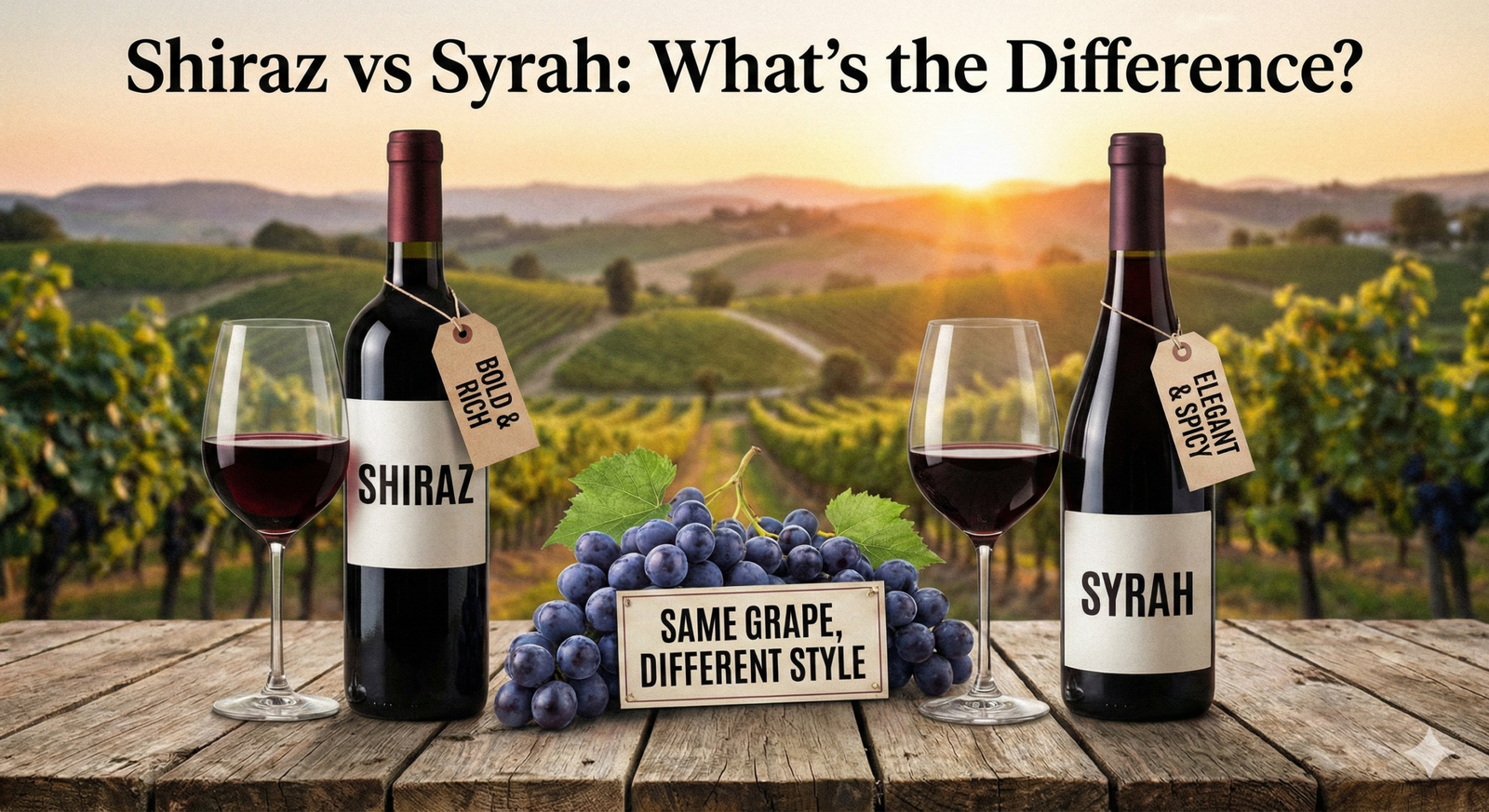
Shiraz vs Syrah: What’s the Difference Between These Red Wine Giants?
You are standing in the wine aisle. On the left, a bottle labeled “Syrah” from France. On the right, a bottle labeled “Shiraz” from Australia. Both are red, both full-bodied, and confusingly, they are genetically identical.
How can the exact same grape taste like black pepper and olives in one bottle but like chocolate and blueberry jam in another? The answer lies in terroir, climate, winemaking philosophy — and one remarkable chemical compound called rotundone.
NO. Syrah and Shiraz are 100% the same grape variety. The difference in name indicates the style of the wine and the region where it was grown — and increasingly, it is used by producers worldwide as a deliberate stylistic signal regardless of geography.
The DNA Detective Story
For centuries, the origins of this grape were shrouded in mystery and romantic folklore. Many believed the vine originated in the ancient Persian city of Shiraz (in modern-day Iran) and was brought to Europe by returning Crusaders. Others speculated it came from Syracuse in Sicily. DNA profiling studies published in the late 1990s by researchers at UC Davis and the French National Institute for Agricultural Research finally settled the debate conclusively: Syrah is the natural offspring of two obscure grapes from southeastern France — Dureza (a dark-skinned grape from the Ardèche) and Mondeuse Blanche (a white grape from the Savoie). Neither parent is famous today, yet their offspring became one of the world’s most noble varieties. The genetics prove definitively that Syrah is indigenous to the Rhône-Alpes region of France, dismantling the Persian and Sicilian origin myths entirely.
The Great Migration to Australia
If it is French, how did it become Australia’s national grape? The story begins in the 1830s with a Scotsman named James Busby, often called the “father of Australian wine.” Busby collected vine clippings from Europe, including specimens from the Hill of Hermitage in the Rhône Valley, and brought them to Australia where they were initially labeled “Scyras” or “Ciraz.” Early Australian documents actually refer to the grape as both Scyras and Hermitage — the latter name revealing that Australian growers understood they were growing the same grape as the famous Rhône hill.
The grape thrived in the hot, dry climate of the Barossa and Hunter Valleys. In the intense Australian sun, it developed riper fruit, higher alcohol, and softer tannins than its French counterpart. By the mid-20th century, the name had standardized to “Shiraz,” and the style had diverged so significantly from the French version that a stylistic distinction was justified. Today, “Syrah” implies a wine made in the elegant, savory, peppery French tradition, while “Shiraz” promises the bold, fruit-forward, chocolatey intensity of warm-climate production.
Grape Anatomy: How the Berry Behaves Differently by Climate
The physical characteristics of Syrah/Shiraz berries are identical at the genetic level — but they respond differently to climate, producing measurably different structural outcomes in the wine. Understanding these physiological responses explains why climate is the dominant driver of the Syrah-vs-Shiraz flavor divide.
Syrah/Shiraz is a thick-skinned, deeply pigmented grape variety — one of the most deeply colored of all major red wine varieties. The thick skins are responsible for the grape’s characteristic very high tannin levels and intense dark color, which makes the wine suitable for long aging and powerful food pairing. In cool northern Rhône conditions, where grapes ripen slowly over a long growing season, the skins develop gradually — maintaining high tannin concentration and producing wines of firm structure with medium to full body.
In the heat of the Barossa Valley, the same thick skin undergoes a different development: faster ripening means sugar accumulates rapidly while the berry expands in size, diluting the skin-to-juice ratio slightly. This produces softer tannins (despite still being high in absolute terms), significantly higher sugar (and therefore alcohol), and a shift in flavor compounds away from aromatic pyrazines (green, peppery, herbaceous) toward fully ripe fruit esters (jam, chocolate, plum). The grape’s naturally high pigmentation produces deeply inky, almost opaque wines in both climates — but the textural and aromatic character diverge dramatically.
The Barossa Valley’s most celebrated Shiraz comes from “old vine” plots — some over 100 years old, making them among the oldest producing Shiraz vines in the world. Old vines produce smaller yields but with dramatically concentrated flavor and natural glycerol richness that gives the wine its characteristic opulent, velvety texture. Penfolds Grange draws on old-vine Barossa fruit as a core component. Old vine Rhône Syrah — particularly from ancient granite plots on the Hermitage hill — similarly produces wines of extraordinary concentration and longevity.
Rotundone: The Pepper Molecule Science
One of the most scientifically fascinating aspects of the Syrah/Shiraz story is the identification of the specific chemical compound responsible for the black pepper character that is Syrah’s most distinctive aromatic signature — and the explanation for why it appears so strongly in cool-climate Syrah but is much less pronounced in warm-climate Shiraz.
What Rotundone Is
Rotundone is a sesquiterpenoid compound — a class of organic molecules found in various plant materials including black peppercorns (Piper nigrum), white pepper, rosemary, marjoram, and basil. In grapes, rotundone is synthesized in the skins during the ripening process and is present in particularly high concentrations in Syrah/Shiraz relative to other major red wine varieties. Its aroma detection threshold in red wine is approximately 16 parts per trillion — an extraordinarily low concentration that explains why even small amounts produce a very perceptible spicy, peppery aroma.
Why Cool Climate = More Pepper
Research has demonstrated a clear inverse relationship between growing temperature and rotundone concentration in Syrah grapes. In cool climates (like the Northern Rhône), where night temperatures drop significantly during the growing season and grapes ripen slowly over a longer period, rotundone accumulates in high concentrations in the berry skins. In warm climates (like the Barossa Valley), higher temperatures accelerate the enzymatic degradation of rotundone during ripening — the compound breaks down faster than it can accumulate, resulting in much lower final concentrations in the wine.
This explains one of the most reliable sensory rules for the Syrah/Shiraz category: wines with prominent black pepper and white pepper aromas are almost always cool-climate expressions (Northern Rhône, cool-climate Australian Shiraz from Adelaide Hills, Washington State Syrah). Wines dominated by ripe dark fruit without perceptible pepper are almost always warm-climate expressions (classic Barossa Shiraz, Paso Robles). The presence or absence of rotundone is not just a flavor descriptor — it is a reliable geographic and climatic indicator detectable without a laboratory.
Next time you taste a Syrah or Shiraz, pay specific attention to whether you detect black or white pepper — not just as an aroma, but as a spicy sensation at the back of the throat on the finish. Strong pepper presence = cool climate, likely Northern Rhône style or cool-climate New World Syrah. No pepper, dominated by ripe fruit = warm climate Shiraz. This single indicator is one of the most reliable style differentiators in the category.
Tasting Notes: Old World vs New World
To truly understand the difference, you have to look beyond the label and into the glass. The divergence in flavor is driven primarily by climate, harvest timing, and winemaking philosophy. In the moderate climate of the Northern Rhône, grapes ripen slowly, retaining high acidity and rotundone concentration. In the baking heat of South Australia, grapes accumulate massive sugars while rotundone degrades, producing richer fruit and higher alcohol.
Syrah (Old World / Cool Climate)
France (Rhône), Washington State, Chile’s Elqui Valley, cool Australia
- Body: Medium-plus. Structured but not heavy; a “leaner” texture.
- The Pepper & Funk: Black pepper, white pepper (rotundone-driven), smoked meat, bacon fat, olive tapenade, graphite, violet flowers.
- Acidity & Tannin: Higher acidity — food-friendly. Tannins firm and grippy; often need years to soften.
- Alcohol: Typically 12.5–14%.
- Oak: Usually French oak — adds cedar and spice without masking the grape’s character.
Shiraz (New World / Warm Climate)
Barossa Valley, McLaren Vale, South Africa, Paso Robles, Argentina
- Body: Full to very full. Stains the glass; high viscosity and glycerol.
- The Fruit Bomb: Blueberry pie, blackberry jam, dark chocolate, licorice, mocha, eucalyptus (in some Australian examples).
- Acidity & Tannin: Lower acidity — feels softer and “sweeter.” Tannins ripe and velvety.
- Alcohol: Commonly 14.5–15.5%+.
- Oak: Often American oak — adds coconut, vanilla, and sweet spice notes.
The “Cool Climate” Shiraz Exception
The lines between Syrah and Shiraz are actively blurring. Producers in cooler Australian regions — Yarra Valley, Adelaide Hills, Tasmania, and parts of Great Southern (WA) — make wines labeled “Shiraz” that taste remarkably like Northern Rhône Syrah: lean, peppery, spicy, and with firm, elegant tannins. These wines demonstrate that climate, not the label, determines style. Similarly, California winemakers in the “Rhône Rangers” tradition bottle their wines as “Syrah” to signal a deliberate departure from the heavy, jammy style — aiming for Côte-Rôtie elegance regardless of geography.
A reliable field guide: check the alcohol percentage. Under 13.5% almost always indicates a lean, savory, Syrah-style expression regardless of label. Above 14.5% almost always indicates a fruit-forward Shiraz-style expression regardless of country.
Because these wines are full-bodied and often high in tannins, knowing how to store them is key. Check our guide on how to store red wine to ensure your Syrah ages perfectly.
The Label as a Style Signal: How Producers Use the Name Deliberately
One of the most practically useful things to understand about the Syrah/Shiraz category is that the name on the label is increasingly used as a deliberate stylistic signal by producers worldwide — regardless of where the wine is physically made. This means that reading the name carefully can give you reliable style information even from unfamiliar producers and regions.
The Global Naming Convention
A winery in California, South Africa, or Chile that labels their wine “Syrah” is actively choosing to communicate that their wine is made in a leaner, more savory, more pepper-forward, French-influenced style. A winery in the same countries that labels their wine “Shiraz” is communicating that their wine is bolder, riper, more fruit-forward, and more Australian-influenced. This is a voluntary, market-driven signaling system — neither name is legally required outside of the specific European appellations where the grape is grown. The result is that in New World wine markets, the name on the label communicates style intent as much as it communicates geography.
South Africa is the most interesting example of this deliberate naming convention in practice. South African producers make both styles and use the names precisely to communicate: “Syrah” from Stellenbosch or Swartland signals a cool-influence, spicy, structured wine; “Shiraz” from the same regions signals a warmer, richer, more fruit-driven expression. The consumer benefit: once you understand this convention, you can use the name alone as a reliable style predictor across virtually all major producing countries.
In California during the 1970s and 1980s, a group of winemakers formed a loose movement known as the “Rhône Rangers” — producers who championed Rhône grape varieties (Syrah, Grenache, Mourvèdre, Viognier, Roussanne) when the California wine establishment was focused almost exclusively on Cabernet Sauvignon and Chardonnay. Pioneers including Randall Grahm (Bonny Doon), Joseph Phelps, and Sean Thackrey discovered that California’s diverse climates — particularly the cooler coastal areas of Santa Barbara, Paso Robles, and the Sonoma Coast — were ideally suited to Rhône varieties. Today California Syrah, particularly from the Sonoma Coast and Santa Barbara, is considered among the finest Syrah produced outside France.
Northern Rhône Deep-Dive: Syrah’s Spiritual Home
The Northern Rhône Valley is the birthplace and spiritual home of Syrah — a narrow corridor of steep, terraced vineyards carved by the Rhône River between Vienne and Valence in southeastern France. The region’s five main appellations each produce a distinct expression of the variety, ranging from perfumed and elegant (Côte-Rôtie) to massive and age-worthy (Hermitage). Understanding these appellations is essential to understanding what Syrah at its finest can achieve.
Hermitage
Northern RhôneThe pinnacle of Syrah. A single granite hill overlooking the town of Tain l’Hermitage produces wines of extraordinary concentration, structure, and longevity — some lasting 30–50 years. Deep, dark, massive wines with black fruit, iron, graphite, and smoked meat. The most expensive and collectable Northern Rhône appellation. Chapoutier, Jaboulet, and Chave are the benchmark producers.
Côte-Rôtie
Northern Rhône“Roasted slope” — south-facing terraced vineyards of steep granite that produce Syrah of extraordinary perfume and elegance. Uniquely allows up to 20% Viognier co-fermentation, which adds floral (violet, apricot) notes. Two sub-zones: Côte Blonde (lighter, floral, early-drinking) and Côte Brune (darker, structured, long-lived). E. Guigal’s single-vineyard “La La” wines are iconic.
Crozes-Hermitage
Northern RhôneThe “surrounds” of Hermitage — a large appellation on flatter terrain around the famous hill. More approachable, earlier-drinking, and significantly more affordable than Hermitage itself. Often shows bright red fruit and olive notes. The best QPR entry point into Northern Rhône Syrah. Age 5–12 years.
Cornas
Northern Rhône100% Syrah only — no Viognier blending permitted. Often the most masculine, tannic, and rustic of the Northern Rhône appellations. Deeply colored, powerfully built, with bacon fat, black fruit, and iron character. Needs 10–20 years to fully integrate. Thierry Allemand and Auguste Clape are the benchmark producers.
St-Joseph
Northern RhôneA large appellation covering granite and schist soils on both banks of the Rhône. Style ranges from light and accessible to serious and structured depending on sub-site. Generally more approachable and affordable than Hermitage or Cornas. Excellent value for Northern Rhône character. Both red and white (Marsanne/Roussanne) versions produced.
Southern Rhône
Rhône ValleyIn the Southern Rhône (Châteauneuf-du-Pape, Gigondas, Côtes du Rhône), Syrah is a blending component rather than the star — typically paired with Grenache (which dominates) and Mourvèdre to add color, depth, and tannic backbone to the blend. A completely different role from its star status in the North.
Australian Shiraz Regions: Not All the Same
Australia produces more Shiraz than any other country outside France, and the stylistic range across its regions is far broader than most consumers realize. “Australian Shiraz” is not one wine — it spans from some of the world’s most opulent fruit bombs to elegant, peppery expressions that closely resemble Northern Rhône Syrah.
Barossa Valley
South AustraliaThe benchmark for bold, traditional Australian Shiraz. Old vines (some over 100 years), warm continental climate, rich alluvial soils. Produces the richest, most concentrated examples: dense dark fruit, dark chocolate, mocha, eucalyptus, American oak influence. Home of Penfolds Grange. The wine that defined the “Shiraz” style globally.
McLaren Vale
South AustraliaSlightly cooler than Barossa due to maritime influence from Gulf St Vincent. Produces Shiraz with more savory, earthy, chocolate-and-mocha character alongside the dark fruit. Often described as “more European” than Barossa. Two Hands and d’Arenberg are benchmark producers.
Hunter Valley
New South WalesAustralia’s oldest wine region. Hunter Shiraz has its own unique identity: medium-bodied, earthy, with distinctive “sweaty saddle” and leather tertiary notes when aged. Lower alcohol than Barossa. Ages magnificently for 15–25+ years, developing extraordinary secondary complexity.
Yarra Valley & Adelaide Hills
Cool ClimateCool-climate Shiraz that closely resembles Northern Rhône Syrah. Lean, peppery, high acidity, violet and spice notes. Defies the “Australian Shiraz” stereotype and demonstrates the grape’s full stylistic range. Often labeled “Shiraz” but tasting like “Syrah” — the clearest demonstration that climate, not label, determines style.
Great Southern (WA)
Western AustraliaFrankland River and Mount Barker subregions produce structured, spicy Shiraz with a distinctive white pepper character. One of Australia’s most European-style Shiraz expressions. Increasingly recognized by international critics as a premium cool-climate alternative to Barossa.
Tasmania
Cool ClimateAustralia’s southernmost and coolest wine region. Tasmanian Shiraz is among the most Syrah-like in the country: high acidity, firm tannin, black pepper, and restrained fruit weight. A niche category but producing genuinely exciting wines for those who prefer European style from Australian terroir.
Syrah/Shiraz Around the World
Beyond France and Australia, Syrah/Shiraz has established itself as a quality grape in a diverse range of producing regions — each adding its own character to the variety’s global profile.
Washington State, USA
Washington’s Columbia Valley and Walla Walla Valley have emerged as among the finest Syrah-producing regions outside France. The combination of warm days, very cold nights (extreme diurnal range), and volcanic basalt soils produces Syrah of extraordinary precision: firm tannins, vibrant acidity, intense dark fruit, and prominent black pepper from the cool nights that preserve rotundone. Cayuse Vineyards in Walla Walla, farming biodynamically on basalt soils, produces wines regularly cited among the finest Syrah in the world. Washington producers almost universally use the “Syrah” label to signal their Northern Rhône stylistic intent.
California (The Rhône Rangers Legacy)
California’s Syrah spans enormous stylistic range. Paso Robles and Lodi produce warm-climate fruit-bomb Shiraz-style wines. Santa Barbara County’s Santa Rita Hills and Sta. Rita Hills AVA produce cool-coastal Syrah of exceptional elegance — comparable to Crozes-Hermitage in structure and aromatic character. The Sonoma Coast AVA, exposed to Pacific maritime influence, produces some of California’s finest and most peppery Syrah. The diversity of California Syrah styles makes it essential to read the specific appellation rather than just “California” when evaluating a bottle.
South Africa (Swartland)
South Africa’s Swartland region has become one of the most exciting Syrah/Shiraz producing areas globally. The combination of old-vine bush-vine farming on granite and schist soils, Mediterranean climate, and an adventurous generation of young natural wine producers has produced a distinctive South African Syrah style: olive, spice, dark fruit, and a distinctive salty minerality from the ancient Swartland soils. Producers like Eben Sadie, AA Badenhorst, and Mullineux have attracted international critical attention. South African producers use both names — “Syrah” for restrained styles, “Shiraz” for more generous warm-fruit expressions.
Chile (Coastal Syrah)
Chile’s coolest coastal regions — particularly the Elqui Valley, Limarí Valley, and San Antonio/Leyda Valley near the Pacific coast — produce Syrah of outstanding quality. The combination of cold Humboldt Current-influenced temperatures, strong diurnal range, and mineral granite-influenced soils produces wines of extraordinary freshness, spice, and rotundone-driven peppery character. Chilean coastal Syrah is arguably the most undervalued Syrah in the world at current prices — offering Northern Rhône character at a fraction of French prices.
Argentina (High-Altitude Syrah)
Argentina’s high-altitude Mendoza vineyards (some above 1,500 meters) produce Syrah of real interest. The extreme altitude moderates temperature in what would otherwise be a very warm climate, preserving acidity and rotundone concentration. High-altitude Argentinian Syrah combines ripe dark fruit with spice and structure that falls stylistically between classic Barossa Shiraz and Northern Rhône Syrah. Producers in the Luján de Cuyo and San Carlos subregions are producing the finest examples.
Viognier Co-Fermentation: The Côte-Rôtie Secret
One of the most intriguing and distinctive aspects of traditional Côte-Rôtie winemaking is the legally permitted addition of up to 20% white Viognier grapes co-fermented with the red Syrah. This practice — unique to Côte-Rôtie among major appellation red wines — produces a distinctly different wine from pure varietal Syrah and is one of the reasons Côte-Rôtie has such a distinctive aromatic profile compared to Hermitage or Cornas.
Why Add White Grapes to Red Wine?
The scientific explanation involves Viognier’s naturally high concentration of vitisin pigments and aromatic compounds, particularly the intensely floral monoterpenes (geraniol, linalool, nerol) that give Viognier its characteristic apricot, peach, and violet aromas. When Viognier is crushed and co-fermented with Syrah, these aromatic compounds bind to the anthocyanin pigments in the Syrah skins through a process called co-pigmentation — stabilizing the color and simultaneously transferring Viognier’s floral aromatics into the red wine. The result is a red wine of striking color stability (co-fermented Côte-Rôtie holds its deep ruby color for decades longer than pure Syrah) and uniquely lifted floral aromatics — particularly violet and apricot — alongside the pepper, meat, and dark fruit character of pure Syrah.
The practice is not universally used in Côte-Rôtie — it is permitted, not required. Producers who do use it (including E. Guigal, whose iconic single-vineyard wines use small percentages) produce wines of extraordinary aromatic complexity. Producers who opt for pure Syrah (or nearly pure) produce darker, more austere wines with less floral lift but greater structural density.
In the Southern Rhône and across many New World regions, Syrah/Shiraz plays a key role in blends rather than as a pure varietal. The most important of these is GSM — see the next section for a full explanation of how this blend works and what each grape contributes.
GSM Blends: Grenache, Syrah/Shiraz, Mourvèdre
While the Syrah/Shiraz vs debate focuses on the varietal wine, a significant portion of the world’s finest Syrah/Shiraz is consumed in GSM blends — wines combining Grenache, Syrah/Shiraz, and Mourvèdre in proportions that vary by producer, region, and vintage. Understanding GSM blending reveals a different dimension of what Syrah/Shiraz brings to the glass and why it is such a valued blending component.
What Each Grape Contributes
- Grenache (G): The dominant grape in most GSM blends (typically 50–70% of the blend). Contributes generous red and dark fruit (raspberry, black cherry), round tannins, warmth, and the characteristic “herbes de Provence” aromatic note of garrigue. High alcohol potential. The “fruit and warmth” engine of the blend.
- Syrah/Shiraz (S): Contributes deep color, firm tannic structure, black pepper, dark fruit concentration, and the aromatic lift of violet. Typically 10–30% of the blend. Acts as the “structural backbone” — without Syrah, many Grenache-dominant blends would be too soft and alcohol-forward without sufficient grip.
- Mourvèdre (M): The smallest component (often just 5–15%). Contributes deep color pigments, very firm tannins, distinctive savory/meaty/gamey notes (leather, game, dried herbs), and exceptional aging potential. The “complexity and longevity” component.
Where GSM Blends Are Made
Châteauneuf-du-Pape: The most famous Southern Rhône appellation. Grenache dominant (often 80%+), with Syrah, Mourvèdre, and up to 13 other permitted varieties in supporting roles. The resulting wines are some of the most complex and age-worthy Grenache-based wines in the world.
Gigondas and Vacqueyras: Southern Rhône appellations where Grenache-Syrah blends produce excellent value alternatives to Châteauneuf.
Australia: Particularly in McLaren Vale and the Barossa, GSM blends labeled as such are increasingly popular — delivering complexity that neither variety achieves alone.
California: Rhône Rangers producers use GSM blending to create wines of Southern Rhône character from California’s diverse climate zones.
French Oak vs American Oak: How Barrel Choice Defines Each Style
Beyond climate, the choice of oak barrel for aging is one of the most significant factors separating Syrah and Shiraz in terms of flavor — and the dominant oak choice differs markedly between the two traditions.
French Oak and Syrah
Traditional Northern Rhône Syrah aging uses French oak — specifically barrels made from Tronçais, Allier, or Vosges forest oak. French oak imparts subtle flavors of cedar, spice, vanilla, and light toast that enhance rather than dominate the wine’s natural character. The tight grain of French oak also allows slower oxygen transmission, producing more gradual tannin integration and greater longevity. The oak is used in relatively small percentages of new barrels (often 20–40% new wood, with the rest being second or third-fill barrels that impart minimal flavor). The result: the wine’s terroir and varietal character remains primary, with oak as a supporting influence.
American Oak and Shiraz
Traditional Barossa Valley Shiraz aging has historically favored American oak — either new American barrels or the large old American oak “hogsheads” (300-liter containers) that are a Barossa tradition. American oak has wider grain than French, releases flavor compounds more quickly, and imparts very distinctive notes: coconut (from the compound whiskey-lactone), vanilla (from vanillin), sweet spice (from eugenol and other phenolics), and a creamy, sweet quality that complements Shiraz’s ripe fruit character. These oak flavors became synonymous with the Barossa Shiraz style — creating the “chocolate and vanilla” profile that defines the archetype. Modern Barossa producers have increasingly moved toward French oak or mixed programs to produce more elegant, internationally styled wines, but American oak remains central to the traditional identity.
Full Tasting Notes: Primary, Secondary & Tertiary
Northern Rhône Syrah: Complete Profile
- Primary aromas: Blackberry, black olive, cassis, smoked meat, bacon fat, violet flowers, black pepper, white pepper, graphite, iron
- Secondary aromas (oak/fermentation): Cedar, light toast, clove, dark chocolate, subtle vanilla (French oak)
- Tertiary aromas (bottle age): Leather, tobacco, truffle, forest floor, game, dried herbs, iron, tar (“la goudron” characteristic of aged Hermitage)
- Palate: Full body, firm and grippy tannins, high acidity, long finish with persistent pepper and mineral notes
Australian Barossa Shiraz: Complete Profile
- Primary aromas: Blackberry jam, blueberry, dark plum, black cherry, milk chocolate, mocha, licorice, eucalyptus/mint
- Secondary aromas (oak/fermentation): Vanilla, coconut, sweet spice, butterscotch (American oak), toast, dark chocolate
- Tertiary aromas (bottle age): Dried fruit, leather, dark chocolate truffle, smoky earthiness, sweet tobacco
- Palate: Very full body, ripe and velvety tannins, lower acidity, long sweet-fruited finish with oak spice
| Attribute | Northern Rhône Syrah | Barossa Shiraz |
|---|---|---|
| Color | Deep ruby to dark purple | Inky purple to near-black |
| ABV | 12.5–14% | 14.5–15.5%+ |
| Acidity | High | Medium |
| Tannin | Firm, structured, grippy | Ripe, velvety, full |
| Dominant Aroma | Black pepper, smoked meat, violet | Dark fruit, chocolate, vanilla |
| Rotundone | High (prominent pepper) | Low (minimal pepper) |
| Oak | French — subtle cedar/spice | American — vanilla/coconut |
| Peak drinking | 8–20+ years for top wines | 5–15+ years for top wines |
Food Pairing: Smoke vs. Spice
Pairing food with Syrah/Shiraz is one of the great joys of dining because the grape offers such a wide spectrum of flavors. The key rule: “Match the Intensity.” Both styles are bold wines with significant structure, and they will crush delicate dishes. You need food with fat, char, and umami to stand up to the wine.
Pairing with Syrah (The Savory Side)
French Syrah is earthy and high in acid, a natural companion for herbs and game meats. The “garrigue” notes (wild herbs: rosemary, thyme, lavender) found in the wine mirror the seasoning on roasted meats.
- Lamb: The definitive textbook pairing. Roasted leg of lamb with rosemary and garlic highlights the peppery, herbal notes of Northern Rhône Syrah — a synergy of herbs in the food and the wine.
- Duck and game: Duck confit, wild boar, venison, and hare all resonate with Syrah’s earthy, gamey tertiary notes. The wine’s acidity manages the fat of duck while the pepper and spice amplify the meat’s character.
- Soft “stinky” cheeses: Unlike Cabernet which demands hard aged cheese, Syrah’s earthiness pairs beautifully with washed-rind cheeses like Camembert, Taleggio, or Époisse.
- Vegetarian umami: Grilled portobello mushrooms, lentil dishes with smoked paprika, wild rice with truffle — Syrah’s earthy, savory notes resonate with umami-rich vegetarian cooking.
Pairing with Shiraz (The Jammy Side)
Australian Shiraz is lower in acid but massive in fruit — the ultimate BBQ wine. The slight perception of sweetness from ripe fruit pairs brilliantly with grilled char and sweet glazes.
- BBQ ribs: A sticky, spicy pork rib glaze is a match made in heaven for fruit-forward Barossa Shiraz. The wine’s sweetness of fruit meets the sweetness of the glaze; the tannin manages the fat.
- Spicy food: Shiraz works surprisingly well with spice. High tannin usually clashes with heat, but the ripe fruit of Shiraz cushions chili, cumin-heavy dishes, and Mexican food in a way Syrah cannot.
- Blue cheese: The intensity of a Gorgonzola or Roquefort needs a wine with massive body. A full Shiraz acts almost like port — the fruit and body balance the salt and pungency.
- Dark chocolate tart: While red wine and chocolate is often a myth, a high-alcohol chocolatey Shiraz is genuinely one of the few dry reds that handles a dark chocolate dessert.

Unlock the Flavor
Both Shiraz and Syrah are bold wines that benefit from oxygen. A wide-bottomed decanter softens tannins and releases the complex fruit and spice aromas in both styles.
Check PriceFor a detailed breakdown of pairing reds with meat, read our dedicated article on the best wines to pair with steak.
The Aging Curve: How These Wines Develop Over Time
Syrah and Shiraz both have exceptional aging potential — but they age differently, develop different secondary characters, and reach their peaks at different timescales. Understanding the aging trajectory helps you decide when to open a bottle for maximum pleasure.
Northern Rhône Syrah Aging
The finest Northern Rhône Syrah — Hermitage and Côte-Rôtie from the best producers and vintages — is among the longest-lived red wine in the world, capable of developing for 30–50 years in the bottle. The aging trajectory for a quality Hermitage:
- 0–5 years: Primary fruit prominent but tannins tight and austere. The wine can seem closed and aggressive. Decant vigorously or wait.
- 5–10 years: Tannins beginning to integrate. Primary fruit evolving toward darker, more complex character. Starting to be enjoyable but still improving.
- 10–20 years: Prime drinking window for most examples. Tannins silky and integrated. Secondary leather, tobacco, truffle developing. Full complexity on display.
- 20–35+ years: The great vintages at their peak. Extraordinary tertiary complexity — leather, game, forest floor, iron, tar. The wine has transformed into something otherworldly that bears little resemblance to the young version.
Australian Shiraz Aging
Premium Barossa Shiraz (and especially Penfolds Grange) also ages magnificently, though its trajectory differs from Hermitage. The riper tannins of warm-climate Shiraz integrate faster, making the wine more accessible young, but the glycerol richness and phenolic concentration provide the structural framework for long development:
- 0–3 years: Accessible and enjoyable. Fruit is vivid and primary, oak prominent. Good for those who like the exuberant young style.
- 3–8 years: Oak integrating. Fruit beginning to develop complexity. A very good drinking window for most premium examples.
- 8–15 years: Secondary character emerging. Leather, dried fruit, tobacco developing alongside the fruit. The preferred window for connoisseurs.
- 15–30+ years (Grange/top producers): Full tertiary development. Extraordinary complexity of dried fruit, dark chocolate, leather, and earth. Grange from top vintages can develop for 50 years.
Unlike Australian Shiraz, which has relatively consistent quality year to year due to stable climate, Northern Rhône Syrah shows significant vintage variation — cool, rainy years produce lean, sometimes disappointing wines while hot, dry years produce monumental, long-lived examples. When buying Hermitage or Côte-Rôtie, a vintage chart is genuinely useful. Look for years rated 90+ by major critics; avoid purchasing the most expensive bottles from mediocre vintages. The investment in a great vintage pays dividends over decades; a poor vintage will not improve regardless of cellaring time.
Price & Value Guide: From Everyday to Investment
| Budget | Syrah Style | Shiraz Style |
|---|---|---|
| Under $15 | Côtes du Rhône with Syrah (blended). Southern French IGP Syrah. Accessible, everyday quality. | South Australian Shiraz (Langmeil, Penfolds Koonunga Hill). Reliable fruit-forward drinking. |
| $15–$30 | Crozes-Hermitage (best QPR in Northern Rhône). Quality Côte du Rhône Villages Syrah. Chilean coastal Syrah — exceptional value. | Premium McLaren Vale or Eden Valley Shiraz. South African Shiraz from Stellenbosch. Washington State Syrah entry-level. |
| $30–$60 | St-Joseph from top producers. Entry Cornas. Quality Washington Syrah. South African Swartland Syrah. | Premium Barossa Valley single-vineyard Shiraz. Penfolds Bin 28 or Bin 128. Premium McLaren Vale examples. |
| $60–$150 | Entry Hermitage and Côte-Rôtie from quality producers (Chapoutier, Paul Jaboulet). Top Washington Syrah (Cayuse). Santa Barbara Syrah. | Premium Barossa Shiraz (Penfolds RWT, Torbreck RunRig, Two Hands Ares). Iconic single-vineyard Australian Shiraz. |
| $150+ | Single-vineyard Hermitage (Chave, Jaboulet La Chapelle). E. Guigal “La La” single-vineyard Côte-Rôtie. Investment-grade, 20–50 year aging. | Penfolds Grange (Australia’s greatest wine), Henschke Hill of Grace. Investment-grade 30–50 year aging potential. |
Serving, Decanting, and Glassware
The experience of Syrah and Shiraz can be significantly enhanced or degraded by serving conditions. Both wines reward attention to temperature, decanting, and glass shape.
The “Room Temperature” Trap
The biggest mistake people make with Shiraz is serving it at “room temperature” — in a modern home, often 72–75°F (22–24°C). At this heat, the alcohol in a 15% ABV Shiraz volatilizes, making the wine smell harsh and taste flabby and burning. The fix: place your bottle in the fridge for 20 minutes before serving. You want cellar temperature of approximately 60–65°F (15–18°C). This slight chill tightens the structure, makes the fruit fresher, and the tannins less aggressive. Northern Rhône Syrah is best served slightly warmer — around 62–65°F — to allow the complex aromatics to fully express.
Decanting Guide
Young Shiraz (under 5 years): Absolutely decant. These wines are often “tight” or reductive when first opened. A vigorous decant for 1–2 hours introduces oxygen, softens tannins, and opens the fruit aromas dramatically.
Young Northern Rhône Syrah: Decant for 2–4 hours. Young Hermitage and Côte-Rôtie are often closed and austere at release; significant air time is needed to begin to show their potential.
Aged Syrah (10+ years): Decant carefully to separate sediment only. Old wines are delicate — too much oxygen can kill the fragile tertiary aromas of leather and earth that developed over a decade. Pour slowly just before serving.
The Perfect Glass
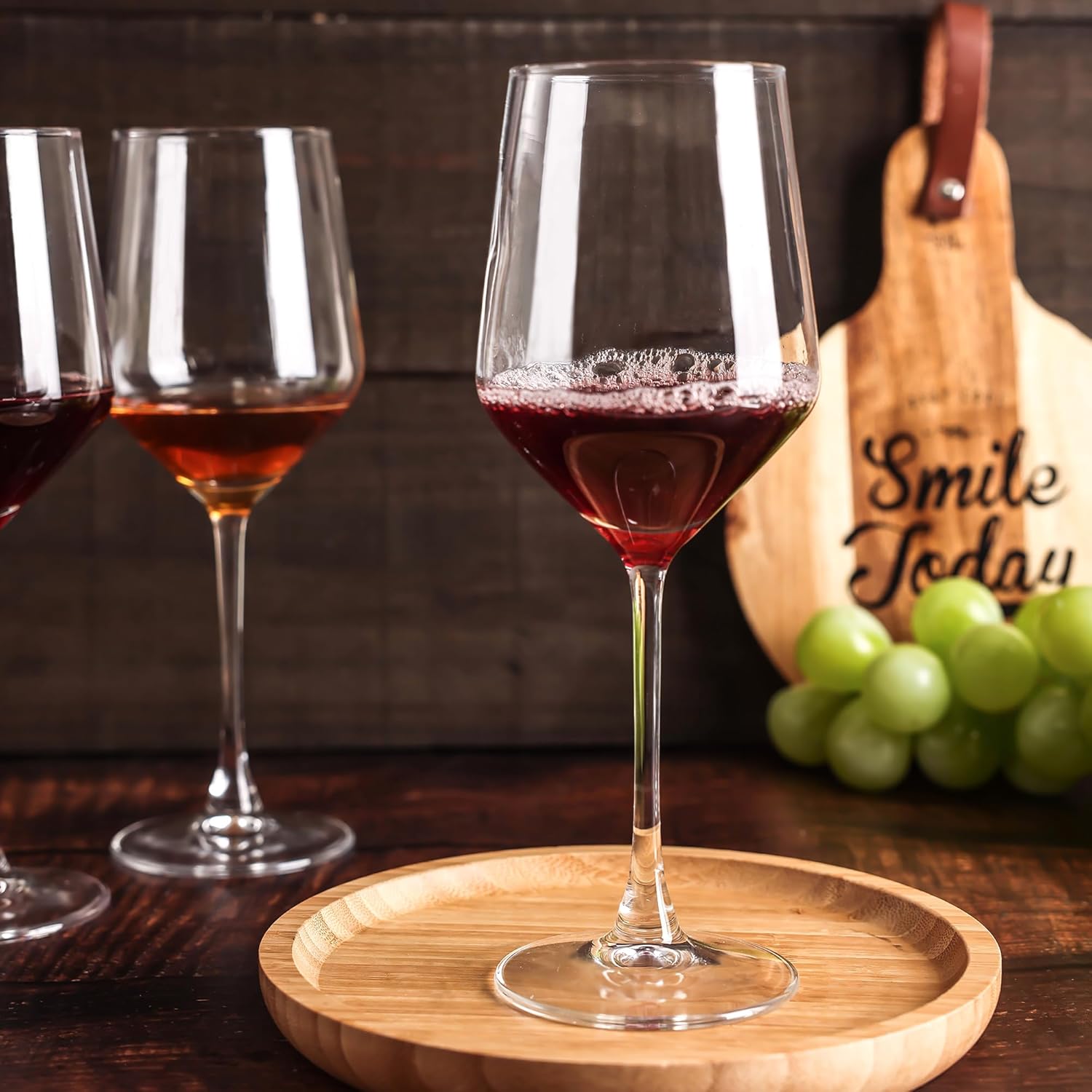
A dedicated Syrah glass differs from a Cabernet glass. A Cabernet glass is wide and broad to soften tannins. A Syrah/Shiraz glass has a slightly taller, more tapered bowl that directs the wine to the back of the palate — highlighting spice and fruit — while the tapered nose traps the complex floral notes of violet found in Northern Rhône Syrah. This shape is designed to deliver the wine’s full aromatic complexity while moderating the perception of high alcohol.
For a full breakdown of glass shapes, read our guide: Kinds of Wine Glasses and Their Uses.

Riedel Vinum Syrah/Shiraz Glass
Designed specifically to balance the tannins, direct the wine to the correct palate area, and concentrate the signature peppery nose of cool-climate Syrah.
See Best SellerBlind Tasting: How to Tell Syrah from Shiraz
In a blind tasting, Syrah and Shiraz from their respective classic regions are among the most reliably distinguishable wine styles in the world — the sensory differences are dramatic enough that a trained taster can identify each with high confidence. Here is the systematic approach.
- Color: Both are deeply colored, but Barossa Shiraz is frequently near-opaque — essentially black-purple at the center, fading to a deep ruby rim. Northern Rhône Syrah, while dark, typically has a slightly more translucent center and a more vivid ruby-purple hue rather than inky black.
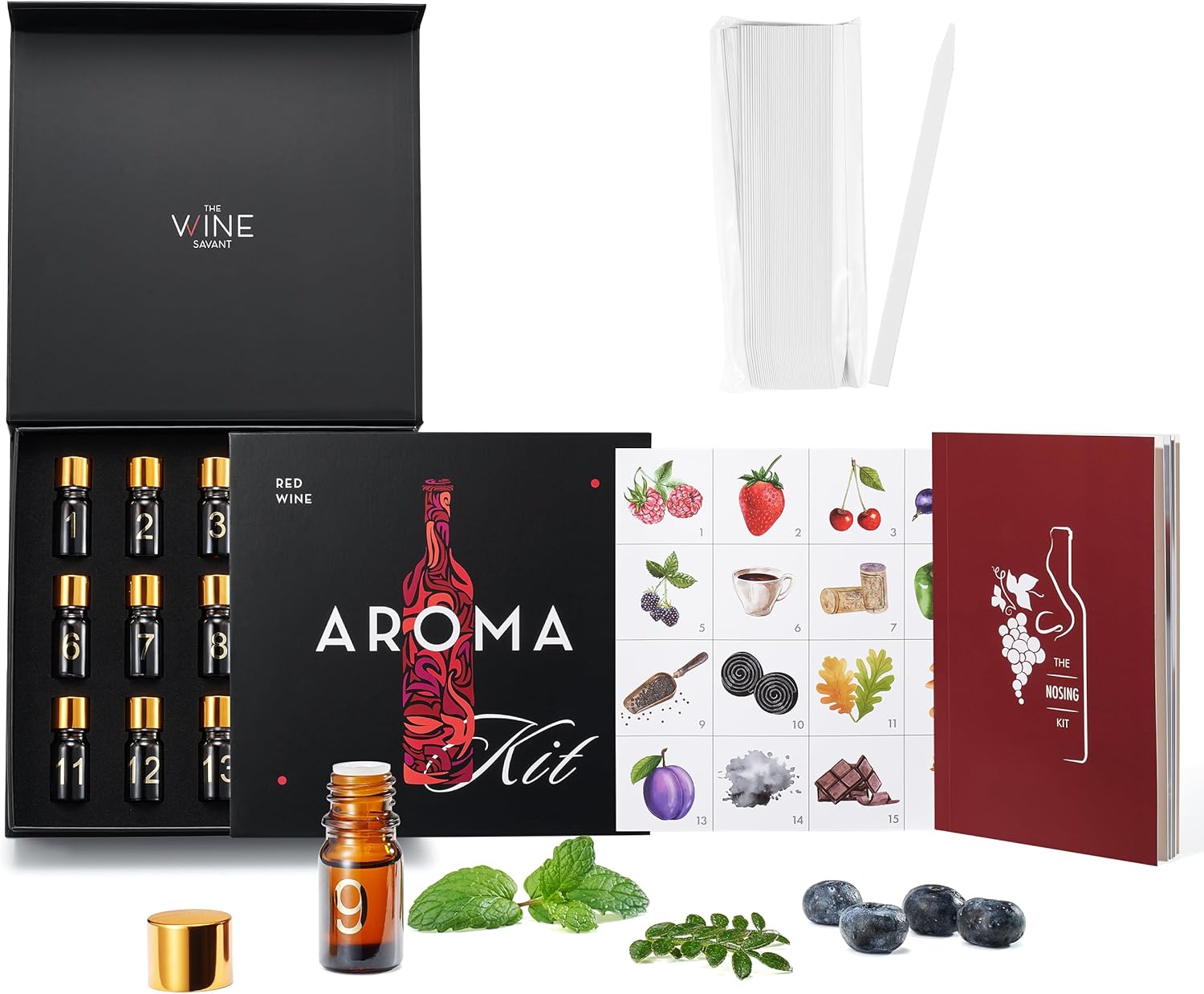
- Nose — pepper: The most reliable single indicator. Prominent black pepper, white pepper, or cracked black peppercorn on the nose = cool-climate Syrah. Absence of pepper, dominated by ripe dark fruit and chocolate = warm-climate Shiraz. Rotundone is the molecule that makes this test reliable.
- Nose — fruit character: Red and dark fruit with savory, meaty, olive, and floral (violet) notes = Syrah. Pure dark fruit (blueberry, blackberry jam, plum) with chocolate and vanilla = Shiraz.
- Nose — oak character: Cedar, light spice = French oak = Syrah tradition. Vanilla, coconut, sweet spice = American oak = Shiraz tradition.
- Palate — structure: Firm, grippy, drying tannins with high acidity = Syrah. Ripe, velvety tannins with lower acidity, softer structure = Shiraz.
- Finish: Long, savory, peppery, mineral finish = Syrah. Long, sweet-fruited, chocolatey, warming finish = Shiraz. The finish “flavor” is one of the most reliable differentiators.
- ABV perception: A perceptible warmth at the back of the throat from high alcohol (14.5%+) points strongly toward Shiraz. A wine that finishes clean with lingering spice and mineral notes without alcohol heat points toward Northern Rhône Syrah.
If you walk away from the glass and after 30 seconds you are still sensing black pepper and savory notes: it is likely Syrah. If you walk away and the lingering sensation is ripe dark fruit, chocolate, and warmth: it is likely Shiraz. The after-effects of these two styles — their persistence in the mouth — are among the most reliable distinguishing characteristics even for non-experts.
Frequently Asked Questions
No — this is a very common mistake. Petite Sirah (also known as Durif) is a completely separate grape variety created by a deliberate crossing of Syrah and Peloursin in the 19th century. Durif/Petite Sirah is even more deeply colored than Syrah, dramatically more tannic, and produces wine of very different character — typically inky, jam-heavy, with massive chewy tannins. It is widely planted in California and Australia but produces a wine that is more like a tannic Zinfandel than a Northern Rhône Syrah. The “Sirah” in the name is the source of the confusion — it was named after Syrah, not because it is Syrah.
Both are dry red wines with negligible residual sugar. However, Australian Shiraz often tastes sweeter because of the ripe, jammy fruit flavors, lower acidity, and higher alcohol content — all of which create an impression of sweetness that is actually the effect of physiological ripeness rather than literal sugar. Northern Rhône Syrah tastes drier and more austere because its higher acidity and firmer tannins create a lean, savory impression that masks any perception of fruitiness.
Quality Shiraz ages very well. Premium Barossa examples from top producers can age 15–25 years with benefit. Penfolds Grange — Australia’s greatest wine — is designed for 30–50 years of development. Most supermarket Shiraz under $20, however, is meant to be consumed within 3–5 years of the vintage date. For Northern Rhône Syrah, the finest Hermitage from great producers can age magnificently for 30–50+ years, making it among the world’s most age-worthy red wines alongside top Bordeaux and Barolo.
The name likely evolved from “Scyras” — the handwritten label on the original James Busby vine cuttings imported from France. Some early Australian documents suggest the name “Hermitage” was also used (referencing the French Hill of Hermitage origin). The “Shiraz” name may have emerged from a resemblance to the Persian city of Shiraz on handwritten labels, or from a gradual corruption of “Scyras” through Australian pronunciation. By the mid-20th century “Shiraz” had become the settled Australian name, and the style had diverged sufficiently that maintaining a distinct name made commercial sense.
The Rhône Rangers is a California winemaker movement from the 1970s–1980s that championed Rhône grape varieties — particularly Syrah, Grenache, Mourvèdre, Viognier, and Roussanne — when the California wine establishment was focused almost exclusively on Cabernet Sauvignon and Chardonnay. Pioneers like Randall Grahm (Bonny Doon), Joseph Phelps, and Edmunds St. John discovered that California’s diverse cool coastal climates were well-suited to Rhône varieties. Today, California Syrah from Santa Barbara County, Sonoma Coast, and Paso Robles is considered world-class, and the Rhône Rangers movement is credited with broadening California’s varietal identity beyond the classic Bordeaux and Burgundy varieties.
Absolutely — and some of the finest wines in the world use Syrah as a blending component. In the Southern Rhône (Châteauneuf-du-Pape, Gigondas), Syrah adds color, structure, and pepper to Grenache-dominant blends. In Australia, GSM (Grenache-Syrah-Mourvèdre) blends from McLaren Vale and the Barossa combine the best qualities of each variety. Penfolds Grange itself typically contains a small percentage of Cabernet Sauvignon. In southern France’s Languedoc region, Syrah is frequently blended with Grenache and Carignan in wines labeled Vin de Pays — producing excellent value for the quality level.
In Côte-Rôtie, up to 20% white Viognier grapes may be co-fermented with Syrah. The Viognier’s aromatic compounds (particularly floral monoterpenes) bind to the Syrah’s color pigments during fermentation, stabilizing the color and transferring violet, apricot, and floral notes into the red wine. The result is a Syrah with more aromatic complexity, better color stability, and a distinctive floral lift that pure Syrah lacks. E. Guigal’s iconic single-vineyard “La La” wines use varying percentages of Viognier and are considered among the most aromatic and complex Syrah produced anywhere. Outside Côte-Rôtie, some New World producers experiment with Viognier co-fermentation to achieve similar aromatic enhancement.
Penfolds Grange is Australia’s most celebrated wine — often called “the Grange” — produced by Penfolds from primarily Barossa Valley Shiraz (with a small percentage of Cabernet Sauvignon). It was created by winemaker Max Schubert in the 1950s as his attempt to make an Australian wine that could age and develop like the great reds of Bordeaux. Grange uses multi-regional blending, new American oak maturation, and an uncompromising quality standard. It is designed for 30–50 years of cellaring and is consistently rated among the greatest wines in the world. A bottle from a great vintage commands several hundred to several thousand dollars at auction — making it one of the most valuable Australian wines commercially.
Washington State’s Walla Walla and Columbia Valleys, California’s Santa Barbara County and Sonoma Coast, South Africa’s Swartland, Chile’s Elqui and Limarí Valleys, and Argentina’s high-altitude Mendoza all produce outstanding Syrah at various price points. Washington State Syrah — particularly from producers like Cayuse and K Vintners in Walla Walla — is regularly cited among the finest Syrah outside France. Chilean coastal Syrah represents the best current value in the category globally, offering Northern Rhône character at accessible prices.