The Art & Science of Pairing Wine with Food: A Masterclass
Have you ever experienced it? That magical moment when a sip of wine after a bite of food creates a third, entirely new flavor that’s more delicious than either on its own. It’s a culinary crescendo that can elevate a simple meal into an unforgettable experience. But for many, the path to that perfect pairing is paved with anxiety. Fear not. This is your definitive guide to transforming pairing panic into confident pleasure.
📋 Table of Contents
- Beyond “Red with Meat, White with Fish”
- The 6 Pillars: A Component-by-Component Guide
- Regional Pairing Traditions Around the World
- Pairing Wine with World Cuisines
- Wine Pairing for Vegetarian & Vegan Dishes
- Navigating Tricky Pairings
- Seasonal Wine Pairing Guide
- Pairing Wine for Entertaining & Hosting
- Budget Wine Pairing: Great Bottles Under $20
- Serving Temperature: The Forgotten Variable
- How Glassware Shapes the Pairing Experience
- Think Like a Sommelier
- 10 Most Common Pairing Mistakes
- The Pairing Pro’s Toolkit
- Quick-Reference Pairing Chart
- Frequently Asked Questions
- Conclusion
The Foundation: Beyond “Red with Meat, White with Fish”
The old adages are not wrong, but they are incredibly simplistic. They’re like saying “wear a coat when it’s cold.” True, but not very helpful for choosing between a raincoat and a parka. To truly master pairing, you need to understand the why. The secret lies in balancing the core components of both the wine and the food. There are two guiding philosophies:
- Congruent Pairing: Matching like with like. You pair a creamy pasta with a creamy, buttery Chardonnay. The shared rich profiles amplify each other.
- Contrasting Pairing: Creating balance through opposition. You pair a rich, fatty piece of fried chicken with a high-acid glass of Champagne. The wine’s acidity cuts through the fat, cleansing your palate for the next bite.
Most of the truly “magical” pairings are contrasting. To achieve them, you need to think like a chef and a scientist, balancing a few key elements. Our wine terminology guide is a fantastic companion for diving deeper into these concepts.
The 6 Pillars of Pairing
Forget the grape for a second. Instead, focus on the structural components of the wine. Is it acidic? Is it tannic? Is it sweet? Is it light or heavy? Understanding these six pillars is the key to unlocking any pairing.
- Acidity: The “zing” or tartness in a wine.
- Tannin: The astringent, mouth-drying sensation from red wine skins.
- Sweetness: The amount of residual sugar in the wine.
- Body: The perceived weight and richness of the wine (influenced by alcohol).
- Bitterness: A subtle component, more pronounced in some Italian reds.
- Flavor Intensity: How subtle or powerful the wine’s aromas and flavors are.
The Principles in Practice: A Component-by-Component Guide
Let’s break down how these pillars interact with food to create harmony… or discord.
Principle #1: Acidity is Your Best Friend
Acidity in wine is like a squeeze of lemon over a dish. It adds freshness, brightens flavors, and cleanses the palate. This is why high-acid wines are among the most food-friendly options available. When pairing with acidic foods, like a salad with vinaigrette or a tomato-based pasta sauce, your wine needs to have at least as much acidity as the food. If the food is more acidic than the wine, the wine will taste flat and dull.
High-acid white wines include Sauvignon Blanc, Riesling, Pinot Grigio, Albariño, and Grüner Veltliner. Among reds, Sangiovese (Chianti), Barbera, and Pinot Noir carry notable acidity that makes them stellar food partners. Pairing a zippy Barbera d’Asti with a meaty Bolognese sauce is a textbook example of matching acid levels across the plate and the glass.
Why it Works (Contrast): The screaming high acidity in the Sauvignon Blanc cuts through the rich, fatty texture of the goat cheese, scrubbing your palate clean and making you want another bite. It’s a perfect reset with every sip.
Principle #2: Tame the Tannins with Fat and Protein
Tannin is a fascinating component. On its own, a highly tannic wine like a young Cabernet Sauvignon can feel harsh and overly astringent. But when you introduce fat and protein, a chemical reaction occurs. The tannin molecules bind to the proteins in the food instead of the ones in your saliva, making the wine feel instantly smoother, softer, and fruitier. This is the science behind the most famous pairing of all.
It’s also worth noting that tannins clash badly with fish, especially oily fish like salmon or mackerel. The tannin reacts with the oils to produce a metallic, bitter aftertaste. This is the real reason white wine has historically been recommended with fish — it’s less about color and more about avoiding tannin’s reaction with fish oils.
Why it Works (Contrast): The powerful tannins in the Cabernet act as a scraper for the fat coating your mouth from the steak. In turn, the fat softens the perception of the tannins, unlocking the wine’s rich dark fruit flavors. Each makes the other better. To experience this fully, you need the right glass; see our guide to the best wine glasses for red wine to understand how shape affects tannin perception.
Principle #3: Your Wine Must Be Sweeter Than Your Dessert
This is the golden, unbreakable rule of pairing. When you eat something sweet, your palate adapts. If you then take a sip of something less sweet (like a dry red wine with a chocolate cake), the wine will taste jarringly bitter and sour. The sugar in the food strips the fruit flavor from the wine, leaving only its harsh structural components. Always ensure your dessert wine — like a Port, Sauternes, or a late-harvest Riesling — has a higher level of sweetness than the dessert itself.
An often-overlooked trick: a wine that feels slightly too sweet on its own can be the perfect match for the right dessert. A Moscato d’Asti, for example, is a wonderfully versatile dessert wine for lighter sweets — think fresh fruit tarts, panna cotta, or almond biscotti — precisely because its moderate sweetness and low alcohol make it refreshing rather than cloying.
Why it Works (Contrast & Congruence): The sweet, rich fruit of the Port wine provides a stunning contrast to the salty, pungent funk of the Stilton cheese. It’s a classic sweet and salty combination that creates a harmonious flavor explosion.
Principle #4: Match the Weight of the Food with the Body of the Wine
This is an intuitive one. Delicate foods need delicate wines. Rich, heavy foods need powerful, full-bodied wines. You wouldn’t pair a light filet of sole with a heavy, high-alcohol Shiraz; the wine would completely overwhelm the fish. Similarly, a delicate Pinot Grigio would be lost next to a hearty beef stew.
A Quick Guide to Wine Body
- Light-Bodied Wines: Think skim milk. Examples: Pinot Grigio, Sauvignon Blanc, Riesling, Pinot Noir, Gamay.
- Medium-Bodied Wines: Think whole milk. Examples: Unoaked Chardonnay, Rosé, Merlot, Sangiovese.
- Full-Bodied Wines: Think heavy cream. Examples: Oaked Chardonnay, Cabernet Sauvignon, Shiraz, Malbec.
Principle #5: Match Flavor Intensity and Character
Beyond weight, consider the flavor profile. An earthy, mushroom-forward Pinot Noir from Burgundy will be a dream with a mushroom risotto because they share congruent, earthy flavor compounds. An oaky, vanilla-scented Chardonnay is a natural fit for lobster with butter or corn chowder, as they complement each other’s creamy, rich character. The more you learn about individual grapes in our wine varietals explained guide, the easier this becomes.
Principle #6: The Salt & Umami Factor
Salt and umami are two underappreciated factors that can dramatically reshape how wine tastes. Salty foods tend to suppress the perception of bitterness and tannin in wine, which is why salty, aged Parmigiano-Reggiano can work surprisingly well with a tannic Barolo. Salt effectively softens the wine’s structure. On the other hand, umami-rich foods — like soy sauce, miso, mushrooms, anchovies, or aged cheeses — can amplify the bitterness and astringency of tannic reds. When eating highly umami-laden dishes, reach for wines with lower tannin or higher acidity: an Aged White Burgundy, a dry Sherry (Fino or Manzanilla), or a high-acid Pinot Noir all work beautifully.
Regional Pairing Traditions: “What Grows Together, Goes Together”
One of the most reliable heuristics in the world of wine pairing is the principle of terroir pairing: wines from a region pair wonderfully with the food of that same region. This isn’t just romantic tradition — it’s the result of centuries of farmers and cooks living alongside the same soil, climate, and ingredients, developing combinations that are practically hardwired into the local palate. When you’re unsure which wine to choose for a specific cuisine, start by asking: “What wine is produced in that country or region?”
🇮🇹 Tuscany, Italy
Chianti Classico (Sangiovese) with ribollita, bistecca alla Fiorentina, wild boar ragù, or classic margherita pizza. The wine’s bright acidity perfectly mirrors tomato-forward Italian cooking.
🇫🇷 Burgundy, France
Red Burgundy (Pinot Noir) with bœuf bourguignon, coq au vin, and mushroom dishes. White Burgundy (Chardonnay) with escargot, poulet à la crème, or gratin dauphinois.
🇪🇸 Rioja, Spain
Rioja Reserva (Tempranillo) with chorizo, jamón ibérico, slow-roasted lamb, or grilled meats. Albariño from Rías Baixas is the definitive partner for Galician seafood and pulpo a la gallega.
🇩🇪 Mosel, Germany
Off-dry Riesling with sauerbraten, sausages, braised pork knuckle, and sauerkraut. The wine’s residual sweetness and bright acidity mirror the sweet-and-sour flavors intrinsic to German cuisine.
🇦🇷 Mendoza, Argentina
Malbec with asado (Argentine BBQ), empanadas, and beef cuts like entraña. The wine’s plummy fruit and silky tannins are built for grilled red meat.
🇿🇦 Western Cape, South Africa
Chenin Blanc (Steen) with bobotie, Cape Malay curry, and grilled snoek. Pinotage pairs well with braai (BBQ), boerewors, and biltong-crusted dishes.
Understanding regional traditions gives you an immediate advantage. If you’re cooking a Portuguese dish, reach for a Vinho Verde or a Dão red. If you’re making sushi or Japanese-inspired food, a Grüner Veltliner, a dry Sake, or a minerally Chablis can mirror the dish’s clean, precise flavors beautifully.
Pairing Wine with World Cuisines: A Country-by-Country Guide
The rise of global cuisine in our kitchens means we’re no longer limited to European pairing conventions. Here’s how to navigate some of the world’s most beloved culinary traditions.
What Wine Goes with Chinese Food?
Chinese cuisine is enormously diverse — from the fiery heat of Sichuan cooking to the delicate dim sum of Cantonese tradition. A few principles help navigate this complexity. For Cantonese dim sum and steamed dishes, a light-bodied, high-acid white like an unoaked Chardonnay or a Grüner Veltliner works well, as does Champagne or Crémant. For Peking Duck with its sweet hoisin sauce and rich, fatty skin, a Pinot Noir from New Zealand or a medium-bodied Grenache-based rosé is a revelation. For intensely spicy Sichuan dishes, the same rule applies as for other spicy cuisines: reach for an off-dry Riesling or Gewürztraminer to temper the heat.
What Wine Goes with Indian Food?
Indian cuisine is one of the most complex pairing challenges due to its layered spices, high heat, and the frequent use of oil and cream. Tannin is generally your enemy here, as it amplifies heat. Instead, look for wines with these qualities: slightly sweet (off-dry), high-acid, lower in alcohol, and aromatic. A Gewürztraminer is often cited as the gold standard partner for Indian food because its lychee and rose petal aromatics echo the spices in many dishes. An off-dry Riesling from Germany or Alsace is equally brilliant. For milder, creamier Indian dishes like butter chicken or korma, an oaked Chardonnay or a Viognier with its opulent texture can be a surprisingly luscious match.
What Wine Goes with Thai Food?
Thai cuisine plays across all flavor dimensions simultaneously — sweet, sour, salty, bitter, and spicy — which is precisely what makes it so delicious and so challenging to pair. The key is finding a wine that can handle all of those flavors at once without being overwhelmed. Off-dry Riesling is, again, the most versatile option. Its bright acidity mirrors the lime juice, its touch of sweetness cools the chili, and its delicate fruit profile doesn’t fight with the lemongrass and kaffir lime leaves. For lighter Thai dishes like fresh spring rolls or larb (Lao meat salad), a dry, aromatic Rosé from Provence or a slightly sparkling Vinho Verde can provide a refreshing contrast.
What Wine Goes with Japanese Food?
Japanese food’s hallmarks are precision, minimalism, and the masterful use of umami — the savory depth found in soy, miso, dashi, and fermented ingredients. Wines that shine alongside Japanese cuisine are typically those with restraint, minerality, and high acidity. Chablis (unoaked Chardonnay) is a classic match for sushi and sashimi, its oyster-shell minerality echoing the clean brininess of the fish. Grüner Veltliner, with its white pepper note and laser-like acidity, is spectacular with omakase tasting menus. For richer Japanese dishes like wagyu sukiyaki or miso-glazed black cod, a Pinot Noir from Burgundy or Oregon bridges the divide between delicacy and depth. Dry Sake is also, obviously, a wonderful native companion for virtually any Japanese meal.
What Wine Goes with Mexican Food?
Mexican cuisine is an enormous culinary universe, but several threads run through its most beloved dishes: heat from chilies, acidity from lime and tomato, richness from avocado and cheese, and the earthiness of corn and beans. For tacos and lighter fare, a dry, fruit-forward Rosé or a crispy Sauvignon Blanc provides the refreshment the spice demands. For richer, darker dishes like mole negro or slow-braised barbacoa, a Grenache, a Zinfandel, or a smoky Syrah can match the complexity and depth of the dish. For seafood-centric Mexican dishes like ceviche or fish tacos, an Albariño or an unoaked Chardonnay provides the perfect citrus-bright counterpoint.
Wine Pairing for Vegetarian & Vegan Dishes
Plant-based eating has never been more central to mainstream dining, and the world of wine offers an extraordinary range of pairings for vegetable-forward menus. The challenge with vegetarian and vegan pairing is that you lose the fat and protein of meat — two of wine’s great allies — and instead must contend with the wide variety of flavors, textures, and compounds found in the plant kingdom.
The guiding principle here shifts slightly: lean into the flavor intensity and cooking method of the vegetable or plant protein rather than its color. A heavily charred cauliflower steak with tahini has more in common with roasted meat than it does with a delicate summer salad, so a medium-bodied Grenache or Syrah-Grenache blend from the Rhône would be a brilliant companion.
Vegetarian Pairing by Cooking Method
- Raw & Lightly Dressed (salads, crudo): High-acid whites — Sauvignon Blanc, Vermentino, Dry Riesling.
- Roasted & Caramelized (root vegetables, squash): Medium-bodied, earthy reds — Pinot Noir, Grenache, Barbera. Or a rich, unoaked Chardonnay.
- Grilled & Charred (eggplant, peppers, broccolini): Smoky, medium reds — Syrah, Mencía, Nero d’Avola.
- Creamy & Rich (risotto, pasta with cream sauce, cauliflower gratin): Full-bodied whites — Oaked Chardonnay, Viognier, White Burgundy.
- Earthy & Umami (mushrooms, lentils, walnuts): Earthy reds — Pinot Noir, Nebbiolo, Aged Chianti Classico.
- Spicy & Aromatic (curries, lentil dal, roasted chili dishes): Off-dry Riesling, Gewürztraminer, Torrontés.
Pairing Wine with Tofu, Tempeh & Seitan
Plant proteins are highly adaptable and take on the flavor of their preparation. Silken tofu in a light miso broth calls for a delicate white — Chablis or a Grüner Veltliner. Crispy fried tofu with a sweet chili dipping sauce is brilliantly served by an off-dry Gewürztraminer. Smoky, marinated tempeh on a grain bowl is ready for a fruity Beaujolais or a light-bodied Grenache. Braised seitan in a rich tomato sauce is practically calling for a glass of Italian Barbera d’Asti. The rule: follow the sauce, the spice, and the cooking method, not the protein itself.
A Note on Vegan Winemaking
Many wine lovers are surprised to discover that not all wines are vegan. Traditional winemaking often uses fining agents derived from animal products — including egg whites (albumin), casein (milk protein), isinglass (fish bladder), and gelatin — to clarify and stabilize the wine. These agents are filtered out before bottling, but trace amounts may remain. If you are pairing wine for a vegan dinner party, look for bottles labeled as “vegan-friendly” or certified by organizations like Barnivore. Many natural wine producers also avoid these fining agents by choice, leaving the wine unfined and unfiltered. When in doubt, a quick search on Barnivore.com will tell you definitively whether a specific wine is vegan.
Navigating Tricky Pairings: The Sommelier’s Challenge
Some foods are notoriously difficult to pair with wine. Here’s how to tackle them with confidence.
- Asparagus & Artichokes: These vegetables contain compounds (cynarin and mercaptan) that can make wine taste metallic or oddly sweet. The Fix: A high-acid, herbaceous white wine like Sauvignon Blanc or Grüner Veltliner. Their “green” notes match the vegetable, and the acidity cleanses the palate.
- Spicy Food (e.g., Thai, Indian): Intense heat can amplify the perception of alcohol and tannin, making a bold red wine taste hot and bitter. The Fix: An off-dry (slightly sweet) white wine with low alcohol. A German Riesling or a Gewürztraminer is perfect. The sweetness cools the spice, and the low alcohol doesn’t add to the burn.
- Salad with Vinaigrette: The high acidity of vinegar can kill the flavor of many wines. The Fix: Match acid with acid. A zesty Sauvignon Blanc or a dry Spanish Albariño can stand up to the dressing. Pro-tip: using a wine-based vinegar in your dressing can also help bridge the gap.
- Eggs: Eggs have a sulfurous, fatty, and very neutral flavor that can clash with tannic reds and make oaked whites taste oddly metallic. The Fix: Champagne or sparkling wine is the undisputed champion pairing for eggs in virtually any preparation — from a simple omelet to a luxurious quiche Lorraine. The bubbles and acidity cut through the fat of the egg, and the yeasty complexity adds dimension.
- Smoked & Cured Meats: The intense smoke and salt in cured meats like prosciutto, jamón, or smoked salmon can overwhelm delicate wines. The Fix: Smoky, savory reds like Syrah or Mourvèdre for red meats. For smoked salmon, a Blanc de Blancs Champagne or an aged white Burgundy are revelatory.
- Chocolate: Dark chocolate’s bitterness clashes catastrophically with tannic dry reds. The Fix: A Ruby or Tawny Port, a Banyuls (southern French sweet wine from Grenache), or a Pedro Ximénez Sherry for very dark chocolate. Milk chocolate loves Brachetto d’Acqui, a sweet, lightly sparkling Italian red.
Seasonal Wine Pairing: Drinking with the Calendar
One of the most overlooked dimensions of wine pairing is seasonality. Just as we intuitively reach for hearty stews in winter and light salads in summer, our wine choices can and should shift with the seasons. Drinking in harmony with the season means selecting wines that reflect the mood, temperature, and ingredients of each time of year.
🌸 Spring
Reach for crisp, aromatic whites and dry rosés. Think Vermentino, Albariño, Pinot Blanc, or a Provence Rosé. These wines complement spring’s peas, asparagus, lamb, and fresh herbs. Light reds like Beaujolais Villages are also delightful slightly chilled.
☀️ Summer
Prioritize refreshment. Rosé, sparkling wines, light Pinot Grigio, and Vinho Verde are summer staples. They shine with grilled fish, tomato salads, gazpacho, fresh cheese, and anything off the barbecue grill.
🍂 Autumn
As temperatures drop, move toward medium-bodied reds with earthy warmth: Pinot Noir, Nebbiolo, Sangiovese, and Grenache. These are built for mushroom dishes, roasted duck, butternut squash, and the rich, earthy flavors of harvest cooking.
❄️ Winter
Full-bodied, warming reds are called for: Cabernet Sauvignon, Malbec, Syrah, and Amarone. They excel with slow-braised meats, root vegetable gratins, and hearty casseroles. Don’t overlook full-bodied whites like oaked Chardonnay with winter fish dishes or creamy soups.
Pairing Wine for Entertaining & Hosting
When you’re hosting a dinner party, the dynamics of pairing become more complex. You’re no longer choosing just one wine for one dish — you’re orchestrating an entire evening’s worth of flavors that should build and evolve in a logical, pleasurable sequence. Here’s how to approach a full dinner party wine selection like a professional.
The Structure of a Wine Menu
Follow these principles to build a cohesive evening of wine and food:
- Start Light, Finish Rich: Begin with sparkling or light white wines with aperitifs and starters, build through medium-bodied whites and lighter reds with middle courses, and crescendo to full-bodied reds or sweet wines at the end.
- Dry Before Sweet: Always serve dry wines before sweet ones. A glass of Sauternes before dinner will make every dry wine you serve afterward taste disappointingly sharp.
- White Before Red (Generally): This follows from the body rule. Exceptions exist — a light Pinot Noir can precede a full-bodied oaked Chardonnay — but they require confidence and intention.
- Young Before Old: If you’re serving multiple vintages of the same wine, younger and simpler before older and more complex.
How Much Wine to Buy for a Dinner Party
A standard 750ml bottle of wine contains approximately 5 glasses (at a generous pour of 5oz). As a general planning guideline, budget for roughly half a bottle of wine per person for a seated dinner where multiple wines are served (since guests will drink smaller amounts of each). For a cocktail party where wine is the primary drink, plan for one full bottle per person over a three-hour event. Always round up — it’s far better to have an extra bottle than to run short.
Planning the Food: Let Your Kitchen Work Smarter
Great wine deserves food that’s worth the pairing — but that doesn’t mean hours of prep. Modern kitchen appliances have transformed how hosts approach entertaining. An air fryer, for instance, is a game-changer for dinner parties: it delivers perfectly crispy chicken wings, golden calamari, and crunchy vegetable bites in a fraction of the oven time, freeing you to focus on your wine service. If you want to explore what dishes pair beautifully with your chosen wines while keeping prep stress-free, Digital Fryer’s cooking guides and air fryer recipes are an excellent resource for fast, crowd-pleasing appetizers and mains.
Sample Dinner Party Wine Menu
- Aperitif: Champagne Brut NV or a dry Cava — served with olives, marinated vegetables, and light canapés.
- First Course (Oysters or Light Seafood Starter): Muscadet Sèvre et Maine or Chablis Premier Cru.
- Second Course (Risotto or Pasta): Pinot Grigio Ramato or a light Sangiovese.
- Main Course (Roasted Rack of Lamb): Pomerol (Merlot-based) or an aged Rioja Reserva.
- Cheese Course: Aged Sauternes or a Tawny Port.
- Dessert: Moscato d’Asti or a Vin Santo with cantucci biscuits.
Budget Wine Pairing: Great Bottles Under $20
Outstanding wine pairing does not require an enormous budget. The world is full of remarkable, food-friendly wines that deliver exceptional value. The key is knowing which regions and grapes consistently over-deliver for the price. Here’s a category-by-category guide to wallet-friendly pairings.
Best Everyday White
Picpoul de Pinet (France) — Zippy, salty, and lemony. Tailor-made for shellfish. Routinely under $15.
Best Everyday Red
Côtes du Rhône (France) — Grenache-based blends with spice and ripe fruit. Flexible with everything from pizza to pork. Often $10–$16.
Best Budget Sparkling
Cava (Spain) — Made by the same traditional method as Champagne but at a fraction of the cost. Brilliant with fried food, seafood, and aperitifs.
Best Budget Rosé
Tavel (France) or Dry Rosé from Navarra (Spain) — Structured, food-friendly rosés that work across an entire meal. Typically $12–$18.
Best Budget Sweet
Moscato d’Asti (Italy) — Slightly fizzy, low-alcohol, and beautifully aromatic. The perfect dessert wine without breaking the bank.
Biggest Overachiever
Vermentino di Sardegna (Italy) — Crisp, herbal, and wonderfully saline. Pairs brilliantly with seafood, salads, and light pasta.
Other fantastic budget regions to explore include: Vinho Verde from Portugal, Torrontés from Argentina (especially for spicy food), Carménère from Chile (a softer alternative to Cabernet), and Garnacha from old-vine Spanish vineyards in Campo de Borja or Calatayud.
Serving Temperature: The Forgotten Variable in Wine Pairing
One of the most important — and most frequently ignored — aspects of wine enjoyment is serving temperature. Serving a wine too warm or too cold can fundamentally alter its character and make an otherwise good pairing fall flat. The phrase “room temperature” for red wine is a historical relic from centuries ago when European rooms were far cooler than our modern centrally-heated homes. “Room temperature” in a 17th-century French château was roughly 60–65°F (15–18°C). Today’s room temperature is often 72°F (22°C) or more, which is too warm for virtually any wine.
| Wine Type | Ideal Serving Temp | Practical Tip |
|---|---|---|
| Sparkling Wines & Champagne | 42–48°F / 6–9°C | Serve straight from the fridge (or ice bucket for 20 min). |
| Light-Bodied White Wines (Pinot Grigio, Sauvignon Blanc) | 46–54°F / 8–12°C | Remove from fridge 5–10 min before serving. |
| Full-Bodied White Wines (Oaked Chardonnay) | 54–60°F / 12–15°C | Remove from fridge 15–20 min before serving. |
| Rosé Wines | 46–55°F / 8–13°C | Similar to light whites — slightly cool but not icy. |
| Light-Bodied Red Wines (Pinot Noir, Beaujolais) | 55–60°F / 13–15°C | Chill in fridge for 20–30 min before serving. |
| Full-Bodied Red Wines (Cabernet, Shiraz) | 60–65°F / 15–18°C | If your room is warm, chill for 10–15 min in the fridge. |
| Fortified Wines (Port, Sherry) | 55–65°F / 13–18°C | Dry sherries prefer cooler; sweet ports prefer slightly warmer. |
| Dessert Wines (Sauternes, Late Harvest) | 50–57°F / 10–14°C | Chilled, but not so cold that aromas are suppressed. |
Temperature directly affects pairing because it changes the wine’s flavor profile. A red wine served too warm will taste alcoholic, jammy, and flat — throwing off the balance with food. A white served too cold will mask its aromatics and acidity, making it seem simple and watery against a rich dish. Getting the temperature right is one of the highest-impact, lowest-effort improvements you can make to your overall pairing experience.
How Glassware Shapes the Pairing Experience
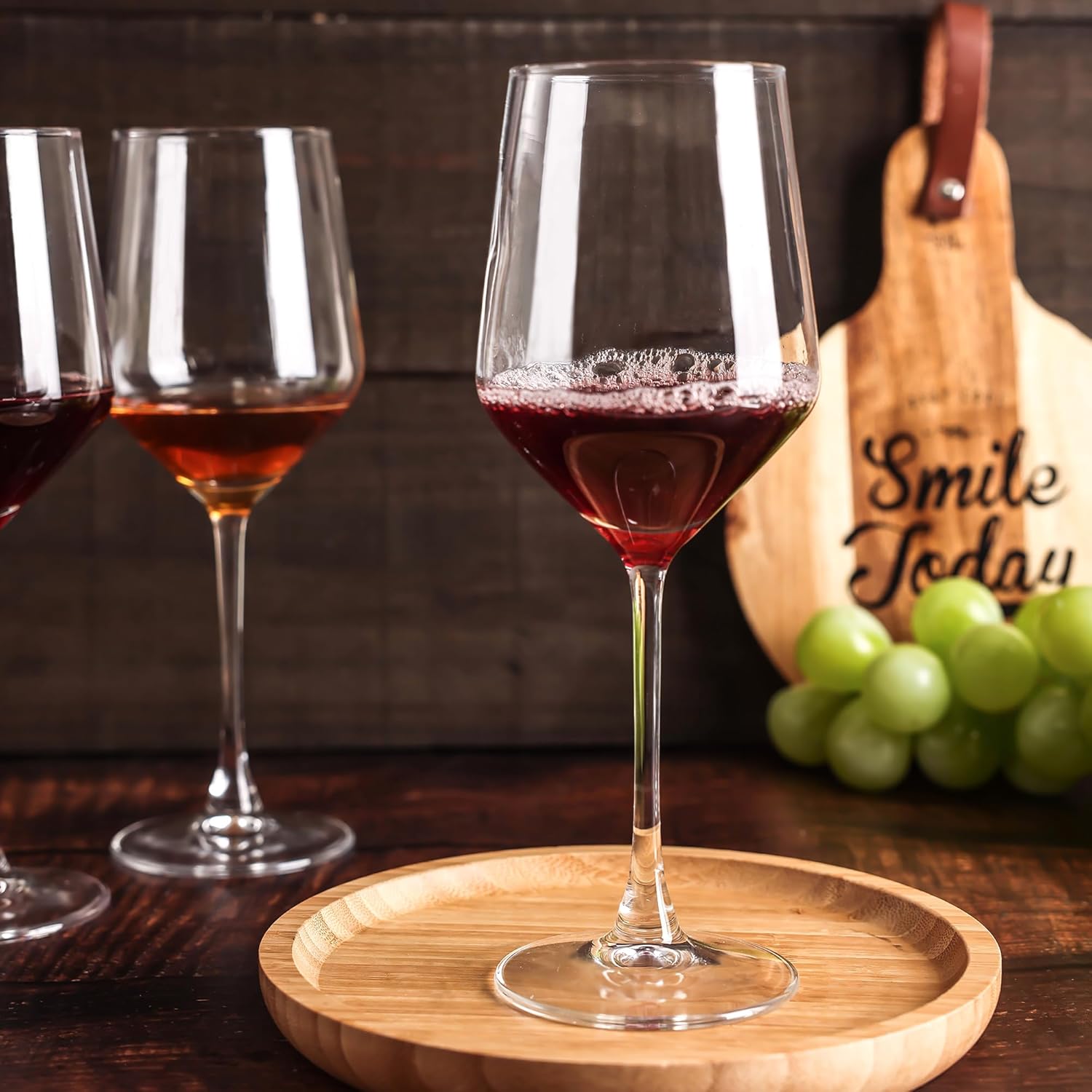
The glass you use is not merely a vessel — it is an instrument that shapes the wine’s aroma, temperature, and the way it lands on your palate. This directly impacts how the wine interacts with food. Investing in quality, varietal-specific glassware is one of the most impactful upgrades you can make to your pairing experience.
Why Glass Shape Matters
The bowl size determines how much oxygen interacts with the wine (affecting aroma development). The rim width determines where the wine hits your palate first — a wide rim deposits wine across your whole palate, while a narrow rim directs it to the center or tip of your tongue, where different taste receptors are concentrated. This is not marketing — it is physiology, and it measurably changes the perception of sweetness, acidity, and tannin.
Glass Shapes & Their Ideal Wines
- Large Bordeaux Glass (wide bowl, slightly tapered rim): Designed for full-bodied, tannic reds like Cabernet Sauvignon and Merlot. The large bowl allows oxygen to soften tannins before the wine reaches your lips.
- Burgundy Glass (wide, balloon-shaped bowl): Built for Pinot Noir and other delicate, aromatic reds. The expansive bowl concentrates the wine’s complex aromas toward your nose.
- Standard White Wine Glass (smaller, tulip-shaped bowl): The smaller size keeps white wines cooler for longer and focuses floral and fruity aromatics.
- Champagne Flute: The narrow flute preserves bubbles by minimizing the surface area. However, many connoisseurs now prefer a tulip-shaped Champagne glass, which allows more aromatic expression without sacrificing effervescence.
- ISO Tasting Glass (universal): A single, highly functional glass that works reasonably well for all wine types — a solid choice if you want one glass to do everything.
For an in-depth exploration of this topic and specific product recommendations, see our dedicated guide to the best wine glasses for red wine.
Think Like a Sommelier: The Professional Approach to Pairing
Professional sommeliers don’t memorize thousands of pairing rules — they apply a systematic, sensory-led approach to any combination. Here is the mental framework they use, which you can adopt immediately.
Analyze the Dish First
Before thinking about wine, deconstruct the dish. What is the dominant flavor? What is the cooking method? What is the richest component? What is the sauce? The answer to these questions reveals the wine’s requirements.
Identify the “Bridge”
Look for a flavor compound that exists in both the dish and a particular wine. Lemon butter sauce and a Chenin Blanc both have citrus and honey notes — that shared bridge creates a harmonious connection.
Consider the Sauce, Not Just the Protein
The sauce is typically the determining factor in a pairing, not the main protein. A chicken breast poached in white wine and cream is a white wine dish. The same chicken braised in red wine, mushrooms, and herbs becomes a red wine dish.
The “Local” Shortcut
When in doubt, pair with a wine from the same region as the dish. Italian pasta? Italian red. French cheese? French white. This heuristic works the vast majority of the time.
Trust the Challenge
Sommeliers embrace “problem” ingredients as puzzles, not obstacles. Asparagus and artichokes are tricky — but Grüner Veltliner solves both beautifully. Knowing the solutions to classic pairing challenges is what separates the confident host from the anxious one.
Always Taste Before Serving
A sommelier always opens and tastes the wine before committing it to a pairing. Even a well-chosen wine from a great producer can be flawed — corked, oxidized, or simply at an awkward stage of development. Taste before serving, always.
How to Use a Wine Tasting Note to Predict a Pairing
Reading a wine’s tasting note carefully can tell you almost everything you need to know about what it will pair with. Here’s how to decode the language:
- “High acidity, notes of lemon and green apple” → This wine will cut through fat and pair with acidic foods. Think seafood, salads, goat cheese, light pasta.
- “Dense, grippy tannins with blackcurrant and cedar” → This wine needs protein and fat to tame it. Think ribeye, leg of lamb, aged cheddar.
- “Round, velvety with low acidity, plum and chocolate” → This is a soft, approachable red for medium-weight dishes. Think braised short ribs, mushroom burger, duck breast.
- “Off-dry, with honeysuckle, peach, and a refreshing finish” → This wine will cool spice and complement aromatic dishes. Think Thai curry, Moroccan tagine, fruit-forward salads.
- “Rich, full-bodied with notes of vanilla, cream, and toasted oak” → This white is built for rich, buttery preparations. Think lobster bisque, roasted chicken with cream sauce, corn chowder.
10 Most Common Wine Pairing Mistakes (And How to Avoid Them)
Even experienced wine lovers fall into predictable traps. Knowing these pitfalls in advance gives you a significant advantage.
- Mistake #1 — Serving Red Wine Too Warm: Modern “room temperature” is often 5–8°F too hot for most red wines. This makes alcohol more pronounced and tannins seem harsher. Always serve reds a little cooler than you think you need to.
- Mistake #2 — Pairing Tannic Reds with Fish: The reaction between tannin and fish oils creates a metallic, bitter taste. If you want to drink red with fish, choose low-tannin options: Pinot Noir, Gamay, or Grenache. Or pair fish with a light, fruity red from Sardinia or Sicily like Frappato or Nerello Mascalese.
- Mistake #3 — Pairing Dry Wine with Dessert: A dry Bordeaux with chocolate cake will taste like you’re eating the rind of a lemon. Always ensure the wine is at least as sweet as the dish.
- Mistake #4 — Ignoring the Sauce: The sauce is the soul of a dish’s wine pairing. Grilling a salmon fillet? A dry rosé works. Serving it with hollandaise? Move to a full-bodied oaked white. Same fish, very different wine requirements.
- Mistake #5 — Buying a Wine Just Because It’s Expensive: Price correlates with quality, not necessarily food-friendliness. Some of the world’s most age-worthy and expensive wines are notoriously difficult to pair with food in their youth because their tannins or acidity are extreme. A more modest, approachable bottle is often a better pairing choice.
- Mistake #6 — Forgetting About Sparkling Wine: Champagne and sparkling wines are among the most versatile food wines on the planet, yet they are too often reserved for toasts and celebrations. Champagne is exceptional with fried food, with salty snacks, with sushi, with poultry, with eggs, and as an aperitif. It should be a regular part of your pairing repertoire.
- Mistake #7 — Pairing Intense Wines with Delicate Food: A 14.5% alcohol Napa Cabernet Sauvignon will completely annihilate a delicate Dover sole. Match the intensity of the wine to the intensity of the food.
- Mistake #8 — Dismissing Rosé: Dry rosé is one of the most underrated food wines. It occupies the ideal middle ground between white and red — carrying acidity and freshness from the white spectrum and structure and fruit from the red. It works beautifully with charcuterie, Mediterranean vegetables, grilled fish, and light pasta dishes.
- Mistake #9 — Cooking with Low-Quality Wine: “Cook with a wine you’d drink” is a genuine rule. When wine is reduced in cooking, its flaws become concentrated and more apparent in the finished dish. If you’re making a red wine reduction for a sauce, use a decent bottle.
- Mistake #10 — Not Considering Sweetness in the Dish Itself: Many savory dishes have sweet elements — teriyaki glaze, hoisin sauce, maple-glazed carrots, caramelized onions. These elements shift the wine requirement toward something with more fruit, a touch of sweetness, or at least very ripe fruit character. A bone-dry, high-acid white alongside a teriyaki-glazed dish will taste harsh and thin.
The Pairing Pro’s Toolkit
Mastering pairing is a journey of practice. Having the right tools not only makes it easier but also more enjoyable. These essentials are some of the most important wine accessories every host needs.

What to Drink with What You Eat
This comprehensive book by Andrew Dornenburg and Karen Page is the definitive A-to-Z guide for pairings, offering endless inspiration.
View on Amazon
Rabbit Wine Decanter
A decanter is crucial for softening tannins in young, bold red wines, making them much more approachable for pairing. This is one of the key wine cellar essentials.
View on Amazon
Gourmet Cheese Board Set
There’s no better way to practice than with cheese. A curated set lets you experiment with salty, creamy, hard, and funky cheeses to see what works.
View on AmazonQuick-Reference Pairing Chart
When in doubt, use this cheat sheet. It’s a great starting point for your pairing adventures.
| Food Category | Wine Style | Specific Varietal Examples |
|---|---|---|
| Light Seafood & Shellfish (Oysters, Scallops) | Light-Bodied, High-Acid Whites | Sauvignon Blanc, Pinot Grigio, Albariño, Muscadet, Champagne |
| Richer Fish & White Meat (Salmon, Chicken, Pork) | Full-Bodied Whites or Light-Bodied Reds | Oaked Chardonnay, Viognier, Dry Rosé, Pinot Noir, Gamay |
| Red Meat (Steak, Lamb, Burgers) | Full-Bodied, Tannic Reds | Cabernet Sauvignon, Merlot, Malbec, Syrah/Shiraz |
| Earthy Dishes (Mushrooms, Truffles) | Earthy Reds & Whites | Pinot Noir (Burgundy), Nebbiolo (Barolo), Sangiovese (Chianti) |
| Spicy Cuisine (Thai, Indian) | Off-Dry, Aromatic Whites | Riesling (off-dry), Gewürztraminer, Viognier |
| Rich Pasta & Tomato Sauces | Medium-Bodied, Acidic Reds | Sangiovese (Chianti), Barbera, Montepulciano |
| Soft & Creamy Cheeses (Brie, Goat Cheese) | High-Acid Whites or Sparkling | Sauvignon Blanc, Champagne, Sancerre |
| Hard & Aged Cheeses (Cheddar, Parmesan) | Full-Bodied Reds or Complex Whites | Cabernet Sauvignon, Aged Chianti, Oaked Chardonnay |
| Desserts & Chocolate | Sweet Fortified or Dessert Wines | Port, Sauternes, Late-Harvest Riesling, Vin Santo |
| Chinese Cuisine (Dim Sum, Peking Duck) | Light Whites, Pinot Noir, Off-Dry Whites | Grüner Veltliner, Brut Champagne, Pinot Noir NZ, Riesling |
| Indian Cuisine (Curry, Korma, Biryani) | Off-Dry Aromatic Whites, Low Tannin | Gewürztraminer, Off-Dry Riesling, Oaked Chardonnay |
| Japanese Cuisine (Sushi, Ramen, Wagyu) | High-Acid Whites, Light Pinot | Chablis, Grüner Veltliner, Burgundy Pinot Noir, Dry Sake |
| Vegetarian & Plant-Based Dishes | Depends on Cooking Method | See Vegetarian Section — Vermentino, Barbera, Gamay, Grenache |
| Smoked & Grilled Meats (BBQ) | Smoky, Fruity Reds or Dry Rosé | Zinfandel, Syrah, Malbec, Dry Rosé, Pinotage |
Remember that proper storage is key to having a delicious bottle ready for your meal. Explore our guides on eco-friendly wine storage solutions and how to store wine without a wine fridge for everyday tips. And for taking that perfectly paired bottle to a friend’s house, a selection from our list of the best wine bags is essential.
Frequently Asked Questions About Wine and Food Pairing
Here are answers to the most common questions we receive from readers who are learning the art of pairing.
What is the most versatile wine for food pairing?
If you had to name one variety, dry Champagne (Brut NV) is arguably the most versatile food wine on the planet. Its combination of high acidity, effervescence, and savory, toasty depth allows it to work with an extraordinary range of dishes — from fried chicken and fish and chips to sushi, oysters, creamy pasta, and even mild cheeses. If Champagne is outside your budget, a quality Brut Cava from Spain or a Crémant from France offers remarkable versatility at a fraction of the price. Among still wines, Pinot Noir (particularly from Burgundy or Oregon) is the red with the widest pairing range, and dry Riesling is the white that bridges the most culinary situations with grace.
Can I pair red wine with fish?
Yes, but with important caveats. The traditional advice to avoid red wine with fish is based on the reaction between tannin and the omega-3 fatty acids in fish, which creates a metallic, bitter aftertaste. However, this problem is specific to tannic red wines. Low-tannin reds — particularly Pinot Noir, Gamay (Beaujolais), Grenache, and certain light Italian reds like Frappato or Nerello Mascalese — can pair beautifully with richer fish: salmon, tuna, swordfish, or grilled sardines. A light Pinot Noir alongside a pan-seared salmon fillet is a genuinely delicious combination. The key is to avoid anything with significant tannin, particularly with delicate white fish like sole, halibut, or sea bass.
What wine goes with pizza?
Pizza is one of those wonderfully democratic dishes that works with a broad range of wines. The guiding principle: follow the sauce and toppings. For a classic tomato and mozzarella Margherita, a Chianti Classico (Sangiovese) is the iconic, perfecto match — Italian wine for Italian food, and the high acidity of the Sangiovese mirrors the tomato perfectly. For a white pizza (pizza bianca) with ricotta and truffle, an oaked Chardonnay or a White Burgundy is sublime. For a meat-lover’s pizza loaded with pepperoni and sausage, a Nero d’Avola from Sicily, a Zinfandel, or a Montepulciano d’Abruzzo can stand up to the richness. For a simple slice from your favorite neighborhood pizzeria? A cold, light Barbera d’Asti or a bubbly glass of Lambrusco (dry) is a joy.
What wine pairs with chocolate?
Chocolate is one of the trickiest pairing challenges in gastronomy, primarily because its bitterness intensifies any bitterness in the wine. The golden rule (dessert wine must be sweeter than the dessert) is especially important here. For dark chocolate (70%+ cacao), a Tawny Port or a Banyuls (a French fortified wine made from Grenache) is exceptional — their sweetness and dried-fruit complexity match the intensity without overpowering it. For milk chocolate, Brachetto d’Acqui (a sweet, lightly sparkling Italian red) is a revelatory match. For chocolate with red fruit elements (raspberry, cherry), try a Framboise (raspberry liqueur wine) or an Asti Spumante. The one pairing to avoid categorically: a dry, tannic red wine with dark chocolate. The clash of bitterness is unpleasant for virtually every palate.
What wine pairs best with cheese?
Cheese pairing is a subject worthy of its own masterclass, but here are the essentials. Soft, fresh cheeses (Brie, Camembert, fresh goat cheese) prefer high-acid whites or sparkling wines — Champagne, Sauvignon Blanc, or Crémant. Semi-hard cheeses (Gruyère, Comté, Manchego) work well with medium-bodied whites or light-to-medium reds — an oaked Chardonnay or a light Rioja are excellent. Hard, aged cheeses (Parmigiano-Reggiano, aged Cheddar, aged Gouda) can handle full-bodied reds — Cabernet Sauvignon, Amarone, or an aged Chianti Classico all work beautifully. Washed-rind and pungent cheeses (Époisses, Muenster) are notoriously wine-unfriendly with reds but can work with aromatic whites or, surprisingly, sweet wines like Sauternes or Gewürztraminer. Blue cheeses (Stilton, Roquefort, Gorgonzola) have a legendary affinity for sweet wines — Port, Sauternes, or a late-harvest Riesling creates the classic sweet-salty combination that makes cheese and dessert wine one of food’s great pairings.
How do I pair wine with a multi-course meal?
The golden sequence for a multi-course meal is: start light and dry, build toward richer and fuller, finish with sweet. Practically, this means opening with Champagne or a crisp white for aperitifs and light starters, transitioning to a medium-bodied white or light red for fish or pasta courses, moving to a full-bodied red for meat or the main course, and finishing with a dessert wine or fortified wine for cheese and dessert. The key is to never serve a wine that will make the next wine taste worse by comparison. If you serve a rich, powerful Barolo early in the evening, anything that follows will seem underwhelming. Save your best, most powerful wines for the climax of the meal.
What is the best wine to serve at a dinner party when you don’t know everyone’s preferences?
When cooking for a mixed crowd with unknown wine preferences, your best strategy is to choose crowd-pleasing, medium-intensity wines with good food-pairing range. Avoid extremes in any direction — nothing too tannic, nothing too sharp or high in acid, nothing too sweet. Good crowd-pleaser whites include an unoaked or lightly oaked Chardonnay, a Pinot Grigio, or a dry Rosé. Crowd-pleaser reds include Pinot Noir, Merlot, and Grenache-based blends (like a Côtes du Rhône). These varieties tend to be approachable even for guests who don’t drink much wine, while being interesting enough for more discerning guests. It’s also wise to have at least one sparkling option (Cava or Prosecco) as it serves as both an aperitif and a versatile food wine.
Does wine vintage matter for food pairing?
For most everyday wine and food pairing, vintage matters far less than grape variety, region, and winemaking style. However, for higher-end wines, vintage can significantly affect how food-friendly a wine is. A young, tannic Barolo from a great vintage might be too grippy and astringent to enjoy with food until it’s aged 10 or more years. The same wine from a lighter vintage might be approachable in just three to five years. Similarly, an aged white Burgundy from an exceptional vintage will have developed complex, nutty, savory flavors that pair very differently from a young version of the same wine. When serving aged wines with food, generally choose dishes with less complexity so the aged wine can take center stage.
The Golden Rule of Wine Pairing
Above all the principles, one truth reigns supreme: the best wine pairing is the one you enjoy. Rules are maps, not laws. Use them to explore, then trust your own palate to lead the way.
Conclusion: Your Palate is the Final Judge
This guide provides the science and the principles, but the art of pairing comes from you. The most important rule is to drink what you like with the food you love. Don’t be afraid to experiment. If you want to drink Cabernet with your oysters, go for it! You might hate it, or you might discover something new about your own palate.
The goal is not to follow rules slavishly, but to use them as a map to explore the vast, delicious world of food and wine. Every bottle you open with a meal is an opportunity to learn something new — about the wine, about the food, and about your own evolving tastes. The more you practice, the more intuitive and effortless these pairings will become.
Start with the fundamentals: match acidity with acidity, tame tannins with fat, always match the weight of the food to the body of the wine, and never serve a drier wine with a sweeter dish. From that foundation, explore the regional traditions, experiment with world cuisines, and embrace the wonderful challenge of tricky pairings. Over time, you won’t be thinking about rules at all — you’ll simply be reaching for the wine that you instinctively know will make the meal sing.
So go forth, be brave, and create your own magical moments. Remember that proper storage is key to having a delicious bottle ready for your meal. Explore our guides on eco-friendly wine storage solutions and how to store wine without a wine fridge for everyday tips. And for taking that perfectly paired bottle to a friend’s house, a selection from our list of the best wine bags is essential.